Balconette vs Plunge Bra: Differences, Fit and Which to Choose
In a balconette vs plunge bra comparison, the difference is the direction of lift and the neckline. A balconette has short, horizontally cut cups and wide-set straps. It lifts the breasts upward into a rounded, “shelf” shape that suits square, sweetheart and wide necklines, and shallow or bottom-heavy breasts. A plunge has angled cups and a low centre gore. It pushes the breasts inward to create cleavage under V-necks, and it suits wide-set, projected and close-set breasts. Your size stays the same in both; the shape and the neckline decide.
Jump to a Section
Balconette vs Plunge at a Glance
| Feature | Balconette | Plunge |
|---|---|---|
| Cup shape | Short, horizontal top edge | Angled, cut low toward the centre |
| Centre gore | Medium height | Very low and short |
| Strap position | Wide-set, toward the shoulder edge | Closer-set, more central |
| Direction of lift | Upward | Inward and upward |
| Silhouette | Round, full upper bust | Cleavage and a deep V |
| Best necklines | Square, sweetheart, scoop, boat, off-shoulder | V-neck, wrap, deep scoop, low button-down |
| Best breast shapes | Shallow, bottom-heavy, full-on-bottom, wide-rooted | Wide-set, projected, close-set, narrow-rooted |
| Typical cup range | A–K (very common in full-bust brands) | AA–G (fewer in very full cups) |
What Is the Difference Between a Balconette and a Plunge Bra?
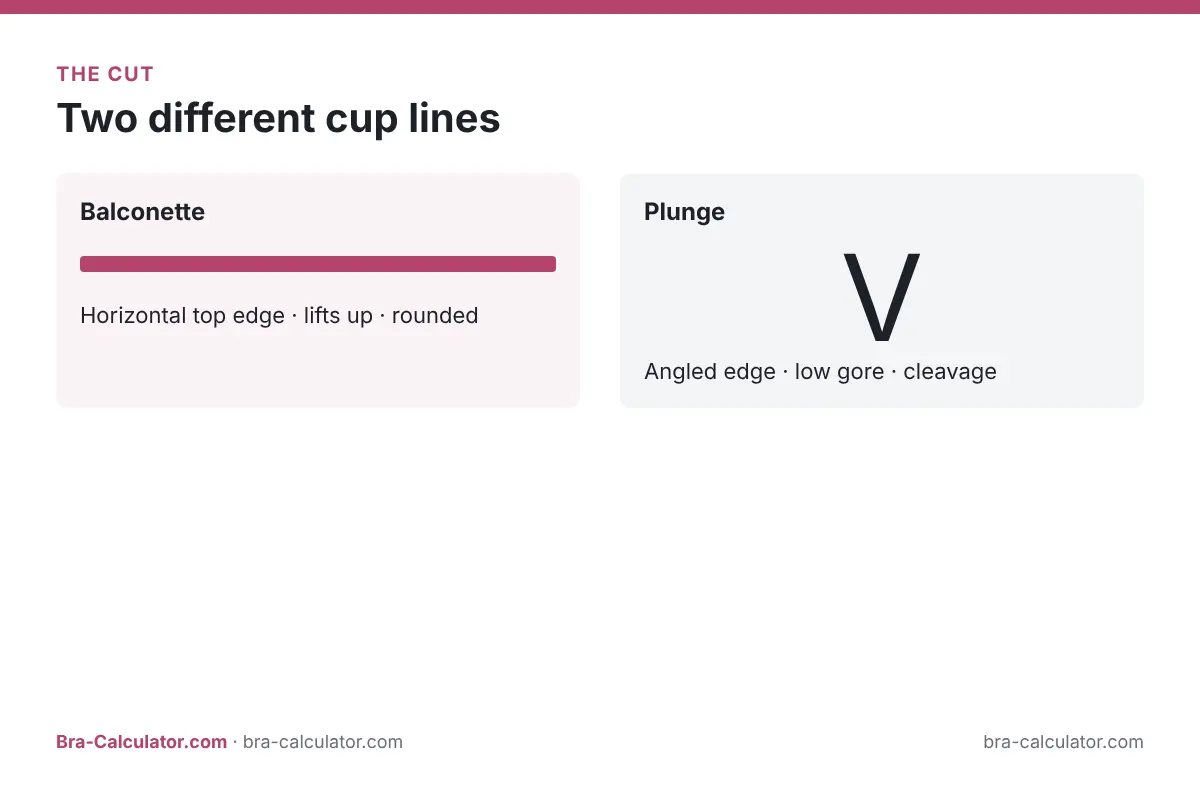
The name “balconette” comes from the idea of a balcony: the cups form a horizontal ledge that the breast sits on and is lifted by. The top edge of the cup runs almost straight across the breast, usually just above the nipple line. The cups are wide and relatively short, and the straps attach toward the outer edge of the cup, which pulls upward rather than inward. The result is a rounded upper bust, full on top, with a natural rather than pushed-together centre.
A plunge is designed around the centre. The cups are cut on a diagonal from the strap down to a very low centre gore, often only 1–2 inches tall. Because the cups slope inward, they encourage tissue toward the middle, and the straps sit more centrally on the cup. The result is cleavage and a deep V-shaped neckline that disappears under low-cut tops.
Neither style changes your bra size. A 34D balconette and a 34D plunge hold the same volume; they only distribute it differently. If you are not sure of your size, measure first with our bra size calculator. If you are between sizes, the sister size calculator shows the alternatives that keep the same cup volume.
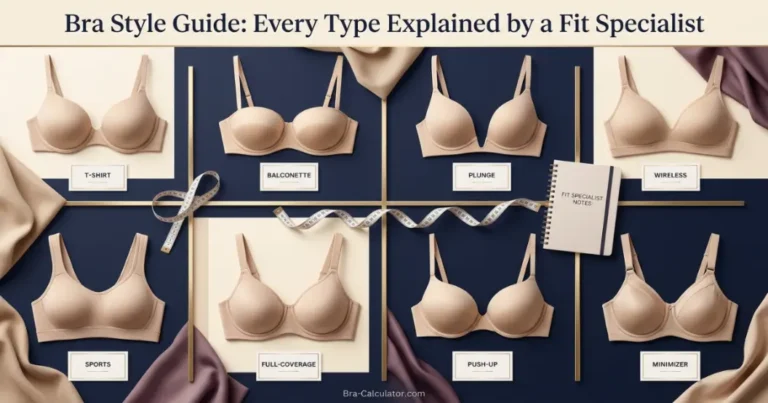
Push-up is a separate feature. Both balconettes and plunges come unlined, lightly lined or push-up. Push-up describes the padding; balconette and plunge describe the cut. A plunge push-up and a balconette push-up give very different results.
Balconette vs plunge
How They Feel and Look on the Body
- Rounded, lifted upper bust
- Horizontal neckline edge
- Natural space between the breasts
- Wide-set straps frame the shoulders
- Cleavage and a defined centre
- A deep V that hides under low necklines
- Breasts sit closer together
- Straps sit more centrally
- Open, uncovered top of the breast
- Less fabric overall
- Can feel less secure on very projected tissue
- Wide straps may slip on narrow shoulders
- More coverage at the sides
- Gore can dig on close-set breasts
- Very secure feel at the centre
- Close-set straps stay on narrow shoulders
- Overflow at the top on projected breasts
- Gaping if the cup is too tall
- Strap slip on sloped shoulders
- Gore poke on close-set breasts
- Side spillage on wide-rooted breasts
- Gaping at the edge on shallow tissue
Which Style Suits Your Breast Shape?
| Breast shape | Better choice | Why |
|---|---|---|
| Shallow (wide base, little projection) | Balconette | Short cups leave no empty space at the top to gape |
| Projected (narrow base, forward volume) | Plunge | Angled cups follow forward tissue; balconette edges can cut across it |
| Wide-set (space between breasts) | Plunge | A low gore and inward cut bring tissue toward the centre |
| Close-set (little space between) | Balconette, or a very low plunge | A tall or wide gore cannot sit flat between close-set breasts |
| Bottom-heavy / full on bottom | Balconette | Lift comes from underneath, where the volume is |
| Full on top | Plunge | A low-cut edge avoids squashing upper fullness |
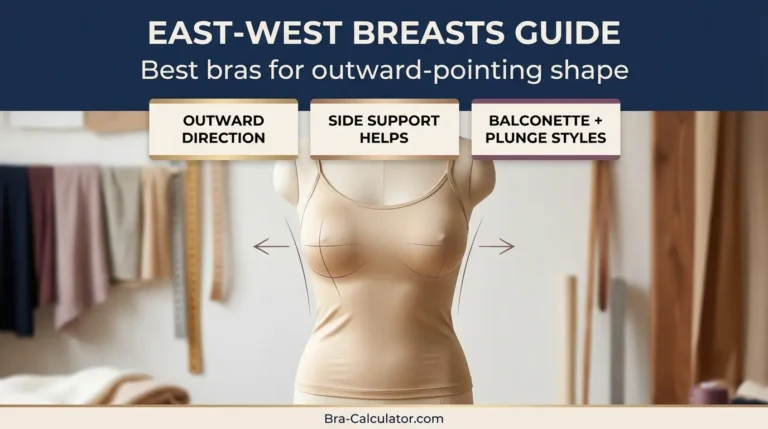
| East-west (pointing outward) | Plunge or side-support balconette | Inward cut redirects tissue to the front |
| Asymmetric | Either, with removable pads | Fit the larger side; pad the smaller |
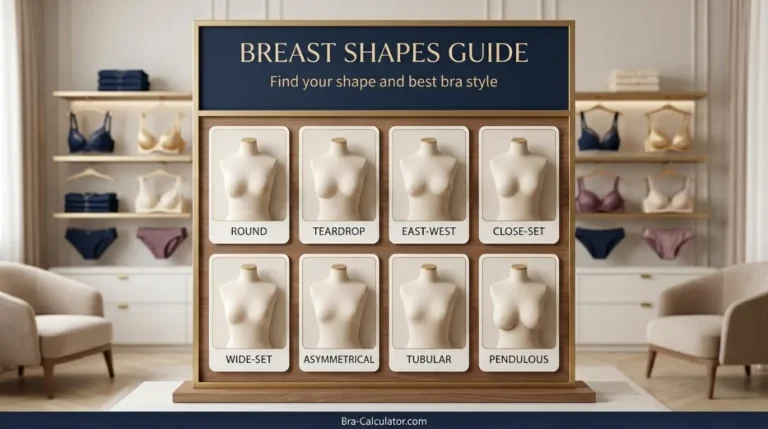
If you are not sure of your shape, our breast shapes guide and breast shape identifier walk you through it. For a broader comparison of every style, see the best bra types for every breast shape.
Breast shape guide

Which Bra for Which Neckline?
| Neckline | Balconette | Plunge |
|---|---|---|
| Square neck | ✓ Ideal: the horizontal edge mirrors the neckline | ✗ The V shows at the corners |
| Sweetheart | ✓ Ideal | Possible if the plunge is shallow |
| Deep V / wrap | ✗ The cup edge shows | ✓ Ideal |
| Scoop | ✓ Good | ✓ Good |
| Boat / off-shoulder | ✓ Wide straps can be removed or converted | ✗ Central straps show |
| Low button-down shirt | Possible with a lower balconette | ✓ Ideal |
| High neck / crew neck | ✓ Fine | ✓ Fine; choose by comfort |
| Fitted T-shirt | Can show a ridge across the breast | ✓ Smoother under thin knits |
A good rule of thumb: a horizontal neckline wants a horizontal cup, the balconette, and a V neckline wants a V cup, the plunge. For backless or strapless outfits, see our guides to bras for backless dresses and strapless sizing.
Balconette vs Plunge by Bust Size
| Size range | What works | What to watch |
|---|---|---|
| AA–B | Plunge for cleavage; balconette for a rounded look | Balconettes may gape on small shallow tissue if the cup is too tall |
| C–DD | Both work widely; choose by shape and neckline | Overflow at the top of balconettes if you are projected |
| E–G | Balconettes are very common in full-bust brands; plunges available | Plunge gores may be too low to separate fuller breasts |
| H+ | Balconette options are widest; deep plunges are rarer | Look for full-bust specialists for either style |
Full-bust brands make some of the best balconettes available, because the horizontal cut gives lift and a rounded shape without the bulk of a full cup. If you wear a G cup or above, the balconette is often the most flattering everyday option. See our best balconette bras and bras for a large bust. With smaller busts, a plunge is the more reliable way to create cleavage. Our push-up bras guide covers padded plunges.
Which Is More Supportive and Comfortable?
Support in any bra comes mostly from the band, around 80% of it in a well-fitted bra, so a correctly sized band matters more than the style. Within that, the two styles support differently.
Balconettes lift from below. The wide wire and horizontal cup act like a shelf, which is very effective for fuller and bottom-heavy breasts. Because the straps are wide-set, they pull straight up, and on a full bust that can feel very secure. The trade-off is that the upper breast is uncovered, so projected or top-full tissue can feel less contained during movement.
Plunges hold from the sides. The angled cups wrap more of the outer breast and the central straps pull slightly inward, so the breasts feel held together. On a wide-set or projected bust this can be the more secure style. The trade-off is the low gore: with close-set or very full breasts it may not sit flat against the sternum, which reduces separation and can feel like pressure in the centre.
| Factor | Balconette | Plunge |
|---|---|---|
| All-day comfort | High if straps stay put | High if the gore sits flat |
| Security in movement | Good from below | Good at the sides and centre |
| Strap pressure | Pulls straight up on wide shoulders | Pulls slightly inward; better on narrow shoulders |
| Separation | Natural separation | Breasts sit closer together |
| Best for exercise | Neither; use a sports bra | Neither; use a sports bra |
If you feel pressure in the shoulders in either style, the band is probably too loose and the straps are doing the work. Our band size guide explains how to check.
Unlined, Lightly Lined or Push-Up: How Padding Changes Each
Both styles come in the same three padding levels, and the padding changes the result as much as the cut does.
A seamed balconette gives shape from the cut alone. Popular in full-bust sizes, cool to wear, and very natural-looking.
A moulded balconette gives the classic rounded look under fitted tops with no visible seams.
Lifts gently toward the centre with a lace or mesh cup. Good for fuller busts that do not need extra volume.
Graduated pads push tissue up and in. The most dramatic cleavage of any everyday bra.
Pads push up rather than in, for a full, lifted upper bust. Can overflow if the cup is too small.
A common mistake is buying a push-up plunge one cup size down because the padding “fills” the cup. The cup volume is reduced by the padding, so many people find they need their normal size, or even a size up, in heavy push-ups. If the top edge cuts in, go up a cup rather than tightening the straps.
Do You Need Both?
For most people, owning one of each covers almost every outfit. A neutral balconette handles square, sweetheart, boat and off-shoulder necklines, plus most casual tops. A neutral plunge handles V-necks, wraps, low shirts and fitted knits. Add a T-shirt bra for everyday thin fabrics and a strapless for special occasions, and you have a complete working set.
If you only want one, choose the style that suits your shape. A wide-set, projected bust will be happier in a plunge most days; a shallow, bottom-heavy bust in a balconette. Then pick the neckline-specific one second.
How to Try On Each Style Properly
Both styles only work if the breast is fully inside the cup and the wire sits in the breast fold. Use this routine in the fitting room or at home:
The band should be firm and level from front to back.
Lean forward and use the opposite hand to bring tissue from under the arm into each cup.
In a balconette the edge should lie flat across the breast with no cutting in. In a plunge the angled edge should lie flat with no gap.
In a balconette the gore should sit on the sternum. In a plunge the low gore should also touch the chest, even if lightly.
Try the bra under the top you bought it for. The neckline test is the one that decides between the two.
Choose in 60 Seconds
Square, sweetheart or off-shoulder: balconette. V-neck or wrap: plunge.
Yes, wide-set: plunge. Very little, close-set: balconette.
Mostly underneath: balconette. Mostly on top or forward: plunge.
Yes: plunge, or a balconette with convertible straps.
Round and lifted: balconette. Cleavage and a deep V: plunge.
One of Each Worth Trying
Both picks are in stock on Amazon with at least a 4.0-star average and hundreds of verified ratings. Ratings were checked in November 2026.
A classic full-bust balconette with short, wide cups and a non-padded, seamed construction, from D cups up. Check sizes on Amazon
A low gore and angled contour cups give a clean V under low necklines. Popular across B–DDD. Check sizes on Amazon
Affiliate disclosure: we earn a commission on qualifying Amazon purchases at no extra cost to you. Picks are chosen for fit, never for commission.
Common Fit Problems in Each Style
Projected tissue overflows the low edge.
Wide-set straps on narrow or sloped shoulders.
The cup is too tall for shallow tissue.
Close-set breasts push the gore off the sternum.
Wide-rooted breasts spill under the arm.
The band is too loose.
Related guides
Frequently Asked Questions
A balconette has short, horizontal cups and wide-set straps that lift upward for a rounded look. A plunge has angled cups and a very low centre gore that push inward for cleavage and a deep V.
Both can work, but balconettes are more widely available in full-bust sizes and give lift with a rounded shape. Choose a plunge if you are wide-set or want cleavage under V-necks.
A plunge gives more cleavage because its cups slope inward to a low centre gore.
Yes, for a rounded, lifted look, especially with shallow tissue in a low-cut balconette. A plunge is better if you want cleavage.
Usually the cup edge shows in a deep V. A plunge is the better match for V and wrap necklines.
A balconette, because its horizontal top edge mirrors the neckline.
Usually yes. The style changes how volume is distributed, not how much there is. Some brands cut balconettes slightly smaller, so check reviews.
They are similar. Both cover less of the upper breast, but a demi has a curved edge and closer-set straps, while a balconette has a straighter edge and wider-set straps.
Get the size right first
Style changes shape, not size. Measure once and get your size in every system.