Bra Center Gore Hurts? Why It Digs In & How to Fix It
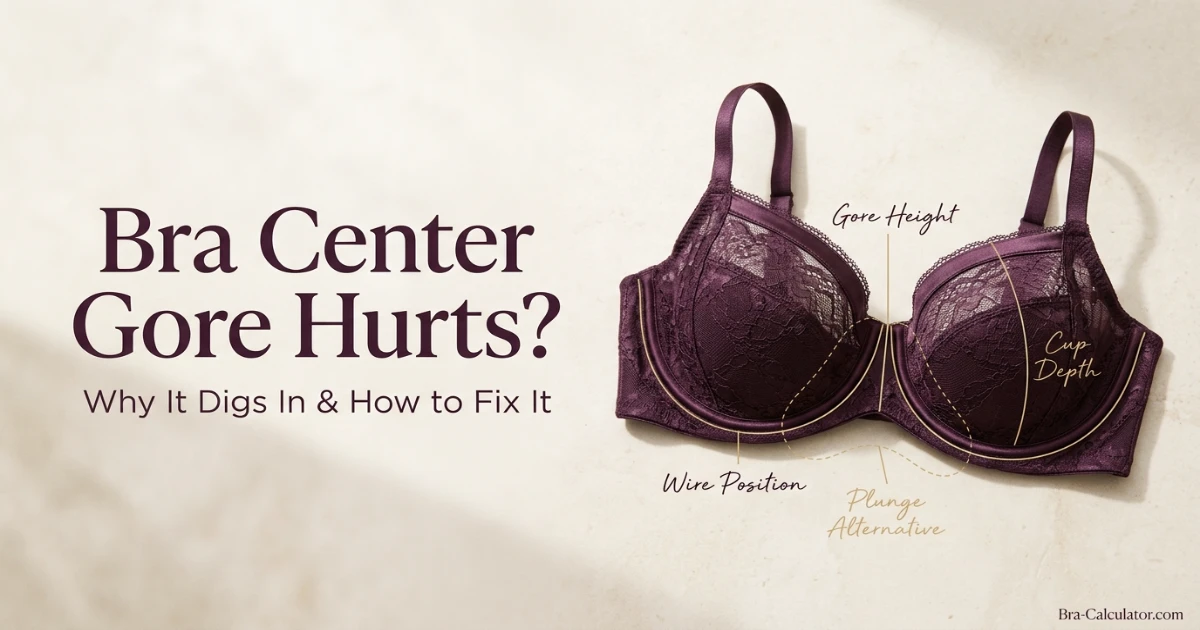
If your bra center gore hurts, the problem may be cup volume, band tension, gore height, breast spacing or wire shape. A supportive center should feel stable—not like a sharp pressure point on your sternum.

Quick answer
A painful center gore usually means the size or the gore shape is not matching your body. Check for a too-small or shallow cup, excessive band tension and close-set breast tissue. If the cups fit but pressure is only at the top of the center, a lower or narrower gore may solve the problem better than changing size.
Why Does My Bra Center Gore Hurt?
If your bra center gore hurts, do not assume pain means the bra is “supportive.” The center gore—the panel between the cups—should stabilize the bra without creating a sharp pressure point on the sternum. Pain can come from cups that are too small, a band that is too tight, a gore that is too tall or wide for your anatomy, or an underwire shape that simply does not suit you.
Not every bra is designed for the gore to tack firmly. Wireless bras and some soft plunge styles behave differently. But in a structured underwire bra, the center should generally sit stably and comfortably when the style matches your breast spacing and the cups have enough room.
Where Exactly Does the Gore Hurt?
| Pressure point | Possible cause | What to test |
|---|---|---|
| Top of gore | Gore too tall/wide for close-set breasts | Lower plunge or narrower gore |
| Whole gore presses hard | Band too tight or cups distorting frame | Band-only test + cup check |
| One wire tip hurts | Wire shape, asymmetry or distorted frame | Inspect wire and compare both sides |
| Gore floats and edge digs | Cups may be too small/shallow | More cup volume or projection |
| Skin becomes irritated | Pressure plus friction | Softer/lower gore; stop if skin is injured |
Cups That Are Too Small Can Make the Gore Hurt
When the cups do not have enough volume, breast tissue pushes the cups and wires away from their intended position. The gore may float forward, tilt or press only at one edge. Tightening the band or straps harder can make that pressure worse.
Check for top spillage, side spillage, wire sitting on tissue and lower-cup compression. If these appear together, go up a cup or try a deeper shape before changing the band.
The Band May Be Too Tight
A firm band helps anchor the center, but excessive band tension can drive the wire and gore into the sternum. Test the band separately by fastening the bra backwards and upside down, with the cups hanging away from the breasts.
If the band alone feels painful or restrictive, the problem is not only the gore. Use the Bra Band Too Tight guide and consider a roomier sister size or different band construction.
Close-Set Breasts May Need a Lower or Narrower Gore
If there is very little space between the breasts, a tall or wide center panel may physically compete with breast tissue. The correct cup size can still feel uncomfortable if the gore is the wrong shape.
Plunge bras often use a lower center gore and can be a better match for close-set breasts. A narrow gore can also reduce pressure compared with a broad center panel.
Gore Height Can Be the Real Problem
Full-coverage and balconette bras often have taller center panels than plunge styles. A tall gore can be supportive for some shapes and intrusive for others. If the pain is concentrated at the top tip of the gore while the rest of the bra fits well, changing style may work better than changing size.
Try a lower gore when:
- pressure is at the top of the sternum;
- breasts are naturally close-set;
- cups fit well but the center feels intrusive;
- plunge shapes usually feel better.
Try more cup depth when:
- the gore floats as well as hurts;
- cups spill at top or sides;
- wires sit on breast tissue;
- the lower cup looks compressed.
The Underwire May Be the Wrong Shape
Underwires vary in width, height, curvature and stiffness. Two bras in the same size can place very different pressure at the center. A narrow rigid wire may press sharply on one torso while a broader or softer wire distributes pressure more comfortably.
If only one style hurts and another bra in the same size fits comfortably, treat that as a shape or construction mismatch before changing all your measurements.
Should You “Break In” a Painful Gore?
Fabric can soften slightly with wear and washing, but sharp underwire pain is not something you should endure in the hope that the bra will eventually become correct. If the gore is leaving a painful pressure point, remove the bra and diagnose the cause.
A new bra may feel firm. It should not feel like the center wire is digging into bone or breast tissue.
What About Red Marks at the Sternum?
A faint temporary pressure mark can happen with close-fitting clothing. Deep grooves, persistent redness, broken skin, burning or tenderness are different. See Are Bra Marks Normal? for a fuller pressure-mark check.
If rubbing is part of the problem, the Cleveland Clinic chafing guide explains how repeated friction and moisture can irritate skin.
How to Fix a Center Gore That Hurts
- Scoop and swoop fully into the cups.
- Check whether the gore floats. Floating plus pain often points toward cup volume or projection.
- Check for tissue under the center wire.
- Test the band by itself.
- Try a lower or narrower gore if your breasts are close-set.
- Compare another bra in the same size.
- Stop wearing the bra if the pressure is painful or injures the skin.
When Is Sternum or Breast Pain a Medical Question?
This page explains garment fit, not the cause of chest or breast pain. If pain continues after removing the bra, is severe, follows an injury, comes with shortness of breath, swelling, a new lump, fever, skin changes or other concerning symptoms, seek appropriate medical care rather than assuming the bra is the cause.
If a bra consistently causes pain, stop wearing that style while you work out whether size, wire shape or gore height is responsible.
Not sure whether the gore pain is size or shape?
Start with fresh measurements, then compare a deeper cup and a lower-gore style rather than changing several variables at once.
Calculate My Bra SizeFrequently Asked Questions
Why does my bra center gore hurt?
Common causes include cups that are too small or shallow, a band that is too tight, a gore that is too tall or wide, or an underwire shape that does not suit your torso.
Should the center gore touch my sternum?
In many structured underwire bras, the gore should sit stably against or very close to the sternum when the style and anatomy allow. Wireless and some plunge designs behave differently.
Why does the top of the gore dig in?
The gore may be too tall or wide for close-set breasts, especially if the cups otherwise fit smoothly.
Can a tight band make the gore hurt?
Yes. Excess band tension can drive the wire and center panel into the sternum.
Can cups that are too small make the gore painful?
Yes. Too-small or shallow cups can distort the frame, make the gore float or tilt, and create concentrated pressure.
Should I break in a painful underwire bra?
A new bra can feel firm, but sharp or persistent pain should not be treated as something to endure until the bra softens.
When should I stop blaming the bra for chest pain?
If pain persists after removing the bra, is severe, or comes with shortness of breath, swelling, a new lump, fever or other concerning symptoms, seek medical care.
Keep Exploring
About this guide: Prepared for Bra-Calculator.com and reviewed by Amelia, Founder & CEO. It explains bra-fitting principles for educational purposes and is not medical advice. Persistent pain, skin injury or unusual breast changes should be discussed with a qualified healthcare professional.