Bra Band Size Guide: How to Measure & Find Your Perfect Band Fit
Everything you need to know about bra band sizes — how to measure, what the numbers mean, how band and cup sizes interact, and which bras perform best at every band from 28 to 56.
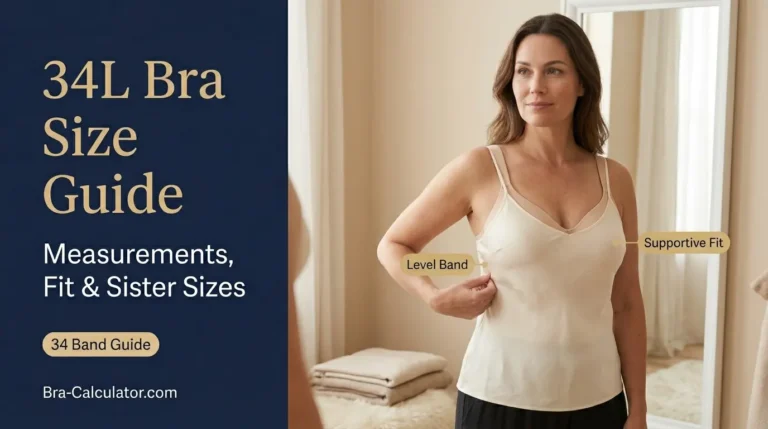
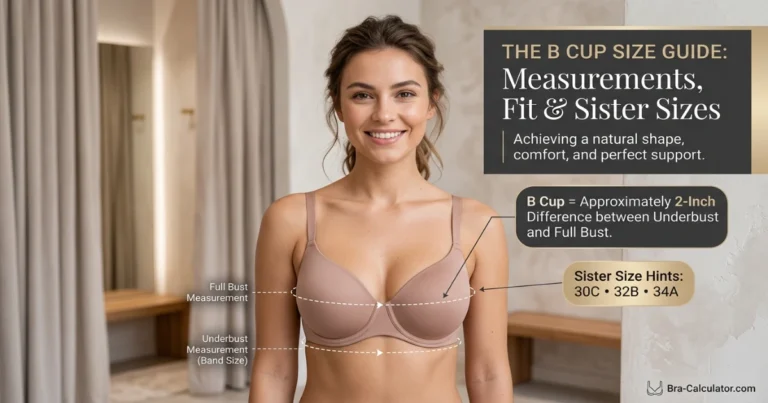
Your bra band size is the even number that equals your ribcage circumference measured directly under your bust, in inches (US/UK). Band sizes run from 28 to 56+. The band delivers 80% of a bra’s support — a band that rides up means you need a smaller size. Use our free bra size calculator to get your exact band and cup size instantly.
The band is the most important — and most misfit — part of a bra. Research consistently shows the majority of women are wearing the wrong band size, almost always too large. A band that is even two inches too big dramatically reduces lift, causes the back to ride up, transfers weight to the straps, and accelerates shoulder pain. Getting the band right changes everything about how a bra performs.
This guide covers the complete picture: how to measure accurately, how to read international conversion charts, how the band and cup interact through sister sizing, how fit should look and feel across every band size, and which bras Amazon customers rate highest for each size category.
📌 Related Tools & Guides:
Choose the fit signs you notice in the band, cups, center and straps. We’ll use them to suggest the most useful next step.
Private fit check — your answers stay in your browser and are used only for this on-page guidance. Nothing is stored or submitted.
What Is a Bra Band Size?
A bra band size — also called the frame size or back size — is a number representing the circumference of your ribcage in inches (US/UK) or centimeters (EU). In the US and UK, band sizes are always even numbers, typically ranging from 28 to 56, with specialist brands extending further in both directions.
The band wraps around your torso and fastens at the back with hook-and-eye closures. It carries the structural load of the bra: the underwire sits in the band, side panels attach to it, and straps connect at the top. When your band fits correctly, 80% of breast support comes from the band alone — straps shape the cup and limit bounce, but they are not designed to bear weight.
Band size and cup size are not independent. Cup volume changes relative to the band — a 34D and a 36C contain the same breast volume (they are sister sizes), but the 36C has a looser band. This means you cannot change your band number without also adjusting your cup letter to maintain the same fit. Always calculate both together with our bra size calculator.
How to Measure Your Bra Band Size Accurately
Accurate band measurement takes under two minutes and requires only a flexible tape measure. The most common errors: measuring over clothing, holding your breath, and measuring too high or too low on the ribcage.
- 1
Remove or loosen your current bra
Measure against bare skin or a thin camisole. Bras — especially padded styles — add false inches and will skew your reading by 1–2 inches.
- 2
Position the tape directly under your bust
Wrap the tape horizontally around your ribcage, immediately below your bust where a bra band naturally sits. Keep the tape level front to back — check in a mirror.
- 3
Breathe normally and read the measurement
The tape should be snug but not compressing — you should be able to slide two fingers underneath. Note the number in inches.
- 4
Round to the nearest even number
US/UK band sizes are always even. A 31-inch measurement = try a 32. A 33-inch measurement = try both 32 and 34. Brand construction varies, so test both if you’re between sizes.
- 5
Verify with the hook test on a new bra
A new bra should fasten comfortably on the loosest hook. As elastic stretches over weeks, you move to the middle hook, then the tightest. If you need the tightest hook on day one, go down one band size and up one cup letter.
Complete Bra Band Size Chart — US / UK / EU / FR / AU
Band sizing notation differs by country. US and UK sizes share the same numbers (both measured in inches). EU sizes use centimeters. French and Spanish sizes add 15 to the EU centimeter number. Australian sizes follow a clothing size scale.
| US / UK | EU (cm) | FR / ES | IT | AU / NZ | Underbust Range | Category |
|---|---|---|---|---|---|---|
| 28 | 60 | 75 | 0 | 8 | 26–27″ | Petite |
| 30 | 65 | 80 | 1 | 10 | 28–29″ | Petite |
| 32 | 70 | 85 | 2 | 12 | 30–31″ | Petite |
| 34 | 75 | 90 | 3 | 14 | 32–33″ | Standard |
| 36 | 80 | 95 | 4 | 16 | 34–35″ | Standard |
| 38 | 85 | 100 | 5 | 18 | 36–37″ | Standard |
| 40 | 90 | 105 | 6 | 20 | 38–39″ | Standard |
| 42 | 95 | 110 | 7 | 22 | 40–41″ | Extended |
| 44 | 100 | 115 | 8 | 24 | 42–43″ | Extended |
| 46 | 105 | 120 | 9 | 26 | 44–45″ | Extended |
| 48 | 110 | 125 | 10 | 28 | 46–47″ | Extended |
| 50 | 115 | 130 | 11 | 30 | 48–49″ | Plus |
| 52 | 120 | 135 | 12 | 32 | 50–51″ | Plus |
| 54 | 125 | 140 | 13 | 34 | 52–53″ | Plus |
| 56 | 130 | 145 | 14 | 36 | 54–55″ | Plus |
Shopping internationally? Use our Global Bra Size Converter to translate between all sizing systems instantly — including UK, EU, FR, AU, and Japanese sizing.
Band Size and the Sister Size System
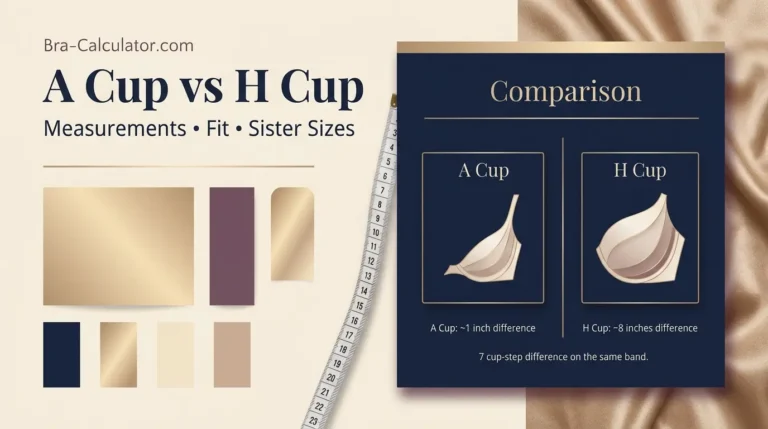
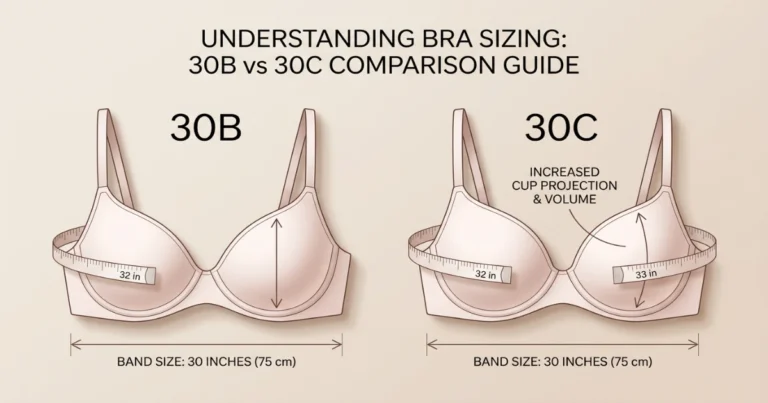
The cup letter does not represent a fixed volume — it represents a relative difference between your underbust and bust measurements. As the band number increases, the same cup letter represents a larger total breast volume. This underpins the sister size system: bras that share the same cup volume but differ in band number.
Go up one band size → go down one cup letter to maintain equivalent volume. Go down one band size → go up one cup letter.
| Your Size | Sister Size Down (smaller band) | Sister Size Up (larger band) |
|---|---|---|
| 32B | 30C | 34A |
| 34C | 32D | 36B |
| 36DD | 34E / 34DDD | 38D |
| 38D | 36DD / 36E | 40C |
| 40E | 38F | 42DD |
| 42G | 40H | 44F |
Sister sizes share cup volume, not band tension. Use your sister size up when your true size is out of stock and you want a more relaxed band. Use our Sister Size Calculator to find your full sister size family instantly.
Best Bras for Standard Band Sizes (32–40)
Standard band sizes cover the broadest retail selection. These are the highest-rated picks across Amazon for everyday, wireless, and underwire styles in the 32–40 band range.


How a Correctly Fitted Bra Band Should Feel
The goal is firm, even pressure around your entire torso — no digging, no riding up, no skin overhang, no gaping. Use this diagnostic table to evaluate any bra you try on:
| Fit Sign | Correct ✅ | Too Loose ❌ | Too Tight ❌ |
|---|---|---|---|
| Back position | Level with front underwire | Rides up the back | Flat, no movement |
| Two-finger test | 2 fingers slide under easily | Entire hand fits through | Cannot fit one finger |
| Lift test | Band lifts max 2.5cm | Band lifts 5cm or more | Band doesn’t move |
| After activity | Cups stay in position | Cups shift; straps slide off | No movement, but pain |
| End of day | Mild visible line, no pain | No line — bra migrated | Deep painful indentation |
| Hook position (new) | Fits on loosest hook | Already on tightest hook | Loosest hook is painful |
Experiencing ongoing fit issues? Our Bra Fit Problems guide covers 14 common band-related problems with exact solutions — including what to do when your size falls between two band numbers.
Extended Band Sizes (42–56): Full Fitting Guide
Extended band sizes — 42 and above — are underserved by mainstream retail but account for a significant proportion of shoppers. Extended bands come with unique construction requirements: longer underwires, wider side panels, multi-row hook-and-eye closures (4–6 columns vs the standard 3), and reinforced straps to distribute load across a larger frame.
Key Fit Principles for Extended Band Sizes
- 4-column or 5-column closures provide more stable anchoring than standard 3-column construction and prevent band twist
- Full-band construction beats stretch lace backs — lace loses tension quickly and provides inconsistent support through the day
- Wider straps (1.5cm+) reduce shoulder pressure significantly at D cup and above in extended bands
- Underwire width must span the full breast root — narrow-set wires cause side spillage regardless of cup size
- The gore (center panel) must lie flat against the sternum — if it floats forward, try a larger cup before sizing up the band
Best Bras for Extended Band Sizes (42–56)
These brands consistently deliver quality construction and accurate sizing across extended band sizes, backed by real Amazon reviewer feedback from the 42+ band community.


Petite Band Sizes (28–32): Specialist Guide
Small band sizes — 28, 30, and 32 — are among the hardest to find in mainstream retail yet are needed by millions of petite-framed women and slim individuals with larger cup sizes. Wearing a 34 or 36 when you genuinely need a 28 or 30 eliminates almost all the structural support a bra can provide.
Brands That Reliably Stock 28–32 Bands
- Freya — 28–44 across most ranges; UK specialist with excellent small-band construction and wide cup range
- Panache — 28–44; known for precise band tension and long-wearing comfort in 28/30 bands
- Fantasie — 28–44; softer elastic construction, runs true to size in smaller bands
- Ewa Michalak — 26–46; Polish specialist with bespoke alteration options for extreme sizes
- Comexim — 26–50; custom alteration service for both very small and very large bands
Petite bands with larger cup sizes (28DD, 30F, 32G+) are a specialist category. Our Breast Size Comparison hub covers how these sizes compare visually and dimensionally. Our Cup Size Calculator confirms your exact cup letter within any band size.
Brand-Specific Band Sizing: What the Numbers Really Mean
Not all 36 bands are identical. Band tension varies significantly between brands due to differences in elastic composition, stretch ratio, and construction. Here’s what you need to know before ordering:
| Brand | Band Tendency | Advice |
|---|---|---|
| Panache | Runs firm / true-to-size | Order your measured size; band softens slightly after 2–3 washes |
| Freya | True-to-size to slightly loose | Size down one band if you are between sizes |
| Wacoal | True-to-size | Very consistent across ranges — reliable reference brand |
| Victoria’s Secret | Runs loose (+1 to 2″) | Size down one band from your measurement |
| Elomi | True-to-size (firm stretch) | Order measured size; excellent for high-volume cup sizes |
| Glamorise | True-to-size (softer elastic) | Wire-free styles run slightly looser; use measured size |
| Natori | Runs slightly loose | Size down one band for a secure fit |
| Chantelle (FR) | +15 offset (FR sizing system) | FR 90 = EU 75 = US 34; always convert before ordering |
| ThirdLove | True-to-size (half-sizes available) | Use their half-cup system if you fall between even band numbers |
Band Size and Breast Shape
Your breast shape affects which band construction works best for you — not just the band number. Wide-set breasts need a bra with a wide gore and extended wings for lateral support. Close-set breasts need a narrow gore that doesn’t create a gap in the center. Projected (forward-pointing) breasts need deeper cups anchored by a firm, inextensible band.
Use our Breast Shape Identifier to discover your exact breast shape and get personalized bra style recommendations that account for both your band size and your unique anatomy. For a complete visual overview of how different shapes change the ideal bra structure, see our Breast Shapes & Types Guide.
Best Wire-Free & Sports Bras Across All Band Sizes
Wire-free and sports styles have their own band sizing logic — construction varies significantly. These are the top Amazon-rated picks across the full band range.


📌 More Resources:
Frequently Asked Questions
Find Your Exact Band Size in 60 Seconds
Enter your underbust and bust measurements to get your precise US, UK, EU, and AU bra size — plus your sister sizes and best bra styles for your shape. Free, instant, no signup.
Calculate My Band Size →This page contains affiliate links. As an Amazon Associate, Bra-Calculator.com earns from qualifying purchases at no extra cost to you. All product recommendations are based on fit quality and independent editorial assessment.