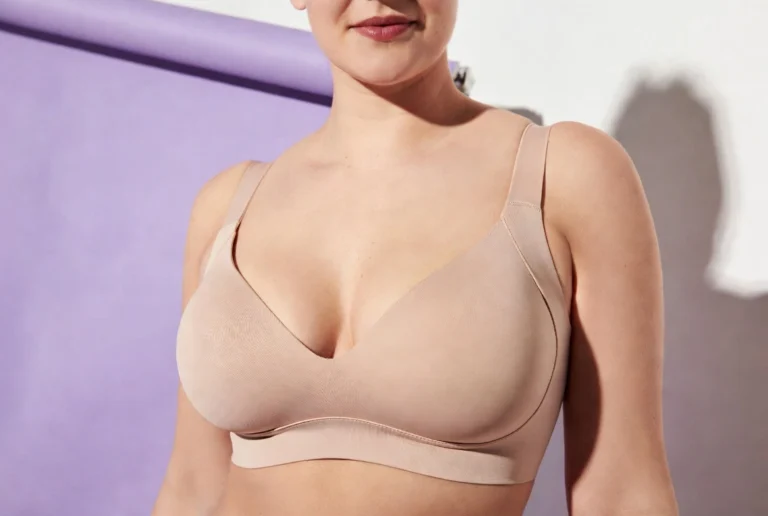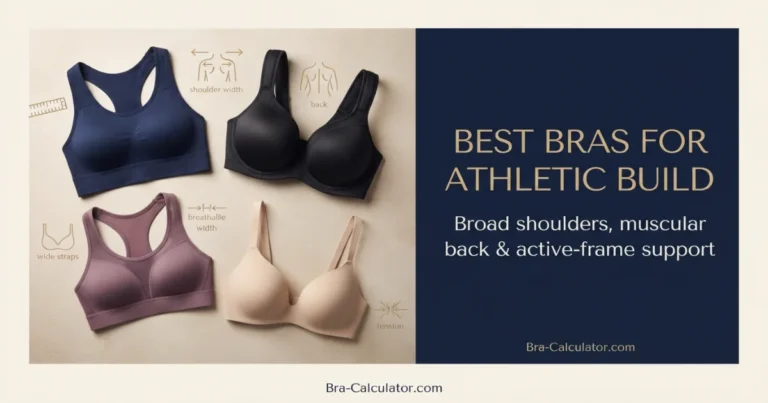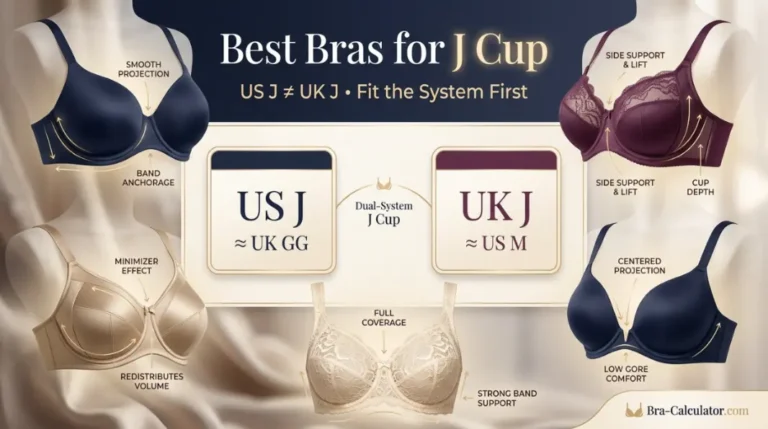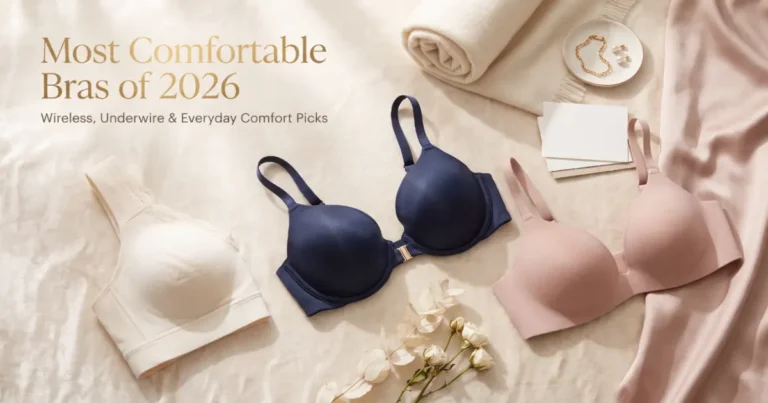
The best bra type depends on your breast shape, projection, fullness, root width and tissue direction. Full-on-top breasts usually suit balconette, demi and stretch-lace bras. Full-on-bottom and teardrop breasts often do better in plunge, demi and lightly lined T-shirt bras. East-west and side-set breasts need side-support, contour, plunge or front-closure bras. Bell-shaped and relaxed breasts usually need structured full-coverage, side-support or firm plunge bras.
Jump to a Section
Breast Shape at a Glance
| Fit Factor | What It Means | Why It Matters |
|---|---|---|
| Fullness | Where most breast volume sits: top, bottom or even | Decides whether you need open cups, plunge cups or fuller coverage |
| Projection | How far tissue projects from the chest wall | Shallow shapes need shallower cups; projected shapes need deeper cups |
| Root width | How wide breast tissue starts on the chest | Helps decide wire width and cup width |
| Tissue direction | Whether breasts face forward, outward or downward | Decides whether side-support or centering features are useful |
| Common mistake | Buying by size only | The same size can fit badly in the wrong cup shape |
Why Breast Shape Matters More Than Most Bra Charts Explain
A bra size gives you a starting point, but your breast shape decides whether that bra actually feels right. Two people can wear the same size, such as 34DD, but one may need a shallow balconette while the other needs a deep plunge or side-support full cup.
This is why a bra can look “correct” on paper but still gap, spill, flatten, dig or push tissue outward. The issue is not your body. The issue is usually cup shape, wire width, cup height, support direction or strap placement.
Before choosing a style, confirm your current size with the Bra Size Calculator. Then match your shape to the style guidance below.
Fit truth: Size gives the frame. Shape gives the blueprint. Style is what finally makes the bra feel like it was made for your body.
How to Identify Your Breast Shape
Stand naturally in front of a mirror without a bra. You are not judging your body — you are simply reading fit clues.
Notice whether most volume sits above the nipple line, below it, or evenly around the breast.
Look at whether your tissue projects forward or spreads more shallowly across the chest.
Notice whether your breast tissue starts wide near the sides or sits narrower on the chest.
Look for forward-facing, outward-facing, downward-facing or side-set tendencies.
Top spillage, upper gaping, side spreading, low tissue or wide spacing usually points to the style you need first.
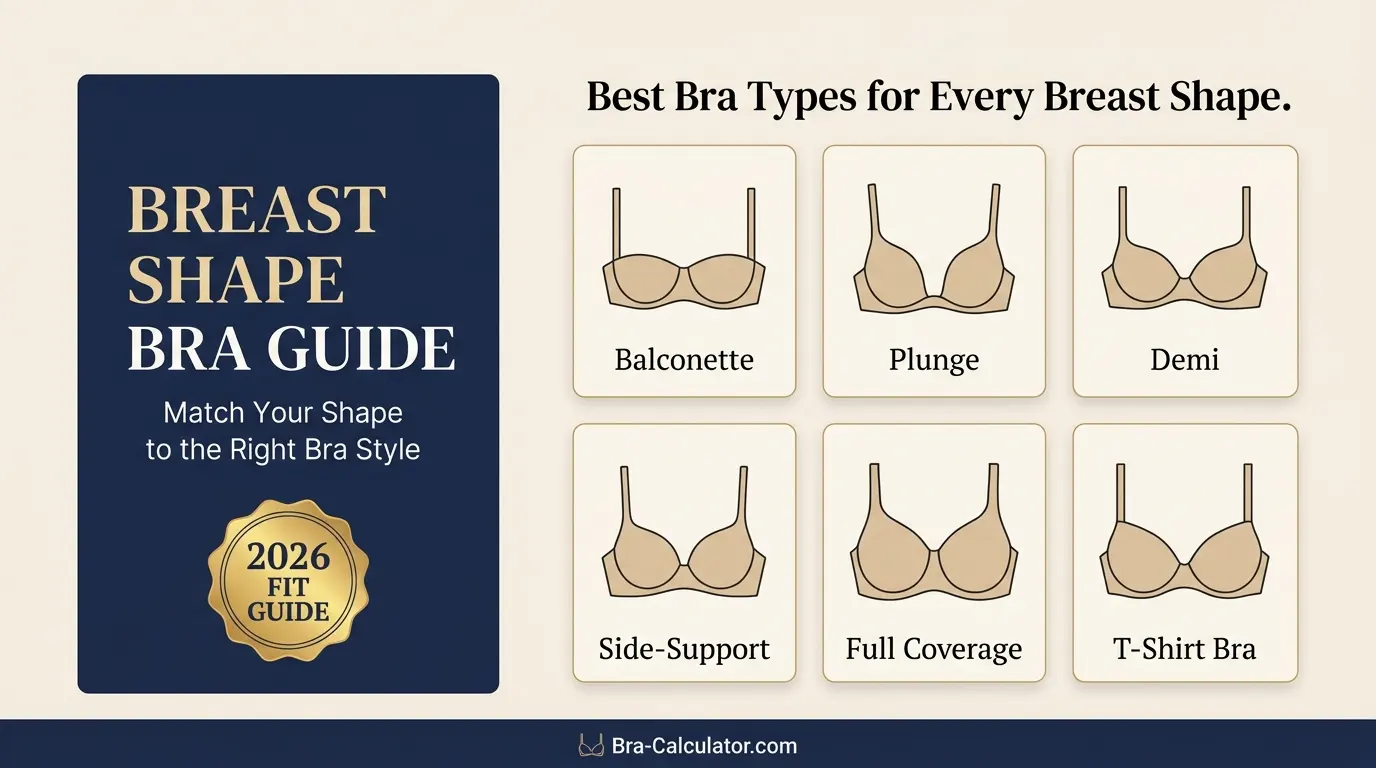
Best Bra Styles for Every Breast Shape
Balconette / Stretch Lace
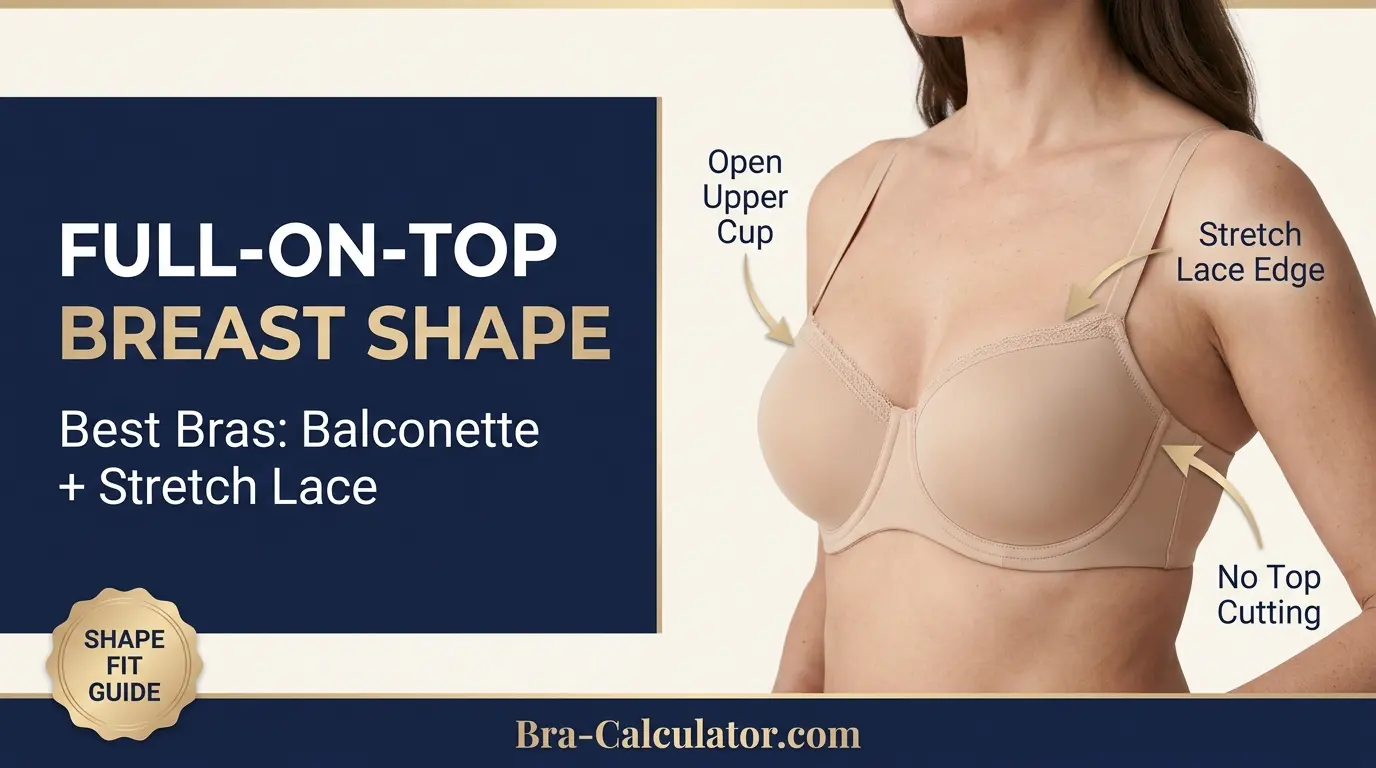
Open upper cups prevent cutting into top fullness.
Plunge / Demi
Shorter cup height lifts lower fullness and reduces top gaping.
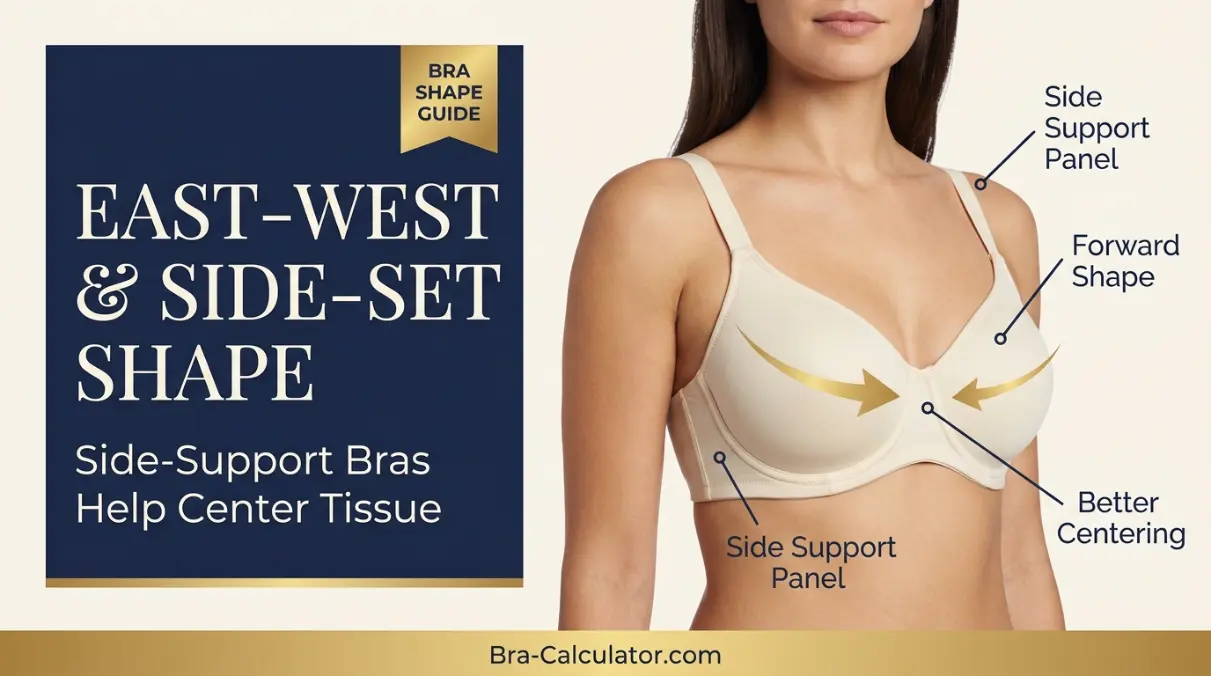
Side-Support
Side panels guide outward tissue toward the center.
T-Shirt / Demi
Even fullness works with many styles when size is correct.
Balconette / Lightly Lined
Supports lower fullness while keeping the top smooth.
Full Coverage
Deeper cups and stronger bands support heavier lower fullness.
Structured Plunge
Firm cup structure lifts softer tissue without excessive padding.
Stretch Lace + Inserts
Flexible cups and removable pads balance natural differences.
Plunge / Front-Close
Centered construction helps reduce wide spacing visually.
Find Your Best Bra Match
Answer a few fit questions to get bra styles matched to your support needs, breast shape and everyday preferences.
Question 1 of 5
Why it matches
What to look for
What may not work
Private fit matching: your answers are used only to build the recommendation on this page. No measurements or fit selections are submitted to Bra-Calculator.com.
This tool suggests a starting bra style, not a medical or diagnostic recommendation. Individual brands and bra models can fit differently.
Best Bras for Full-On-Top Breasts
What this shape means
Full-on-top breasts have more visible volume in the upper part of the breast. The most common issue is the top of the cup cutting in, creating spillage or a quad-boob effect even when the band feels fine.
Avoid: rigid full-coverage cups with tight top edges and very padded push-up bras that add too much upper volume.
Best Bras for Full-On-Bottom Breasts
What this shape means
Full-on-bottom breasts carry more volume below the nipple line. The classic sign is upper-cup gaping while the lower cup feels full. This does not always mean the cup is too big — it often means the cup is too tall or too open on top.
Avoid: very tall full cups or wide-open balconettes if they leave empty space at the top.
Best Bras for East-West Breasts
What this shape means
East-west breasts naturally point outward, with nipple direction leaning toward opposite sides. The goal is not to force your body into one shape, but to choose cups that gently guide tissue forward and inward.
Avoid: very soft triangle bralettes or unstructured cups that let tissue spread outward.
Best Bras for Round & Teardrop Breasts
Round breasts
Round breasts have fairly even fullness at the top and bottom. This shape is versatile and often fits well in T-shirt bras, demi bras, plunge bras, balconettes and supportive bralettes.
Teardrop breasts
Teardrop breasts are fuller at the bottom with a soft natural slope at the top. They usually do well in balconette, demi, plunge and lightly lined T-shirt bras.
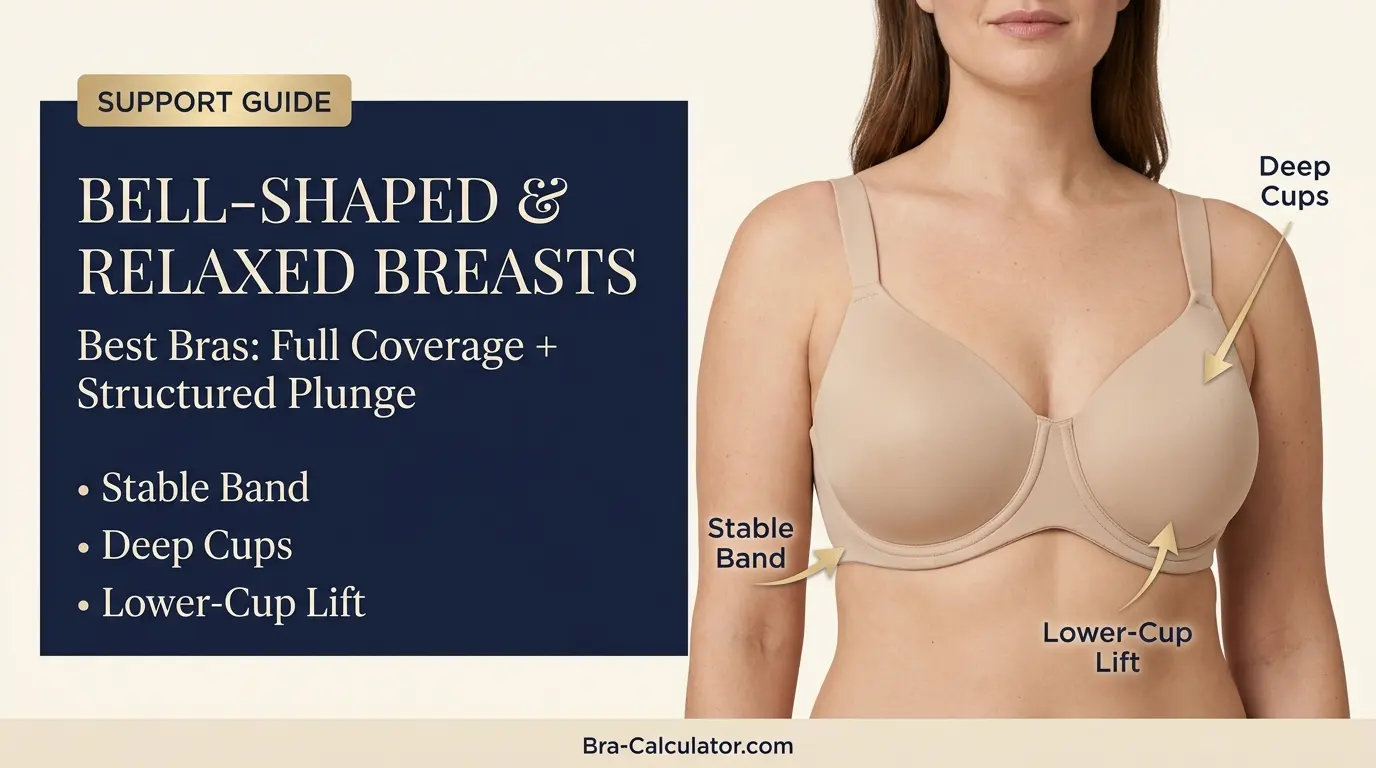
Best Bras for Bell-Shaped & Relaxed Breasts
Bell-shaped breasts
Bell-shaped breasts are narrower at the top and heavier or fuller at the bottom. They often need stronger support, deeper cups and a stable band, especially in D+ cup ranges.
Relaxed breasts
Relaxed breasts have softer tissue and may point downward. The best bras use structure rather than heavy padding: firm cups, strong bands, underwire support and lower-cup lift.
Best Bras for Asymmetric & Side-Set Breasts
Asymmetric breasts
One breast being larger than the other is very normal. Fit the bra to the larger breast first, then balance the smaller side with a removable insert, stretch cup or slight strap adjustment.
Side-set breasts
Side-set breasts have a wider natural gap. This shape may struggle to create cleavage, even in the correct size. Plunge, front-closure and side-support styles usually help most.
Amazon Bra Picks by Breast Shape
Use these as style categories, not one-size-fits-all recommendations. Confirm your size first, then choose the product type that matches your biggest fit issue.

Side-Support Underwire Bra
- Helps guide outward tissue toward the center.
- Useful for east-west and side-set shapes.
- Works well when soft bralettes spread tissue outward.

Lightly Padded Plunge Bra
- Reduces empty space at the top of the cup.
- Lifts lower fullness upward.
- Good under V-neck and lower neckline outfits.

Full-Coverage Support Bra
- Deeper cups support heavier lower fullness.
- Stable band helps reduce pulling and shifting.
- Helpful for relaxed tissue and all-day support.
Common Bra Problems and the Shape Behind Them
Usually linked with full-on-top breasts or cups that close too sharply at the top.
Common with full-on-bottom or teardrop shapes in cups that are too tall.
Often seen with east-west or side-set tissue direction.
Common in bell-shaped or very projected breasts that need deeper support.
Frequently Asked Questions
How do I know my breast shape?
Look at where your fullness sits, how projected or shallow your tissue is, how wide your breast root appears, and whether your nipples point forward, outward or downward. Compare those clues with full-on-top, full-on-bottom, round, teardrop, east-west, bell-shaped, relaxed, asymmetric and side-set shapes.
Does breast shape matter more than bra size?
Both matter. Bra size gives the foundation, but breast shape decides which cup style fits smoothly. A correct size can still gap, spill or dig if the cup shape is wrong.
Can I have more than one breast shape?
Yes. Many people are between shapes, such as full-on-bottom and side-set, or round with slight east-west direction. Prioritize projection first, fullness second, root width third and tissue direction last.
What is the best bra for east-west breasts?
Side-support bras, contour T-shirt bras and plunge bras are usually best for east-west breasts because they help guide outward-facing tissue toward the center.
What is the best bra for full-on-bottom breasts?
Plunge, demi, light push-up and lightly lined T-shirt bras usually work best because they lift lower fullness and reduce empty space at the top of the cup.
What is the best bra for asymmetric breasts?
Stretch-lace bras, plunge bras, demi bras and bras with removable inserts work well. Fit the larger breast first, then balance the smaller side with an insert or strap adjustment.
Which bras work best for relaxed breasts?
Structured plunge bras, molded T-shirt bras, firm underwire bras and balconettes usually work best because they lift softer tissue and create forward support.
Should I change size or change bra style?
If the band rides up, cups overflow everywhere, or wires sit on tissue, check your size. If only the top gaps, the upper edge cuts in, or tissue spreads outward, you may need a better style in the same size.
Find the Bra Style That Matches Your Shape
Start with accurate measurements, then choose a bra style that supports your fullness, projection, root width and tissue direction.