Comfort Intelligence · 50+ Fit Science
Senior & Elderly COMFORT FIT
BRA SIZE CALCULATOR
Built for mature, senior, and elderly women — including pancake-shaped, sagging, or asymmetrical breasts. Two measurements in — a comfort-first starting size, sister sizes, and research-backed guidance for bodies over 50.
Your Measurements
- 1 Time it rightMeasure in the afternoon — breasts are slightly fuller, giving a truer everyday size.
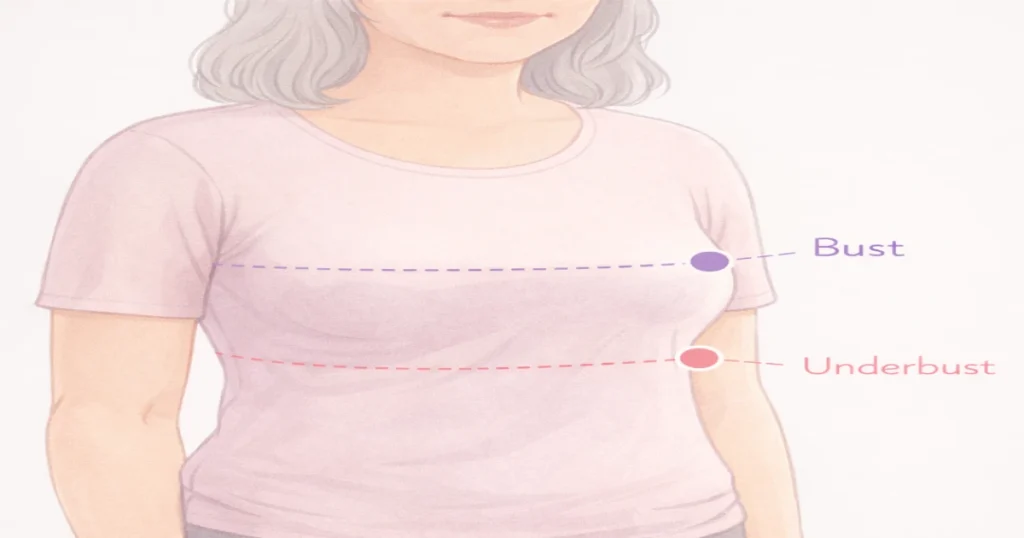
- 2 Underbust (snug)Stand upright. Tape directly under the breast crease, level around the ribcage. Snug like a firm hug — exhale and measure, not painful.
- 3 Bust (fullest point)Keep tape parallel to the floor. Don’t compress tissue. Lean slightly forward if breasts are soft, flattened, or pendulous.
- 4 Fit to the larger sideIf asymmetrical, measure the larger breast and pad the smaller cup if needed.
- 5 Re-measure regularlyBreast tissue and ribcage shape change with age, weight, and menopause. Re-measure every 1–2 years.
Comfort Preferences
Your personalised starting size and fit advice will appear here.
Written & reviewed by Amelia, Founder & CEO of Bra-Calculator.com · Last updated 2026
Quick Answer: How to Measure Bra Size for an Elderly or Senior Woman
To measure bra size for an elderly or senior woman, take two measurements: the snug underbust (directly under the breast crease) and the bust at its fullest point, without compressing tissue. Because breast tissue softens and flattens with age, add roughly 1–2 inches of comfort allowance to the band and choose a cup shape — often a cut-and-sewn or lower-cup style — that supports pancake, sagging, or asymmetrical breasts without pinching or gapping.
- Best for elderly/senior bodies: comfort-first band, seamed cup shape, wide straps
- Common shape changes after 50: pancake (flattened), sagging/pendulous, asymmetrical
- Re-measure: every 1–2 years, or after any weight or health change
A mature comfort bra size calculator helps women over 50 find a supportive, comfortable bra size by adjusting for softer breast tissue, posture changes, and increased sensitivity. Unlike traditional calculators, it provides a comfort-first starting size plus nearby try-on sizes to reduce pain, digging, and fit frustration — including for elderly women whose breast shape has become pancake-flat, sagging, or uneven.
If your bra suddenly feels tight, uncomfortable, or wrong — even though it’s the “same size” you’ve always worn — you’re not doing anything incorrectly.
After 40 and especially after 50, bra fit changes for biological reasons, not personal failure. Breast tissue softens, weight distribution shifts, posture adapts, and skin becomes more reactive to pressure. Traditional sizing systems were never designed for these realities.
This guide — and the Senior & Elderly Comfort Bra Size Calculator above — exist to offer a calmer, more realistic starting point for older women who want support that doesn’t hurt.
Key Takeaways
- Breast tissue softens after menopause, which is why an old “correct” size can start to hurt.
- A comfort-first band is usually 1–2 inches looser than a standard-math band for women over 50.
- Pancake (flattened) and sagging shapes both need cup styles that follow the tissue instead of moulding against it.
- Try-on sizes matter more than one “final” number — expect to test 2–3 sister sizes.
- Re-measure every 1–2 years, since weight, posture, and hormones keep shifting shape over time.
Example 1: Typical mature body with some sensitivity and rounded posture
- Inputs:
- Snug underbust: 34 inches
- Bust (fullest): 39 inches
- Modifiers selected: Sensitive skin + Rounded posture + Comfort-first preference
- Expected Output:
- Primary Starting Size: 36DD (or 36E in some systems) — The baseline math might suggest 34F/DDD, but modifiers relax the band +2 for rib sensitivity/posture (prevents digging) and avoid aggressive cup upsizing to reduce top gaping from softer/lower fullness.
- Try-On Sizes (2–3 flexible options):
- 38D (if band feels snug — sister size for extra room)
- 36DDD/E (if cups feel slightly empty at top)
- 34F (if you want firmer support and can tolerate it)
- Personalized Fit Advice:
- If the band rides up → Try the smaller band sister size, but prioritize comfort.
- If straps slip → Wider straps or a style with adjustable positioning will help due to forward shoulders.
- If cups wrinkle at the top → This is common with softer tissue; opt for full-coverage or plunge with deeper cups instead of demi.
- Overall: Comfort-first means a slightly looser band often feels better all day without losing support.
Example 2: Full-on-bottom shape, normal skin, lift preference
- Inputs:
- Snug underbust: 38 inches
- Bust: 44 inches
- Modifiers: Full-on-bottom shape + Lift-first (minimal comfort relax)
- Expected Output:
- Primary Starting Size: 40DD (baseline difference ~6 inches = DD/E, with slight band relax for age-related changes but keeping lift)
- Try-On Sizes:
- 42D (for swelling days or softer fabrics)
- 38E/F (if band feels too loose — sister for more support)
- 40DDD (if cups gap at top due to lower fullness)
- Fit Advice:
- Prioritize bras with lower cup edges and side-support panels to lift without push-up.
- Avoid very tall cups that might gap; wireless or lightly lined styles often work best here.
- Re-measure if weight fluctuates, as even small changes affect lower fullness.
Example 3: Minimal modifiers (basic use, like a younger calculator)
- Inputs:
- Snug underbust: 32 inches
- Bust: 36 inches
- No modifiers selected
- Expected Output:
- Primary Starting Size: 34B (or 34C) — Standard calc (underbust +2-ish band, 4-inch difference = B/C)
- Try-On Sizes:
- 36A (looser band for comfort testing)
- 32C (firmer if you prefer lift)
- Advice: Even without modifiers, it reminds you to check for pain/marks and try sister sizes due to potential mature-body factors.
Why Bra Fit Changes After 50 (What Actually Happens)
Most women are never told why bras stop working — they’re just told to “try another size.” Here’s what research, fitters, and lived experience consistently show:
- Softer breast tissue → cups behave differently, wrinkle more easily, and may flatten into a pancake shape
- Lower fullness → top-cup gaping becomes common
- Increased rib sensitivity → previously “fine” bands feel painful
- Postural shifts → straps slip, cups tilt, gore floats
- Skin sensitivity → narrow elastics and stiff seams cause irritation
None of these are problems to “fix.” They simply require different fit logic.
Bra Fitting for Pancake Breasts After 50
A “pancake” breast shape — flattened, with less projection and volume concentrated lower on the chest — is one of the most common changes after menopause, and one of the least talked about. It happens because glandular tissue is gradually replaced by softer fatty tissue, and skin elasticity decreases, so the breast loses its rounded, self-supporting shape. Standard moulded cups are built for projection, so they gape at the top and leave empty space on a flattened shape.
What actually helps a pancake-shaped breast fit better
- Cut-and-sewn (seamed) cups instead of moulded/padded cups — they follow the flattened shape rather than forcing a rounded one
- A lower, wider cup base so tissue isn’t pushed upward into a gap
- Soft-cup or wire-free styles that sit against the actual shape instead of a pre-set mould
- One band size firmer than you’d expect — a flattened shape needs the band, not the cup, to do the support work
- Scooping tissue fully into the cup every time you put the bra on, since there’s less natural volume to hold it in place
Use the Breast Fullness field in the calculator above and select “Soft / pendulous (mature)” — it’s built to flag both pancake and pendulous shapes and adjust cup-shape guidance accordingly.
Bra Fit for Sagging or Drooping Breasts
Sagging (ptosis) happens when the skin and ligaments that normally hold breast tissue up stretch or lose elasticity, letting the breast sit lower on the chest wall. It’s driven by age, hormonal change, weight fluctuation, and past breastfeeding — not by not “wearing support early enough.” Fitting for a drooping shape means repositioning tissue upward, not just containing it.
Best bra features for a drooping or lower-sitting breast
- Sling or 3-part cup construction — physically lifts tissue rather than just covering it
- A firm, non-stretch band — the band, not the straps, should carry most of the lift
- A narrower-set gore to reposition tissue toward the centre instead of letting it drift outward
- Deep side panels to catch and hold tissue that has drifted toward the underarm
- Measuring at the fullest point while standing upright, not leaning forward, so the calculator captures the true lower position of the tissue
If sagging is significant or sudden, or comes with pain, skin changes, or asymmetry that’s new, a professional bra fitting or a check-in with a doctor is worth doing alongside any calculator.
How Do I Find the Right Bra Size If My Shape Has Changed With Age?
Start by re-measuring rather than reusing your old size: take a snug underbust and a fullest-point bust measurement, then add a comfort allowance to the band since aging tissue needs more support from the band and less from tight cups. Choose a cup shape — seamed for pancake or pendulous breasts, full-coverage for asymmetry — that matches your current shape, and expect to try 2–3 sister sizes before settling on one.
Why Generic Bra Size Calculators Fall Short for Mature Bodies
Most calculators still rely on rigid math rules (often outdated), producing one “correct” size with no context. That approach assumes:
- Firm tissue
- Minimal sensitivity
- Stable posture
- High tolerance for tight bands
For many women over 50 — including those with pancake, sagging, or asymmetrical shapes — those assumptions no longer apply.
That’s why a comfort-first bra size calculator doesn’t just calculate — it interprets.
What the Mature Comfort Bra Size Calculator Actually Does (Transparent & Clear)
The calculator still starts with the two measurements that matter most:
- Snug underbust
- Bust at fullest point
From there, optional inputs influence the output in specific, predictable ways:
Example Adjustments (So You Know What’s Happening)
- Comfort-first selected
→ Slightly relaxes band tension and prioritizes sister sizes that reduce rib pressure - Sensitive skin selected
→ Avoids aggressive down-banding and emphasizes wider, softer support zones - Rounded posture selected
→ Prevents automatic cup upsizing that often causes top gaping - Soft / pendulous (pancake) shape selected
→ Recommends seamed cups and a lower cup edge instead of moulded cups
These are small, conservative adjustments — not dramatic size jumps — designed to reflect real-world comfort outcomes rather than idealized math.
The result is not a single “perfect” size, but:
- One most-likely starting size
- 2–3 nearby try-on sizes
- Clear guidance on why you might prefer one over another
How to Measure Accurately After 50 (No Tricks Required)
You don’t need to bend forward, squeeze, or overthink — this works whether you’re measuring for a senior, elderly, or simply older, changed body.
Underbust (Snug)
- Measure under the bust
- Firm but comfortable
- Normal breathing
Bust (Fullest)
- Measure level around the fullest point
- No compression
- Relaxed posture
These two numbers are enough when interpreted correctly.
Understanding Your Results (How to Use Them Wisely)
The calculator is designed as a starting-point tool, not a final authority.
Your Starting Size
Think of this as your most likely comfortable baseline.
Try-On Sizes
These account for:
- Daily swelling
- Fabric differences
- Personal comfort tolerance
Trying two nearby sizes is normal — especially with softer tissue.
Fit Guidance
You’ll see explanations like:
- Why cups may wrinkle
- Why straps might slip
- When a looser band improves support (yes, really)
This helps you troubleshoot instead of guessing.
Breast Shape & Fit After 50 (Often Overlooked, Very Real)
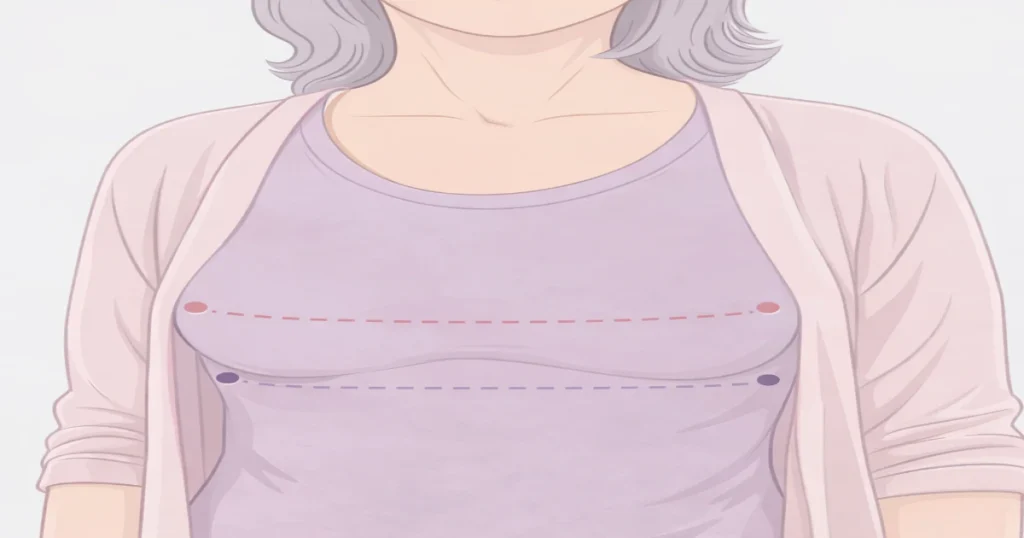
Many mature women experience:
- Pancake breasts (flattened, less-projected shape)
- Pendulous or sagging breasts (longer, lower-hanging shape)
- Wide-set breasts
- Asymmetry (one side fuller than the other)
The calculator doesn’t “solve” shape differences, but it acknowledges them by:
- Avoiding overly tall cups by default
- Encouraging fit based on the larger side
- Recommending style adjustments rather than constant size changes
This is why cup shape matters just as much as cup letter.
Best-Working Bra Styles for Many Women Over 50
Based on comfort-focused fitting principles, many mature bodies do best with:
- Wireless bras with structured bands
- Front-closure designs for ease of wear
- Wide straps to distribute weight
- Side-support or seamed cups for shape
- Higher-coverage centers for stability
Support comes from engineering, not discomfort.
Ready to shop your size?
Once you’ve got your comfort-first starting size above, browse wireless, seamed-cup, and front-closure styles built for softer, mature shapes.
Shop Comfort Bras for Mature Shapes on Amazon →When Professional Fittings Still Matter
While a comfort-first calculator is extremely helpful, professional fittings are still valuable — especially after:
- Surgery
- Major weight changes
- Persistent pain despite correct sizing
- Medical conditions affecting lymph or skin sensitivity
Think of this tool as empowerment, not replacement.
Related Bra Size Calculators & Fit Guides
Bra sizing needs can change at different stages of life. If your fit concerns don’t match a mature or post-menopause body, you may find these related tools helpful.
Those shopping for a first bra or still experiencing growth can use the teen bra size calculator for gentle, age-appropriate sizing.
Women who need extra support for fuller busts or larger cup ranges may prefer the plus-size bra size calculator, which focuses on stability, wider bands, and structured support.
Using the right calculator for your body stage helps you start closer to a comfortable, supportive fit — with less trial and error.
Common Questions (Answered Simply)
“How should a bra fit an older woman?”
The band should sit level and feel firm but never painful, the centre gore should rest flat against the sternum, and the cup should fully contain breast tissue with no wrinkling, gaping, or spilling — even if that means a looser band or a different cup shape than you wore at 30.
“Should my bra size change after menopause?”
Very often, yes — especially band comfort and cup shape.
“Why does my bra hurt even though it’s the same size?”
Your body changed; the bra didn’t.
“How do I measure for a bra if I have sagging or pancake-shaped breasts?”
Measure standing upright at the fullest point without lifting or repositioning the tissue, then choose a seamed or cut-and-sewn cup rather than a moulded one — moulded cups are shaped for projection and gape on flattened or lower-sitting breasts.
“Is it okay to choose comfort over lift?”
Comfort and support are not opposites.
“Do wireless bras still support mature breasts?”
Yes — when designed correctly.

When to Re-Measure
Re-measure if:
- You feel pain or pressure
- Your bra leaves marks
- Straps slip constantly
- Cups wrinkle or gape
- It’s been over a year
Bodies evolve. Fit should adapt.
Final Thought: Comfort Is Not a Compromise
Comfort is not giving up.
It’s responding intelligently to your body’s current needs.
The Senior & Elderly Comfort Bra Size Calculator exists to remove blame, confusion, and outdated rules — and replace them with clarity, flexibility, and respect for real bodies, whatever shape they’ve become.
Use it as a guide.
Trust your comfort.
And remember: a good bra should support your life — not interrupt it.
Not sure if your current bra still fits?
Bodies change over time. Re-measuring once a year helps prevent discomfort, pressure, and poor support. Use the comfort-first bra size calculator above as a calm, pressure-free starting point.
Check Your Size Again