36D vs 36DDD: What Is the Difference? Same Band, Different Cup Explained (2026)
Quick Answer: 36D and 36DDD are not the same size and cannot substitute for each other. They share the same band — both fitting a ribcage of approximately 31–32 inches — but the 36DDD cup holds significantly more breast tissue than the 36D cup. They are three full cup sizes apart on the same band, making this one of the largest cup volume gaps possible within a single band size. The 36DDD is also labelled 36F in UK and European sizing.
⚠️ Three cup sizes apart on the same band. 36D and 36DDD are not adjacent sizes — there are two full cup sizes between them (36DD sits in the middle). On the same band, this is a very substantial volume difference. These sizes are not interchangeable and belong to entirely different sister size families three volume rows apart.
Choose the fit signs you notice in the band, cups, center and straps. We’ll turn them into a practical next step for 36D.
Private fit check — your answers stay in your browser and are used only for this on-page guidance. Nothing is stored or submitted.
⚡ Key Takeaways
- 36DDD is much larger: The 36DDD cup holds significantly more breast tissue than the 36D — three full cup sizes apart.
- Three cup sizes apart: 36D → 36DD → 36DDD — a three-step progression on the same band.
- Same band size: Both fit an underbust of ~31–32″ (79–81 cm) — band fit is identical.
- Different bust measurements: 36D bust ~36″; 36DDD bust ~38″ — approximately 2 inches apart at the fullest point.
- 36DDD = 36F in UK/EU sizing: Always verify labelling when shopping international brands.
- Not sister sizes: 36D and 36DDD belong to volume families three rows apart.
- 36D sister sizes: 34DD and 38C — not 36DDD.
- 36DDD sister sizes: 34DDDD (34G) and 38DD (38E) — not 36D.
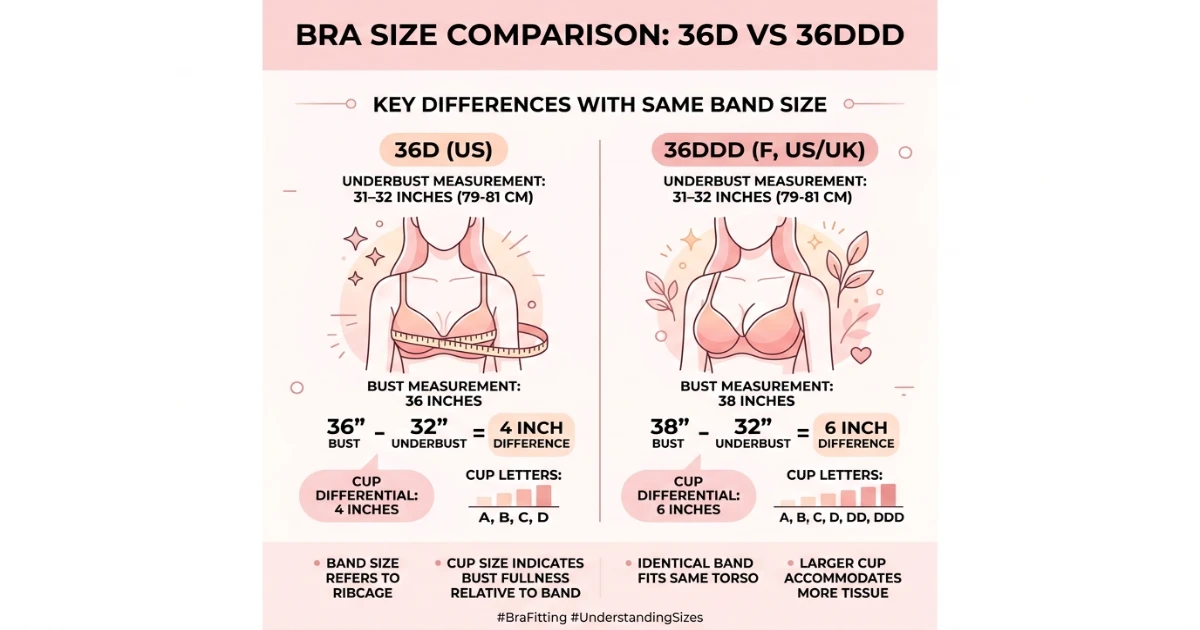
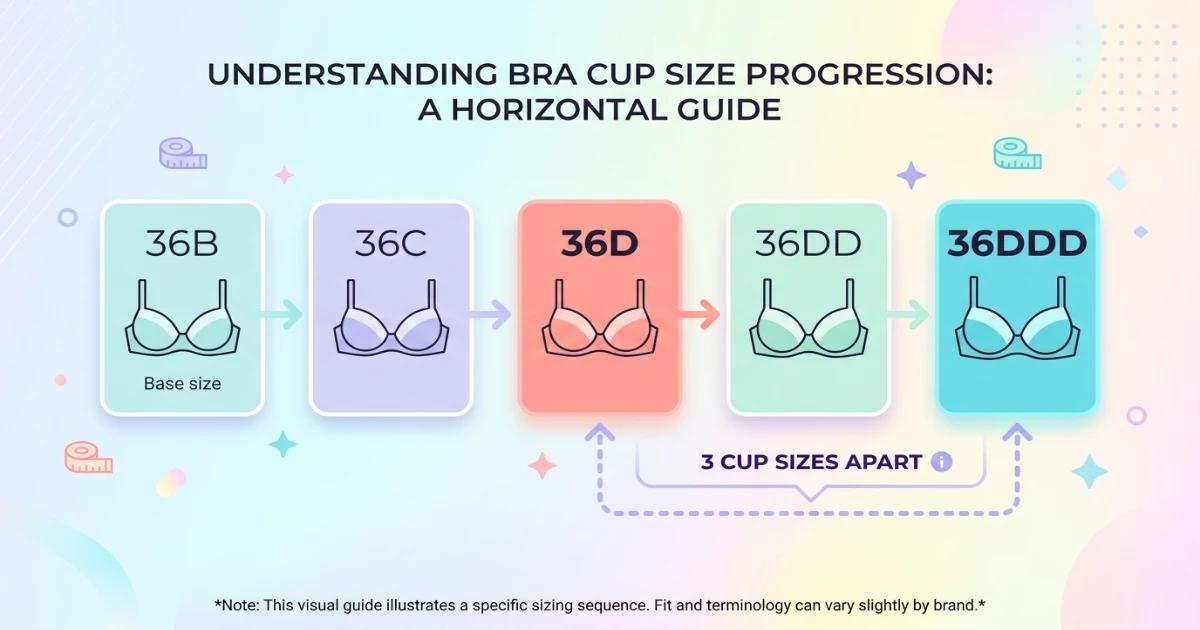
Same Band, Three Cup Sizes Apart: The 36 Cup Progression
When two bra sizes share the same band number, the cup letter comparison is direct: a higher letter always means more volume. The greater the gap between the letters, the greater the volume difference. With 36D and 36DDD sitting three steps apart on the same band, this is one of the most significant volume gaps you can have while still fitting the same ribcage.
The full 36 band cup progression:
Moving from 36D to 36DDD means jumping three positions and adding 2 inches to the bust measurement. The 36DD sits directly between them — and it is a genuinely distinct size in its own right, not a negligible stepping stone. Anyone unsure whether they need a 36D or a 36DDD should first confirm whether 36DD is their correct size before moving further along the progression.
Why Same-Band Comparisons Are the Most Direct
Unlike cross-band comparisons where sister sizing can make different letters hold equal volume, same-band comparisons are absolute. On the 36 band, DDD always means substantially more volume than D. The only variable is your actual bust-to-underbust measurement — which determines the correct letter for your body. Explore how all cup sizes compare visually on our cup size visuals page.
Measurement Breakdown: 36D vs 36DDD
The table below includes all three sizes on the 36 band to show the full progression clearly. The underbust is identical throughout — all differences are in the bust measurement and cup volume.
| Size | Underbust | Bust (Fullest Point) | Cup Differential | Cup Volume |
|---|---|---|---|---|
| 36D | ~31–32″ (79–81 cm) | ~36″ (91 cm) | 4″ (10 cm) | Smallest ↓↓↓ |
| 36DD (middle step) | ~31–32″ (79–81 cm) | ~37″ (94 cm) | 5″ (13 cm) | Middle |
| 36DDD (36F) | ~31–32″ (79–81 cm) | ~38″ (97 cm) | 6″ (15 cm) | Largest ↑↑↑ |
The 36DDD bust is approximately 2 inches larger than the 36D at the fullest point — equivalent to three full cup sizes of additional breast tissue depth and volume on the same band. EU sizing: 36D = 80D; 36DDD = 80F. Same EU band number, very different cup letters. Cross-reference all conventions using our international size charts.
Different Sister Size Families: Where 36D and 36DDD Each Belong
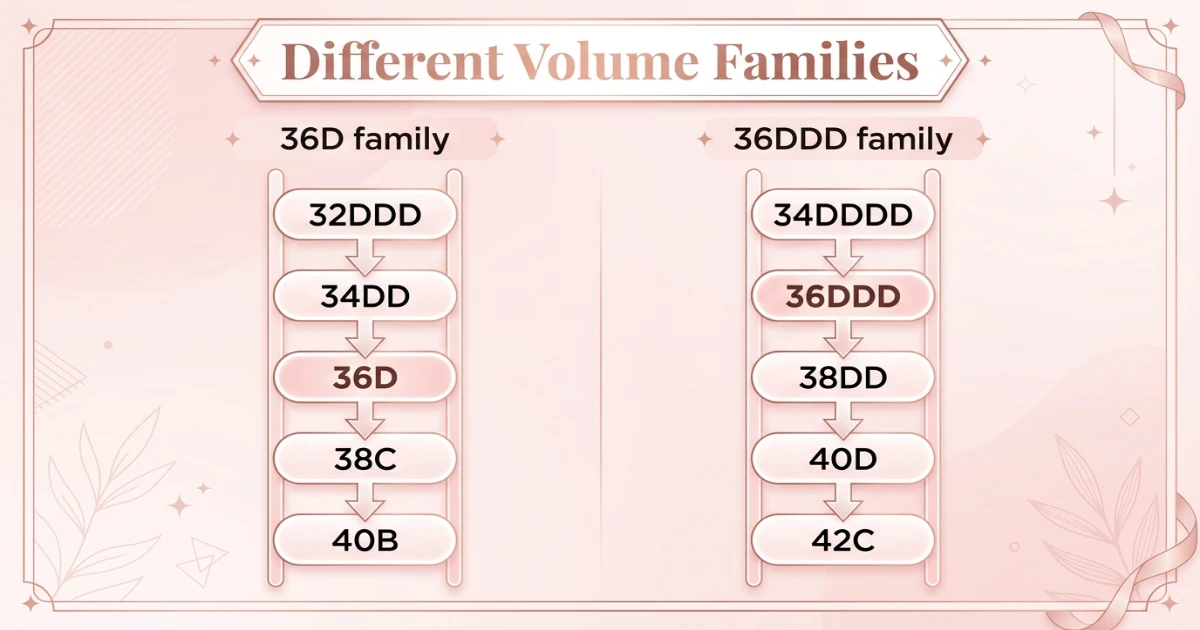
Because 36D and 36DDD hold very different cup volumes, they belong to sister size families that are three full volume rows apart. The 36DDD’s closest sister on the 34 band is a 34DDDD (34G) — which is already four full cup sizes above a 34DD, which is itself the sister of 36D. The distance between these families is vast.
36D Sister Size Family
36DDD (36F) Sister Size Family
If your 36D is unavailable, the correct sister substitutes are 34DD (tighter band, same volume) or 38C (looser band, same volume) — never a 36DDD. If your 36DDD is unavailable, the correct substitutes are 34DDDD/34G (tighter band, same volume) or 38DD/38E (looser band, same volume) — never a 36D. Explore the complete system on our sister sizes guide or generate your personal ladder with the sister size bra calculator.
Real Fit Differences Between 36D and 36DDD
Band Fit — Identical for Both
Since both sizes share the 36 band, the band experience is the same for a correctly measured wearer. Both are designed for an underbust of approximately 31–32 inches (79–81 cm). If your 36 band currently passes the two-finger test and runs level front and back, that is confirmed correct for both sizes — the entire question is about the cup.
Cup Depth and Projection — A Substantial Difference
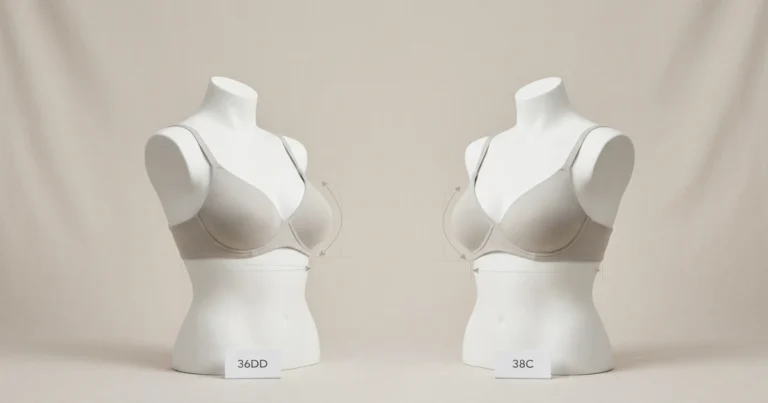
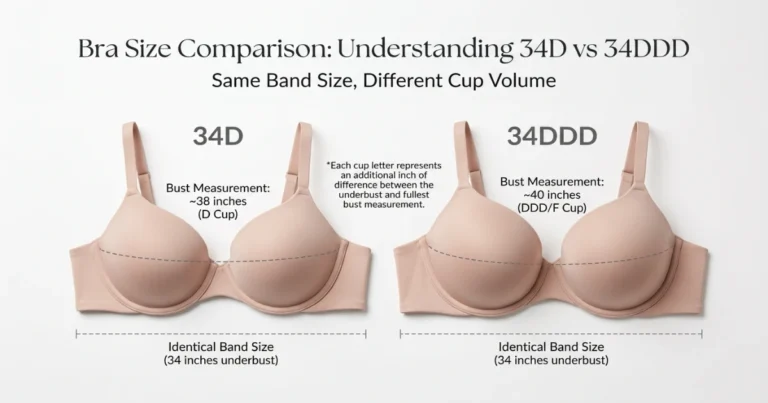
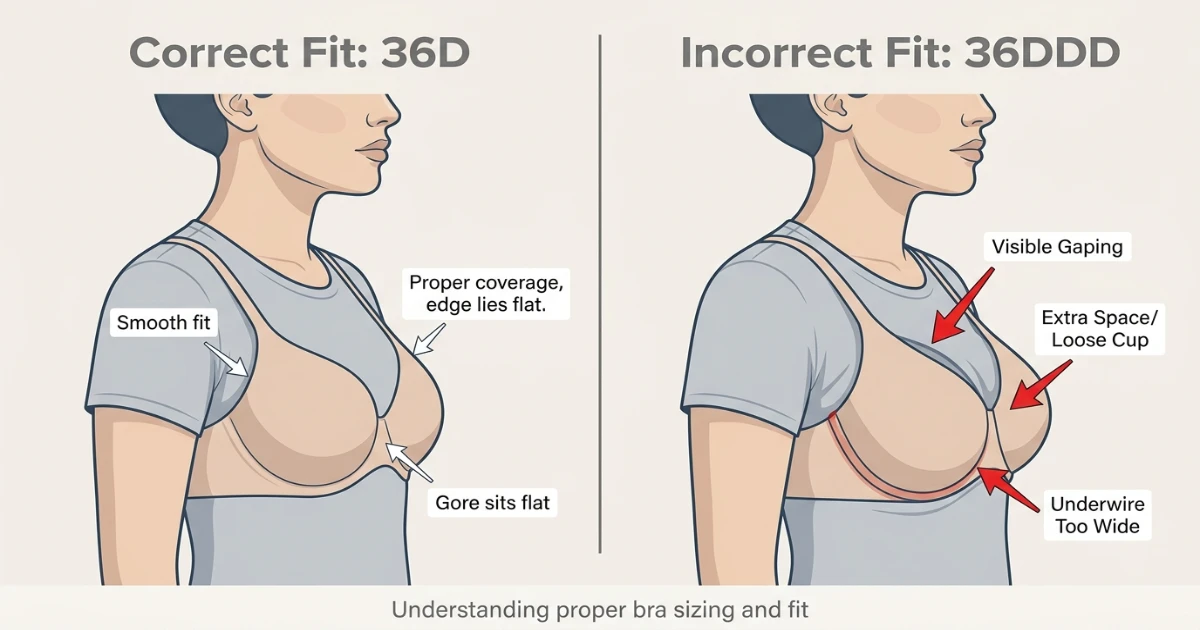
The 36D cup is built for moderate forward projection on a 36-inch chest — considerable forward depth but not the fullest cup available on this band. The 36DDD cup is substantially deeper, projecting significantly further from the chest wall and designed to contain breast tissue that extends considerably further from the body. The visual difference between these two cups on the same band is immediately obvious: the 36DDD cup is noticeably taller and deeper when held next to a 36D cup. Putting a 36DDD wearer into a 36D produces marked overflow — tissue spilling at the top and sides even after careful scooping. The reverse produces obvious gaping — two to three inches of empty cup space and wrinkling at the top.
Underwire Width and Coverage
The 36DDD underwire is meaningfully wider than the 36D underwire, built to encircle the broader natural breast root of a fuller DDD cup. At DDD cup sizes, the breast tissue typically extends further toward the underarms — the 36DDD underwire is engineered to follow that broader root. Wearing a 36DDD on a 36D frame means the wire ends sit on bare ribcage well past the breast boundary, causing jabbing discomfort and marks. Wearing a 36D on a 36DDD frame means the wire sits inside the breast tissue, cutting into it from the front — a common source of underwire pain that is often misattributed to wrong band size. Diagnose your issue accurately on our bra fit problems guide.
Support Requirements
At DDD cup sizes, the breast tissue carried is relatively heavy. The 36 band is the same width for both sizes — but the load it supports in a 36DDD is substantially greater than in a 36D. This means the band fit check is especially non-negotiable for 36DDD wearers: if the 36 band is even slightly loose, the additional weight of a DDD cup will cause it to ride up and fail faster than it would in a smaller cup.
Who Should Choose 36D?
- Underbust measurement approximately 31–32 inches (79–81 cm) confirmed snugly.
- Bust measurement at the fullest point of approximately 36 inches (91 cm) — a 4-inch differential.
- Previously tried a 36DDD and experienced significant gaping, empty cup space, or underwire extending well past breast tissue.
- Breast tissue projects moderately forward from the chest wall without extending significantly toward the underarms.
- Current 36D cups feel slightly full after scooping → try 36DD first, not 36DDD.
Confirm your fit on our how to know your bra fits page.
Who Should Choose 36DDD (36F)?
- Underbust measurement approximately 31–32 inches (79–81 cm) — same band as 36D.
- Bust measurement at the fullest point of approximately 38 inches (97 cm) — a 6-inch differential.
- Previously tried 36D and 36DD with cups overflowing significantly even after thorough scooping.
- Gore consistently floats away from the sternum in 36D and 36DD — a reliable indicator of grossly insufficient cup volume.
- Underwire consistently sits on breast tissue rather than ribcage in 36D and 36DD cups.
- Breast tissue extends substantially toward the underarms and requires a wider underwire to contain fully.
At DDD cup sizes, specialist fuller-bust brands produce the best fit. Use our size charts and breast shape identifier to confirm before purchasing.
What If You Feel Between 36D and 36DDD?
If you are unsure whether you need a 36D or a 36DDD, 36DD is almost certainly your correct size. It sits directly between them on the same band and is a meaningfully distinct size with its own specific measurements, cup depth, and fit character. Because 36D and 36DDD are three steps apart, the probability that the correct answer lies at one of the two extremes rather than in the middle is relatively low.
The correct process when cups feel too small on a 36 band:
- If your 36D cups overflow after scooping → try 36DD
- If your 36DD cups still overflow after scooping → try 36DDD
- Confirm the gore lies completely flat in whichever size you land on
Never skip the 36DD step. Jumping from 36D directly to 36DDD risks overshooting your correct size by two full cup sizes. Use our AI bra size calculator to land precisely on the right cup from your actual measurements.
🛍️ Best Bras for 36D and 36DDD — Top Amazon Picks
The 36D and 36DDD require very different cup engineering — especially in depth and underwire width. These two top-rated picks are specifically designed for each cup’s unique demands on the 36 band.

- Full-coverage cup perfectly engineered for D cup depth and forward projection
- Underwire width precisely matched to the 36D natural breast root boundary
- Side-boning provides additional lateral containment without digging in
- Firm, level band that stays anchored on a 31–32 inch ribcage all day
- Available in a broad range of colours including nude, black, and white

- Engineered specifically for DDD/F cup depth — full containment without any overflow
- Wide, anatomically correct underwire follows the full DDD breast root from side to gore
- Three-section cup construction lifts and shapes without flattening deep cup projection
- Reinforced firm band stays level all day even under the heavier DDD breast load
- Widely stocked in 36DDD / 36F across multiple colourways and styles
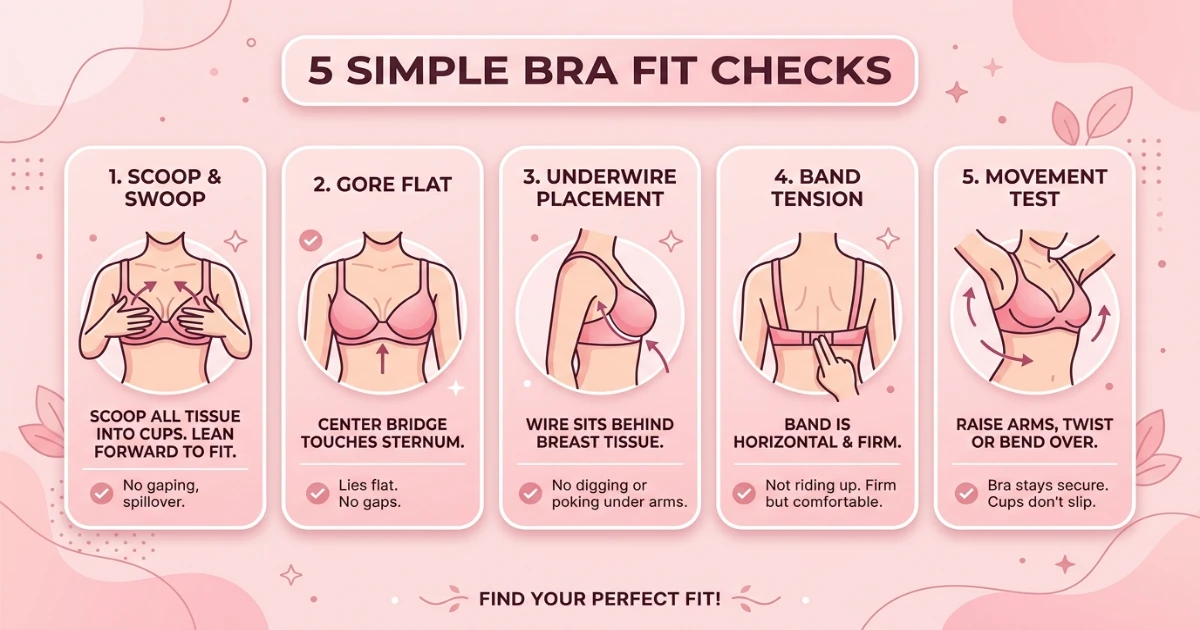
Quick Bra Fit Test: 5 Checks for D and DDD Cup Wearers on the 36 Band
Since the band is the same for both sizes, every check below focuses on identifying the correct cup volume — the only question that separates 36D from 36DDD. At DDD cup sizes, fit issues are particularly pronounced and immediately obvious.
Lean forward and scoop all breast tissue — especially the significant side and underarm fullness common in D and DDD cup sizes — fully forward and upward into the cup. After scooping: pronounced overflow at top or sides = cup is too small, go up one letter on the 36 band (36D → 36DD → 36DDD). Multiple folds of wrinkling fabric at the top = cup is too large, go down one letter at a time. At DDD sizes, even small overflow can indicate the next cup up is needed.
The centre gore must lie completely and continuously flat against the sternum. In D and DDD cup sizes a floating gore is the single most reliable and consistent sign of insufficient cup volume — it almost never has another cause on the correct band size. If the gore floats, go up one cup letter. Confirm it is completely flat before deciding your size is correct. This check takes priority over all other visual assessments.
At DDD cup sizes the natural breast root is broader than at smaller cups — the underwire must follow it completely. Check both ends of the wire: they should begin and end at the exact outer edge of your breast tissue. Wire ends on bare ribcage beyond the breast = underwire too wide for your breast root (36DDD may be too large). Wire ends cutting into breast tissue at the sides = underwire too narrow (36DDD is needed on this band, or a 36D with a wider-wire style). This check tells you whether the cup letter is right even before checking volume.
On the loosest hook, two fingers fit under the back band with mild resistance. Since 36D and 36DDD share the band, this check confirms whether the 36 band is correct for your body at all — if it fails regardless of cup size, your band measurement may need revision before this cup comparison is meaningful. At DDD cup sizes the band must be correctly snug — the heavier cup load will expose even slight band looseness faster than in smaller cups.
Raise both arms overhead, twist from side to side, walk briskly for 60 seconds. Because 36D and 36DDD are three cup sizes apart, wearing the wrong one on this band produces immediately obvious movement problems — not subtle ones. Pronounced overflow during activity = multiple cup sizes too small. Cup clearly shifting away from the breast and underwires jabbing the ribcage = multiple cup sizes too large. Movement never lies at this size gap.
Still unsure whether 36D, 36DD, or 36DDD (36F) is your correct cup on the 36 band? Get a precise answer from your actual measurements in seconds.
Try the AI-Powered Bra Size Calculator →36D vs 36DDD: Full Side-by-Side Comparison
| Feature | 36D | 36DDD (36F) |
|---|---|---|
| Band Size | 36 (31–32″ / 79–81 cm underbust) | 36 (31–32″ / 79–81 cm underbust) |
| Cup Letter (US / UK-EU) | D — 4″ (10 cm) differential | DDD / F — 6″ (15 cm) differential |
| EU Size | 80D | 80F |
| Cup Volume | Smaller ↓↓↓ (3 cup sizes less) | Larger ↑↑↑ (3 cup sizes more) |
| Bust Measurement | ~36″ (91 cm) | ~38″ (97 cm) |
| Cup Steps Apart | 3 full cup sizes (36D → 36DD → 36DDD) | |
| Cup Depth | Moderate — significant projection | Deep — substantial forward projection |
| Underwire Width | Narrower | Wider — broader breast root coverage |
| Band Fit | Identical ✓ — same 36 band, same underbust | |
| Sister Sizes | 34DD and 38C | 34DDDD (34G) and 38DD (38E) |
| Are They Sisters? | ❌ No — three volume rows apart on same band | |
| Middle step | 36DD — always try this before jumping between 36D and 36DDD | |
| If cups too small | Try 36DD, then 36DDD if still overflows | Try 36DDDD next |
| If cups too large | Try 36C next | Try 36DD, then 36D if needed |
| Best For | Bust ~36″, 4″ differential on 36 band | Bust ~38″, 6″ differential on 36 band |
| Availability | Widely stocked in most retailers | Fuller-bust specialists; best range online |
People Also Ask: 36D vs 36DDD — Answered
What is the difference between 36D and 36DDD?
36D and 36DDD share the same band but are three full cup sizes apart in volume. The 36DDD (also labelled 36F in UK/EU sizing) holds significantly more breast tissue — approximately 2 inches more bust circumference at the fullest point, with a substantially deeper, more projected cup. Both fit the same 31–32 inch underbust, but the 36DDD is designed for a considerably larger bust of approximately 38 inches versus the 36D’s 36 inches.
Is 36DDD bigger than 36D?
Yes — significantly bigger. The 36DDD is three full cup sizes larger than the 36D on the same band. The cup differential increases from 4 inches (36D) to 6 inches (36DDD), and the bust measurement increases by approximately 2 inches at the fullest point. This is one of the largest cup volume gaps possible within a single band size — the difference is visually pronounced and immediately obvious in fit.
Are 36D and 36DDD sister sizes?
No. Sister sizes hold equal volume with different band and letter combinations. 36D’s sisters are 34DD and 38C. 36DDD’s (36F) sisters are 34DDDD (34G) and 38DD (38E). These families are three full volume rows apart. Sharing the same band number does not create a sister size relationship — it just confirms both sizes fit the same ribcage measurement.
Is 36DDD the same as 36F?
Yes — completely. US brands use DDD for a 6-inch cup differential; UK and European brands call the same cup F. When shopping UK or EU brands, search for 36F to find what US brands call 36DDD. All comparisons in this article apply equally to 36D vs 36F — the 36F holds three full cup sizes more volume than the 36D on the same band.
How many cup sizes apart are 36D and 36DDD?
Exactly three cup sizes apart on the same band. The progression is: 36D → 36DD → 36DDD. The 36DD sits directly between them and is a genuinely distinct size. Moving from 36D to 36DDD skips 36DD entirely and adds 2 inches to the bust-to-underbust differential — going from a 4-inch gap to a 6-inch gap on the same frame. Always check 36DD before jumping between the two extremes.
Can I wear a 36DDD instead of 36D?
Not as a substitute — they hold very different volumes. Wearing a 36DDD when you measure as a 36D gives you a cup with three full sizes more depth and space than needed. The result is dramatic gaping, wrinkling fabric, and underwires sitting on bare ribcage several inches beyond the breast. If your 36D is unavailable, the correct sister substitute is 34DD (tighter band) or 38C (looser band).
If my 36D cups are too small, should I try 36DDD?
Try 36DD first. Always increase one cup letter at a time — 36D → 36DD → 36DDD. The 36DD is a genuinely distinct size sitting between these two, and for most people who find their 36D too small, 36DD is the correct next step. Only move to 36DDD if the 36DD cups still show overflow or a floating gore after a proper scoop-and-swoop fit check.
What are the sister sizes of 36D?
The sister sizes of 36D — holding approximately equal cup volume — are: 32DDD (32F), 34DD, 38C, and 40B. If 36D is unavailable, 34DD (tighter band) or 38C (looser band) are the correct substitutes. The 36DDD holds three full cup sizes more volume than 36D and is not in this family.
What are the sister sizes of 36DDD?
The sister sizes of 36DDD (36F) — holding approximately equal cup volume — are: 34DDDD (34G), 38DD (38E), 40D, and 42C. If 36DDD is unavailable, 34DDDD/34G (tighter band) or 38DD/38E (looser band) are the correct substitutes. The 36D holds three full cup sizes less volume than 36DDD and is not in this family.
How do I know my correct bra size?
Measure your underbust snugly for your band and your bust at the fullest point for your cup. Subtract underbust from bust — each inch equals one cup letter. On a 36 band: 4 inches = 36D; 5 inches = 36DD; 6 inches = 36DDD (36F). Verify fit: level band, flat gore, underwire on ribcage matching full breast root width, two fingers under back band, no movement during activity. Use our bra size chart calculator for a precise result.