36D vs 38C: Are They Sister Sizes? Same Cup Volume, Different Band Explained (2026)
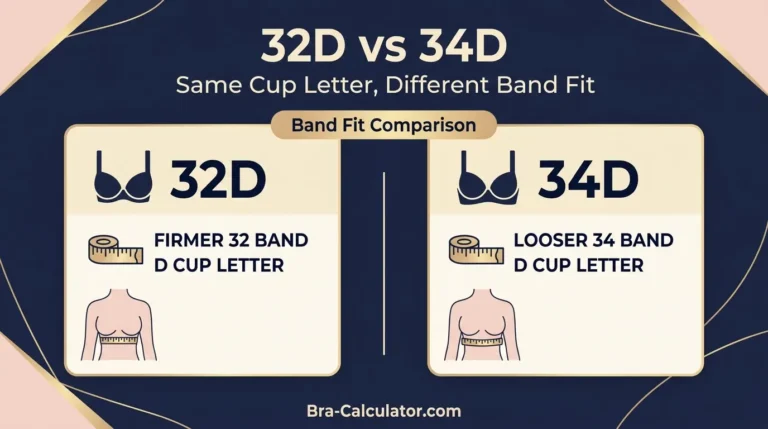
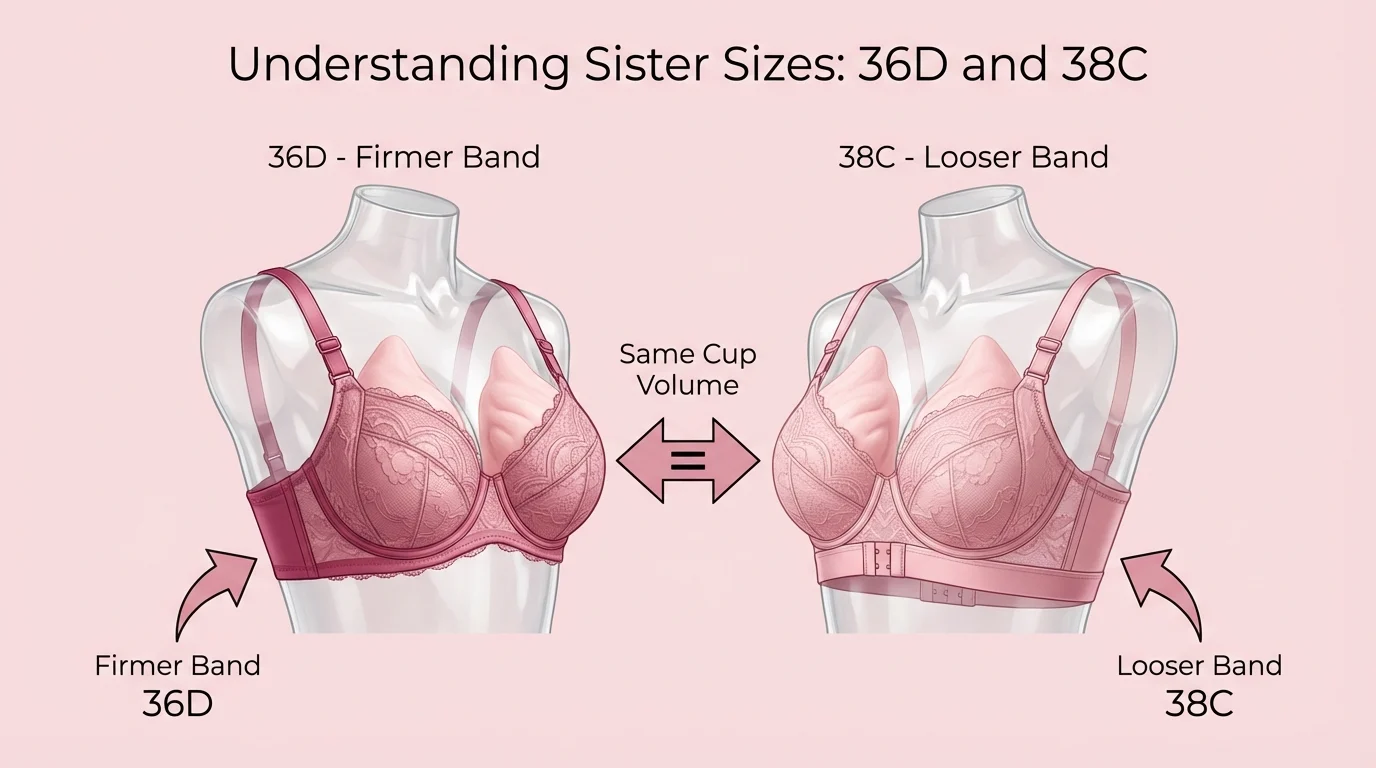
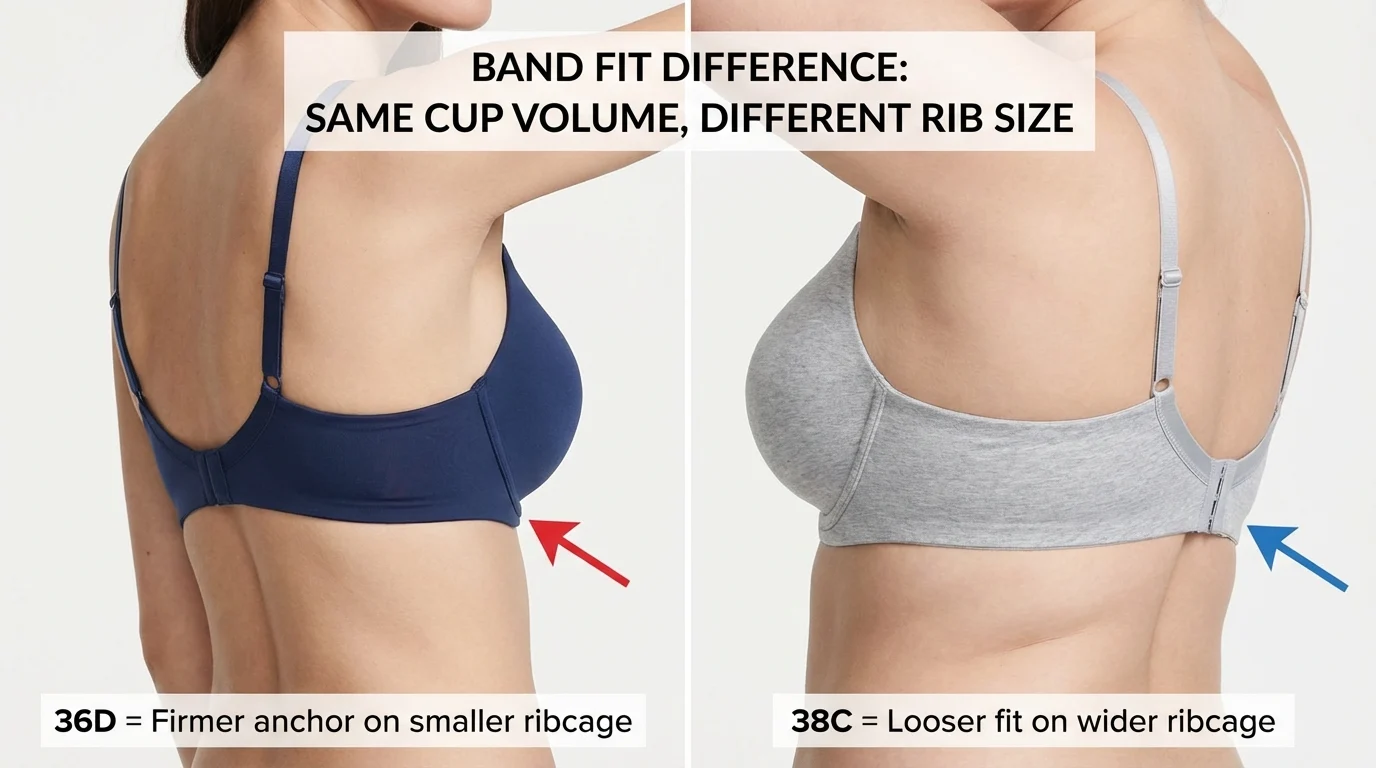
Quick Answer: Yes — 36D and 38C are sister sizes. They hold approximately the same cup volume on different band sizes. Going up one band from 36 to 38 and dropping one cup letter from D to C follows the sister size rule exactly, preserving cup volume. The difference between them is in the band: 36D feels firmer on a smaller ribcage, while 38C feels looser on a wider one. The cup capacity is approximately equal, but the fit and support feel different because the band changes.
✅ This is a confirmed sister size comparison. Unlike same-letter comparisons such as 36D vs 38D — where the same cup letter on a bigger band produces more cup volume — 36D and 38C follow the true sister size rule. That means the cup volume stays about the same, while the band size changes the way the bra anchors to the body.
Choose the fit signs you notice in the band, cups, center and straps. We’ll turn them into a practical next step for 36D.
Private fit check — your answers stay in your browser and are used only for this on-page guidance. Nothing is stored or submitted.
⚡ Key Takeaways
- Sister sizes: 36D and 38C hold approximately equal cup volume and sit in the same size family.
- The main difference is the band: 36D is firmer and more anchored; 38C is looser and wider around the body.
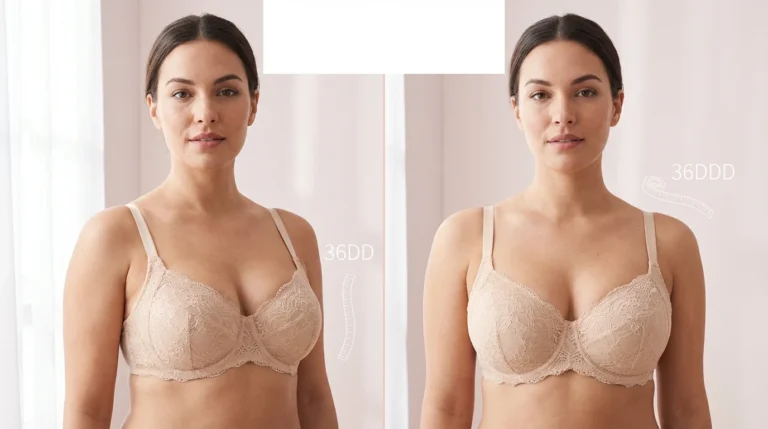
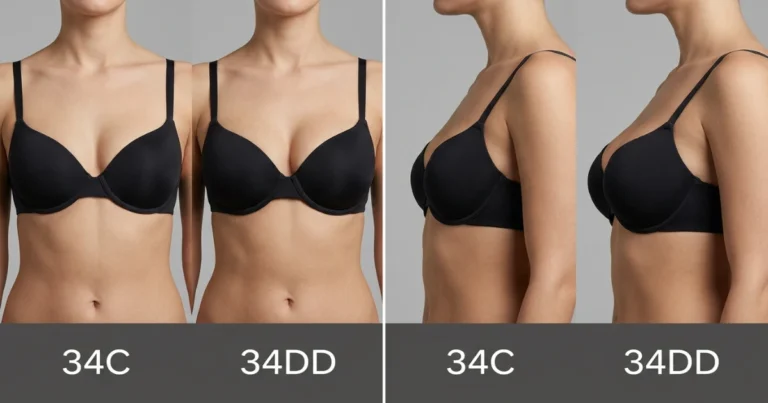
- Same cup volume, different feel: Even though the cups hold the same amount of breast tissue, the bra can feel very different because of band tension and wire width.
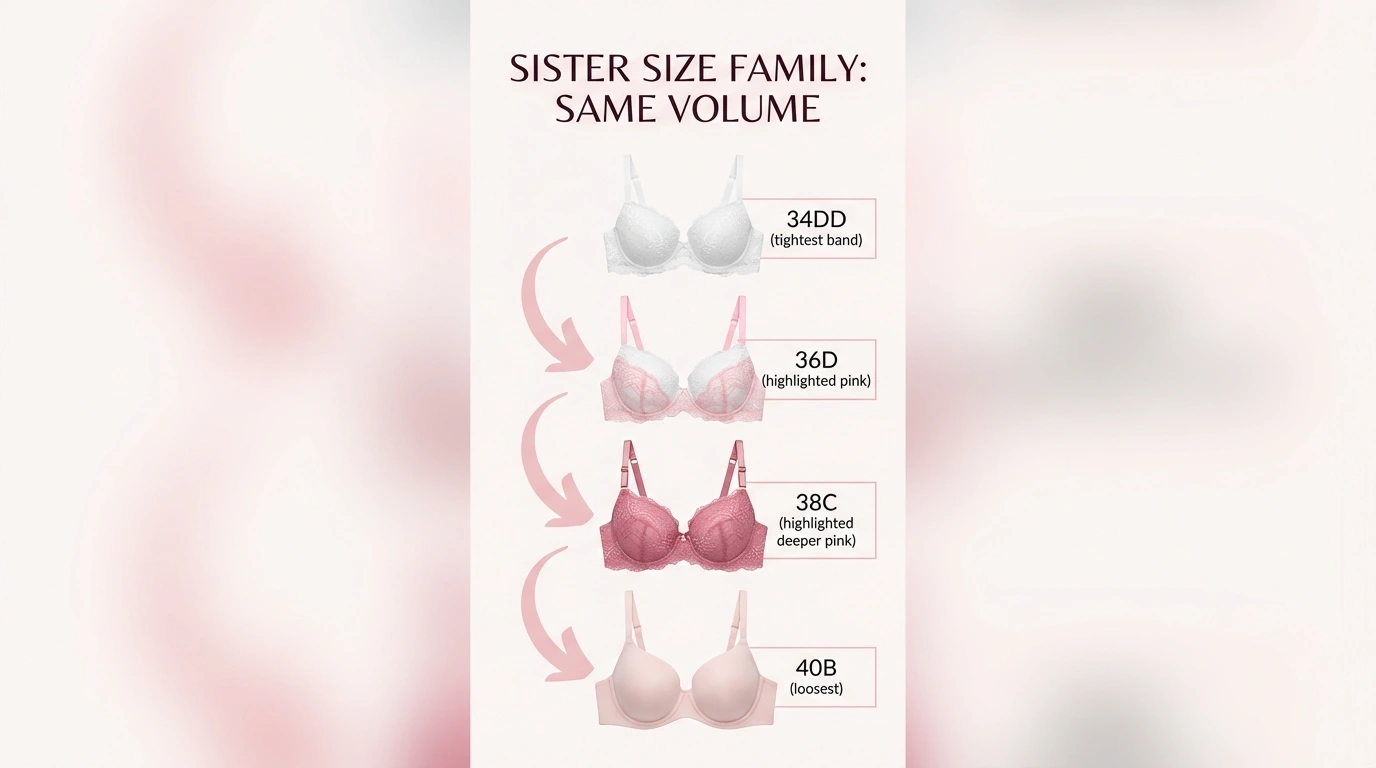
- Full sister size family: 34DD — 36D — 38C — 40B.
- Correct substitution: If 36D is unavailable, 38C is the nearest larger-band swap with equal cup volume.
- Wrong swap: 38D is not the sister size of 36D — it is a larger overall bra.
- Support comes from the band: If you wear 38C on too-small a ribcage, it can feel less supportive even though the cups technically fit.
- Best rule to remember: Go up one band and down one cup to keep volume the same.
Why 36D and 38C Hold the Same Cup Volume
One of the most common bra-fit mistakes is treating cup letters like fixed sizes. They are not. A D cup does not represent one single cup volume across all band sizes. Instead, cup letters are relative to the band. That means a 36D and a 38D do not hold the same volume — the 38D is larger because it sits on a wider band. This is exactly why sister sizing matters.
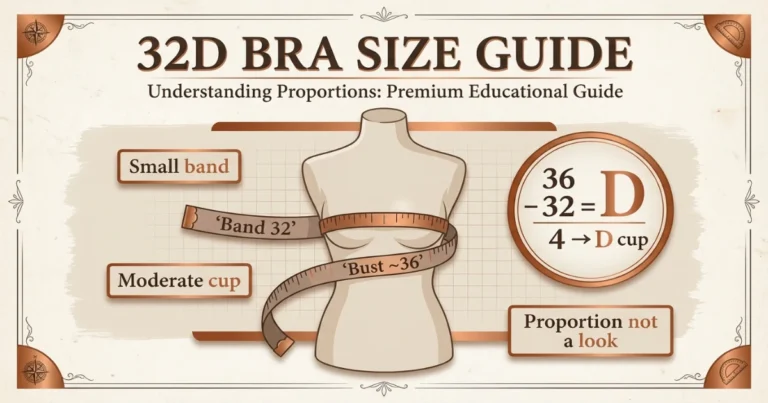
In bra sizing, the cup letter represents the difference between the bust measurement and the underbust measurement. A general simplified system looks like this:
- 1″ difference = A cup
- 2″ difference = B cup
- 3″ difference = C cup
- 4″ difference = D cup
- 5″ difference = DD cup
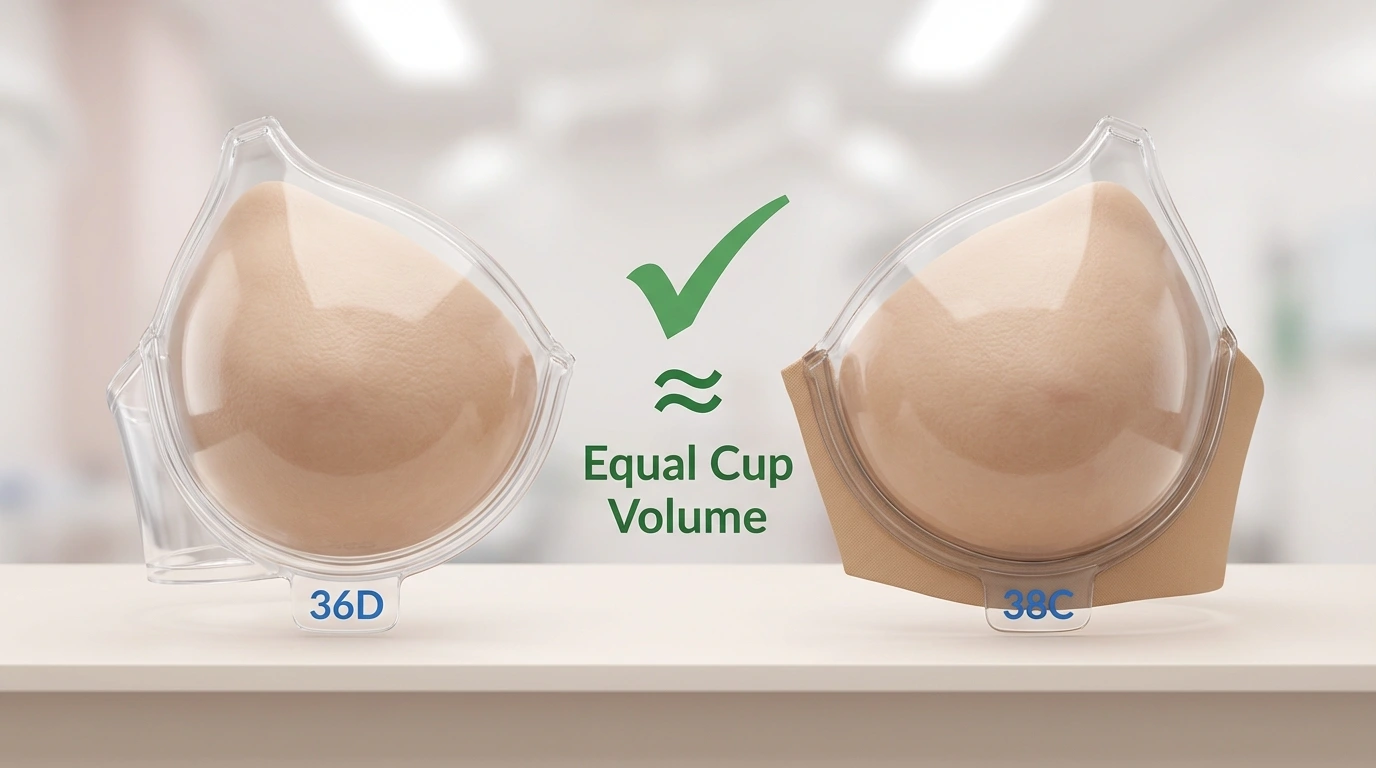
A 36D means the bust is around 4 inches larger than the underbust on a 36-band frame. A 38C means the bust is around 3 inches larger than the underbust on a 38-band frame. Because the 38 band is physically wider, it offsets the smaller cup letter. The result is approximately the same total enclosed breast volume.
That is the core of sister sizing: when you go up one band size, you go down one cup letter to preserve cup volume. Likewise, when you go down one band size, you go up one cup letter. That is why 36D and 38C belong together in the same size family.
The Volume Equivalence Visualised
≈ Equal cup volume — same sister size family
The reason this matters in real life is simple: many women discover that their cups actually fit, but the band does not. In those cases, sister sizing becomes the most practical adjustment. If your 36D cups are right but the band feels too tight, 38C is the logical next test. If the 38C cups fit but the band feels too loose, going back to 36D is often the right move. See our cup size visuals page for a clearer visual explanation of how volume changes across bands.
Measurement Breakdown: 36D vs 38C
| Size | Underbust (Band) | Bust (Fullest Point) | Cup Difference | Cup Volume |
|---|---|---|---|---|
| 36D | ~31–32″ (79–81 cm) | ~36″ (91 cm) | 4″ (10 cm) | ≈ Equal ↔ |
| 38C | ~33–34″ (84–86 cm) | ~37″ (94 cm) | 3″ (8 cm) | ≈ Equal ↔ |
At first glance, these measurements make 36D look bigger because the cup letter is higher. But that is not how bra volume works. The 38 band is wider, so the base of the bra is larger. That larger base balances out the smaller C cup letter, keeping the total cup capacity close to the same as a 36D.
This is why two bras with different labels can fit the same breast volume while feeling completely different on the body. The cup volume might match, but the band tension, strap placement, side coverage, and overall support can all shift because the band size changed.
In most US and UK mainstream sizing systems, C and D cups align similarly at these mid-range cup sizes, though brand-specific construction still varies. Use our international size charts if you want to cross-check conversions and brand differences before buying.
The Sister Size Family: Where 36D and 38C Both Belong
Because 36D and 38C hold the same cup volume, they belong to the same sister size chain. Every size in this ladder keeps the same approximate cup capacity while changing the band and cup letter accordingly.
36D / 38C Sister Size Family
This ladder matters because it shows that cup volume does not live in the cup letter alone. A DD cup on a 34 band can equal a D cup on a 36 band, which can equal a C cup on a 38 band. Once you understand that, bra shopping becomes much easier and far less frustrating.
The most useful substitutes are usually the immediate neighbors. For a 36D, those are 34DD if you need a tighter band and 38C if you need a looser band. Going farther away in the chain can preserve cup volume on paper, but the band may stop doing its job properly. That is why the closest sister size is usually the best practical substitute. Explore the full logic in our sister sizes guide or use the sister size bra calculator to generate your own ladder.
Real Fit Differences Between 36D and 38C
Band Fit: Where the Two Sizes Actually Differ
The single biggest difference between 36D and 38C is the band. A 36D is designed for someone with a smaller ribcage who still needs a D-cup volume. Because the band is smaller, it feels firmer and tends to give more support when worn on the correct underbust range. If your underbust falls near the 36 band range, this size usually feels more secure and stable.
A 38C, on the other hand, is designed for a wider ribcage with the same cup capacity. If you wear 38C on too-small a frame, the band may ride up in the back, shift during movement, and transfer too much weight to the straps. That can make the bra feel less supportive even if the cups themselves appear to fit.
Support and Everyday Comfort
Support comes mainly from the band, not the straps. That is why sister sizing works only when you actually need a band adjustment. If your 36D cups fit well but the band feels just a touch too tight, 38C can be a smart switch. But if your 36D already feels secure and comfortable, moving to 38C may reduce support unnecessarily.
This becomes especially noticeable after several hours of wear. A band that is too loose might seem comfortable for the first 15 minutes, but later it can start shifting, sliding upward, and causing straps to dig in because they are doing work the band should be doing. A correctly fitted 36D often feels more secure on a smaller frame, while a correctly fitted 38C feels more natural on a broader one.
Underwire Width and Cup Placement
Even with equal cup volume, the underwire and cup placement can differ slightly. A 38C usually has a somewhat wider wire base because it is designed for a larger torso circumference. A 36D is slightly narrower and more compact. That means a 38C can feel too wide under the arms on a smaller chest frame, while a 36D can feel more centered and anchored.
This also affects how the breast tissue is distributed visually. On some bodies, 36D appears a bit more projected and lifted. On others, 38C spreads the same volume a little wider across the chest. Neither is automatically better — the correct choice depends on your actual ribcage and breast root width. See our bra fit problems guide if you want help diagnosing wire width, band tension, and cup placement issues.
Shape Appearance on the Body
This is where many women get confused. They try on two sister sizes and notice that one looks different under clothing. That is normal. Equal cup volume does not mean identical appearance. A firmer band can pull the cups closer and create a more centered look, while a looser band can make the cups sit slightly wider. So yes, 36D and 38C can look different on the body while still being sister sizes.
Who Should Choose 36D?
- Your underbust measures around 31–32 inches and you need a firmer anchor.
- You tried 38C and the band rode up your back or felt too loose.
- You want more stable support throughout the day without relying on the straps.
- Your breast root is slightly narrower and wider-band cups feel too spread out.
- Your 38C cups seem fine, but the overall bra shifts during movement.
- If the 36D band feels right but the cups are too small, try 36DD on the same band — not 38C.
If your priority is lift, security, and a more anchored everyday fit, 36D is usually the better choice when your ribcage falls in the 36 range. Confirm the fit with our how to know your bra fits guide.
Who Should Choose 38C?
- Your underbust measures around 33–34 inches and 36D feels too tight.
- You want the same cup volume as 36D with a looser band fit.
- You have a broader torso and need a wider band base for comfort.
- Your 36D cups fit, but the band feels restrictive after a few hours.
- You prefer a little more breathing room without increasing cup volume.
- If the 38C band feels right but the cups are too small, try 38D on the same band — not 36D.
For women who truly fall into the 38 band range, 38C often feels more natural even though the cup volume matches 36D. Use our breast shape identifier and size charts to double-check your best fit.
🛍️ Best Bras for 36D and 38C — Our Top Picks
D and C cup wearers usually do best in bras that balance shape, comfort, and stable band support. These two Amazon options fit well within this everyday size range and work especially well for women comparing sister sizes like 36D and 38C.
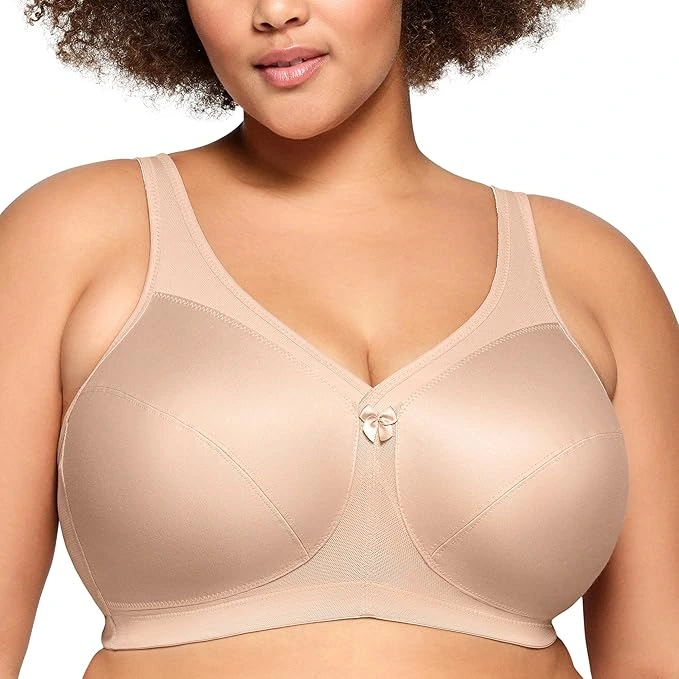
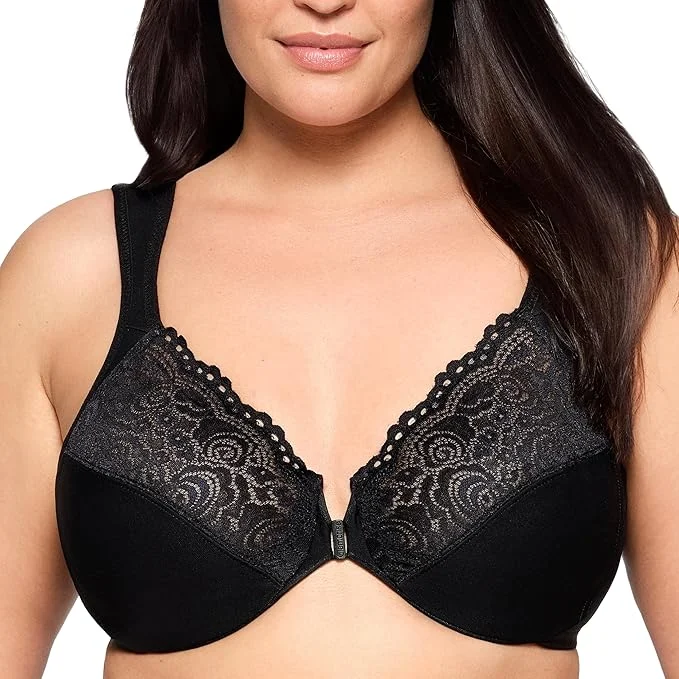
ℹ️ As an Amazon Associate, Bra Calculator earns from qualifying purchases. Product availability and pricing subject to change.
The Sister Size Rule Applied to 36D and 38C
| Comparison Type | Example | Same Volume? | Relationship |
|---|---|---|---|
| Band up + Cup letter down | 36D → 38C | ✅ Yes | Sister sizes — equal volume |
| Band up, same cup letter | 36D → 38D | ❌ No | 38D is larger — one full cup above 36D |
| Band down + Cup letter up | 36D → 34DD | ✅ Yes | Sister sizes — equal volume |
| Band up + Cup letter up | 36D → 38DD | ❌ No | 38DD is larger still |
| Same band, cup up | 36D → 36DD | ❌ No | 36DD is one full cup larger on the same band |
| Same band, cup down | 36D → 36C | ❌ No | 36C is one full cup smaller on the same band |
The most important rule here is simple: if the 36D cups fit but the band feels tight, then 38C is the correct sister-size experiment. If the 36D cups are too small, however, the answer is not 38C — it is usually 36DD. Sister sizing fixes the band while preserving volume; it does not increase cup volume when you need more room in the cups.
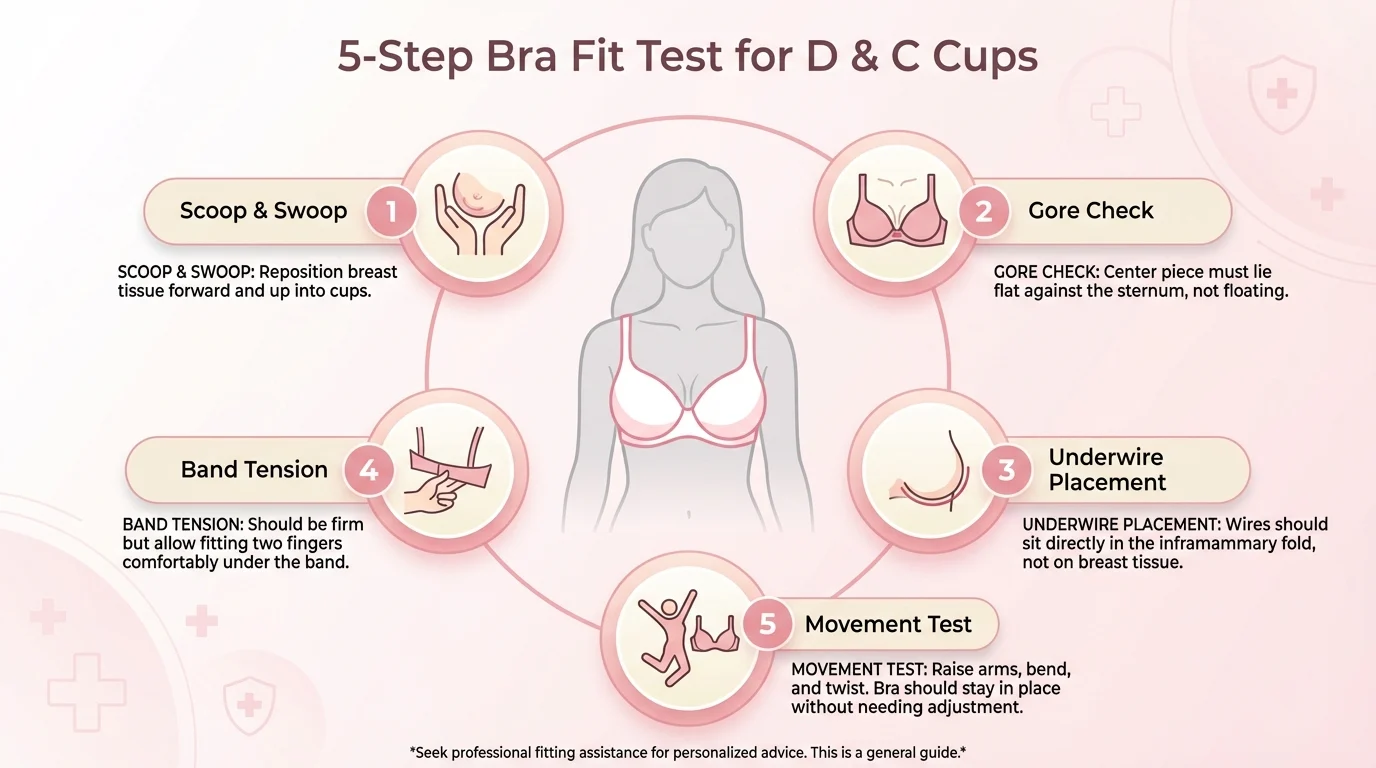
Quick Bra Fit Test: 5 Checks for D and C Cup Wearers
At D and C cup sizes, fit problems often show up as band instability, cup gaping, side-wire width mismatch, or straps overcompensating for a loose band. Use these five checks any time you compare 36D and 38C.
Lean forward and bring all breast tissue fully into the cup. This matters even in moderate cup sizes. If tissue spills after scooping, the cups may be too small. If the fabric wrinkles or gaps, the cups may be too large or too shallow for your shape.
The centre gore should sit flat against your sternum. If it floats away from the body, the cup may be too small or the bra shape may not be right for your breast spacing. This is a useful diagnostic sign even in D and C cups.
The wire should fully surround your breast tissue and rest on the ribcage, not on the breast. If a 38C feels too wide under the arms, that can be a sign the band is too large for your frame. If a 36D feels too narrow or restrictive, the band or wire geometry may be too compact for your torso.
On the loosest hook, you should be able to fit two fingers under the back band with firm resistance. If the band rides up, it is too loose. If it feels uncomfortably tight while the cups fit, that is when a sister size like 38C becomes worth testing.
Raise your arms, twist, and walk around. The band should stay level, the cups should stay in place, and the straps should not dig in or slip excessively. If the bra shifts a lot during movement, the band size is often the real problem.
Still unsure whether 36D or 38C — or a completely different size — is right for your measurements? Get a precise answer in seconds.
Try the AI-Powered Bra Size Calculator →36D vs 38C: Full Side-by-Side Comparison
| Feature | 36D | 38C |
|---|---|---|
| Band Size | 36 — firmer fit on a smaller ribcage | 38 — looser fit on a wider ribcage |
| Cup Letter | D — 4″ over underbust | C — 3″ over underbust |
| Cup Volume | ≈ Equal ↔ | ≈ Equal ↔ |
| Sister Size? | ✅ Yes — same volume family | |
| Band Feel | Firmer, more anchored | Looser, more relaxed |
| Underwire Width | Slightly narrower base | Slightly wider base |
| Support | Better for smaller ribcages | Better for broader ribcages |
| Visual Shape | More centered and slightly more projected | Broader and slightly flatter in appearance |
| Full Sister Family | 34DD — 36D — 38C — 40B | |
| If cups too small | Try 36DD | Try 38D |
| If cups too large | Try 36C | Try 38B |
| If band too tight | Try 38C (sister size) | Try 40B (sister size) |
| If band too loose | Try 34DD (sister size) | Try 36D (sister size) |
| Best For | Smaller ribcage needing firmer support | Wider ribcage needing more band room |
| Availability | Common in mainstream stores | Also common, though brand stock varies |
People Also Ask: 36D vs 38C — Answered
Are 36D and 38C the same size?
36D and 38C are sister sizes, which means they hold approximately the same cup volume on different band sizes. They are not identical bras, because the band tension and overall fit differ, but the cup capacity is about the same.
Are 36D and 38C sister sizes?
Yes — 36D and 38C are true sister sizes. Moving up one band from 36 to 38 and dropping one cup letter from D to C follows the sister size rule exactly. They belong to the same family: 34DD, 36D, 38C, and 40B.
Which is bigger — 36D or 38C?
Neither is bigger in cup volume. They hold approximately the same amount of breast tissue. The 38C is physically wider around the body because of the larger band, but the cup capacity itself is about equal to 36D.
Can I substitute 38C for 36D?
Yes — if your 36D cups fit well but the band feels too tight, 38C is the correct sister-size swap. The cup volume remains about the same, but the band will feel looser. If the 38C rides up or feels less supportive, 36D is probably the better fit for your frame.
What are the sister sizes of 36D?
The closest sister sizes of 36D are 34DD on the tighter side and 38C on the looser side. The wider volume family is 34DD — 36D — 38C — 40B. All of these hold approximately equal cup volume.
My 36D band feels too tight — should I try 38C or 38D?
If the cups fit but the band feels tight, try 38C — not 38D. 38C is the sister size that preserves cup volume while increasing the band. 38D increases both the band and the cup, so it is only correct if your 36D cups are also too small.
My 38C cups feel too small — should I try 38D or 36D?
If the 38C band fits but the cups are too small, try 38D on the same band. Going to 36D changes the band and keeps the volume similar, so it will not solve a true cup-too-small problem.
Is 38C more comfortable than 36D?
It can be, but only if your body actually needs the larger band. On the correct ribcage, 38C may feel more comfortable because it is less restrictive. On a smaller ribcage, however, it may feel too loose and less supportive. Comfort depends on whether the band matches your measurements.
How do I know my correct bra size?
Measure your underbust snugly and your bust at the fullest point, then compare the difference. After that, confirm your fit by checking the band level, gore contact, cup smoothness, and underwire placement. Use our bra size chart calculator for a measurement-based recommendation.