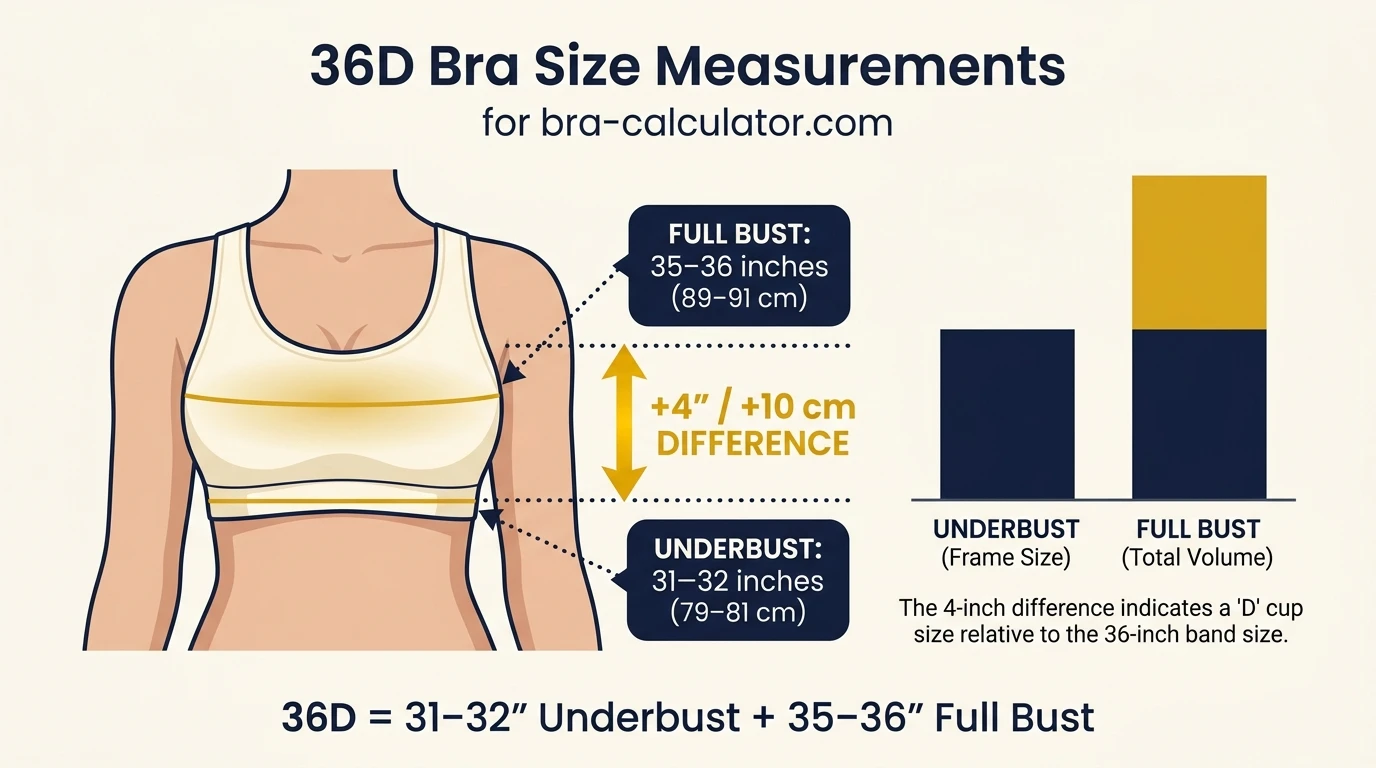
A 36D bra size usually means your underbust is around 31–32 inches (79–81 cm) and your full bust is around 35–36 inches (89–91 cm). That is about a 4-inch difference, which creates a D cup on a 36 band. 36D is a full, common mainstream size, but it is not automatically “huge” because visual size depends on frame width, breast shape, and tissue placement. A well-fitted 36D bra should keep the band level, contain side tissue, lift from the band, and prevent shoulder strain.
36D at a Glance
| Attribute | Detail |
|---|---|
| Band Size | 36 inches — usually fits 31–32″ underbust / 79–81 cm |
| Full Bust Measurement | 35–36 inches / 89–91 cm |
| Cup Difference | About 4 inches / 10 cm — D cup |
| General Category | Full mainstream size / medium-full cup volume |
| Sister Sizes | 34DD / 34E tighter band · 38C looser band |
| Common Fit Issue | Loose band, shoulder digging, side spillage, shallow molded cups |
| Best Bra Styles | Balconette, side-support, plunge, full cup, structured T-shirt, minimizer |
| US / UK Size | 36D |
| EU Size | 80D |
| AU / NZ Size | 14D |
What Is a 36D Bra Size?
36D is a bra size that pairs a 36 band with D cup depth. In measurement terms, it usually fits someone with a snug underbust around 31–32 inches and a full bust around 35–36 inches. The difference between those two measurements is about 4 inches, which points to a D cup in most US and UK sizing systems.
The number 36 describes the band. This is the part of the bra that wraps around your ribcage and provides most of the support. The letter D describes cup depth, not the total size of the body. A 36D is fuller than 36C and one cup smaller than 36DD, but the D letter alone does not tell the whole story.
36D is not the same size as every D cup. A 32D, 34D, 36D, and 40D all have the same cup letter, but they do not hold the same breast volume. Cup volume increases as the band gets larger. That is why a 36D can look balanced on a wider frame and more prominent on a narrower or shorter frame.
The most common 36D fitting mistake is wearing the band too loose. Many people choose 36D because it feels comfortable when they first put it on, but if the band rides up or the straps dig, the support is not working. In that case, 34DD may be a better sister size because it keeps a similar cup volume with a firmer band. If the 36 band feels genuinely tight and the cups feel right, 38C may be the better sister size.
36D Bra Measurements
To confirm 36D, measure your underbust and full bust with a soft tape. Stand naturally, keep the tape level, and avoid compressing breast tissue. For D cup depth, a small measuring mistake can make you choose 36C or 36DD by accident, so take the measurement twice if needed.
About 4 inches difference = D cup on a 36 band
| Nearby Size | Typical Underbust | Typical Full Bust | When It Fits Better |
|---|---|---|---|
| 36C | 31–32″ | 34–35″ | If 36D cups wrinkle or feel too deep |
| 36D | 31–32″ | 35–36″ | Your reference size |
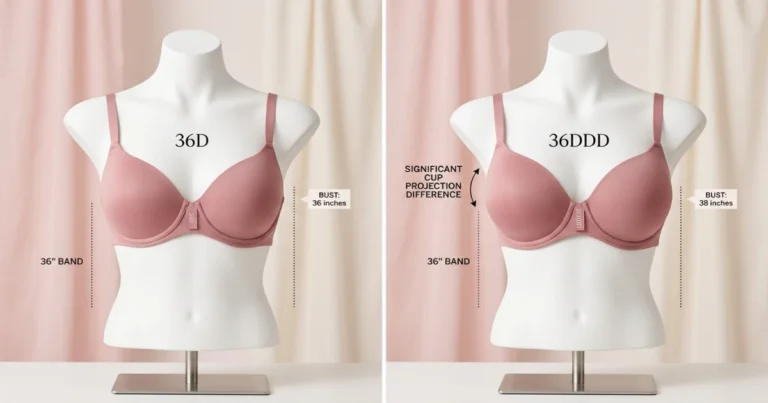
| 36DD | 31–32″ | 36–37″ | If 36D cuts in, spills, or gore floats |
| 34DD / 34E | 29–30″ | 34–35″ | If 36D cup volume fits but band rides up |
| 38C | 33–34″ | 36–37″ | If 36D band feels too tight but cup volume is right |
Wrap the tape around your ribcage directly under the bust. Keep it snug and level. For 36D, the underbust usually sits around 31–32 inches.
Measure around the fullest part of your bust without flattening tissue. For 36D, this is usually around 35–36 inches.
If your full bust is about 4 inches larger than your underbust, you are likely in the D cup range. Around 3 inches suggests C; around 5 inches suggests DD.
The band should stay level, cups should fully contain tissue, straps should not dig, and the center gore should sit flat or close to your sternum.
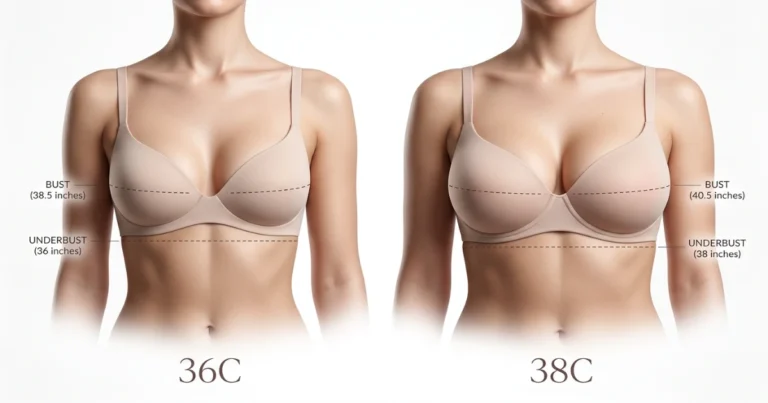
36D Measurement Visual
What Does 36D Look Like?
A 36D usually looks full, rounded, and noticeable, but not identical on every body. On a broader frame, the volume can look balanced and proportional. On a shorter or narrower upper body, the same size may look more prominent. Breast root width, tissue softness, posture, height, shoulder width, and bra style all change the visual result.
From the side, 36D usually has clear projection compared with 36C. From the front, it may look wide, centered, full-on-bottom, round, or more spread out depending on breast shape. In clothing, a well-fitted 36D bra should create a lifted and smooth outline without flattening the bust or pushing tissue toward the underarm.
The right bra style matters a lot for this size. A shallow molded cup can make 36D feel too small even when the label is correct. A cup that is too tall can gape at the top even when the volume is correct. That is why 36D often fits best in balconette, side-support, plunge, full-cup, or structured T-shirt bras depending on shape.

Structured Balconette Bra — Lift, Shape & Containment for 36D
- Helps lift fuller D cup tissue from the band
- Creates a rounded shape without flattening the bust
- Useful for side tissue, full-on-bottom shapes, and everyday support
- Works well under fitted tops, dresses, and structured outfits

Wireless Support Bra — Comfortable Daily Hold for 36D
- Soft cups reduce wire pressure during long wear
- Good for relaxed days, work-from-home comfort, and travel
- Wide underband helps support fuller D cup volume
- Best when the band is firm enough to prevent bounce and shifting
Balanced Fullness
On a fuller 36-band frame, 36D often looks rounded and proportional rather than exaggerated.
Balanced volumeWider Chest Wall
Breast tissue may spread wider across the chest, making side-support bras especially helpful.
Side supportLower Fullness
Choose cups with enough lower depth. If wires slide down, the cup may be too shallow at the base.
Lower cup depthNeeds Containment
Soft 36D tissue often feels best in stretch lace, full cup, or side-support styles that prevent shifting.
Secure coverageIs 36D Considered Large?
36D is usually considered a full mainstream size, but it is not automatically huge. It is one cup larger than 36C and one cup smaller than 36DD. On many bodies, 36D looks full and defined; on broader frames, it can look very balanced. The band size, body frame, and breast shape matter more than the letter alone.
One reason 36D feels confusing is that older retail sizing treated D as a very large cup. Modern bra fitting is more precise. D simply means about a 4-inch difference between underbust and full bust. A 36D can be a normal, everyday size when the band and cup are correct.
36D is full, common, and very wearable. It can look balanced, rounded, projected, or broad depending on your frame and breast shape.
If your 36D bra feels heavy, check the band first. A loose band makes the straps carry weight, which can cause shoulder pain even when the cup volume is correct.
36D Sister Size & Fit Problem Visual
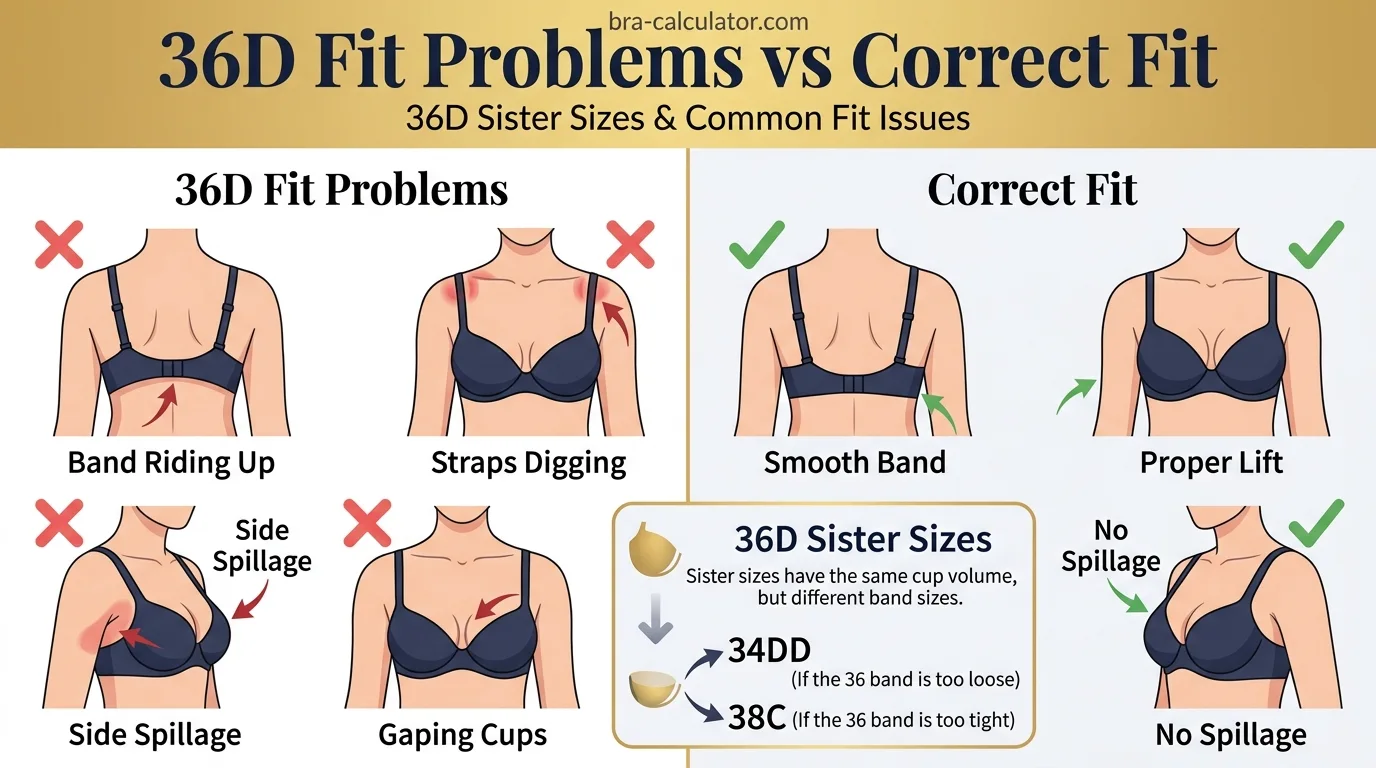
36D Sister Sizes
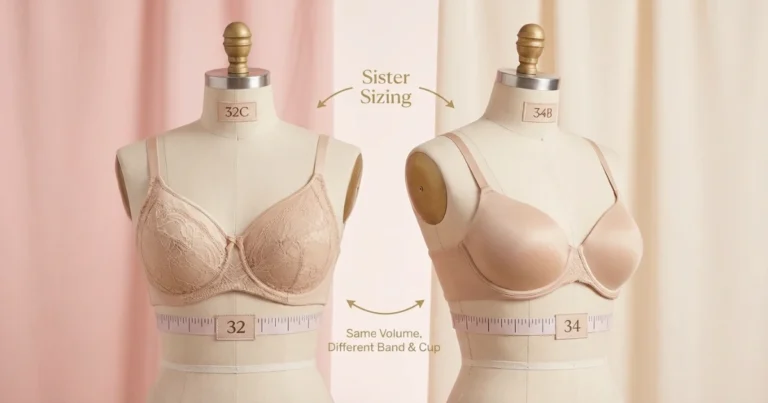
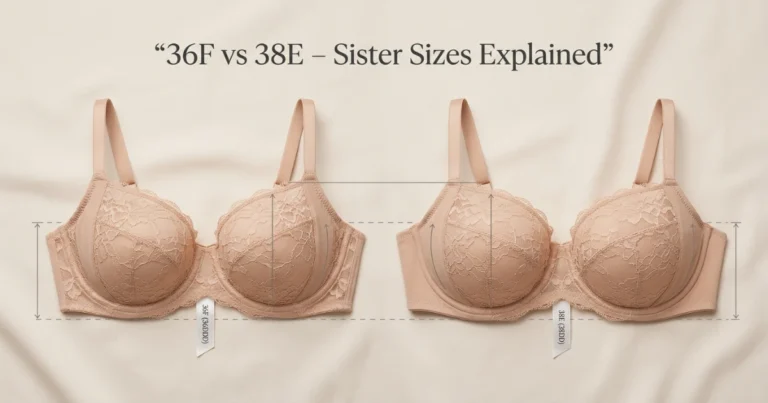
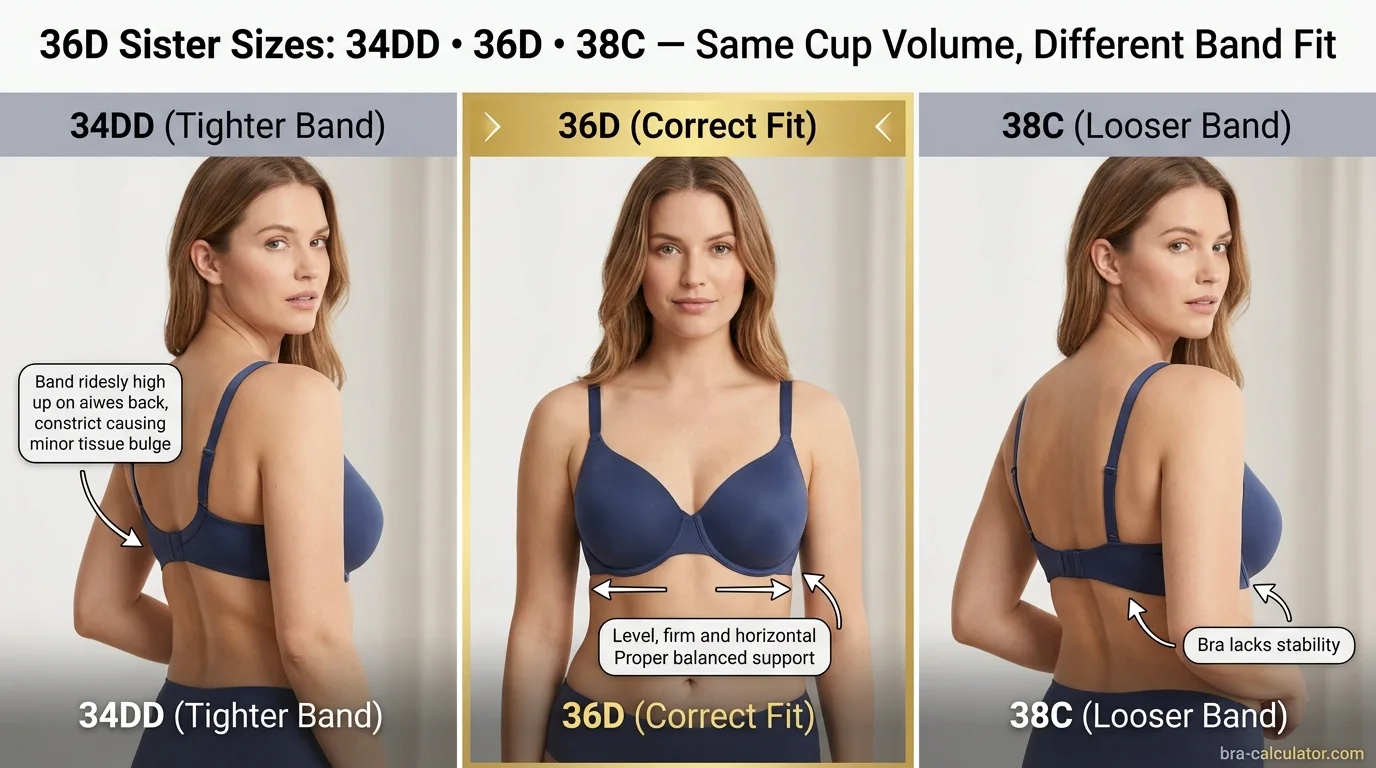
Sister sizes keep similar cup volume while changing the band. For 36D, the main sister sizes are 34DD / 34E and 38C. This is useful when the cup volume feels right but the band does not.
If your 36D cups contain the breast tissue well but the band rides up, 34DD may give better support. If the 36D band feels too tight and the cups feel right, 38C may be more comfortable. The cup volume stays close, but the band fit changes.
Rule: Down one band → Up one cup | Rule: Up one band → Down one cup | Example: 36D ≈ 34DD / 34E ≈ 38C.
| Tighter Sister Size | Reference Size | Looser Sister Size |
|---|---|---|
| 34DD / 34E | 36D — You | 38C |
| 32DDD / 32E | 36D | 40B |
36D vs Other Sizes
These comparisons help you decide whether 36D is truly your best fit or whether 36C, 36DD, 34DD, or 38C would work better.
- About 4-inch bust difference
- One cup larger than 36C
- More depth and containment
- Better if 36C spills at top or sides
- Same 36 band
- About 3-inch difference
- One cup smaller
- Better if 36D wrinkles or feels too deep
- One cup smaller than 36DD
- Full but not extra-full
- Works when cup edge sits smooth
- Same 36 band
- More cup depth
- Try if 36D cuts in, spills, or gore floats
- Reference size
- Good for 31–32 inch underbust
- Looser than 34DD
- Sister size — similar cup volume
- Tighter band
- Try if 36 band rides up
- Firmer band than 38C
- Better for 31–32 inch underbust
- More secure support
- Sister size — similar cup volume
- Looser band
- Use only if 36 band feels genuinely tight
Best Bra Styles for 36D
36D usually benefits from stable structure, but that does not always mean thick padding. The best 36D bras lift from the band, contain side tissue, support the cup depth, and prevent the straps from doing all the work.
Creates lift and roundness while keeping the neckline open. Great for many 36D shapes.
Helps bring tissue forward and prevents side spillage under fitted clothing.
Works well if the center gore feels too tall or the breasts are close-set.
Good for soft tissue, fuller shapes, and anyone who wants more coverage.
Helpful if you want a flatter front profile under workwear or button-down shirts.
Can push tissue sideways, cause cup-edge cutting, or make the gore float.
Common Fit Problems with 36D
The band is too loose or stretched out. With D cup volume, this quickly shifts support onto the straps.
The cup may be too small, too shallow, or too closed on top.
The cup may be too tall, too molded, or shaped for more upper fullness than you have.
The band is not doing enough support work, so the straps are carrying too much weight.
The cups may be too small, too shallow, or incompatible with close-set/full-center tissue.
The wire may be too narrow, or the cup may not have enough side coverage.
International Size Conversion for 36D
36D is usually the same label in US and UK sizing. In European sizing, it commonly converts to 80D. In Australia and New Zealand, it usually converts to 14D. Always check the brand chart because band firmness, cup depth, and wire width can vary.
If you are ordering from international brands, use the Global Bra Size Converter and Brand Size Decoder before checkout.
Related 36D Tools & Guides
Use these supporting pages to confirm your measurements, compare 36D with nearby sizes, and fix common fit problems.
| Guide / Tool | Why It Helps |
|---|---|
| Bra Size Calculator | Calculate your exact band and cup size from underbust and bust measurements. |
| Cup Size Visuals | Compare D cup with C, DD, E, F, G, H, and larger cup sizes visually. |
| Sister Size Calculator | Find 36D sister sizes like 34DD and 38C. |
| Global Bra Size Converter | Convert 36D to EU 80D, AU 14D, and other international systems. |
| AI Smart Fit Bra Calculator | Check symptoms like band riding up, gore floating, and side spillage. |
Frequently Asked Questions
36D usually means a 31–32 inch underbust and a 35–36 inch full bust. It has about a 4-inch cup difference.
36D is full and noticeable, but not automatically huge. It can look balanced on wider frames and more prominent on smaller upper bodies.
The main sister sizes are 34DD / 34E and 38C. 34DD is tighter; 38C is looser.
They are sister sizes with similar cup volume, but 34DD has a tighter band and usually gives firmer support.
Yes. 36D is one cup larger than 36C on the same band.
Choose 36D if the cups sit smooth. Try 36DD if 36D spills, cuts in, or the center gore floats.
Choose 36D if the band feels secure. Choose 38C only if the 36 band feels genuinely tight but the cup volume feels right.
The band may be too loose or stretched out. Try a firmer 36 band or sister size 34DD.
36D usually converts to EU 80D.
36D usually converts to AU/NZ 14D.
Yes, but choose a wireless bra with a firm band, wide straps, and enough side coverage.
Balconette, side-support, full-cup, plunge, structured T-shirt, minimizer, and supportive wireless bras can all work well for 36D.
Find Your Best 36D Fit
Measure your underbust and bust to confirm whether 36D, 36C, 36DD, 34DD, or 38C is your most comfortable match.