How to Wash and Store Bras So They Last Longer (Step-by-Step)
To wash and store bras so they last: hand-wash in cool water with a mild detergent, or machine-wash in a mesh bag on a cool, delicate cycle with hooks fastened. Never tumble-dry: press out water in a towel and air-dry flat or hung by the centre gore. Wash an everyday bra after 2–3 wears, sports bras after every wear. Store molded bras nested cup-in-cup, never folded inside out, and rotate at least three bras so the elastic rests between wears.
Jump to a Section
Bra Care at a Glance
| Attribute | Detail |
|---|---|
| Best method | Hand-wash in cool water with a mild detergent |
| Machine washing | Cool, delicate cycle, in a mesh bag, hooks fastened |
| How often (everyday bra) | After every 2–3 wears |
| How often (sports bra) | After every wear |
| Drying | Air-dry only: flat, or hung by the centre gore. No tumble dryer |
| Storage (molded cups) | Nest cup inside cup; never fold inside out |
| Rotation | At least 3 everyday bras so each rests a day between wears |
| Biggest enemies | Heat, chlorine bleach, fabric softener, wringing, hanging by straps when wet |
Why Bra Care Matters So Much
A bra’s support comes mainly from the band, and the band’s grip comes from elastane (spandex/Lycra). Elastane is strong but sensitive. Heat, from hot washes, tumble dryers and radiators, breaks down its fibres. Body oils, sweat and sunscreen left in the fabric degrade it over time, and chlorine bleach attacks it directly. Once the elastic weakens, the band stretches out, rides up the back and stops supporting you. The straps then take the weight, which is the root of many comfort complaints.
That is why a bra that “fit perfectly when I bought it” often feels loose a few months later. The band has relaxed. Good care slows that process dramatically. It also protects the parts that make a bra look good: molded cups that keep their shape, lace that does not snag, and wires that stay in their channels instead of poking out.
Care also affects sizing. Most people buy a bra to fit on the loosest hook so they can move to tighter hooks as the band relaxes. With good care, that progression takes many months rather than weeks. If your bras feel loose on the tightest hook within a short time, check both your care routine and your size. Our bra size calculator confirms the band, and band too loose explains the difference between a worn-out band and a wrong size.
How Often Should You Wash a Bra?
| Bra type | Wash after | Why |
|---|---|---|
| Everyday bra (T-shirt, balconette, plunge) | 2–3 wears | Removes sweat and oils before they build up in the elastic |
| Sports bra | Every wear | Heavy sweat; bacteria and odour build quickly |
| Bralette / lounge bra | 2–3 wears | Light use, but body oils still accumulate |
| Sleep bra | 2–3 nights | Night sweat and skin oils |
| Nursing bra | Daily, or when damp | Milk and moisture; hygiene and skin comfort |
| Strapless / special occasion | After each event | Often worn for long hours |
In hot weather, or if you sweat heavily, wash everyday bras after every wear, or at least rinse them in cool water. Never leave a sweaty bra rolled up in a laundry basket for days; damp fabric sitting in a heap degrades faster and develops odour.
How to Hand-Wash a Bra (Best Method)
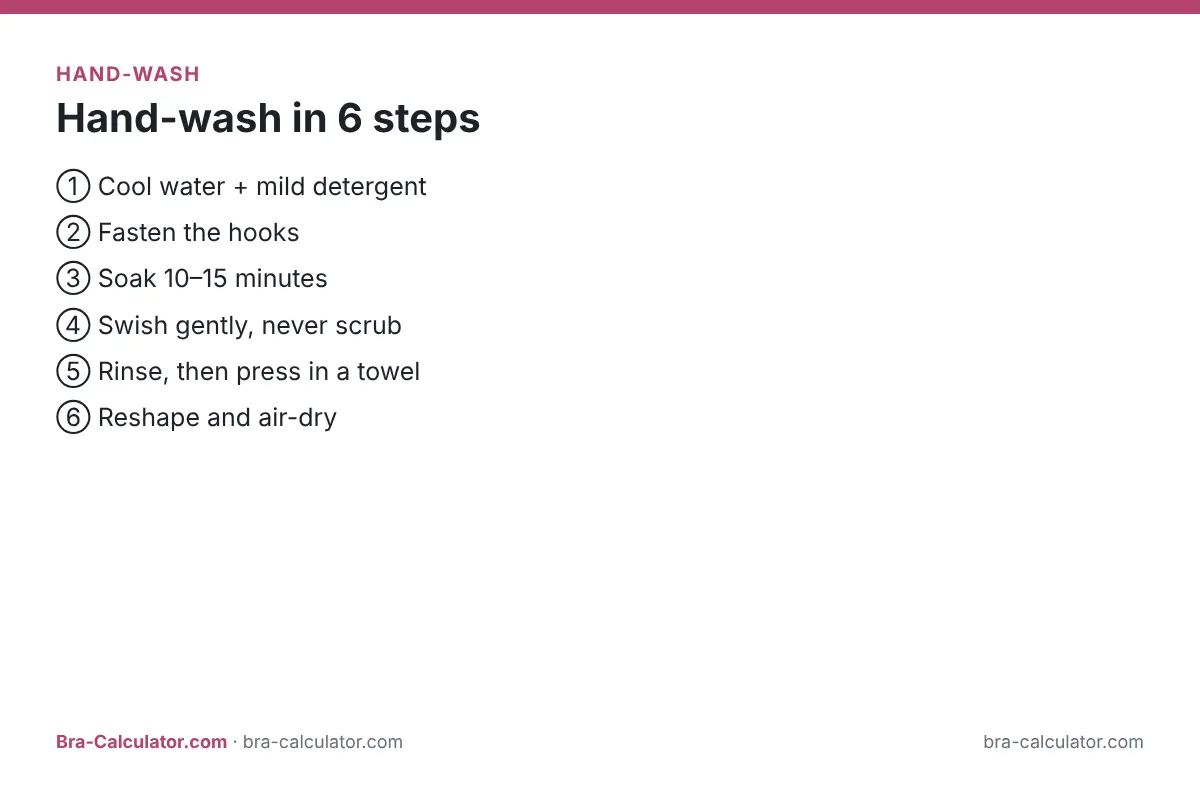
Lukewarm at most. Hot water damages elastane.
A teaspoon of gentle liquid detergent or lingerie wash. Avoid bleach and biological powders with strong enzymes.
Closed hooks cannot snag lace or other bras.
Gently press the bra under the water so the cups and band soak through.
Move the bra through the water and gently rub the band and the inside of the cups with your fingers. Do not scrub or twist.
Rinse until no suds remain; detergent residue irritates skin and attracts dirt.
Lay the bra flat on a towel, roll it up and press. Never wring.
Smooth the cups into shape and dry flat, or hang by the centre gore.
Pre-treat stains like deodorant marks or makeup by dabbing a little detergent directly onto the area and leaving it for 10 minutes before soaking.
How to hand-wash a bra
How to Machine-Wash a Bra Safely
One or two bras per bag. The bag stops straps tangling and wires bending.
Cool water (30 °C / 86 °F or below) and a low spin.
Powder can leave residue in foam cups.
Avoid jeans, towels and anything with zips that can crush or snag.
Do not leave bras damp in the drum.
Never put bras in the tumble dryer, even on low.
Choosing a Detergent for Bras
You do not need a special lingerie wash, though they work well. What matters is that the detergent is mild, liquid and used in a small dose. Liquid detergents dissolve fully in cool water and rinse out of foam cups more easily than powders, which can leave a gritty residue inside padding. Avoid detergents with chlorine bleach or strong optical brighteners for coloured bras, and choose a fragrance-free formula if your skin reacts to perfumes. A no-rinse wool or lingerie wash is convenient for travel, but give heavily worn bras a proper rinse to clear sweat salts.
Use less than you think. A teaspoon in a basin is enough for two or three bras. Excess detergent stays in the fabric, attracts dirt and can irritate skin under the band.
How to Dry a Bra Without Damaging It
| Do | Do not |
|---|---|
| Dry flat on a towel or rack | Tumble-dry, even on “delicate” |
| Hang from the centre gore | Hang by the straps while wet (they stretch) |
| Reshape molded cups while damp | Leave cups folded or creased |
| Dry indoors or in shade | Dry on a radiator, heater or in strong direct sun |
| Allow a full day for padded bras | Wear a bra that is still damp inside the foam |
The tumble dryer is the single fastest way to ruin a bra. One cycle can warp molded foam, distort underwires and weaken the band. Air-drying takes longer but adds months to the life of every bra.
How to Store Bras
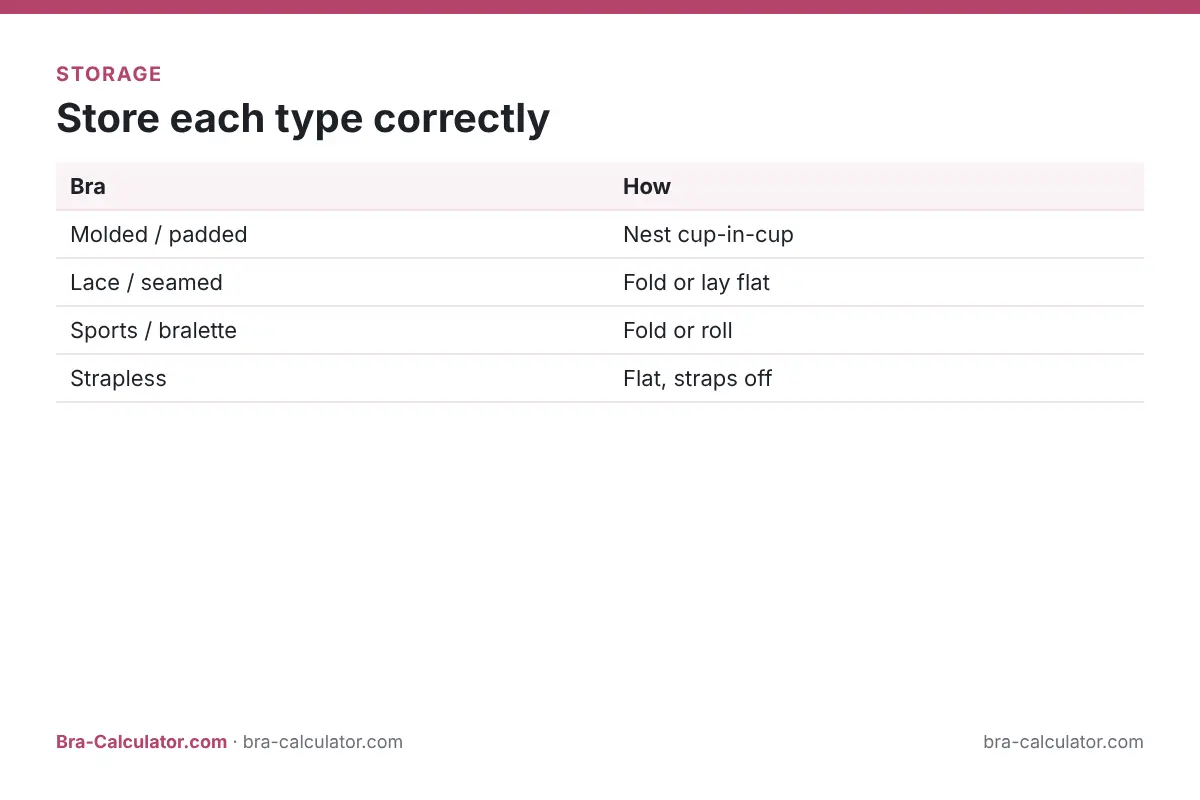
Place one cup inside the other and stack bras of the same shape together in a drawer. Never fold a molded cup inside out.
These can be folded in half at the centre gore or laid flat; they will not dent.
Unstructured, so fold or roll them in a drawer or bin.
Store flat with straps detached, to protect silicone grip strips.
A hanger with a central clip works; never hang from the straps long-term.
Crushed cups dent permanently and hooks snag lace.
How to store bras
Care for Special Bra Types
| Type | Special care |
|---|---|
| Sports bra | Wash after every wear; no fabric softener (it blocks wicking); air-dry |
| Lace bra | Always hand-wash or mesh bag; lace snags easily |
| Push-up / padded | Allow extra drying time; reshape pads; avoid wringing |
| Strapless | Clean silicone strips with water only; dry flat (strapless sizing) |
| Adhesive bra | Follow the maker’s instructions; usually mild soap, air-dry sticky side up, re-cover |
| Nursing bra | Wash frequently; fasten clips before washing (nursing guide) |
| Mastectomy / pocketed bra | Remove prostheses before washing; follow care labels (mastectomy bras) |
Sports bras need special attention because fabric softener coats the fibres and stops them wicking sweat. Skip it entirely for activewear. Our sports bra calculator helps with sizing, and a fresh, correctly sized sports bra is one of the best investments for comfort during exercise.
Should You Wash a New Bra Before Wearing It?
Yes, especially if you have sensitive skin. New fabric can carry finishing residues and loose dye from manufacturing, and both can irritate skin or transfer colour to light clothing. A single gentle hand-wash before the first wear removes most of it. Dark colours, particularly navy, black and red, are the most likely to bleed, so wash them separately the first few times.
Before washing, try the bra on and decide whether you are keeping it. Many retailers will not accept returns of washed lingerie. Check the band on the loosest hook, scoop into the cups and look for gaping or cutting in. If you are unsure of the fit, our guides to cup gaping and underwire sitting on breast tissue help you decide quickly.
Fixing Odour, Yellowing and Grey Bras
Bacteria trapped in synthetic fibres, often made worse by fabric softener.
Sweat, body oils and deodorant build-up.
Dye transfer from darker items in the same load.
The foam was stored before it was fully dry.
Protecting Underwires in the Wash
Underwires bend and work their way out of their channels when bras are washed loose in a machine. The drum twists the bra and the wire’s tip gradually wears through the fabric. A mesh bag, hooks fastened, and a gentle cycle prevent most of this. Hand-washing prevents nearly all of it. If a wire has started to poke through, a small patch of fabric or a few stitches can sometimes hold it temporarily, but once the channel has worn through, the bra is near the end of its life. A loose wire can scratch skin and will not hold its shape. See underwire poking out and, if wires dig in even when intact, underwire digging in.
The Rotation Rule: Why You Need at Least Three Bras
Elastic needs time to recover after it has been stretched all day. If you wear the same bra two days running, the band never fully returns to its original tension, and it relaxes permanently much faster. A simple rotation of three everyday bras means you wear one, wash one and rest one. Each gets a full day off, and all three last far longer than one bra worn constantly.
A useful core set is two everyday bras in colours close to your skin tone and one in black, plus a sports bra and a sleep or lounge bra if you use them. If you are building a wardrobe from scratch, our most comfortable bras guide and best T-shirt bras are good starting points.
Signs a Bra Needs Replacing
The elastic has relaxed permanently.
The channel has worn through.
Foam damaged by folding or heat.
Strap elastic has stretched.
Elastane breakdown.
With good care, a well-made everyday bra in regular rotation typically lasts somewhere around six months to a year. Our guide on how often to replace a bra covers this in detail.
Common Bra Care Mistakes
Heat breaks down elastane.
Warps foam and wires, weakens bands.
Coats fibres, blocks wicking and degrades elastic.
Attacks elastane and yellows some fabrics.
Crushes cups and snags lace.
Water weight stretches the straps.
Washing and Storing Bras When Travelling
A hotel sink is perfectly good for washing bras. Use a little travel wash or shampoo in cool water, rinse well, roll the bra in a towel to press out water, and hang it by the gore overnight. Microfibre and unlined bras dry by morning; padded bras may take longer. Avoid hotel tumble dryers and radiators. For packing, nest molded cups and fill the inner cup with socks so it cannot be crushed in your suitcase.
Related guides
Frequently Asked Questions
Everyday bras after 2–3 wears, sports bras after every wear, and nursing bras daily or whenever they are damp.
Yes, in a mesh lingerie bag on a cool, delicate cycle with the hooks fastened. Hand-washing is gentlest.
No. Tumble-drying warps molded cups and wires and weakens the band elastic. Always air-dry.
Roll it in a dry towel and press firmly to remove most of the water, then hang by the centre gore in a well-ventilated room.
Nest them cup-in-cup with bras of the same shape, in a drawer where they are not crushed. Never fold a molded cup inside out.
No. It coats fibres, blocks moisture-wicking in sports bras and can weaken elastic.
Dab a little mild detergent onto the stain, leave it for about 10 minutes, then hand-wash in cool water.
With gentle care and rotation, around six months to a year for an everyday bra. Replace it when the band feels loose on the tightest hook.
Does your band still fit?
If your bras feel loose even on the tightest hook, check your size before buying more.