Bra Strap Extender Size Guide: How to Size a Bra Band/Back Extender
Match the hook count, center-to-center spacing and closure height before you buy. A bra extender can give a slightly firm band more room, but it does not increase cup volume or fix a band that already rides up.
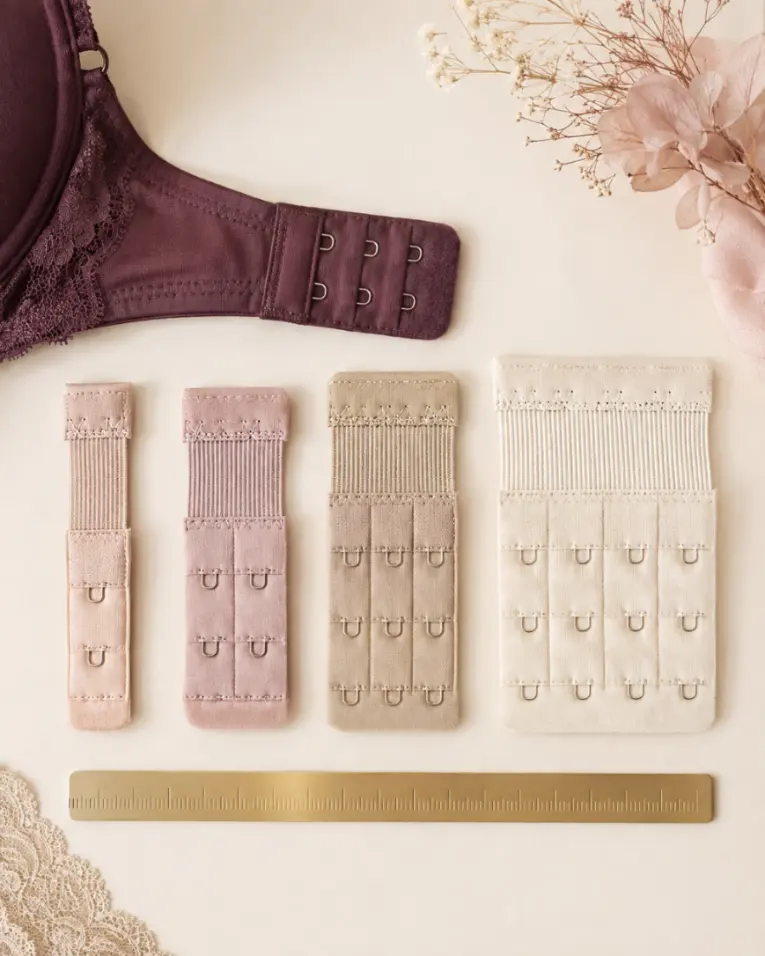
Choose a bra extender by matching three things: the number of hooks on your bra, the vertical spacing between those hooks, and the overall width of the closure. Use only enough added length to make the band comfortably snug. An extender changes band length; it does not make the cups bigger. If you have breast spillage, wires sitting on tissue, or a floating center gore, recheck the cup size instead of relying on an extender.
What Is a Bra Extender?
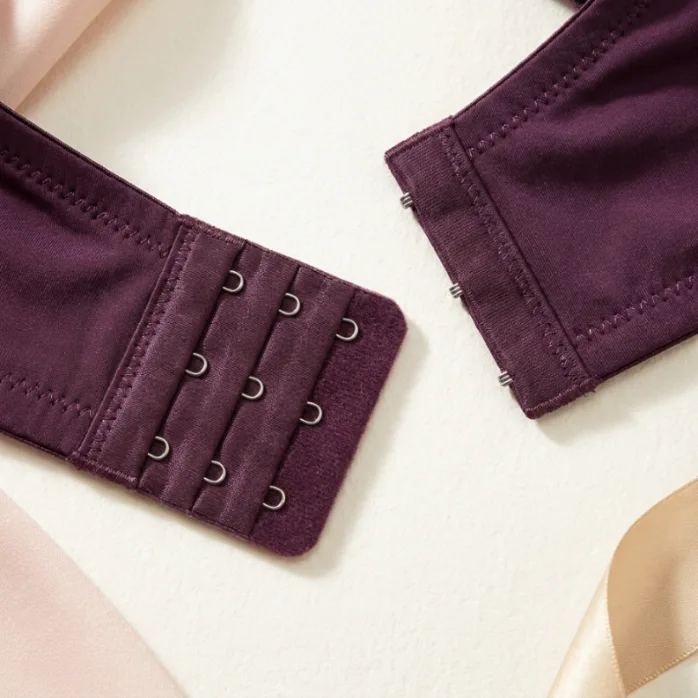
A bra extender—more precisely called a bra band extender or bra back extender, and commonly searched as a “bra strap extender”—is a small fabric panel with hooks and eyes that attaches to the back closure of a bra. It adds extra circumference to the band without altering the cups, wires or front of the bra.
That sounds simple, but extenders are not universal. A two-hook extender can still fail to fit a two-hook bra if the hook spacing is different. A wide three-hook extender may bunch on a narrow closure. A very stretchy extender can also change the feel of the band more than a firm one.
How to Choose the Correct Bra Extender Size
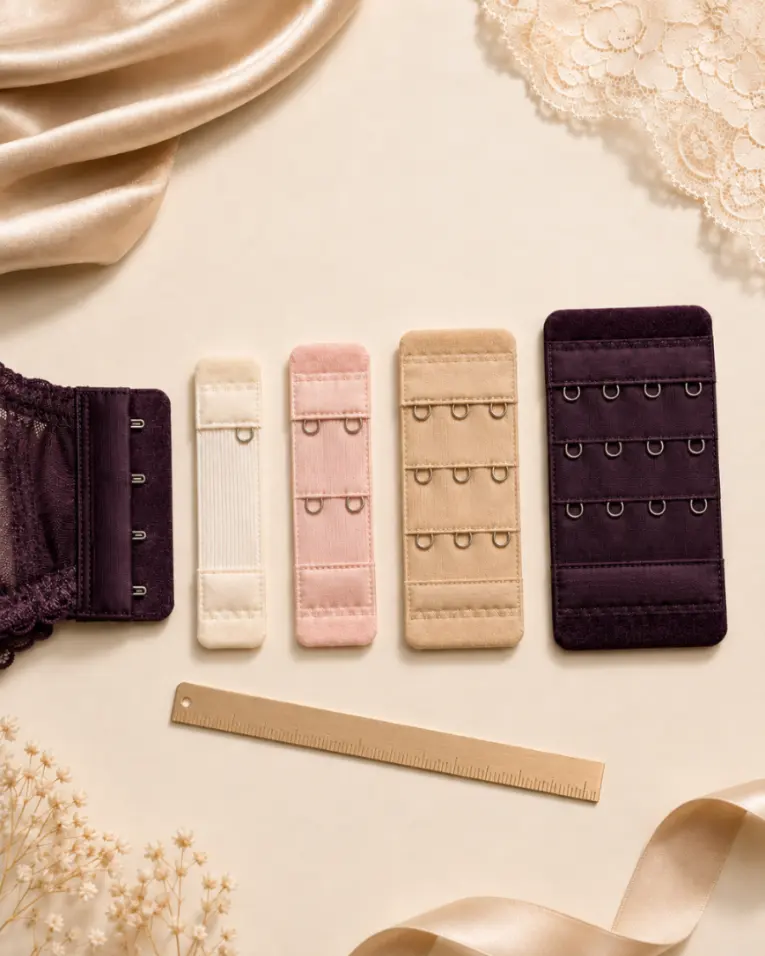
Do not shop by “small, medium or large” alone. Match the extender to the hardware already on the bra. The most reliable order is: hook count, hook spacing, closure width, then added length.
Count the hooks
Fasten your bra flat and count the hooks arranged vertically: one, two, three, four or more.
Measure spacing
Measure from the center of one hook to the center of the next. Similar hook counts can use different spacing.
Measure closure width
Check the full height of the hook-and-eye panel so the extender does not twist or overhang awkwardly.
| Bra closure | Typical use | What to check before buying |
|---|---|---|
| 1 hook | Some bralettes, lightweight or narrow-back styles | Single-hook position and fabric width |
| 2 hooks | Very common everyday bras | Exact center-to-center hook spacing |
| 3 hooks | Fuller-coverage, supportive and some larger-cup bras | Spacing plus closure height |
| 4+ hooks | Longline, posture, smoothing or high-coverage styles | Overall width, number of rows and firmness |
Manufacturers do not use one global hook-spacing standard. If the listing provides millimeter or inch measurements, compare those with your bra rather than assuming “3-hook” automatically means “3-hook compatible.”
Current extender listings commonly show about ½ inch (12–13 mm) or ¾ inch (19 mm) between adjacent hook centers. Both are real market examples, which is exactly why hook count alone is not enough. Some fashion, narrow-back or brand-specific closures can differ.
Measure the bra you own from the center of one hook to the center of the next. Use these numbers as a shopping reference, not a sizing standard.
How to Measure Your Bra for an Extender
These four quick diagrams show exactly what to measure and what a good hardware match looks like. They are schematic, so use a ruler on your own bra before ordering.
1. Hook spacing: center to center
Measure between the centers of adjacent hooks—not the outside edges.
2. Closure height
Measure the full hook-and-eye panel height so the extender lies flat.
3. Correct attachment
Hook rows should align without pulling the extender up, down or sideways.
4. Mismatched spacing
Same hook count can still be wrong if the vertical spacing does not match.
How Much Length Should a Bra Extender Add?
The goal is not to make the bra loose. The goal is to move a slightly-too-tight band into a comfortably snug range while keeping it level around the torso. Many extenders provide several eye rows so you can choose a small or larger adjustment.
Current products vary: some standard 2- and 3-hook extenders are sold as adding up to about 2 inches (5 cm), while longer elastic styles may advertise up to about 3 inches (7.6 cm). The physical length of an extender is not the same thing as the exact circumference it will add on every eye row.
Do not estimate added length from the number of rows alone. Check the product’s stated usable extension and start with the shortest comfortable setting.
Start with the smallest amount of added length that removes painful compression or digging. Then check the back in a mirror. If the band now rides upward, shifts when you raise your arms, or can be pulled far away from the body, you have likely added too much.
Concrete example: if your bra closes but feels only slightly too firm, do not jump straight to a 3-inch extension. Try the nearest eye row first, recheck the cups and wires, and increase only if the band still compresses uncomfortably.
| After adding the extender | What it suggests | Next move |
|---|---|---|
| Band feels secure and level; cups still fit | Extender is doing its job | Keep the shortest comfortable setting |
| Band rides up or shifts easily | Too much length was added | Use a shorter setting or remove extender |
| Cups spill even though band is comfortable | Cup volume/shape issue remains | Recheck cup size and bra shape |
| Center gore moves farther from sternum | Cups may be too small or band now too loose | Assess full fit, not band comfort alone |
| Wires slide onto breast tissue | Band/cup relationship is compromised | Remeasure and try another size/style |
When a Bra Extender Can Be Useful
An extender is most useful when the cups and wires fit well but the band needs a modest, temporary increase in circumference. That can happen with a new bra whose band is firmer than expected, day-to-day body fluctuations, temporary abdominal or ribcage changes, or when you are genuinely between two band sizes in a particular brand.
Good extender scenario: cups are correct, band is the only problem
Imagine a 34D in which the breast tissue is fully contained, the wires sit around the breast root and the center front lies as expected, but the newest loosest-hook position feels uncomfortably firm. Adding a small amount of band length can be a reasonable test before changing the whole size.
Another good scenario: brand-to-brand band variance
Two bras labelled 34D can use different elastics and pattern blocks. One may feel noticeably firmer. If the firmer bra fits beautifully everywhere else, an extender may preserve that cup fit while giving the band a little more room.
What a Bra Extender Cannot Fix
A band extender is not a universal bra-fit repair. Because it only changes the circumference at the back, it cannot create more cup depth, widen wires, change strap placement or reshape the cup.
Adding length to a bra that is already too loose can reduce the band’s ability to anchor the cups. That may make shoulder straps work harder and can exaggerate riding, shifting or gaping.
Bra Extender vs. Sister Size: Which Should You Use?
An extender and a sister size solve related but different problems. An extender keeps the same bra and simply lengthens its band. A sister size changes both the band label and cup letter to keep approximately similar cup capacity while altering band length.
| Situation | Extender | Sister size |
|---|---|---|
| New band is just a little too firm, cups perfect | Often worth testing | Optional |
| Need a permanently looser band in most bras | May become a workaround | Usually more useful to test |
| Band rides up | No—adds even more length | Try smaller-band sister size if cups otherwise fit |
| Cup spillage | No | Not automatically; you may need more cup volume |
| Between bands in one unusually firm brand | Useful | Also worth comparing |
For example, if 34D is too tight in the band but the cups fit, the larger-band sister size is roughly 36C. The extender lets you keep the exact 34D cup construction while testing extra band room; the 36C changes the entire bra pattern and may fit differently even though the nominal cup volume is related.
Not sure whether the band or cup is actually wrong?
Start with your measurements, then use sister sizing only after checking the real fit signals.
Use the Bra Size CalculatorCheck Sister SizesHow to Attach a Bra Extender Correctly
Do Bra Extenders Work for Larger Busts?
They can, but support demands make the fit check more important. A larger or heavier bust does not mean you should tolerate a painfully tight band, yet a band that becomes too loose after adding an extender may shift more of the work toward the shoulder straps.
If your bra uses three or four hooks, choose an extender with matching width and stable fabric so the back closure does not twist. Then watch what happens to the cups and straps after adding length. If the front of the bra drops, the back climbs, or shoulder pressure increases, the extender has probably taken the band beyond its supportive range.
7 Common Bra Extender Mistakes
- Matching hook count but ignoring spacing. Two-hook hardware is not automatically identical across brands.
- Using an extender to solve cup spillage. Extra band length does not add cup capacity.
- Adding the maximum length immediately. Start with the smallest comfortable change.
- Putting an extender on a band that already rides up. This usually makes the anchoring problem worse.
- Ignoring closure width. An extender that is too tall or narrow can twist and show under clothing.
- Assuming every tight feeling means the band is too small. Cups that are too small can make a band feel tighter because breast tissue pushes the bra away from the chest.
- Turning a temporary fix into permanent sizing. If nearly every bra in a band size needs an extender, remeasure and compare the next band/sister size.
What to Look for When Buying a Bra Extender
Match the number of hooks and center-to-center spacing before color or pack size.
A very flimsy extender can curl; an extremely rigid one can create a noticeable pressure point.
Adjustable rows let you add only as much length as you need instead of one fixed jump.
Useful under fitted tops where bulky hardware or thick edging may show.
Especially important for three-, four- and five-hook supportive bras.
Choose care instructions compatible with your lingerie routine and avoid high heat on elastic components.
3 Bra Extenders Worth Comparing
Choose by your bra’s hardware, not by brand name alone. Match hook count and spacing first, then decide whether you need a standard or more elastic extension.
Soft Stretchy Bra Extender
A useful starting point when you need several hook-count options. SAMGU currently sells variants across 2-, 3-, 4-, 5- and 6-hook closures, so select the exact variant that matches your bra.
Check Price on Amazon →Best for: shoppers comparing common hook-count options. Measure center-to-center spacing before ordering.
4-Hook Stretchy Bra Extender
A better fit category for bras with a taller four-hook back closure, including many fuller-coverage and supportive styles. Width and hook spacing still need to match your own bra.
Check Price on Amazon →Best for: taller four-hook closures where a narrow 2- or 3-hook extender would twist or sit unevenly.
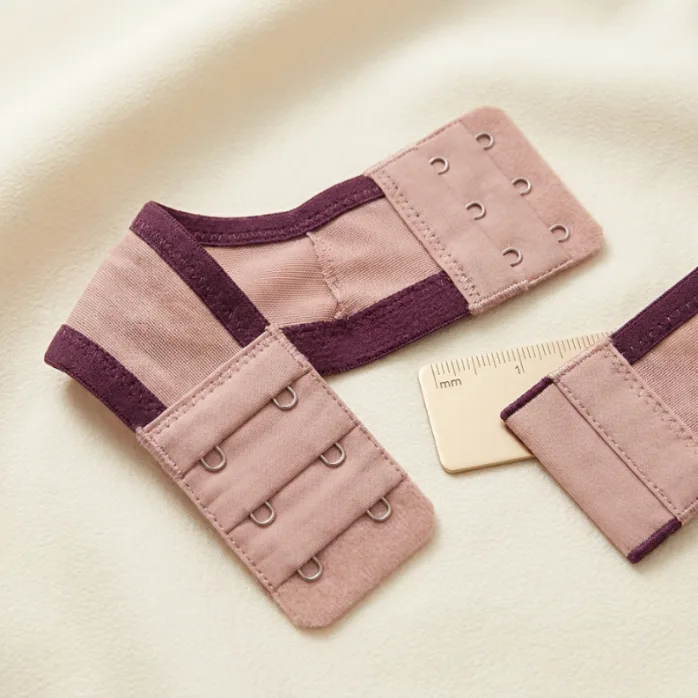
3-Hook Elastic Bra Band Extender
A three-hook elastic option with multiple eye rows for incremental adjustment. It is most useful when the bra fits correctly in the cups but the band needs a modest, flexible increase.
Check Price on Amazon →Best for: small adjustable band changes. Do not use extra stretch to compensate for cup spillage or a riding band.
Affiliate disclosure: As an Amazon Associate, Bra-Calculator.com earns from qualifying purchases at no extra cost to you. Product availability, dimensions and variants can change. Measure your bra and confirm the current listing specifications before buying.
Real-World Fit Examples
Example 1: 32DD fits in the cups but feels too firm
If the 32DD cups contain the bust well and the band is level but uncomfortably tight even on the loosest hook, a matching extender can test a small amount of extra room. If that immediately improves comfort without changing cup position, it may be a useful bridge. If you consistently need substantial added length, compare the 34D sister size.
Example 2: 36C has top spillage and feels tight
Do not assume the band is the culprit. Cup spillage can make the whole bra feel constricting. An extender may make the back looser while leaving the actual volume problem untouched. Recheck cup capacity and wire placement first.
Example 3: 38D rides up
An extender is the wrong direction. A riding band usually needs better anchoring, not more circumference. If the cups fit, a smaller-band sister size such as 36DD may be worth testing.
How to Care for Bra Extenders
Close the hooks before washing so they are less likely to snag delicate fabric. A lingerie bag is useful if you machine wash on a gentle cycle, though hand washing is gentler for elastic. Air dry rather than using high heat. Keep extender sets paired by hook spacing so you can identify the right one quickly.
Inspect the eyes and stitching periodically. Bent hooks or stretched fabric can make the closure sit unevenly and may damage the bra’s own hardware.
Frequently Asked Questions About Bra Extenders
Do bra extenders really work?
Yes, when the band needs a modest amount of extra length and the rest of the bra already fits well. They are much less useful when the cup size, wire shape or overall bra size is wrong.
How do I know what size bra extender I need?
Match the number of hooks, the center-to-center hook spacing and the height of the closure panel. Then choose an extender that offers the amount of added length you actually need.
Can I use a 2-hook extender on any 2-hook bra?
No. Two bras can both use two hooks while having different hook spacing or closure widths. Measure before buying.
Does a bra extender increase cup size?
No. It only increases band circumference. It can slightly change how the cups sit because the band tension changes, but it does not add cup volume.
Can a bra extender help during temporary body-size changes?
It can be a convenient temporary fit tool when the cups still fit and the band alone needs extra room. If your breast volume or cup fit has also changed, remeasure rather than relying only on an extender.
Should a new bra need an extender?
Not necessarily. Some new bands are firm, but a correctly sized bra should still be wearable without painful restriction. If multiple new bras in the same size all need extenders, compare your measurements and sister size.
Can I wear two extenders together?
Stacking extenders adds substantial length and can make the back unstable. If one correctly sized extender is not enough, it is usually more useful to test a larger band or remeasure.
Will an extender stop bra straps from digging in?
Only if excessive band tightness was contributing to the problem. Shoulder pressure can also come from a band that is too loose, cup issues or strap design, so check the full fit.

Amelia reviews Bra-Calculator.com guides with a measurement-first approach: start with the band and cup relationship, then use accessories such as extenders only when they solve the specific fit issue without creating a new one.
Editorial note: Bra construction and hook spacing vary by brand. The ½-inch/12–13 mm and ¾-inch/19 mm spacing figures shown above are examples found in current retail extender specifications, not an industry sizing standard. Product claims for added length also vary, so compare the extender’s stated measurements with the bra you own.