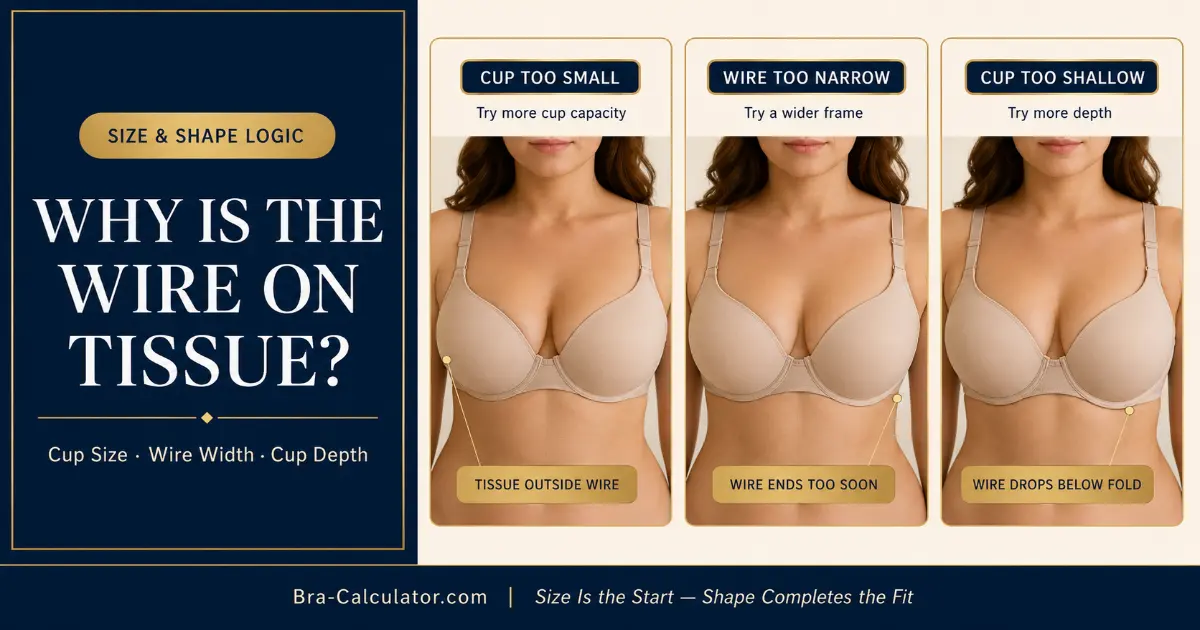
An underwire should sit around your breast tissue on the chest wall — not on top of breast tissue. Correct bra underwire placement follows the natural breast fold underneath, then curves just outside the outer breast root near the side. If the wire cuts across tissue, leaves breast tissue outside the cup, or sits well below the bust crease, the likely causes are a cup that is too small, an underwire that is too narrow, a cup that is too shallow, or a band that cannot keep the wire anchored. This page focuses on wire placement itself; for pain at multiple locations, also read the complete underwire bra digging in guide.
Underwire Sitting on Breast Tissue at a Glance
| Placement Sign | What It Usually Means |
|---|---|
| Wire line crosses soft breast tissue at the outer side | The wire is likely too narrow, cup capacity is inadequate, or tissue has not been fully placed into the cup. |
| Breast tissue escapes beyond the side wire after scoop-and-swoop | The cup boundary is not enclosing your breast root; review width and cup volume. |
| Wire sits below the fold under the breasts | The cup may be too shallow or too small, allowing breast tissue to push the wire downward. |
| Wire sits on tissue and cups also spill | The cup may need more usable space; review bra cup spillage signs. |
| Wire sits on side tissue while upper cup gaps | A shape mismatch may be present; the cup can be too narrow or shallow without being too large overall. |
| Wire boundary looks correct but pressure is painful | Comfort may depend on wire rigidity, channel padding, band pressure or a wireless support preference. |
Where Should a Bra Underwire Sit?
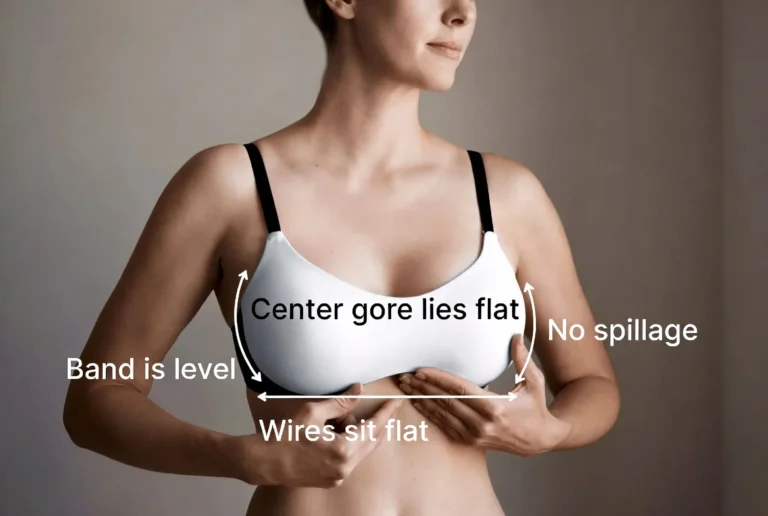
A bra underwire is designed to frame the breast from beneath and around the sides. It should rest on the chest wall immediately outside breast tissue, tracing the natural crease beneath the breast and following the outer border of the breast root. In simple terms: the breast belongs inside the wire; the wire belongs around the breast.
When a wearer says her underwire is not around the breast, she may be noticing the outer wire ending too far inward, the bottom wire dropping below the breast fold, or the wire cutting across tissue after a few hours of movement. Each of these signs gives valuable fit information. A wire cannot provide stable support if it is trying to sit through the breast rather than around it.
This issue is narrower than general underwire pain. A wire can hurt because it is high at the gore, damaged, stiff against sensitive ribs or too tall under the arm. This page targets one specific fit failure: the wire boundary is positioned incorrectly in relation to breast tissue. Correcting that boundary often improves not only comfort, but also lift, cup shape, side containment and the appearance of clothing over the bra.
The core placement rule: After you scoop breast tissue into the cups, the wire should not cut across soft breast tissue at the center, bottom or outer side. If it does, the bra is not giving the tissue a correct supported boundary.
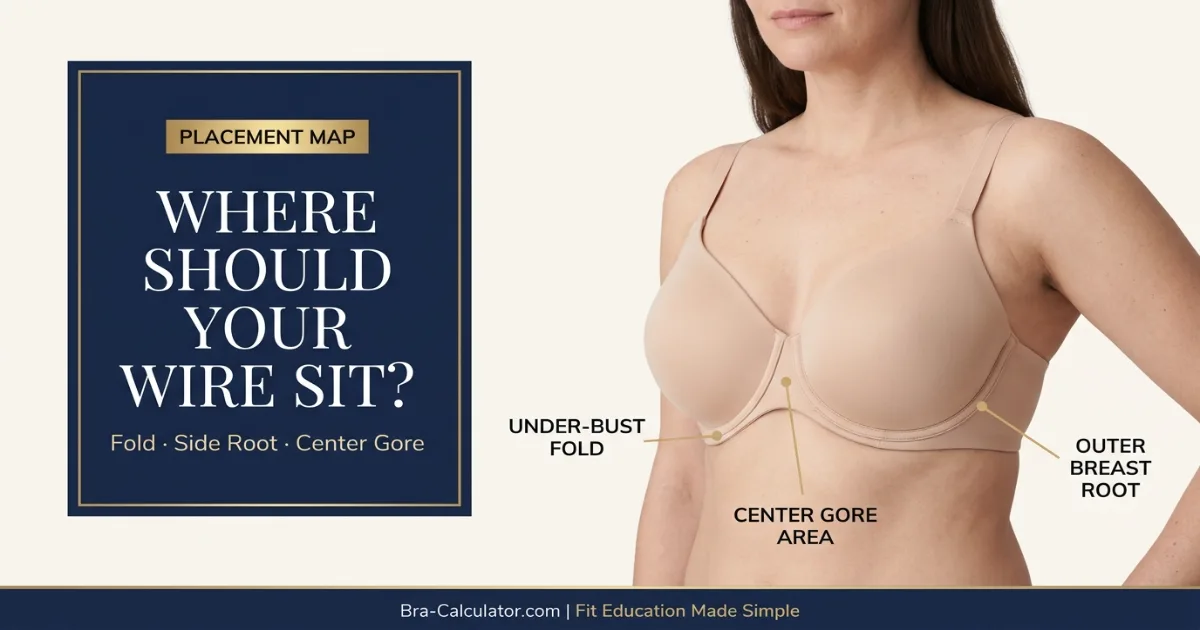
Correct Wire Placement vs Underwire Sitting Wrong
Do not evaluate underwire placement only from the front of the mirror. A wire can look centered while still resting on outer breast tissue, or it can appear low because the cup has been pushed downward by tissue needing more depth. Use this location map after a gentle scoop-and-swoop and while the bra is comfortable enough to test.
| Wire Area | Correct Placement | Wrong Placement Sign |
|---|---|---|
| Under-bust fold / IMF | Wire sits in the natural crease directly beneath breast tissue. | Wire rests down on the ribs below the fold, with space or wrinkling above it. |
| Outer side near underarm | Wire finishes just beyond the breast root without pressing on tissue. | Wire line cuts through breast tissue or leaves side tissue outside the cup. |
| Center gore area | Wire frames the inner breast and the gore lies comfortably near the sternum where shape allows. | Wire sits onto inner tissue, gore presses painfully, or overflow pushes the gore away. |
| During movement | Wire remains close to the fold while reaching, sitting and walking. | Wire slides downward, shifts onto tissue or requires repeated repositioning. |
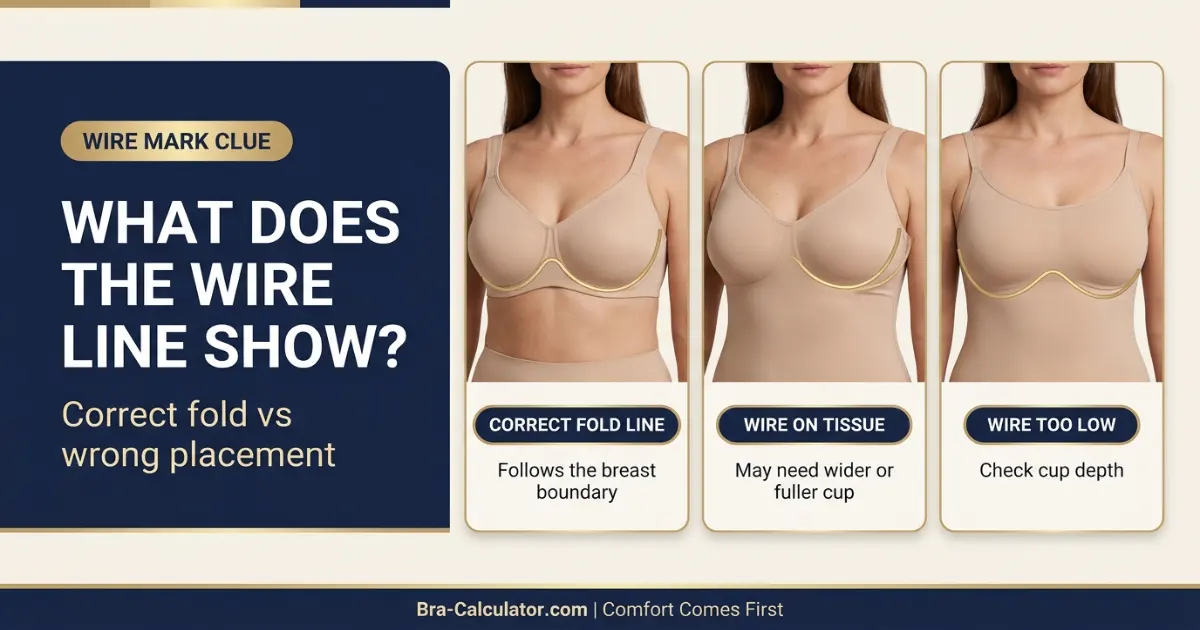
How to Check Whether the Wire Follows Your Breast Root
The breast root is where breast tissue attaches to the chest wall. It is not identical for everyone: it may be broad, narrow, short, tall, close-set or extend farther outward toward the underarm. Underwire placement only works when the wire shape is reasonably compatible with that natural boundary.
Fasten the band comfortably, lean slightly forward and gently bring all side and underneath tissue into each cup. Do not decide where the wire sits until tissue has been correctly positioned.
Lift each breast gently if needed and position the bottom wire in the natural fold. If it immediately slides lower, the cup may be unable to accommodate your breast depth.
Feel where the wire ends near the side. The wire should sit just outside tissue. If soft breast tissue continues beyond or over the wire, your side boundary is not properly contained.
Look for side spillage, top overflow, cup gaping, a floating gore, bottom wrinkles or band movement. These clues help distinguish a size issue from a wire-shape issue.
Correct placement should remain reasonably stable. If the wire shifts down below the bust or climbs onto side tissue with movement, the bra construction is not supporting your shape securely.
Comfort rule: Do not deliberately wear a wire that painfully presses on tissue just to study the mark it leaves. A short, comfortable fit check is enough; sharp pressure means the bra should be removed.
Can Wire Marks Show Whether Your Underwire Is on Breast Tissue?
A light temporary outline from a comfortable bra can sometimes help reveal placement after removal. The useful question is not whether you have any mark at all; it is where that outline sits. A correctly aligned outline follows the crease beneath the breast and continues just outside the outer root. A misplaced outline may cross visible soft breast tissue, sit below the fold on the ribs, or stop too far inward while breast tissue extends outside it.
Marks are not a test to perform by enduring pain. A deep, painful, bruised or long-lasting mark does not provide “better” fit information; it signals that the bra should be removed and reassessed. Skin sensitivity also varies, so visual marks should be combined with your comfort and the cup/band symptoms you observe while wearing the bra.
| What the Wire Outline Shows | What It May Mean | Next Direction |
|---|---|---|
| Line follows the under-bust fold and sits outside side tissue | Placement may be close to correct if wear is comfortable. | Evaluate comfort, movement and cup containment rather than changing automatically. |
| Line crosses outer breast tissue | Wire may be too narrow or cup may not contain enough tissue. | Compare a wider-root or larger/deeper cup. |
| Line sits notably below the natural breast fold | Cup may be pushed down by insufficient depth or band may not hold position. | Test projected cup shapes and band stability. |
| Line is painful, deep or persists unusually long | The pressure is not comfortable, regardless of its location. | Stop wearing that style and reassess fit or wire-free support. |
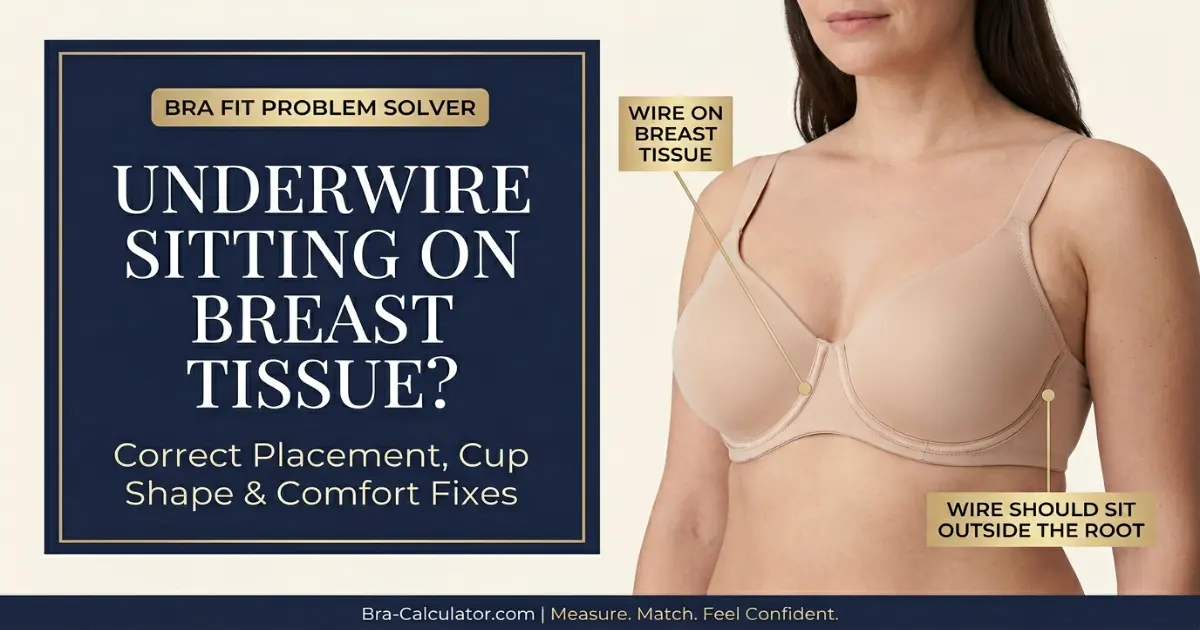
Why an Underwire Sits On Breast Tissue
1. The Cup Is Too Small
When the cup does not provide enough volume, breast tissue may escape beyond the upper or side cup edge. The wire then has no room to surround all tissue and may settle across it instead.
2. The Outer Wire Is Too Narrow
A bra may seem close in cup volume but use a wire that ends too early at the side. This is common when side tissue remains outside the wire despite a cup that is not obviously overflowing at the top.
3. The Cup Is Too Shallow
A shallow cup cannot accommodate enough forward projection. Breast tissue pushes the cup outward and drives the wire lower, so the bottom wire may sit below the bust while side or top areas still feel crowded.
4. The Band Is Too Loose to Hold the Wire
Even a suitable cup may shift if the band cannot anchor it. A band that rides up or rotates allows the wire to move away from the root and land on tissue as you move.
5. Tissue Has Not Been Scooped Into the Cup
Sometimes side breast tissue remains outside a cup simply because the bra has been put on without positioning the tissue. Once scooped inward, the cup may then reveal whether it truly has enough room.
6. Your Root Shape Does Not Match This Wire
Bra wires vary by brand and style. A wearer with a wide root, close-set breasts or significant projection may need a different wire profile even when measurements suggest the same starting size.
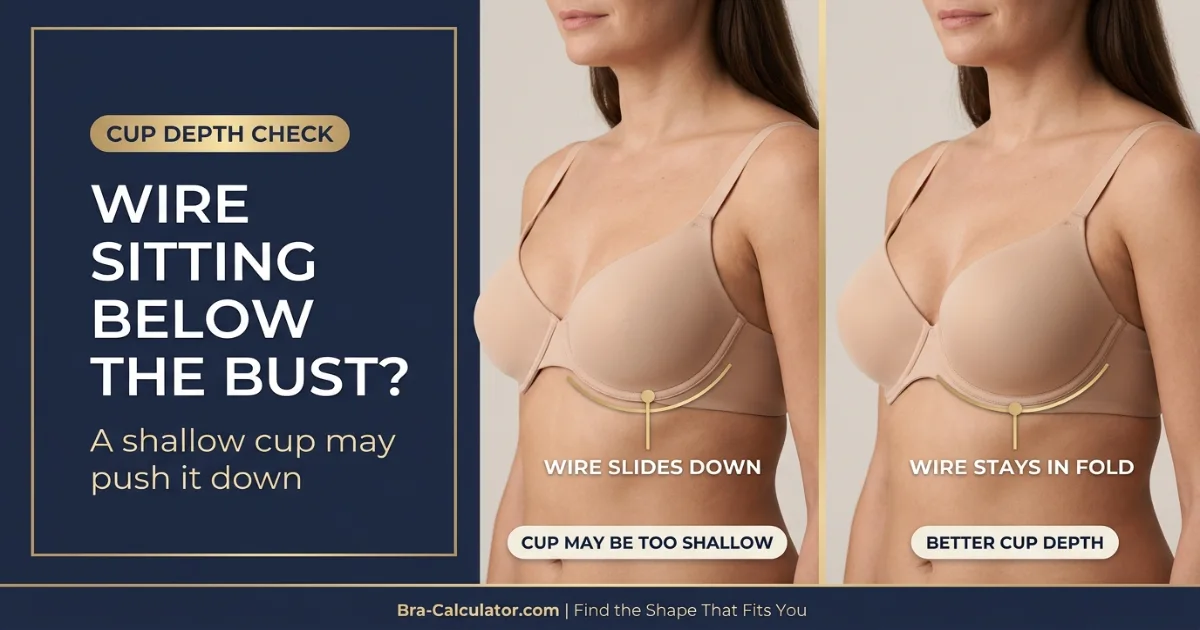
Why Your Underwire Sits Below the Bust
Underwire below the bust crease is a particularly useful clue because it is often misunderstood. Many wearers assume the band simply needs tightening so the wire stays higher. But when the cup is too shallow for a projected breast shape, the breast can push the cup outward and downward. The wire migrates onto the ribs below the natural fold because there is not enough space at the deepest point of the cup.
This can happen even if you do not see dramatic overflow. Look for subtle signs: the wire will not stay in the crease after you position it, fabric wrinkles at the lower cup, the cup feels compressed or flattened at the front, and rib pressure becomes worse when sitting. In this case, a deeper or more projected cup can be more effective than merely increasing band tightness.
| Underwire-Below-Bust Pattern | Likely Reason | Best Test |
|---|---|---|
| Wire slides down and bottom cup wrinkles | Not enough cup projection/depth | Try a deeper or seamed cup in the appropriate size. |
| Wire drops while the band also rides up | Band anchor may be weak along with cup mismatch | Review size and sister-size direction together. |
| Wire remains low and cup visibly overflows | Cup volume may be insufficient | Test more cup capacity before judging wire comfort. |
| Wire placement is correct standing but painful sitting | Torso/rib shape or wire rigidity may matter | Try softer wire casing, shorter wire profile or supportive wireless comfort. |
What to Do When Your Underwire Is Sitting Wrong
The correction should return the wire to the breast boundary, not simply hide a mark or make the bra tighter. Follow this order so you do not solve a cup-shape problem by creating rib or shoulder discomfort.
If the wire is poking sharply, escaping its channel, causing skin injury or leaving persistent painful pressure, stop wearing that bra while you diagnose the issue.
Place the wire in the fold under the breast, then scoop all breast tissue into the cups. Check whether the wire can surround tissue or whether it immediately lands on the side or drops below the fold.
If tissue spills at the top or side while the band feels secure, more cup capacity is a sensible starting direction. Review the bra cup spillage guide when overflow is prominent.
If the upper cup gaps but the outer wire is on tissue, or if the wire slides below the bust while the cup wrinkles, test a more suitable wire width or deeper cup shape rather than automatically sizing down.
The band should remain level and comfortably secure while the wire stays close to the breast fold during sitting and reaching. A supportive fit should not require constant retucking or painful tightening.
Why Underwire Placement Varies With Breast Shape
A size calculation gives a useful starting point, but it cannot describe the exact outline of your breast root or the cup depth you need. Underwire sitting on tissue is often where breast shape and bra construction visibly collide.
Outer Wire Can End Too Soon
Breast tissue may extend toward the underarm and need a wire that encloses a broader boundary.
Try wider wireWire Can Drop Low
Insufficient depth can push wires below the breast fold and onto the ribs.
Try cup depthCenter Wire Matters
A gore that is too wide or high may land on inner tissue even if the outer side fits.
Try low goreMigration Reveals Fit
Soft tissue can settle beyond a narrow cup edge during wear and show where support is missing.
Try stable cupsBreast-Root Pattern to Construction Match
| Pattern You Notice | Useful Construction Feature | Avoid Relying Only On |
|---|---|---|
| Outer wire cuts across side breast tissue | Wider wire or side-support cup with sufficient capacity | Very high side smoothing panels that compress rather than enclose |
| Bottom wire cannot remain in natural fold | Projected, deeper or seamed cups | A tighter band without checking cup depth |
| Inner wire/gore sits on close-set tissue | Lower or narrower center-gore construction | A larger cup alone if outer fit is already adequate |
| Wire boundary is correct, but rigidity is uncomfortable | Soft casing, flexible wire or supportive wireless bra | Continuing painful wear because placement is technically correct |
Health note: Fit guidance can explain pressure caused by a bra. Seek professional medical advice for a new lump, persistent breast or underarm pain, redness, skin change, discharge, bruising, numbness or symptoms that remain when you are not wearing a bra.
Does a Wire on Tissue Mean Your Cup Is Too Small?
Sometimes it does; sometimes a different cup shape is the more important change. Use the full symptom set rather than the wire alone. The example below uses common sizing notation; exact labels after DD vary between brands and regional systems.
| Your Fit Signs | Starting Direction | Reason |
|---|---|---|
| Wire on tissue plus cup overflow; band stable | Increase cup volume | There is evidence the cup boundary lacks enough room. |
| Wire on side tissue plus gaping at top | Try different wire width/cup shape | A narrow or shallow cup can spill sideways while looking loose above. |
| Wire below bust with lower-cup wrinkles | Try more projected/deeper cups | Breast depth may be forcing a shallow cup downward. |
| Wire shifts while band rides up | Test firmer band with enough cup capacity | Wire placement needs an anchored foundation. |
| Wire follows tissue boundary but still hurts | Try softer wire or wireless support | Comfort preference still matters after correct placement. |
What Should You Correct First?
- Outer wire ends on breast tissue
- Side tissue remains outside cup
- Possible side or top overflow
- Check cup capacity
- Try wider-wire or side-support cups
- Retest after scoop-and-swoop
- Wire rests below breast fold
- Pressure on ribs
- Bottom cup wrinkles or shifts down
- Try deeper/projected cup shapes
- Check band stability
- Do not rely only on tightening
- Top of cup gapes
- Outer wire still sits on tissue
- Cup shape feels inconsistent
- Review cup shape mismatch
- Try suitable wire width and depth
- Do not automatically size down
- Wire placement seems correct
- No overflow or wire-on-tissue line
- Rigid pressure still feels unpleasant
- Try soft casing or flexible wire
- Consider supportive wireless bras
- Prioritize comfortable daily wear
Bra Constructions That Help With Correct Underwire Placement
Helpful when the outer wire sits on side breast tissue and you need a cup boundary that encloses a broader root.
Useful when shallow cups cause the wire to slide below the bust crease and press into the ribs.
Can help when inner wires sit on close-set breast tissue after cup volume is correctly assessed.
Useful where wire-on-tissue placement occurs together with broader cup overflow and side escape.
A valid comfort choice if underwire feels unpleasant despite appropriate sizing and placement checks.
Can repeat side wire pinching or low-wire migration for wider-root or projected shapes.
What to Check Before Replacing a Bra With Wrong Wire Placement
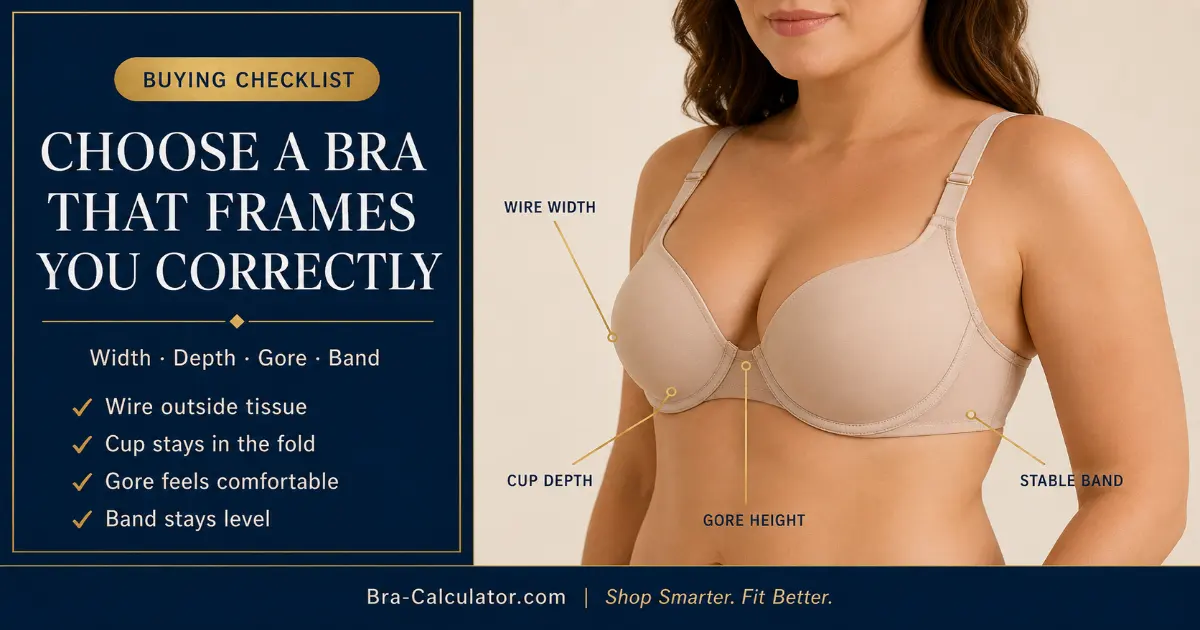
No product card can tell you whether a wire will follow your breast root unless you compare the product’s construction with the reason your current bra fails. Use this checklist before trying another style.
| Product Feature | When It Helps | Warning Sign |
|---|---|---|
| Wider outer wire / side containment | Outer wire cuts through side breast tissue or side spillage remains after scoop-and-swoop. | Do not assume extra width is needed when the current wire already extends far beyond tissue. |
| More projected or seamed cup | The wire slides below the breast fold or lower cup creases while pressure builds on ribs. | A shallow molded shape may repeat the same low-wire problem. |
| Correct cup capacity | Wire-on-tissue appears with visible spillage, quad-boob or floating gore. | A higher side wing cannot substitute for enough cup room. |
| Lower/narrower gore | Inner wire rests on close-set tissue or stabs at the sternum. | Very low styles can overflow if central cup containment is inadequate. |
| Stable comfortable band | Wire shifts because the bra rides up or moves during wear. | Painfully tight elastic is not a correct anchoring solution. |
| Soft casing or wireless structure | Placement is correct but rigid wire feel remains uncomfortable. | Softness should not be used to ignore continuing wire-on-tissue placement. |
Shop Support Styles After Checking Wire Placement
These categories can be useful comparison starting points only after you know whether your current wire is failing because of cup capacity, side containment, movement or wire sensitivity. Always check the actual product construction, underwire or wireless design, sizing and return options before choosing a replacement.

Wide Padded-Strap Full-Coverage Bras
- Worth comparing where wire-on-tissue placement happens together with upper or side cup overflow.
- Confirm that the cup provides sufficient capacity and that the wire surrounds your outer breast root.
- Coverage is only helpful when it contains breast tissue comfortably rather than pressing across it.

U-Back Support Bras With Wide Straps
- A stable back may help keep correctly selected cups and wires aligned through normal movement.
- Useful to compare when wires move away from the fold because the bra shifts during wear.
- Still confirm wire width and cup depth; stability cannot correct the wrong breast-root shape.

Wireless Comfort Bras With Cushioned Straps
- A practical option if you prefer not to wear underwire after checking measurement and support needs.
- Look for a sufficiently supportive band and cup coverage to keep breast tissue comfortable.
- Relevant when wire placement can be corrected but rigid wire contact still feels unpleasant.
Advice That Can Keep Your Underwire Sitting Wrong
| Myth | Correct Fit Guidance |
|---|---|
| “A wire touching breast tissue is normal if the bra feels supportive.” | The wire is intended to surround tissue. Support that cuts across tissue needs reassessment. |
| “Side tissue means I just need a smoothing bra.” | If breast tissue lies outside the wire, first correct cup capacity or wire width; smoothing is secondary. |
| “Underwire below the bust means tighten the band.” | A shallow cup can push the wire down; cup depth may be the true correction. |
| “If a cup gaps, it cannot be too narrow or shallow.” | A cup can gape at the top while the wire still sits on side tissue because shape, not simple volume, is wrong. |
| “Correct placement means I must tolerate underwire.” | You may still prefer a supportive wireless bra; comfort choice is valid after fit is understood. |
Frequently Asked Questions
Should an underwire sit on breast tissue?
No. A bra underwire should rest on the chest wall just around breast tissue, following the under-bust fold and enclosing the outer breast root. If it cuts across breast tissue, the bra needs a fit or style review.
Where should a bra underwire sit?
The wire should sit in the natural fold underneath the breast and curve around the outer side just beyond breast tissue. All breast tissue should be within the wire boundary after scoop-and-swoop.
Why is my underwire not around my breast at the side?
The outer wire may be too narrow, the cup may be too small, or the cup may be too shallow and pushing tissue outward. Check for side spillage and whether the wire line crosses breast tissue.
What does it mean when underwire sits below my bust?
Wire below the natural breast fold often indicates that breast tissue is pushing the cup downward, especially when a cup lacks enough projection. A loose band or inadequate cup volume can also contribute.
Can a small bra cup make the wire sit on breast tissue?
Yes. If the cup cannot contain all breast tissue, the wire may sit on the breast instead of around it. Top or side spillage and a floating gore are useful accompanying clues.
Can I use an underwire mark to check placement?
A light temporary mark from comfortable wear may show whether the wire follows the breast fold or crosses tissue. Do not continue wearing a painful bra to produce a mark, and stop if pressure is sharp or persistent.
Do I need a bigger cup or a different cup shape?
Try more cup volume when the band is stable and the cup visibly overflows. Try a different wire width or deeper cup when the cup gaps elsewhere, the wire sits on side tissue, or the bottom wire slides below the bust.
When should wire pressure or breast pain be medically checked?
Seek healthcare guidance for persistent pain, a new breast or underarm lump, redness, skin changes, discharge, bruising, numbness or symptoms that remain after removing the bra.
Check Whether Your Bra Wire Is in the Right Place
An underwire should frame breast tissue comfortably, not sit on it or slide beneath it. Start with your measurements, then use the wire-placement clues above to choose the cup size and shape that better matches your body.