Band Size Calculator: Find Your Bra Band
Enter one snug underbust measurement. We’ll give you a practical starting band, translate the label across four sizing systems, and show the fit checks that decide whether to stay there or try a neighboring band.

Enter Your Measurement
This tool runs in your browser. Your underbust measurement is not uploaded or stored by the calculator.
How do I calculate my bra band size?
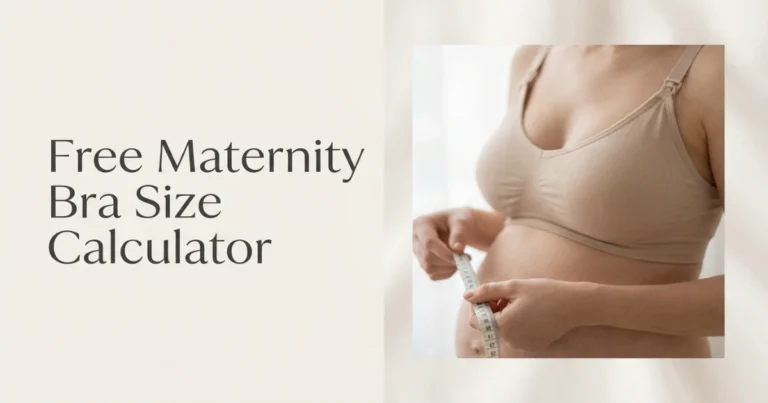
Measure your ribcage snugly directly under your bust, with the tape level all the way around. In this calculator’s modern no-+4 method, that raw underbust is rounded to a practical even US/UK starting band. A snug 34-inch underbust therefore starts at a 34 band; a 33-inch measurement sits between 32 and 34 and usually deserves a two-size try-on rather than false precision.
International labels are then converted from the same starting band. For example, a US/UK 34 band is commonly sold as EU 75 and AU/NZ 12. Those are equivalent garment labels—not a claim that “75 cm equals 34 inches.” Brand body-measurement charts may use a different fitting convention.
Get the anchor right first.
A bra can have beautifully shaped cups and still feel wrong if the band is not anchored. Think of the band as the foundation: it sets the tension, holds the wires in position, and gives the straps something stable to work with. This page is designed to help you find that starting point without hiding the method behind a black-box answer.
How to Measure Your Underbust Correctly
The number looks simple, but a small measuring error can push you toward the wrong band. The goal is not to squeeze the tape as tightly as possible or leave it hanging loosely. You want a repeatable ribcage measurement at the point where the bra band actually sits.
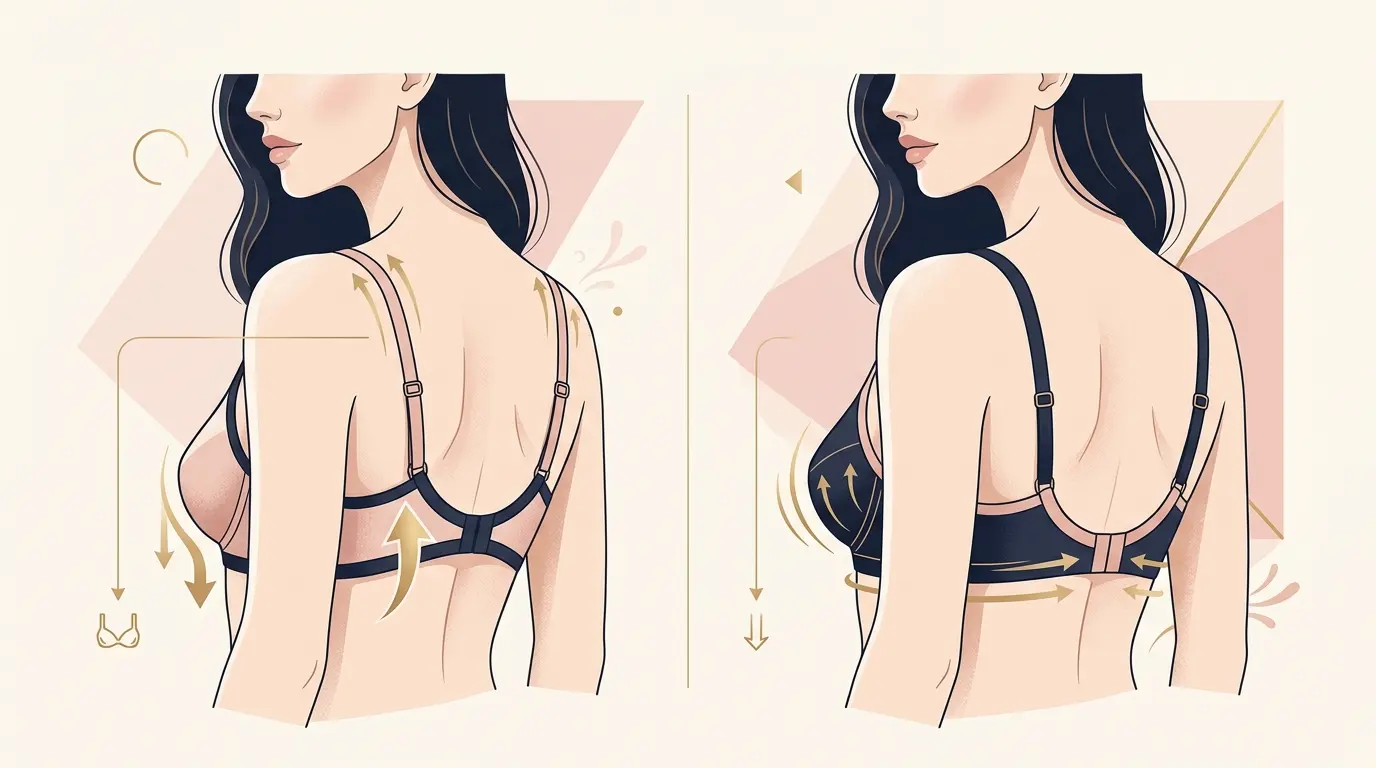
What “level” actually means
The back of the band should not climb toward your shoulder blades. When it rises, the front loses leverage and the straps are forced to do more work.
How This Band Size Calculator Works
This tool uses a transparent starting-size method: raw snug underbust first, then a practical even-numbered US/UK band. It does not automatically add four inches. That matters because older retail formulas can produce a looser band before you have even tried a bra on.
Step 1: Find the nearest practical US/UK band
If your underbust is already close to an even number, the starting point is straightforward. If it falls close to an odd number, you are effectively between two bands. The calculator still gives one starting result, but it flags the nearby band so you can compare both.
Step 2: Translate the label, not the tape measurement
Once the US/UK starting band is established, the calculator maps that garment label to its common regional equivalent. A 34 becomes EU 75 and AU/NZ 12; a 36 becomes EU 80 and AU/NZ 14. This is a size-label conversion. It is not a centimetre conversion of the number printed on the US tag.
Step 3: Use preference and fabric as try-on guidance
Your “firm,” “comfort,” or band-stretch choice does not secretly rewrite your body measurement. Instead, the result shows a neighboring band when that is worth trying. This is more useful than pretending that one formula can know the elasticity of every bra on the market.
The most useful calculator does not pretend a tape measure knows the stretch of every bra. It gives you the right starting point, then teaches you what to look for on your body.
Amelia · Bra-Calculator.com fit methodologyYour snug underbust tells us where to start.
Elastic, wing height and fabric decide how that label feels.
A level, stable, comfortable band decides whether the size stays.
Band Size Conversion Chart: US, UK, EU & AU/NZ
US and UK bands generally share the same even-number labels. EU and AU/NZ use different band numbers for equivalent garment sizes. Use this table when shopping across regions, then check the specific brand chart because construction and labeling can vary.
| US / Canada | UK / Ireland | EU | AU / NZ |
|---|---|---|---|
| 28 | 28 | 60 | 6 |
| 30 | 30 | 65 | 8 |
| 32 | 32 | 70 | 10 |
| 34 | 34 | 75 | 12 |
| 36 | 36 | 80 | 14 |
| 38 | 38 | 85 | 16 |
| 40 | 40 | 90 | 18 |
| 42 | 42 | 95 | 20 |
| 44 | 44 | 100 | 22 |
| 46 | 46 | 105 | 24 |
| 48 | 48 | 110 | 26 |
Worked Band Size Examples
These examples show the calculator’s no-+4 starting logic. They are deliberately simple so you can see what the tool is doing rather than treating the result like a black box.
| Snug underbust | Starting US/UK band | EU equivalent | AU/NZ equivalent | Try-on note |
|---|---|---|---|---|
| 31.8 in / 80.8 cm | 32 | 70 | 10 | Strong 32 starting point |
| 33.0 in / 83.8 cm | 34 | 75 | 12 | Between 32 and 34; compare both |
| 34.0 in / 86.4 cm | 34 | 75 | 12 | Start at 34 |
| 35.2 in / 89.4 cm | 36 | 80 | 14 | 36 is the closer starting band |
| 37.0 in / 94.0 cm | 38 | 85 | 16 | Between 36 and 38; fabric matters |
If your result surprises you, do not assume the tape or your body is “wrong.” Compare the suggested band with the bra you already own. A large jump from your usual size often means your current bra uses a different fitting convention, has stretched with wear, or the cup size is masking a band problem.
The 30-Second Band Fit Test
A number only becomes useful when the bra passes a real fit check. Put a new bra on the loosest hook, scoop all breast tissue into the cups, then assess the band before changing the straps.
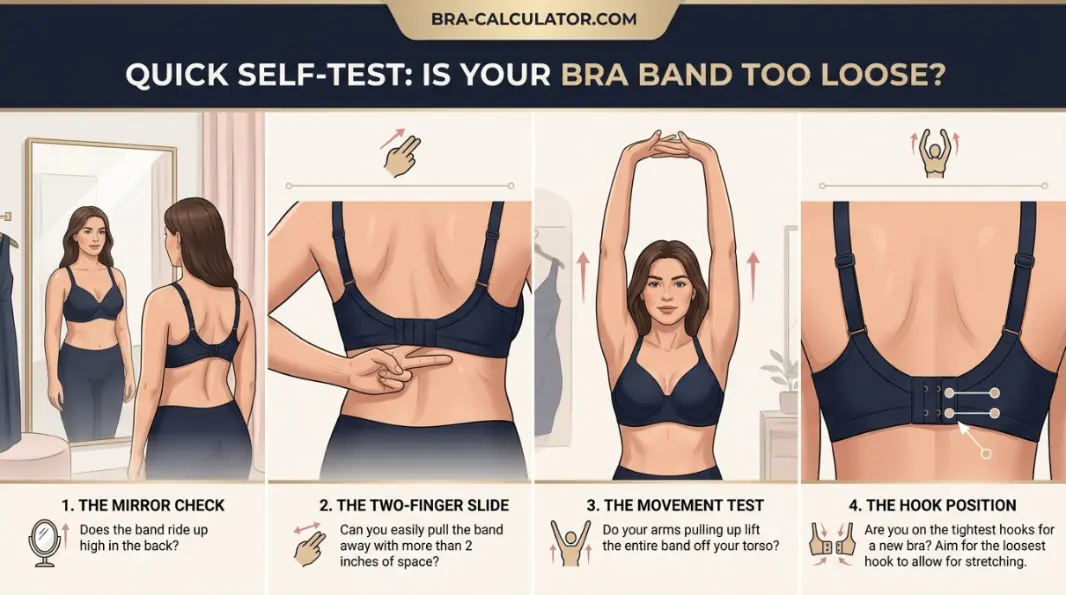
Do the movement test, not just the mirror test
A band can look acceptable while you stand still and still fail as soon as you move. Raise both arms, twist gently, sit down, and take a full breath.
What if the band feels tight?
First test the bra backwards and upside down so the cups are out of the equation. If the band suddenly feels comfortable, the cup may be too small or too shallow and is making the whole bra feel tighter. If the band still feels restrictive on its own, try the next band up or a softer/stretchier construction.
What if the band rides up?
That usually points toward too much band length or too much stretch. Try the next band down while adjusting the cup in the opposite direction if you want to preserve similar cup volume.
Sister Sizes: Change the Band Without Losing Cup Volume
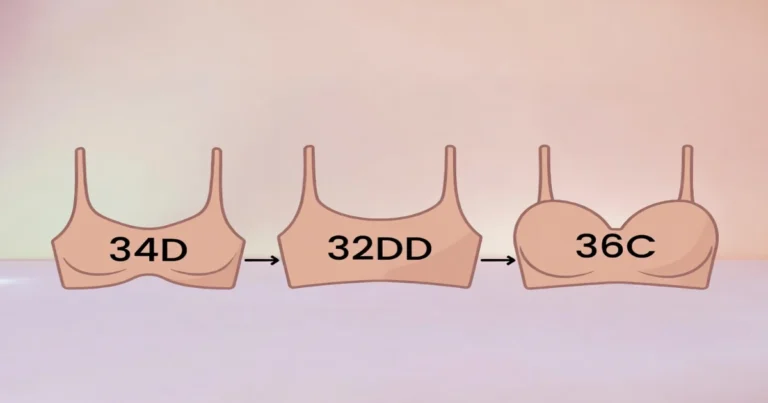
A band size cannot be sister-sized by itself because sister sizing changes both parts of a full bra size. If the cup volume is correct but the band is wrong, move the band and cup in opposite directions.
| Current size | Firmer band | Looser band |
|---|---|---|
| 32C | 30D | 34B |
| 34C | 32D | 36B |
| 36C | 34D | 38B |
| 38C | 36D | 40B |
Use the Sister Size Bra Calculator when you already know your full band-and-cup size and want the exact cup-letter change for your sizing system.
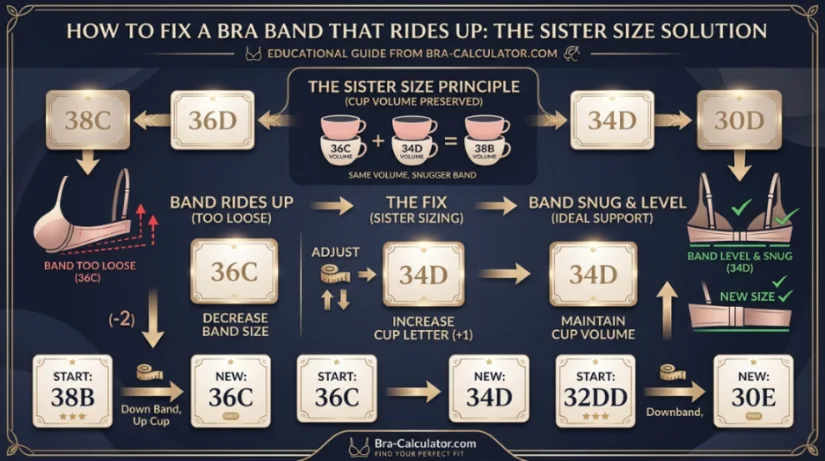
Change one problem at a time
If the cups feel right but the band rides up, sister sizing lets you change band tension without throwing away the cup volume that was already working.
Example: 36C → 34D gives a firmer band with similar cup capacity. 36C → 38B moves the other way for more ribcage room.
Why the Same Band Size Feels Different Between Brands
Band labels are not tension ratings. Two bras can both say 34 and feel noticeably different because the fabric, elastic recovery, hook spacing, wing height and pattern block are different. That is why this calculator treats stretch as a try-on signal rather than pretending it can manufacture an exact brand-specific answer from one tape measurement.
Shopping a brand you have not worn before? Use the Brand Size Decoder after you establish your base size.
Ready to test your starting band?
Try your calculated band and one nearby option when possible. The better choice is the one that stays level and supportive without painful pressure—not the one with the most familiar number on the tag.
Browse Bras by Band Size on Amazon → Affiliate disclosure: Bra-Calculator.com may earn from qualifying purchases at no extra cost to you.Band Size Calculator FAQs
What is my band size if my underbust is 34 inches?
Using this calculator’s no-+4 method, start with a 34 US/UK band. The common equivalent labels are EU 75 and AU/NZ 12. Then confirm the result with the real band fit.
Do I add 4 inches to my underbust?
Not in this calculator. Enter the raw snug measurement exactly as taken. The tool rounds it to a practical even US/UK starting band and keeps any comfort or firmness adjustment visible as a try-on option instead of hiding it inside the formula.
What if my underbust is an odd number like 33 inches?
You are between two common even-numbered bands. This calculator starts at the nearer practical band and flags the neighboring size. At exactly 33 inches, 32 and 34 are both worth comparing because fabric stretch and personal comfort can decide the better fit.
Is a US 34 band the same as EU 34?
No. They are different labeling systems. A US/UK 34 band commonly converts to EU 75. Converting the printed band number as if it were a body measurement gives the wrong result.
What is a US 34 band in Australia?
The common AU/NZ equivalent is band 12. For example, US/UK 34C is generally labeled AU/NZ 12C, although individual brand charts should still be checked.
Should a bra band leave marks?
Light temporary pressure marks can happen with supportive clothing, but sharp pain, persistent deep indentations, numbness or difficulty breathing are not a goal. Recheck the band, cup volume and bra construction if the fit is uncomfortable.
Can the cup make my band feel too tight?
Yes. Cups that are too small or too shallow can pull the band forward and make the whole bra feel tighter. Test the band backwards and upside down to judge its tension without the cups influencing the fit.
How often should I remeasure my band size?
Remeasure when your bras stop fitting the way they used to, after a meaningful body change, during or after pregnancy, or whenever the band starts riding up or digging in unexpectedly. There is no need to chase a new number on a fixed schedule if your bras still fit well.
Use the Right Tool for the Next Question
Band size is only the foundation. If you need the cup letter, international cup conversion, or help diagnosing a bra you already own, continue with the tool that matches the problem.
Reviewed by Amelia
Amelia built Bra-Calculator.com to make sizing less intimidating and more practical. Her approach is simple: show the measurement logic, explain where regional labels differ, and use real fit symptoms—not the tag alone—to decide what changes next.
Meet Amelia & read our fit methodology →