Gynecomastia Workout Compression: 7 Best Gym Support Tips
A compact, practical guide to choosing secure workout compression for gynecomastia without painful tightness, overheating, or obvious gym layering.
The best gynecomastia workout compression feels firm, smooth, and breathable — not painfully tight. For most gym sessions, choose a moisture-wicking compression shirt or tank that controls chest movement, lets you take a full deep breath, stays flat under the arms, and works under a relaxed athletic T-shirt. Compression can improve comfort and confidence during training, but it does not treat or remove glandular breast tissue.
Jump to a Section
Gynecomastia Workout Compression at a Glance
| Attribute | Best Choice | Avoid |
|---|---|---|
| Compression feel | Firm, even, breathable pressure across the chest | Sharp rib pressure, numbness, tingling, or shortness of breath |
| Workout use | Medium-to-firm support for lifting, running, HIIT, and gym classes | Rigid binders for intense exercise or double-layer compression |
| Fabric | Moisture-wicking stretch fabric with smooth seams | Thick cotton, scratchy seams, and fabric that holds sweat |
| Layering | Compression base layer plus relaxed athletic outer tee | Skin-tight outer shirts that reveal every edge and seam |
| Medical reminder | Use compression for comfort and discretion only | Assuming compression treats glandular tissue or replaces medical advice |
What Does Gynecomastia Workout Compression Really Mean?
Gynecomastia workout compression is a support strategy for exercise. It uses a firm athletic base layer to reduce visible bounce, create a smoother outline under gym clothing, and make high-movement workouts feel less distracting. The goal is not to crush the chest flat. The goal is controlled support that lets you move, breathe, sweat, and train without constantly thinking about your shirt or chest outline.
This is important because gym environments expose small fit problems quickly. A shirt that looks fine while standing can cling during sweating, lift during overhead presses, or bounce during running. A compression shirt that feels fine for five minutes can feel restrictive after warm-up if the fabric is too rigid or the size is too small. The correct garment should feel secure after your heart rate rises, not only when you try it on in front of a mirror.
Compression is not a treatment claim. True gynecomastia involves enlargement of glandular breast tissue. Exercise may improve posture, muscle tone, and body composition, but compression does not remove glandular tissue. For workout confidence, though, the right support layer can make a major practical difference: less bounce, less shirt cling, less nipple irritation, and a cleaner silhouette under activewear.
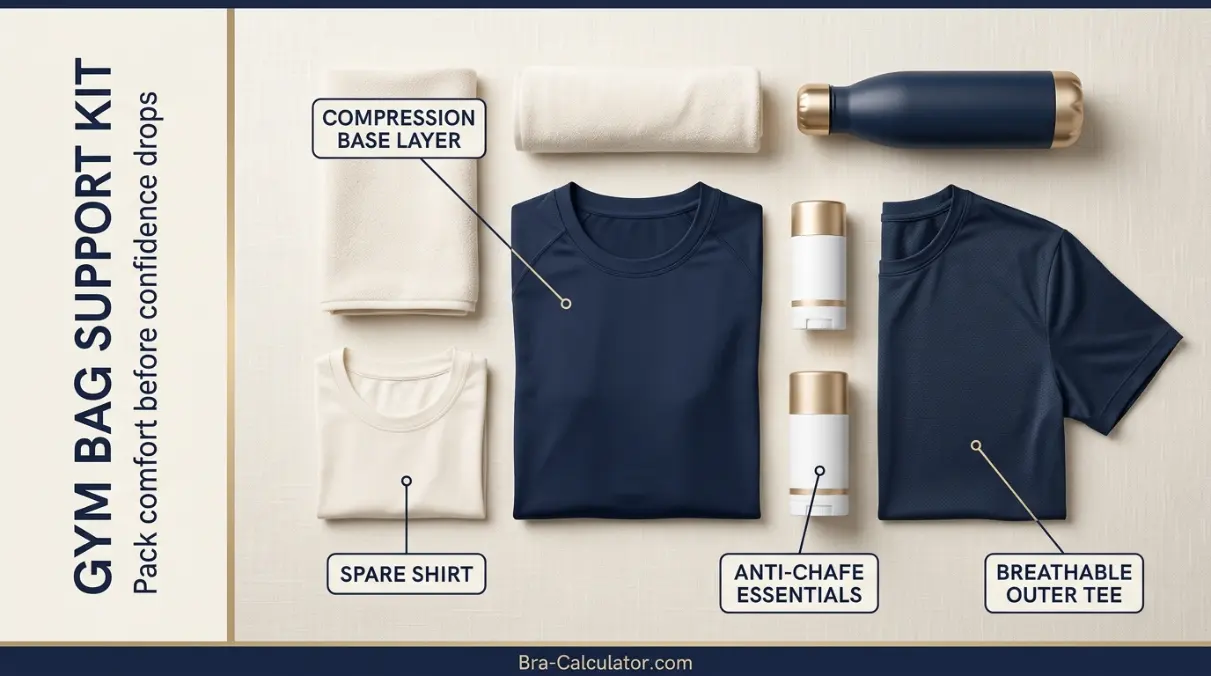
The best approach is a simple three-part system: a correctly sized compression base layer, a relaxed outer gym shirt, and a quick movement test before training. When all three work together, the result looks natural and athletic — not like a medical garment, not like an obvious binder, and not like an overly tight shirt.
Light vs Medium vs Firm Workout Compression
More compression is not automatically better. The right level depends on workout intensity, chest sensitivity, fabric stretch, heat, and how long you plan to train. Most people need enough compression to control movement, but not so much that breathing, rib expansion, shoulder movement, or cooling becomes difficult.
| Training Situation | Best Compression Level | Why It Works |
|---|---|---|
| Strength training | Medium support | Controls chest movement while allowing deep breathing, bracing, and full range of motion. |
| Running or treadmill | Firm athletic support | Reduces bounce and shirt movement during repetitive impact. |
| HIIT or jump rope | Firm but flexible | Needs high-motion control without rib restriction during fast breathing. |
| Hot weather workouts | Light-to-medium breathable | Prevents overheating and sweat trapping while still smoothing the chest. |
| Long gym session | Medium support | Better for comfort after 60–90 minutes than maximum compression. |
How to Choose Gynecomastia Workout Compression
The easiest way to choose a workout compression shirt is to test it like you will actually train. Do not judge it only by how flat it looks standing still. Check breathing, shoulders, underarms, hem movement, sweat comfort, and how it looks under your outer shirt.
For lifting and machines, choose medium compression. For running, HIIT, and jumping, choose firmer athletic support. For walking or mobility work, lighter compression may be enough.
Take three full breaths. Your ribs should expand normally. If breathing feels shallow, strained, or anxious, the garment is too tight for exercise.
The chest panel should stay smooth, the underarms should not cut, and the hem should not roll upward aggressively.
Jog in place, squat, twist, and bend forward. If the compression shifts, folds, pinches, or traps heat immediately, change size or fabric.
A dark, heathered, patterned, or slightly structured workout tee hides compression edges and creates a natural gym look.
Moisture-wicking fabric matters. Cotton compression can become heavy, clingy, and more noticeable once sweat starts.
Pain, numbness, tingling, sharp rib pressure, or shortness of breath means the compression is not safe or not fitted correctly.
Visual Fit Checks for Workout Support
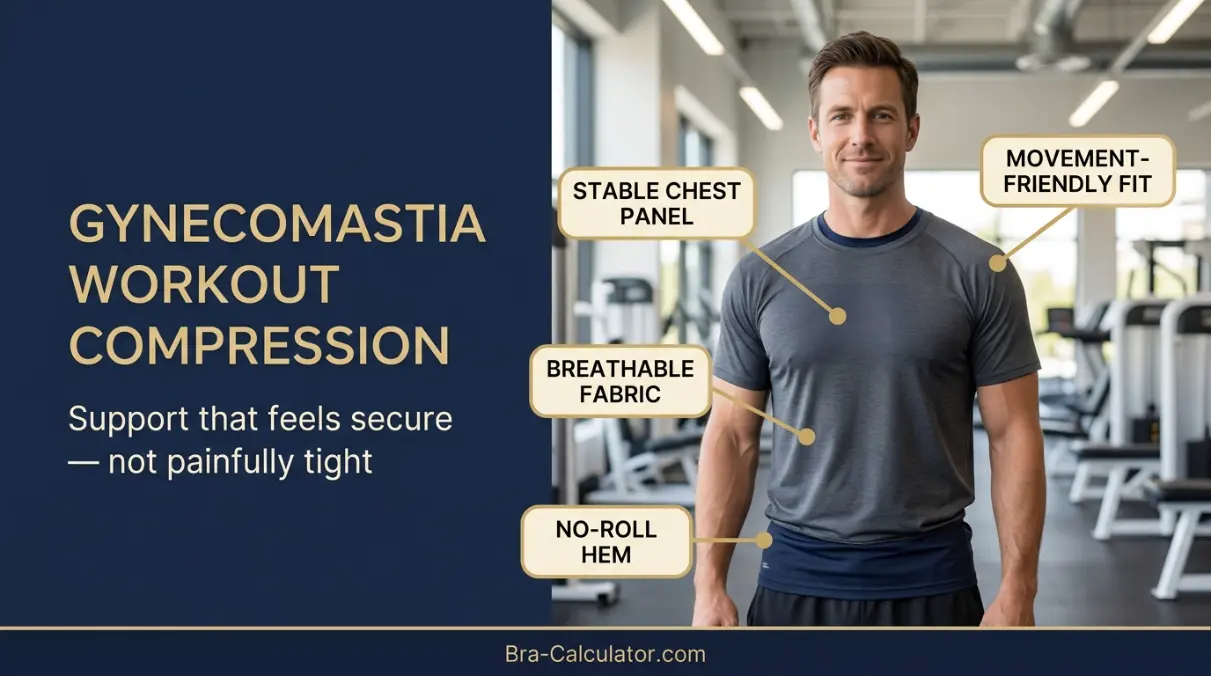
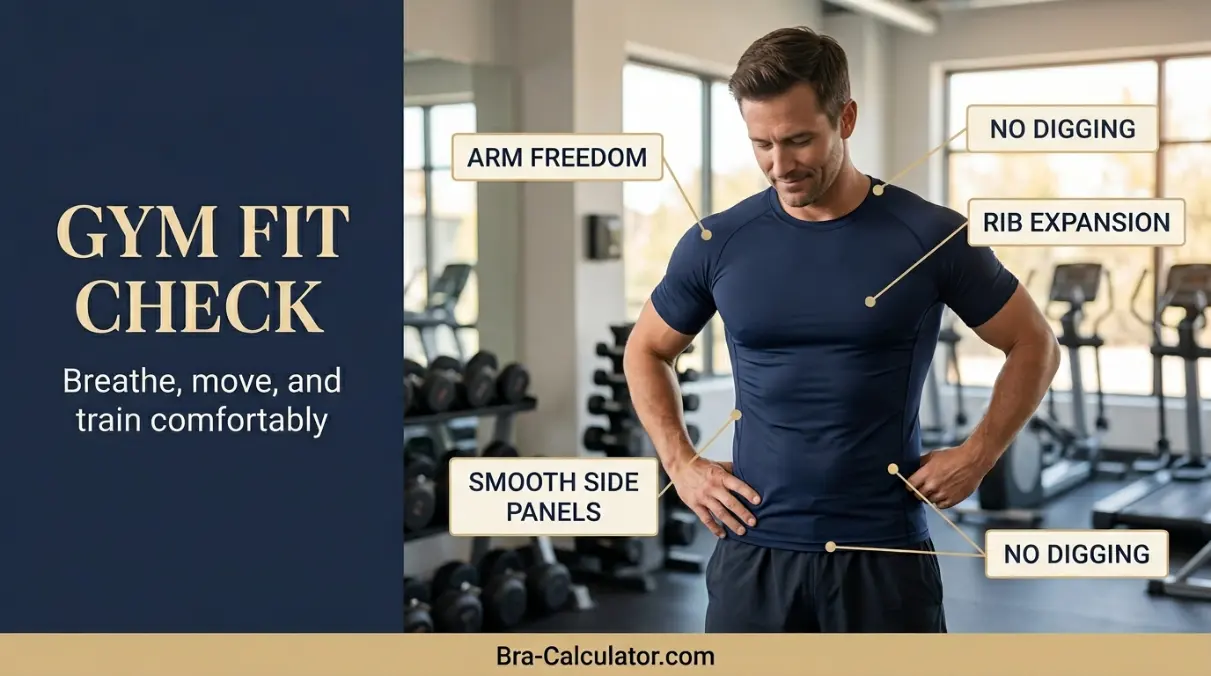
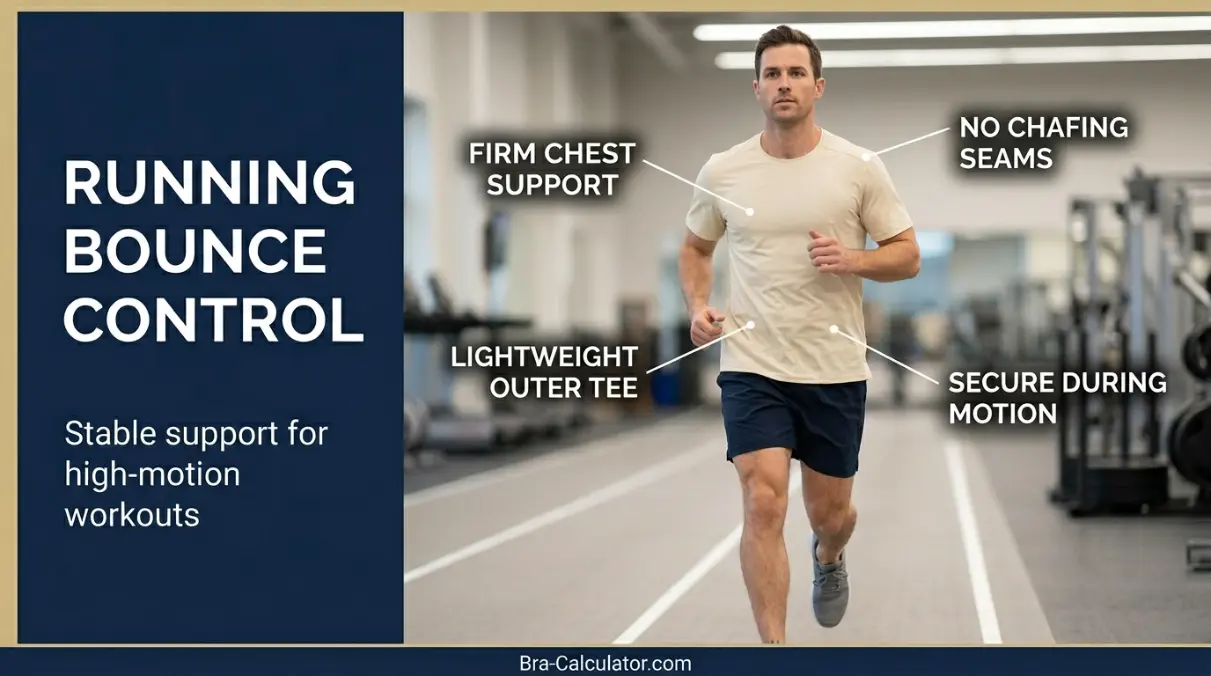
Use these image slots for your final branded visuals. Keep the style modest, respectful, non-medical, and focused on activewear support rather than body exposure.
Gynecomastia Compression for Different Training Styles
- Medium compression shirt or tank with four-way stretch.
- Loose outer tee that does not cling during sweat.
- Enough rib expansion for bracing during squats, presses, and rows.
- Flat seams under arms to prevent chafing during pulling movements.
- Rigid binding that restricts breathing while bracing.
- Very tight sleeves that limit shoulder range during presses.
- Thick cotton layers that become heavy after warm-up.
- Hem rolling during deadlifts, rows, or overhead work.
- Firm athletic compression with strong chest-panel recovery.
- Moisture-wicking fabric to reduce sweat cling.
- Outer shirt with texture or a darker color for better discretion.
- Short jog test before leaving home or locker room.
- Loose base layers that shift up and down with every step.
- Compression that feels fine standing but hurts after five minutes.
- Rough seams over sensitive nipple areas.
- Overheating from heavy double layers.
- Firm but flexible compression that supports jumping and fast transitions.
- High-stretch underarm panels for burpees, planks, and mountain climbers.
- Outer tee with enough length to stay down during floor work.
- Spare dry shirt if the class is sweat-heavy.
- Maximum compression that limits fast breathing.
- Low-cut necklines that shift during floor exercises.
- Seams or logos that print through the outer layer.
- Compression vests that dig at the lower rib during bending.
- Light-to-medium compression in breathable performance fabric.
- Mesh or thin panels where possible.
- Loose light outer tee with decent structure.
- Shorter sessions or breaks if heat builds quickly.
- Heavy compression that traps heat and sweat.
- Dark double layers for outdoor summer workouts.
- Staying in wet compression after training.
- Ignoring skin irritation under the chest or arms.
Best Products for Gynecomastia Workout Compression
Use these product categories as shopping blocks. The safest page angle is to recommend features — breathable fabric, correct pressure, flat seams, and movement comfort — rather than promising permanent chest reduction.

Breathable Compression Base Layer
- Best first option for lifting, machines, walking, and general gym sessions
- Should feel secure without limiting deep breathing or shoulder movement
- Works best under a relaxed athletic T-shirt
- Choose moisture-wicking fabric over thick cotton

Firm Athletic Compression Tank
- Better for bounce control during running and high-impact training
- Tank cut can reduce sleeve bulk under a gym tee
- Look for wide shoulder straps and smooth arm openings
- Avoid if it pinches ribs or restricts fast breathing

Relaxed Performance Outer Tee
- Hides compression edges and reduces visible shirt cling
- Dark, heathered, textured, or patterned fabric works best
- Choose enough length so it stays down during bending
- Pairs well with compression base layers for natural styling
How Body Shape Changes Workout Compression
Two people can wear the same compression size and get very different results. Chest projection, shoulder width, torso length, tissue sensitivity, and belly shape all change how a garment sits during training. This is why a movement test matters more than the size printed on the package.
Needs Chest-Panel Stability
More forward projection usually needs a firmer chest panel and a relaxed outer shirt. Thin, stretchy base layers may smooth at rest but fail during running or jumping.
Use medium-to-firmNeeds Smooth Seams
If rubbing around the nipple or underarm is a problem, fabric texture and seam placement matter more than maximum compression. Soft technical fabric is the priority.
Prioritize comfortWatch Arm Mobility
A very tight shoulder area can pull the chest panel upward. Choose four-way stretch and test presses, rows, and overhead movement before training.
Check shouldersWatch Hem Rolling
Long compression shirts may bunch or roll at the waist during squats and bends. A tank or shorter athletic cut may feel cleaner under gym clothing.
Check hem lengthA Simple Compression Support Progression
Think of compression as a ladder. Start with the lowest level that solves your workout problem. If support is not enough, move up one level. If breathing or comfort suffers, move back down or change fabric.
Best takeaway: workout compression should solve movement and outline problems without creating a breathing, pain, heat, or skin problem.
Which Styles Work Best for Gynecomastia Workout Compression?
The right style depends on workout intensity and how discreet you want the outfit to look. Start with athletic support garments, then use your outer shirt to finish the silhouette.
Best all-purpose choice for gym use. It gives support without looking unusual under a normal workout tee.
Good for running and high-motion workouts when shirt sleeves feel bulky or visible under the outer layer.
Not support by itself, but essential for discretion. Breaks up chest outline and hides compression edges.
Can smooth the chest and upper torso together, but must not roll, dig, or restrict breathing during bending.
Useful for sensitive skin, longer runs, and high-sweat training where rubbing becomes the bigger issue.
Too restrictive for intense exercise if it limits rib expansion, shoulder motion, or breathing rhythm.
Common Problems in Gynecomastia Workout Compression
If compression causes a new problem, it is not the right solution. Use these symptoms as a fitting guide before buying more of the same style.
Safe Use Rules for Workout Compression
Compression should support activity, not fight your body. During workouts, your ribs need room to expand, your shoulders need full movement, and your skin needs cooling. When compression becomes painful, it stops being useful.
| Do This | Why It Matters |
|---|---|
| Choose breathable athletic fabric | Reduces sweat trapping, overheating, and skin irritation during training. |
| Test deep breathing before exercise | Exercise needs rib expansion; compression should not make breathing shallow. |
| Remove wet compression after training | Staying in sweaty fabric increases the chance of irritation and odor. |
| Use medical judgment for symptoms | New pain, a firm lump, nipple discharge, skin dimpling, or one-sided change should be checked. |
Important: This guide is for clothing comfort and workout support only. It is not a diagnosis, treatment plan, or substitute for medical advice. If you have pain, tenderness, nipple discharge, a hard lump, sudden swelling, one-sided enlargement, or symptoms after surgery, speak with a qualified healthcare professional.
Related Tools & Guides for Gynecomastia Support
| Guide / Tool | Why It Helps |
|---|---|
| Men’s Gynecomastia Size Calculator | Estimate a supportive starting size for men’s chest support garments. |
| Gynecomastia Support for Travel | Plan discreet support for flights, road trips, hotels, and hot-weather travel. |
| Gynecomastia Support Guide | Understand everyday support options, fit checks, and clothing strategies. |
| Chest Measurement Guide | Measure chest and underbust areas more consistently before buying compression. |
| AI Smart Fit Bra Calculator | Use fit symptoms to diagnose tightness, gaping, straps, and support issues. |
Frequently Asked Questions
Gynecomastia workout compression is a firm athletic support layer worn during exercise to reduce chest movement, smooth the outline under gym clothing, and make training feel more secure. It is a clothing-support strategy, not a medical treatment for glandular breast tissue.
No. It should feel firm and controlled, but not painful. If you feel numbness, tingling, shortness of breath, sharp rib pressure, or strong underarm cutting, the garment is too tight or not suitable for exercise.
Medium athletic compression is usually best for lifting. It gives chest stability while still allowing deep breathing, bracing, shoulder motion, and torso rotation. Maximum compression can become uncomfortable during heavy sets.
Running usually needs firmer support than lifting because repetitive impact creates visible bounce and shirt movement. A firm compression tank or shirt with moisture-wicking fabric works best when it still allows normal breathing.
Exercise can improve body composition, chest muscle tone, and posture, but true gynecomastia involves glandular breast tissue. Compression can help you train more comfortably and confidently, but it does not remove glandular tissue.
A very rigid binder is usually not the best option for intense workouts because it may restrict breathing and shoulder movement. A breathable athletic compression shirt or tank is usually safer for exercise if it allows full rib expansion and movement.
A relaxed athletic T-shirt works best. Choose darker, heathered, patterned, or slightly structured fabric. This hides compression edges, reduces cling, and makes the whole outfit look natural rather than overly tight.
See a healthcare professional if you notice new swelling, pain, tenderness, nipple discharge, a firm lump, skin dimpling, one-sided enlargement, or symptoms that worry you. Compression is for comfort and discretion; it is not a substitute for medical assessment.
Find a Comfortable Support Starting Point
Use your measurements, workout type, and real fit symptoms to choose compression that supports movement without pain, overheating, or breathing restriction.