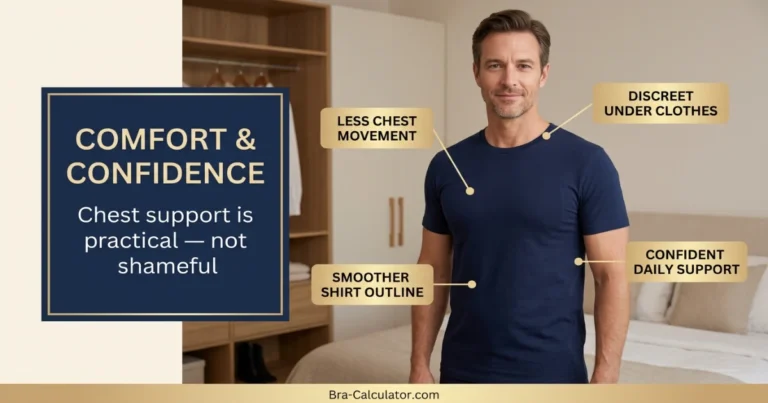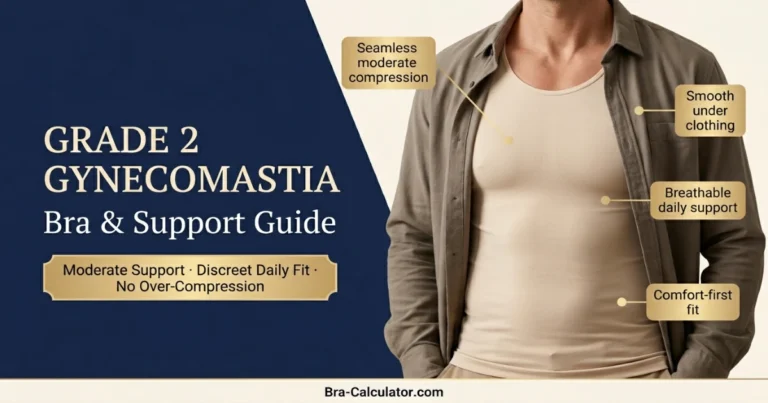
A gynecomastia bra is any supportive chest garment used by men to reduce chest movement, improve comfort and create a smoother outline under clothing. It may be a compression undershirt, compression tank, gynecomastia vest, soft wireless support top, sports compression shirt or post-surgery compression garment. The best choice depends on your chest volume, torso shape, tenderness, activity level and how discreet the garment needs to be. Support garments can help with comfort and appearance, but they do not diagnose, treat or cure gynecomastia.
Gynecomastia Support at a Glance
| Support Need | What It Usually Means |
|---|---|
| Visible chest outline under shirts | A seamless compression undershirt or tank is usually the most discreet first option. |
| Chest moves during walking or workouts | You may need firmer front compression or a sports compression top with better stretch recovery. |
| Compression rolls up at the stomach | The torso length may be too short, or the waist compression may be too aggressive for your body shape. |
| Shoulders or neck feel strained | Support may be hanging from straps rather than being distributed through the garment body. |
| Chest is tender or sensitive | Soft wireless support may be better than firm flattening compression. |
| Post-surgery compression needed | Use the garment and wear schedule recommended by your surgeon or clinician, not a general everyday compression shirt. |
What Does Gynecomastia Chest Support Actually Mean?
Gynecomastia chest support means using a garment to make the chest feel more stable, less exposed under clothing and more comfortable during daily movement. The garment may look like a regular men’s undershirt, a compression tank, a medical-style vest or a soft support top. The purpose is practical: reduce bounce, smooth the shirt line, limit rubbing, provide light-to-firm hold and help the wearer move through the day with less distraction.
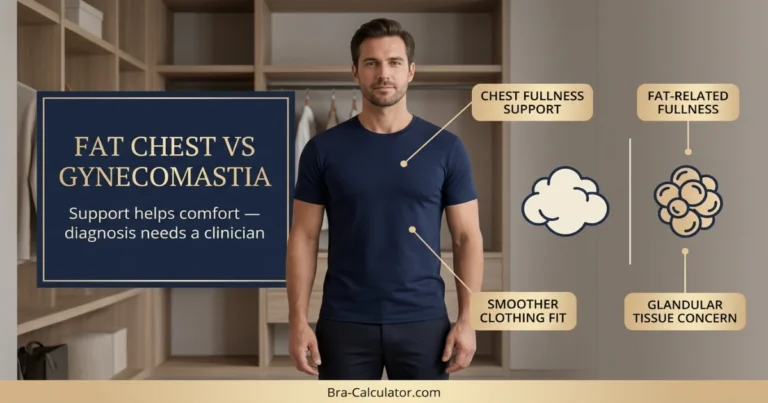
This is different from medical treatment. Gynecomastia itself refers to enlarged male breast or chest tissue. Some men also have pseudogynecomastia, where fullness is mainly fat-related rather than glandular. A support garment can help both situations from a clothing and comfort standpoint, but it cannot tell you which one you have. Only a qualified healthcare professional can diagnose the cause of a new or concerning chest change.
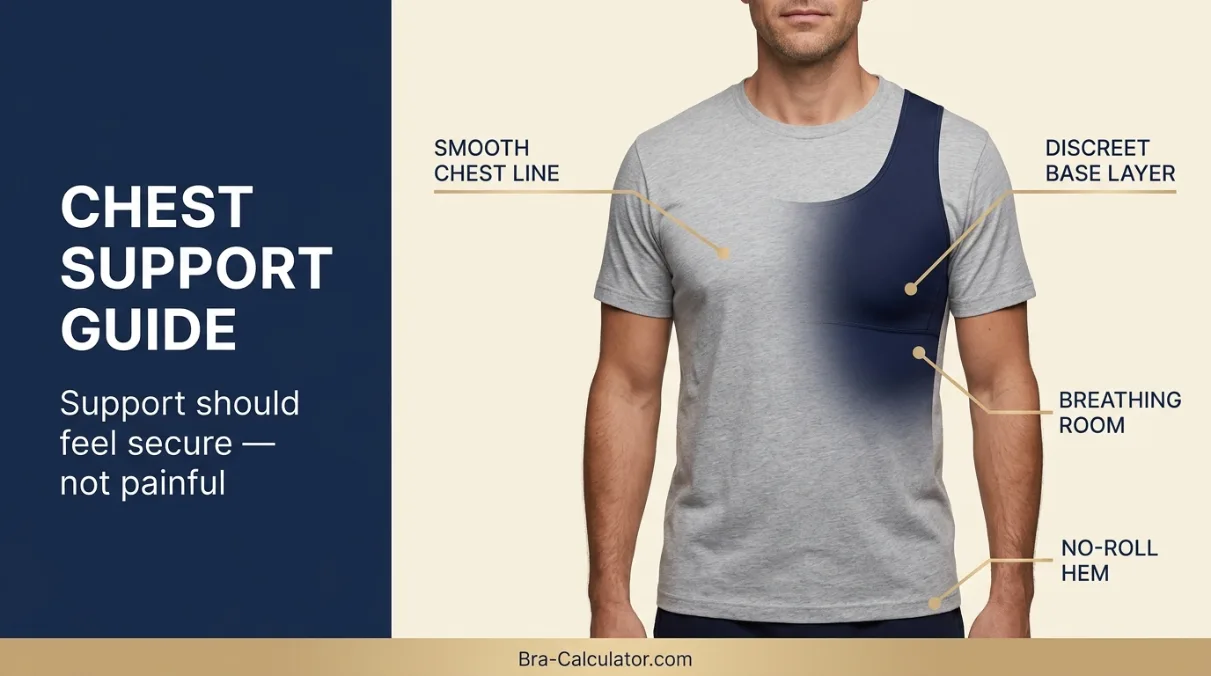
Many men make the same mistake: they buy the tightest compression garment available because they assume flatter always means better. But very firm compression can restrict breathing, roll up at the stomach, create shoulder pressure, overheat in warm weather and make the chest feel more noticeable because the wearer is constantly adjusting it. A good gynecomastia support garment should feel secure, discreet and wearable — not like punishment.
Fit truth: The best support is not always the tightest support. The best support is the firmest level you can wear comfortably for your real situation — work, gym, travel, sleep, swimming or post-surgery recovery.
Five Checks Before Buying a Gynecomastia Bra or Compression Top
Make these checks before choosing a product. Gynecomastia support problems are not all solved by the same garment. Some users need more chest hold, some need less waist pressure, and some need a softer garment because tenderness matters more than flattening.
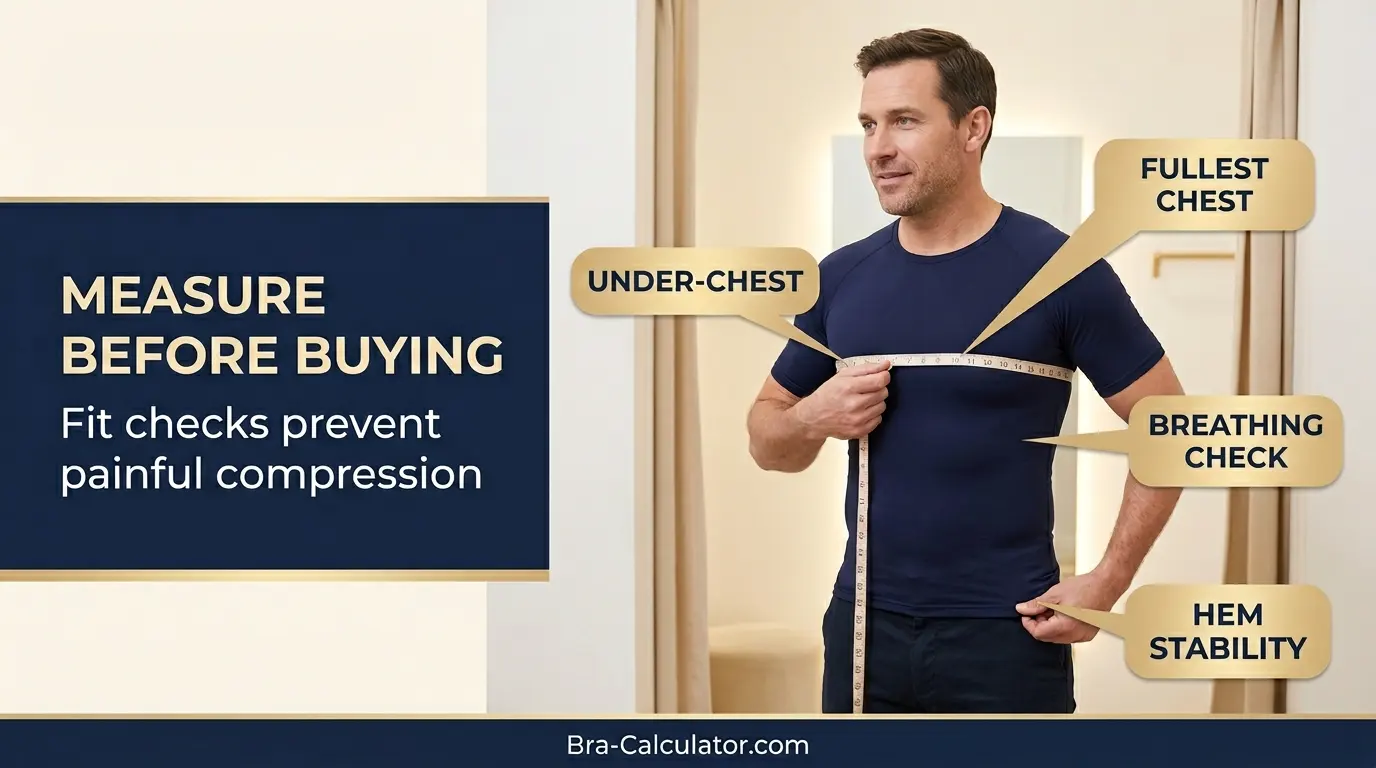
Wrap a soft tape measure around your ribcage directly under the chest tissue. Keep it level and snug, but not tight enough to dig in. This measurement helps estimate the garment’s base size or band support.
Measure around the fullest part of the chest, usually across the nipple line. Stand naturally and breathe normally. This tells you how much front coverage or compression the garment needs to handle.
Are you trying to reduce shirt outline, stop movement, protect tender tissue, avoid nipple show-through, support workouts or follow post-surgery instructions? The main problem determines the best support type.
If you have a larger stomach, long torso or broad shoulders, garment length and shoulder construction matter as much as chest compression. Short or narrow garments often roll, dig or show.
Start with enough support to solve the problem, not maximum compression. You should be able to sit, walk, breathe deeply and move your arms without pain, numbness or constant adjustment.
| Your Main Symptom | Likely Support Issue | Best First Change |
|---|---|---|
| Chest outline shows under fitted shirts | Need smoother daily discretion | Try a seamless compression undershirt or tank. |
| Chest bounces during movement | Need firmer front hold | Try sports compression or a structured compression vest. |
| Garment rolls up when sitting | Torso/waist mismatch | Try longer length, less waist compression or a vest style. |
| Chest is tender or sore | Need gentle support, not flattening | Try soft wireless support or lighter compression. |
| Compression makes breathing hard | Too tight or wrong size | Size up or reduce compression level immediately. |
Why Your Gynecomastia Support Garment Feels Wrong
1. The Compression Is Too Strong
Very firm compression can flatten the chest but create new problems: restricted breathing, shoulder tension, rib pressure, overheating and constant awareness of the garment.
2. The Shirt Is Too Short
Short compression tops often roll up at the stomach, especially when sitting, bending or walking. Once the hem rolls, chest support becomes uneven and uncomfortable.
3. The Front Panel Is Too Weak
Some regular athletic compression shirts are built for muscle warmth, not chest support. They may hug the body but still allow visible movement at the chest.
4. The Shoulder Design Is Wrong
Narrow shoulder straps or thin tank straps can dig in when chest volume is heavier. A garment that hangs from the shoulders instead of distributing support through the body will feel tiring.
5. The Fabric Is Too Hot
Heavy cotton or thick medical compression can feel unbearable in warm weather or during workouts. Sweat can also make the garment more visible and uncomfortable.
6. The Garment Is Too Visible
A technically supportive garment may still fail if the neckline, seams, color or panel edges show under normal clothing.
7. It Is the Wrong Category for Your Situation
A post-surgery vest is not the same as a daily undershirt. A swim rashguard is not the same as a gym compression top. A soft support garment is not the same as firm shaping.
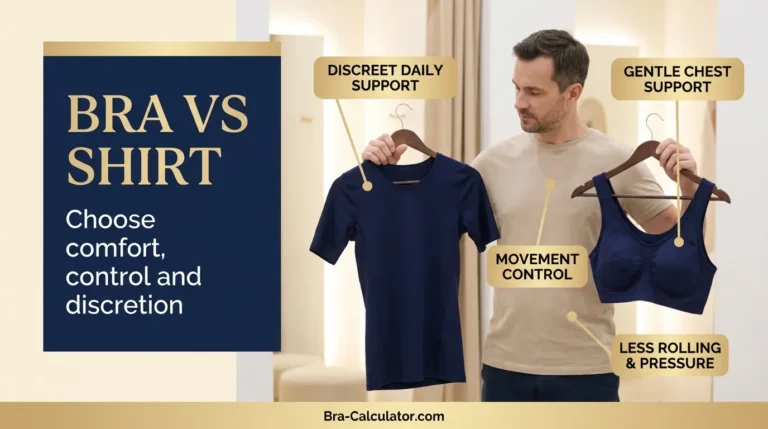
Gynecomastia Bra vs Compression Shirt vs Compression Vest
People often use the phrase “gynecomastia bra” for any chest support garment, but the actual product category matters. The right option depends on whether you need discreet clothing support, firm shaping, workout control, tenderness comfort or recovery compression.
| Support Type | Best For | Avoid This Mistake |
|---|---|---|
| Compression undershirt | Discreet daily smoothing under T-shirts, polos and work shirts | Do not choose one that is too short if you have a larger stomach or long torso. |
| Compression tank | Warm weather, layering, lower necklines and less sleeve bulk | Do not ignore shoulder width; thin straps may show or dig. |
| Gynecomastia compression vest | Firmer front control and stronger chest support | Do not use maximum compression if it restricts breathing or causes numbness. |
| Soft wireless support top | Tenderness, light movement control or dislike of stomach compression | Do not expect the same flattening effect as a firm vest. |
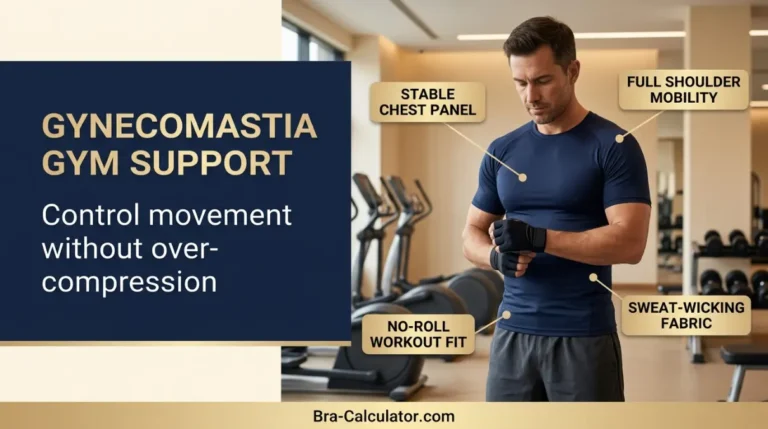
| Sports compression top | Gym, running, lifting and movement-heavy days | Do not use hot, heavy fabric for workouts. |
| Post-surgery compression vest | Only when recommended after gynecomastia surgery | Do not choose recovery compression casually without clinician guidance. |
Medical safety note: If your chest change is new, painful, one-sided, rapidly changing, associated with discharge or feels like a hard lump, choose medical evaluation before treating the issue as only a clothing-fit problem.
Step-by-Step: How to Choose the Right Gynecomastia Support
Work through these steps in order. Jumping straight to the firmest compression garment can create discomfort and reduce the chance you will actually wear it.
Choose one primary need: daily discretion, workout support, tenderness comfort, swimming, travel or post-surgery compression. One product rarely works perfectly for every situation.
Measure under-chest and fullest chest. Use these measurements with the men’s bra size calculator or brand chart to avoid buying only by T-shirt size.
For everyday use, moderate compression is often more wearable than firm medical-style compression. You can move firmer if support is not enough.
Sit, walk, raise your arms and take a deep breath. If the garment rolls, digs, restricts breathing or causes numbness, the fit is wrong.
Try the garment under the shirts you actually wear. A great support garment still fails if the neckline, seams or color show clearly through your normal clothing.
Why Gynecomastia Support Feels Different on Different Bodies
Chest support is not only about the chest measurement. Shoulder width, torso length, stomach shape, tissue tenderness, activity level and recovery status all change what feels supportive.
Shoulders Need Width
Wide shoulders often work better with tank-style compression or broad shoulder panels rather than narrow straps.
Try wide shouldersLength Prevents Rolling
Short compression tops roll more easily when sitting. A longline undershirt or vest usually stays smoother.
Try longlineBulk Can Show
Very firm vests may look bulky under thin shirts. A seamless tank may be more discreet for daily wear.
Try seamless tankSoftness Matters
If the chest is tender, gentle support may feel better than hard flattening. Avoid harsh seams over sensitive areas.
Try soft supportBreathability Wins
Workout support needs sweat control and stretch recovery, not just tightness. Heavy cotton is rarely ideal.
Try sports fabricFollow Instructions
Recovery garments should match your surgeon’s instructions for compression level and wear time.
Use clinician adviceFlexibility Helps
Uneven chest fullness needs flexible front panels. New or rapidly changing one-sided enlargement should be checked.
Try flexible panelFabric Is Critical
Choose breathable, moisture-wicking fabric and a neckline that stays hidden under summer shirts.
Try wicking blendWhat Better Gynecomastia Support Often Improves First
These are not medical outcomes or promised results. They are the practical clothing and comfort changes many men are usually looking for when they switch from a random tight undershirt to a better-matched support garment.
“My shirts sit smoother now.”
When the garment has a seamless front, enough chest coverage and the right neckline, fitted T-shirts and polos often look smoother without obvious seams or panel edges showing through.
“I stopped adjusting it all day.”
A longer torso length, wider shoulder area and moderate compression can reduce rolling, shoulder digging and constant readjustment — especially during work, travel or long sitting.
Important: If a support garment only looks better for ten minutes but becomes painful, hot, restrictive or visible during real movement, it is not the right everyday solution. Wearability matters as much as compression.
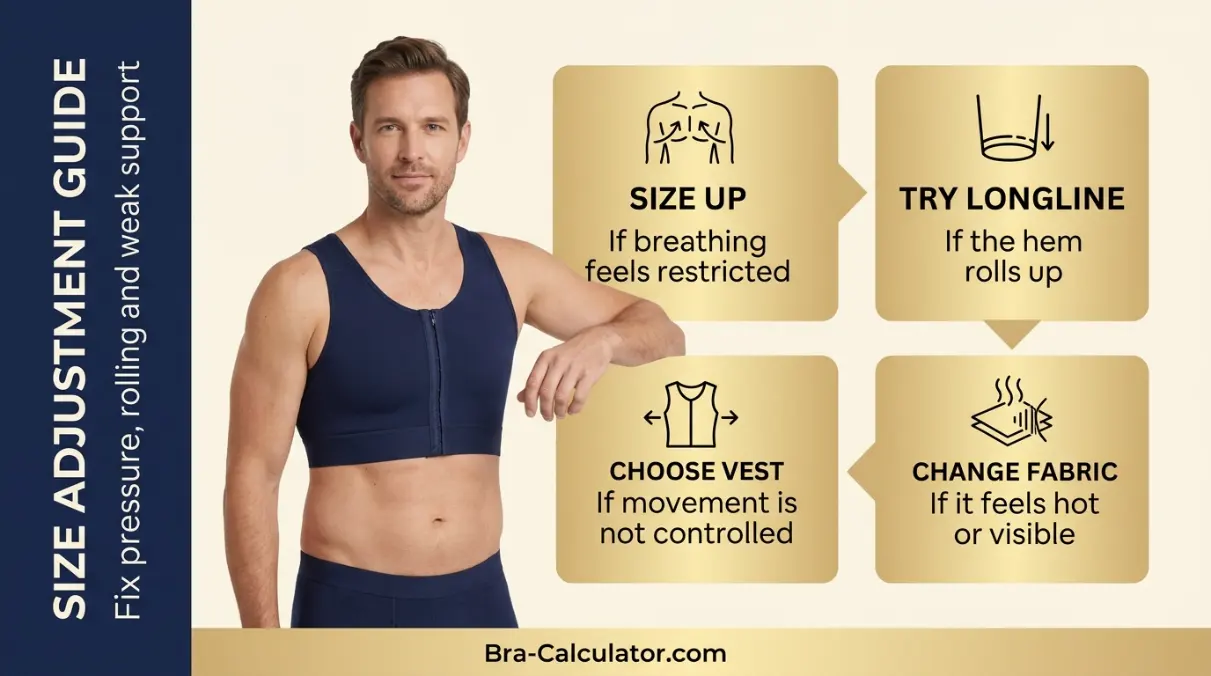
When to Size Up, Size Down or Change Support Category
Gynecomastia support sizing is not always a simple “small, medium, large” decision. The best correction depends on whether the garment is too tight, too loose, too short, too visible or simply the wrong support type.
| Your Fit Signs | Try First | Why |
|---|---|---|
| Breathing feels restricted | Size up or reduce compression level | Compression is too aggressive for safe comfortable wear. |
| Chest still moves too much | Choose firmer front panel or vest | The garment is not supportive enough at the chest. |
| Garment rolls at the waist | Longer length or vest style | The hem/torso fit is failing, not necessarily the chest support. |
| Shoulders hurt | Wider straps or tank-style shoulder area | Pressure is concentrated instead of distributed. |
| Support shows under shirts | Seamless design, matte fabric, matching neckline | The garment may fit but is wrong for your clothing style. |
What Should You Fix First?
- Chest outline shows under shirts
- Nipple show-through is the main issue
- You want the garment to look like an undershirt
- Try a seamless compression undershirt
- Choose matte fabric and neutral color
- Match neckline to the shirts you wear
- Chest moves during walking or workouts
- Regular compression shirt is not enough
- You adjust the garment often
- Try sports compression or a vest
- Look for a firmer front panel
- Check shoulder width and hem stability
- Compression feels painful or hot
- Chest is tender or sensitive
- You dislike pressure around the stomach
- Try softer wireless support
- Choose lighter compression
- Avoid harsh seams over tender areas
- You recently had gynecomastia surgery
- Your clinician gave compression instructions
- Swelling control is the goal
- Follow surgeon instructions
- Use post-surgery compression only as directed
- Do not replace clinical garments with casual compression
Support Styles That Help With Gynecomastia Comfort
The best starting point for discreet daily support because it looks like a normal base layer and smooths under shirts.
Helpful for warm weather and users who need longer torso coverage to reduce rolling at the waist.
Useful when a regular compression shirt is not strong enough to control movement or front projection.
Better for workouts because it is usually more breathable and movement-friendly than casual compression.
Gentler option when the chest is sensitive or when stomach/rib compression feels uncomfortable.
May flatten temporarily but can restrict breathing, roll up, overheat and feel unrealistic for long daily wear.
Three Product Types to Consider After Measuring
For this pillar page, three product categories are enough. The goal is to guide users toward the right support direction, then send deeper commercial intent to the dedicated best bras for gynecomastia product page.
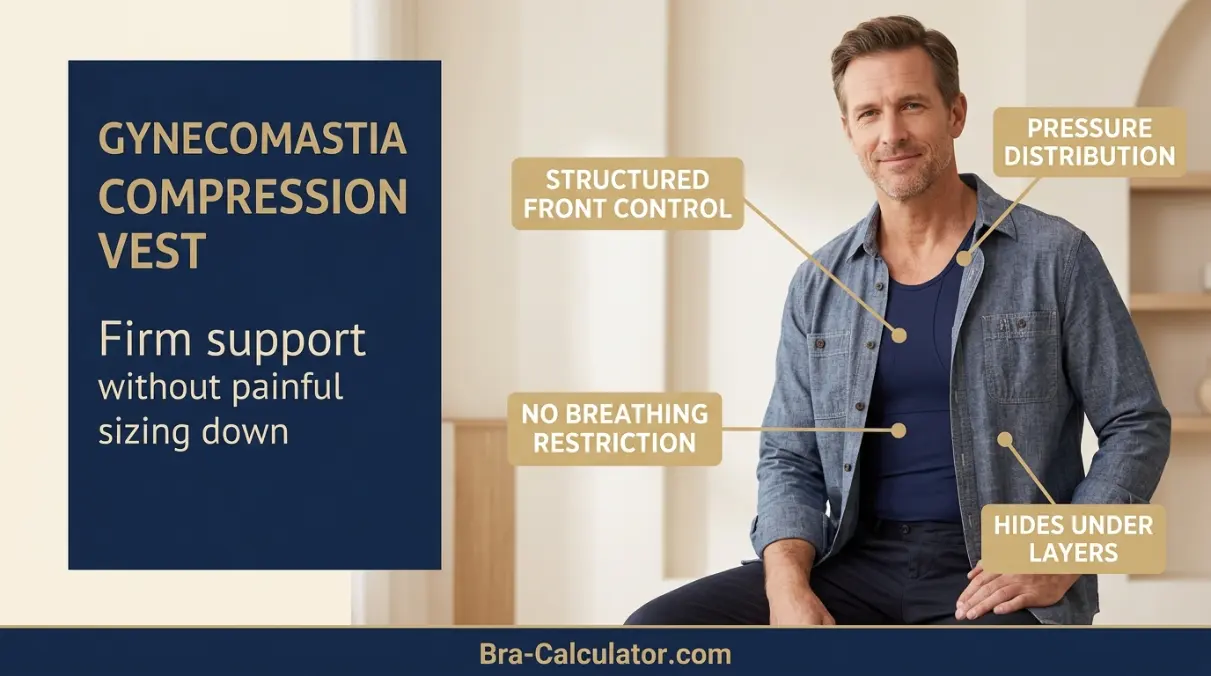
Men’s Compression Undershirts
- Best starting option for smoothing the chest under T-shirts, polos, uniforms and work shirts.
- Looks like a normal undershirt, so it is usually more discreet than a bra-style garment.
- Choose longline construction if regular compression shirts roll at the stomach.
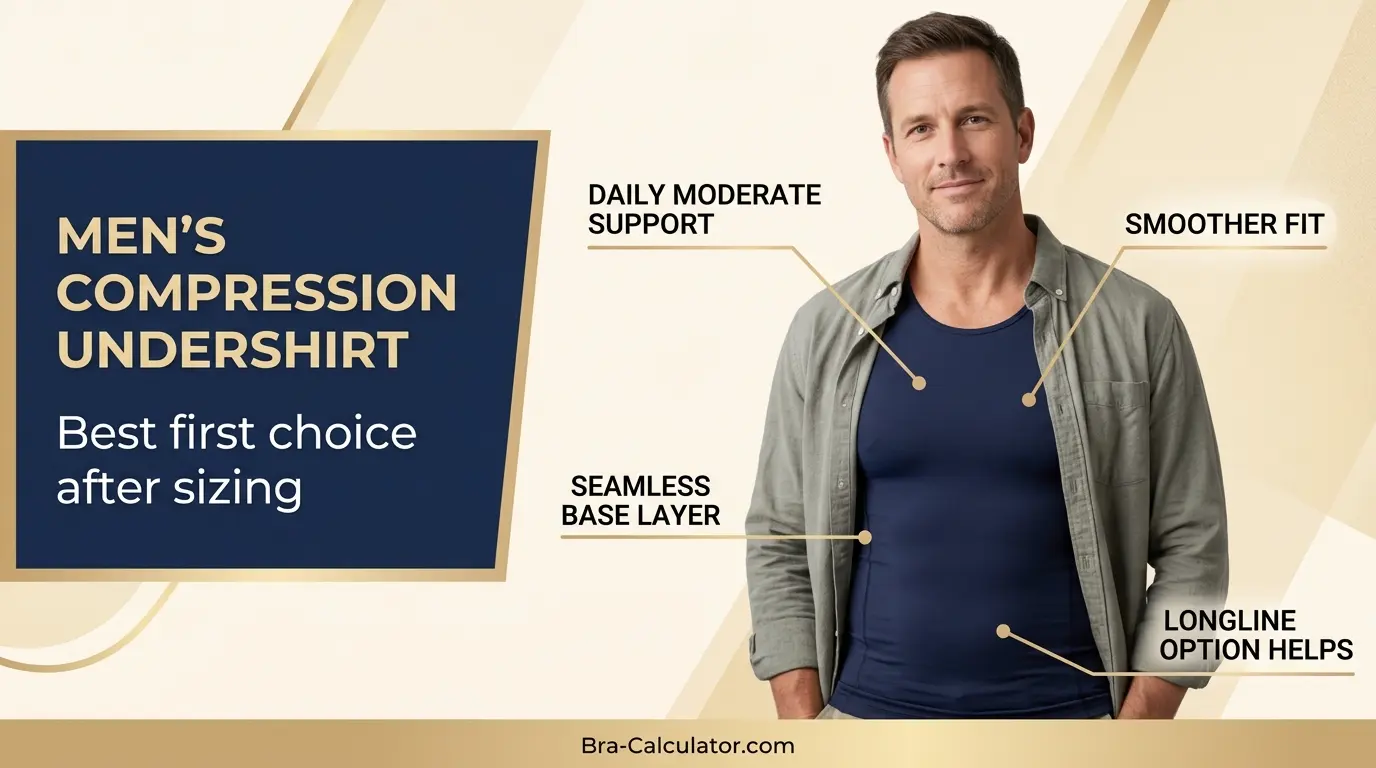
Gynecomastia Compression Vests
- Better when a standard compression undershirt does not control chest movement enough.
- Useful for larger chest volume, higher movement days or stronger shaping needs.
- Check breathing, shoulder pressure and heat before wearing firm compression all day.
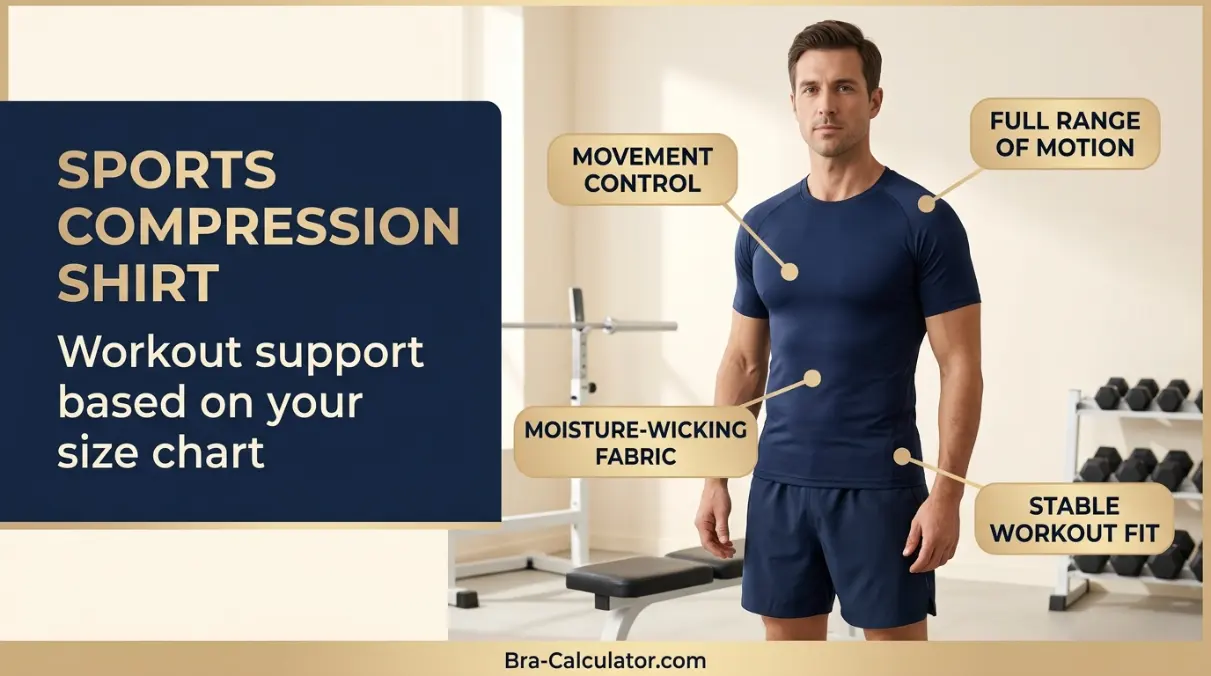
Sports Compression Shirts
- Best for gym, running, lifting and movement-heavy days when bounce control matters.
- Moisture-wicking fabric usually performs better than heavy cotton during exercise.
- Avoid compression so tight that it limits breathing or shoulder range of motion.
Problems Often Confused With Bad Gynecomastia Support
If the garment restricts breathing, creates numbness or leaves painful marks, the compression is too strong or the size is wrong.
Rolling usually comes from short length, tight waist compression or mismatch with stomach shape rather than chest size alone.
Seams, panel edges, color contrast and high necklines can make a supportive garment too obvious under regular clothing.
A regular compression undershirt may smooth the chest under clothes but fail during running, lifting or sport.
References and Medical Disclaimer
This guide is for comfort, clothing support and sizing education. It is not medical advice and does not diagnose or treat gynecomastia. Support garments can improve how the chest feels and how clothing sits, but they do not remove glandular tissue or replace professional evaluation.
Seek medical advice if you notice a new hard lump, sudden swelling, one-sided rapid change, nipple discharge, skin dimpling, redness, fever, severe pain or any symptom that feels unusual for you.
Frequently Asked Questions
What is a gynecomastia bra?
A gynecomastia bra is a supportive chest garment worn by some men to reduce chest movement, improve comfort and create a smoother outline under clothing. It can be a soft support bra, compression undershirt, compression tank, compression vest or sports compression top.
Should men with gynecomastia wear bras?
Some men with gynecomastia choose bras or compression garments for comfort, support and confidence under clothing. It is a personal comfort choice, not a medical requirement for everyone.
Which gynecomastia support should I try first?
For most daily clothing concerns, start with a seamless men’s compression undershirt because it is discreet and easy to wear under normal shirts. If movement control is still not enough, try a gynecomastia compression vest. For gym use, choose a breathable sports compression shirt.
Is a compression shirt better than a bra for gynecomastia?
A compression shirt is often more discreet under men’s clothing because it looks like a regular undershirt. A soft support bra or top may feel better for tenderness or when full torso compression feels uncomfortable.
How tight should gynecomastia compression be?
Compression should feel snug and supportive, not painful. You should be able to breathe normally, sit comfortably, raise your arms and remove the garment without numbness, sharp marks or skin irritation.
Can a gynecomastia bra reduce breast tissue?
No. A gynecomastia bra or compression garment may improve comfort and appearance under clothes, but it cannot reduce glandular tissue or treat the underlying cause of gynecomastia.
What is the most discreet support for gynecomastia?
A seamless compression undershirt or tank is usually the most discreet option because it looks like a normal base layer and avoids visible bra straps, seams or cup outlines.
Can I wear gynecomastia support to the gym?
Yes. Many men use sports compression tops during workouts to reduce movement. Choose breathable fabric and avoid compression so tight that it limits breathing or shoulder movement.
Why does my compression shirt roll up?
Compression shirts usually roll up when the torso length is too short, the waist is too tight, the hem lacks grip or the garment is trying to compress the stomach too aggressively. A longer top or vest-style garment may work better.
What fabric is best for gynecomastia support?
For daily wear, a smooth nylon/spandex or polyester/spandex blend usually works better than heavy cotton because it stretches, recovers shape and lies flatter under clothing. For workouts, choose moisture-wicking performance fabric.
Do I need a doctor before buying support?
You do not need a doctor simply to buy comfort support, but you should seek medical advice for sudden changes, a hard lump, severe pain, nipple discharge, skin changes or fast one-sided enlargement.
Choose Gynecomastia Support That Fits Your Body
Measure your under-chest and fullest chest, then use the free men’s calculator to choose a realistic starting size before buying compression shirts, support tops or vests.