Gynecomastia Support for Travel: 7 Smart Comfort Tips
Compact travel guide for flights, road trips, hot weather, airport outfits, packing backups, and discreet support that feels secure — not painfully tight.
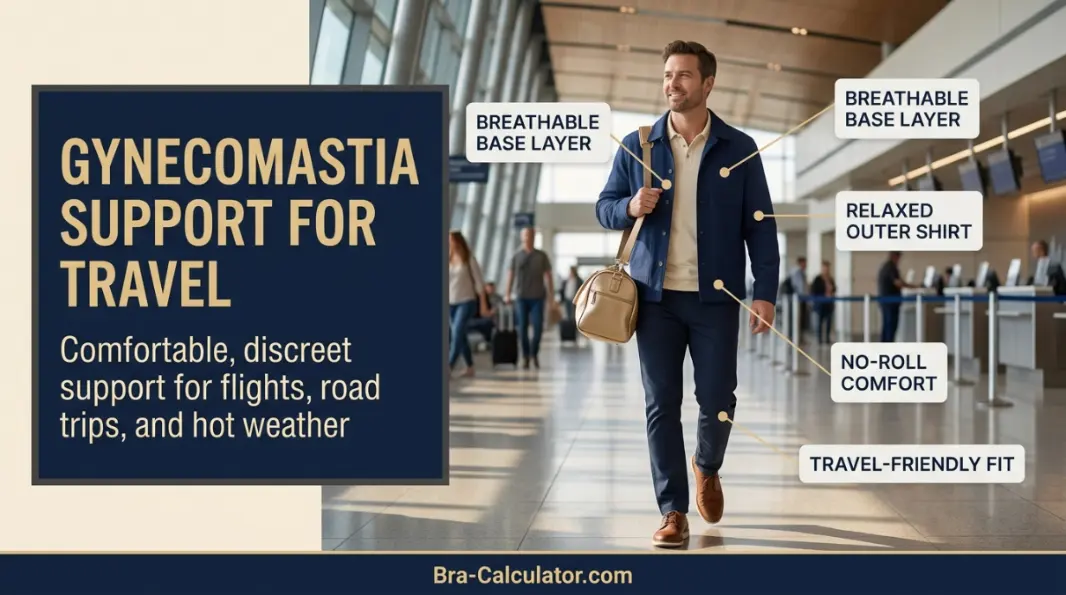
The best gynecomastia support for travel is a breathable, moderate-compression base layer that smooths the chest without restricting breathing, digging into the ribs, or creating visible edges under clothes. For flights and road trips, comfort matters more than maximum flattening because you may wear the garment for several hours while sitting, walking, carrying bags, and sleeping upright.
A strong travel setup usually includes one trusted support garment, one structured overshirt, one backup support layer in your carry-on, and a simple sweat/laundry plan. The goal is confidence and comfort from departure to arrival — not painful compression.
Jump to a Section
Gynecomastia Support for Travel at a Glance
| Travel Need | Best Choice | Avoid |
|---|---|---|
| Long flights | Moderate compression with soft hem and breathing room | New, very tight compression worn for the first time |
| Airport outfit | Supportive base layer + textured shirt + open overshirt | Thin pale stretch shirts that cling to the chest |
| Carry-on backup | One clean support layer packed in personal bag | Keeping all support garments in checked luggage |
| Hot weather | Moisture-wicking fabric, darker shirt, lighter support | Heavy cotton layers that stay wet and rub |
| Safety rule | Secure, breathable, painless support | Shortness of breath, numbness, sharp rib pressure, skin breakdown |
This page is clothing and comfort guidance, not medical diagnosis or treatment. If you have sudden one-sided swelling, a hard lump, nipple discharge, severe pain, recent chest surgery, breathing difficulty, skin breakdown, or clotting concerns, speak with a qualified clinician before using tight compression for long travel.
Why Gynecomastia Support Feels Different When You Travel
At home, you can adjust clothing quickly. You can change shirts, remove a tight layer, cool down, or swap support if your chest starts feeling uncomfortable. During travel, those small fixes become harder. You may be seated for hours, moving through crowded terminals, carrying a backpack, wearing a seat belt, or switching between outdoor heat and cold air conditioning.
That is why gynecomastia support for travel needs a different strategy than gym support, office support, or daily casual wear. A garment that feels fine for two hours may feel too tight after six. A shirt that looks smooth while standing may crease across the chest when sitting. A compression top that feels discreet in a mirror may become sweaty and irritating under a jacket.
The best travel support balances stability, breathability, and forgiveness. Stability reduces bounce and visible movement. Breathability helps with sweat and odor. Forgiveness means the garment still feels comfortable when posture changes, the ribcage expands during deep breathing, or the body feels slightly swollen after salty airport food and long sitting.
Lift, Reach, Walk
You bend, lift bags, reach for documents, and walk quickly. Support should stay in place without rolling up or showing a hard edge.
Rib Pressure Matters
Seats compress your torso. A band or hem that feels fine standing may dig into the ribs during long flights, buses, or car rides.
Breathing roomCling Shows Fast
Travel days often include temperature swings. Breathable fabric and spare layers matter more than extreme flattening.
Moisture-wickingPressure Lines
Backpacks and crossbody bags can press across the chest. Test your real bag with your real outfit before leaving.
Strap testLight vs Moderate vs Maximum Travel Compression
For travel, stronger is not always better. The tightest garment may look flatter in a mirror, but a long journey rewards softness, breathability, and a garment you can wear without thinking about it every hour.
| Support Level | Best For | Travel Risk |
|---|---|---|
| Light support | Relaxed sightseeing, sleep/rest days, low tenderness | May allow too much bounce under backpack straps or during rushed walking |
| Moderate support | Most flights, road trips, airports, business travel | Must still allow deep breathing and seated comfort |
| Maximum compression | Short events where appearance matters more than all-day comfort | Can become restrictive, hot, or painful during long sitting |
Best Gynecomastia Support by Travel Situation
There is no single perfect travel garment. A city flight, a 14-hour international route, a beach holiday, a road trip, and a work conference create different fit problems. Start with the table below, then test the garment before travel day.
| Trip Situation | Best Support Choice | Avoid This |
|---|---|---|
| Short flight or train ride | Moderate compression undershirt or light support bra under a structured shirt | Very tight binders that feel restrictive after one hour |
| Long-haul flight | Breathable support with soft lower hem and spare top in carry-on | New garments worn for the first time on flight day |
| Road trip | Compression tank or seamless support layer with relaxed hoodie/overshirt | Thick pads that shift under the seat belt |
| Hot-weather destination | Moisture-wicking lightweight support and breathable dark shirt | Heavy cotton layers that stay wet and rub the nipple area |
| Business travel | Smooth base layer under thicker dress shirt, knit polo, or blazer | Thin dress shirts without an undershirt |
| Adventure/sightseeing | Sports-style support with sweat control and no-roll hem | Loose base layers that allow chest movement under straps |
Discreet Airport Layering That Does Not Look Overdone
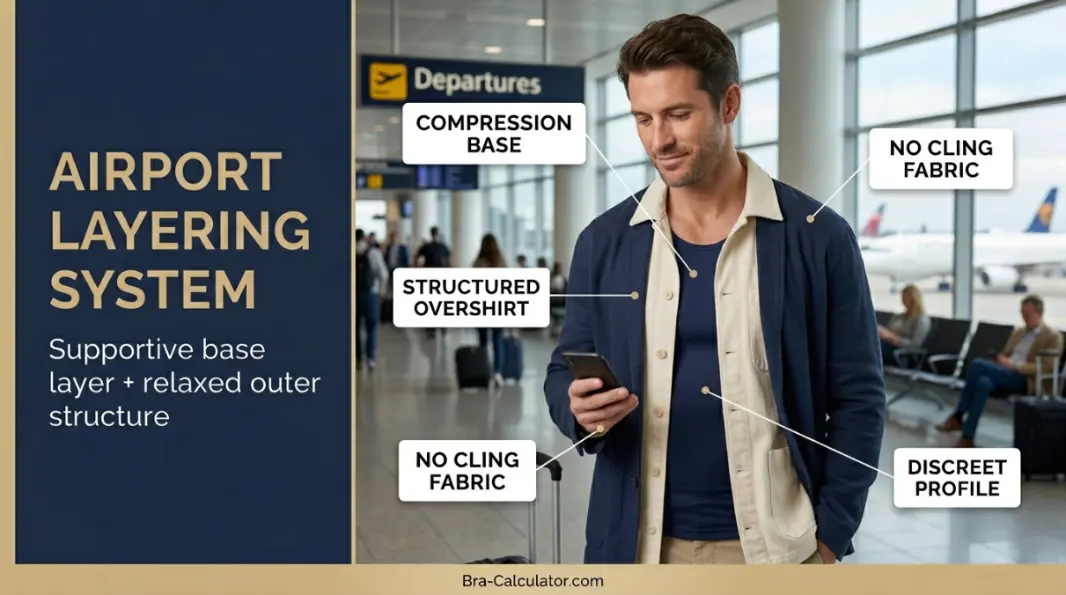
The easiest travel outfit formula is simple: supportive base layer + structured middle layer + relaxed outer layer. The base layer controls movement. The middle layer softens the chest outline. The outer layer adds shape and coverage without making the outfit look like you are hiding something.
For many men, a fitted compression undershirt under a breathable overshirt works better than wearing a very tight binder under a thin T-shirt. Thin fabric tends to reveal the nipple line, the lower breast curve, and the edges of support garments. A shirt with a little structure — such as a camp collar shirt, casual button-up, travel overshirt, zip hoodie, or lightweight jacket — breaks up the chest area naturally.
Dark navy, charcoal, olive, denim blue, and small textured patterns are usually more forgiving than thin white or pale grey shirts. You do not need oversized clothing. In fact, very oversized shirts can sometimes hang from the chest and draw attention to the area. Aim for relaxed, clean, and structured instead.
The 4-Part Packing System for Gynecomastia Travel Support
Packing for gynecomastia support is not just adding one compression top to your suitcase. A good system gives options. If the weather changes, if your first layer gets sweaty, if your bag is delayed, or if your chest feels tender, you still have a plan.
This is the garment you trust most for travel day. It should already be tested while sitting, walking, lifting bags, and wearing your planned shirt.
Checked luggage can be delayed and travel days can stretch longer than expected. Keep one clean support layer in your backpack or personal item.
A soft overshirt, hoodie, quarter-zip, travel jacket, or textured button-up can make support look natural without clinging to the nipple area.
Pack a small laundry bag, spare undershirt, and skin-safe anti-chafe protection if rubbing is common. Choose softness and breathability over stronger squeeze.
The Travel Fit Test Before You Leave
Before travel day, put on your chosen gynecomastia support garment with the exact shirt or outfit you plan to wear. Then run this short test. It catches the problems that usually appear at the worst time.
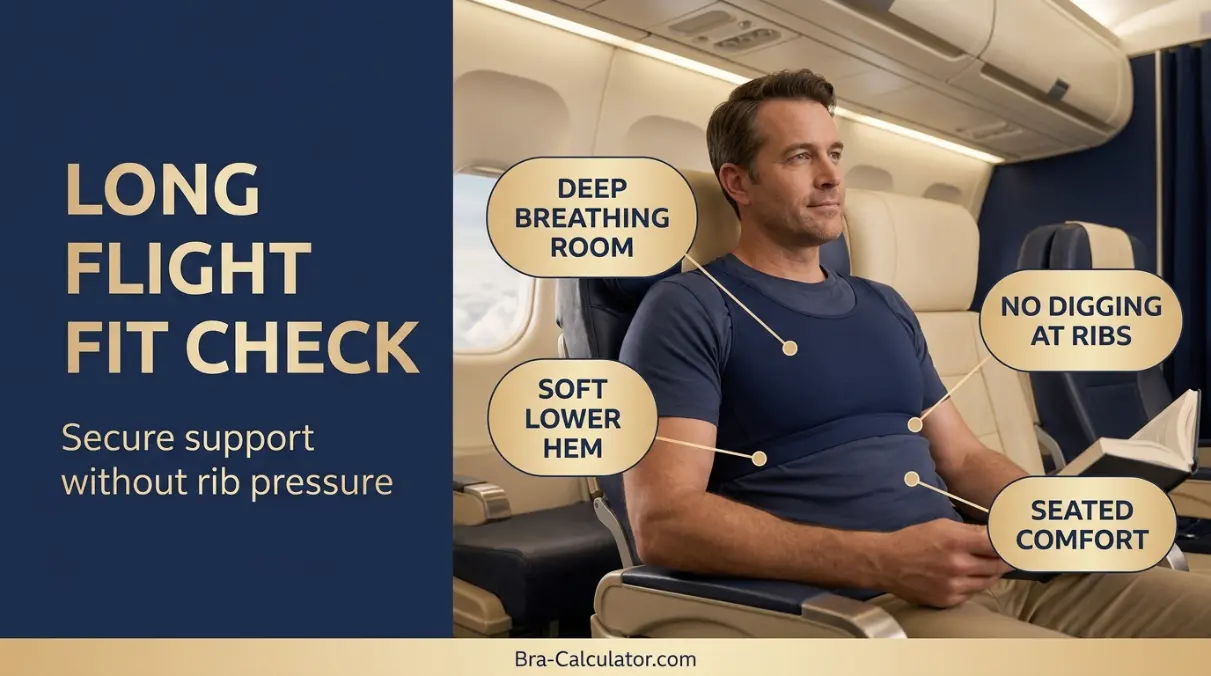
Sit for two minutes and breathe deeply. Your ribs should not feel trapped, squeezed, or sharply compressed.
Raise your arms like placing a carry-on bag overhead. The garment should not roll up or expose hard edges.
Lean forward like tying shoes. The chest should stay supported without sharp digging or skin pinching.
Wear your backpack or crossbody bag. Straps should not create painful pressure across the supported chest area.
Look for hard edges, nipple show-through, rolling fabric, or a lower hem line showing through your shirt.
If the garment fails two or more checks, it is not your best travel-day option. Use it for shorter outings and choose softer, more breathable support for long journeys.
Flights, Trains & Road Trips: Support Without Over-Compression
Long travel often means long sitting. That changes how compression feels. A chest garment that presses into the lower ribs may become more noticeable when your torso is folded in an airplane seat. A stiff hem may roll upward. Shoulder straps can dig under a backpack. A tight garment can also make you feel warmer when boarding, rushing through terminals, or waiting in a packed vehicle.
For travel, the safest mindset is: smooth and secure, not maximum squeeze. You should be able to breathe deeply, talk normally, eat, sit, and move without pain. If you feel numbness, tingling, dizziness, sharp rib pressure, skin burning, or shortness of breath, loosen or remove the garment as soon as it is safe to do so.
For road trips, pay attention to the seat belt. A diagonal belt can press across the chest and make the area more noticeable. A structured overshirt or jacket can reduce the visual line of the belt. For long flights, stand, stretch, and move your legs when possible because long sitting can affect circulation.
Do not use tight chest compression as a substitute for medical compression advice. Gynecomastia support is about comfort and confidence. If a doctor has advised surgery recovery rules, travel precautions, or compression limits, follow that guidance first.
Hot Weather Gynecomastia Support for Humid Destinations
Hot weather is one of the hardest situations for gynecomastia support because sweat can make fabric cling to the chest. It can also increase friction around the nipple, under the breast fold, or along the lower hem of a compression top. The answer is not always more layers. The answer is smarter fabric and better shirt structure.
Choose moisture-wicking support when possible. Avoid very thick cotton as your only base layer because once cotton gets wet, it can stay damp and rub. A lightweight technical undershirt or breathable support tank usually performs better for walking tours, airport transfers, beach towns, and summer city breaks.
For outerwear, try darker breathable shirts, subtle prints, textured polos, linen-blend overshirts, or camp collar shirts. These pieces help disguise cling without trapping too much heat. Avoid thin, pale, stretchy shirts if you are worried about nipple visibility or chest outline.
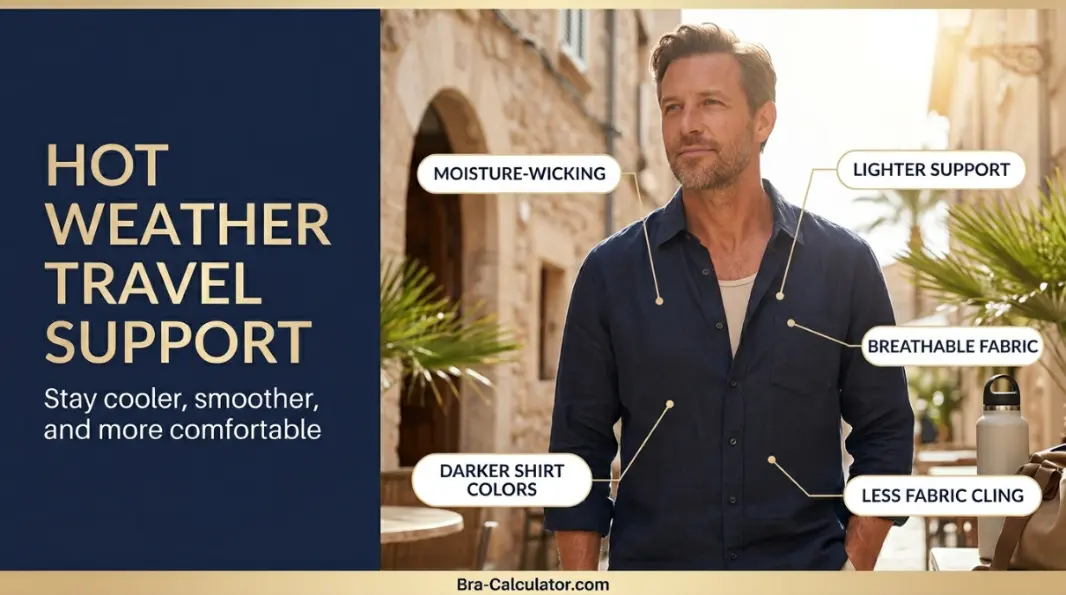
Helps reduce cling and sweat build-up during airports, transfers, sightseeing, and warm destinations.
Pique, chambray, linen blends, and small patterns soften the chest outline without heavy layering.
Creates vertical lines and breaks up the chest area while still feeling casual and airport-friendly.
Useful when a full-torso compression shirt feels too warm but some chest stability is needed.
Can stay damp, rub the nipple area, and feel bulky in humid travel conditions.
Often highlights nipple show-through, garment edges, and chest outline more than structured fabric.
What to Wear Through Airport Security
Most travel support garments are simply clothing. Still, avoid outfits that require constant adjustment or include unusual hard pieces that make you feel nervous. Soft compression shirts, seamless support bras, and normal undershirts are usually easier to manage than bulky, heavily structured items.
If you use padding, inserts, or a specialized post-surgery vest, keep the setup simple and secure. You do not want loose pads shifting while lifting arms, removing a jacket, or carrying bags. If you recently had surgery, follow your surgeon’s travel and garment instructions rather than relying on a general clothing guide.
For confidence, wear your airport outfit for a short errand before the trip. Walk, sit, bend, use a backpack, and check whether the garment needs adjustment. The more familiar the outfit feels, the calmer the travel day becomes.
Best Products to Pack for Gynecomastia Support for Travel
Use these categories as a practical packing checklist. Choose products that match your body, climate, and comfort needs. These are clothing support categories, not medical prescriptions.

Moderate Compression Undershirt
- Smooths the chest under travel shirts, hoodies, and jackets
- Best when it allows deep breathing and does not roll at the hem
- Choose breathable fabric for long airport days
- Test while sitting before travel day

Seamless Support Bra or Chest Support Top
- Useful when full-torso compression feels too warm
- Provides lift and movement control without covering the abdomen
- Choose smooth edges that do not show under shirts
- Pair with a textured overshirt for discretion

Anti-Chafe & Skin Comfort Kit
- Helps reduce rubbing around nipple area, under-breast fold, and lower hem
- Useful for humid destinations and long walking days
- Pack travel-size products in your personal bag
- Stop wearing tight garments if skin breaks or burns
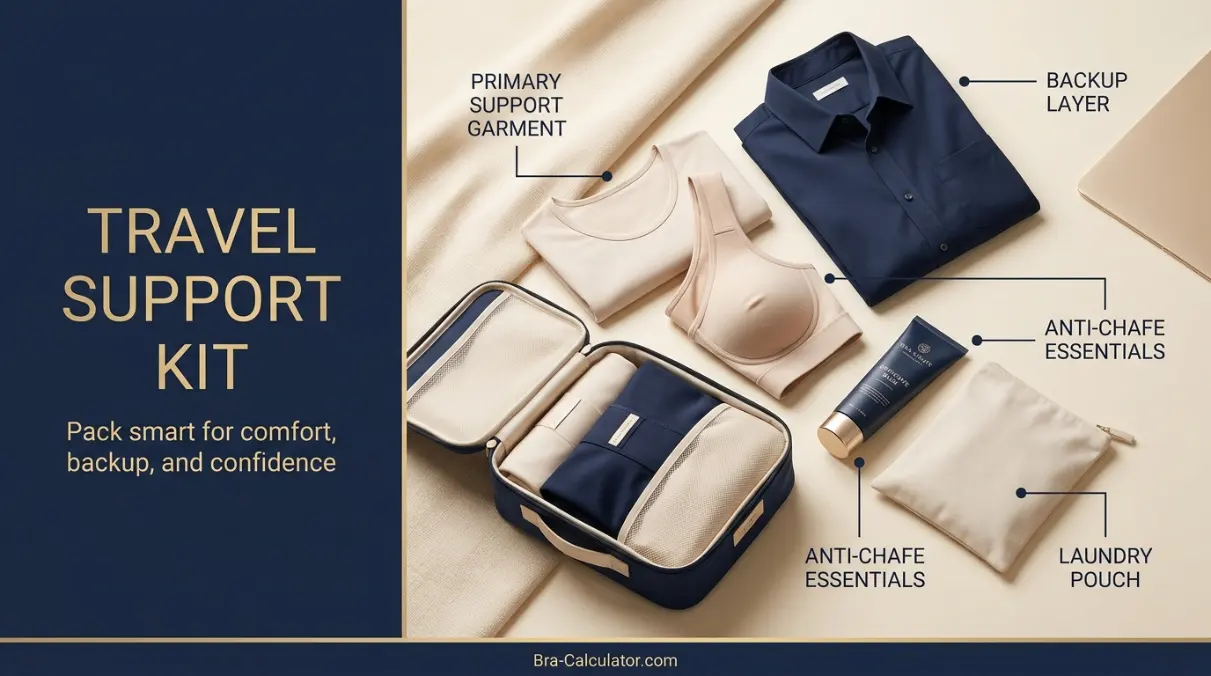
Laundry & Backup Pouch
- Keeps clean support layers separate from worn garments
- Prevents you from rewearing sweaty compression by force
- Small pouch fits in carry-on or hotel drawer
- Helpful for multi-city travel and long layovers
Traveling After Gynecomastia Surgery
If you recently had gynecomastia surgery, do not replace your surgeon’s instructions with general clothing advice. Post-surgery compression garments are different from everyday support garments. They may have specific pressure levels, wearing schedules, cleaning rules, and travel restrictions.
Before flying or taking a long road trip after surgery, ask your medical team when travel is safe, how long you should wear the surgical vest, whether you need breaks from sitting, and what warning signs should prompt urgent care. If you are still swollen, bruised, draining, or in significant pain, travel support should be treated as part of recovery planning, not just outfit planning.
For non-surgical gynecomastia or pseudogynecomastia, the same comfort rules apply: no sharp pain, no restricted breathing, no skin breakdown, and no garment that makes you feel trapped. Support is successful when you can forget about it for most of the journey.
Common Mistakes in Gynecomastia Travel Support
Most travel discomfort comes from choosing compression based only on mirror appearance. Travel support has to survive sitting, heat, bag straps, seat belts, security lines, delays, and bathroom changes.
Related Tools & Guides for Gynecomastia Support for Travel
| Guide / Tool | Why It Helps |
|---|---|
| Men’s Bra Size Calculator | Find your support size before buying a travel garment. |
| Men’s Bra Size Guide | Understand band, cup, and support garment options for gynecomastia. |
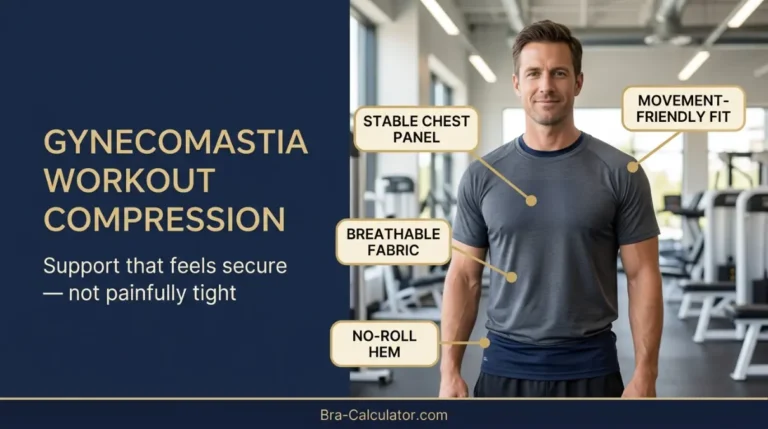
| Gynecomastia Workout Compression | Choose gym and movement support when travel includes training or running. |
| Gynecomastia Support for Work | Plan discreet office or business-travel outfits. |
| How to Hide Gynecomastia | Learn shirt, color, and layering tricks for flatter visual balance. |
Gynecomastia Support for Travel FAQs
The best gynecomastia support for travel is a breathable, moderate-compression base layer that smooths the chest without restricting breathing, digging into the ribs, or creating visible edges under clothes. For long trips, comfort and breathability matter more than maximum flattening.
Yes, many people can wear moderate compression on a long flight, but it should not restrict breathing, cause numbness, dig into the ribs, or create pain. Test it before travel day. If you have recent surgery, chest pain, breathing issues, or circulation concerns, ask a clinician first.
A very tight binder is usually not the most comfortable travel choice. Long sitting, heat, and limited changing options can make strong compression feel worse. A breathable compression undershirt or softer support garment is often better for flights, trains, and road trips.
Wear normal, soft, secure clothing that does not need constant adjustment. A compression undershirt under a structured overshirt is usually simple and discreet. Avoid loose inserts or bulky pieces that shift while lifting arms or removing outer layers.
For a one-week trip, pack at least two to three support options if you wear them daily: one primary, one backup, and one lighter option for hot weather or rest days. Keep one clean backup in your carry-on or personal bag.
Use breathable support, darker or textured shirts, and relaxed structured layers instead of heavy clothing. Moisture-wicking fabric helps reduce cling. Avoid thin pale stretch shirts if you are concerned about nipple visibility or chest outline.
Sleeping in tight compression is not ideal for many people. If you need overnight support, choose a soft, low-compression option and remove it if breathing feels restricted, skin hurts, or your ribs feel compressed.
A moderate compression base layer, a textured T-shirt or polo, and an open overshirt or light jacket is one of the most discreet combinations. It creates natural vertical lines and avoids the clingy look of thin single-layer shirts.
Pack Comfort Before Confidence Drops
Confirm your support size, test your outfit while sitting, pack one backup layer, and choose breathable structure over painful compression.
More gynecomastia support guides
- Gynecomastia bra guide
- Gynecomastia bra size chart
- Best Discreet Bras for Men with Gynecomastia (Under Clothes)
- Why Men with Gynecomastia Should Wear Bras: Comfort & Confidence
- Gynecomastia Stages 1–4: What Support Do You Need at Each Stage?
- Pseudogynecomastia vs Gynecomastia: Key Differences & Support Options
- Gynecomastia Bra Results: What Changes After Wearing a Gynecomastia Bra?