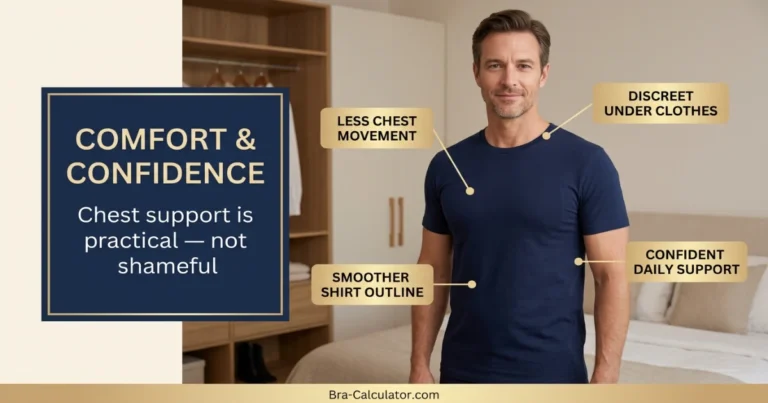
Gynecomastia means enlarged male breast gland tissue, while pseudogynecomastia means fat-related chest fullness without increased gland tissue. The two can look similar under clothing, and both can cause movement, rubbing, shirt-outline concerns and self-consciousness. A support garment can help comfort and appearance while worn, but it cannot diagnose the cause or remove glandular tissue or fat. If you have a hard lump, pain, discharge, skin changes or sudden one-sided change, see a clinician.
Medical disclaimer: This page is educational and support-focused. It cannot tell you whether your chest fullness is glandular gynecomastia, pseudogynecomastia, skin-related change or another condition. Diagnosis requires clinical evaluation.
Pseudogynecomastia vs Gynecomastia at a Glance
| Term | Simple Meaning |
|---|---|
| Gynecomastia | Increase in male breast gland tissue, often related to hormone balance, age, medications or other causes. |
| Pseudogynecomastia | Fat-related chest fullness without increased glandular breast tissue. |
| How they look | They can look similar under clothes, especially in T-shirts, polos and fitted shirts. |
| How support helps | Support can reduce movement, rubbing, tenderness or shirt outline while worn. |
| What support cannot do | It cannot diagnose, treat, remove gland tissue or remove fat tissue. |
| Main rule | Support for comfort, clinician for diagnosis |
What Gynecomastia and Pseudogynecomastia Actually Mean
True gynecomastia refers to enlargement of male breast gland tissue. It can happen at different ages and may involve one or both sides. Some men notice tenderness, a firmer area under the nipple, or a chest shape that does not change much even when body weight changes.
Pseudogynecomastia refers to fat-related chest fullness. It can make the chest look enlarged, but the main issue is fatty tissue rather than glandular breast tissue. This is why some people search “fat chest vs gynecomastia” or “fake gynecomastia.” The better term is pseudogynecomastia, because the comfort and clothing concerns are still real.
The difficult part is that appearance alone is not reliable. Fat, gland tissue, skin looseness and body shape can overlap. A support garment can help the shirt outline, but a clinician is the right person to confirm what is actually causing the fullness.
Respectful framing: Pseudogynecomastia is not “fake” in the sense that the concern is imaginary. It simply means the tissue type is different.
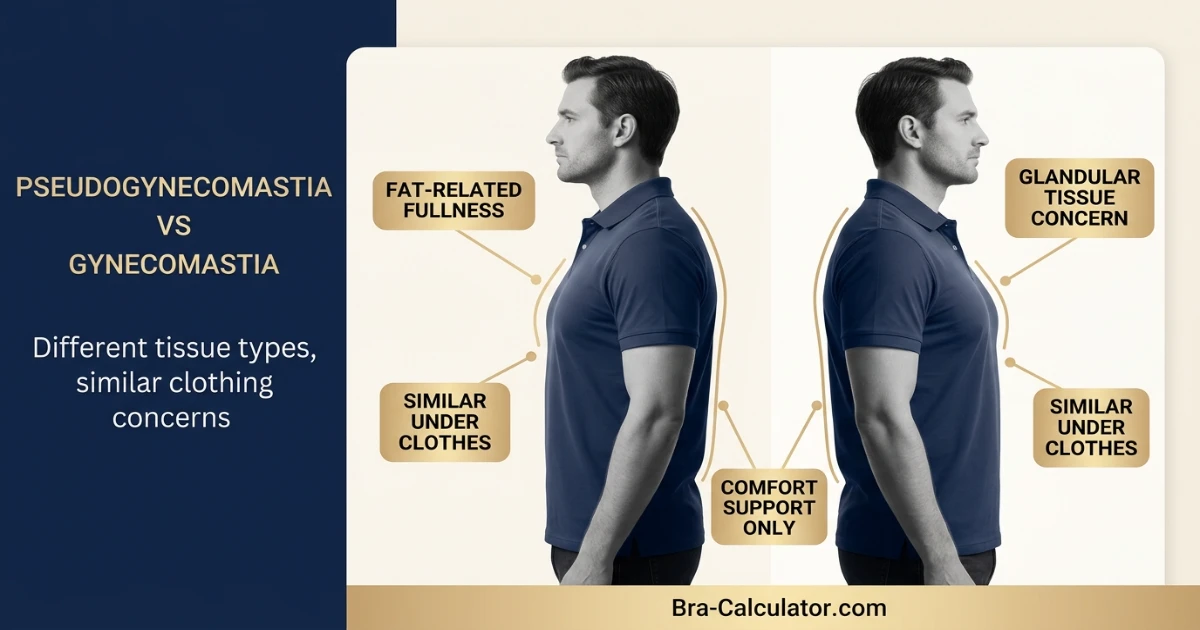
Gynecomastia vs Pseudogynecomastia Comparison Table
| Feature | Gynecomastia | Pseudogynecomastia | Support Implication |
|---|---|---|---|
| Main tissue type | Glandular breast tissue. | Fat-related chest fullness. | Both may benefit from smoothing and movement control. |
| Common feel | May feel firmer under or around nipple. | Often softer and more diffuse. | Feel is not enough to diagnose. |
| Weight change effect | May not reduce much with weight loss. | May change more with fat loss. | Support needs may change with body size. |
| Tenderness | Can be tender or sore. | Usually less gland-related tenderness, but rubbing can still happen. | Use soft support if sensitivity is present. |
| Clothing issue | Projection, nipple outline, movement. | Broader chest fullness, shirt cling, lower chest shape. | Choose support type by the visible problem. |
| Diagnosis | Clinical evaluation needed. | Clinical evaluation can confirm fat-related fullness. | Do not rely on support garments as diagnosis. |
| Best first step | Measure + choose comfort support + seek medical advice if symptoms are concerning | ||
How to Tell Gynecomastia or Fat? Why Online Checks Are Limited
Many men try to self-check by pressing around the nipple, comparing chest firmness or looking at photos online. These clues may raise questions, but they are not reliable enough to confirm the difference. A firmer area can be glandular tissue, but body fat distribution, muscle shape, skin thickness and swelling can confuse the picture.
Online images are also misleading because lighting, posture, body fat percentage, chest muscle size and camera angle can change how the chest looks. Two men with different tissue types can look very similar in a shirt.
The safest approach is to separate two questions: “What might this be medically?” and “What support helps me feel comfortable today?” A clinician answers the first. A measured support garment can help with the second.
See a clinician if you notice a hard lump, sudden swelling, ongoing pain, nipple discharge, bleeding, skin changes, fast one-sided enlargement, or anything that feels unusual for your body.
Support Options for Fat Chest vs Gynecomastia
| Situation | Best First Support | Why It Helps | Watch Out For |
|---|---|---|---|
| Fat-related chest fullness | Longline compression undershirt | Smooths broader chest and torso outline. | Short shirts may roll at stomach. |
| Suspected true gynecomastia | Chest-focused support top or moderate compression | Helps movement, projection and tenderness. | Too much pressure may worsen discomfort. |
| Tender or sore chest | Soft support top | Reduces rubbing without harsh compression. | May be less discreet under thin shirts. |
| Shirt outline concern | Seamless matte compression layer | Reduces cling, texture and visible movement. | Wrong color or neckline can show. |
| More movement or larger volume | Low-profile support vest | More structure and control than light undershirts. | Must not restrict breathing. |
| Unsure what you have | Moderate seamless support | Comfort-first starting point | Medical evaluation if symptoms concern you. |
How to Choose Support When You Are Unsure Which One You Have
If a shirt smooths your chest, that does not prove fat or gland tissue. It only proves the garment changes the outline while worn.
Choose support based on movement, tenderness, shirt cling, nipple rubbing, workout discomfort or confidence under clothes.
Use under-chest, fullest chest, waist and torso length. T-shirt size alone often causes rolling or tightness.
Most men should begin with a comfortable, measured support layer instead of maximum compression.
Support is fine for comfort, but changes like pain, lumps, discharge or skin changes need clinician review.
Best Support for Pseudogynecomastia
For pseudogynecomastia, the support goal is usually smoothing rather than lifting a specific glandular area. The chest fullness may be broader and blend into the upper stomach or side chest. That means garment length and waist fit matter a lot.
A longline compression undershirt or waist-friendly compression tank often works better than a short, very tight top. If the garment compresses the chest but rolls at the stomach, it can create a visible ridge that makes clothing look worse.
Helps smooth the chest and torso together so the hem does not cut across the stomach.
Reduces shine, texture and cling under normal men’s shirts.
Short tight compression often rolls and creates a visible waist ridge.
Best Support for True Gynecomastia
For true gynecomastia, the support goal may include reducing movement, tenderness, nipple rubbing and forward projection. A simple waist-focused compression shirt may help clothing appearance, but some men need more chest-specific support.
If tenderness is the issue, soft support is better than harsh compression. If movement is the issue, a structured compression top or low-profile vest may help more than a basic undershirt. If straps dig or compression feels too tight, the garment type may be wrong.
Balanced support can reduce movement without forcing painful pressure.
Useful when rubbing and sensitivity matter more than maximum flattening.
More structure may help when undershirts feel too weak.
Support Options for Pseudogynecomastia and Gynecomastia
These are product categories, not medical treatments. Replace placeholder images and generic Amazon searches with selected products when ready.
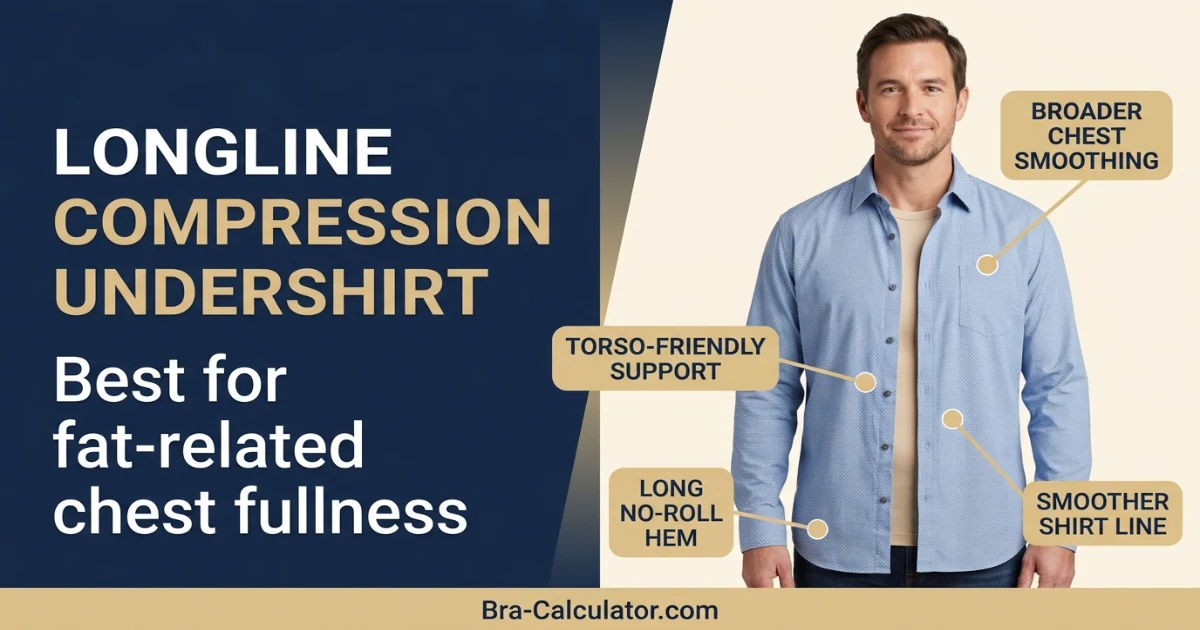
Longline Compression Undershirt
Best when chest fullness blends into the torso and you want smoother clothing lines without a short hem rolling upward.
- Smooths chest and torso
- More discreet than vests
- Good daily first option
- Can feel warm
- Wrong size may roll
- Not a fat-loss treatment
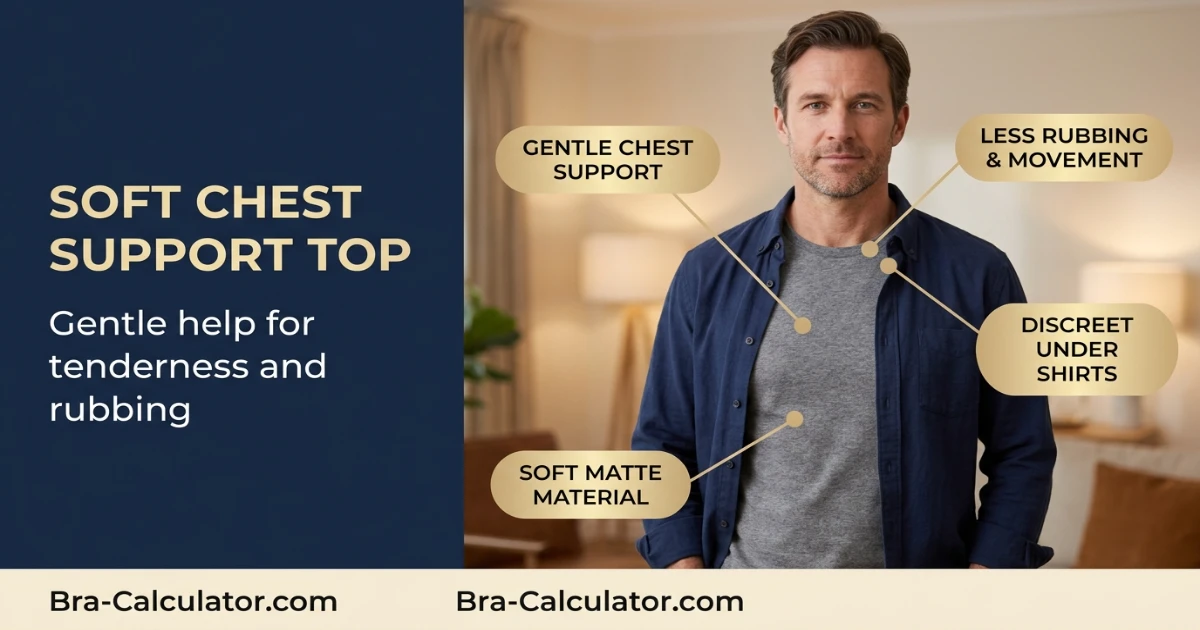
Soft Chest Support Top
Best when chest or nipple sensitivity makes loose fabric uncomfortable and firm compression feels too harsh.
- Gentler than firm compression
- Reduces rubbing
- Good sensitive-day option
- May be more visible
- Less flattening
- Needs neckline testing
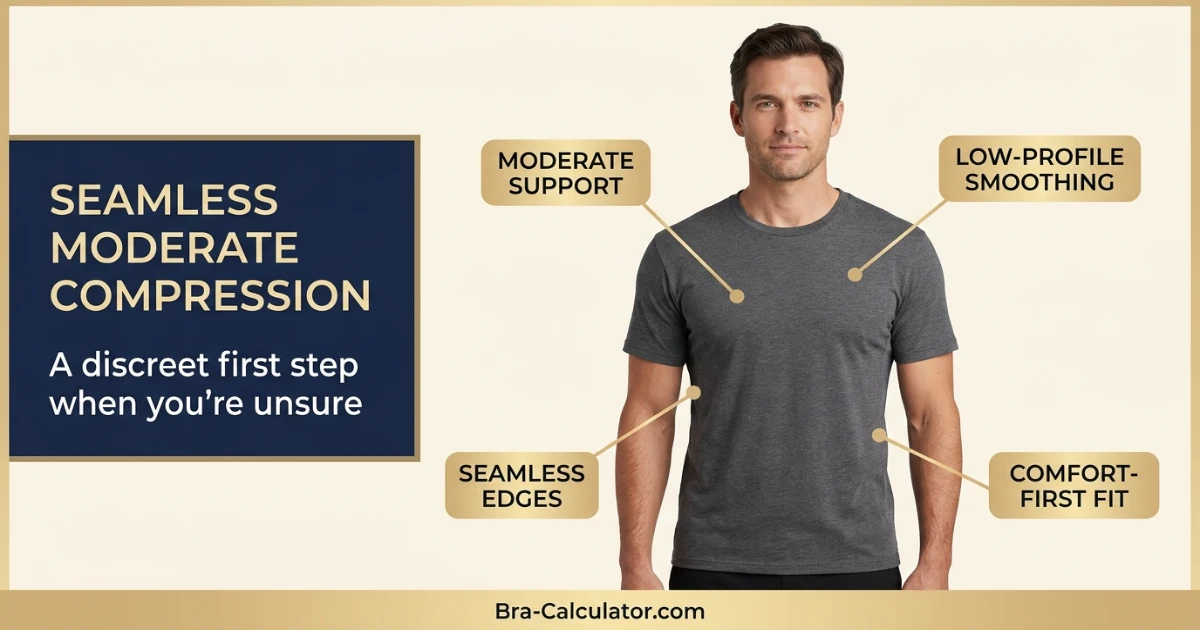
Seamless Moderate Compression Shirt
Best when you are unsure whether the fullness is fat-related or glandular and simply want a discreet daily support layer.
- Good neutral starting point
- Discreet under clothes
- Works for many body types
- May not help severe movement
- Can roll if short
- Not diagnostic
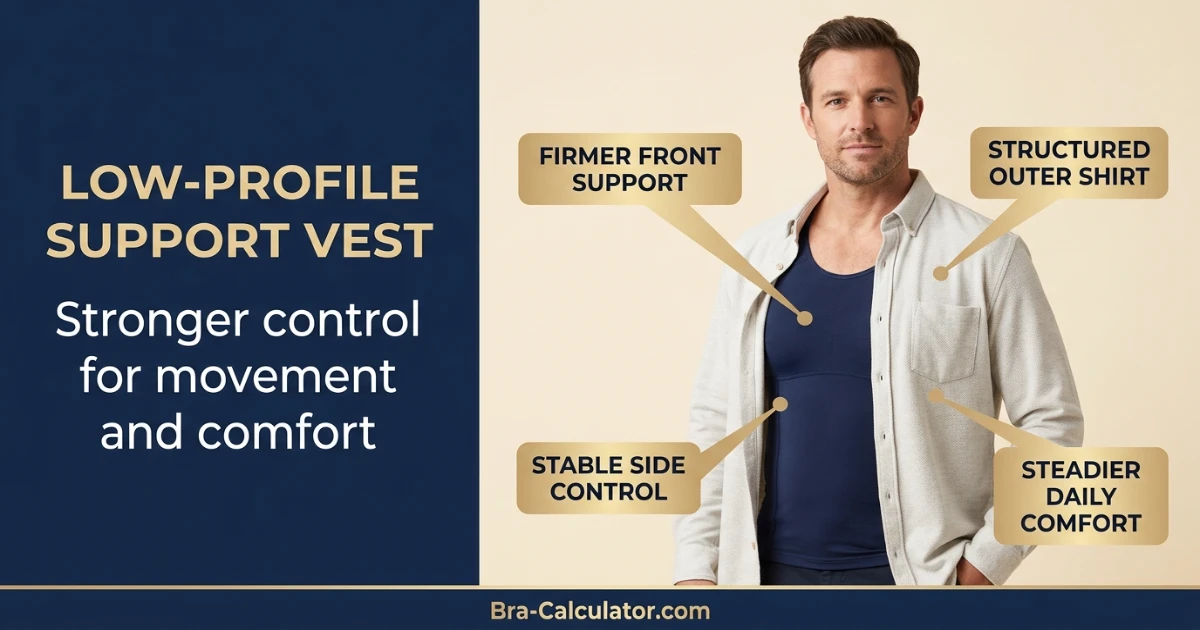
Low-Profile Support Vest
Best when basic compression shirts are too weak and movement control is the main daily problem.
- More structure
- Better motion control
- Useful under thicker shirts
- Can feel warm
- May show under thin shirts
- Should not restrict breathing
Which Support Direction Makes Sense for Your Situation?
- Broader chest fullness
- Shirt cling
- Chest-to-stomach smoothing
- Longline undershirt
- Waist-friendly compression
- Matte seamless fabric
- Projection near nipple
- Movement control
- Chest-focused support
- Moderate support top
- Compression shirt
- Vest if larger movement
- Nipple rubbing
- Soreness
- Loose fabric discomfort
- Soft support top
- Light compression
- Smooth edges
- Not sure fat or gland
- Want discreet help
- No red flags
- Measure first
- Moderate seamless support
- See clinician if concerned
Myths About Fake Gynecomastia and Fat Chest
Appearance can mislead. A clinician is needed to confirm fat, gland tissue, skin or another issue.
The tissue type is fat-related, but discomfort, clothing stress and self-consciousness can still be real.
Support garments change comfort and outline while worn. They do not remove fat or gland tissue.
Both conditions may benefit from smoother clothing, less movement and less rubbing.
Fat-related fullness often needs longer torso smoothing; glandular fullness may need chest-focused support.
New, painful, one-sided or changing symptoms should not be handled with shopping advice alone.
What Usually Improves When Support Matches the Real Problem
These are practical comfort outcomes, not medical promises.
“Longline support worked better for my fat chest.”
When fullness blends into the torso, longer compression often creates smoother lines than short tight tops.
“Soft support helped more than firm compression.”
For tenderness or nipple rubbing, gentler support can feel better than forcing maximum compression.
“I stopped trying to diagnose myself from photos.”
Many men feel calmer when they separate medical evaluation from everyday comfort support.
“A discreet undershirt was enough for daily clothes.”
For many mild-to-moderate cases, a measured seamless layer is a practical first step.
Medical References and Disclaimer
This guide is for comfort, clothing and support education. It is not medical advice and does not diagnose gynecomastia, pseudogynecomastia, lipomas, cysts, cancer or any other condition. A qualified healthcare professional should evaluate new, painful, changing or concerning chest symptoms.
Seek medical advice for sudden swelling, a hard lump, ongoing breast or nipple pain, nipple discharge, bleeding, skin changes, fast one-sided enlargement, or any symptom that feels unusual for you.
Frequently Asked Questions
What is the difference between pseudogynecomastia and gynecomastia?
Gynecomastia involves enlargement of male breast gland tissue. Pseudogynecomastia is fat-related chest fullness without increased gland tissue. Only a clinician can confirm which one you have.
How can I tell if I have gynecomastia or fat?
You cannot reliably tell from appearance alone. A clinician may use medical history, physical examination and sometimes tests to distinguish glandular tissue, fat-related fullness, skin changes or another condition.
Does pseudogynecomastia feel different from gynecomastia?
Pseudogynecomastia may feel softer and more diffuse, while gynecomastia can sometimes feel like firmer tissue under or around the nipple, but self-checking is not a diagnosis.
Can compression shirts help pseudogynecomastia?
Compression shirts may help create a smoother outline and reduce movement while worn, but they do not remove fat tissue or treat the cause.
Can bras help true gynecomastia?
Bras, compression tops and support vests may help reduce movement, tenderness, rubbing and clothing discomfort while worn, but they cannot remove glandular tissue.
Is pseudogynecomastia fake gynecomastia?
Some people call it fake gynecomastia, but a more respectful term is pseudogynecomastia or fat-related chest fullness. The discomfort and clothing concerns can still be real.
What support is best for fat chest vs gynecomastia?
Fat-related chest fullness often responds best to smooth longline compression or waist-friendly undershirts. True gynecomastia may need more chest-focused support, soft support for tenderness or a low-profile vest for movement.
When should I see a doctor?
Seek medical advice for sudden swelling, a hard lump, ongoing pain, nipple discharge, bleeding, skin changes, fast one-sided enlargement, or symptoms that feel unusual.
Use Support for Comfort — Use a Clinician for Diagnosis
Whether your chest fullness is fat-related, glandular or unclear, start with accurate measurements and choose a support garment that reduces movement, rubbing and shirt-outline discomfort without painful compression.