Bras for Fibrocystic Breasts: Comfortable Support for Tender Breasts
The best bras for fibrocystic breasts are well-fitted, supportive bras that limit movement without pressing on tender tissue: a firm band, full or encapsulated soft cups, wide padded straps and, for many people, wire-free or a well-cushioned wire. Mayo Clinic suggests a firm, professionally fitted bra and a sports bra during exercise and, if helpful, at night when breasts are most sensitive. Many people need some flexibility in cup size across their cycle. A bra eases discomfort but does not treat the condition. See a doctor about any new lump, or about pain that is severe, one-sided or persistent.
Jump to a Section
Fibrocystic Breasts and Bras at a Glance
| Attribute | Detail |
|---|---|
| What it is | Common, non-cancerous changes that make breast tissue lumpy, rope-like or tender |
| When symptoms peak | Often in the 1–2 weeks before a period, easing afterwards |
| Why a bra helps | Limits movement and spreads weight, which reduces strain on tender tissue |
| Best features | Firm band, full or encapsulated soft cups, wide cushioned straps, minimal pressure points |
| Wire or wire-free? | Either, if nothing presses on tissue; many prefer wire-free on tender days |
| At night | A soft sleep or sports bra may help when breasts are most sensitive |
| See a doctor | For any new lump, a change in an existing lump, nipple discharge, skin changes, or severe or one-sided pain |
What Are Fibrocystic Breast Changes?
Fibrocystic breast changes describe breast tissue that feels lumpy, dense or “rope-like”, sometimes with fluid-filled cysts. They are very common, particularly between the late teens and menopause, and they are benign: not cancer, and in most cases not linked to a higher risk of it. The changes are driven by the normal monthly rise and fall of hormones, which is why many people notice swelling, heaviness and tenderness in the week or two before a period that eases once it starts.
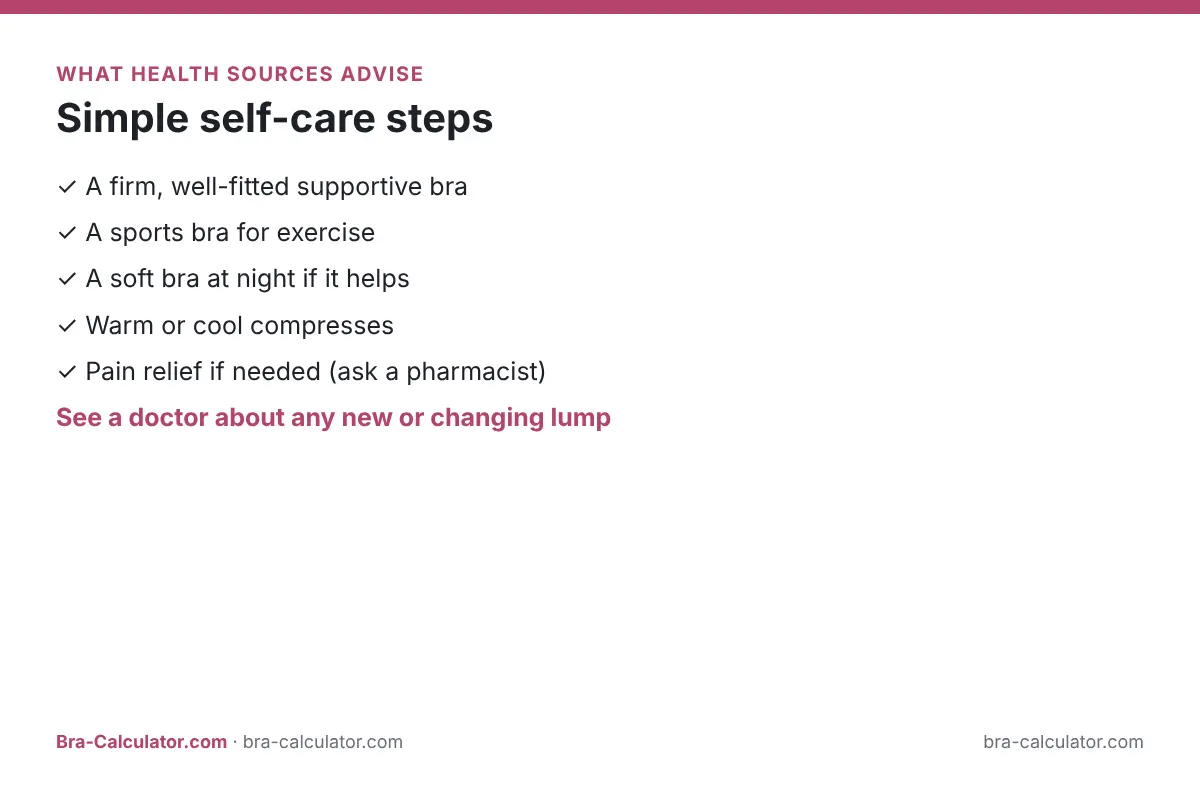
Health sources agree that most people need no specific treatment and that symptoms often lessen over time. The self-help measures they suggest are simple: a well-fitted supportive bra, over-the-counter pain relief if needed, and warm or cool compresses. Mayo Clinic specifically recommends a firm, well-fitted bra, ideally fitted by a trained professional, and a sports bra during exercise and while sleeping when breasts feel more sensitive. Cancer Research UK also advises well-fitted, supportive bras for mild soreness.
What a bra can do is limited but real. It reduces how much the breasts move, spreads their weight across the band and shoulders, and avoids pressure on the most tender areas. It does not change the tissue. The evidence is modest: small studies have reported less breast pain when people switched to well-fitting supportive or sports bras. But this is low-risk, practical advice that many people find helps.
Health note: this guide covers bra comfort and fit. It is not medical advice and does not replace a clinical examination. Fibrocystic changes can make it harder to notice new lumps, so get to know how your breasts normally feel across your cycle, and see your GP or doctor promptly about any new or changing lump, nipple discharge, skin dimpling or puckering, a nipple that turns inward, or pain that is severe, persistent or on one side only.
Fibrocystic breast self-care
Bra Features That Ease Fibrocystic Discomfort
The band carries most of the weight. A firm band reduces movement and takes pressure off the straps and breast tissue.
Cups that enclose each breast fully reduce bounce and spread pressure evenly, with no edge cutting across tender tissue.
Smooth cotton, microfibre or spacer linings avoid seams pressing on sensitive spots.
Spread the load on the shoulders, especially for fuller busts.
The rule is no pressure on breast tissue. A wire that sits correctly behind the tissue is fine; many prefer wire-free on tender days.
Stretch-lace top edges or adjustable designs cope with pre-period swelling.
They compress tissue and add pressure where it already hurts.
Bra Sizing Across Your Cycle
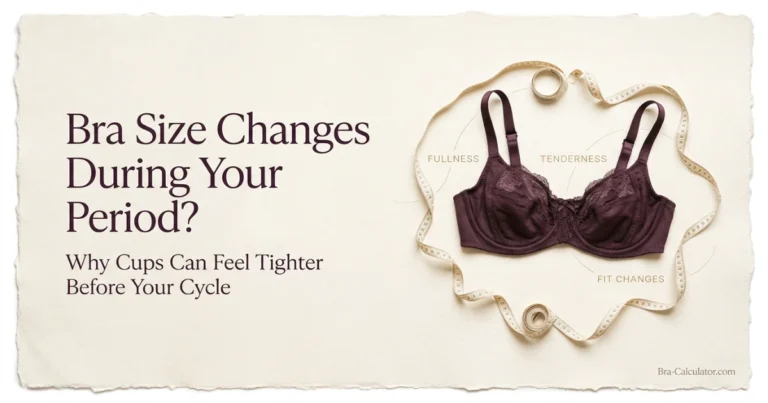
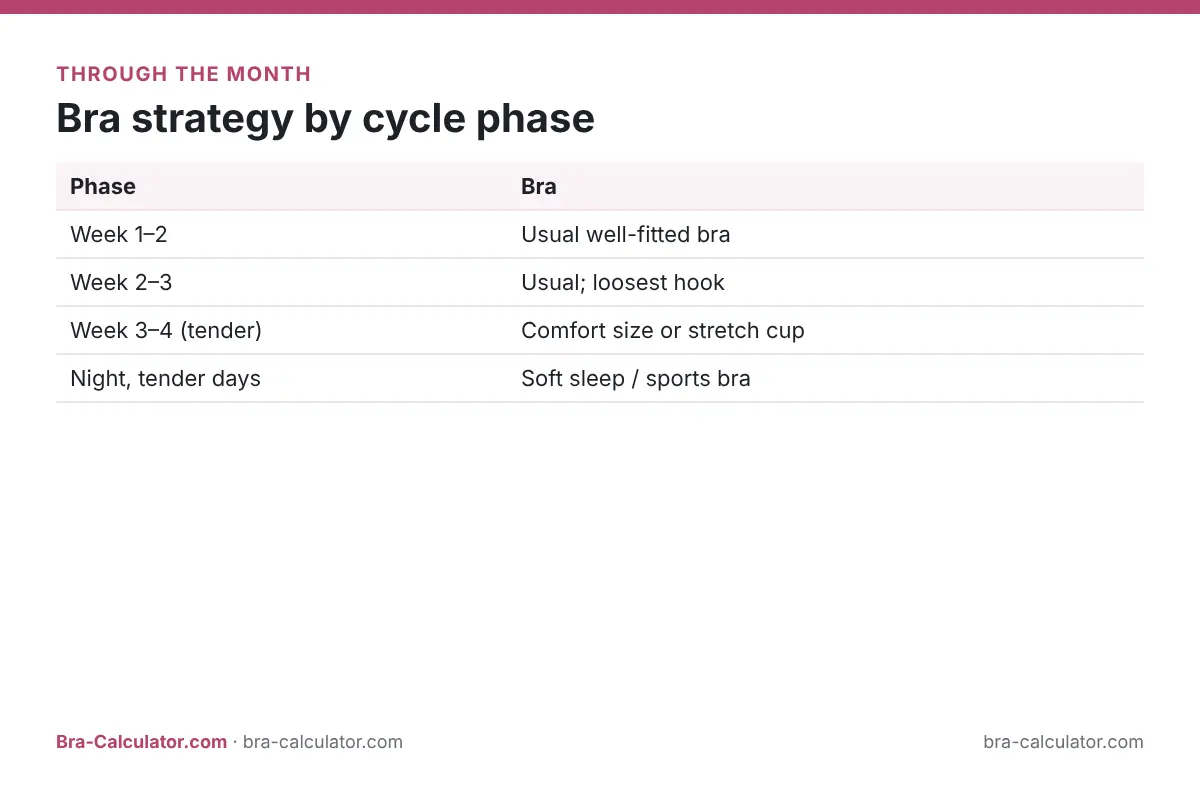
Many people with fibrocystic changes notice their breasts swell by up to a cup size before a period. A bra that fits perfectly in week one can feel tight, cut in or press on tender lumps in week four. Practical ways to handle it:
| Cycle phase | Typical feel | Bra strategy |
|---|---|---|
| After the period (week 1–2) | Least tender, smallest | Your usual well-fitted everyday bra |
| Mid-cycle (week 2–3) | Mild fullness possible | Usual bra; loosest hook if needed |
| Pre-period (week 3–4) | Swollen, heavy, tender | A “comfort size”: one cup up, a stretch-cup bra, or a supportive wire-free bra |
| Night-time on tender days | Most sensitive | A soft sleep or low-impact sports bra if it helps |
Measure on a low-symptom day for your main size, then measure again on a tender day. If the difference is a full cup, it is worth owning one or two bras in the larger cup, or stretch-cup styles that cover both. Our bra size calculator takes two minutes. The sister size calculator helps if the band feels different too.
Cycle sizing
Underwire or Wire-Free for Fibrocystic Breasts?
There is no rule that underwire is harmful, and no good evidence that underwire bras cause or worsen fibrocystic changes. The real question is pressure. A correctly fitted underwire sits on the ribcage, behind all breast tissue, and does not press on the breast itself. A wire that is too narrow or a cup that is too small puts the wire directly on tissue, which is uncomfortable for anyone and painful for tender breasts.
If you love underwire bras, make sure the wire sits in the breast fold and that the cup is big enough on your fullest days. See underwire sitting on breast tissue and underwire digging in. If you prefer wire-free, choose one with a firm band and structured or side-sling cups so you still get real support. Our guides to underwire vs wireless and wireless bras for large busts compare the options.
Sports Bras and Sleep Bras
Movement is one of the main triggers of breast discomfort, and exercise multiplies it. A well-fitted sports bra that limits movement is one of the most commonly recommended steps for tender breasts. Choose the impact level for your activity: encapsulated sports bras, with a separate cup for each breast, usually control movement better than compression crop tops for C cups and up. Use the sports bra calculator and our guide to choosing a sports bra.
At night, some people find a soft, wire-free sleep bra or a low-impact sports bra more comfortable, especially in the days before a period when lying on the side or front is painful. Others prefer nothing at all. Both are fine. Choose what lets you sleep comfortably. A sleep bra should be soft and gently supportive, never compressive. Avoid sleeping in an underwire or a tight compression sports bra, which can press on tender tissue for hours.
A Gentle Fitting Checklist for Tender Breasts
Professional fittings are recommended, but if you are fitting yourself, or tissue is tender on the day, this checklist keeps it comfortable and accurate:
Measurements on a swollen day overestimate the cup for most of the month.
Measure the snug underbust and the full bust without pressing into tissue.
The band should be firm and level; the cups should enclose all tissue without an edge pressing anywhere.
Bring tissue into the cup with a flat hand rather than pinching. Skip it if it hurts, and let a soft cup settle instead.
If the breasts move freely or anything presses on a tender area, try a different cup shape or a firmer band.
If the same bra presses or cuts in, add a comfort-size bra for those days.
Fibrocystic Changes Through Life
Fibrocystic changes are most common in the reproductive years and usually ease after menopause, when the monthly hormone cycle stops. During pregnancy and breastfeeding, breasts change size and tenderness rapidly, and stretchy, wire-free maternity and nursing bras are usually most comfortable; see maternity bras. Some people taking hormonal contraception or hormone replacement therapy notice changes in breast tenderness. If that happens, mention it to your doctor rather than just changing bras. After menopause, many people find they can move to lighter, softer bras. But any new lump at any age should still be checked.
Supportive, Comfortable Options
All picks are in stock on Amazon with at least a 4.0-star average and hundreds of verified ratings. They are chosen for soft, supportive construction, not as a treatment. Ratings were checked in November 2026.
Wire-free with a deeper, supportive cup and adjustable straps; a good everyday option for tender days. Check sizes on Amazon
A very soft, lightly lined wire-free bra, popular for lounging and sensitive days. Check sizes on Amazon
A wire-free full-figure sports bra that limits movement for walking and exercise. Check sizes on Amazon
A full-coverage seamed underwire with a cushioned channel, for those who prefer a wire with full containment. Check sizes on Amazon
Affiliate disclosure: we earn a commission on qualifying Amazon purchases at no extra cost to you. Picks are chosen for fit and comfort, never for commission.
What Works Best at Your Size
| Bust size | Everyday | Tender days | Exercise |
|---|---|---|---|
| AA–B | Soft wire-free or a lightly lined bra | Stretch bralette or soft cup | Compression sports bra |
| C–DD | Full-coverage soft cup or cushioned underwire | Wire-free with a firm band, or one cup up | Encapsulated sports bra |
| DDD/E+ | Seamed full-coverage bra with wide straps | Supportive wire-free with side slings | High-support encapsulated sports bra |
Fuller busts generally benefit most from support, because heavier breasts move more and put more strain on tender tissue. See our guides to bras for a large bust and bras for back pain if you also notice upper-back or shoulder strain.
Common Problems and Fixes
Cyclical swelling.
The cup is too small or the edge cuts across tissue.
Too much movement.
The band is too loose, so the straps take the weight.
Wire too narrow or cup too small.
Other Self-Care Steps Health Sources Mention
Alongside a supportive bra, the self-care steps most often suggested by health sources include over-the-counter pain relief when needed (check with a pharmacist, especially if you take other medicines), and warm or cool compresses on sore areas. Some sources mention reducing caffeine or dietary fat, though the evidence for these is limited. Keeping a simple symptom diary across a few cycles, noting the date, which side and how severe, helps you and your doctor see whether pain is cyclical and plan bra sizes around it.
If breast pain is affecting daily life, your GP can discuss further options. And remember the most important point: get any new or changing lump checked, even if you know you have fibrocystic breasts. Doctors would much rather see a lump that turns out to be benign.
It can also help to do a gentle self-check at the same point in each cycle, a few days after your period ends, when tissue is usually least lumpy and tender. Knowing what is normal for you makes it easier to spot something new, and it means you will not mistake ordinary pre-period swelling for a change.
Sources and Further Reading
- Mayo Clinic: Fibrocystic breasts
- Cancer Research UK: Fibrocystic breast changes
- NHS: Breast pain
- MSD Manual: Fibrocystic changes of the breast
Bra fitting guidance on this page follows our published sizing methodology.
Related guides
Frequently Asked Questions
A well-fitted supportive bra with a firm band, full or encapsulated soft cups and wide straps, with no pressure on tender tissue. Many people prefer wire-free on sensitive days.
Health sources such as Mayo Clinic suggest a firm, well-fitted bra can reduce discomfort by limiting movement. It eases symptoms but does not change the tissue.
There is no good evidence that underwire causes fibrocystic changes. A wire that presses on breast tissue is uncomfortable, though, so make sure it sits behind the tissue.
Some people find a soft sleep bra or sports bra helps at night when breasts are tender, and Mayo Clinic mentions it as an option. It is a personal choice.
Hormonal swelling can increase breast size by up to a cup. A comfort-size bra or stretch-cup styles help on those days.
Yes, during exercise. Limiting movement is one of the most consistently recommended steps. Encapsulated designs work best for fuller cups.
Fibrocystic changes are benign. But because they can make new lumps harder to notice, see a doctor about any new or changing lump.
If pain is severe, persistent, on one side only, or comes with a new lump, nipple discharge or skin changes.
Start with a properly fitted band
A firm, correct band is the foundation of comfortable support. Measure in two minutes.