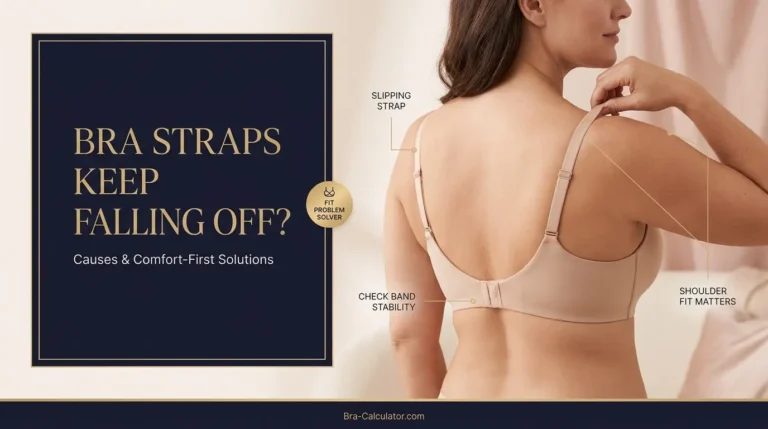
When bra straps fall off during a workout, the problem is rarely solved by pulling the straps tighter and tighter. Straps can slip because the sports bra band is moving, the cups do not control bounce, straps are set too far outward for your shoulders, adjusters loosen during exercise, or the design is not matched to high-impact movement. Start with a level, secure band and correct cup containment; then test a racerback, cross-back or J-hook style if the size is already right but straps slide toward the shoulder edge.
Sports Bra Straps Falling at a Glance
| Workout Sign | Most Likely Issue | First Correction |
|---|---|---|
| Both straps slide while running or jumping | Band instability, loose/stretchy straps or a low-support style being used for high impact. | Perform the band-and-jump test before relying on tighter straps. |
| Straps slip even though the band stays level | Outer-set strap placement may not suit narrow or sloping shoulders. | Try a racerback, J-hook, cross-back or center-pull design. |
| Only one strap falls | Natural asymmetry, uneven adjustment, posture or one stretched strap. | Adjust sides independently and test a convertible strap position. |
| Straps fall while breasts still bounce heavily | Support level or cup containment is inadequate for the workout. | Try high-impact encapsulation or hybrid support in the correct size. |
| Straps dig in after tightening to stop slipping | Straps are compensating for a band/cup/design problem. | Loosen pressure and solve the support foundation first. |
| Previously secure straps now slide during training | Elastic or strap adjusters may have lost recovery. | Assess bra wear and replace if stability has deteriorated. |
Why Do Bra Straps Fall Off During Exercise?
A sports bra has a different job from an everyday bra: it must control breast movement while your torso, shoulders and arms move repeatedly. During running, skipping, netball, gym circuits or high-impact classes, straps that are only just staying on in normal standing wear can slide outward as the body moves. Sweat, repeated arm swing, fabric stretch and bounce can make the problem appear much faster in exercise than in daily life.
The important fit principle is that straps are not meant to carry all the support. A sports bra should be anchored primarily by a secure band and supported by cups or panels designed for the activity. If the band rides up or the bust moves excessively, tightening the shoulder straps can feel like a quick fix, but it often creates pressure marks, neck tension or painful digging without preventing the strap from moving again.
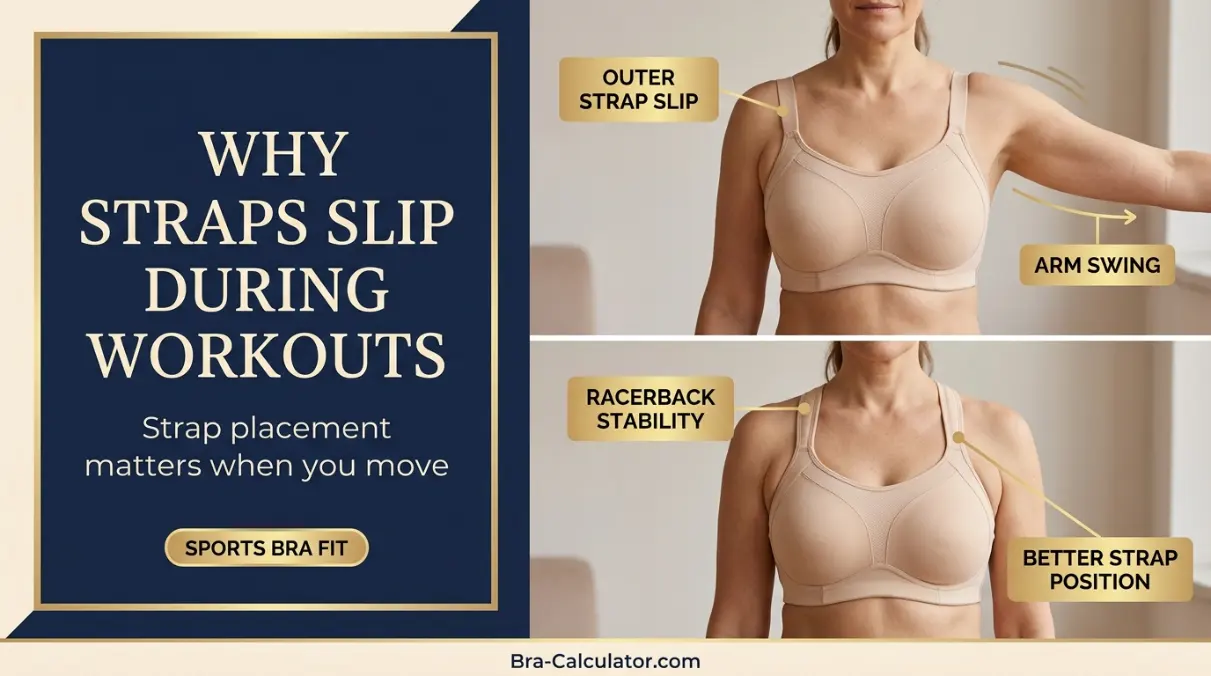
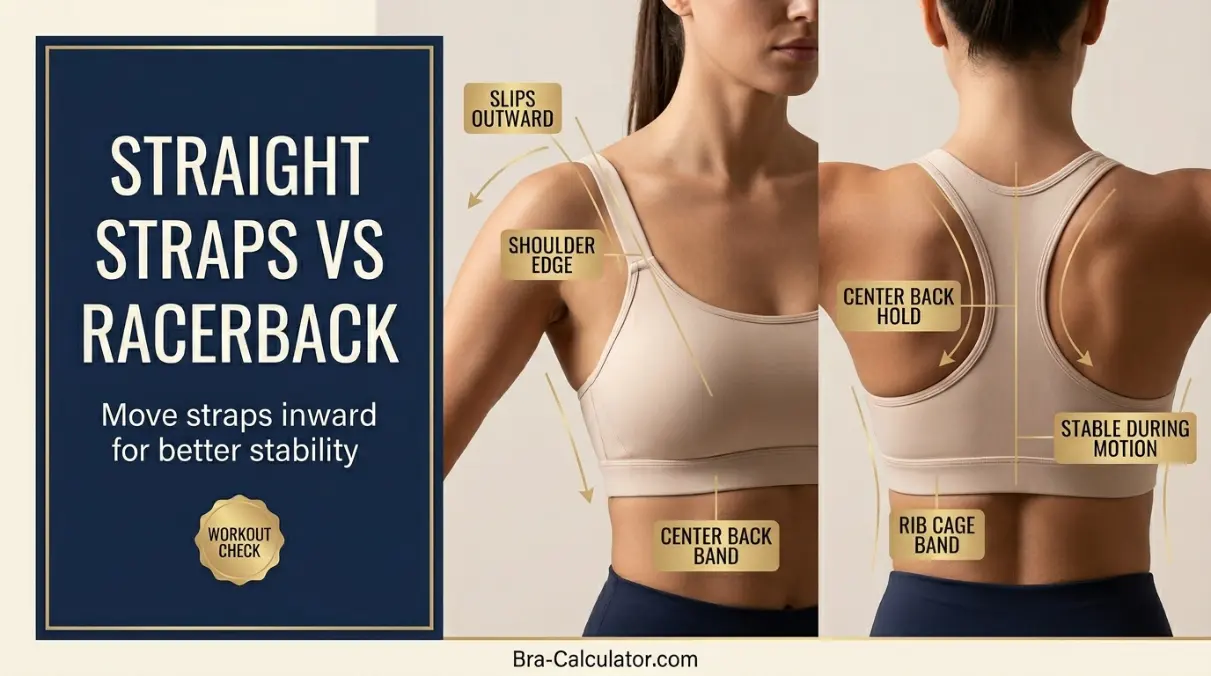
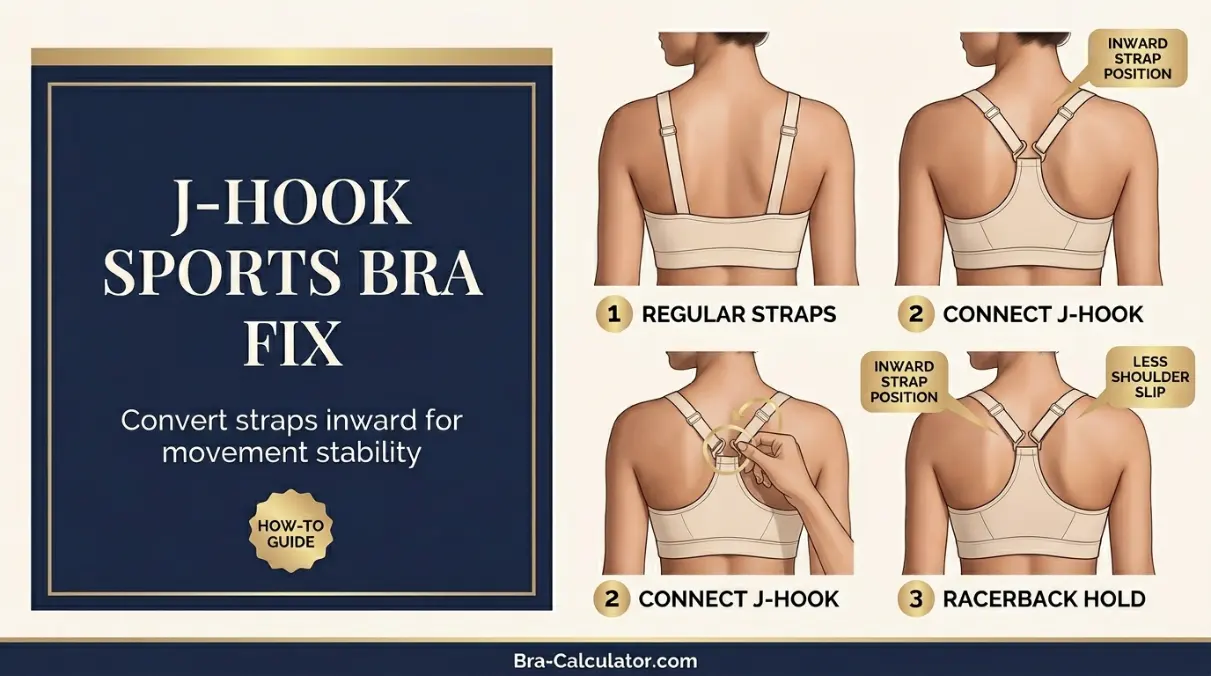
Strap orientation also matters. Some people have narrow, sloping or asymmetrical shoulders; a sports bra with straps attached far apart may naturally sit near the shoulder edge. In that case, even a correctly sized bra can slip during movement. Convertible J-hook, cross-back and racerback designs can move the straps inward and improve stability when the bra otherwise fits properly.
Fit truth: Slipping during a workout does not mean you need to endure painfully tight straps. Start with band stability, cup containment and impact level, then choose strap placement that matches your shoulders and movement.
Five Tests Before Buying a New Sports Bra
Do these checks in the type of movement that causes the problem. A bra that feels fine while standing still may behave very differently during running or jumping.
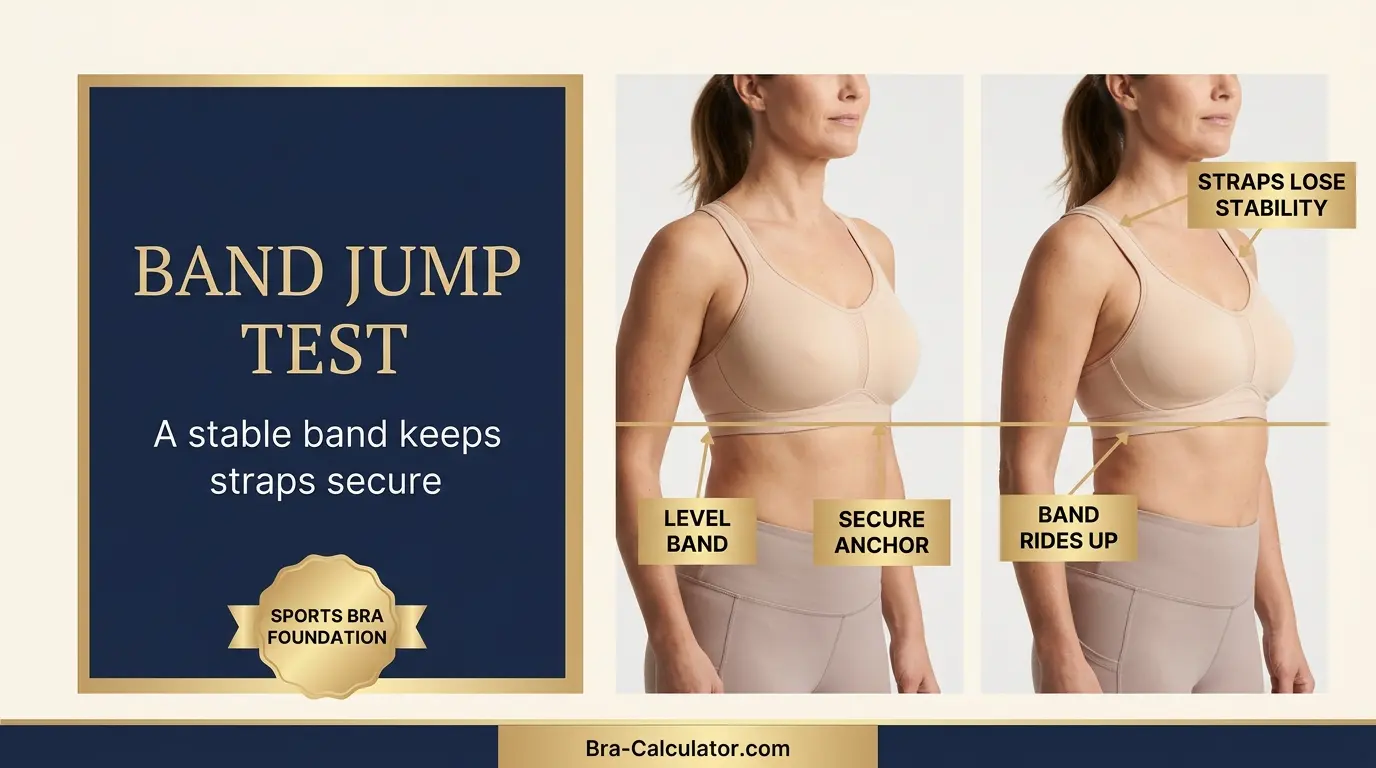
Fasten the bra securely, place all breast tissue inside the cups and check that the band stays horizontal around your body. If the band starts high or loose, strap conclusions will be misleading.
Shorten each strap until it is secure without digging. You should not need to aggressively crank straps upward just to make the bra feel supportive.
Raise both arms, swing them as you would during running, then jog or jump in place. Watch whether the band rises, straps slide, cups shift or bounce feels poorly controlled.
If straight straps slip but the bra otherwise feels correctly fitted, test the convertible setting. It should improve strap stability without creating neck pressure or pulling cups out of position.
Walking, yoga and gentle lifting place different demands on a bra than running, HIIT, court sports or jumping. A low-support bra cannot always be adjusted into a high-impact bra.
| Test Result | What It Suggests | Try Next |
|---|---|---|
| Band rides upward while straps fall | Foundation is unstable | Remeasure and test a firmer band or correct sister size. |
| Band stays level; straight straps slip outward | Strap placement mismatch | Try racerback, J-hook, cross-back or inward-set straps. |
| Straps stay on only when painfully tight | Support burden is on shoulders | Choose better band/cup support instead of more strap tension. |
| Bounce is uncontrolled in running or HIIT | Impact support is insufficient | Use a high-impact cup-sized encapsulation or hybrid sports bra. |
| One strap slips and one remains stable | Asymmetry or adjustment issue | Adjust each side individually; try convertible positioning. |
What to Check While You Move
These educational visuals are designed for the final branded image set. Each one answers a different question the reader needs solved before buying another sports bra.
Why Sports Bra Straps Keep Slipping
1. The Band Is Not Doing Its Share
The band is the anchor of sports bra support. When it is too loose, stretched out or pushed away by an incorrect cup fit, it can rise during movement and the straps are pulled into unstable positions.
2. Straps Sit Too Far Outward
Some sports bras place straps wider on the shoulder. For narrow or sloping shoulders, these straps can slide outward as soon as arms swing, even when the cup volume is close.
3. Impact Level Is Too Low
A bra intended for yoga or walking may not control motion during running, skipping or court sports. Heavy bounce can pull straps, disturb cups and create repeated readjustment.
4. Cups Do Not Contain the Bust
Spillage, compression without separation, a floating wire or cups that shift while moving may indicate that the bra is not containing tissue appropriately. Strap slipping is then part of a larger fit problem.
5. Adjusters Slip or Elastic Is Worn
Sports bras work hard: sweat, washing and repeated stretch affect their recovery. If straps lengthen during the workout or the band no longer rebounds, the bra may be past its best performance fit.
6. One Shoulder or Breast Differs
One strap falling repeatedly is common when shoulders slope differently, posture is uneven or one breast is fuller. Identical strap settings are not required for a comfortable fit.
7. The Straps Are Painfully Overtightened
Tightening straps can temporarily keep them higher, but it can also increase digging, neck tension and chafing while leaving bounce uncontrolled. It is a symptom fix, not always a support fix.
Match the Bra to the Movement Level
Straps that remain fine in a gentle class may fail during repetitive impact. Choose support based on what you actually do, not only what the bra looks like in the fitting room.
Yoga & Stretching
Mobility and comfort often matter more than maximum bounce control. Slipping may come from wide strap placement during arm movement.
Low ImpactWalking & Strength
A stable band and adjustable straps usually matter most, especially during bends, rows and overhead lifts.
Low–MediumDance & Gym Circuits
Repeated direction changes make strap and cup stability more important. Convertible placement can be useful.
Medium–HighRunning, HIIT & Court Sports
Look for high-impact support, strong band anchoring and controlled movement rather than relying on strap tightness.
High ImpactWhy Support Level Matters
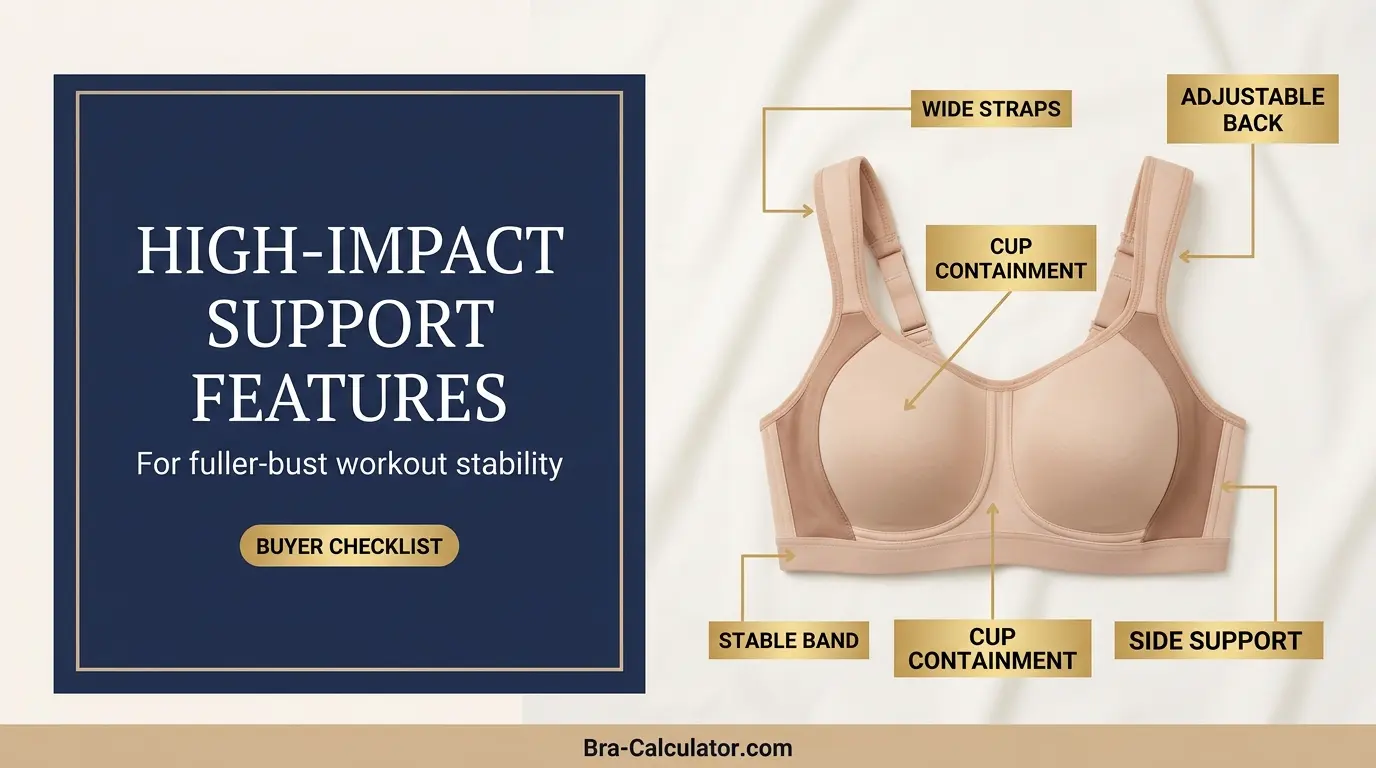
Sports bras are external support equipment for exercise, and the Australian Sports Commission states that appropriate sports bras can reduce breast movement by nearly 60%. Research on active women with larger breasts also found that wide, vertically oriented straps on encapsulation bras are preferable for reducing strap pressure and discomfort during exercise.
Use this evidence as design guidance — not as a promise that one style fits every body. Your band, cup shape, shoulders, workout type and comfort still determine the best bra.
How to Fix Sports Bra Straps Falling Off
The back band should remain level during movement. If it rides up, measure again and review the bra band rides up guide before replacing straps or choosing a tighter adjustment.
Scoop tissue fully into the sports bra. Check for side escape, top spillage, excessive flattening discomfort or cups shifting in a jog test. Stable straps cannot compensate for inadequate cup support.
When size and band are secure but straps slide off the shoulder edge, move them inward with a built-in J-hook, racerback or cross-back option. A converter clip can be a temporary test, but a designed-in option is usually smoother for exercise.
Switch from low-support to high-impact construction when running, jumping or playing court sports. Look for controlled bounce, breathable material and adjustable features — not only a tight feeling.
If straps slide longer during the workout, the band stretches easily or the same bra suddenly permits more bounce than before, worn elastic or hardware may be the actual cause.
What to Do When a Strap Slips Mid-Session
A strap falling during exercise is distracting and can make you lose confidence in movement. You do not need to abandon activity or ignore discomfort. Pause safely between sets, at the side of a track, or after a point in your game, then use a quick fix based on what the bra is doing.
Place the strap back on your shoulder and check whether it has lengthened through its adjuster. Do not hold your shoulders unnaturally high or rounded just to keep it in place.
If your sports bra offers a J-hook or racerback conversion and you know how to fasten it safely, changing the strap orientation may help you complete the session. Stop if it suddenly pulls on your neck or changes cup positioning.
If straps keep slipping and bounce becomes painful, change high-impact intervals to walking, cycling, controlled resistance work or mobility exercises until you have supportive gear that stays stable.
Note the activity, strap setting, band movement, chafing and whether racerback mode helped. This makes your next shopping decision far more accurate than simply buying another “high support” label.
Confidence reminder: A slipping sports-bra strap is a garment-fit problem, not a failure of your body or fitness level. The goal is support that lets you concentrate on moving, breathing and enjoying the workout rather than continually adjusting your clothes.
Sports Bra Strap Fixes for a Large Bust
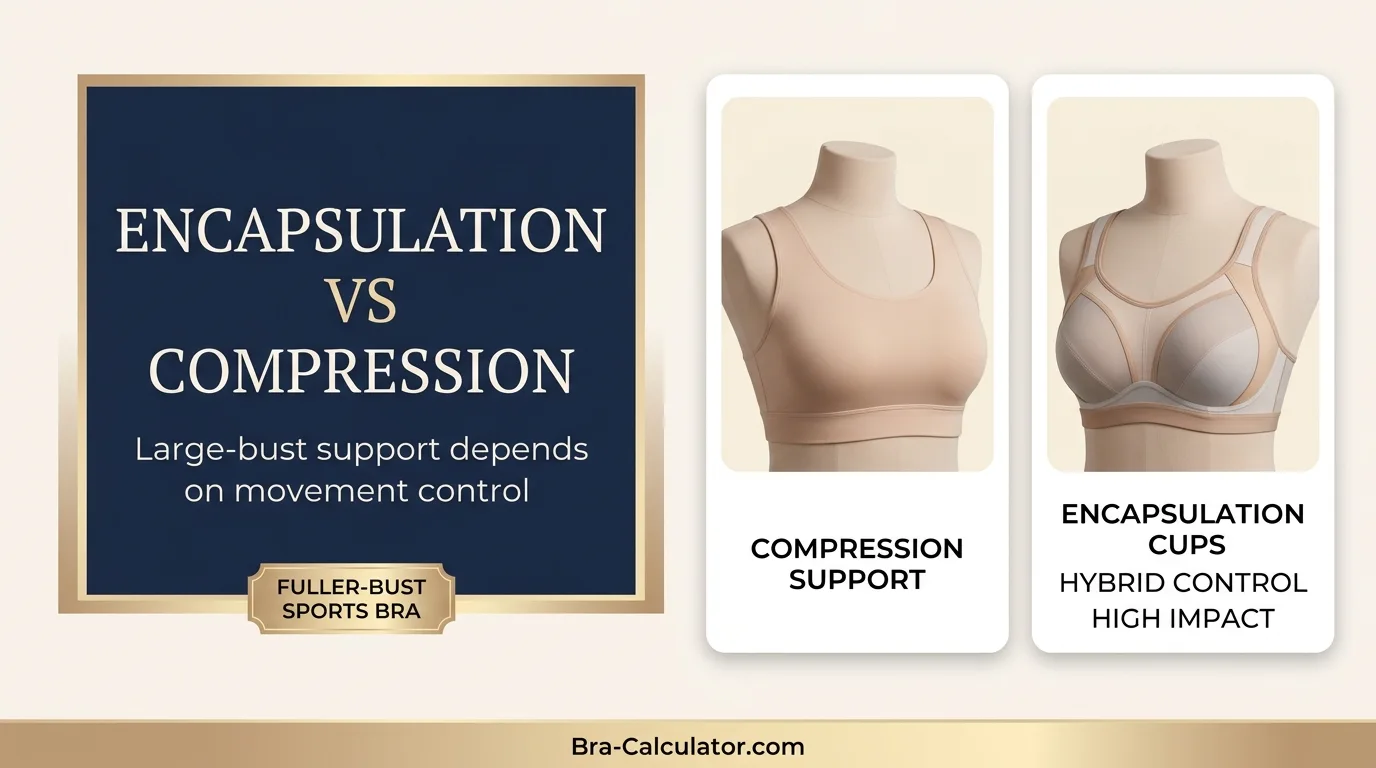
For a fuller bust, slipping straps may be especially frustrating because a quick tightening fix can shift pressure onto the shoulders without improving movement control. Many fuller-bust wearers benefit from a sports bra that supports each breast through cups or structured panels rather than relying only on overall compression. This is often called encapsulation; hybrid bras combine encapsulation with some compression.
Evidence-based design guidance points toward wider, vertically oriented straps on encapsulation sports bras for active women with larger breasts, because those features can help reduce shoulder strap pressure and discomfort during exercise. This does not mean every fuller-bust reader requires underwire or maximum compression. It means the strap should be one part of a supportive system: firm underband, suitable cups, controlled movement, moisture management and a strap orientation that remains on your shoulders.
Useful for dispersing pressure rather than concentrating load in a narrow point on the shoulder.
Helps contain movement individually, particularly during running, court sports or HIIT.
Moves straps inward when outer-set straps slip, while allowing you to return to straight straps for other wear.
Improves stability around the bust so straps are not being used as the main support system.
Racerback, Firmer Band or New Sports Bra?
Do not buy a completely different size simply because a strap slips once. Use the full symptom pattern to decide whether the fix is strap position, band anchoring, support level or replacement.
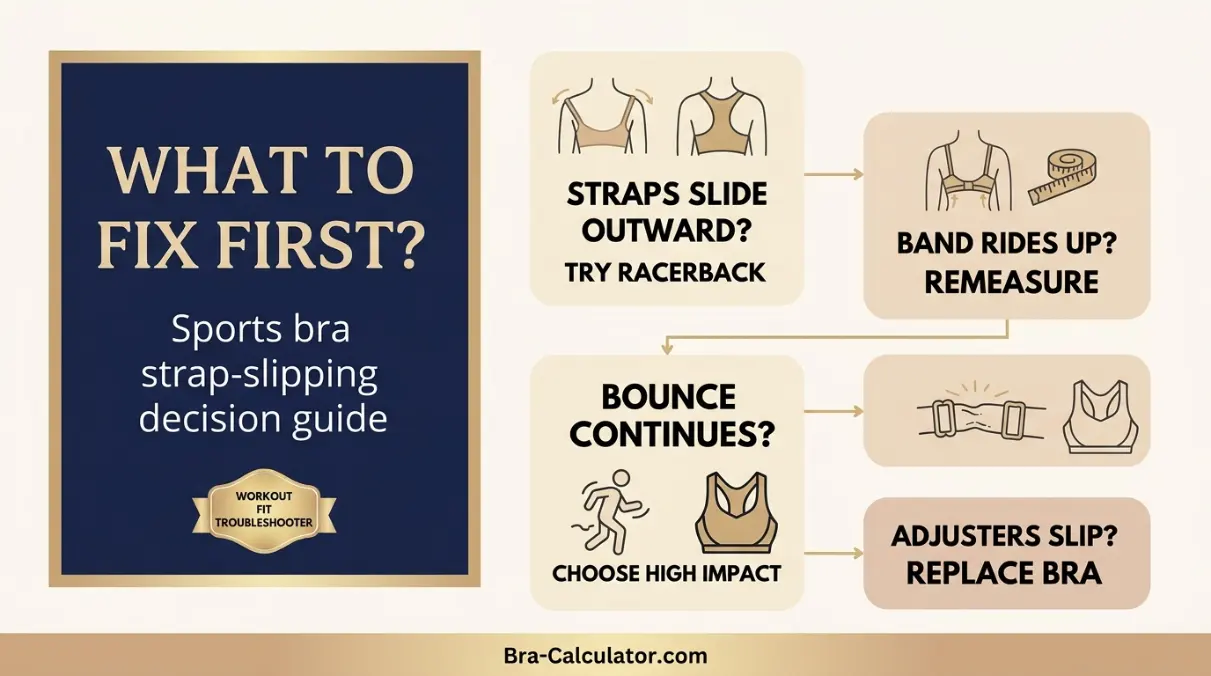
What Should You Fix First?
- Band stays secure
- Cups fit smoothly
- Straps slide toward outer shoulders
- Racerback or J-hook
- Center-pull/inward-set straps
- Check comfort around neck
- Band rides upward
- Bra shifts during arm motion
- Straps carry too much load
- Remeasure band and cup
- Test correct sister size
- Retest during movement
- Problem worsens while running
- Bounce continues despite straps
- Low-support bra in HIIT
- Upgrade support level
- Encapsulation or hybrid cups
- Look for adjustable conversion
- Adjusters slide longer
- Band feels soft or loose
- Bounce increased over time
- Compare with newer bra
- Retire unstable workout bra
- Track replacement timing
Sports Bra Styles That Help Prevent Falling Straps
Allows regular straps to convert inward for racerback stability when straight straps slide during movement.
Cup-based support and a stable band can control motion without making shoulder straps do all the work.
Wider straps may distribute shoulder pressure more comfortably when bust weight and impact are higher.
Useful when straps slip outward but you still want individual strap and band adjustment.
Can be comfortable for walking or strength work when a high-impact construction is unnecessary.
May not offer the band stability, adjustability or cup containment needed for running and jumping.
Examples of Features to Look For When Shopping
These named examples are educational reference points based on manufacturers’ published construction details. Availability, sizing and comfort can change, so check the latest product information and returns policy before purchasing.
Panache Power Wired Sports Bra
Panache identifies a J-hook racerback conversion and cushioned straps designed to help disperse pressure — useful features when outer straps slip during movement.
Elomi Energise Sports Bra
Elomi describes a non-compression design with side support and a moveable J-hook, intended to add support and reduce strap slippage in racerback mode.
Wacoal Sydney Sport Underwire Bra
Wacoal lists maximum support, full containment and back adjustable straps that convert to a crisscross style for high-impact activity.
Brand examples are not personal fit prescriptions. Use your measurements, movement test and comfort signs to decide what works for your body.
Support Categories to Explore After Diagnosing the Cause
Use these affiliate categories after you know whether your problem is strap placement, high-impact bounce or fuller-bust containment. Shopping by feature is more useful than buying a bra simply because it says “sports.”
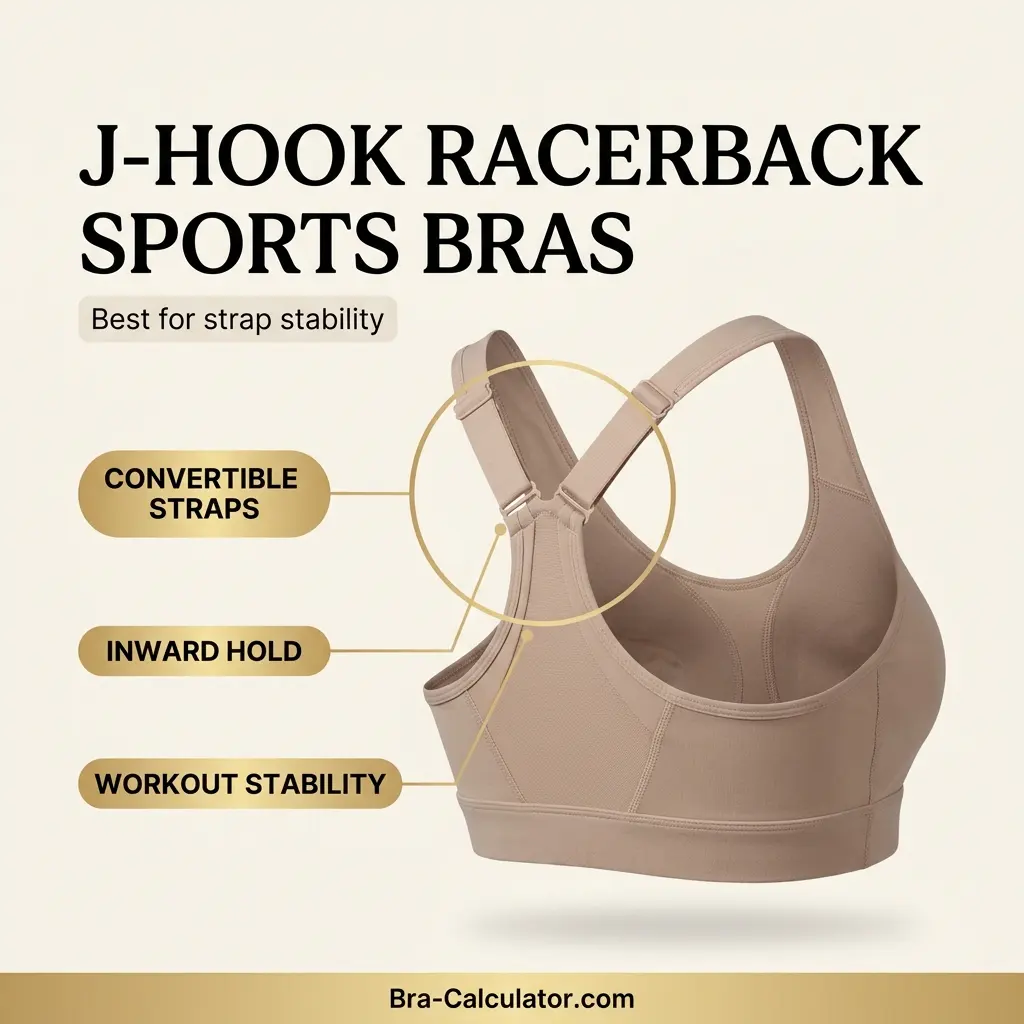
Convertible J-Hook & Racerback Sports Bras
- Designed for straps that slip outward during arm swing or running.
- Look for adjustable band and cups appropriate to your impact level.
- Test that racerback conversion does not create painful neck pressure.
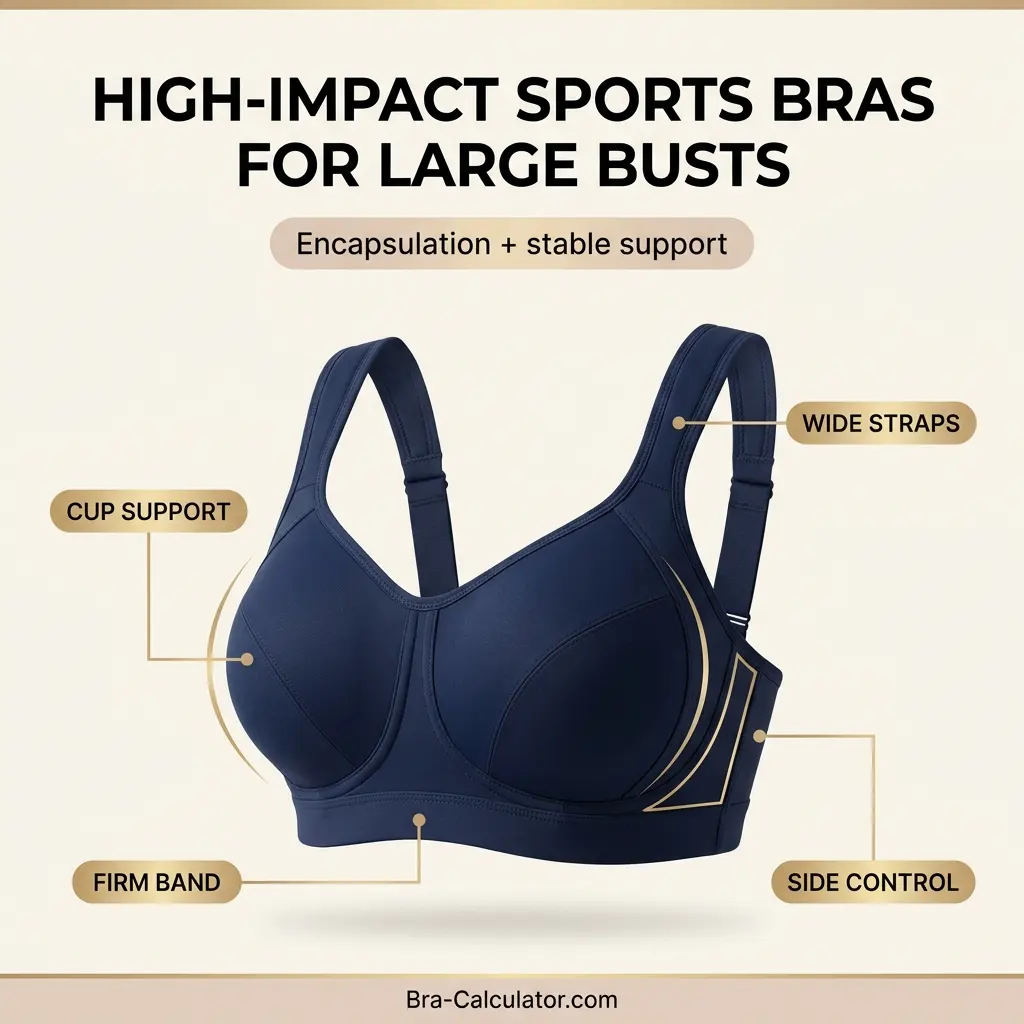
High-Impact Sports Bras for a Large Bust
- Prioritize secure bands, cup containment, wide straps and adjustable conversion.
- Encapsulation or hybrid support may feel more controlled than basic pull-on compression.
- Check sizing system carefully before ordering.
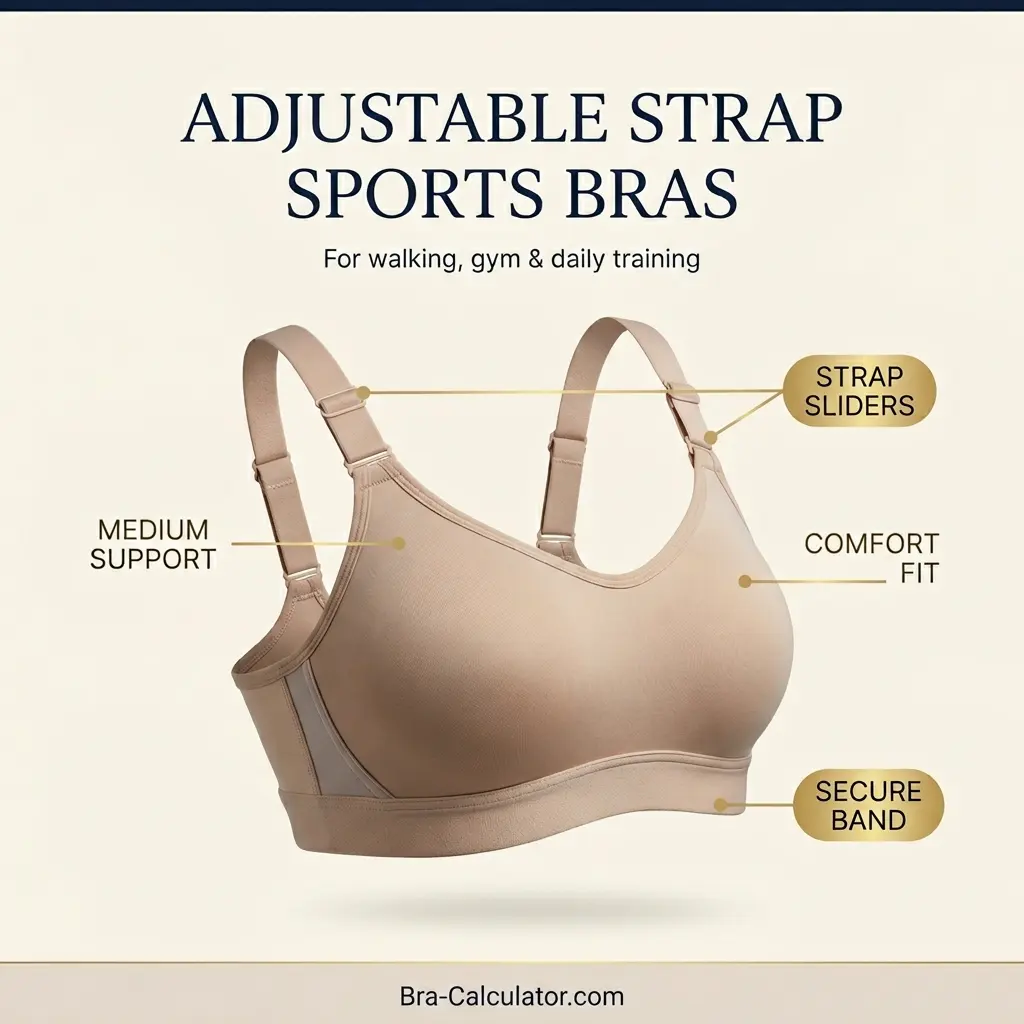
Adjustable-Strap Sports Bras for Daily Training
- Useful for strength sessions, walking and medium-impact movement.
- Choose straps that hold their adjustment and do not chafe when sweating.
- Upgrade to high-impact support for running or repeated jumps.
Do Not Train Through Pain or Chafing
A sports bra should feel secure, but exercise support should not require sharp shoulder pain, numbness, open chafing, breathing restriction or wire injury. Straps that dig deeply after being tightened to prevent slipping indicate that the problem has moved from inconvenience to discomfort. Stop, readjust or change bras rather than finishing a session in avoidable pain.
Repeated rubbing under the straps or band can worsen when sweat and high movement are present. Look for smooth edges, moisture-wicking fabrics, padded straps or alternative placement; clean and dry irritated skin after activity. New breast pain, lumps, nipple discharge, significant skin changes or symptoms that persist beyond clothing pressure should be discussed with a qualified healthcare professional rather than assumed to be caused by a sports bra.
When a Professional Fitter Can Help
A fitter is particularly useful when you have a fuller bust, repeated sports-bra failures, one-sided strap problems, significant chafing, or need a running/high-impact bra that controls movement without shoulder pain.
Workout Problems Often Linked to Slipping Straps
If the problem is not exercise-specific, review everyday strap placement and shoulder fit first.
Asymmetry can matter more than activity level when only one side repeatedly slips.
Outer-set strap construction may conflict with narrow or sloping shoulders.
Overtightening to prevent slipping can create pressure rather than correct support.
Your Sports Bra Movement Test
Save or Print Before Buying
Use this checklist in the fitting room or during a short home try-on session before removing tags.
Frequently Asked Questions
Why do my sports bra straps fall off during a workout?
Sports bra straps can slip during movement when the band is not anchoring firmly, straps are too widely placed for your shoulders, the strap adjusters loosen, the cups are not containing movement, or the style is not supportive enough for the activity. A racerback or J-hook may help when the underlying size and band fit are already sound.
Should I tighten the straps if they fall during exercise?
Tighten straps only enough to remove slack. If you must shorten them aggressively to keep them on, the band, cup fit or strap placement is probably wrong for your workout. Overtight straps can dig into shoulders without solving bounce or slippage.
Does a racerback sports bra stop straps falling off?
A racerback or J-hook configuration often helps keep straps away from the outer shoulder edge and may add upper-back stability. It will not correct an oversized band, poor cup containment or a bra that is worn out.
What sports bra is best for straps falling off during running?
For running and other high-impact activity, look for a secure band, adjustable or convertible straps, bounce-controlling cups and an impact rating suited to the activity. Cup-sized encapsulation or hybrid support is especially useful for many fuller-bust wearers.
Are slipping straps a sign my sports bra band is too loose?
Often, yes. If the band rides up, twists or moves during a jump test, the straps are being asked to hold too much of the support. A firmer band or correctly fitted sister size may stabilize the entire bra.
What is better for a large bust: compression or encapsulation?
Many people with larger busts prefer encapsulation or hybrid sports bras because separate cup support can control movement without flattening all tissue together. Comfort and fit vary, so the band, cups, strap placement and impact level all need checking.
Can narrow or sloping shoulders cause sports bra straps to slip?
Yes. Straps set far apart may sit too close to the shoulder edge, especially on narrow or sloping shoulders. A center-pull strap, J-hook, cross-back or racerback option can be more compatible.
Why does only one sports bra strap fall down?
One-sided slipping may be caused by natural shoulder or breast asymmetry, different strap adjustment, posture, or a stretched strap. Fit the fuller side first, adjust each strap independently and consider a style with convertible strap placement.
Can a worn-out sports bra make straps fall off?
Yes. Elastic, strap adjusters and band recovery weaken with use and washing. If the band no longer stays level, straps loosen while exercising or bounce is noticeably worse than before, replacement may be more effective than further adjustment.
Should I wear a high-impact sports bra for strength training?
It depends on the movement. Walking and controlled lifting may need less support than running, jumping or HIIT. Choose the support level that controls movement comfortably without unnecessary restriction.
How can I test a sports bra before a workout?
Put it on correctly, scoop tissue into the cups, check that the band stays level, set the straps gently, then jog or jump in place and raise your arms. Straps should stay secure, the band should not ride up and movement should feel controlled without pain.
When should strap slipping be checked by a professional fitter?
Consider a professional fitting when straps keep slipping across multiple sports bras, you have a fuller bust with pain or chafing, one-sided fit problems are hard to solve, or you cannot find high-impact support that stays stable during movement.
Stop Pulling Up Your Straps Mid-Workout
Find a stable starting size, then choose support built for your movement, shoulders and bust. A comfortable workout bra should stay in place without making you fight your straps through every run, lift or class.