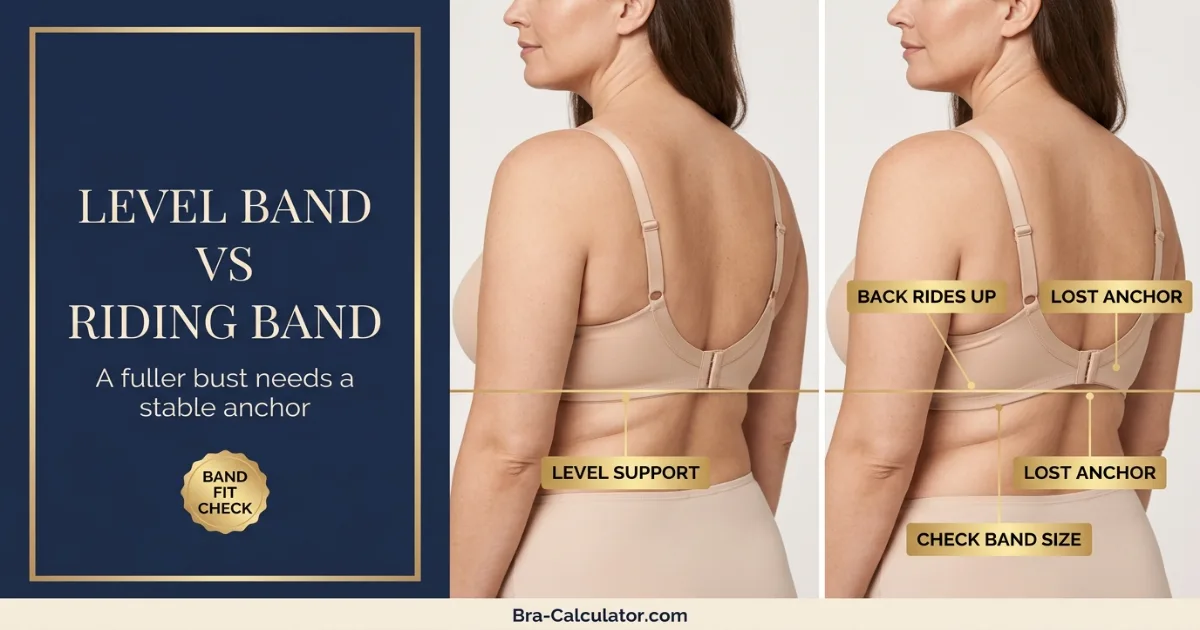
When a bra band rides up on a large or fuller bust, the band is usually not providing a stable enough anchor. It may be too large, stretched out, too soft for the level of support needed, or being pulled out of position because the cups are too small or too shallow. Do not fix it by overtightening straps. Start with the upside-down band test, check cups and wires after scoop-and-swoop, and then consider a firmer sister size or a structured full-bust bra with supportive wings and side-support cups.
Riding-Up Bands on a Fuller Bust at a Glance
| Fit Sign | What It Usually Suggests | First Check |
|---|---|---|
| Back band forms an upward arch | Band is not anchoring level around the torso. | Try the band independently of the cups. |
| Shoulder straps dig in while back rises | Straps are taking load the band should help stabilize. | Reset band before adjusting straps. |
| Rides up plus cup overflow | Band may be loose and cups too small or shallow. | Check full-bust sister size or deeper cup. |
| Only older bras ride up | Band elastic may have relaxed with wear. | Compare against a newer bra on loosest hook. |
| Band seems loose but wires dig or gore floats | Cup fit may be distorting the whole frame. | Do not size down in band without checking cups. |
| Band rolls or curls with a softer torso | Construction, wing height or elastic firmness may matter. | Test supportive wide-back/banded styles. |
Important fit truth: “Large bust” cannot be diagnosed from the letter D or DD alone. Cup letters are relative to band size, so a 32DD and a 42DD have very different cup volumes. Diagnose the rising band from how the bra fits your body, not from the letter on the tag.
Why a Bra Band Rides Up With a Large Bust
With a fuller bust, the bra has more volume and movement to manage, but the principle is the same for every size: the underband should sit level around the torso and remain comfortably firm. If the back creeps upward, the bra loses its foundation. The front may sink, straps may feel painfully tight, and cups can stop lifting or separating as intended.
A common mistake is assuming a large bust must need very tight straps. In a correctly fitted bra, straps fine-tune positioning; they should not be used to hoist the bust while the band floats upward. Tightening them can make the back rise even more and create shoulder grooves without addressing the real cause.
This page focuses specifically on the fuller-bust version of the symptom: when the band is being challenged by larger cup volume, heavier-feeling tissue, greater projection, softer tissue or construction that is not strong enough for daily support. For the broad symptom guide, see bra band rides up.
Five Tests Before Choosing a Smaller Band
A riding band usually needs attention, but a smaller band is only the right answer after cup fit, band stretch and comfort have been checked together.
Put the bra on with cups hanging down your back so breast tissue cannot distort the result. The band should feel secure and level on the loosest useful hook, without sliding easily upward or causing pain.
After wearing the bra normally, bring all side and lower tissue into the cups. If tissue overflows, the center gore floats or wires rest on breast tissue, the cups may be contributing to the rising back.
A stable band should remain close to the same horizontal position through light movement. If it travels upward rapidly, the band is loose, worn or not supportive enough for the fit.
Set straps comfortably rather than tightly. If the band drops closer to level when straps are loosened, overtightened straps were lifting the back instead of supporting comfortably.
Try a fuller-bust design with firm wings, a multi-part cup or side support. If it stays level in the correct size where a soft fashion bra rides up, construction matters as well as measurements.
| Result | Likely Cause | Best First Action |
|---|---|---|
| Band loose upside-down | Back size/elastic issue | Test a firmer band or replace stretched bra. |
| Band secure alone, but rises with cups on | Cup volume or shape issue | Try deeper/larger cups before shrinking band. |
| Band rises only after straps tightened | Strap compensation | Reset straps and support from band/cups. |
| New structured bra stays level | Construction mismatch | Choose supportive full-bust design features. |
What to Look For on a Fuller Bust
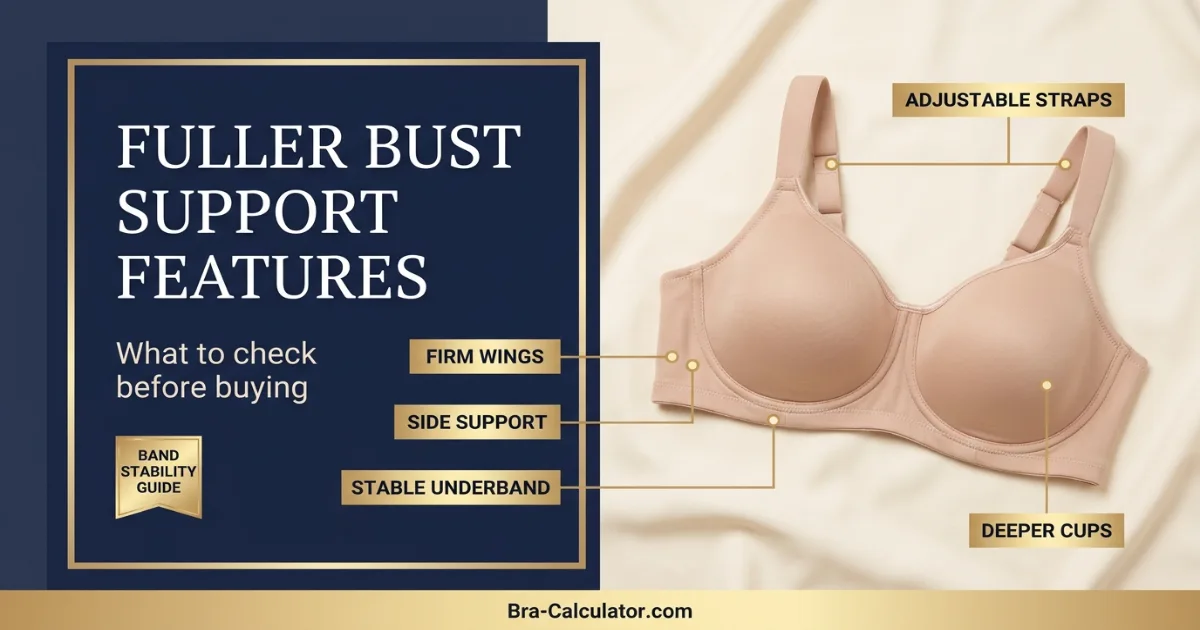
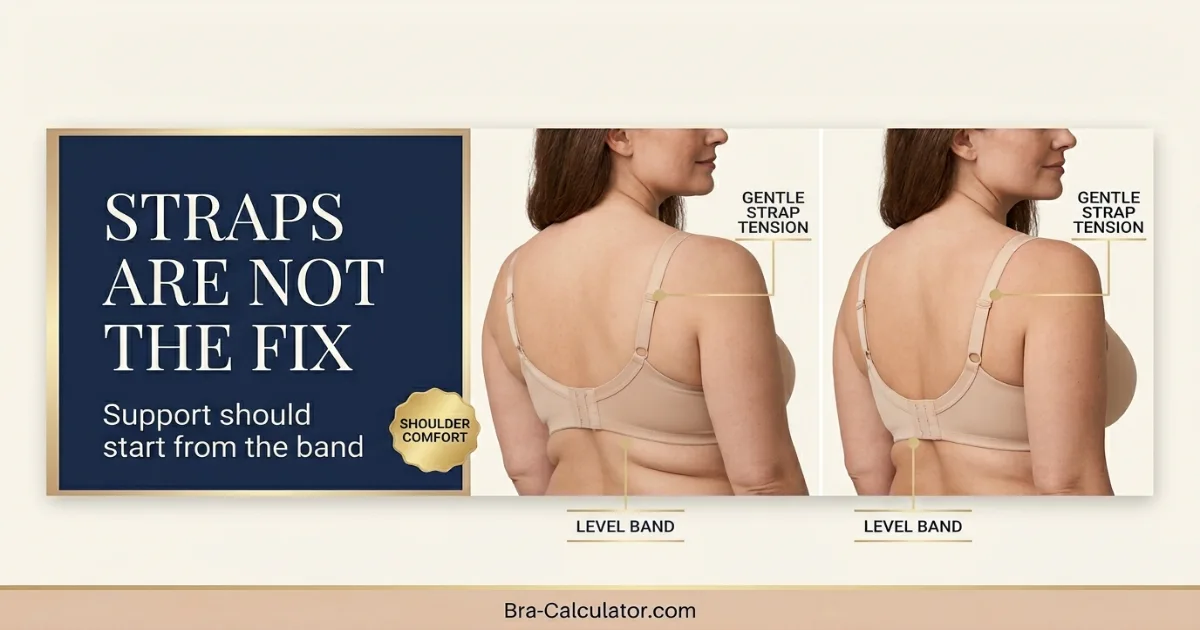
These visual checkpoints help distinguish a band that is too loose from a bra whose cups or construction are undermining support.
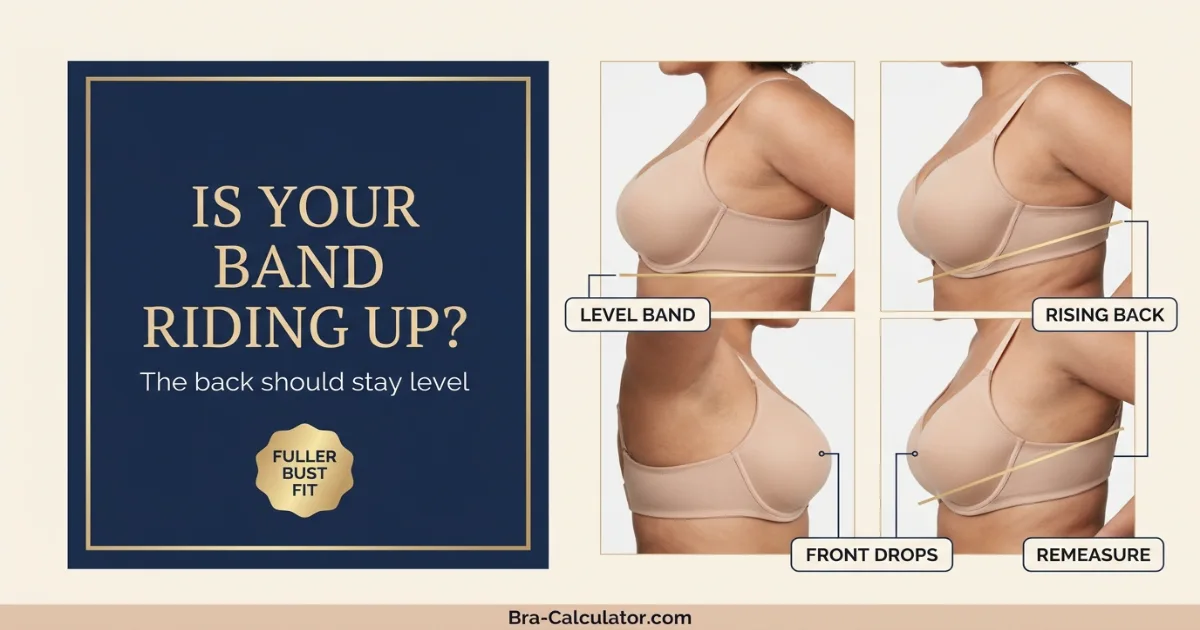
A supportive band stays parallel to the floor; a rising back signals lost anchoring.
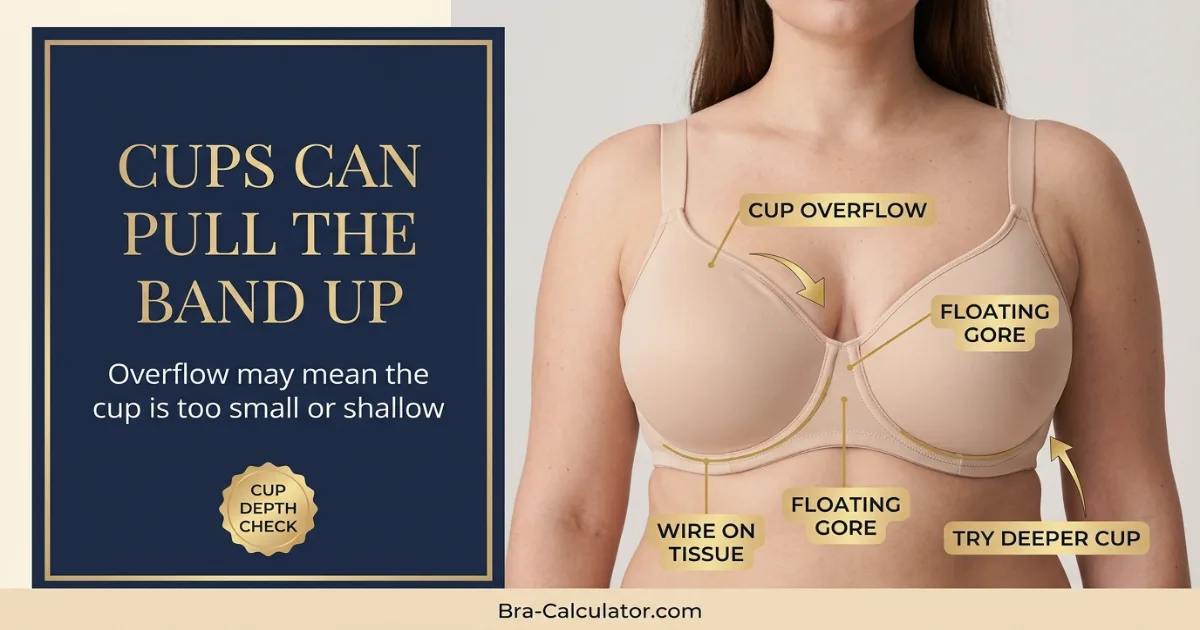
Overflow or a floating gore can mean cups need more room or depth.
Shoulders should not be doing the band’s job.
Firm wings and side-support cups can keep weight centered and the band steadier.
Why Your Bra Back Rides Up in D, DD and Larger Cups
1. Band Size Is Too Large
If the band can travel upward during normal movement, it cannot provide reliable support. This is especially noticeable on a full bust because the front of the bra has more tissue to contain.
2. The Band Has Stretched Out
A favourite bra may initially fit perfectly and later begin to rise. Elastic relaxes over time, particularly when one bra is worn frequently or always fastened on the tightest hook.
3. Cups Are Too Small or Shallow
When cups cannot contain breast volume or projection, tissue pushes against the frame. You may see side spillage, a floating gore, breast tissue beneath the wire or a front band that is dragged down.
4. Straps Are Overtightened
It is understandable to tighten straps when the bust feels unsupported. Unfortunately, pulling straps tighter often lifts the back band and increases shoulder discomfort.
5. Soft or Low-Support Construction
A stretchy lightweight bra may feel comfortable at first but fail to remain level for heavier or more projected breast tissue. Design matters: the same size can behave differently across bras.
6. Body or Breast Shape Has Changed
Weight change, pregnancy, postpartum changes, ageing or hormonal fluctuation can alter underbust measurement and tissue distribution. An older size may stop anchoring correctly.
7. Bra Is Not Built for Fuller-Bust Support
Some styles are designed more for appearance than anchoring a projected/full bust throughout a long day. A tall band, stronger wings or supported cup architecture can change how stable the bra feels.
How to Stop a Bra Band Riding Up on a Large Bust
Measure without compressing your breast tissue and use a consistent method. A current measurement gives you a better starting point than buying the same bra size by habit. Use the Bra Size Calculator as your next-fit starting point.
Check for quadding, side escape, wires on tissue, a floating gore or cups pushed downward. A stable band cannot solve cups that are not deep or large enough for the bust.
If the band is loose but cups are close, go down one band and up one cup rather than dropping the band while keeping an undersized cup. Fit carefully because UK and US cup progressions differ after DD.
For a full bust, test multi-part cups, side slings or side-support panels, powermesh or firm wings, and adjustable straps. These features can help keep the bust contained and the back band in position.
Sit, walk, raise your arms and wear a fitted top over the bra. A good solution should remain level without sharp pressure, slipping, repeated readjusting or shoulder digging.
Why “I’m a DD” Is Not Enough to Solve Band Ride-Up
Many people are told that D or DD automatically means “large,” then are placed in a band that is too loose because the store has limited cup sizes. That can create the exact symptom this page addresses: the band rises, the bust feels heavy, and straps are tightened repeatedly to compensate.
Cup size is a ratio, not a fixed breast volume. A 32DD is not the same cup volume as a 40DD. A person wearing 38DD with a loose rising band may discover that a firmer band with an adjusted cup letter gives better lift and comfort, even though the cup letter looks “larger.” This is why the label should never be treated as a judgment or a maximum.
Front May Pull Down
Shallow cups can tilt the bra and let the back ride upward.
Try deeper cupsNeeds Containment
Side support and firmer cup sections may help keep tissue forward.
Try side supportGore Fit Matters
A painful or floating gore can signal cup/frame mismatch.
Check center fitFit Fuller Side
Do not choose a loose band just to accommodate one cup.
Adjust cup style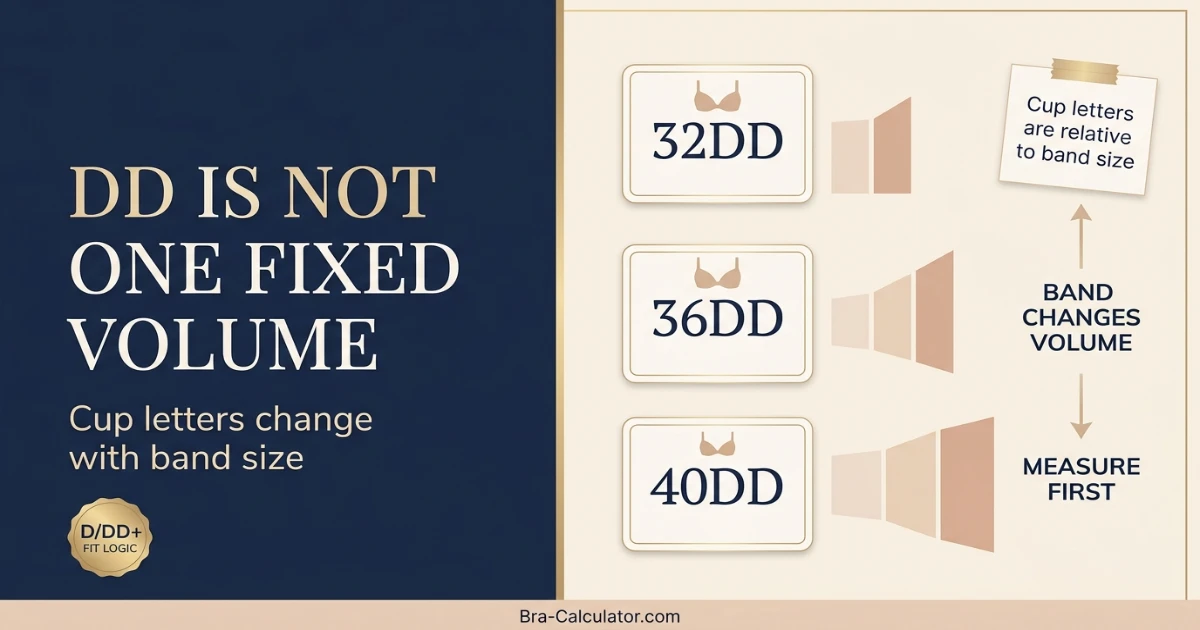
Band Size, Cup Depth or Style: Which Change Comes First?
Use sister sizing only when cup volume is already close. If cups overflow or the gore floats, the solution may require more cup capacity or projection as well as a firmer band.
| Your Fit Pattern | Try First | Why |
|---|---|---|
| Band rises; cups smooth and gore flat | Firmer sister size | Similar cup volume with a stronger anchor may stop movement. |
| Band rises; cups spill or wires sit on tissue | Firmer band plus greater/deeper cup | The cups may be forcing the bra out of position. |
| Band rides up only in old bras | Replace the bra in rechecked size | Elastic recovery may be gone. |
| Band is firm but rolls or folds | Different wing/band construction | Height, stiffness and torso shape affect stability. |
What Should You Fix First?
- Band rises during arm lift
- Cups fit reasonably smoothly
- Band feels easy to pull away
- Test firmer sister size
- Fasten new bras on loosest hook
- Reset straps after band fits
- Overflow or side escape
- Gore floats away from sternum
- Wire rests on breast tissue
- Seek larger/deeper cup
- Try full-bust side support
- Do not just tighten straps
- Size seems right but soft bras shift
- Bust pulls to sides or downward
- Band lacks firm wings
- Try three/four-part cups
- Choose firm wings/side support
- Test wider underband design
- Only older bras rise
- Elastic feels limp
- Using tightest hook already
- Replace stretched bras
- Rotate daily bras
- Remeasure before reorder
Supportive Bra Features for a Large Bust Band That Rides Up
Multi-part cups with a side sling or side panel can bring tissue forward and reduce the pull that destabilizes a band.
Powermesh or structured wings can give a firmer, level anchor where very stretchy backs creep upward.
A stable lower cup with flexible upper lace can suit fuller or uneven breast tissue while maintaining containment.
May create a smoother profile for some wearers, but must not flatten tissue painfully or substitute for correct sizing.
Can suit comfort preferences when it has a genuinely stable underband and sufficient cup separation/containment.
May be comfortable for rest, but often lacks anchoring and shaping for a heavy/full bust over long wear.
Fuller-Bust Construction Examples to Explore
Officially described with four-part cups, stretch lace top cups, laminated bottom cups, powermesh wings and a side sling — a useful example of structured support.
Officially described with a three-section cup plus side frame and stretch lace, available in DD–K cup ranges — a relevant fuller-bust construction example.
Official descriptions highlight side-support shaping and supportive fuller-bust cup construction; check current range and your correct UK size before purchase.
Support Categories to Consider After Remeasuring
These affiliate links may earn a commission at no extra cost to you. Product cards are starting categories, not a substitute for measuring and checking cup depth, band stability and returns before purchase.

Wide Padded-Strap Full-Coverage Bras
- Useful category when shoulder comfort matters after a rising band has been corrected.
- Look for a firm back and cups deep enough for your full bust.
- Do not rely on wide straps alone if the band still rides up.

U-Back Support Bras With Wide Straps
- A supportive back shape may help keep straps and band more stable through daily movement.
- Choose the correct band first; an oversized U-back can still rise.
- Check cup containment and underwire position after scoop-and-swoop.

Wireless Comfort Bras With Cushioned Straps
- A softer option for low-impact days or wearers who dislike underwire pressure.
- For a fuller bust, confirm the underband stays level and provides meaningful support.
- A wireless style that shifts upward is still not the right fit.
When a Fuller Bust Makes Band Ride-Up More Complicated
A rising band does not look or feel identical on every fuller-bust body. Two people may both need stronger anchoring, but the most comfortable bra architecture can differ because projection, torso length, tissue softness and life-stage changes affect how support is distributed.
Small Band + Large Cup Volume
Wearers with a narrower ribcage and a fuller cup may be offered a larger band simply because stores stock limited cup letters. That can trade cup availability for poor support: the back rises, straps tighten and the bust feels lower. A specialist full-bust range may offer the firmer band and deeper cup needed together.
Soft, Pendulous or Bottom-Full Tissue
Softer tissue may settle downward or toward the sides in cups that lack containment, making the bra feel unstable even when the band is close. A multi-part cup, side-support panel and secure upper edge can improve positioning before straps are adjusted.
Short Torso or Softer Rib Area
A high or very rigid band can fold, roll or sit uncomfortably even when a smaller band is mathematically plausible. In this situation, comfort depends on the balance of firmness, wing height and cup anchoring rather than simply choosing the tightest possible band.
Weight Change, Postpartum or Hormonal Shifts
A previously dependable full-bust bra may start riding up after the torso measurement changes or upper fullness redistributes. Trying to force an older bra to work with strap tension can worsen discomfort. Remeasure and reassess cup shape if the change persists.
A comfort-first reminder: The goal is not the smallest band you can tolerate. It is a stable, level anchor that supports your bust without breathing restriction, sharp underwire pressure, skin injury or painful shoulder load.

A Fuller Bust Should Not Mean Accepting Discomfort
Many people with larger breasts are told that shoulder digging, a back band climbing upward or constant readjustment is simply normal. It is common, but it should not be treated as inevitable. A full bust may need more supportive construction and a wider size search, not more tolerance for pain.
Changing from a familiar DD size to a different band and cup letter can feel emotionally uncomfortable, especially when clothing stores have made certain letters seem unusually “large.” The number and letter are only fit tools. A bra that supports comfortably, stays level and lets you move confidently is a better goal than staying attached to an old label.
When to Use a Professional Fitter or Seek Care
A fuller-bust fitting can save repeated wrong-size purchases
Consider a specialist fitting when your band repeatedly rides up in several brands, your shoulders are painful, you cannot get both cups and band comfortable at the same time, or you need an extended-size range beyond typical retail stock. Bring your best-fitting and worst-fitting bras so the fitter can see the pattern.
Start with the Bra Fit Problem Solver →Fuller-Bust Band Stability Checklist
Use this before ordering a replacement bra or comparing full-bust styles.
Frequently Asked Questions
Why does my bra band ride up when I have a large bust?
A band that rides up is usually not anchoring firmly enough to balance the weight and movement of the bust. The band may be too large, overstretched or paired with cups that are too small or too shallow, causing breast tissue to push the bra downward at the front and upward at the back.
Does a bra riding up in a D or DD cup always mean I need a smaller band?
Not automatically. D and DD are cup letters relative to the band size, so they do not describe the same volume on every body. Check the band independently, then check for cup spillage, a floating gore or wires sitting on tissue before choosing a firmer sister size.
Should the bra band provide support for heavy breasts?
Yes. Straps help position the cups, but a stable level underband is the foundation that anchors the bra around the torso. If the band slides upward, straps often become overworked and may dig into the shoulders.
How do I know if the band is too big or simply stretched out?
Try the bra on its tightest hook temporarily. If an older bra becomes level only on the tightest hook, its elastic may be worn out. If a newer bra rides up even on a secure hook and the cups fit, you may need to test a firmer band using sister-size logic.
Can cups that are too small cause the band to ride up?
Yes. Cups that are too small or too shallow can push the bra away from the breast root and pull the front downward, making the back band creep upward. Look for side overflow, double-busting, a floating center gore or wire discomfort before reducing the band alone.
What bra style is best when the band rides up on a full bust?
Many fuller-bust wearers benefit from structured multi-part cups, side-support panels, firm wings, a secure underband and fully adjustable straps. The best style still depends on breast shape, size range and comfort preference.
Should I tighten my straps to stop the band riding up?
No. Very tight straps can lift the back band further and create shoulder pain. Loosen or reset straps after confirming that the band is level and the cups contain all tissue comfortably.
What is the sister size fix for a loose band?
When cup volume is close but the band is loose, go down one band size and up one cup size, such as 38DD to 36E in UK sizing or the equivalent system for the brand. Always verify the brand’s size chart because US and UK lettering differs after DD.
Is a wide band better for a large bust?
A wider, firmer band and supportive wings can distribute tension across more area and feel steadier for some fuller-bust wearers. Width alone does not fix an incorrect size, so it works best after remeasurement and cup-fit checks.
Can weight change make my bra band ride up?
Yes. Weight loss, weight gain, pregnancy, postpartum changes and hormonal fluctuations can alter underbust measurements or breast fullness. Remeasure when a previously reliable bra begins shifting or feeling unsupported.
When should I see a professional bra fitter?
A fuller-bust fitting is especially useful when several sizes fail, wires sit on tissue, straps leave deep marks, the band rides up despite sister sizing, or asymmetry and shape changes make fitting difficult.
When should bra discomfort be checked medically?
Seek medical advice for a new breast lump, persistent one-sided breast change, nipple discharge, skin dimpling or redness, unexplained swelling, or pain that continues independently of the bra.
Stop Pulling Your Bra Band Back Down All Day
A large bust deserves support that stays level, protects your shoulders and feels secure without constant adjusting. Start with current measurements, then test the right band, cup depth and supportive construction.