A bra can feel too tight after eating because fullness, gas or bloating increases pressure beneath and near the bra band, especially when the band is already firm, the underwire sits low, or you are seated after a meal. Your actual bra size has not necessarily changed. First check whether discomfort appears only after meals or occurs all day. For occasional post-meal tightness, loosen an adjustable hook, use a temporary extender, choose a softer backup bra or avoid restrictive bands for long meals. If your band pinches even before eating, leaves painful marks, restricts comfortable breathing or your measurements have changed, remeasure your bra size and assess the fit properly.
Bra Too Tight After Eating at a Glance
| What You Notice | What It May Mean | Best First Step |
|---|---|---|
| Band is comfortable in the morning but presses after a large meal | Temporary fullness or bloating is increasing pressure near the underband. | Try the loosest hook or a temporary band extender for long meals. |
| Bra feels tight before eating and worse afterward | The band may already be too tight, overstretched, or cups may be pulling the band forward. | Remeasure and complete a full band-and-cup fit check. |
| Underwire digs into upper stomach when sitting | Wire height, band position, longline depth or posture may be concentrating pressure. | Test a softer/lower wire or flexible wireless option for seated comfort. |
| Pressure happens with bloating or around a menstrual cycle | Day-to-day abdominal comfort can fluctuate without permanently changing your size. | Keep an adjustable comfort option and track patterns. |
| Breathing feels restricted, pain is sharp or marks linger | The bra is not comfortably tolerating normal movement and expansion. | Remove or change the bra now and reassess the fit. |
| Bloating is frequent, severe or comes with other symptoms | The issue is not only bra fit and may need health advice. | Speak to a healthcare professional about the symptoms. |
Why Does a Bra Feel Tighter After a Meal?
Many people notice that a supportive bra feels perfectly acceptable earlier in the day but uncomfortable after eating. A fuller stomach, intestinal gas or temporary abdominal bloating can create a sensation of pressure and expansion below the bust. Because a bra band circles the lower chest close to the upper abdomen, that extra fullness may make an otherwise firm band or underwire feel more noticeable, especially while sitting, bending or wearing fitted clothing.
This does not necessarily mean your breast size or permanent band size has changed after one meal. Normal breathing also causes the lower ribcage to move and expand. A comfortable bra should allow easy breathing and daily movement; however, a very rigid band, a low underwire or a longline style can leave little tolerance for temporary fullness near the underbust area. A meal can expose that lack of comfort margin.
It is also important not to assume every episode is a bra problem. Occasional bloating after eating is common, and can be associated with gas, swallowing air, large meals, particular foods, constipation or hormonal changes. If bloating is frequent, painful or persistent, it deserves attention separately from your bra wardrobe.
Fit truth: A bra that feels tight only after a heavy meal may need a flexible comfort strategy, not a permanently larger everyday size. A bra that is uncomfortable before meals, prevents relaxed breathing or causes painful wire pressure needs a proper size-and-style reassessment.
Five Checks Before You Change Your Bra Size
A tight feeling after eating can come from temporary bloating, a consistently tight band, a too-small cup, underwire placement or a style that does not tolerate sitting and movement. Test in this order before buying a replacement.
Wear the same bra before eating and again after an ordinary meal. If discomfort appears only after fullness or bloating, note that pattern rather than immediately sizing up. If it is tight from the start, the base fit needs attention.
A new everyday bra should generally begin on its loosest comfortable hook so there is room to tighten as elastic relaxes. If you already need the loosest hook and still cannot sit or breathe comfortably, the band or style may be too restrictive.
If breast tissue spills, the center gore does not settle, or wires sit on tissue, the cup may be too small or shallow and can make the entire bra feel tighter. Do not judge the band alone while cups are compressing you.
Post-meal discomfort often appears while seated. Sit upright, take an easy breath and bend slightly. The bra should not jab the upper stomach, painfully cut into ribs or make you feel you must unfasten it immediately.
If the bra fits the rest of the day, a small extender, adjustable band setting or soft meal-time bra may be enough. If the discomfort is frequent regardless of meals, use the bra size calculator and reassess from current measurements.
| Your Test Result | Likely Issue | Best First Change |
|---|---|---|
| Only tight after larger meals or known bloating days | Temporary comfort fluctuation | Use a looser hook, extender or flexible backup style. |
| Tight at all times and leaves painful band pressure | Band may be too small or too firm | Remeasure and compare a larger band or sister size carefully. |
| Tight feeling plus cup overflow or wire on tissue | Cup volume/shape may be contributing | Assess cup size and depth before increasing band alone. |
| Only lower wire presses after sitting to eat | Construction or seated-position issue | Try shorter wires, flexible banding or wireless comfort bras. |
| Pain remains after removing bra, or bloating is frequent | Not simply normal bra comfort variation | Address fit and consider medical advice for symptoms. |
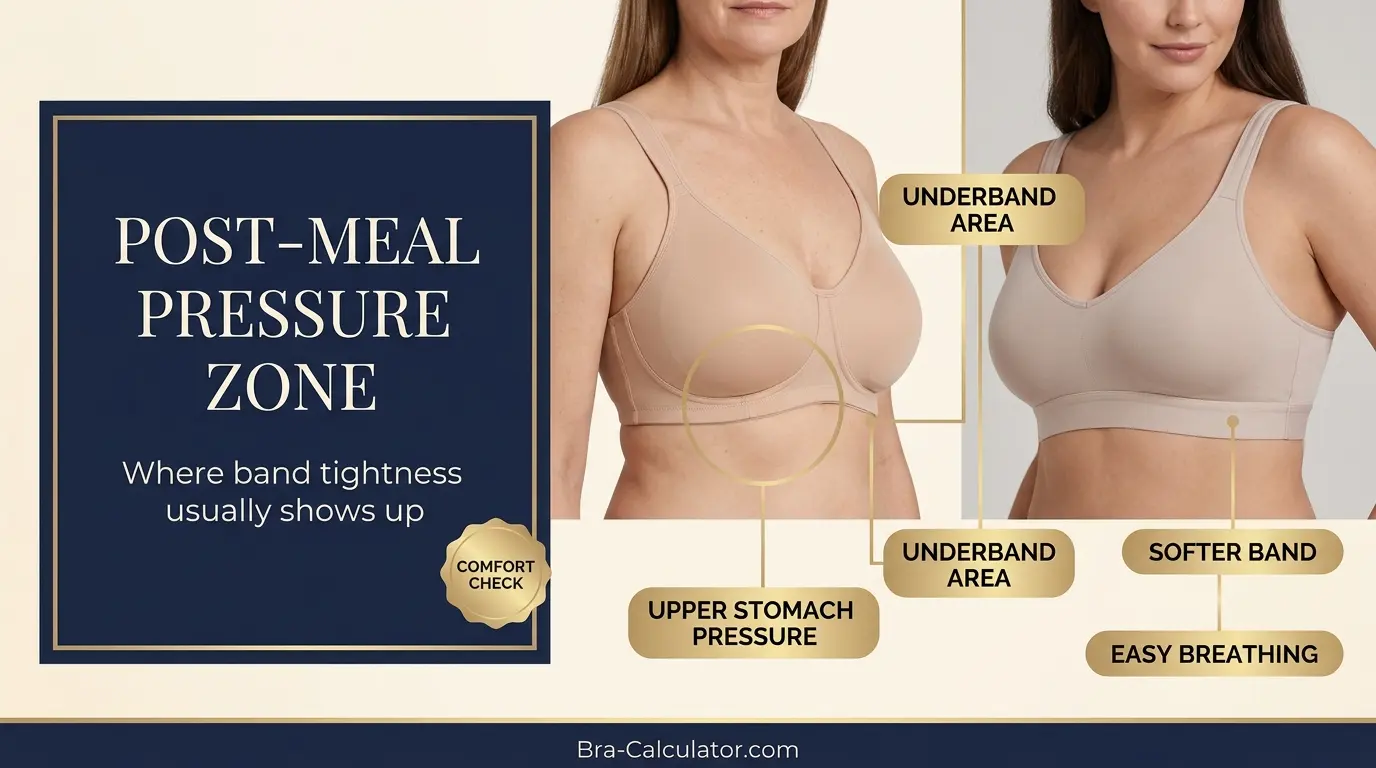
Four Visual Checks for Post-Meal Bra Pressure
These illustrations help readers understand whether they need a comfort adjustment, a fit correction or a different bra construction for meals and long seated days.
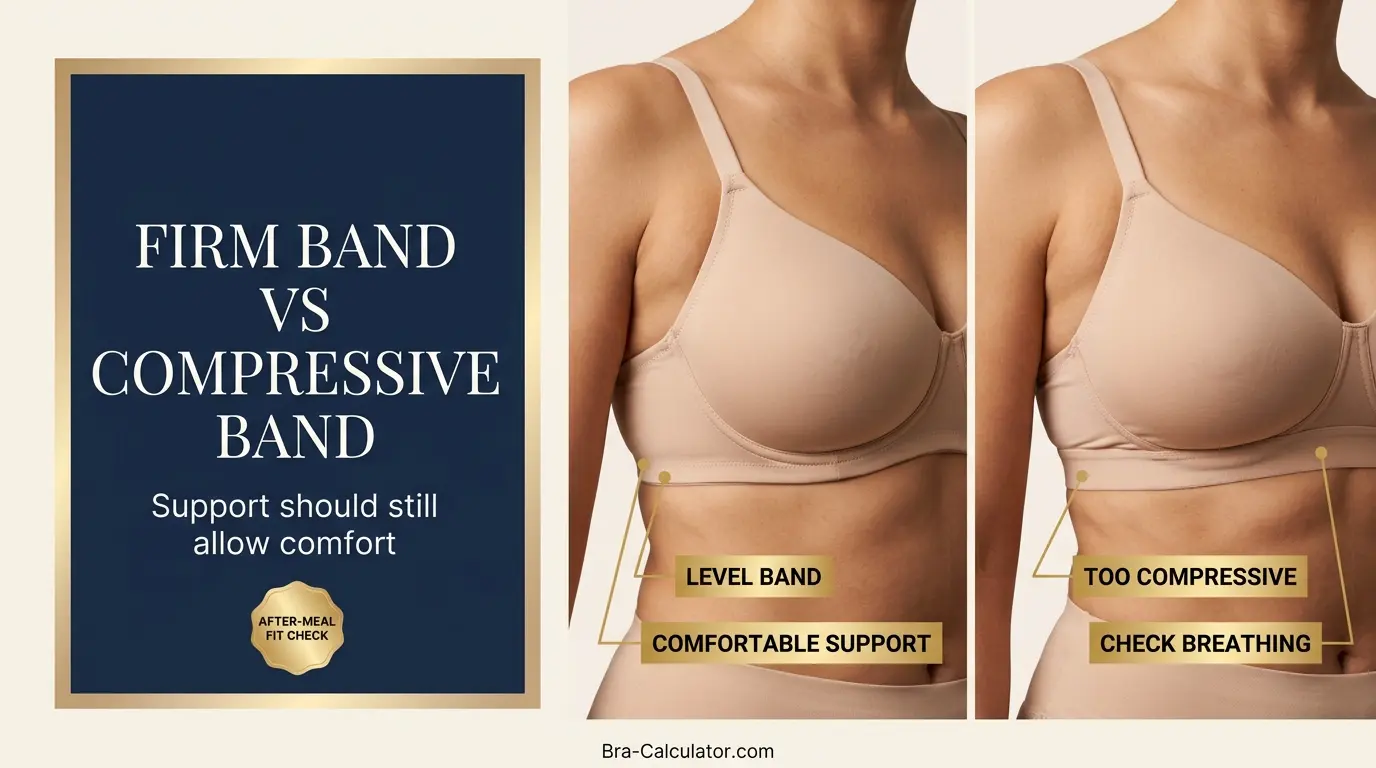
1. Firm vs Compressive Band
A supportive band feels secure. It should not create sharp underbust pressure or prevent easy sitting and breathing after a meal.
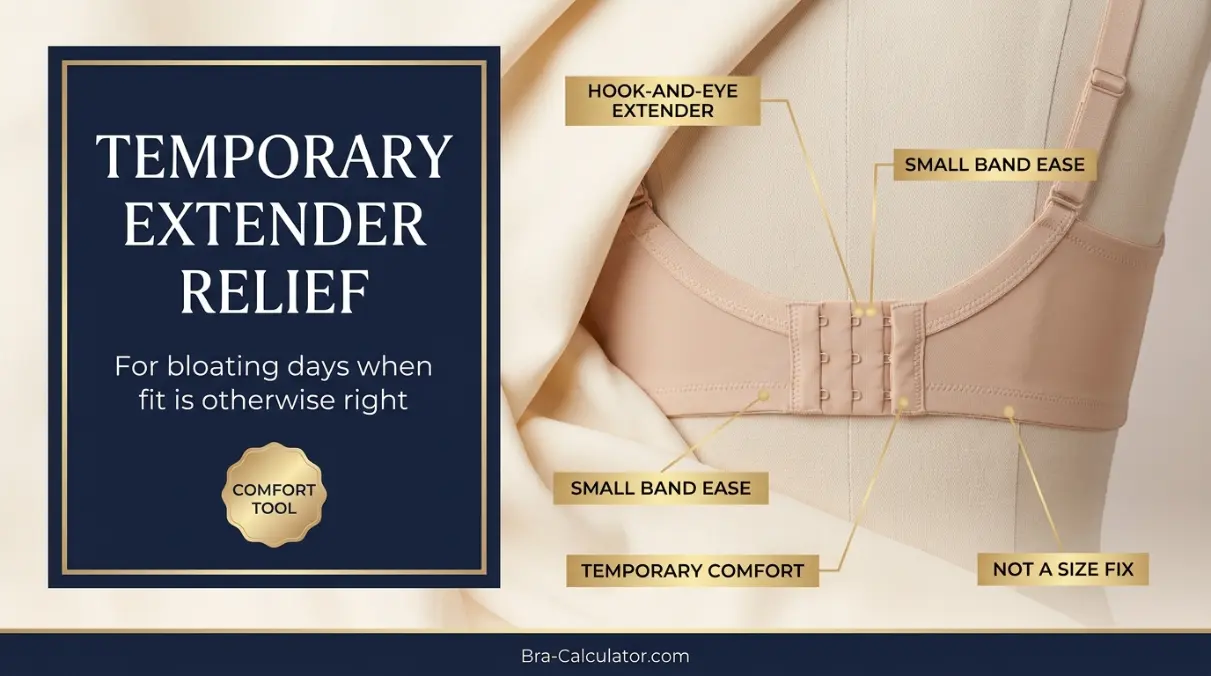
2. Temporary Extender Relief
An extender adds short-term band ease when fit is otherwise correct and comfort changes only on bloated days.
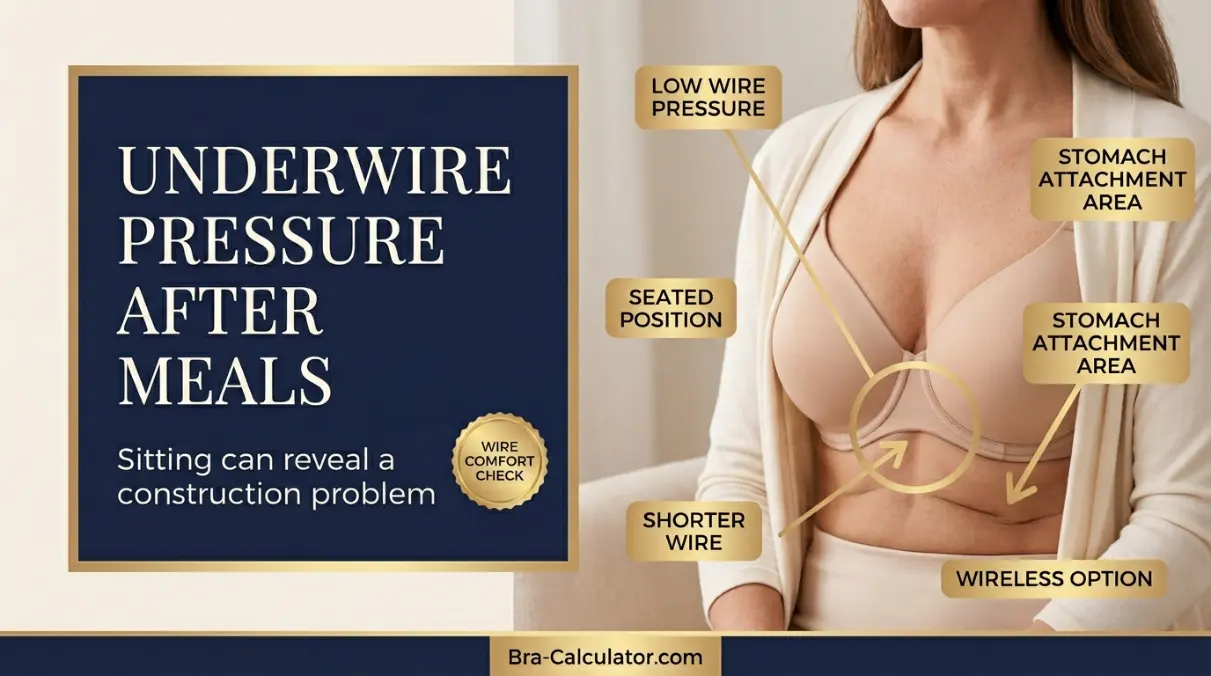
3. Underwire Pressure Zone
Low or rigid wires can press into the upper abdomen when seated, especially after fullness or gas increases pressure below the bust.
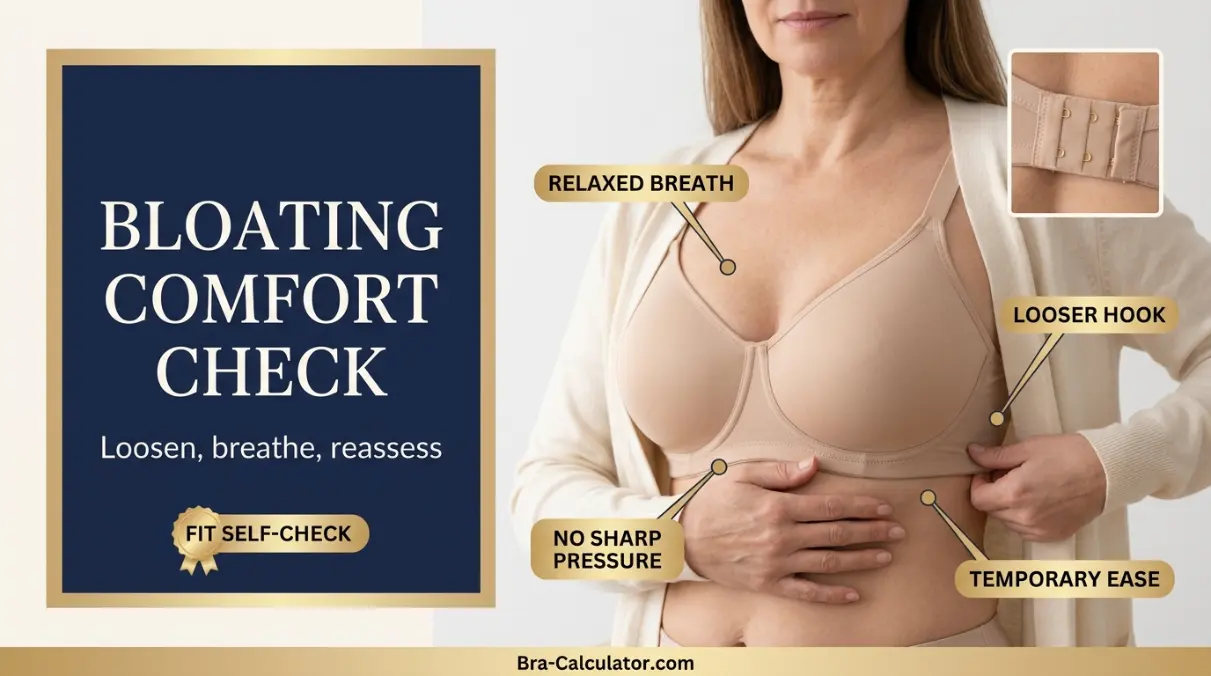
4. Breathing & Movement Check
You should be able to sit upright, inhale comfortably and move without painful digging at the band or wire.
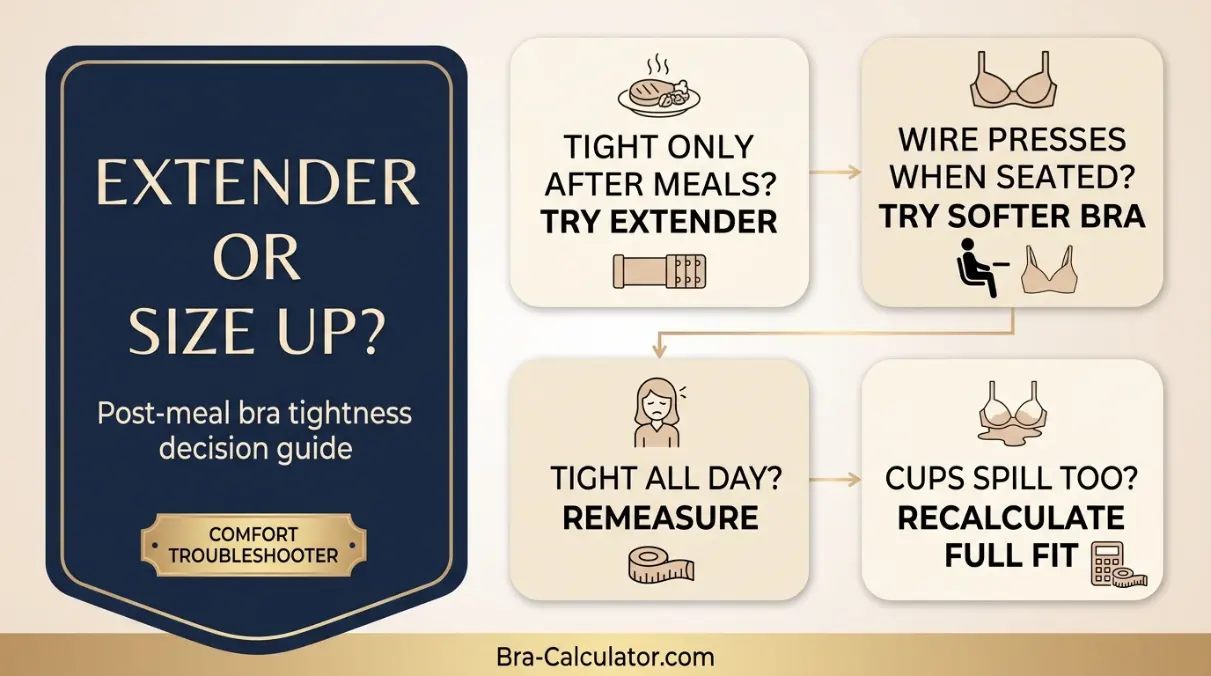
Why Your Bra Band Feels Tight After Eating
1. Temporary Bloating or Fullness
Eating a larger meal, swallowing more air, drinking fizzy beverages or having gas can make the abdomen feel full and press upward into the space beneath the bra band. This can be most noticeable in a fitted underwire bra.
2. The Band Has No Comfort Margin
A firm support band is expected, but a band that is already at your tolerance limit may become uncomfortable with normal breathing, posture changes or mild post-meal fullness.
3. Underwire or Longline Bra Pressure
Some underwires, firm center gores and longline bands extend lower on the torso. When the stomach is full and you sit, the bra can meet the body at a pressure point that feels fine while standing but uncomfortable after eating.
4. Cups Are Too Small or Too Shallow
A cup that compresses breast tissue can pull the bra frame outward and create a tight-band feeling. If you also see overflow, wire-on-tissue or a floating center gore, the issue is not simply bloating.
5. Hormonal or Digestive Patterns
Some people experience more bloating around periods, with constipation, food intolerances or irritable bowel symptoms. A bra can become the most noticeable pressure point during those days.
6. A Consistently Wrong Band Size
If the bra is tight before breakfast, difficult to fasten, causes persistent marks or restricts comfortable movement throughout the day, post-meal tightness is revealing an already poor fit.
7. Body Changes Since You Bought the Bra
Weight changes, pregnancy, postpartum shifts, changes in exercise or natural body fluctuations can affect comfort at the ribcage and bust. A style that used to tolerate long wear may no longer suit your body.
Could Certain Meals Make Band Pressure More Noticeable?
A bra cannot cause digestive bloating, but a firm underband or underwire can make the sensation more noticeable when your abdomen feels fuller after a meal. There is no single “bloating food” that affects everyone, so this is not a reason to restrict your diet without clinical advice. Instead, look for patterns: what you ate or drank, how quickly discomfort started, how long it lasted, and whether your bra was already firm before the meal.
Fizzy Drinks
Carbonated drinks may add to gas or fullness for some people, making a rigid lower band feel more intrusive.
Large or Rich Meals
A larger volume of food, or meals that feel heavy for you, may increase seated pressure under the bust temporarily.
Eating Quickly
Eating quickly may increase swallowed air for some people; tracking pace can help reveal whether pressure is meal-pattern linked.
Your Own Triggers
If certain foods repeatedly cause troublesome symptoms, discuss changes with a clinician or dietitian rather than self-diagnosing.
What to Do When Your Bra Is Uncomfortable After a Meal
When tightness starts after eating, the goal is immediate comfort without creating a long-term fitting mistake. Do not force yourself to remain in a bra that causes pain, sharp wire pressure or restricted breathing.
If your bra has hook settings, move to the loosest comfortable hook. If you are at home or privacy allows, change into a soft bra or remove the restrictive bra rather than tolerating pain.
A hook-and-eye extender can add a small amount of ease without requiring you to purchase a larger band for a temporary issue. Use it only when the cups and regular-day fit are otherwise appropriate.
Slouching can push a firm underwire or low band into the upper stomach. Sitting more upright and taking a short gentle walk may improve comfort when fullness or gas is contributing.
For dinners, travel or long seated events, a well-fitting wireless bra, flexible stretch band or softer cup construction may be more comfortable than a rigid underwire or longline bra.
If the tightness occurs most days, during ordinary meals or even before eating, calculate your current size and compare styles. A temporary workaround should not be used to tolerate a consistently poor fit.
Temporary Bloating or a Truly Too-Tight Bra?
The best replacement decision depends on timing. Going up a band size because one bra felt tight after a very large meal can leave you unsupported on ordinary days. On the other hand, calling daily pain “just bloating” can keep you in a bra that never fit comfortably.
| Pattern | Most Likely Explanation | Smart Response |
|---|---|---|
| Comfortable most days; tight only after occasional heavy meals | Temporary post-meal pressure | Keep size; use extender or softer option as needed. |
| Comfortable standing; wire presses when seated after meals | Style/underwire placement may be sensitive to posture and fullness | Try a shorter or softer wire, or wireless meal-time bra. |
| Band tight every morning and becomes unbearable later | Daily fit is already too tight | Remeasure and review bra band too tight fixes. |
| Band seems tight with breast spillage or center-gore lifting | Cup may be small/shallow and distorting the band feel | Check cup fit before simply increasing band size. |
| Tightness happens with frequent bloating, pain or digestive symptoms | Comfort issue may be driven by an ongoing symptom pattern | Use comfort clothing and seek appropriate health advice. |
Practical rule: Choose your core bra size based on your usual supported fit, not your most bloated hour. Keep temporary comfort solutions for temporary changes; choose a new size when the problem is consistent.
When Post-Meal Tightness Feels More Intense
Bra discomfort after eating is not a sign that you are doing anything wrong. Different body shapes, stages of life, health patterns and clothing needs can change where a bra sits and how strongly you notice pressure after meals.
Less Space Below Wire
Underwires or longline bands may sit closer to the upper abdomen and press more when seated after eating.
Try shorter wiresComfort Can Fluctuate
Gas, constipation or cycle-linked bloating may make a secure band feel intrusive for part of the day.
Keep an extenderRibcage & Bust May Shift
If comfort has changed during or after pregnancy, remeasure rather than relying on a pre-change bra.
Remeasure firstSeated Pressure Builds
Long dinners, flights or desk work may make rigid wires more noticeable than when standing.
Flexible comfortComfort is not a failure of discipline or body shape.
A bra is supposed to support you through real life, including meals, sitting, movement and changing comfort needs. You do not need to avoid ordinary meals, hide discomfort or tolerate painful pressure to “earn” a supportive fit. Needing an extender, a softer dinner or travel bra, or a remeasurement does not mean your body is wrong; it means your underwear should adapt to the body you live in today.
When to Use an Extender, Sister Size or New Measurement
The correct solution depends on whether your fit is stable before eating. An extender is a useful comfort tool for temporary swelling or bloating, but it cannot fix cups that are too small or a band that is wrong every day.
| Your Fit Signs | Try First | Why |
|---|---|---|
| Fits normally; temporary bloating causes mild tightness | Band extender or loosened hook | Preserves regular-day support without oversizing. |
| Band is too tight all day; cups appear correct | Measure, then test a sister size | A larger band may improve comfort while retaining similar capacity. |
| Band tight and cups spill or wires sit on breast tissue | Full recalculation of band and cup | A larger band alone may mask a cup issue. |
| Underwire presses only while sitting after meals | Different construction in calculated size | Wire height and firmness may matter more than size. |
| Bloating varies greatly week to week | Flexible comfort bra plus symptom tracking | Comfort management may be better than repeated size changes. |
Quick Decision Tree: Size Up or Use an Extender?
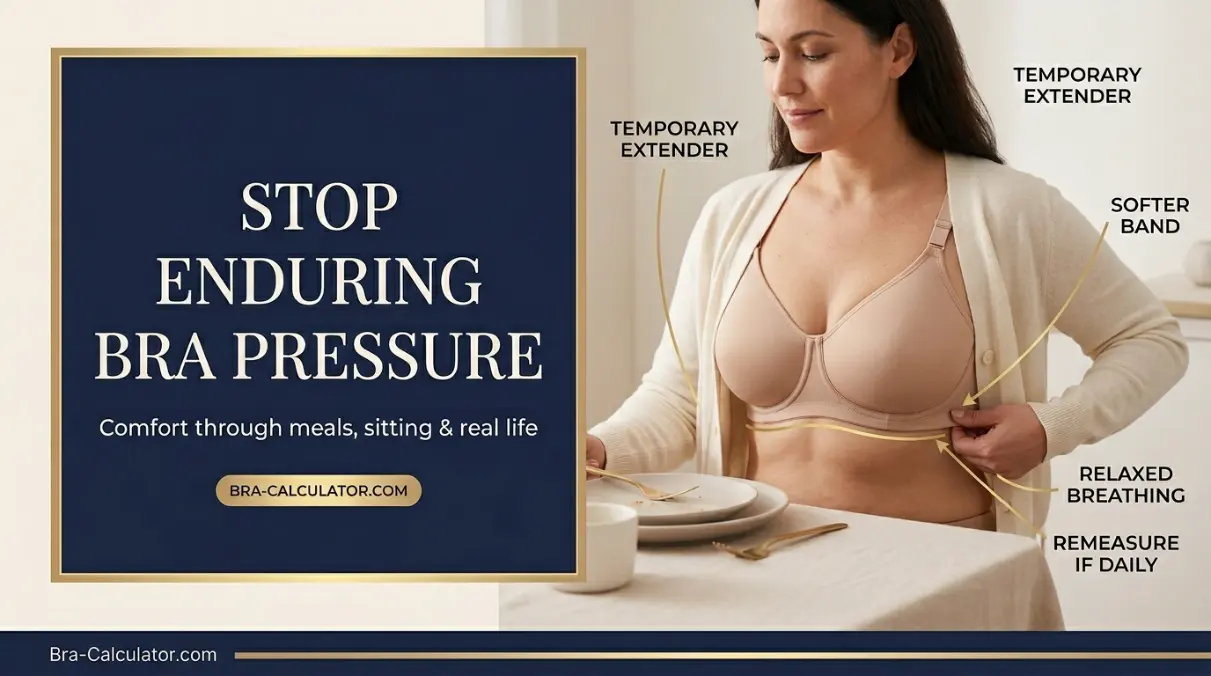
What Should You Fix First?
- Comfortable before eating
- Pressure after larger meals
- Normal comfort returns later
- Use a temporary extender
- Wear a softer dinner/travel option
- Do not automatically upsize
- Band tight from morning onward
- Persistent marks or pressure
- Cannot wear it comfortably for normal time
- Remeasure now
- Check cup fit and band size
- Test sister sizing only with correct cup volume
- Wire presses under bust or upper stomach
- Worse when sitting or bending
- Band may otherwise feel acceptable
- Try shorter/flexible wire styles
- Use wireless comfort option for long meals
- Confirm wire is not on breast tissue
- Fullness, gas or repeated abdominal pressure
- Tightness changes by meal or cycle
- Other digestive symptoms may occur
- Prioritize comfortable clothing
- Track the pattern
- Get medical advice if persistent or concerning
Comfortable Options When a Bra Feels Tight After Eating
Allows small comfort changes for ordinary fluctuation days without abandoning a supportive fit.
A comfortable alternative for dinners, travel or evenings when rigid underwires feel intrusive.
Can provide support with more give during sitting and temporary post-meal fullness.
May suit a shorter torso or anyone whose lower wires press into the upper stomach when seated.
Useful for occasional bloat-related discomfort when the base bra fit is correct on normal days.
Can add support but may press lower on the torso and feel uncomfortable after meals or during bloating.
Real-World Style Examples to Compare
These are not one-size-fits-all recommendations; use them as construction examples after measuring and checking your own comfort pattern.
| Example Style | Feature Worth Comparing | Why It May Help After Meals |
|---|---|---|
| Wacoal Comfort First Wire Free T-Shirt Bra | Wire-free construction, flexible fabric and a stretch-and-recover band | Useful to compare when underwire pressure or a rigid band is the main seated-meal discomfort. |
| Chantelle Bare Essential Lightweight Wireless Bra | Lightweight wireless design with full-support positioning | Useful to compare when you want softer pressure without moving entirely to light-support lounge styles. |
| Adjustable Hook-and-Eye Everyday Bra | Multiple hooks with a stable but forgiving band | Often more practical than fixed-pull-on compression when comfort varies through the day. |
Why Sports Bras Can Feel Especially Tight After Eating
Compression support is designed for movement, not always long seated meals.
High-compression sports bras and firm pull-on bands can feel much less forgiving during a meal, car journey or desk day because they offer limited band adjustment. Keep high-impact compression for activity when it fits comfortably; for pre-workout meals, recovery, travel or everyday wear, consider an encapsulation style with a fastening band or a softer adjustable wireless option.
If a sports bra limits comfortable breathing, feels painful after ordinary movement or leaves persistent pressure marks, it should not be treated as “normal support.” Recheck size and construction rather than simply tolerating discomfort.
Support Styles to Consider After Checking Fit
Post-meal tightness is not solved by buying randomly. First establish whether your usual band and cup fit are correct. When a softer daily option is genuinely useful, these locked comfort categories can be considered as part of a flexible bra rotation.

Wide Padded-Strap Full-Coverage Bras
- Can provide steady daily support after you confirm the correct band and cup fit.
- Look for an adjustable back closure so comfort can be fine-tuned.
- Avoid selecting an overly firm underband solely to create more lift.

U-Back Support Bras With Wide Straps
- A stable back may help distribute support without relying on overtight straps.
- Choose a band that stays secure but still permits relaxed breathing and sitting.
- Recheck comfort after ordinary meals before committing to multiples.

Wireless Comfort Bras With Cushioned Straps
- Can be helpful for evenings, meals or days when underwire pressure feels intrusive.
- Flexible construction may feel gentler when your upper abdomen is bloated.
- Do not use softness alone to ignore a consistently incorrect base size.
When Tightness Is Not Just a Bra Issue
Occasional fullness after eating is common, and adjusting clothing pressure can be reasonable. However, a bra should never be used to explain away ongoing or concerning symptoms. Remove a bra that worsens pain or makes breathing uncomfortable, and pay attention to the symptom pattern outside the bra.
Speak to a healthcare professional when bloating is persistent or concerning.
Get advice if bloating is regular, does not go away, or is accompanied by unintentional weight loss, blood in stool, vomiting, significant pain, fever, a lump/swelling, inability to pass stool or gas, or severe breathing difficulty. This page offers bra-fit comfort guidance, not diagnosis or treatment for digestive symptoms. Readers experiencing repeated bloating can review general guidance from NHS bloating advice or discuss symptoms with a qualified clinician.
When should you see a professional bra fitter?
Consider a fitting when every band feels restrictive, wires repeatedly press into the upper abdomen, cup overflow makes the band feel tighter, pregnancy/postpartum changes have altered comfort, or you have tried several sizes without relief. Bring your most comfortable and least comfortable bras so fit patterns are easier to compare.
Problems That Can Mimic Post-Meal Band Tightness
If discomfort is present even before eating, the underlying band fit may already be incorrect.
Overflowing or shallow cups can pull on the band and create a tight feeling around the ribs.
People sometimes overtighten straps when trying to lift a tight-feeling bra away from the stomach.
If tightness began after body-weight changes rather than meals alone, your starting size may need recalculation.
Post-Meal Bra Comfort Checklist
Use this quick checklist before you decide whether to adjust temporarily, buy a different style or remeasure for a new core size.
Before Replacing Your Bra, Check:
Frequently Asked Questions
Why is my bra too tight after eating?
After eating, fullness, gas or bloating can increase pressure below and near the bra band. A firm band or low underwire may feel more restrictive when you sit or bend after a meal. If your bra is comfortable most of the day, temporary adjustment may be enough; if it is tight all day, remeasure.
Does my ribcage expand after eating and make my bra tight?
Your lower chest naturally moves with breathing, while post-meal fullness and bloating generally occur in the abdomen beneath the band. Together, this can make a very firm band or underwire feel tighter, but one meal does not usually mean your permanent bra size has changed.
Should I buy a larger bra band because I bloat after meals?
Not automatically. If your bra is supportive and comfortable on ordinary days, a temporary extender or softer meal-time option may maintain better regular-day support. Consider a new band size when tightness is consistent, not limited to occasional bloating.
Can a bra band extender help with bloating?
Yes. A compatible hook-and-eye extender can add a small amount of temporary ease on bloated days when the cups and normal-day band fit are otherwise correct. It is not a substitute for remeasuring when a bra is uncomfortable most of the time.
Why does underwire hurt after I eat?
When you sit after eating, abdominal fullness can increase pressure beneath a low or rigid wire. A shorter wire, flexible band or wireless bra may be more comfortable, but check that the wire is not sitting on breast tissue or that cups are not too small.
Can a cup that is too small make the band feel tight?
Yes. Too-small or shallow cups can compress breast tissue and pull the bra frame forward, making the band feel tighter. Signs include spillage, a floating center gore or wires resting on breast tissue.
What bra should I wear for dinners or long seated events?
Choose a correctly sized bra with adjustable hooks, a softer stretch band, flexible wires or a comfortable wireless design. Avoid very rigid underbands or longline shapes if they routinely press into your upper stomach while sitting.
Can period bloating make my bra band feel tight?
Yes. Hormonal changes can be associated with bloating and changes in breast comfort. If tightness follows a predictable pattern, keeping a flexible backup bra or extender may help while preserving your regular everyday fit.
When should I remeasure my bra size?
Remeasure when the band is uncomfortable before meals, breathing or ordinary movement feels restricted, cups also show fit problems, or body changes have occurred. A bra calculator provides a useful starting size to test in real bras.
Is it normal to unhook my bra after a meal?
Wanting pressure relief occasionally is understandable, but a properly chosen bra should remain tolerable through ordinary meals and movement. If you routinely need to remove it because of pain, use a fit assessment and consider a less restrictive style.
Can sports bras feel tighter after eating?
Yes. Compression sports bras and firm underbands may feel especially restrictive after a meal or during bloating. Avoid using a very compressive sports bra for long seated wear if it interferes with comfort or easy breathing.
How do I choose the right bra band extender?
Match the extender to the number and spacing of hooks on your bra so it lies flat without twisting. Use it for small temporary comfort changes when cups and normal-day band support already fit; if you need an extender most days or the cups also fit poorly, remeasure instead.
When should bloating after eating be checked medically?
Seek medical advice when bloating is frequent, persistent, painful or associated with symptoms such as vomiting, blood in stool, unintentional weight loss, fever, a lump or severe breathing difficulty. Bra adjustments can ease clothing pressure but cannot identify the cause of ongoing symptoms.
Stop Enduring Post-Meal Bra Pressure
Your bra should support you through dinner, sitting and normal movement without painful digging. If tightness is more than occasional bloating, calculate a fresh starting size today and choose a fit built for real-life comfort.
Fit guidance supports comfort decisions. Persistent or concerning abdominal symptoms should be assessed by an appropriate healthcare professional.