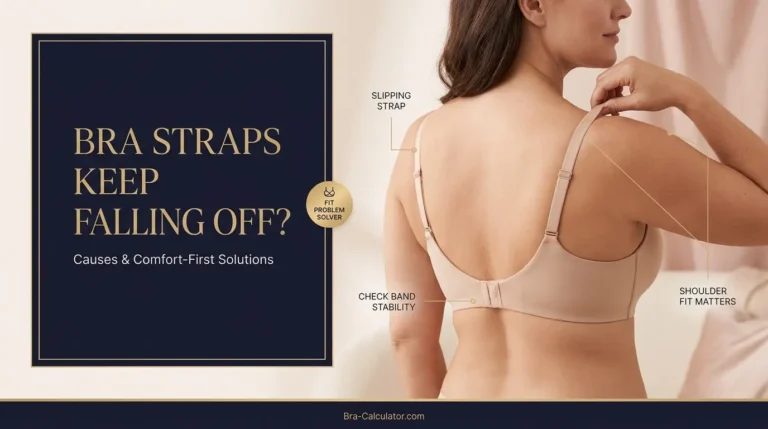
When only one bra strap keeps slipping, the problem is usually asymmetrical rather than a general strap problem. One shoulder may be lower or more sloped, one breast may fill its cup less fully, one strap may have stretched more, or the bra may be rotating slightly. Adjust each side independently, check cup balance and band position, then try a center-pull, J-hook or racerback style if ordinary adjustment does not hold.
Jump to a Section
One Bra Strap Slipping at a Glance
| Clue | Most Likely Meaning | First Fix |
|---|---|---|
| Same strap slips in many bras | Shoulder slope or one-sided anatomy | Independent strap adjustment and closer-set style |
| One cup looks looser on slipping side | Breast asymmetry or cup mismatch | Fit larger side first; balance smaller side |
| Bra rotates toward one side | Band or cup balance is unstable | Recheck band level and tissue placement |
| Only one old strap slips | Uneven strap stretch or damaged adjuster | Replace the bra or strap hardware |
| Both straps slip | Broader fit issue, not one-sided asymmetry | Read the general slipping-straps guide |
What Does One Slipping Strap Really Mean?
Most bodies are not perfectly symmetrical. One shoulder can sit slightly lower, one shoulder blade can angle differently, and one breast may be fuller, higher or more projected than the other. These small differences are ordinary, but a bra strap sits directly on that uneven terrain. That is why one strap can slip repeatedly while the other stays perfectly secure.
This problem is different from both straps falling off. When both straps slip, the usual suspects are a loose band, very wide strap placement, worn elastic or a general style mismatch. When just one strap slips, the fitter has to compare the left and right sides individually. Matching the two strap adjusters at exactly the same length can actually make the fit worse, because the body underneath them is not identical.
The page also differs from Bra Straps Too Wide. A wide-set design can make either or both straps sit too close to the shoulder edge. This page is for the one-sided version: the slipping remains noticeably worse on one shoulder, often even after the strap has been adjusted reasonably.
Symmetry is not the fit goal. The correct fit may mean one strap is adjusted shorter, one cup uses a small removable insert, or one bra style works better because it anchors inward. Your bra should adapt to your body, not force both sides to behave identically.
Four Tests for One-Sided Strap Slipping
Use the same bra during these checks and note whether the exact same side keeps failing. These tests isolate shoulder slope, cup fill, band rotation and strap wear without turning the problem into guesswork.
Wear two or three bras that usually fit well. If the same shoulder loses the strap every time, your body shape or posture is more likely involved than one defective bra.
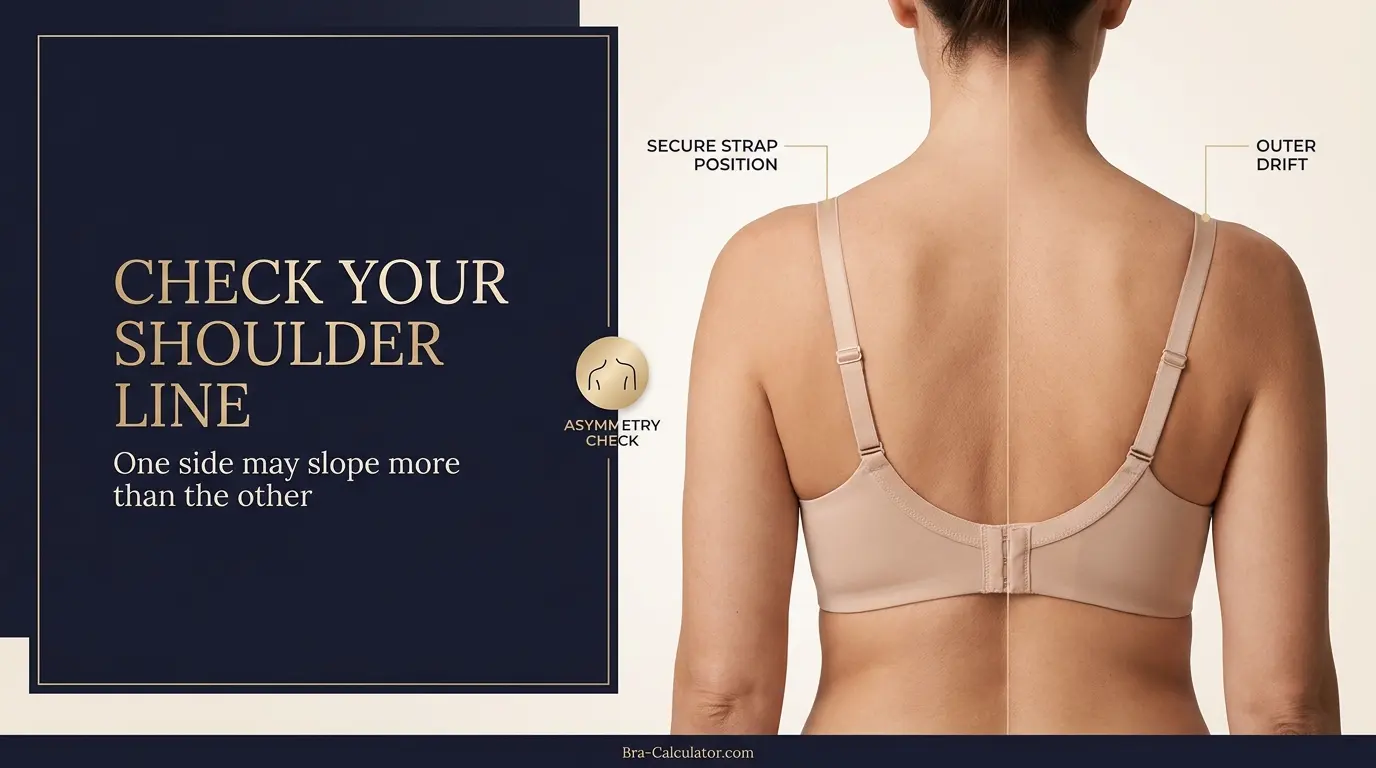
Stand naturally in front of a mirror and compare where each strap rests. If one shoulder slopes downward or the strap naturally drifts closer to its edge, that side needs more inward anchoring.
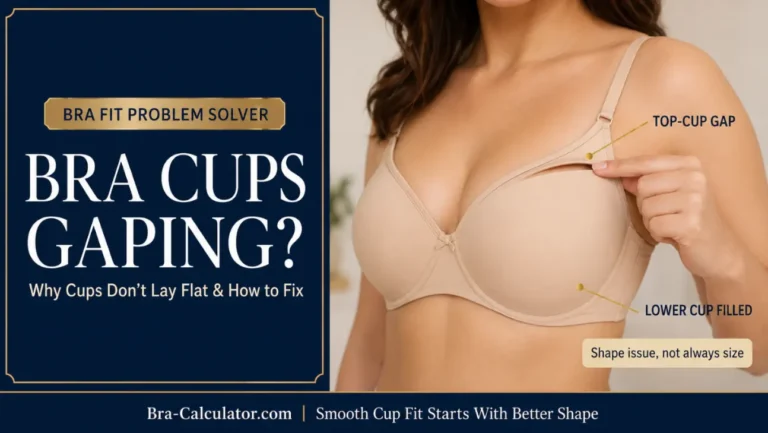
Scoop and settle both sides, then check whether the cup on the slipping side wrinkles, gaps or lacks tension at the top edge. A less-filled cup can relax the strap above it.
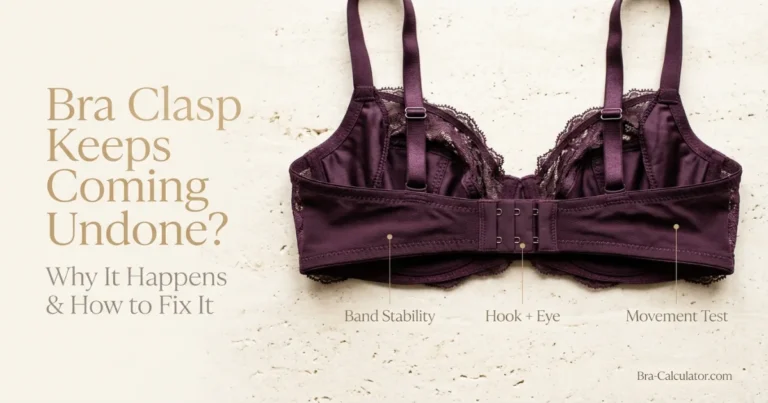
Look at the hooks and side seams after moving. If the bra twists toward one side, fix the band/cup balance before treating the strap alone.
| Result | Likely Cause | Useful Next Step |
|---|---|---|
| Same side slips across many styles | Shoulder slope or posture asymmetry | Try center-pull or convertible J-hook design |
| Only one cup gaps | Uneven cup fill | Fit fuller breast; add balance on smaller side |
| Slip appears only in one old bra | Strap stretch or slider failure | Replace or repair that bra |
| Slip comes with band riding up | Unstable band | Check band ride-up fixes |
Why Does Only One Bra Strap Keep Slipping?
1. One shoulder is naturally more sloped. A strap can remain stable on the flatter shoulder but drift down the side with a steeper slope. Overtightening may temporarily hold it higher, but it commonly trades slipping for shoulder pressure.
2. One breast fills the cup differently. Breast asymmetry is common. If the smaller side leaves extra space in the cup, the strap on that side may have less upward tension and more freedom to slide. This is especially visible in molded cups that cannot flex to uneven fullness.
3. One strap has stretched or its adjuster slips. With daily wear, one strap can be handled or pulled more often than the other. A slider that gradually loosens during the day creates a one-sided failure even when your bra style is otherwise correct.
4. The band rotates slightly. If the band is looser on one side, if the cups are pulling unequally or if tissue has not been properly scooped into place, the bra can rotate. Rotation changes the strap angle and makes one shoulder feel like the problem when the frame is actually misaligned.
5. Shoulder posture or movement pattern differs side to side. Carrying a bag on one shoulder, desk posture or daily movement habits can affect where a strap rests. Persistent pain or sudden shoulder changes are reasons to speak with a qualified healthcare professional rather than relying on bra tweaks alone.
6. Strap placement is marginal for your shoulders. A bra may be close to wearable until the naturally lower or narrower shoulder exposes its weakness. A more inward strap position often solves this without requiring a different cup or band size.
How to Fix One Bra Strap That Keeps Slipping
Adjust the strap that stays secure until the cup rests smoothly. Then adjust the slipping side independently; the two strap lengths do not need to match.
Shorten it only enough to stay in place during gentle movement. If it leaves a groove or creates shoulder pain, the angle or bra design needs changing.
Fit the fuller breast first. If the smaller side gaps, test a removable insert, stretch-lace cup or a more flexible cup construction that can accommodate asymmetry.
A one-sided fix will not last if the bra rotates or the band rides up. The band should remain parallel to the floor across movement.
Try a J-hook, convertible crossover, racerback or center-pull full-cup bra to move the slipping strap inward and off the shoulder edge.
What a One-Sided Strap Fix Looks Like
A successful fix does not require making both sides visibly identical. In a good fit, both cups are supported, the band remains level and each strap sits comfortably without falling or digging. One slider may sit slightly higher than the other, especially when one shoulder is more sloped or one cup needs a little extra balance.
Start by looking at the strap path from the cup to the shoulder. If the slipping-side strap begins far outward and then travels toward an already sloped shoulder edge, the bra is asking that side to hold an unstable angle. A center-pull or crossover option creates a straighter, more secure line of support.
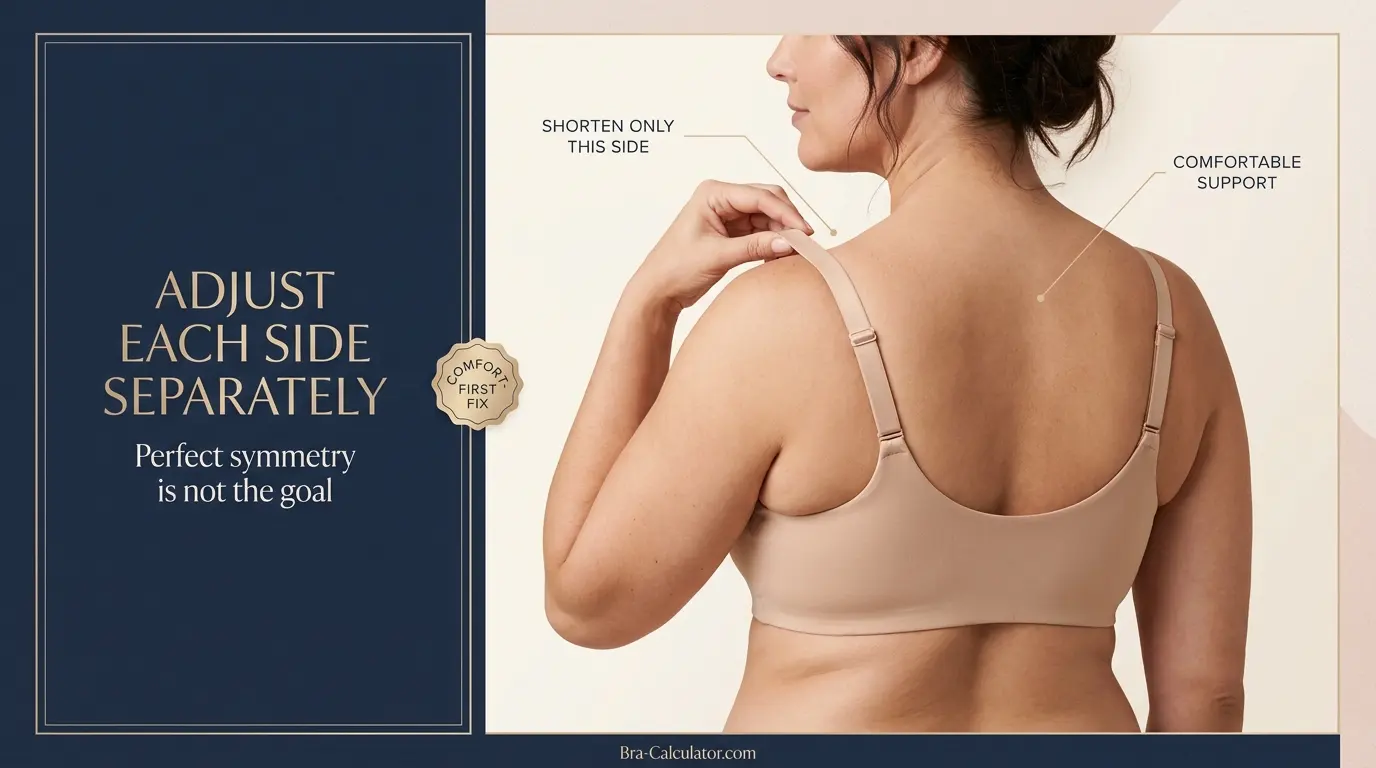
Do not force equal strap settings. A bra can be fitted correctly when one strap is shorter than the other. Comfort, stable support and smooth cup contact matter more than matching slider positions.
Best Bra Features for One-Sided Strap Stability
These product categories are chosen for the specific geometry of one-strap slipping: more inward pull, convertible adjustment and flexible cup balance. Choose your measured size first, then evaluate whether the strap path remains stable on the slipping side.

Center-Pull Full-Cup Bra
- Straps rise from a more central cup position rather than the outer edge.
- Can feel steadier on one lower or more sloped shoulder.
- Fuller cup coverage may also improve balance when one side fills differently.

Convertible Bra With J-Hook
- Lets you bring both straps inward during active days or slippery necklines.
- Useful when normal strap placement works on one side but fails on the other.
- A reversible test before committing to a racerback-only wardrobe.

Racerback or T-Back Support Bra
- Keeps the strap path away from the outer shoulder edge.
- Strong option when one sloped shoulder repeatedly defeats standard straps.
- Check neckline compatibility before choosing for everyday outfits.
How Shoulder and Breast Asymmetry Change Strap Fit
Inward Anchor Helps
The strap on the lower slope has less flat surface to grip. A center-pull or J-hook design can reduce outward drift.
Check strap pathBalance Cup Tension
Reduced cup fill can loosen the strap above it. Fit the fuller side first, then gently balance the smaller side.
Insert optionalDifferent Length Is Fine
The higher side may need a longer strap than expected while the lower/slipping side needs a shorter or inward path.
Adjust separatelyMovement Reveals Fit
A strap may slip only during desk work, carrying bags or repeated arm motion. Test in your real daily positions.
Real-life test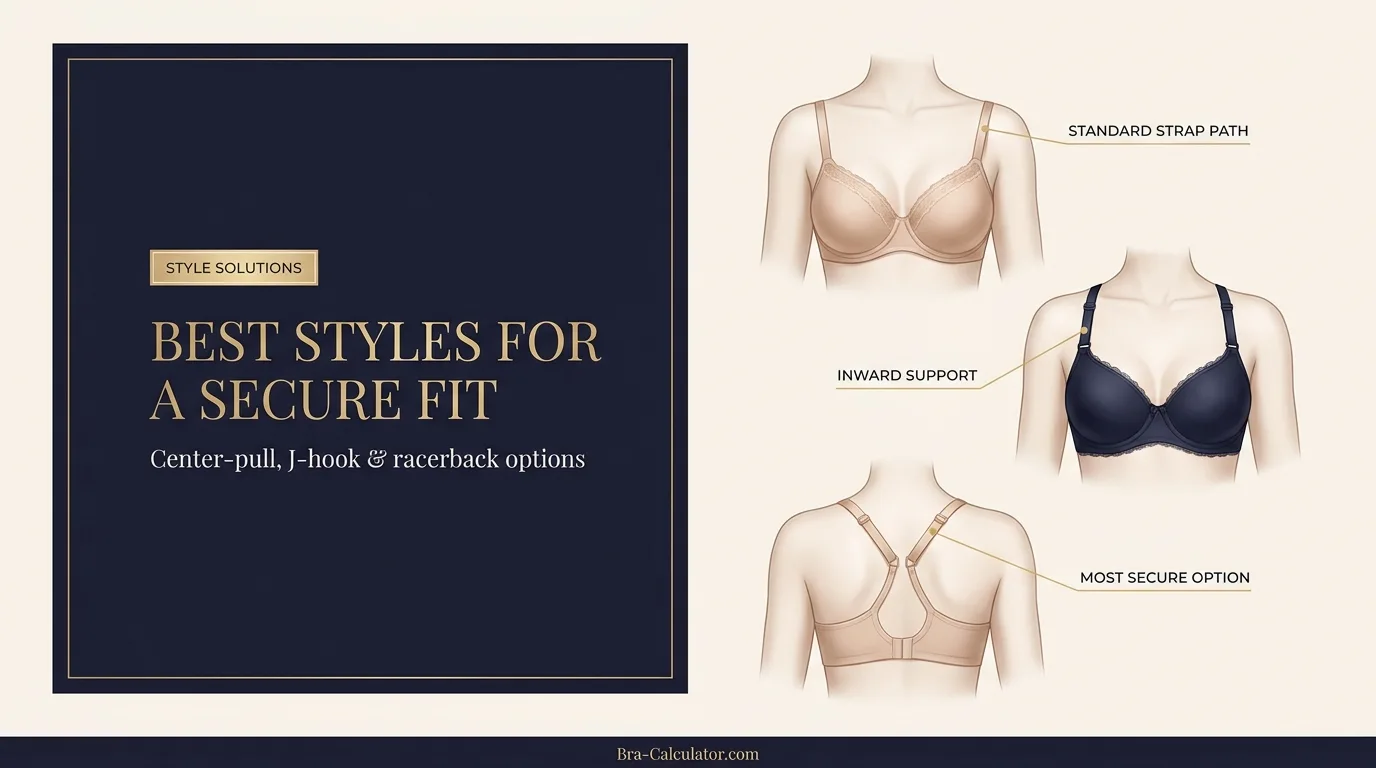
Is It Your Shoulder, Cup, Band or Strap?
- Same side slips in several bras
- One shoulder visually slopes more
- Cups and band otherwise feel stable
- Clip or racerback test improves hold
- Adjust sides independently
- Choose inward strap placement
- Try center-pull or J-hook
- Avoid painful overtightening
- Gaping on the slipping side
- One breast fills less fully
- Strap loses contact above empty space
- Molded cups show asymmetry clearly
- Fit the fuller breast
- Try removable padding on smaller side
- Consider stretch-lace cups
- Keep pressure gentle
- Side seams shift while wearing
- Band rises or twists on one side
- Both cup and strap position change
- Slip worsens during movement
- Recheck band size
- Use band ride-up guide if needed
- Scoop and settle tissue
- Then reassess strap angle
- Only one bra causes slipping
- Slider creeps loose during the day
- Strap elastic looks stretched
- One side has been repeatedly pulled
- Mark slider position and retest
- Replace worn strap/bra
- Do not change size for one damaged bra
- Choose firmer adjustable straps
Which Bra Styles Work Best for One Slipping Strap?
Brings strap pull inward and creates a more stable path over a sloped shoulder.
Provides everyday flexibility and an inward anchor when one side slips.
Best for repeated slipping when standard strap placement will not stay secure.
Adapts more gently to uneven fullness than a rigid molded cup.
Allows the less-full side to be balanced without over-tightening its strap.
Outer strap placement can expose the slipping side even more strongly.
Common Mistakes With One Slipping Strap
If only one side slips, equal tightening can create pressure on the already-stable shoulder.
A stable, level band may be fine while one-sided anatomy or strap placement causes the slip.
A strap above a less-filled cup can lose tension even when the shoulder is not especially sloped.
If standard wide-set straps always fail on one shoulder, repeated adjustment will not change the strap geometry.
Frequently Asked Questions
When only one strap slips, the cause is often one-sided: one shoulder may slope more, one breast may fill the cup differently, one strap may have stretched, or the bra may sit slightly rotated. Check the slipping side separately rather than tightening both straps.
Not always, but natural shoulder asymmetry is common and can make one strap sit closer to the edge. A simple mirror and movement check can show whether the slipping side is consistently lower or more sloped.
Yes. If one cup is less filled, the strap on that side can lose tension and drift outward. Fitting the larger breast first and using a removable insert or adjustable cup solution on the smaller side may stabilize the strap.
No. Symmetrical strap lengths are not the goal; balanced support is. If one shoulder is lower or one breast sits differently, each strap may need its own comfortable adjustment.
A small adjustment is reasonable, but tightening until the strap digs in is not a fix. If slipping continues, test band stability, cup fill and a style with more inward strap placement.
Center-pull full-cup bras, convertible J-hook styles, racerback options and bras with closer-set back straps are often easier to stabilize on asymmetrical or sloped shoulders.
Use the broader guide when both straps slip, straps fall in nearly every bra, or you are not sure whether the cause is band fit, cup fit, strap placement or worn elastic.
Posture patterns or past shoulder issues can change how a strap rests. If you have ongoing shoulder pain, weakness, numbness or sudden changes, get medical guidance rather than relying only on bra adjustments.
Find a Strap Fit That Works With Both Sides
Use one-sided fit checks, comfortable independent adjustments and supportive strap designs to keep the slipping side secure without creating pressure on the stable side.