An underwire bra digging in is usually a sign that the wire is not sitting in the correct place or is not the right shape for your body. A wire poking into breast tissue often means the cup is too small, too narrow or too shallow. A wire hurting the ribs may point to an overly tight band, a cup sliding down because it lacks depth, or a rigid wire shape. Side/underarm poking can mean the wire is either too narrow and sitting on tissue or too tall for your torso. Remove any damaged or sharply painful bra, locate the pain exactly, then correct size, cup shape or wire style rather than simply enduring it.
Underwire Bra Digging In at a Glance
| Where the Wire Hurts | What It May Mean |
|---|---|
| Wire pokes directly into breast tissue | The wire is not enclosing tissue; review cup volume, wire width and cup depth. |
| Wire digs at the outer side or underarm | The wire may be too narrow and sitting on tissue, or too tall and rubbing your torso. |
| Wire presses painfully beneath the breast or ribs | The band may be too tight, or the cup may be sliding down due to insufficient depth. |
| Center gore hurts between the breasts | The gore may be too tall, too wide, too firm or pushed outward by cups that do not fit. |
| Wire pain happens with overflow or quad-boob | The cup likely needs more usable room or a better shape; see bra cup spillage. |
| Wire pokes through the fabric channel | The bra is damaged; stop wearing it until properly repaired or replaced. |
Why an Underwire Bra Hurts
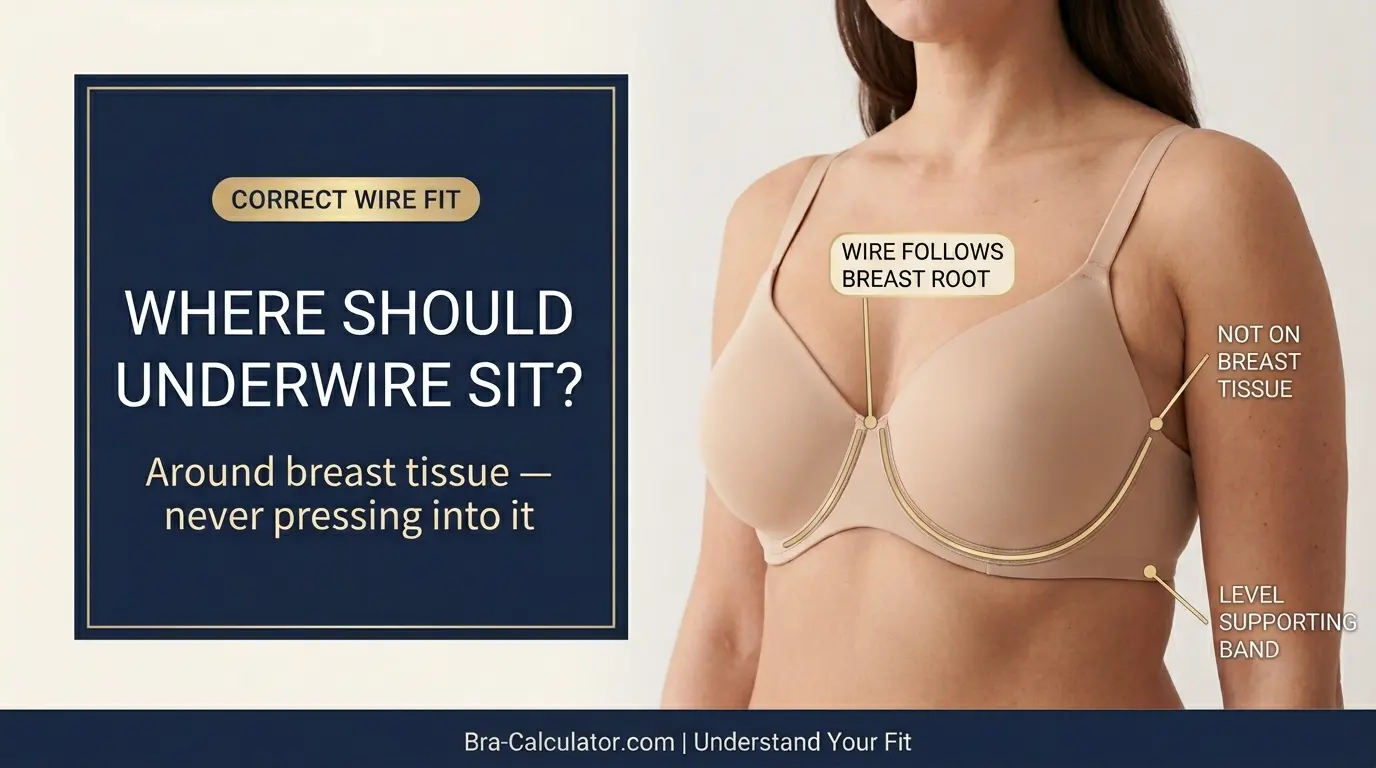
An underwire is intended to provide structure beneath and around the breast, supporting cup shape and helping the band hold the bra securely. In a suitable fit, the wire follows the breast root: it rests against the chest wall just outside the breast tissue, rather than pressing onto the tissue itself. It should not stab, scrape, pinch, shift painfully down the ribs or force you to remove the bra as soon as possible.
When an underwire bra hurts, the wire is often blamed as if all underwire is automatically uncomfortable. Sometimes the bra itself is damaged or the wire is simply too rigid for the wearer’s comfort preference. More often, the pain gives information about a mismatch: cup volume, cup depth, wire width, gore height, band tension, side-wing height or torso shape. That is why the correct fix depends on where the bra is digging in.
For example, an underwire poking into breast tissue at the outer side is not solved in the same way as a wire painfully pressing against the ribs below the cup. The first may need a wider wire or more cup space; the second may happen because a shallow cup is being pushed downward, or because the band is overly tight. A precise location-based check prevents a cycle of buying bras that feel different in the fitting room but hurt in the same place after an hour of wear.
Do not push through sharp pain. A correctly fitting bra should not stab, bruise, cause broken skin or force breast tissue beneath or beyond a wire. Stop wearing an exposed-wire or sharply painful bra while you identify the cause.
Find the Cause by Where the Underwire Digs In
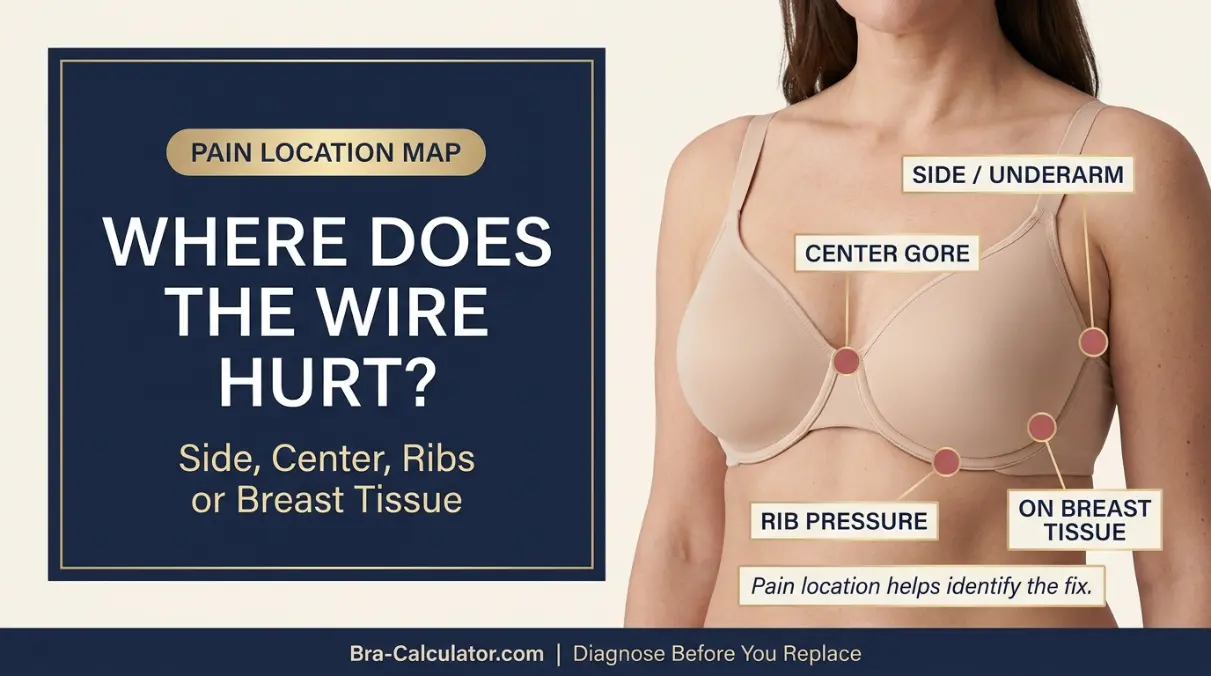
This is the key section for solving underwire pain. Instead of asking only whether a bra is “too tight,” identify the exact pressure location and the other signs appearing with it. Wire pain usually makes more sense when mapped to cup, band and body position together.
| Pain Location | Clues You May Also Notice | Likely Fit Direction |
|---|---|---|
| Outer side / underarm | Side tissue outside wire, red line through breast tissue, or rubbing when arms move | If the wire sits on tissue, try wider wire/more capacity; if tissue is enclosed but the tip rubs, try a shorter or softer side wire. |
| Under the breast on ribs | Wire slides down, pressure worsens sitting, cup wrinkles at bottom, or band feels overly tight | Check for more cup depth/projection; also assess whether band tension or rigid wire is excessive. |
| Center gore / sternum | High gore pokes, breasts are close-set, or gore floats before being tightened | Try a lower or narrower gore; if gore floats with overflow, increase or reshape cup capacity first. |
| On breast tissue at bottom/side | Spillage, wire cannot sit at breast root, pain leaves a line across tissue | Cup is not enclosing tissue; review cup size, depth and wire shape rather than tightening the band. |
| Only after hours of wear | Bra moves downward, elastic relaxes, irritation appears with movement | Wear-test band stability, cup projection and flexible wire/wing comfort. |
| Sharp point through fabric | Wire end is visible or casing has opened | Stop wearing; the issue is garment damage, not a fitting adjustment. |
Five Checks for an Underwire Pain Fix
Use these tests only with an intact bra that is not causing sharp immediate pain. If the wire is exposed, broken or creating skin injury, remove the bra first and do not use it for fitting evaluation.
Check both wire ends and fabric channels. A wire that has escaped, bent sharply or is pushing through worn fabric is a damaged garment problem. Do not confuse damage with normal new-bra firmness.
Put on the bra, gently scoop breast tissue from the side and underneath into each cup, then settle the wire at the natural breast root. If the wire now sits on tissue or overflow appears, the cup fit needs correction.
With a fingertip, follow the wire from the center gore, beneath the cup and up toward the side. Note the exact spot it becomes painful or crosses soft breast tissue.
The band should remain level around the ribcage and securely anchored without feeling painfully restrictive. A very tight band can intensify rib pressure; a loose band can let wires shift and poke in new locations.
A bra can feel fine standing still but hurt when sitting or moving. Check whether the wire presses into ribs, rises under the arm or slides out of the breast root during normal motion.
| Your Test Result | Most Likely Issue | Best First Change |
|---|---|---|
| Wire sits on breast tissue after scoop-and-swoop | Cup/wire boundary is unsuitable | Try more cup room, more depth or a different wire width. |
| Wire stays below breast root and hurts ribs | Cup may lack projection or band may be too tight | Test deeper cups and reassess band tension. |
| Outer wire contains tissue but rubs underarm | Wire or side wing may be too tall | Try shorter side wires or softer wing finishing. |
| High center gore is the only painful point | Gore height/width may not suit body spacing | Try a lower-gore or narrower-center style. |
| Wire is exposed or casing is split | Garment damage | Stop wearing until properly repaired or replaced. |
The Wire Boundary Test: Breast Root, Width & Depth
The most important principle for underwire comfort is that the wire should sit on the chest wall around the breast tissue, not across the breast tissue. The outline where breast tissue joins the torso is often called the breast root. Your breast root can be narrower, wider, shorter, taller, more centered or more outward-set than the wire shape used by a particular bra.
A wire that is too narrow commonly digs at the outer side because breast tissue extends beyond it. This may be connected with side breast tissue spillage. A wire that is too wide can extend beyond your tissue, rub farther toward the back or feel unsupportive. A cup that is too shallow can cause a different problem: breast tissue needs more forward room, so it pushes the wire downward onto the ribs, creating pain beneath the breasts even when the wire width is not obviously wrong.
| Wire-Fit Pattern | What It Feels Like | What to Test Next |
|---|---|---|
| Too narrow at the outer side | Wire pinches breast tissue; side overflow; red mark ends on tissue | A wider or more suitably shaped wire, often with more cup capacity. |
| Too wide for your root | Wire extends far beyond tissue; empty outer cup; rubbing too far back | A narrower-root cup style while keeping required depth and volume. |
| Too shallow in cup depth | Wire moves downward; rib pressure; bottom wrinkles; breasts push cup away | A more projected or seamed cup with greater forward depth. |
| Correct boundary but harsh feel | Tissue is enclosed, yet wire feels rigid against ribs | Softer-flex wire, padded casing or supportive wireless style. |
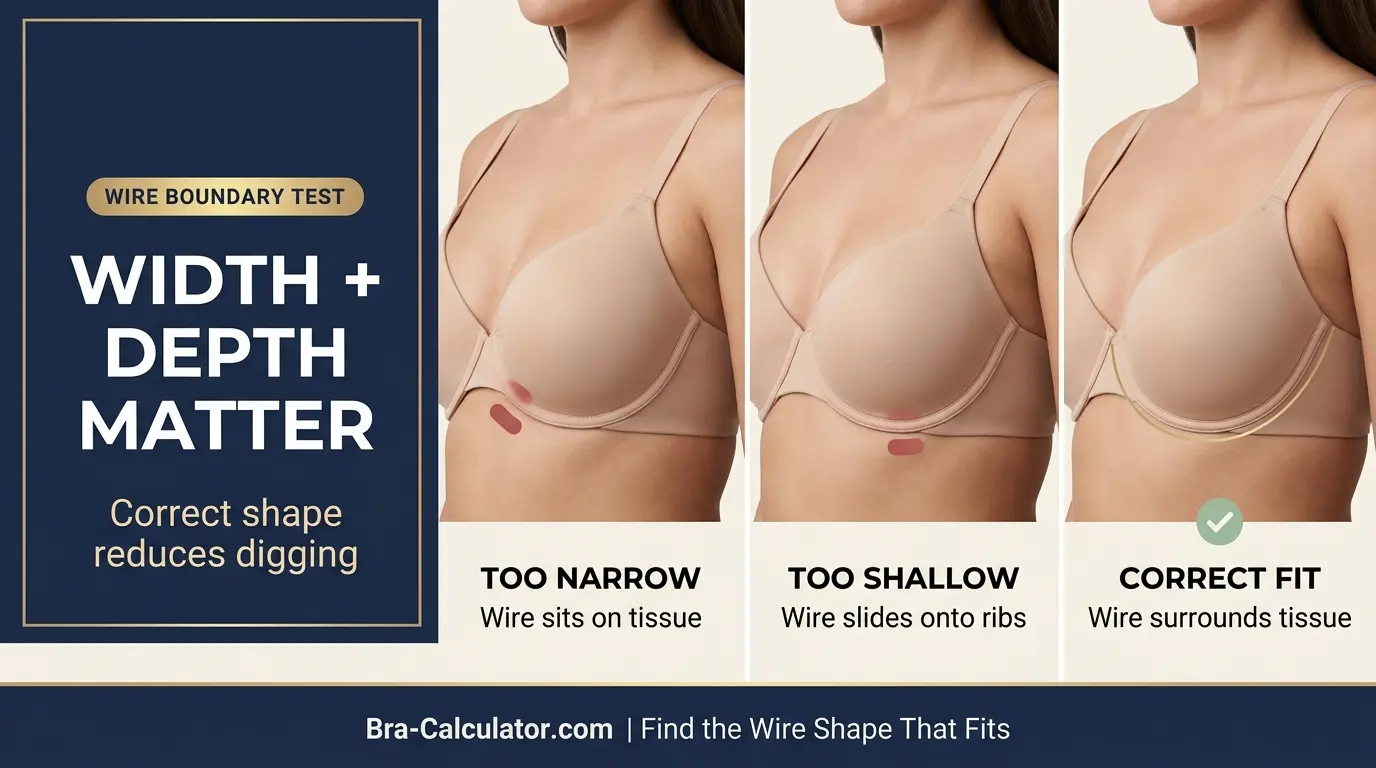
Do not solve a wire-on-tissue problem with padding alone. Cushioned casing may improve surface comfort, but a wire that crosses breast tissue needs a size or cup-shape correction first.
Why Your Underwire Bra Is Digging In
1. Cups Are Too Small
A cup without enough room can make tissue push beyond the edge, lift the wire away at the center or force the wire onto breast tissue. Top overflow, side spill or a floating gore strengthen this clue.
2. Cup Shape Is Too Shallow
Some cups have width but not enough depth. Projected breast tissue pushes the cup away, while the wire is driven down onto the ribcage. This frequently feels like painful pressure below the breasts.
3. Outer Wire Is Too Narrow
If the wire ends on breast tissue near the side, it can stab or pinch during normal arm movement. You may also notice breast tissue outside the cup or a persistent red mark through the outer breast area.
4. Wire or Wing Is Too Tall at the Side
Sometimes the tissue is fully enclosed but the bra still pokes into the underarm because the outer wire or side wing is too high for your torso or underarm placement.
5. Gore Is Too High or Wide
A tall or wide center gore can press painfully against the sternum, especially for close-set breasts or certain chest shapes. A floating gore with overflow, however, points to cup fit first.
6. Band Is Too Tight or Too Loose
An overly tight band increases wire pressure around the ribs. A loose band allows the wire to slide, rotate or drop below the breast root, creating friction and digging during movement.
7. The Bra Is Worn Out or Damaged
Wire channels weaken with repeated wear, laundering and fabric breakdown. A wire that has escaped its channel or bent sharply is no longer a comfort-fit problem; it is an unsafe garment issue.
Step-by-Step: Fix an Underwire Bra Digging In
Do not begin by adding padding or buying another bra that looks similar. Start with safety, locate the pain and then apply the correction that matches the reason the wire is hurting.
An exposed wire can scratch or injure skin, and a wire that causes sharp persistent pain should not be worn while you “wait for it to soften.” Remove it and inspect the bra first.
Identify whether pain is at the side, under the breast/ribs, center gore or directly on breast tissue. This separates wire-width, cup-depth, gore and band problems.
Scoop and swoop, then check for cup spillage, side overflow, gaping or a wire that rests on tissue. A cup mismatch must be corrected before comfort extras can help.
If the band is stable and cups overflow, try more cup room. If the band rides up while the wire shifts, consider a firmer band with sufficient cup capacity. If wire pushes downward despite a stable band, seek greater cup projection.
Once sizing is close, choose lower gores for center poking, shorter side wires for underarm rubbing, softer casing for rib sensitivity, or supportive wireless bras if underwire remains uncomfortable despite appropriate fit.
Why Underwire Comfort Differs on Different Bodies
The same bra can feel comfortable on one wearer and painful on another because underwire comfort depends on more than the printed size. Breast root width, projection, breast spacing, ribcage shape, torso height and sensitivity all affect where a wire lands and how it behaves when you move.
Side Wire May Pinch
Breast tissue extending outward may require a wider enclosing wire and supportive side coverage.
Check outer wireWire Can Slide Down
A shallow cup may be pushed onto the ribs when the breast needs more forward depth.
Try more depthHigh Gore Can Hurt
A tall or wide center gore may press between breasts even when side fit is close.
Try lower goreOuter Tip May Poke
Very high side wires or wings can rub against the underarm during normal motion.
Try shorter sidesPain Pattern to Style Match
| Your Underwire Pain Pattern | Style Features Worth Testing | What Not to Rely On Alone |
|---|---|---|
| Side wire lands on tissue and side breast spills | Wider-root cups, side-support panels, enough cup volume | High smoothing wings without correcting wire placement |
| Wire hurts ribs or slides below breast | Projected/seamed cups, firm-but-comfortable band, softer wire casing | Loosening straps or band without checking cup depth |
| Center gore presses painfully | Lower gore, narrower center, plunge-compatible support where suitable | Bending or altering a wire as a routine solution |
| Underwire is correctly positioned but still uncomfortable | Flexible wire, padded channel or supportive wireless alternatives | Forcing daily wear because a style is “supposed” to support better |
Health note: Bra-fit changes can improve pressure caused by the garment. Persistent pain, a new lump, skin changes, redness, bruising, nipple discharge, numbness or pain unrelated to wearing a bra should be evaluated by a healthcare professional.
When Wire Pain Means You Need a Different Size
Underwire pain does not always mean “go bigger” or “go wireless.” Correct sizing direction depends on the combination of cup containment and band stability. The examples below use common size progressions; brand labeling may differ after DD.
| Your Signs | Best Starting Direction | Why |
|---|---|---|
| Wire on tissue and cups overflow; band stable | Increase cup volume | The cup boundary may need more usable space to surround tissue. |
| Wire hurts ribs and bottom cup wrinkles/slides down | Try more projected cup shape | Insufficient depth can force the wire downward even without obvious overflow. |
| Band rides up and wire shifts during wear | Firmer sister-size direction with adequate cup room | A stable foundation may keep the wire aligned at the breast root. |
| Wire fits tissue, but gore or side tip alone pokes | Change wire profile/style | Height and placement may be wrong even if volume is close. |
| Correct fit still feels uncomfortable for your preference | Try supportive wireless options | You do not have to wear underwire to prioritize support and comfort. |
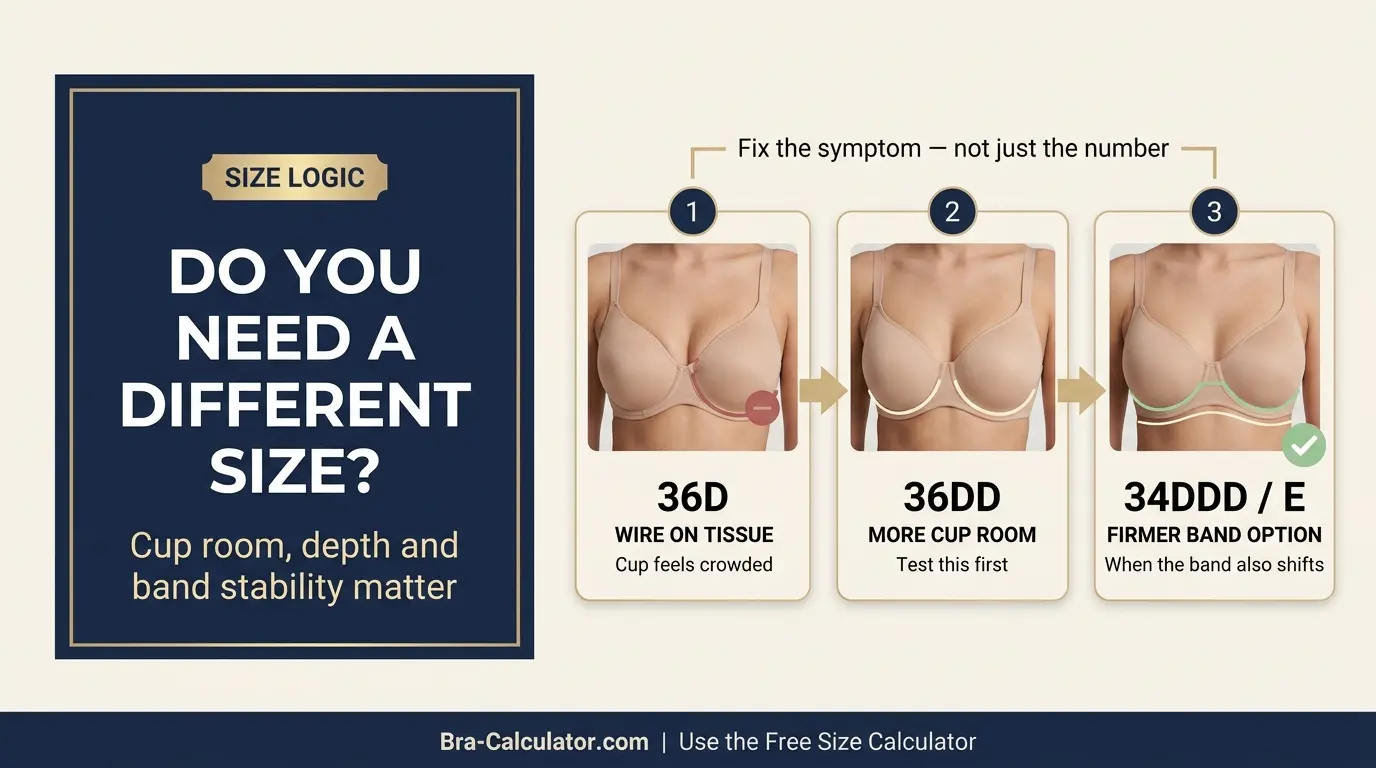
What Should You Change First?
- Wire digs under the arm
- Side tissue sits outside cup
- Outer wire mark falls on tissue
- Check wire width and cup room
- Try side-support construction
- If tissue is contained but tip rubs, use shorter side wire
- Pressure beneath the breast
- Wire slides down while sitting
- Bottom cup folds or wrinkles
- Look for greater cup depth
- Check band is not painfully tight
- Try softer casing if fit is correct
- Pressure between breasts
- Center gore feels too tall
- Close-set tissue feels poked
- Check cup fit if gore floats or overflow occurs
- Try lower or narrower gore
- Consider plunge or low-center styles
- Wire pokes through fabric
- Channel seam is split
- Wire appears bent or sharp
- Remove the bra immediately
- Repair professionally or replace
- Do not wear through sharp poking
Bra Styles to Consider When Underwire Hurts
Useful for side wire pain caused by outward tissue, when the wire is correctly wide and the cup has enough room.
Helpful when underwire slides onto the ribs because shallow cups do not allow enough forward depth.
May reduce sternum poking for close-set breasts after cup size and containment are confirmed.
Can improve surface comfort when wire position is correct but the ribcage is pressure-sensitive.
A comfortable alternative if appropriate underwire still feels unpleasant for everyday wear.
A protruding or broken wire should not be worn simply because the bra otherwise fits.
What to Check Before Buying a Bra for Underwire Pain
The right product depends on the cause of the pain. Do not buy only from a product photo or from “comfort” wording. Use your pain location and fitting checks to select the construction feature that is relevant to your body.
| Feature to Compare | Best For | Watch Out For |
|---|---|---|
| Wire width and side support | Outer wire sitting on breast tissue or side spill | High wings that cover but still rub or pinch under the arm. |
| Projected or seamed cup shape | Wire being pushed down into ribs by shallow cups | Very flat molded cups that repeat the same rib pressure. |
| Low/narrow center gore | Stabbing or pressure at the sternum with close-set breasts | Low coverage that creates center overflow when cup capacity is inadequate. |
| Soft wire casing or padding | Pressure sensitivity when the wire boundary already fits correctly | Using padding to conceal a wire that sits on breast tissue. |
| Supportive wireless structure | Anyone who prefers avoiding wires after checking size | Very loose bralettes that cannot provide the desired level of support. |
| Return and size availability | Testing the right wire profile and cup shape at home | Keeping a painful bra because it cannot easily be exchanged. |
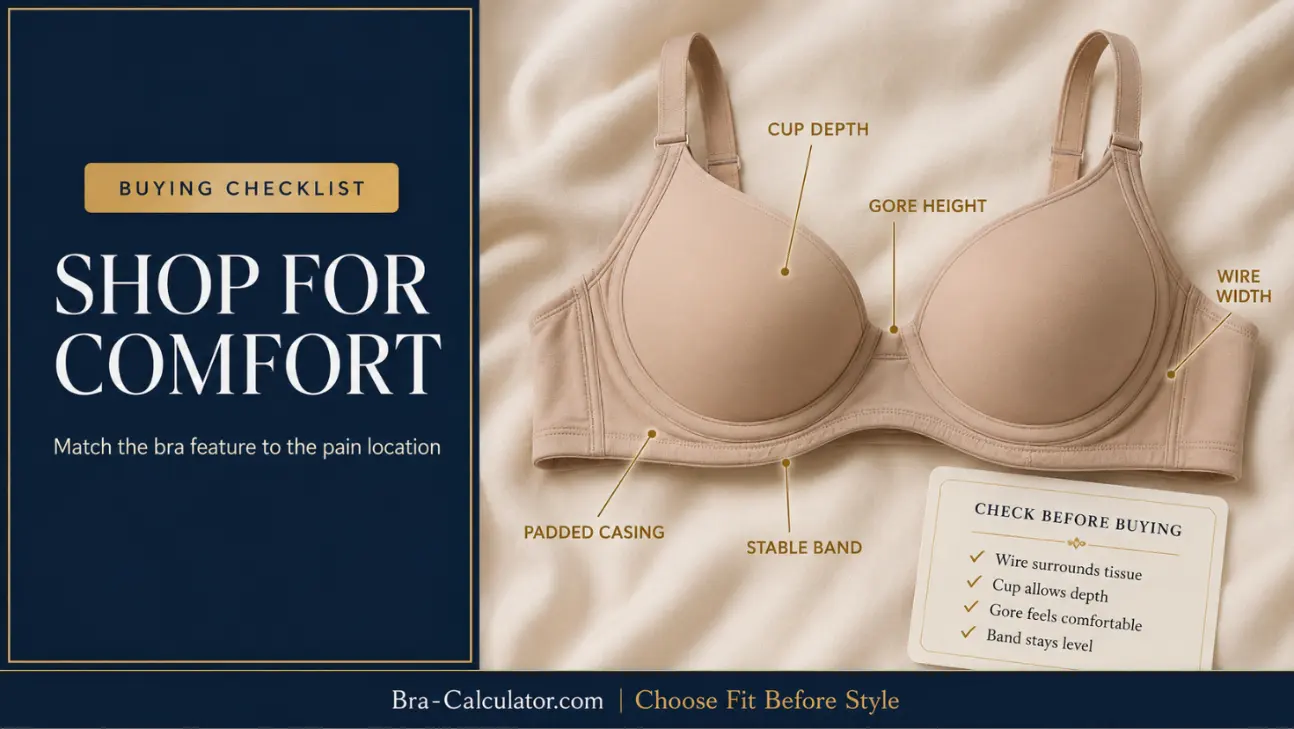
Shop Support Styles for Gentler Daily Wear
These categories are best used only after you have identified whether your discomfort comes from cup capacity, side-wire position, rib pressure or a preference for softer support. Always open the product listing to confirm underwire or wireless construction, available size range, cup coverage and return options before buying.

Wide Padded-Strap Full-Coverage Bras
- Full coverage can be helpful where wire pain occurs with cup overflow or unstable tissue containment.
- Check whether the selected style has a wire shape that actually follows your breast root.
- Wider straps improve shoulder comfort but do not correct a wire sitting on tissue.

U-Back Support Bras With Wide Straps
- Stable back construction may help limit bra shifting that causes wire movement during daily wear.
- Useful to compare when pain worsens because the band or straps fail to keep cups positioned.
- Do not rely on stability alone if the wire height, width or cup depth is wrong.

Wireless Comfort Bras With Cushioned Straps
- A wire-free option for wearers who find underwire uncomfortable even after size and fit checks.
- Look for a supportive underband and enough cup coverage so tissue stays contained.
- Especially relevant for relaxed wear or periods of increased rib or breast sensitivity.
Underwire Pain Advice That Can Make Things Worse
| Myth | Better Fit Guidance |
|---|---|
| “All underwire hurts, so pain is normal.” | Underwire preference varies, but sharp digging, tissue pinching and broken skin are not comfort goals and should be addressed. |
| “Just loosen the band when the wire hurts ribs.” | Rib pain may be caused by shallow cups pushing the wire down; check cup depth as well as band tension. |
| “Padding solves a wire that pokes the breast.” | A wire on breast tissue needs a cup or wire-shape correction before comfort padding is considered. |
| “Bend the wire until it stops hurting.” | Altered wire shape can damage the garment or create new pressure points; choose a more suitable style instead. |
| “You must wear underwire for proper support.” | Supportive wireless options can be a valid comfort choice when they fit securely and meet your needs. |
Frequently Asked Questions
Why is my underwire bra digging in?
An underwire bra may dig in when cups are too small or shallow, the wire is too narrow or too tall for your body, the gore does not suit your breast spacing, the band is too tight or unstable, or the bra is damaged. Check the exact pain location before deciding on a fix.
What does underwire poking into breast tissue mean?
Underwire should sit around breast tissue, not across it. A wire poking the breast often means the cup is not enclosing tissue properly because it is too small, too narrow or a poor shape match.
How do I fix underwire digging into my side or underarm?
After scoop-and-swoop, check whether the outer wire is resting on breast tissue. If so, you may need more cup room or a wider wire. If all tissue is enclosed but the wire tip rubs under your arm, try a shorter-side or softer-edge style.
Why is my bra underwire hurting my ribs?
Rib pain may happen when the band is overly tight, but it can also occur when a shallow cup is pushed downward below the breast root. A deeper cup, more comfortable band tension or softer wire construction may help depending on the full fit signs.
Can cups that are too small make underwire pain worse?
Yes. Too-small cups can cause overflow, a floating gore and wires that rest on breast tissue instead of enclosing it. When the band is secure and cups are crowded, try more cup capacity.
Should underwire bras leave marks on the skin?
Light temporary impressions can occur after wear, but deep painful marks, bruising, broken skin, numbness or red lines that show the wire crossing breast tissue indicate that the bra is not fitting comfortably.
Can I keep wearing a bra if the underwire is poking out?
No. If a wire has broken through the casing or is scratching the skin, stop wearing that bra until it has been properly repaired or replaced. A protruding wire can injure the skin.
When should I seek medical advice for pain blamed on a bra?
Seek medical advice for persistent pain after removing the bra, a new breast or underarm lump, redness, skin changes, bruising, nipple discharge, numbness or pain that occurs independently of wearing a bra.
Find Support Without Painful Poking
Underwire should support your shape, not dig into breast tissue or ribs. Check your band and cup size first, then use the pain-location guide to find a wire profile or comfortable alternative that fits your body.
Enjoying our sizing & fit guides?
Make Bra-Calculator.com a Preferred Source on Google to see our helpful bra sizing, fit and measurement content more prominently in your Google experience.