Breast Sizes With Examples & Bra Size Chart: Every Cup From AA to K
See what every cup size actually looks like — AA to K on the same 32-inch band — then find your own size on the full bra size chart in inches and centimeters. Reference images, volume per breast, US/UK/EU labels, sister sizes and the fit problems each size runs into, all in one place.
Written & reviewed by Amelia, Founder & Bra Fit Specialist · Last updated
See every cup size ↓Find my size on the chartWhat Do Different Breast Sizes Look Like?
Each cup letter adds about 1 inch of difference between bust and band: 1″ = A, 2″ = B, 3″ = C, 4″ = D, 5″ = DD. On a 32 band, that runs from roughly 100 cc per breast at AA to about 2,150 cc at K. A–C cups look gently to moderately rounded; D–DD look full with clear side projection; DDD and above look large and projected.
- The band changes everything: a 38D holds about the same volume as a 32G.
- Letters split after D: US DDD = UK E = EU F.
- Example: 34″ underbust + 38″ bust = 4″ difference = 34D.
Jump to a size:
Find Your Size on the Chart
Enter two measurements. We’ll show your US, UK and EU size, your sister sizes, highlight you on the chart and jump you to your cup’s example.
Cup Size Comparison: AA to K at a Glance
All sizes on a 32 band. Volumes and weights are approximate — real volume varies with breast shape and root width.
| US cup | Bust − band | UK | EU | Volume / breast | Approx. weight | Sister sizes |
|---|---|---|---|---|---|---|
| AA | <1″ | AA | AA | 50–150 cc | ≈0.1 kg | 30A |
| A | 1″ | A | A | 150–250 cc | ≈0.2 kg | 30B · 34AA |
| B | 2″ | B | B | 250–400 cc | ≈0.3 kg | 30C · 34A · 36AA |
| C | 3″ | C | C | 400–550 cc | ≈0.5 kg | 30D · 34B · 36A |
| D | 4″ | D | D | 550–700 cc | ≈0.6 kg | 30DD · 34C · 36B |
| DD | 5″ | DD | E | 700–850 cc | ≈0.8 kg | 30DDD · 34D · 36C |
| DDD | 6″ | E | F | 850–1,000 cc | ≈0.9 kg | 30G · 34DD · 36D |
| G | 7″ | F | G | 1,000–1,200 cc | ≈1.1 kg | 30H · 34DDD · 36DD |
| H | 8″ | FF | H | 1,200–1,450 cc | ≈1.3 kg | 30I · 34G · 36DDD |
| I | 9″ | G | I | 1,450–1,700 cc | ≈1.6 kg | 30J · 34H · 36G |
| J | 10″ | GG | J | 1,700–2,000 cc | ≈1.9 kg | 30K · 34I · 36H |
| K | 11″ | H | K | 2,000–2,300 cc | ≈2.1 kg | 34J · 36I |
US letters follow the common DD → DDD → G sequence; some US brands use F for DDD. Every system: Global Bra Size Converter.
Breast Volume by Cup Size
Each cup step adds more volume than the one before it, which is why the jump from G to H looks far bigger than the jump from B to C.
Side Profiles From AA to K
Illustrations of how forward projection grows with each cup size on the same band.
Every Cup Size With Examples
Filter by size group. Each card shows the size in US, UK and EU letters, approximate volume and weight, sister sizes and the fit problems specific to that cup.
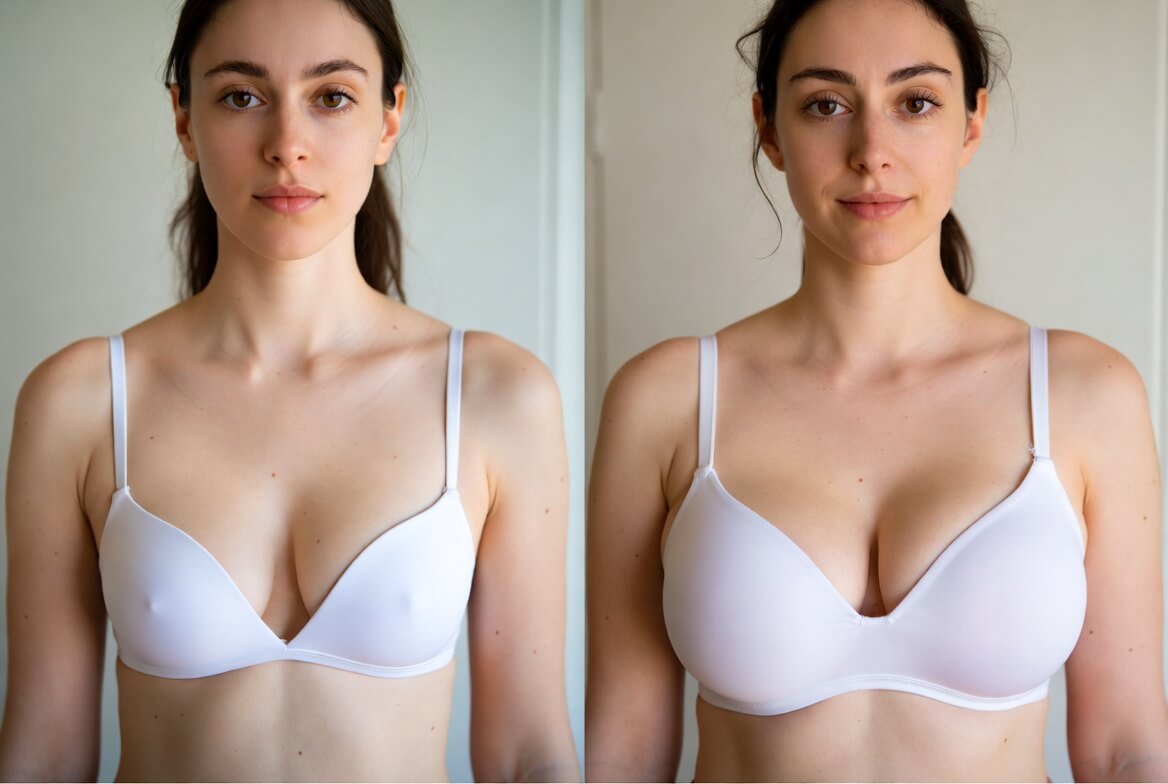 AALeast common
What Does an AA Cup Look Like?
An AA cup is the smallest standard cup: the bust measures less than 1 inch more than the underbust. From the side, the chest looks close to flat, with tissue spread across the chest wall rather than projecting forward. Most structured bras are over-built for this volume, so cups gape and wires press on the breastbone. Soft, seamless and adhesive styles fit best — and going braless is a perfectly valid everyday choice.
- Sister sizes
- 30A
- Underwire
- Not needed
- Sports bra
- Light compression crop
- Best styles
- Seamless wireless, bandeau, adhesive, bralette
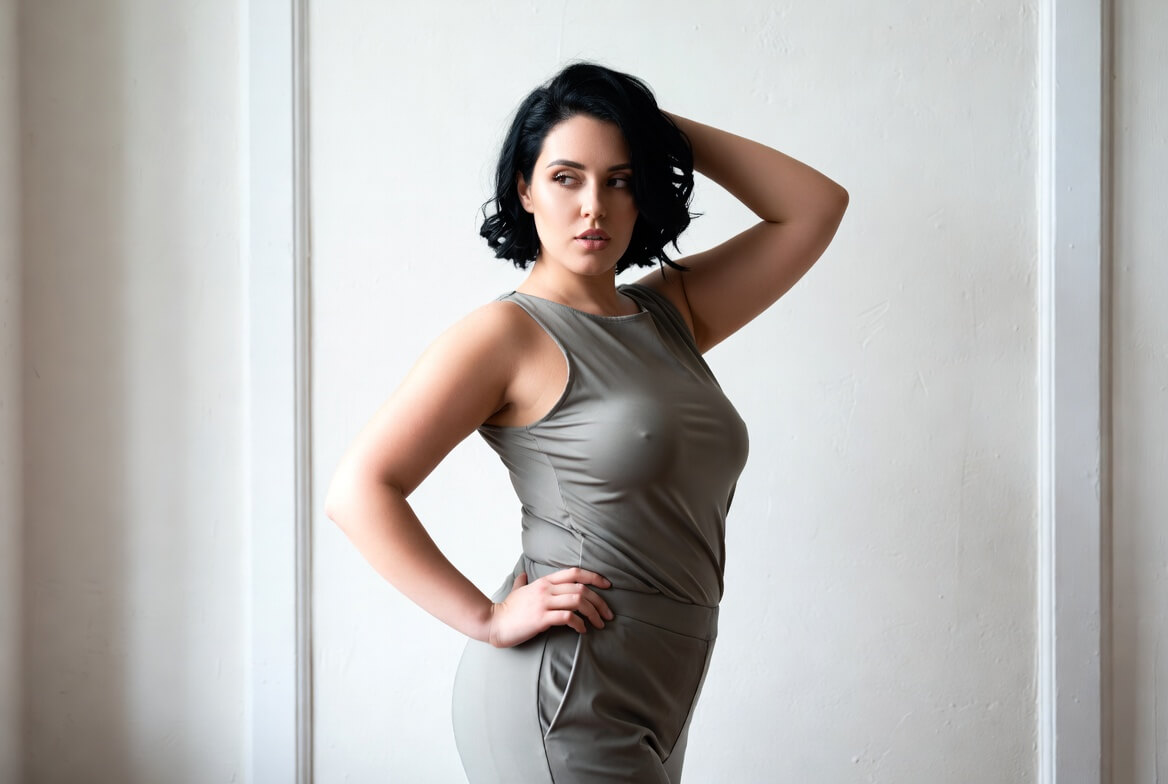 ACommon
What Does an A Cup Look Like?
An A cup has a 1-inch difference between bust and band. The breast sits close to the chest wall with a gentle outward curve and little projection from the side. From the front the shape looks subtle rather than round. Because there’s little weight to support, soft cups work well; the most common fit problem is gaping, especially in thick molded cups designed for fuller shapes.
- Sister sizes
- 30B · 34AA
- Underwire
- Optional
- Sports bra
- Light compression
- Best styles
- Bralette, triangle, soft wireless, lightly lined demi
 BVery common
What Does a B Cup Look Like?
A B cup (2-inch difference) has a defined, rounded shape with gentle projection from the side — roughly the depth of a lightly cupped palm. It’s one of the most widely sold sizes, but many B-cup wearers actually fit a C once their band is corrected: a too-loose band makes the cup letter look smaller than it is. Most clothing and swimwear is cut around this volume.
- Sister sizes
- 30C · 34A · 36AA
- Underwire
- Optional
- Sports bra
- Light to medium
- Best styles
- Demi, T-shirt bra, wireless with molded cups
 CVery common
What Does a C Cup Look Like?
A C cup (3-inch difference) is full and rounded with clear forward projection from the side. This is usually where soft bralettes stop being enough for a full day and underwire starts to feel supportive rather than decorative. C is often called average, but it’s one of the most mis-sized letters: plenty of women sold a 34B or 36A are a 32C with a firmer band.
- Sister sizes
- 30D · 34B · 36A
- Underwire
- Recommended
- Sports bra
- Medium support
- Best styles
- T-shirt bra, balconette, underwire demi
 DCommon
How Big Is a D Cup?
A D cup has a 4-inch difference between bust and band. On a 32 band, it’s visibly full from the front with clear projection from the side. Weight becomes noticeable by the end of the day without a firm band. D is also where the letter misleads most: a 32D is a moderate size, while a 40D holds far more. Many D-cup wearers who struggle are actually in DD or DDD.
- Sister sizes
- 30DD · 34C · 36B
- Underwire
- Yes, daily
- Sports bra
- High-impact
- Best styles
- Full-cup underwire, plunge, supportive T-shirt bra
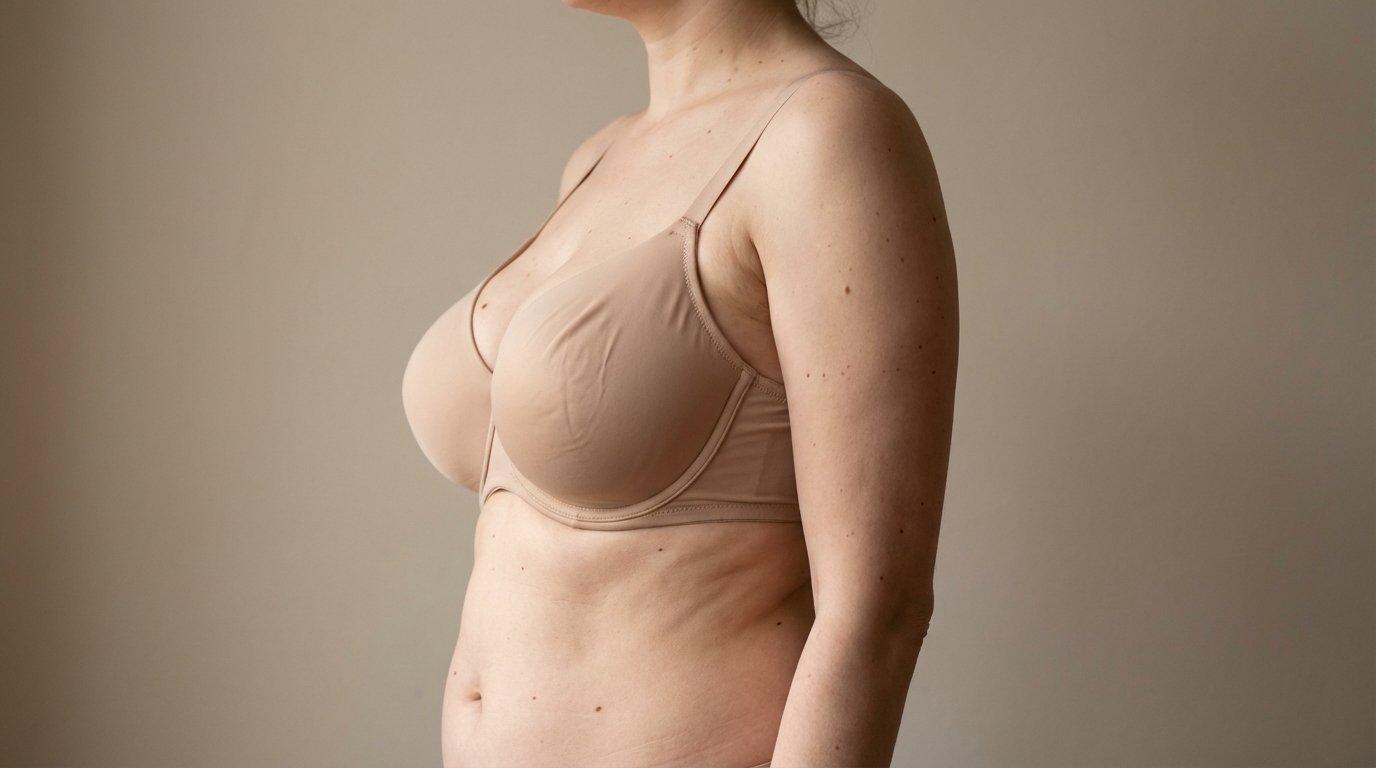 DDCommon
What Do DD Breasts Look Like?
A DD cup (5-inch difference, called E in EU sizing) is full and rounded with strong side projection and visible movement. Band fit becomes the single biggest comfort factor here: a loose band pushes the weight onto the straps and causes shoulder pain by mid-afternoon. DD is where fuller-bust specialist brands start to fit better than fashion brands.
- Sister sizes
- 30DDD · 34D · 36C
- Underwire
- Essential
- Sports bra
- Encapsulation
- Best styles
- Balconette, full-coverage underwire, side-support plunge
 DDDLess common in stores
Is a DDD, E or F Cup Big?
Yes. A 6-inch difference is labeled US DDD (sometimes F), UK E and EU F — three letters for the same size. Volume is substantial and often wide, so cups need a broad wire and good side support to stop tissue drifting toward the armpit. This is where most high-street stores stop stocking, and where brand sizing becomes the least consistent.
- Sister sizes
- 30G · 34DD · 36D
- Underwire
- Essential — wide wire
- Sports bra
- Encapsulation only
- Best styles
- Full-cup with side slings, wide-root underwire, minimizer
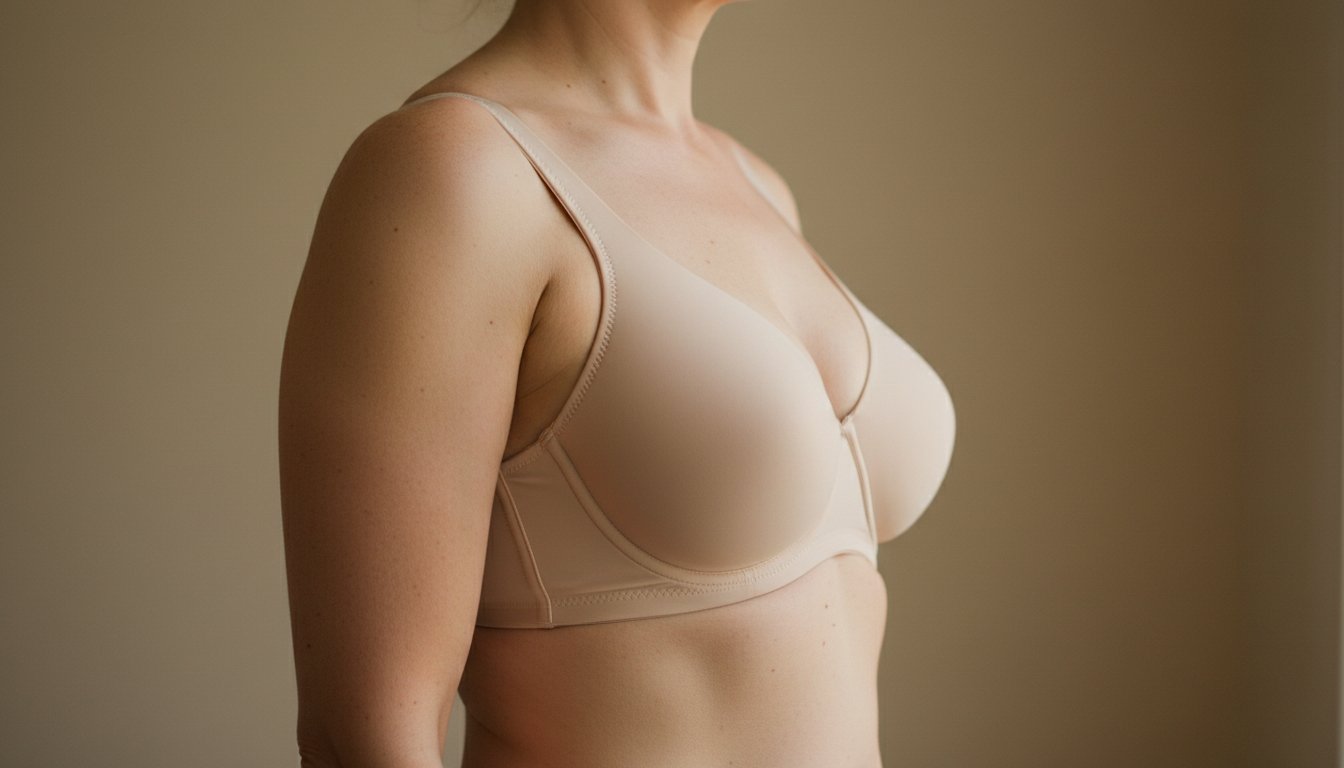 GSpecialist sizing
What Does a G Cup Look Like?
A US G cup has a 7-inch difference — the same size as a UK F and EU G. The breast is large and projected, extending past the arm from the side, and the weight is felt in the shoulders within hours in the wrong bra. Getting the center gore to lie flat gets harder, so plunge and seamed cups often fit better than traditional full cups. Fitted tops and button-downs often gape.
- Sister sizes
- 30H · 34DDD · 36DD
- Underwire
- Steel, firm
- Sports bra
- High-impact encapsulation
- Best styles
- Seamed full-cup, molded full-coverage, longline
 HSpecialist sizing
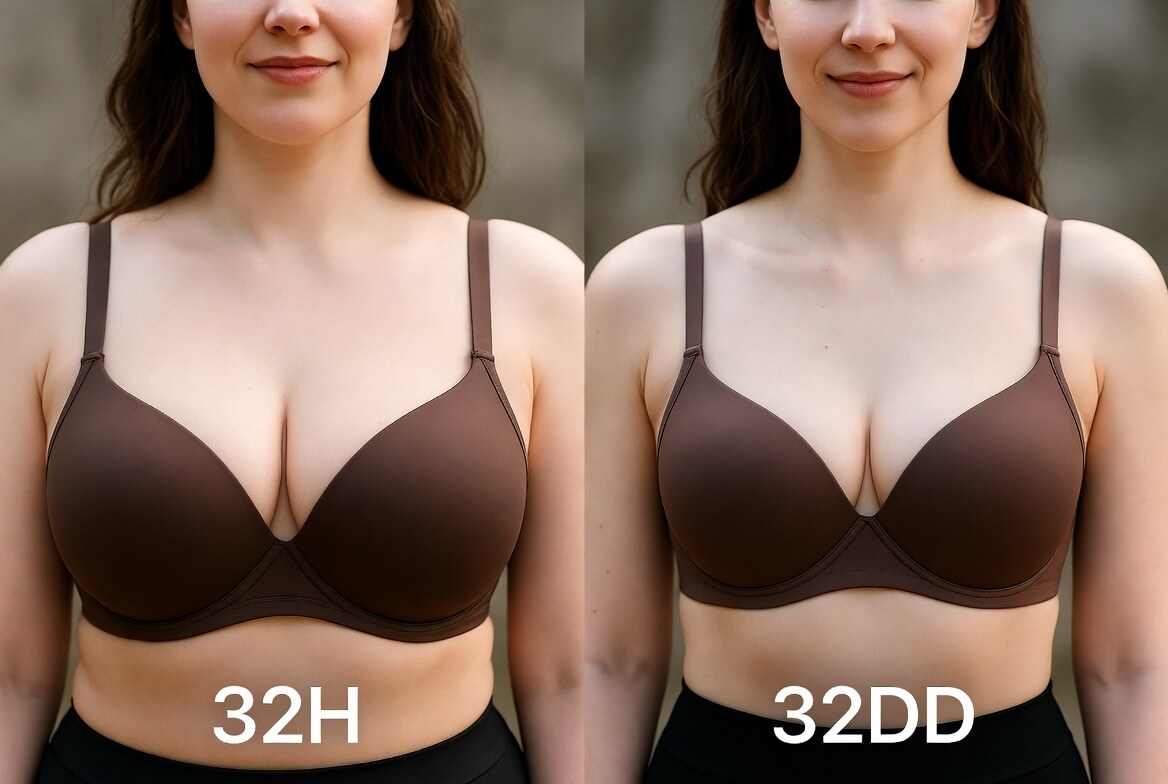
How Big Is an H Cup?
A US H cup has an 8-inch difference — a UK FF and EU H. Each breast weighs roughly 1.2–1.4 kg on a 32 band, and poor support tends to round the shoulders forward as the upper back compensates. Clothing sized for the body often strains across the chest. At this point, specialist full-bust brands aren’t a luxury — they’re what actually fits.
- Sister sizes
- 30I · 34G · 36DDD
- Underwire
- Steel
- Sports bra
- Specialist encapsulation
- Best styles
- Steel-wire full-cup, side-sling, 3–4 hook band
 IRare in stores
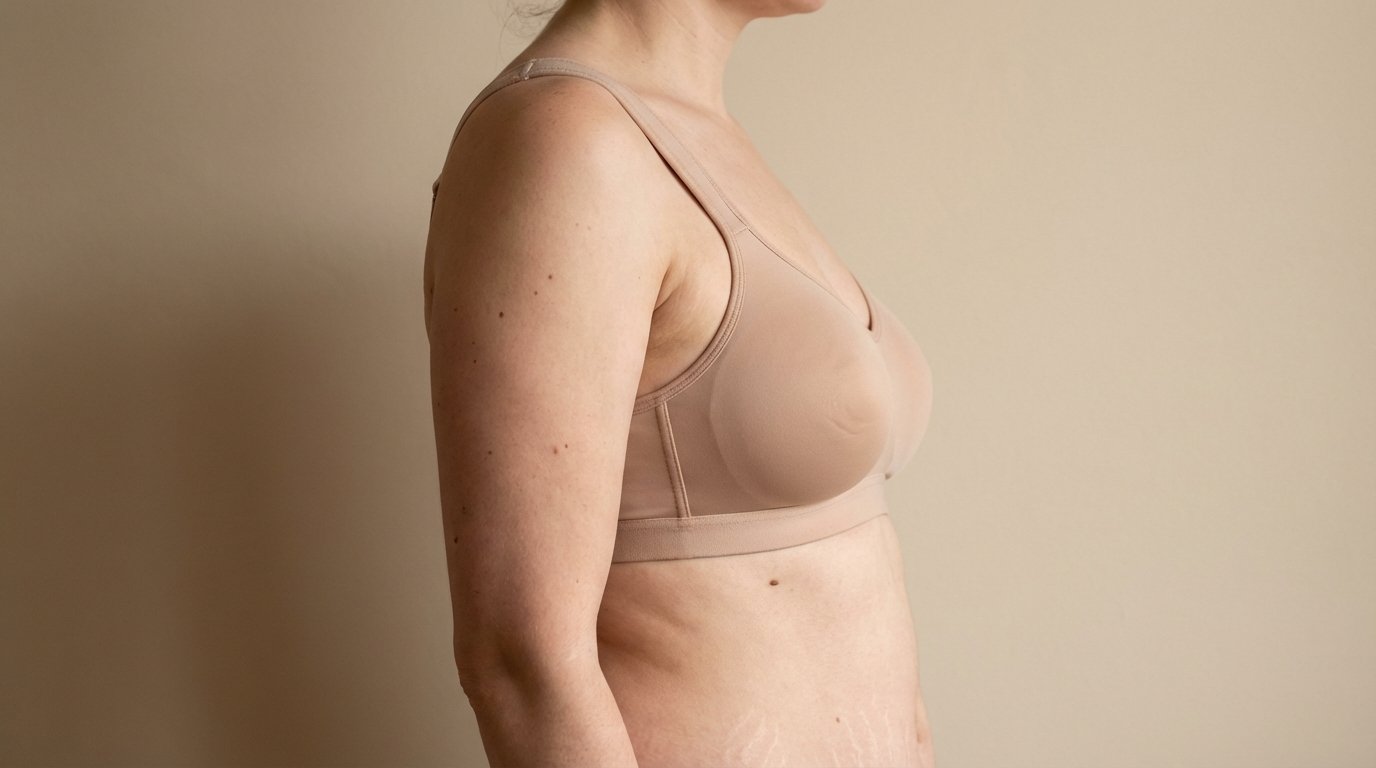
What Does an I Cup Look Like?
A US I cup has a 9-inch difference. UK brands skip the letter I entirely, so the same size is sold as a UK G. The breast is heavy and highly projected, and the bra becomes structural rather than decorative. Wide, padded straps, a 3–4 hook firm band and steel wires make the biggest difference. Most women at this size shop UK-labeled specialist brands.
- Sister sizes
- 30J · 34H · 36G
- Underwire
- Steel
- Sports bra
- Specialist encapsulation
- Best styles
- 4-hook full-coverage, wide padded straps, minimizer
 JRare
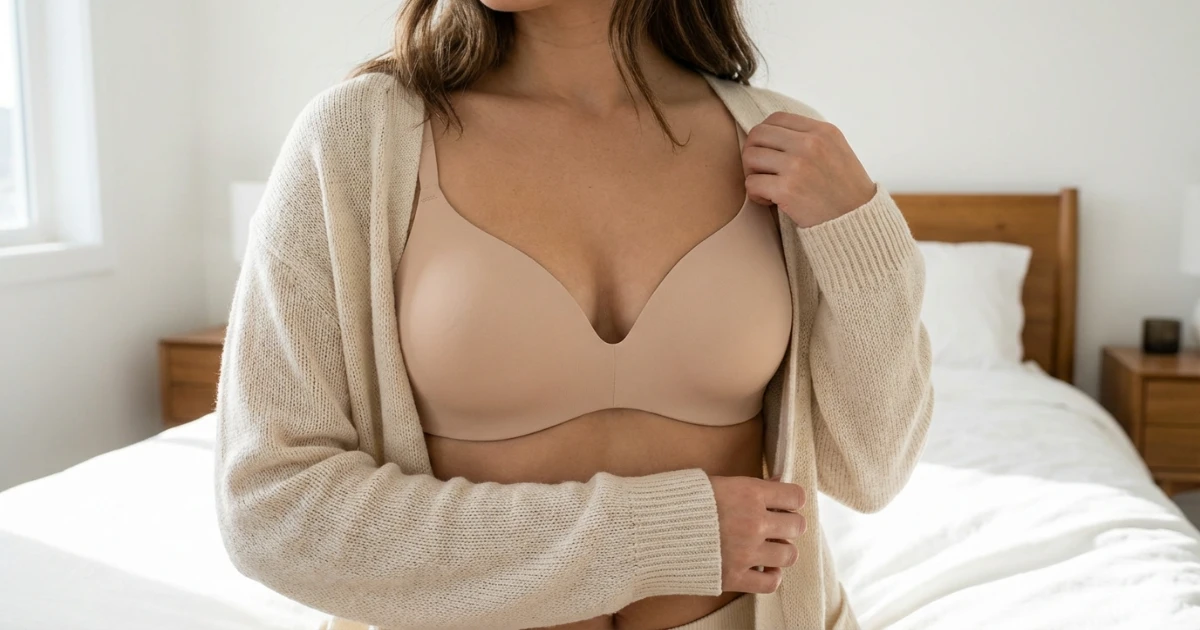
JRareWhat Is a J Cup, and How Big Is It?
A US J cup has a 10-inch difference — a UK GG and EU J. Each breast can weigh close to 2 kg on a 32 band. Very few mainstream stores stock this size, so most J-cup wearers buy from UK full-bust brands or get fitted in person. Because the volume is so large, small differences in wire width and cup depth decide whether a bra is comfortable at all.
- Sister sizes
- 30K · 34I · 36H
- Underwire
- Steel
- Sports bra
- Specialist or custom
- Best styles
- Full-bust specialist brands, made-to-measure
 KVery rare
What Does a K Cup Look Like?
A US K cup has an 11-inch difference between bust and band — a UK H and EU K. On a 32 band, each breast holds roughly 2 liters of volume, which puts a constant load on the back and shoulders. Ready-to-wear options are limited to specialist full-bust brands, and an in-person fitting is the most reliable route. Persistent pain at this size is worth discussing with a doctor.
- Sister sizes
- 34J · 36I
- Underwire
- Steel, boned
- Sports bra
- Custom or specialist
- Best styles
- UK full-bust specialists, made-to-measure, longline
Images are size references. Breasts of the same size can look different depending on shape, density, symmetry and frame.
Bra Size Chart (Inches): Every Band 28–46, Cups A–K
Find your band in the left column, then move across to your full bust measurement — the column heading is your US cup. A 36 band with a 41″ bust is a 36DD. Use the chart finder above to highlight your cell automatically.
| Band | A | B | C | D | DD | DDD | G | H | I | J | K |
|---|---|---|---|---|---|---|---|---|---|---|---|
| 28 | 29″ | 30″ | 31″ | 32″ | 33″ | 34″ | 35″ | 36″ | 37″ | 38″ | 39″ |
| 30 | 31″ | 32″ | 33″ | 34″ | 35″ | 36″ | 37″ | 38″ | 39″ | 40″ | 41″ |
| 32 | 33″ | 34″ | 35″ | 36″ | 37″ | 38″ | 39″ | 40″ | 41″ | 42″ | 43″ |
| 34 | 35″ | 36″ | 37″ | 38″ | 39″ | 40″ | 41″ | 42″ | 43″ | 44″ | 45″ |
| 36 | 37″ | 38″ | 39″ | 40″ | 41″ | 42″ | 43″ | 44″ | 45″ | 46″ | 47″ |
| 38 | 39″ | 40″ | 41″ | 42″ | 43″ | 44″ | 45″ | 46″ | 47″ | 48″ | 49″ |
| 40 | 41″ | 42″ | 43″ | 44″ | 45″ | 46″ | 47″ | 48″ | 49″ | 50″ | 51″ |
| 42 | 43″ | 44″ | 45″ | 46″ | 47″ | 48″ | 49″ | 50″ | 51″ | 52″ | 53″ |
| 44 | 45″ | 46″ | 47″ | 48″ | 49″ | 50″ | 51″ | 52″ | 53″ | 54″ | 55″ |
| 46 | 47″ | 48″ | 49″ | 50″ | 51″ | 52″ | 53″ | 54″ | 55″ | 56″ | 57″ |
US lettering after DDD varies by brand; UK and EU equivalents are in the comparison table.
Bra Size Chart in CM
The same chart with full bust in centimeters. The EU band is in brackets (EU bands are in cm: 75 ≈ US 34). Values are rounded to the nearest cm.
| Band | A | B | C | D | DD | DDD | G | H | I | J | K |
|---|---|---|---|---|---|---|---|---|---|---|---|
| 28 (EU 60) | 74 | 76 | 79 | 81 | 84 | 86 | 89 | 91 | 94 | 97 | 99 |
| 30 (EU 65) | 79 | 81 | 84 | 86 | 89 | 91 | 94 | 97 | 99 | 102 | 104 |
| 32 (EU 70) | 84 | 86 | 89 | 91 | 94 | 97 | 99 | 102 | 104 | 107 | 109 |
| 34 (EU 75) | 89 | 91 | 94 | 97 | 99 | 102 | 104 | 107 | 109 | 112 | 114 |
| 36 (EU 80) | 94 | 97 | 99 | 102 | 104 | 107 | 109 | 112 | 114 | 117 | 119 |
| 38 (EU 85) | 99 | 102 | 104 | 107 | 109 | 112 | 114 | 117 | 119 | 122 | 124 |
| 40 (EU 90) | 104 | 107 | 109 | 112 | 114 | 117 | 119 | 122 | 124 | 127 | 130 |
| 42 (EU 95) | 109 | 112 | 114 | 117 | 119 | 122 | 124 | 127 | 130 | 132 | 135 |
| 44 (EU 100) | 114 | 117 | 119 | 122 | 124 | 127 | 130 | 132 | 135 | 137 | 140 |
| 46 (EU 105) | 119 | 122 | 124 | 127 | 130 | 132 | 135 | 137 | 140 | 142 | 145 |
Band Size Chart: Underbust to Band
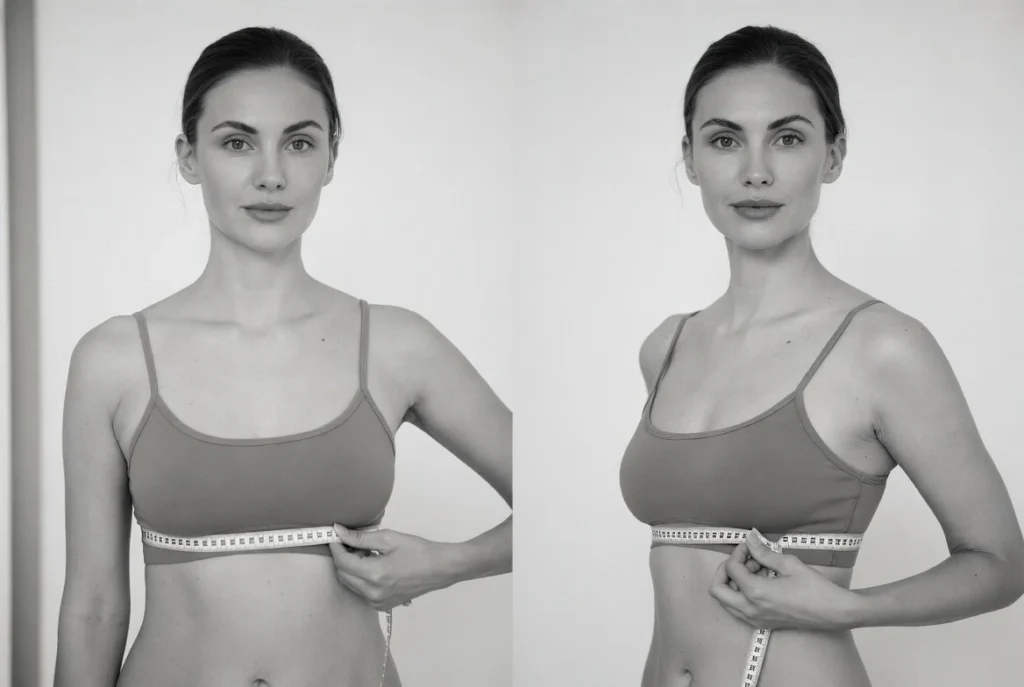
Your band is your snug underbust rounded to the nearest even number. Don’t add 4 inches — that older method gives a loose band, and a loose band is the #1 reason bras hurt.
| Snug underbust | cm | US / UK band | EU band | FR band |
|---|---|---|---|---|
| 27–28″ | 69–72 | 28 | 60 | 75 |
| 29–30″ | 74–77 | 30 | 65 | 80 |
| 31–32″ | 79–82 | 32 | 70 | 85 |
| 33–34″ | 84–87 | 34 | 75 | 90 |
| 35–36″ | 89–92 | 36 | 80 | 95 |
| 37–38″ | 94–97 | 38 | 85 | 100 |
| 39–40″ | 99–102 | 40 | 90 | 105 |
| 41–42″ | 104–107 | 42 | 95 | 110 |
| 43–44″ | 109–112 | 44 | 100 | 115 |
| 45–46″ | 114–117 | 46 | 105 | 120 |
Bra Sizes by Country: Same Size, Different Labels
| US | UK | EU | FR / ES | AU / NZ |
|---|---|---|---|---|
| 32B | 32B | 70B | 85B | 10B |
| 34C | 34C | 75C | 90C | 12C |
| 34DD | 34DD | 75E | 90E | 12DD |
| 36D | 36D | 80D | 95D | 14D |
| 36DDD | 36E | 80F | 95F | 14E |
| 38DD | 38DD | 85E | 100E | 16DD |
| 40G | 40F | 90G | 105G | 18F |
Brand charts differ because of band method (+4 vs snug), cup lettering, band stretch and cup shape. Use this chart for your starting size, then the brand’s chart for the label.
Why the Same Cup Size Looks Different on Different People
A cup letter only describes the difference between bust and band, so the same letter holds more volume on a bigger band. That’s why a 32D and a 38D look nothing alike.
| Size | Same volume as | What it looks like |
|---|---|---|
| 30D | 32C · 34B · 36A | Moderate — a “D” on a petite frame |
| 32D | 30DD · 34C · 36B | Full but moderate |
| 38D | 36DD · 34DDD · 32G | Large — about three cups more than 32D |
| 42D | 40DD · 38DDD · 36G | Very full — a “D” at 42 is not a small cup |
Band size
More band means more volume under the same letter.
Breast shape
Full-on-top, full-on-bottom, shallow or projected breasts of the same size look different in profile.
Root width
Wide-set breasts spread volume sideways; narrow roots push it forward.
Height & frame
The same size looks larger on a shorter or narrower frame.
How to Measure Your Bra Size
- Underbust: wrap a soft tape snugly and level around your ribcage, directly under your breasts. Round to the nearest even number.
- Full bust: measure loosely around the fullest point. If you’re DD+ or a 40+ band, also measure leaning forward and average the two — softer tissue can hide 1–2″.
- Subtract: each inch of difference is one cup. 32″ band + 40″ bust = 8″ = US 32H · UK 32FF · EU 70H.
Keep the tape level all the way round (a tape that dips at the back adds inches), measure over a non-padded bra, and repeat twice. Full method: measuring guide · plus sizes: plus-size bra calculator.

Measure accurately: Prym Flexible Body Tape
Soft tape with inches and cm on one side, so you can read both charts above directly.
Check Price on Amazon →As an Amazon Associate we earn from qualifying purchases.
Sister Size Chart
Sister sizes hold the same cup volume on a different band. Go down a band and up a cup for a firmer fit, or up a band and down a cup for a looser one.
| Tighter band | Your size (US) | Looser band |
|---|---|---|
| 28D | 30C | 32B |
| 30D | 32C | 34B |
| 32D | 34C | 36B |
| 32DD | 34D | 36C |
| 34DD | 36D | 38C |
| 34DDD | 36DD | 38D |
| 36G | 38DDD | 40DD |
Every sister size for your size: Sister Size Calculator.
Common Fit Problems by Cup Size — and the Fix
Cups gaping at the top
Cup too big, or the wrong shape. Go down a cup, or try a demi or plunge for full-on-bottom breasts.
Spillage or quad-boob
Cup too small. Go up one cup or choose full coverage.
Band riding up
Band too loose. Go down a band and up a cup (34G → 32H) to keep the volume.
Straps digging in
The straps are doing the band’s job. Firm up the band first, then choose wider straps.
Center gore floating
Cups too small, or close-set breasts. Size up the cup or switch to a plunge.
Wire sitting on tissue
Cup too small or wire too narrow. Size up, or try wider-wire brands.
Side spillage
Common from DDD up. Choose side-support panels and wider wires.
Wire digging in
Usually a cup that’s too small. Go up a cup before trying a different style.
Run the full 10-step check in How to Know If Your Bra Fits.
Cup Size Myths
Myth: “D cup means large breasts”
A 30D holds about the same as a 34B. The letter means nothing without the band.
Myth: “There’s an average bra size to aim for”
Surveys and sales data disagree, and a letter has no fixed volume without a band. Your measurements are the only reliable guide.
Myth: “G and H cups are extremely rare”
They’re rarely stocked in stores, which isn’t the same as rarely worn — especially on larger bands.
True: most women wear the wrong size
The most common mistake is a band that’s too big with cups that are too small.
True: sister sizing fixes “almost right”
If the cup fits but the band doesn’t, move one band and one cup in opposite directions.
Best Bra Styles by Cup Size
| Cup | Everyday | Sports bra | Avoid |
|---|---|---|---|
| AA–A | Bralette, triangle, seamless wireless | Light compression | Deep molded cups, push-up for fit |
| B–C | T-shirt bra, demi, balconette | Light to medium | Unstructured lace for all-day wear |
| D–DD | Full-cup underwire, plunge, balconette | High-impact encapsulation | Strapless without boning |
| DDD–G | Side-support full cup, seamed cups, longline | Encapsulation only | Soft-cup wireless for heavy days |
| H–K | Steel-wire full coverage, 3–4 hooks, wide straps | Specialist full-bust sports bras | Fashion-brand sizing |
Want specific picks? See our most comfortable bras by size range.
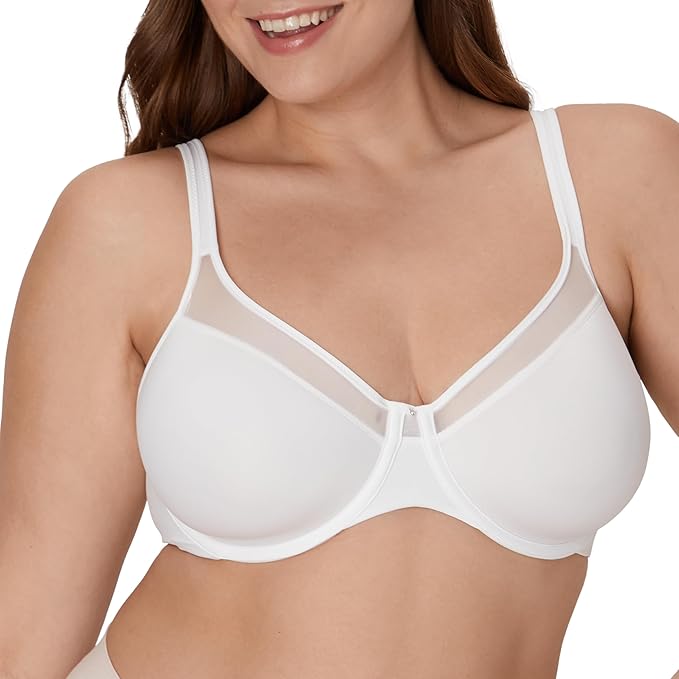
Recommended for DD Cups and Up
At DD+, look for three things: a firm band with 3+ hooks, wires wide enough to sit behind all breast tissue, and wide straps. This full-coverage underwire checks all three.
Check Price on Amazon →
Wacoal Awareness Full Figure Underwire
A structured full-coverage bra that most reviewers find true to chart sizing. Check Wacoal’s own chart before ordering.
Check Price on Amazon →As an Amazon Associate we earn from qualifying purchases.
Cup Size & Bra Chart: Key Facts
- Cup rule
- 1 inch (2.5 cm) of bust-to-band difference = 1 cup size.
- Band rule
- Snug underbust rounded to the nearest even number — no +4.
- US cup sequence
- AA, A, B, C, D, DD, DDD, G, H, I, J, K.
- UK after D
- DD, E, F, FF, G, GG, H.
- Volume range (32 band)
- ≈100 cc per breast at AA to ≈2,150 cc at K.
- Sister size rule
- Band down one, cup up one (or reverse) keeps similar volume.
- Same volume example
- 32G ≈ 34DDD ≈ 36DD ≈ 38D.
- Method
- Editorial fitting guidance; volumes approximate, reviewed September 2026.
Breast Size & Bra Size Chart FAQs
What do different breast sizes look like?
Each cup letter adds about 1 inch of bust-to-band difference. On a 32 band, sizes run from about 100 cc per breast at AA to about 2,150 cc at K. A–C cups look gently to moderately rounded, D–DD look full with clear side projection, and DDD and above look large and projected. The same letter looks bigger on a larger band.
How do I read a bra size chart?
Round your snug underbust to the nearest even number to get your band. Find that band's row, then move across to your full bust measurement — the column heading is your cup. A 34 band with a 37-inch bust is a 34C.
How many cup sizes are there?
US sizing runs AA, A, B, C, D, DD, DDD, G, H, I, J and K — 12 cup sizes, each about one inch of bust-to-band difference apart. UK sizing uses different letters after D (DD, E, F, FF, G, GG, H), and specialist brands go beyond K.
What size bra is a 36-inch bust?
It depends on your band. A 36-inch bust is a 32D on a 32 band, a 34B on a 34 band and a 30DDD on a 30 band. The bust number alone can't give you a bra size.
What bra size is 34 underbust and 38 bust?
A 34-inch underbust and 38-inch bust is a 34D: a 34 band with a 4-inch difference.
What does 34C mean in a bra size?
34 is the band — your underbust in inches, rounded to the nearest even number. C is the cup: a 3-inch difference between full bust and band. A 34C fits roughly a 34-inch underbust and 37-inch bust.
Should I add 4 inches to my underbust?
No. The +4 method is outdated and gives a band that's too loose. Use your snug underbust rounded to the nearest even number, unless a specific brand's chart says otherwise.
How big is a D cup?
A D cup is a 4-inch difference between bust and band. On a 32 band it's about 550–700 cc per breast — full but moderate. It grows with the band: a 40D holds roughly the same volume as a 34G.
Is 34D the same as 36D?
No. Cup volume grows with the band, so a 36D holds more than a 34D. The 36-band size with the same volume as a 34D is 36C.
How much bigger is a DD than a D?
One cup: one extra inch of bust-to-band difference, or roughly 150 cc more per breast on a 32 band. Steps get bigger in larger cups, so G to H is a bigger visual jump than C to D.
Is DD the same as E?
In US and UK sizing, DD is one cup above D; EU sizing calls the same cup E. A UK E is one cup larger than DD — the same as a US DDD.
Is a DDD the same as an F or E cup?
A 6-inch difference is sold as US DDD (some US brands call it F), UK E and EU F. Same size, different labels — check which system a brand uses.
How big is an H cup?
A US H cup is an 8-inch difference, equal to a UK FF. On a 32 band each breast is roughly 1.2–1.45 liters, so steel wires, a firm band and wide straps matter most.
How do I use a bra size chart in cm?
Use the centimeter chart, or find your band from your underbust in cm (84–87 cm = 34 / EU 75). Each 2.5 cm of bust-to-band difference is roughly one US/UK cup; EU cups step every 2 cm.
Does the same cup size look the same on everyone?
No. Volume depends on the band — a 32D and a 38D look very different — and shape matters: full-on-top, full-on-bottom, wide-set and projected breasts can share a size but look different.
What are sister sizes?
Sister sizes hold the same cup volume on a different band: go down one band and up one cup, or up one band and down one cup. 32DD, 30DDD, 34D and 36C all hold similar volume.
What is the average bra size?
There's no reliable average: surveys measure different groups with different methods, and sales data only reflects what stores stock. A cup letter also has no fixed volume without a band, so your own measurements matter more than any average.
Can breast size change without weight change?
Yes. Menstrual cycles, pregnancy, breastfeeding, menopause and some medications can change breast volume. Remeasure every 6–12 months or after any major change.
Related Tools & Guides
What Size Are You?
Enter two measurements and see your size in US, UK and EU — plus your sister sizes.
Use the Free Bra CalculatorUse the chart finder