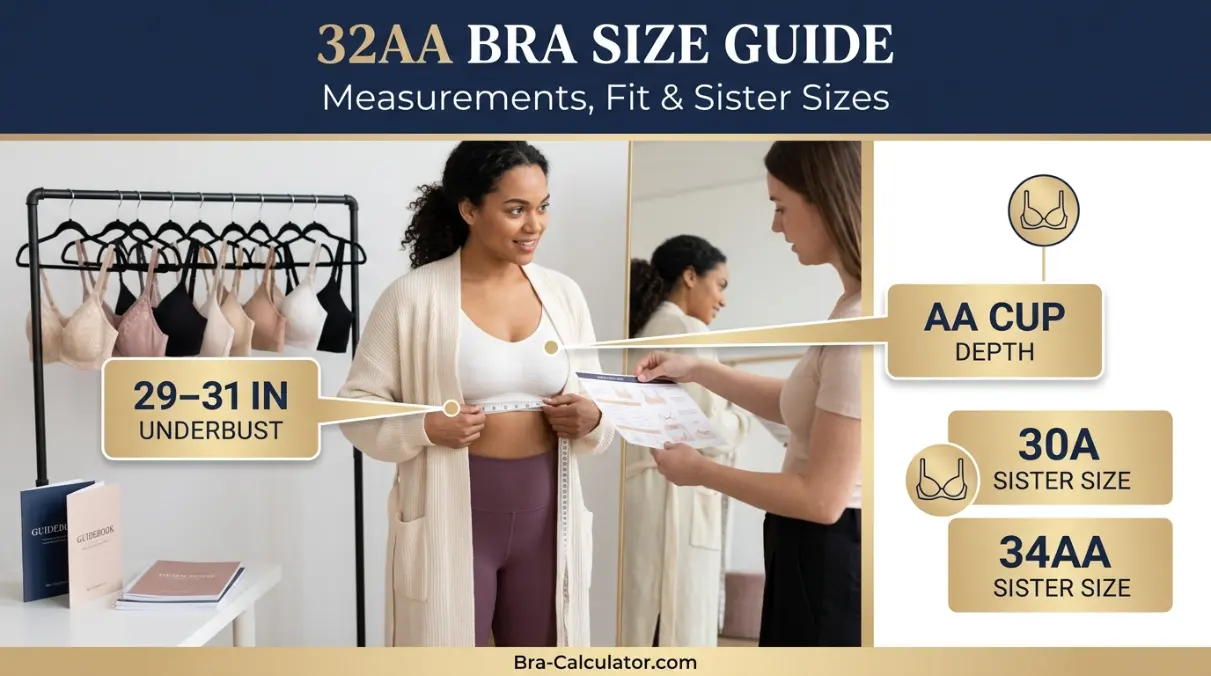
A 32AA bra size usually means a snug underbust around 29–31 inches with a AA cup depth. In many size charts, the AA cup is linked with less than 1 inches of bust-to-underbust difference, but the real answer depends on brand scaling, breast shape, tissue softness, and how the bra behaves when you move. The 32 band should feel firm enough to stay level without forcing the straps to do the lifting.
Jump to a Section
Choose the fit signs you notice in the band, cups, center and straps. We’ll turn them into a practical next step for 32AA.
Private fit check — your answers stay in your browser and are used only for this on-page guidance. Nothing is stored or submitted.
32AA at a Glance
| Fit Attribute | 32AA Guide Detail |
|---|---|
| Band family | 32 band, usually suited to a snug underbust around 29–31 inches. |
| Cup profile | AA cup, generally treated as light-volume; exact capacity changes by brand and style. |
| Best fit clue | The band stays level while the cup edge lies smooth, with no spillage, empty fabric, or painful wire pressure. |
| Main risk | Choosing by label alone instead of checking band tension, cup depth, root width, projection, and movement. |
| Useful tools | Bra Size Calculator, Sister Size Calculator, and AI Smart Fit Bra Calculator. |
What Does 32AA Really Mean?
A 32AA bra combines a 32-band frame with a AA cup. The band number is the anchor: it should wrap around the ribcage firmly, sit parallel to the floor, and provide most of the support. The cup letter then describes how much cup space is built onto that band. This is why 32AA is not the same body size as 34AA or 30AA; the band changes the actual cup volume.
For many wearers, the 32 band is a smaller-to-average ribcage zone, so precision matters. A band that is even slightly too loose can ride up and make the cups look too small. A band that is too tight can distort cup shape, push tissue out of place, and make the gore feel harsher than it should. The goal is not to squeeze into 32; the goal is to confirm whether 32 is the right support base for your body.
The AA cup on this band needs a shape match as well as volume. Some people need a shallow cup with gentle height; others need more projection at the wire, more immediate depth, or stronger side containment. A correct 32AA should look calm under clothing, feel secure when you lift your arms, and stay comfortable after several hours of wear.
Use this guide as a fit map, not a label judgment. Bra sizing is practical, not moral. The best size is the one that places breast tissue inside the cup, keeps the band steady, and lets the shoulders relax instead of carrying the weight.
How to Measure for a 32AA Bra
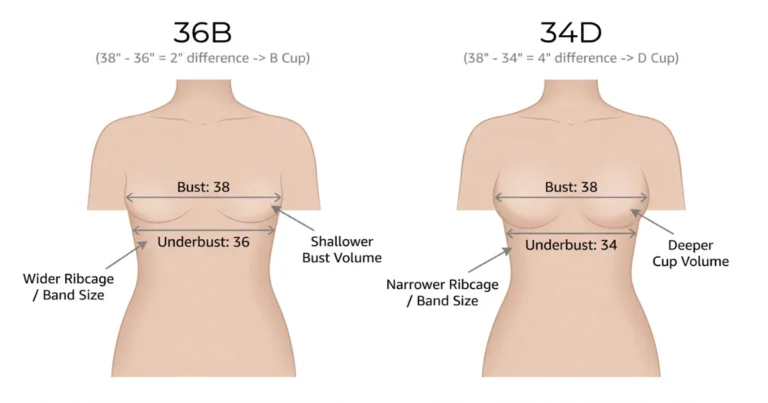
Start with a snug underbust measurement. For the 32-band family, many calculators and fitting methods place the snug ribcage range around 29–31 inches. Then measure the fullest part of the bust while standing naturally. The difference between these two numbers gives the estimated cup starting point.
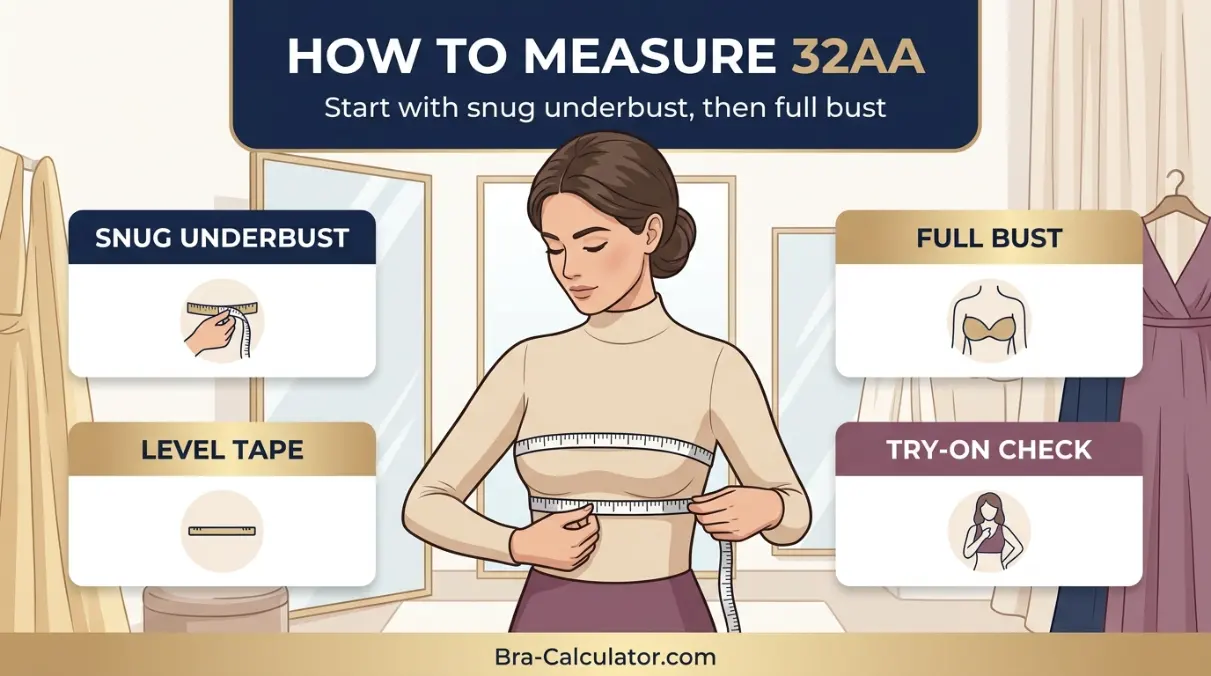
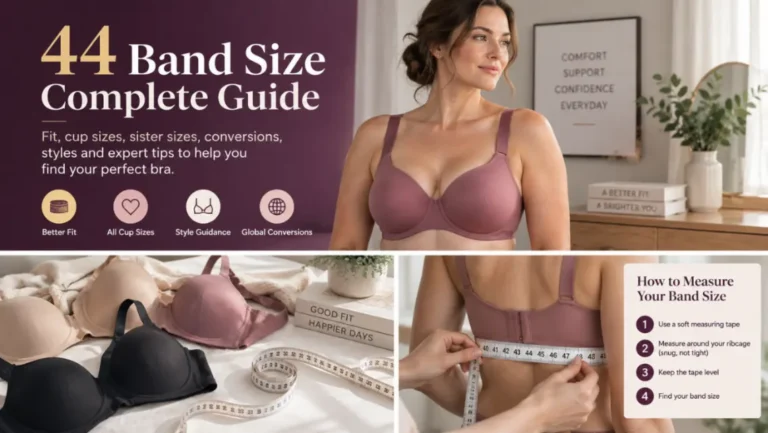
Keep the tape level around the ribcage. A 32 band usually starts near 29–31 inches, depending on comfort and brand stretch.
Measure at the fullest point without compressing breast tissue. Leaning slightly can help capture softer or outer tissue.
A new 32 band should feel secure on the loosest hook so you can tighten it as the elastic relaxes over time.
Check the cup edge, center gore, side wire, straps, and band position after moving around for a few minutes.
What Does 32AA Look Like?
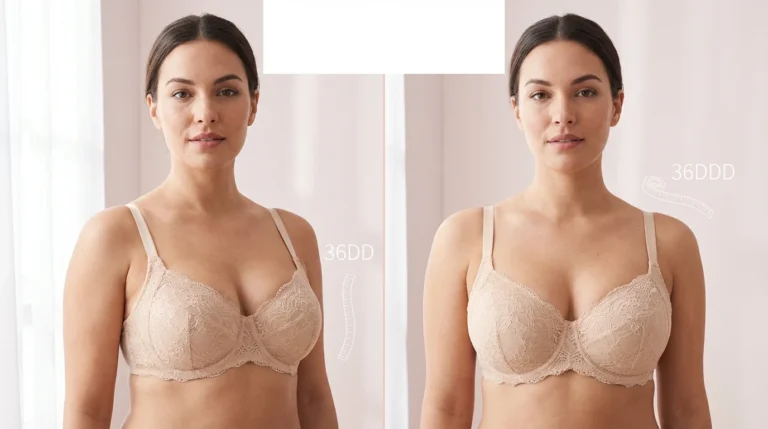
A 32AA can look very different from one person to another because cup volume is spread across body width, root shape, projection, tissue density, and bra construction. On a narrow ribcage, the same cup letter may look more projected. On a broader upper torso, the shape may look more distributed even when the cup volume is technically the same.
The most reliable visual clue is not size appearance; it is smooth containment. The top edge should not bite into tissue, the lower cup should not collapse, and the wire should not rest on breast tissue. If the cup seems visually “right” but the band rides up or the straps dig in, the fit is still not correct.
Fit reality: A good 32AA should feel supportive without looking forced. The cup should frame your natural shape, not flatten, spill, or push tissue into the underarm.
Judge the bra after scoop-and-settle, after raising your arms, and after sitting down. Real-life movement tells the truth faster than a still mirror check.
Best Products to Test 32AA Fit
These product cards are selected for the fit problems most common in the 32AA range: band stability, cup-depth accuracy, side containment, smoothness under clothes, and movement support. When testing, compare styles in the same band first before changing the cup.

Lightly Lined T-Shirt Bra
- Smooth cups make gaping, wrinkling, and cup-edge cutting easier to spot.
- Helpful when you want a clean everyday fit under fitted tops.
- Choose the 32-band first, then compare nearby cups if the edge is not smooth.

Wireless Contour Bra
- A comfortable option when wire pressure makes fit testing confusing.
- Works well for lighter cup volumes and relaxed daily wear.
- Check that the band stays level instead of relying on tight straps.

Low-to-Medium Impact Sports Bra
- Use movement to expose slipping, bounce, or band riding up.
- A good second test after the everyday bra looks correct in the mirror.
- Choose encapsulation or shaped cups if compression flattens unevenly.
How Body Shape Changes 32AA Fit
Two people can wear 32AA and need very different bras. Breast shape controls whether the cup feels too tall, too shallow, too narrow, too wide, or just right. This is why one brand can feel perfect while another brand in the same size fails completely.
Needs More Forward Depth
Projected shapes usually need immediate depth near the wire and enough center room so the gore does not float.
Check lower cup depthNeeds a Smoother, Lower Cup
Shallow shapes may gap in tall cups even when the size is close. A lower or more flexible edge can work better.
Watch cup heightNeeds Wire Width
If the wire sits on outer tissue, the cup may be too narrow even when the volume sounds correct.
Check side wireNeeds Containment
Softer tissue often benefits from stretch lace, side support, and cups that contain without cutting across the top.
Contain gently32AA Sister Sizes
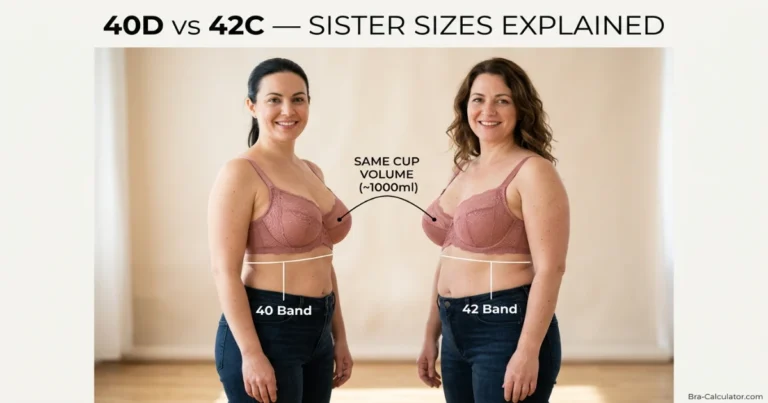
Sister sizing is useful when the cup volume feels close but the band is wrong. The rule is simple: down one band and up one cup, or up one band and down one cup. For 32AA, that usually points toward 30A for a firmer band and 34AA for a roomier band.
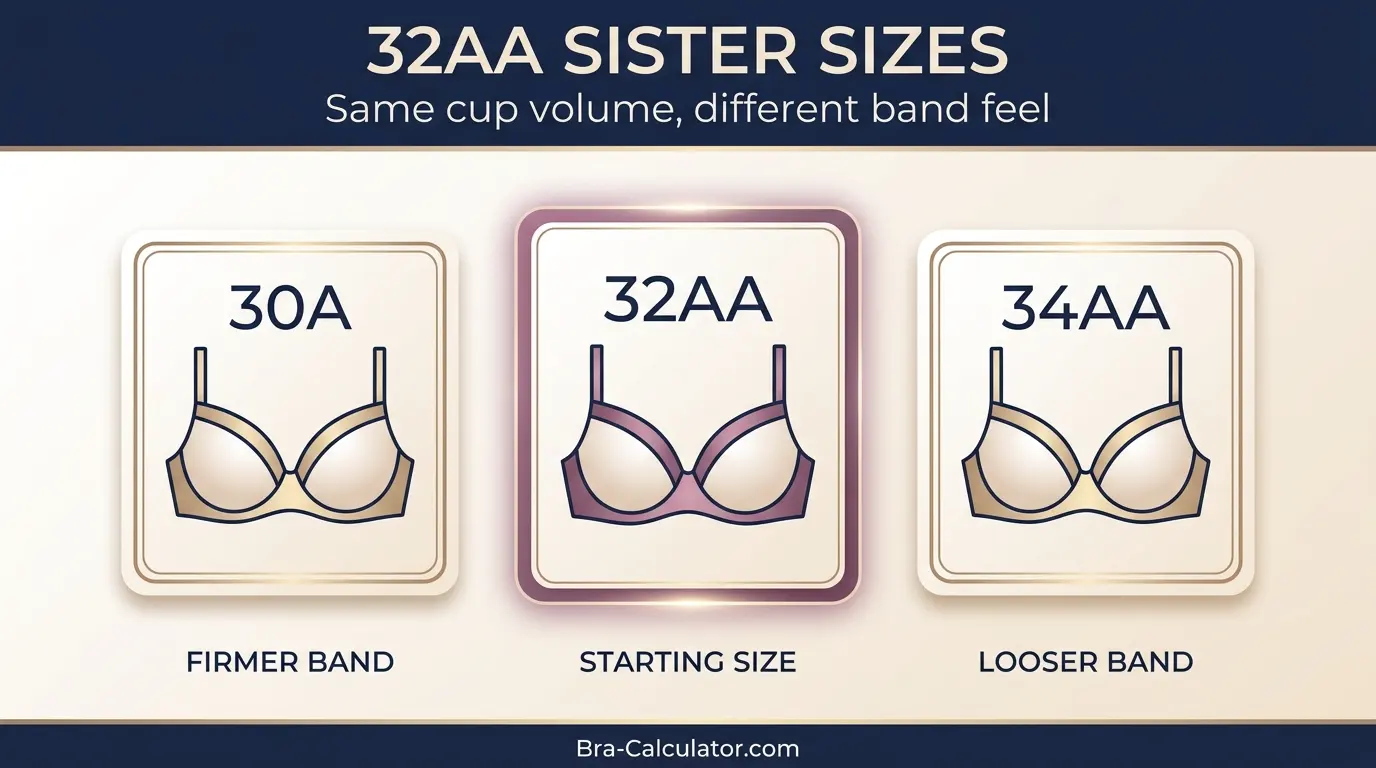
| Fit Situation | Try This | Why It Helps |
|---|---|---|
| Band rides up | 30A | A firmer band can keep similar cup capacity while improving support. |
| Band digs painfully even on the loosest hook | 34AA | A roomier band can reduce ribcage pressure while staying close in cup volume. |
| Cups spill but band feels right | Stay at 32 band and try the next cup up | The issue is likely cup capacity or shape, not the band. |
| Cups gap but band feels right | Stay at 32 band and try a smaller or shallower cup | The cup may be too tall, deep, or open for your shape. |
How to Diagnose a 32AA Bra
- The 32 band should sit level from front to back without riding toward the shoulders.
- You should be able to fit about two fingers under the band, but it should not slide easily.
- If the band feels loose, test 30A. If it feels painful, test 34AA.
- The cup should hold all breast tissue after scoop-and-settle.
- Spillage suggests more cup depth or a more open style may be needed.
- Wrinkling or gaping suggests the cup may be too large, too tall, or too projected for your shape.
- The center gore should sit flat or comfortably close, depending on body shape and cup style.
- A floating gore often points to insufficient cup depth, too-loose band tension, or close-set tissue needing a plunge.
- Hard pressing at the sternum can mean the gore is too tall, too wide, or the band is over-tightened.
- Straps should fine-tune the lift, not carry most of the support.
- Digging straps usually mean the band is loose, the cup is wrong, or the bra lacks structure.
- Slipping straps can come from a loose band, narrow shoulders, or cups that are not filled correctly.
Best Bra Styles for 32AA
For 32AA, prioritize smooth cup edges, stable band tension, and avoiding cups that are too tall or too open. The best styles usually include lightly lined, demi, wireless contour, and soft T-shirt bras, but the final choice depends on shape and daily use.
Good for checking smoothness under clothing and identifying cup-edge problems quickly.
Helpful when molded cups feel too shallow, too tall, or too rigid for your shape.
Centers breast tissue and improves containment, especially on smaller bands with more cup volume.
Useful for close-set tissue or when a high center gore feels uncomfortable.
Separates and supports each side better than simple compression during movement.
Can feel comfortable at first but often hides band and cup problems instead of solving them.
Common 32AA Fit Problems
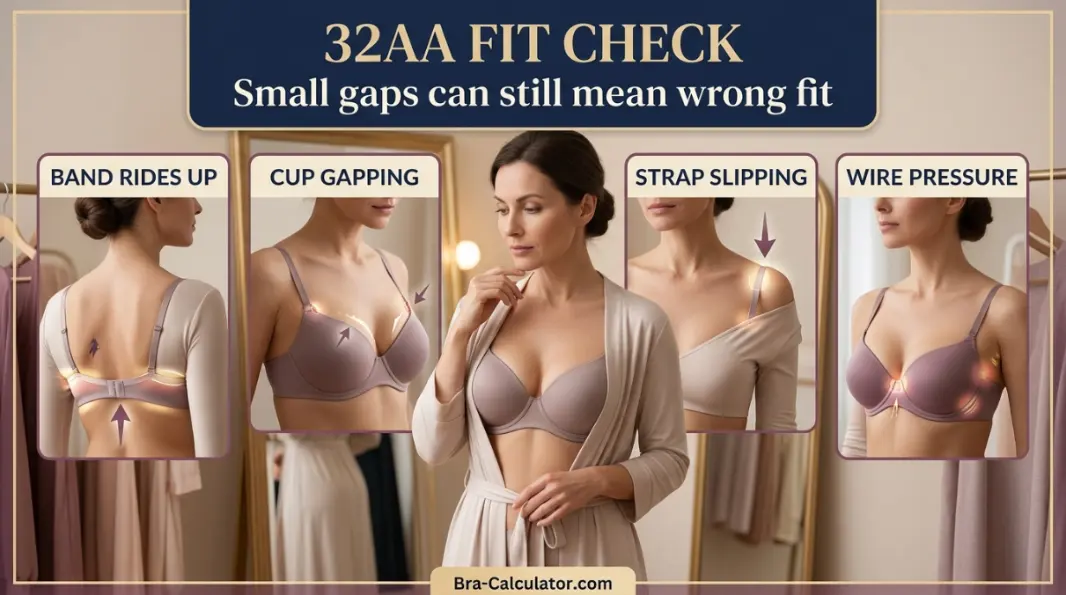
The band is not anchoring the bra, so the cups and straps start compensating.
The cup may be too small, too closed on top, or too shallow for your tissue shape.
The cup may be too tall, too projected, or not suited to your upper fullness.
The cup may be too narrow or the side panel may not surround the full breast root.
Straps are doing too much work because the band or cups are not providing enough support.
International Conversion Notes for 32AA
International sizing is especially important on 32-band pages because the band converts cleanly, while cup labels can shift by country and brand. A US 32 band usually maps to EU 70 and AU/NZ 10, but the cup letter should always be checked against the brand chart.
Use the Global Bra Size Converter and Brand Size Decoder before buying from international brands, especially for DD/E/F/G/H/I/J/K cup labels.
Related Tools & Guides for 32AA
| Guide / Tool | Why It Helps |
|---|---|
| Bra Size Calculator | Calculate your starting size from real underbust and bust measurements. |
| Sister Size Calculator | Compare 30, 32, and 34 band options without losing cup-volume logic. |
| Cup Size Visuals | Understand why the same cup letter changes when the band changes. |
| AI Smart Fit Bra Calculator | Diagnose gaping, spillage, strap digging, band riding, and gore issues. |
Frequently Asked Questions
A 32AA usually starts with a snug underbust around 29–31 inches, then uses the full-bust difference to estimate the cup. In many charts, AA cup represents less than 1 inches of bust-to-underbust difference, but brands can vary.
32AA is a real size, but availability depends on the cup. Smaller cups are often easy to find, while fuller 32-band sizes may require full-bust or UK-focused brands.
The most practical nearby sister sizes are 30A on a tighter band and 34AA on a looser band. These are starting points, not automatic replacements.
The band should sit level, the cups should contain tissue smoothly, the straps should not carry most of the weight, and the center gore should sit flat or comfortably close.
The strongest options are lightly lined, demi, wireless contour, and soft T-shirt bras. The best style depends on tissue shape, root width, projection, and how much daily support you need.
Gaping can mean the cup is too tall, too open, or too large for your shape. Spillage can mean the cup is too small, too shallow, or the band is shifting out of place.
A 32 band usually converts to EU 70 and AU/NZ 10. Cup labels vary by brand, especially from DD/E upward, so always check the specific brand chart.
Remeasure after weight changes, pregnancy, breastfeeding, major training changes, surgery, or whenever your bra starts riding up, slipping, digging, gaping, or spilling.
Check Your Best 32-Band Fit
Use measurements, sister sizes, and real fit symptoms to decide whether 32AA, 30A, 34AA, or a nearby cup gives the cleanest support.