If your bra doesn’t fit after weight loss, remeasure before choosing a smaller replacement. Weight loss may change your underbust measurement, breast volume, upper-cup fullness or several of these at once. A riding band usually signals reduced band support; cup gaping may mean lower volume, a new breast shape, or a loose band allowing cups to move. There is no reliable pounds-to-cup-size formula, so begin with current measurements and then confirm fit in a real bra.
Bra Fit After Weight Loss at a Glance
| Fit Sign | What It Can Mean |
|---|---|
| Band rides up or shifts easily | Your underbust is smaller now, the band has stretched with wear, or both; straps cannot replace a stable band. |
| Cups gape at the top | You may have less upper fullness, lower cup volume or a rigid cup shape that no longer follows your tissue. |
| Whole cup looks empty | When the band is secure, the cup may genuinely be too large for your current breast volume. |
| Straps begin slipping | The entire bra may be moving because the band is loose, or cups/strap placement may no longer suit your shape. |
| Wire extends beyond breast tissue | A previous cup may now be too wide or voluminous, or the wire shape is no longer compatible. |
| Weight is still changing | Measure now for comfort, but avoid building a large bra wardrobe until fit becomes more stable. |
How Weight Loss Affects Bra Size and Fit
A bra is built around two measurements: the band, which anchors around your ribcage, and the cup, which holds breast tissue in a particular volume and shape. After losing weight, either measurement can change, and the visible result is not the same for every person. Some wearers mainly notice a loose band. Others notice cup gaping, a softer upper cup or underwires that sit outside their present breast root.
Breasts contain fatty tissue, so breast volume can reduce with overall fat loss. However, the amount of breast change differs from person to person. Someone may lose inches around the torso with only a small cup adjustment, while another person may find that cup fullness changes more noticeably. That is why guessing a new size from the number of pounds lost is unreliable.
Shape matters as much as the number on the label. A firm molded T-shirt bra that previously sat smoothly may begin to gape when upper fullness decreases or tissue becomes softer. A stretch-lace or seamed cup can sometimes fit better at a similar size because it adapts to the current shape rather than holding a rigid preformed outline.
Fit truth: A bra that feels wrong after weight loss does not automatically require only a smaller cup. Always check the band anchor first, because a loose band can make the cups lift away from the body and imitate a cup-size problem.
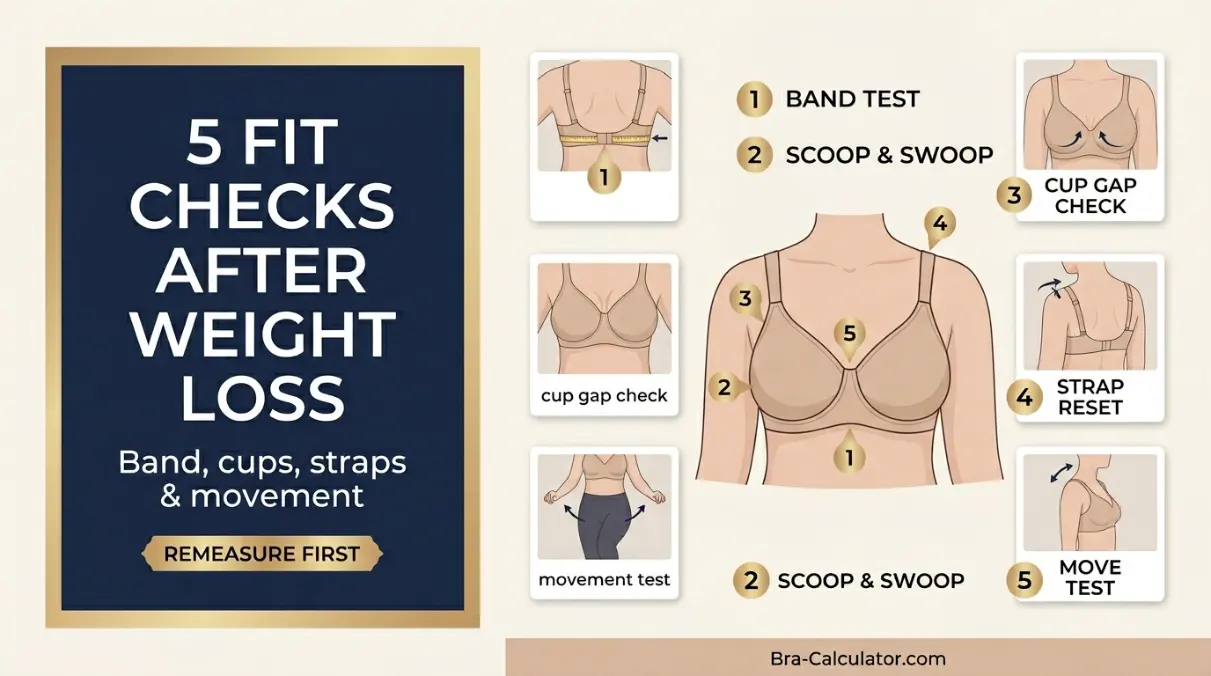
Five Checks When Your Bra Doesn’t Fit After Weight Loss
Work through these checks before shopping. The goal is to identify whether the first failure is the band, cup capacity, cup shape or strap position.
Wear the bra on the loosest comfortable hook and check whether the band stays level when you raise your arms. A band that rises, rotates or pulls far away from the body is no longer giving reliable support.
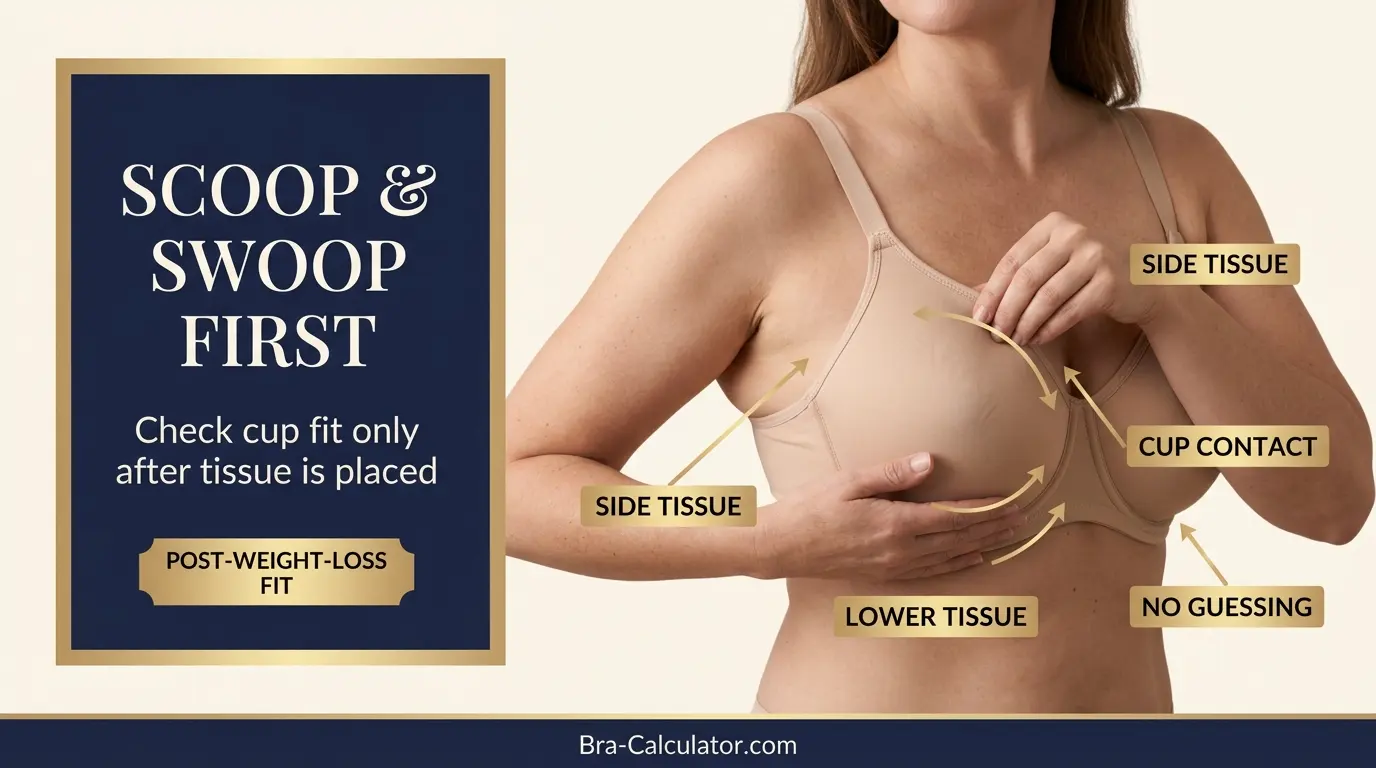
Lean slightly forward and gently bring tissue from the sides and below into each cup. Only judge cup fit after tissue is positioned; otherwise an apparently empty cup can be misleading.
Top-edge gaping can indicate less upper fullness or cup-shape mismatch. Empty space throughout both cups on a stable band more strongly suggests reduced cup volume.
Shorten straps only enough to remove slack. If straps must be pulled painfully tight to create lift or flatten gaps, the band or cup is likely the real issue.
Sit, reach upward and bend gently. A good replacement should remain anchored without cups collapsing, straps slipping or wires shifting far beyond breast tissue.
| Your Test Result | Likely Issue | Best First Change |
|---|---|---|
| Band rides up even when straps are relaxed | Band is too loose or stretched | Remeasure underbust and test a firmer band. |
| Top gaps but lower cup is filled | Cup shape/fullness mismatch | Try flexible or shorter cup designs before sizing down. |
| Both cups remain roomy overall | Cup volume may be too large | With a stable band, compare one cup size smaller. |
| Cups gap and band moves | Band must be corrected first | Do not judge final cup size on an unstable band. |
| Only one cup gaps | Natural asymmetry may be visible | Fit the fuller side; fine-tune the smaller side. |
See Which Change Is Causing Your Fit Problem
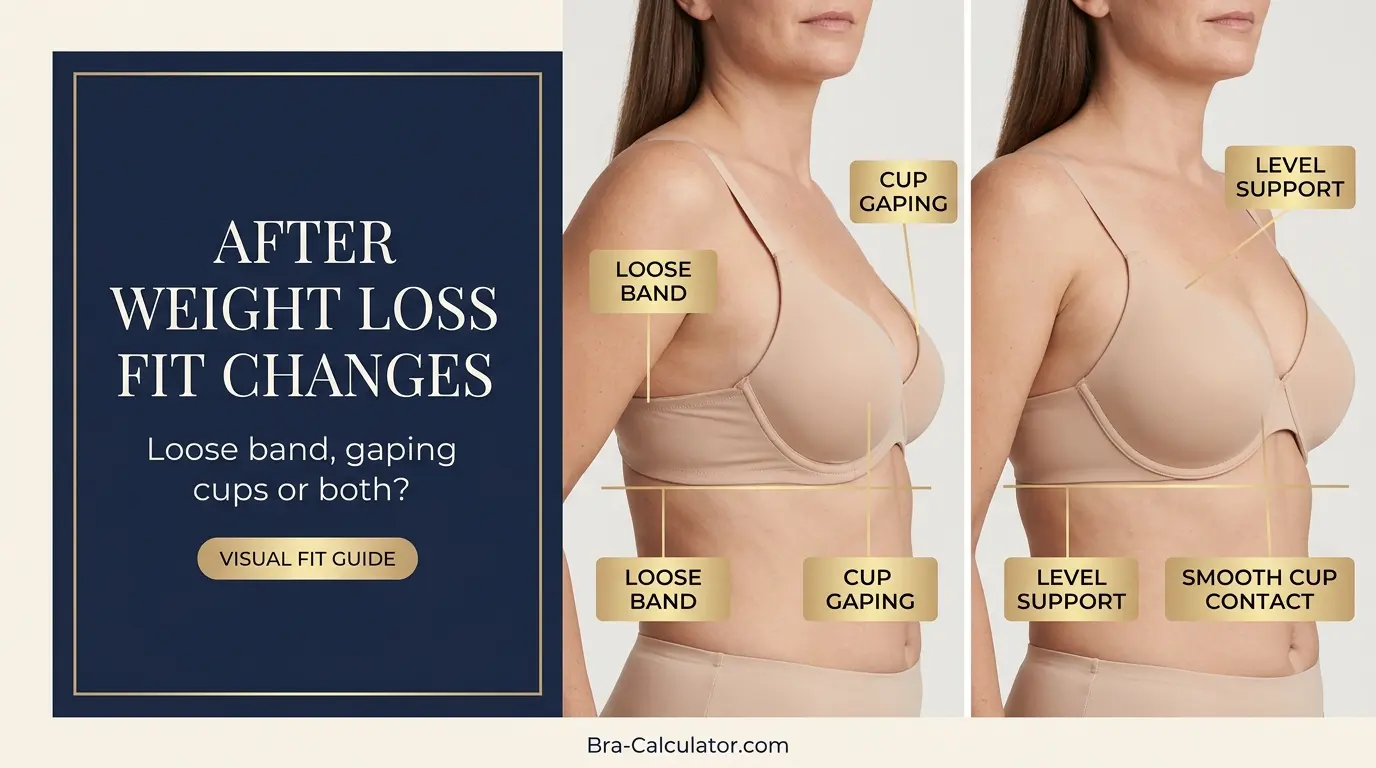
After weight loss, the same old bra can fail in different ways. These visual checkpoints help readers distinguish a support problem from a cup-volume or cup-shape problem before purchasing a replacement.
1. Scoop & Swoop First
Move side and lower tissue fully into the cup before judging gaps, wrinkles or spillage.
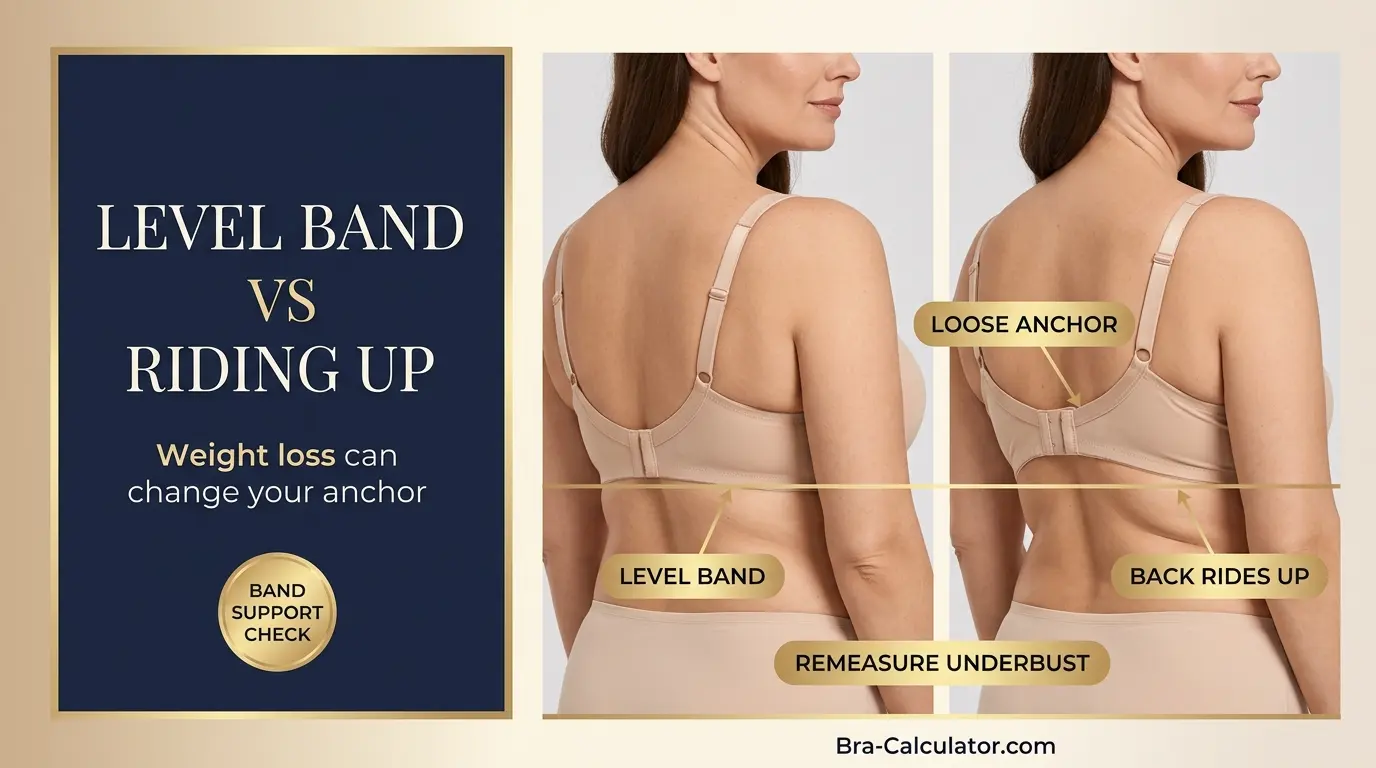
2. Level Band vs Riding Up
A rising back band usually means the support anchor is too loose, even if cup symptoms are visible.
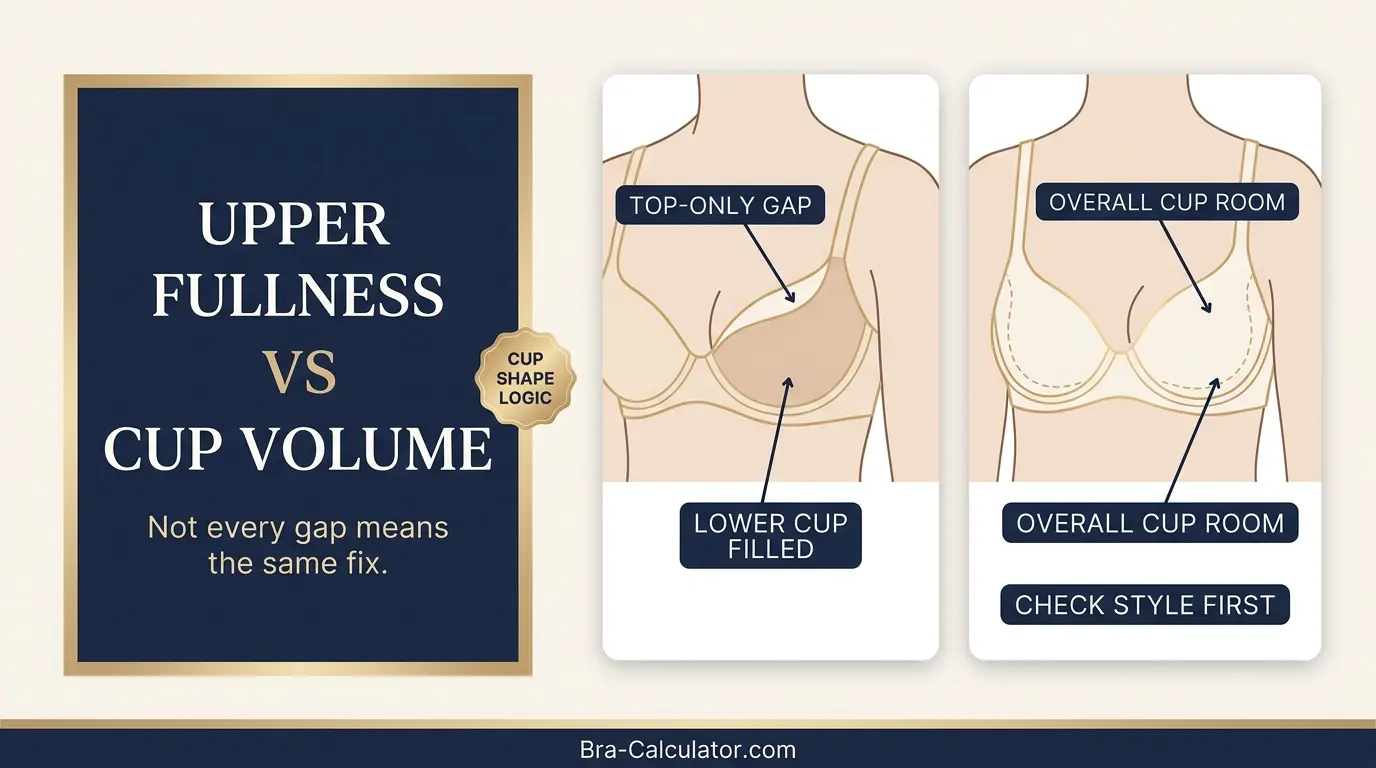
3. Upper Fullness vs Volume
Top-only gaping can need a different cup shape; empty space throughout the cup may need a smaller volume.
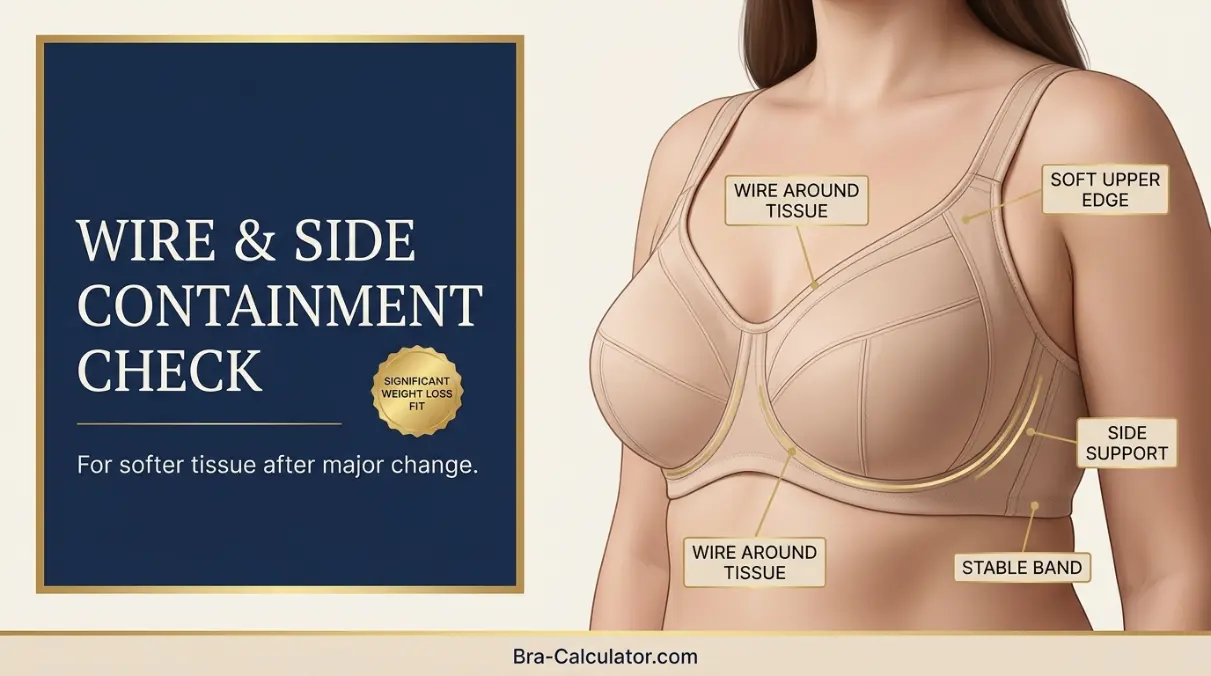
4. Wire & Side Containment
When tissue is softer or skin is looser, a well-positioned wire and side-support panel may improve containment.
Why Your Old Bra May Stop Fitting
1. Your Band Measurement Is Smaller
If weight has reduced around your ribcage, the old band may no longer sit firmly and level. A loose band transfers too much work to straps and lets cups drift away from your body.
2. Breast Volume Has Reduced
When cup capacity is now greater than your breast tissue needs, you may see empty space, loose fabric or wires that feel wider than before.
3. Upper Fullness Has Changed
Even without a dramatic cup-size difference, reduced upper fullness may make taller or rigid cups stand away at the neckline.
4. Your Straps Are Compensating
When the band no longer anchors support, you may keep shortening straps. This can cause shoulder digging while the bra still feels unstable.
5. Your Old Bra Has Also Stretched
If weight loss took place over months, your favourite bras may have aged at the same time. Elastic fatigue can amplify fit symptoms and make size changes look larger than they are.
Loose Band, Gaping Cups or Slipping Straps: Which Comes First?
When several problems appear together, begin with the band. A band that no longer anchors the bra can create secondary signs: cups tipping forward, straps slipping, and reduced lift. Correcting only those secondary signs can leave you with another uncomfortable bra.
| What You Notice | What It Often Suggests | Avoid This Mistake |
|---|---|---|
| Band rides up while cups shift | Underbust support is no longer firm enough | Do not just tighten straps to pull the bra down. |
| Top-cup gaping on an otherwise stable band | Reduced upper fullness or cup construction mismatch | Do not automatically jump several cup sizes smaller. |
| Entire cup wrinkles after scoop-and-swoop | Cup capacity may now be too generous | Do not ignore wire width and cup shape. |
| Straps slip repeatedly | Band movement, roomy cups or outer-set strap placement | Do not overtighten until shoulders hurt. |
| Wire sits well beyond tissue | Cup volume or wire shape may no longer match | Do not continue wearing a shifting, unsupportive bra. |
Related symptom: When the back band is no longer stable, use the bra band too loose guide. When straps repeatedly slide after the band is corrected, review bra straps falling off.
How to Remeasure After Weight Loss
Use your current body measurements rather than adjusting around an old label. A calculated result is a starting point, and your final choice should also pass real fit checks for band stability, cup contact, wire comfort and movement.
Place the tape directly beneath the bust, keeping it level and snug without painful compression. This tells you whether your band foundation has changed.
Keep the tape horizontal and avoid flattening soft tissue. After weight loss, breast distribution can change, so a fresh bust measurement is more useful than an old cup tag.
Enter current measurements in the Bra Size Calculator. Use the result as your fitting starting point, then compare nearby sizes or shapes only if fit signs show a reason.
A new band should feel secure on the loosest comfortable hook so there is room to tighten gradually as elastic relaxes through wear.
Scoop tissue into the cups, move your arms, sit and bend gently. Keep a bra only if the band stays stable and the cups remain smooth and supportive.
Measure Consistently While Your Body Is Still Changing
Measurements can shift during active weight loss, across the menstrual cycle, during pregnancy or postpartum recovery, and with hormonal transitions. A measurement is a useful starting point, not a verdict about your body or a promise that every brand will fit the same way.
Use Consistent Conditions
For comparison over time, measure in a non-padded bra or without a bra, using the same tape method and similar time-of-day conditions whenever practical.
During Active Weight Loss
Buy only enough well-fitting bras to stay comfortable now. Retest fit when the band begins shifting, cups gape or sports support changes.
Pregnancy, Postpartum or Hormonal Change
Weight loss may overlap with tissue and fullness changes caused by hormones, pregnancy, nursing or menopause. This can change style needs even when measurements look close.
Why Bra Size Changes After Weight Loss Look Different on Every Body
Body change is individual, and bra-fit solutions should reflect that. One wearer may need a smaller band while preserving similar cup capacity; another may need a different cup volume and a more adaptive cup style. The pattern of symptoms matters more than any single assumption.
Band No Longer Anchors
Your cups may move or gape simply because the old band now rides up.
Band firstTop Cup Stands Away
Rigid or tall cups may gape even when the overall size is close.
Try softer cupsWhole Cup Looks Empty
On a secure band, extra room throughout the cup may indicate a smaller cup is needed.
Recheck volumeFit Keeps Shifting
Choose adaptable everyday options and remeasure before investing in several bras.
Buy graduallyBra Fitting After Major Weight Loss, Bariatric Surgery or GLP-1 Weight Loss
Larger or faster changes in weight can leave a more noticeable difference in breast volume, skin elasticity and tissue distribution. Some people experience softer tissue, increased downward settling, more visible asymmetry or loose skin that needs secure containment rather than a rigid molded silhouette. This can happen after lifestyle-related loss, bariatric surgery or weight loss while using prescribed GLP-1 medication.
When Loose Skin or Softer Tissue Changes the Fit
A bra may need to do more than reduce a cup size. Look for secure band anchoring, cups that fully contain tissue, comfortable side support, stretch upper cups that follow uneven fullness and straps that remain stable without carrying all the weight.
During ongoing loss, softer wireless or adjustable support can be useful for comfort, while a structured side-support or seamed full-coverage bra may help once a stable everyday fit is needed.
| Post-Loss Situation | What to Check | Style Direction to Explore |
|---|---|---|
| Loose skin or softer, pendulous tissue | Side escape, folding at cup edge, wire sitting below the root | Seamed full-coverage or side-support cups with flexible upper edge |
| Top looks “deflated” while lower cup fills | Top-only gaping in tall cups | Stretch lace, lower neckline, demi/balconette or spacer construction |
| Breasts feel heavier during activity | Bounce, band rolling or rubbing | A newly fitted encapsulation-style sports bra rather than compressing an old loose size |
| Measurements continue dropping | Fit changes within weeks or months | Minimal transitional wardrobe and scheduled remeasurement |
Important health note
Weight loss can explain many bra-fit changes, but do not assume every new breast change is caused by weight loss. Speak with a healthcare professional about a new lump, new one-sided change, nipple discharge, persistent redness, skin dimpling or a newly inverted nipple.
Your New Fit Is Not a Failure of Your Body
Losing weight can feel positive and complicated at the same time. It is normal to be surprised when an old bra no longer creates the shape, lift or confidence you expected. A changed breast shape is not something you caused by “wearing the wrong bra,” and a changed size is not a problem to hide. It simply means your support needs have changed.
Choose comfort now
You do not need to wait for a goal weight to deserve a bra that feels secure and comfortable today.
Fit the current body
Use your present measurements and symptoms rather than trying to fit into an older familiar label.
Expect trial and error
One failed style does not mean nothing will fit; a different cup shape can make a dramatic difference.
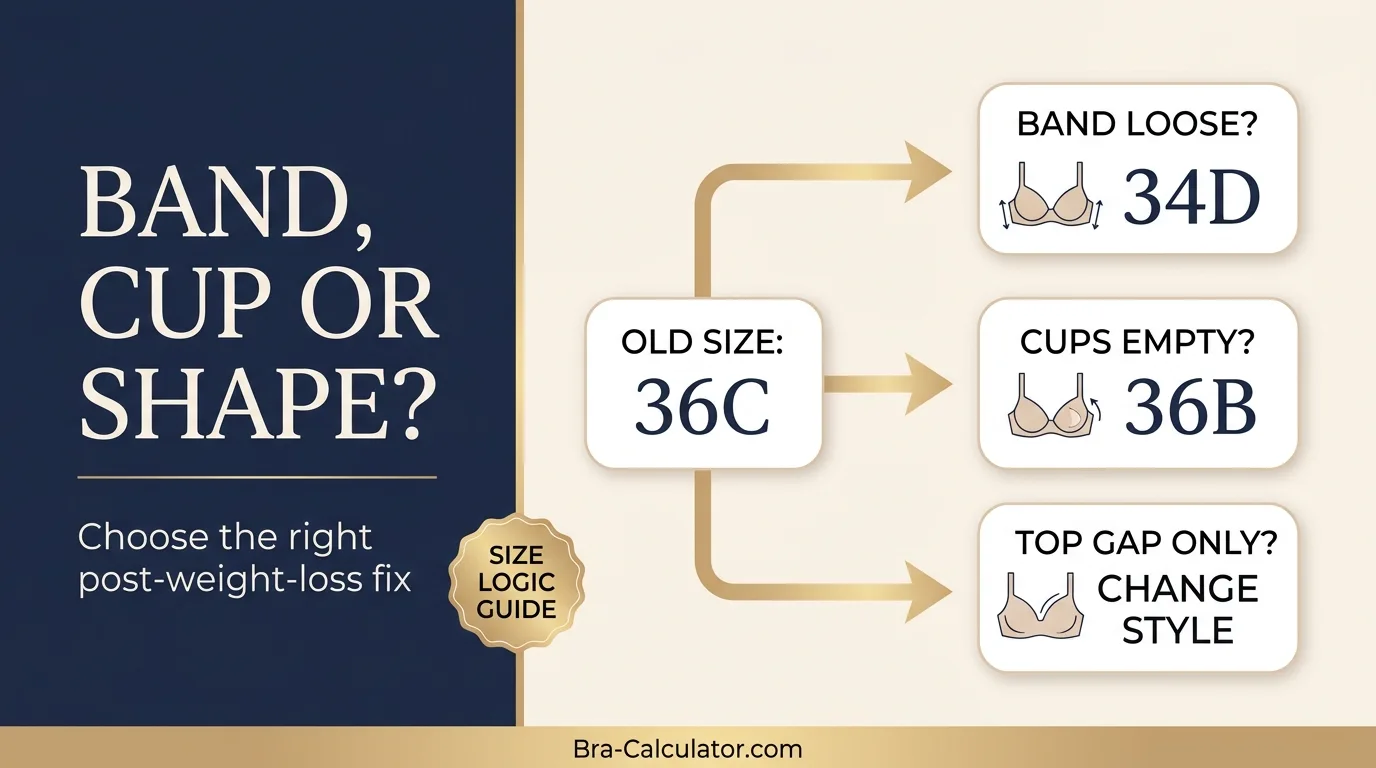
Do You Need a New Band, Cup or Bra Shape?
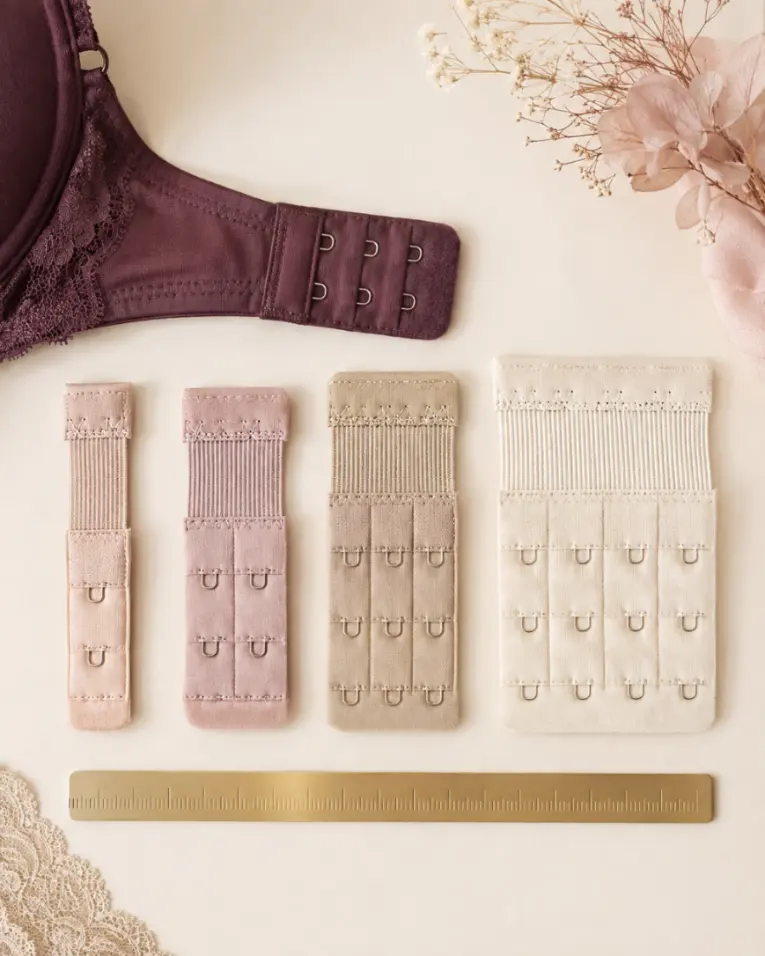
Sister sizing is useful only when you need to change band firmness while keeping similar cup capacity. It is not a solution when both the band and the cup have become too large after weight loss.
| Your Fit Signs | Try First | Why |
|---|---|---|
| Band is loose; cups look close | Smaller band with sister-size cup adjustment | The support foundation changed more than cup capacity. |
| Band is secure; cups are empty overall | Same band with smaller cup | Reduced breast volume is the main visible sign. |
| Band and cups both feel loose | Full remeasurement | Both fit dimensions may now require correction. |
| Only top of cup gaps | Different cup style first | Fullness distribution may have changed more than volume. |
| One breast shows more gaping | Fit larger breast; adjust smaller side | Weight change can make existing asymmetry more noticeable. |
What Should You Fix First?
- Band rises at the back
- Bra shifts when arms lift
- Straps feel responsible for support
- Take a new underbust measurement
- Test a firmer band
- Use sister sizing only if cup volume remains suitable
- Band feels secure and level
- Both cups show excess room
- Wire feels wider than needed
- Compare one smaller cup on the same band
- Check wire comfort and side containment
- Do not choose a cup that cuts in
- Top edge gapes but lower cup fits
- Molded bras show the issue most
- Softer tissue does not settle in rigid foam
- Try stretch-lace or seamed cups
- Compare demi or balconette shapes
- Avoid reducing cup size by guesswork
- Your body is still changing
- Current bras become loose quickly
- You are between comfortable options
- Remeasure when symptoms reappear
- Purchase essential comfort bras gradually
- Choose adjustable, forgiving constructions
Bra Styles That Often Work Better After Weight Loss
Flexible cup edges can follow softer or reduced upper fullness more naturally than rigid foam.
Useful for checking true cup contact, projection and containment when molded cups begin to gape.
Can provide stable everyday support when the new band and cup are accurately selected.
A shorter upper cup may work better if tall cups gap after upper fullness changes.
Can be gentle during transition periods, provided the band still supports and cups contain tissue.
May emphasize gaps when current tissue shape no longer matches the cup’s fixed outline.
Specific Bras to Compare After Weight-Loss Fit Changes
These examples are not a substitute for remeasuring and are not guaranteed to fit every body. They show useful construction details to look for when shopping: flexible lace, side-support panels, full containment and stable strap placement.
Soft stretch-lace, non-padded cups are designed to adjust to shape, which can be worth comparing when rigid molded cups gape after upper-fullness loss.
View official product details →Full-coverage cups, a hidden sling for side support and close-set back straps make this type of construction useful to compare when tissue needs centering and straps slip.
View official side-support range →A three-section cup with side frame and stretch-lace top cup offers a strong example of containment plus flexible edge fit, particularly in DD+ ranges.
View official product details →When to Book a Professional Bra Fitting
Get hands-on fitting help when several changes happen at once
A professional fitter can be particularly useful after major weight loss, when one breast fits very differently, wires will not stay in place, tissue escapes at the side, or you have tried several sizes without finding stable comfort. Start with retailers or boutiques that carry multiple brands and offer fittings in person or virtually.
Support Options to Consider After Remeasuring
Always calculate and check your current fit first. These everyday support categories may be useful once you know whether your replacement needs a smaller band, different cup volume or a softer cup construction.
As an Amazon Associate I earn from qualifying purchases.

Wide Padded-Strap Full-Coverage Bras
- Can help rebuild everyday support after a fresh size check.
- Wide straps may improve shoulder comfort once the band is doing its job.
- Confirm that coverage does not create top-cup gaping in your current shape.

U-Back Support Bras With Wide Straps
- A supportive back design may help reduce shifting after correct band sizing.
- Useful when strap position and stability matter during everyday movement.
- Choose current measurements rather than your pre-weight-loss label.

Wireless Comfort Bras With Cushioned Straps
- A softer option for comfort while body measurements are still settling.
- May suit relaxed or lower-impact wear when underwire feels less comfortable.
- Still confirm band support and cup containment before keeping the fit.
Problems Often Seen With Post-Weight-Loss Bra Fit
The band may slide upward or fail to hold cup position as your underbust changes.
Less upper fullness can leave empty space in tall or rigid cups without proving the entire cup is too large.
Strap slipping may follow a loose band or a changed cup/strap relationship.
Several symptoms together can make it difficult to know which adjustment matters first.
Printable Post-Weight-Loss Bra Fit Checklist
Use this short checklist before buying replacements or attending a fitting appointment.
Frequently Asked Questions
Why does my bra not fit after losing weight?
Your bra may not fit because weight loss can change your underbust circumference, breast volume, fullness distribution or a combination of these. A bra made for earlier measurements may become loose in the band, empty in the cups or unstable during movement.
Does weight loss always make your bra cup size smaller?
No. Some people notice reduced breast volume, while others see greater change in their band measurement or breast shape. There is no dependable rule that turns an amount of weight lost into an exact cup-size reduction.
Should I buy a smaller cup if my cups gap after weight loss?
Not automatically. First confirm whether the band is too loose, because an unstable band can make cups move away from the body. If the band is secure and the entire cup remains roomy, then testing a smaller cup may be appropriate.
When should I remeasure my bra size after weight loss?
Remeasure when your bra consistently rides up, gaps, slips, shifts or stops supporting comfortably. When your weight is still changing, remeasure again as symptoms return and avoid buying many identical bras until fit is steadier.
Can I use sister sizes after losing weight?
Yes, when the band fit has changed but cup capacity still seems suitable. Sister sizing changes band size while keeping similar cup volume. When both band and cups feel too roomy, take fresh measurements instead of relying on sister sizing alone.
Why do bra straps fall after losing weight?
Straps may fall because a loosened band lets the bra shift, the cups are now roomy, or the strap placement no longer suits your fit. Check the band and cups before simply tightening straps.
Are molded T-shirt bras more likely to gape after weight loss?
They can show gaps more clearly when upper fullness changes because molded cups keep a fixed shape. Stretch-lace or seamed cups may adapt more easily to current tissue shape, although correct sizing remains essential.
What is the best first step for bra fit after losing weight?
Take fresh underbust and bust measurements, calculate a new starting size, then check band levelness, cup contact, strap comfort and stability during movement. Avoid replacing the bra by guessing from an old size label.
What bra styles help after major weight loss or loose skin?
Many people prefer full-coverage or side-support bras with stable bands, adjustable straps and a flexible stretch-lace upper cup. These features can help contain softer tissue while adapting to changes in upper fullness. Fit still depends on your current measurements and comfort.
Do I need a new sports bra while I am losing weight?
Recheck a sports bra when the band moves, bounce increases, straps slip or compression becomes uneven. During active weight loss, one or two correctly fitted sports bras may be more practical than buying several in a changing size.
How often should I replace bras during active weight loss?
There is no fixed schedule. Replace or refit when the bra stops anchoring, cups no longer contain tissue comfortably or activity support decreases. If your measurements are still changing, buy a small transitional rotation and remeasure when fit symptoms return.
When should I see a professional fitter after weight loss?
Consider a fitting when you have major weight loss, pronounced asymmetry, loose skin or softer tissue that escapes cups, wires that will not sit correctly, or several unsuccessful size trials. A fitter can compare shapes and brands while you start from fresh measurements.
Your Body Changed. Find the Support That Fits Now.
Do not settle for slipping straps, gaping cups or a band that no longer anchors. Take fresh measurements today, calculate a new starting size and use the checklist above to shop with confidence.
Fit note: Bra fit can vary by brand, sizing system, elastic stretch, wire shape and breast shape. This guide provides fit education, not medical advice. Unexpected breast changes, new lumps, persistent pain or skin changes should be discussed with a qualified healthcare professional.