in 60 Seconds
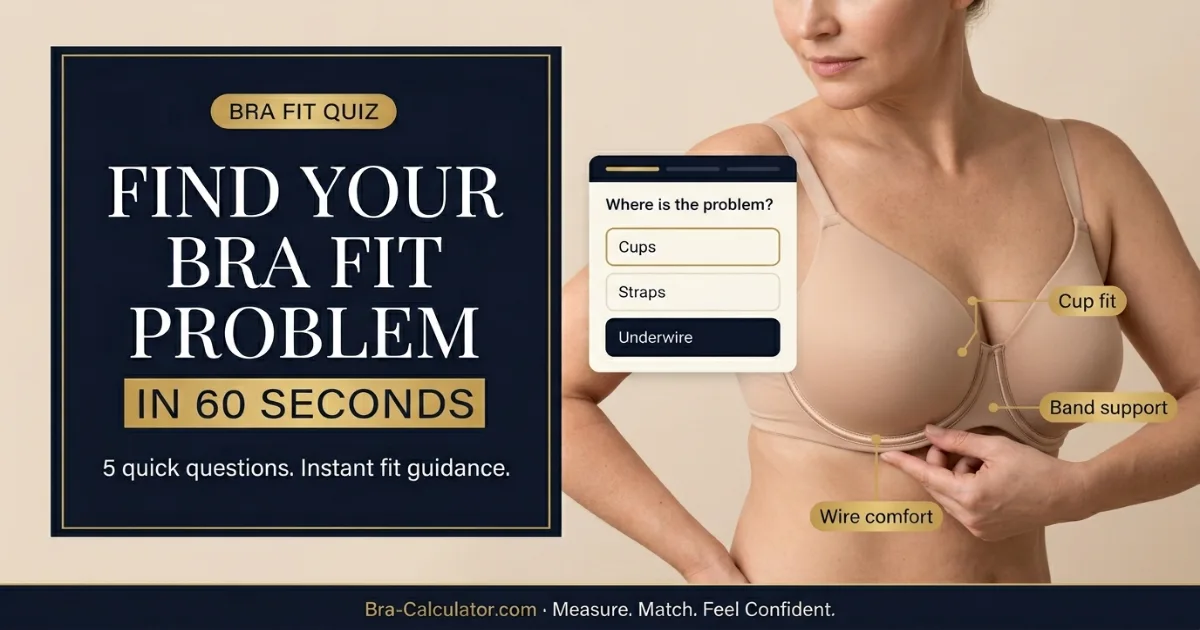
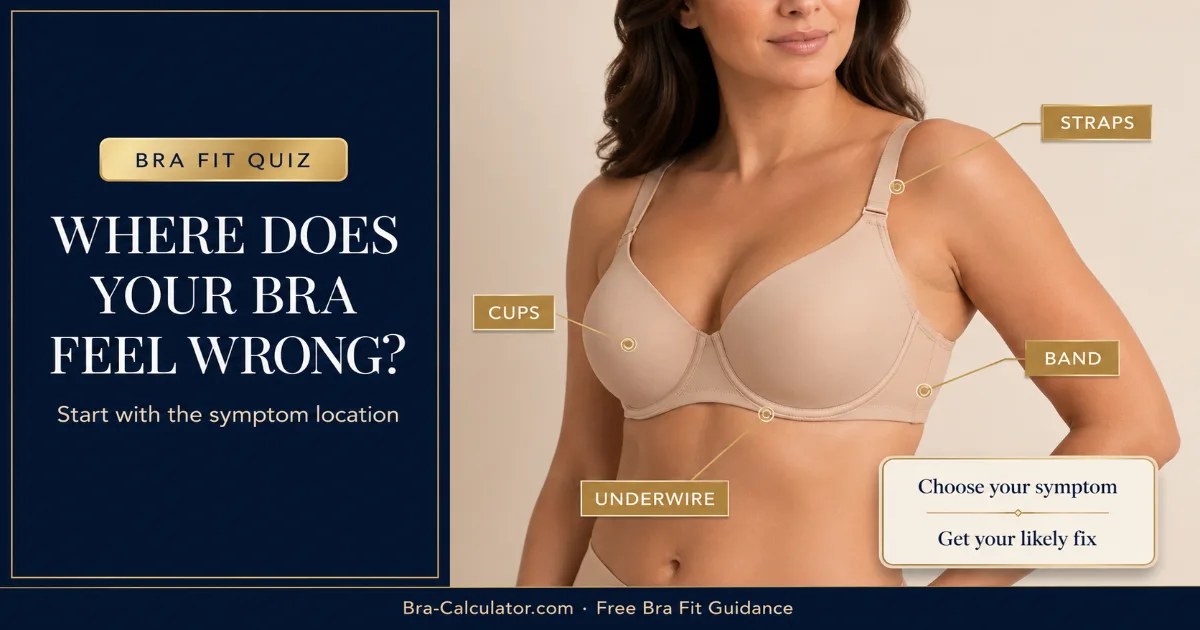
Answer 5 quick questions about how your bra feels right now. Get an instant diagnosis, the likely cause, and the exact fix — no measuring tape needed.
Pick the one that bothers you most. You can explore others after your result.
Most Likely Cause
Recommended Fix
Use the free calculator to confirm your correct size and find your ideal sister size match.
Five Questions. One Clear Answer.
Most bra fit problems have one root cause — and that cause almost always comes down to band size, cup size, or a mismatch between your breast shape and the bra style. This quiz narrows it down fast.
Describe Your Symptoms
Tell us where the problem is — band, cups, straps, underwire or general discomfort. Each answer branches to a more specific follow-up.
Get Your Diagnosis
The quiz identifies the most likely root cause based on your symptom combination — whether it’s cup volume, band size, wire width, strap position, or cup shape.
Apply the Fix
You get the exact correction: go up a cup, try a sister size, check strap width, change cup style — plus links to the specific guide and the free size calculator.
Which One Sounds Like You?
Each of these has a specific cause and a precise fix. The quiz diagnoses which applies — but here’s the at-a-glance overview.
Band Riding Up
The band rises at the back and the front drops. Almost always means the band is too large — and often the cup is also too small.
Fix: Sister size down + up cupCup Overflow or Double Bust
Breast tissue spills over the cup edge. The cup may be too small in volume, too shallow, or too closed along the neckline for your breast shape.
Straps Digging In
Shoulder grooves from straps carrying too much weight. The band is probably too loose and the straps are compensating for its lack of support.
Fix: Check band support + strap comfortCup Gaping or Wrinkling
Empty space or fabric folds in the cup. The cup may be too large, too tall, or made from a fabric that doesn’t conform to your breast shape.
Fix: Smaller cup or different shapeUnderwire Digging or Gore Floating
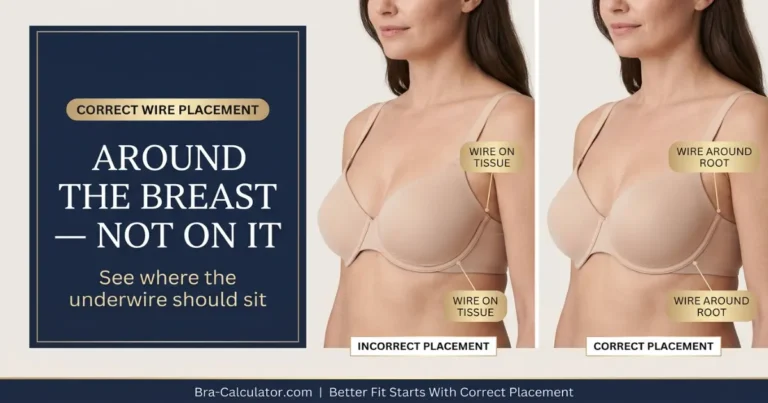
Wire sitting on breast tissue rather than surrounding it. The cup may be too small, too shallow, or the wire frame too narrow for your breast root.
Fix: Bigger cup or wider wireStraps Falling Off
Straps slide off the shoulders during wear. Strap attachment point is set too wide for narrow shoulders, or straps need shortening and repositioning.
Fix: Shorten straps or adjust width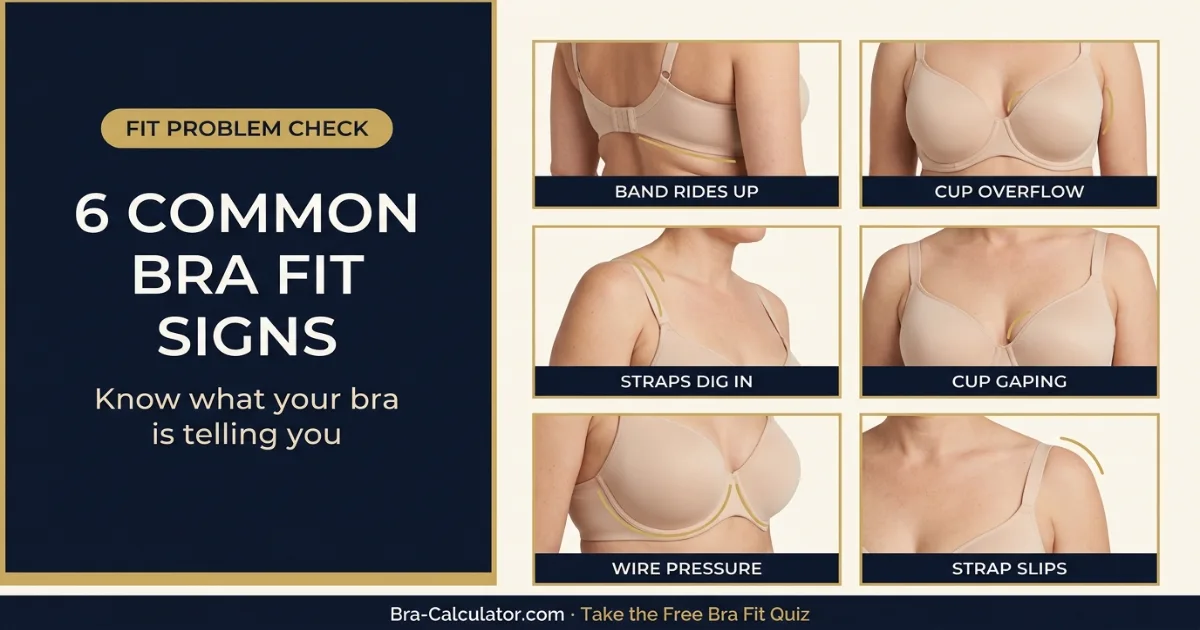
What a Perfectly Fitting Bra Actually Feels Like
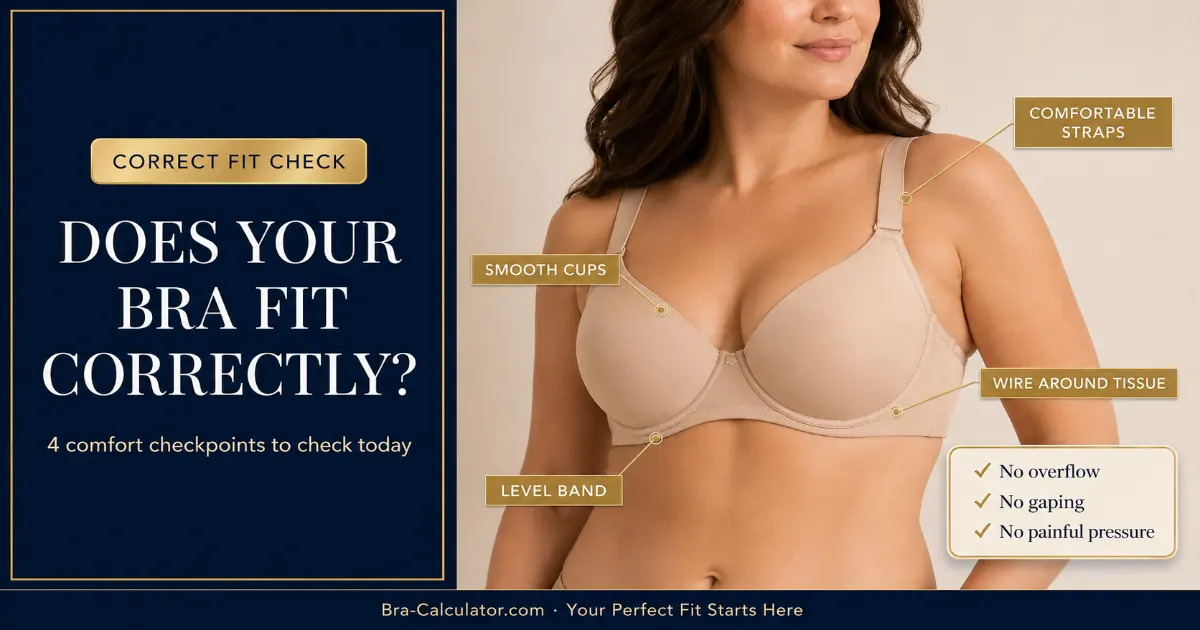
Knowing the correct fit standard is the fastest way to identify where your bra is falling short. Every item below should be true simultaneously for a bra to be considered correctly fitted.
| Component | Correct Fit | Problem Sign |
|---|---|---|
| Band | Lies level and horizontal. Two fingers slide under it at the back. Stays put when you raise your arms. | Rises at back. Digs in and marks skin. Slides or shifts throughout the day. |
| Cups | All breast tissue contained smoothly. No overflow, no wrinkles, no gaping at any point. | Tissue spills at top or sides. Empty space or wrinkled fabric. Cup digs into breast tissue. |
| Straps | Stay in place with light adjustment. Not digging in. Sit comfortably without carrying excessive pressure — the band should provide most support. | Digging grooves into shoulders. Falling off constantly. Need tightening multiple times per day. |
| Underwire | Follows the natural breast root on the chest wall and surrounds tissue without pressing across it. | Digs into side of breast or ribs. Presses on breast tissue. Pokes through casing at end. |
| Center gore | In a structured underwire style, sits comfortably near the sternum where breast spacing and bra design allow. | Floats with overflow, presses painfully, or clearly conflicts with your breast spacing and the bra design. |
Need a deeper fix after your quiz? Read the focused guides for bra cup gaping, cup spillage and overflow, side spillage and side support, underwire digging in, or incorrect underwire placement.
Shop Support Styles After Your Diagnosis
Use your quiz result first. A product style may help only when it matches the cause of your fit problem — such as fuller containment, stable positioning or a preference for wire-free comfort.

Wide Padded-Strap Full-Coverage Bras
Worth comparing after a result involving cup overflow or reduced containment. Confirm the cup size and neckline suit your shape before purchasing.
View Options on Amazon
U-Back Support Bras With Wide Straps
Useful to compare when a shifting band or unstable straps contribute to discomfort. Stability still depends on choosing the correct band and cup.
View Options on Amazon
Wireless Comfort Bras With Cushioned Straps
A softer option to compare when wire pressure bothers you or relaxed wear is the priority. Choose a secure band and enough cup coverage.
View Options on AmazonFrequently Asked Questions
What does a bra fit quiz tell you?
A bra fit quiz identifies your most likely bra fit problem based on the symptoms you describe — such as straps digging in, the band riding up, cups gaping, overflowing or wrinkling, or the center gore floating. It then explains the likely root cause and recommends the correct size adjustment or style change to fix it.
How do I know if my bra fits correctly?
A correctly fitting bra has a band that lies level and stays horizontal all day, cups that contain all breast tissue with no overflow or gaping, straps that stay in place without digging, underwires that sit completely flat on the chest wall at the natural breast root, and a center gore that lies flat against the sternum at all points. All five conditions should be true simultaneously.
What is the most common bra fit problem?
The most common bra fit problem is wearing a cup that is too small combined with a band that is too large. This typically causes the band to ride up at the back, the center gore to float away from the sternum, breast tissue to overflow the cup at the top, and the straps to dig in because they are carrying support that the loose band should be providing.
How common is it to wear an ill-fitting bra?
Ill-fitting bras are common because brand sizing varies, breast shape can change over time, and many people continue wearing a familiar size without checking how it now fits. Rather than relying on a broad percentage, look at practical fit signs: cup overflow, cup gaping, underwire sitting on tissue, straps causing pressure or a band that rides up.
Can an ill-fitting bra contribute to back or shoulder discomfort?
An ill-fitting bra can contribute to discomfort for some wearers, especially when straps dig in, breast weight feels unsupported or the band cannot anchor securely. A better fit may improve comfort, but persistent pain, numbness or symptoms unrelated to bra wear should be checked by an appropriate healthcare professional.
How often should I remeasure my bra size?
It is generally recommended to remeasure every 12 months and after any significant body change — including weight gain or loss of more than about 5 kg, pregnancy, post-breastfeeding, hormonal changes from medication, or any perimenopause-related changes in breast tissue density and distribution.
What is sister sizing in bra fitting?
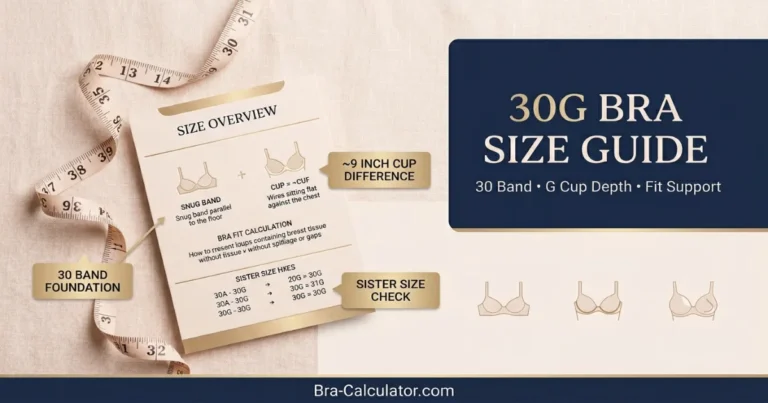
Sister sizing means moving one band size up or down while simultaneously moving one cup size in the opposite direction. This keeps the cup volume the same while changing the band size — for example, 34D and 36C are sister sizes with equivalent cup volume but different band circumferences. It is used when the cup fits correctly but the band needs to be firmer or looser.
Can I use this quiz for sports bra fit problems?
This quiz is optimised for underwire and traditional bra fit problems. Sports bra fit shares some common principles — band firmness and cup containment remain important — but sports bras have different construction, compression levels and strap designs that create different symptom patterns. Use this quiz as a starting point and apply the relevant size insights to your sports bra selection.
Ready to Find Your Correct Bra Size?
The quiz tells you what the problem is. The free bra size calculator tells you what your correct measurements are. Use both together for the most accurate fit diagnosis available.