Women’s Size Conversion Chart: US, UK, EU and AU Clothing and Bra Sizes in One Place
- A widely used pattern is US size + 4 = UK and AU, and US size + 32 = EU.
- Older charts offset US sizes by two, so check which convention a chart uses before trusting it.
- Pants and jeans depend on waist and hips, not bust, and tops depend on bust and shoulders.
- Bra sizes convert by band and cup separately: a 34 band is 75 in EU sizing, and cup letters change above a D.
- Measure yourself, then compare with the brand’s chart rather than relying on your usual size.
The conversion chart: US, UK, EU and AU
Based on the common current pattern used by many retailers. Example measurements are one retailer’s own-brand figures.
| US | UK | EU | AU | Letter (typical) | Bust (in) | Waist (in) | Hips (in) |
|---|---|---|---|---|---|---|---|
| 0 | 4 | 32 | 4 | XXS | 31 | 24 | 33 |
| 2 | 6 | 34 | 6 | XS | 32 | 25 | 34 |
| 4 | 8 | 36 | 8 | S | 33 | 26 | 35 |
| 6 | 10 | 38 | 10 | S | 35 | 28 | 37 |
| 8 | 12 | 40 | 12 | M | 37 | 30 | 39 |
| 10 | 14 | 42 | 14 | M | 39 | 31 | 41 |
| 12 | 16 | 44 | 16 | L | 41 | 33 | 43 |
| 14 | 18 | 46 | 18 | L | 44 | 36 | 46 |
| 16 | 20 | 48 | 20 | XL | Check the brand’s chart | ||
| 18 | 22 | 50 | 22 | 1X | Check the brand’s chart | ||
| 20 | 24 | 52 | 24 | 2X | Check the brand’s chart | ||
Why two size charts can disagree
If you have ever compared two charts and found different measurements for the same size, you are not imagining it. There is no single legally binding standard for women’s clothing sizes, so every chart reflects the choices of whoever wrote it. Here are two real references side by side:
| Size label | US standard-style chart: bust / waist / hip | Retailer own-brand chart: bust / waist / hip |
|---|---|---|
| US 4 | 33.5 / 25 / 35.5 in | 33 / 26 / 35 in |
| US 8 | 35.5 / 27 / 37.5 in | 37 / 30 / 39 in |
| US 12 | 38 / 29.5 / 40 in | 41 / 33 / 43 in |
The same label can differ by more than an inch in the bust and by several inches in the waist. That is why this page tells you to treat any conversion as a shortlist. Three reasons explain most of the gap:
- Different conventions. Older charts line US 2 up with UK 4 and EU 32. More current charts line US 0 up with UK 4. A two-size offset is the single biggest source of confusion.
- Brand fit models. Each brand grades its sizes from its own fit model and target customer, so “medium” means different things at different shops.
- Fabric and cut. A stretch knit and a woven shirt in the same size fit differently, which is why the charts often list “stretch” separately.
Letter sizes (XS to 2X) and what they usually mean
Letter sizes are shorthand, and they overlap. A typical pattern looks like the table below, but brands move the boundaries.
| Letter | US number (typical) | UK | EU |
|---|---|---|---|
| XS | 0 to 2 | 4 to 6 | 32 to 34 |
| S | 4 to 6 | 8 to 10 | 36 to 38 |
| M | 8 to 10 | 12 to 14 | 40 to 42 |
| L | 12 to 14 | 16 to 18 | 44 to 46 |
| XL | 16 | 20 | 48 |
| 1X | 18 | 22 | 50 |
| 2X | 20 | 24 | 52 |
Plus-size ranges (1X, 2X and up) are labelled differently across brands, and some use their own number sequences. If you are shopping a plus-size range, the garment’s own measurement table matters more than the letter. Our plus-size bra calculator and plus-size measuring guide cover the bra side of fuller-figure fitting.
T-shirt and top sizes: what to measure
Tops are driven by bust, shoulders and length. A t-shirt size chart usually lists chest or bust circumference, and many also list length, sleeve length and shoulder width. When you read one, look for these:
- Bust or chest circumference. Compare it with your own bust measurement, taken around the fullest part with a soft tape.
- Garment width versus body width. Some charts list “body” measurements (your body), others list “garment” measurements (the shirt laid flat). Do not mix the two.
- Length. If you are tall or short, length decides whether the top sits where you want.
- Fit type. Fitted, relaxed and oversized cuts of the same size fit very differently.
- Fabric stretch. A knit with elastane forgives a near-miss, while a stiff cotton does not.
If your bust is much larger than your waist and hips, you may find that tops sized to your bust feel loose elsewhere. That is normal, and relaxed-fit or wrap styles can help. If your bust has changed, check your bra size too, because a well-fitted bra changes how tops sit. Start with the bra size calculator.
Pants and jeans: waist and hips, not bust
The search phrase “bust size pants” points at a common mix-up. Pants and jeans are sized from the waist and hips (and sometimes the inseam), not the bust. A reliable approach is:
- Measure your natural waist and the fullest part of your hips. If they fall in different rows of the chart, decide by what the garment needs: waist for a fitted waistband, hips for a close-fitting skirt or trouser leg.
- Check the rise. Low, mid and high rise sit in different places, and the same size can fit differently.
- Look at the inseam. Many brands offer short, regular and long.
- Account for stretch. A stretch denim fits closer to the number, while a rigid denim may need a size up.
Women’s pants sizes follow the same number system as dresses, so the conversion table above applies. But pants are more sensitive to brand differences than almost any other garment, which is why brand-specific charts matter most here.
Bra sizes convert by band and cup
Bras follow different rules from clothing, because they have two numbers: band and cup. Bands convert fairly consistently. Cups do not.
| US and UK band | EU band | AU band |
|---|---|---|
| 30 | 65 | 8 |
| 32 | 70 | 10 |
| 34 | 75 | 12 |
| 36 | 80 | 14 |
| 38 | 85 | 16 |
| 40 | 90 | 18 |
| 42 | 95 | 20 |
| 44 | 100 | 22 |
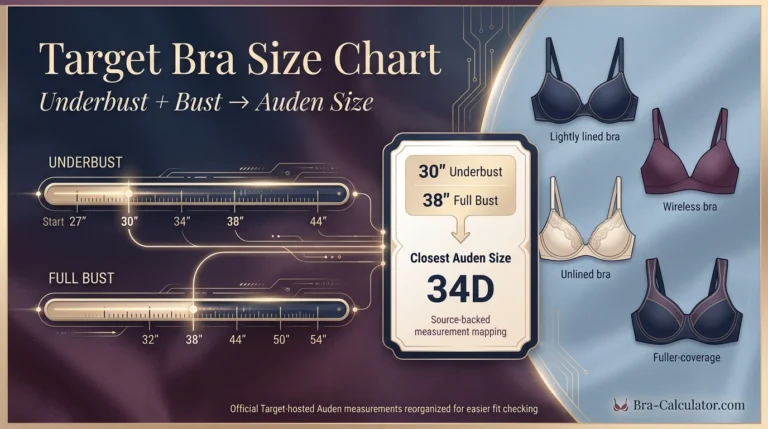
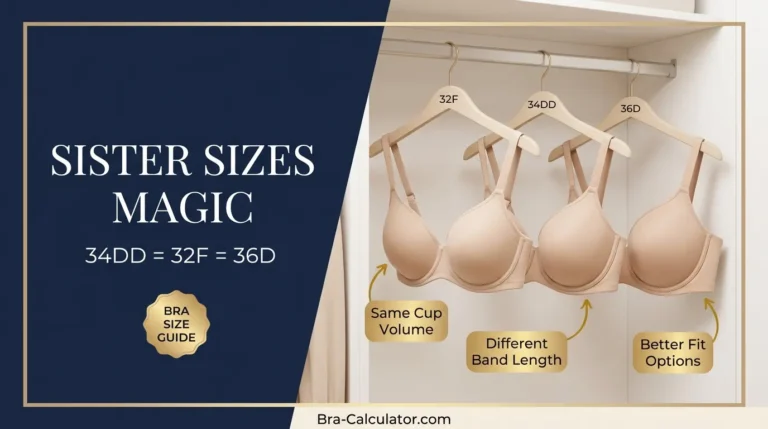
Cup letters match from A to D across US and UK sizing, and then diverge: the same cup volume can be labelled differently above a D. Our global bra size converter handles the full cup conversion. If you need a starting size, use the bra size calculator, and for a loose or tight band, the sister size calculator shows equivalent sizes. A full list of size guides lives in the bra size guides index.
How to take the measurements a chart needs
- Use a soft tape and stand naturally. Wear light clothing, relax your shoulders and keep the tape level.
- Bust. Measure around the fullest part of the chest, level at the back, not squeezing.
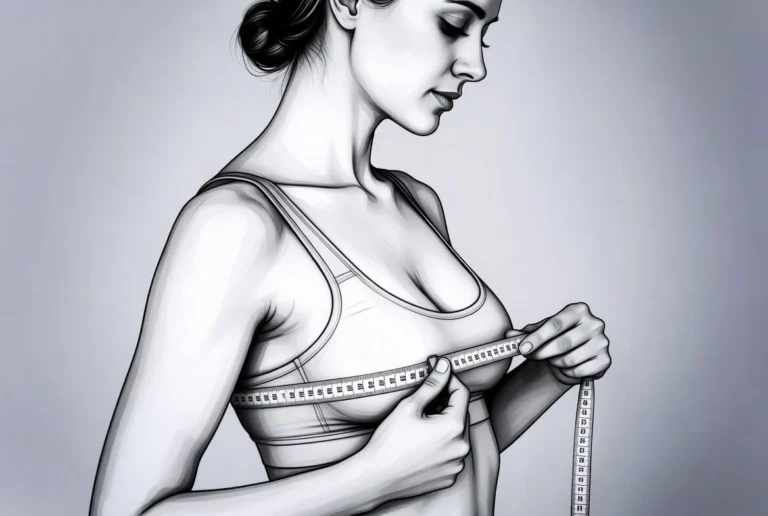
- Underbust (for bras). Measure snugly around the ribcage just under the bust while you exhale.
- Natural waist. Find the narrowest part of your torso, usually just above the navel, and measure without pulling tight.
- Hips. Measure around the fullest part of your hips and seat, keeping the tape level.
- Write them down and measure twice. If two readings differ by half an inch or more, measure again.
How to use any size chart without getting burned
- Find the brand’s chart: use the shop’s own chart before any generic conversion.
- Compare measurements, not labels: match your inches or centimeters to the chart, not your usual size name.
- Check body vs garment: know whether the chart lists your body or the garment itself.
- Read the fit notes and reviews: look for comments about sizing up or down, and for people with similar measurements.
- Consider fabric stretch: stretch fabrics forgive; rigid fabrics do not.
- Know the return policy: if you are between sizes, order both when returns are easy.
If you are between two sizes on the same chart, the bust, waist and hip that matter most for that garment type should decide it. For tops, go by bust. For pants, go by hips and waist. For dresses, check all three.
Five size myths worth retiring
Brands differ, so your number changes between shops.
Charts are approximations. Use them to shortlist.
Small, medium and large shift from brand to brand.
Bra sizes come from underbust and bust measurements.
The right size is the one that fits your measurements.
Take the same measuring tape to the calculator for a measured bra size.
Bra size calculatorGlobal bra size converterSoft measuring tapeAs an Amazon Associate, Bra-Calculator.com may earn from qualifying purchases at no extra cost to you.