Breast Size Change Estimator: Pregnancy, Weight Change & Bra Size Guide
Use this breast size change estimator to understand how your bra size may shift after pregnancy, breastfeeding, weight gain, weight loss, menopause, hormonal changes, or augmentation planning. It gives a realistic size range — not a single fantasy number — along with bra styles and timing guidance for each stage.
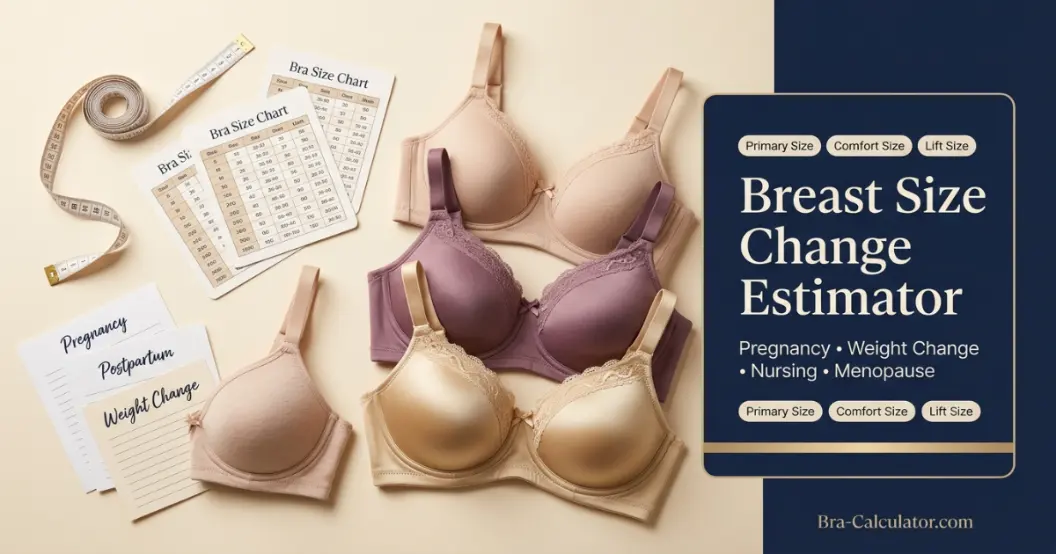
Start with your current bra size, select the reason for change, and get a primary size, comfort size, lift size, and sister sizes matched to your situation.
What Is a Breast Size Change Estimator?
A breast size change estimator is a bra-fit tool that predicts whether your band size, cup size, or both are likely to shift after pregnancy, breastfeeding, weight gain or loss, menopause, or hormonal changes. It starts with your current bra size, then uses the reason for change, fullness direction, underbust changes, and fit symptoms to suggest a realistic new size range and matching bra styles.
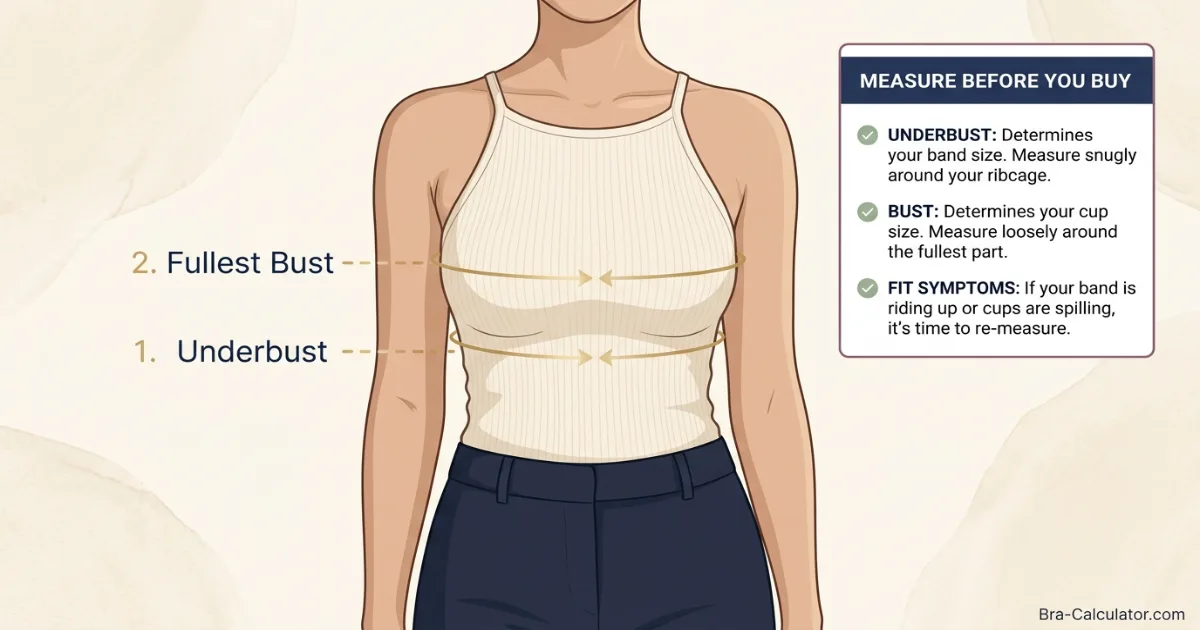
Your bra size can change even when your weight looks stable on the scale — because band fit and cup volume respond to different physiological factors. The band follows your ribcage and underbust circumference. The cup follows the difference between bust and underbust. Pregnancy can expand both; weight gain may increase both; weight loss often reduces cup volume first; and menopause can alter tissue softness even when the tape-measure number barely moves.
That is why this estimator produces a try-on range rather than one rigid answer: a primary size, a comfort size, a lift size, and sister sizes to account for brand fit variation. After you use this tool, confirm your current measurements with the free Bra Size Calculator and find sister sizes with the Sister Size Bra Calculator.
🤱 Pregnancy & Nursing
Volume, tenderness, and ribcage size often change simultaneously and at different rates. Adjustability and soft support matter more than a fixed “correct” size during these stages.
⚖️ Weight Gain or Loss
Band and cup don’t always change together. A 10–25 lb shift can change cup volume even when the underbust stays similar — or vice versa. This tool separates both directions.
🌿 Menopause & Hormones
Tissue softness, swelling days, tenderness, and upper-cup gaping can make your old size feel wrong even before a significant measurement shift occurs on the tape.
Breast Size Change at a Glance — By Life Stage
| Stage | Likely size direction | When to remeasure | Best bra type |
|---|---|---|---|
| Early pregnancy | Cup often increases first; band may still be close to pre-pregnancy | Every 4–6 weeks or when tenderness / spillage starts | Wireless, stretch cup, breathable fabric, soft band |
| Late pregnancy | Band increases as ribcage expands; cup may increase again | At each trimester shift; avoid buying multiples too early | Maternity bra, extender, wide straps, flexible band |
| Breastfeeding / pumping | Cup fluctuates by fullness and feeding schedule — day-to-day | Every 2–4 weeks early postpartum; stabilises as supply regulates | Nursing clips, pumping access, stretch cup, sleep bra |
| Weight gain | Cup often increases; band may increase if ribcage measurement grows | After each 10–15 lb / 5–7 kg change or when band marks appear | Full coverage, side support, deeper cups, smoothing band |
| Weight loss | Cup often decreases; band may decrease if underbust changes | After each 10–15 lb / 5–7 kg change; confirm once stable | Stretch upper cup, seamed cup, firmer band, balconette |
| Menopause / hormones | Softness, swelling, tenderness, or upper gaping changes fit pattern | When cycle symptoms change or old bras suddenly feel wrong | Wireless, minimizer, full coverage, cooling breathable fabric |
Breast Size Change Estimator — Get Your Size Range
Select your current bra size, the reason your body is changing, and how your fit feels right now. The estimator produces a primary size, comfort size, lift size, and sister options — plus the bra styles and timing notes for your specific stage.
Why Breast Size Changes Need a Range — Not One Exact Number
When your body is actively changing, one fixed size is often less useful than a try-on window. A nursing engorgement day, a third-trimester ribcage expansion, or a post-weight-loss soft tissue shift can make the same label feel correct at 9am and wrong by 3pm. The three-size output from this tool reflects that reality.
Primary size
The most likely size based on your current label and direction of change. Start here when your body feels relatively stable — during a consistent weight period, between feeds, or mid-trimester.
Comfort size
A more forgiving nearby option for tenderness, engorgement, swelling, pregnancy sensitivity, or ribcage expansion. Often one band size up and one cup size down from the primary.
Lift size
A slightly firmer option when band support matters most — particularly when the band rides up or when postpartum tissue has softened significantly and needs more structured containment.
How to Use Your Breast Size Change Estimate
Use the primary size as your first try-on during stable body periods. Use the comfort size on tender, swollen, or high-fluctuation days. Use the lift size when the band rides up or support feels inadequate. Never stock up during a fast-change phase — buy 1–2 bras and remeasure every 4–6 weeks.
The estimator works best as a shopping filter rather than a definitive answer. It tells you which sizes to prioritise when trying on and which bra construction will work best for your current stage. For example, if the result shows 36DD as primary and 38D as comfort, that doesn’t mean both are “equally correct” — it means one will give better band support, while the other will be kinder on tender ribs.
For a measurement-confirmed starting size, use the Bra Size Calculator after this estimator. Check brand-specific fit differences with the Global Bra Size Converter before buying internationally.
- Try the primary size first when your body feels stable
- Try the comfort size for pregnancy, tenderness, or swelling days
- Try the lift size when the band rides up or support feels weak
- Don’t stock up during fast-change stages — buy 1–2 and remeasure
- Use the Sister Size Calculator to find brand-adjusted fit options
Best Bra Styles for Changing Breast Size — By Stage
A changing breast size isn’t only a size problem — it’s a construction problem. A rigid molded T-shirt bra that worked before pregnancy or weight change can become genuinely uncomfortable when tissue is tender, fuller, softer, or unpredictably fluctuating. Here are the styles that actually work at each stage.
🤱 Pregnancy & Tenderness
- Wireless maternity bras with soft underbands
- Extra hook-and-eye rows or bra extenders
- Wide, padded adjustable straps
- Breathable cotton, modal, or bamboo blends
- Stretch cups that grow with volume changes
🍼 Nursing & Pumping
- One-hand nursing clips for single-hand feed access
- Hands-free pumping bra options or convertible styles
- Non-compressive side support (engorgement-sensitive)
- Sleep bras for overnight comfort and low-level support
- Stretch or flexible cup sizing for daily size fluctuation
📉 Weight Loss or Soft Tissue
- Stretch or lace upper cups for upper gaping patterns
- Seamed cups to restore shape to softer tissue
- Firm-level band (down-band, up-cup sister sizing)
- Side-support panels to redirect lateral tissue forward
- Balconette or full-cup seamed construction
Menopause & Hormonal Changes: A Separate Fit Logic
During perimenopause and menopause, the fit problem is often softness and distribution change rather than a major measurement shift. The same band and cup number may technically still measure correctly but feel completely different because tissue has redistributed from upper to lower cup, become softer and less structured, or become more sensitive to underwire pressure.
What usually changes
- Upper cup begins gaping despite correct cup measurement
- Underwire becomes uncomfortable at the same wire width
- Breast tissue becomes softer and more bottom-heavy
- Swelling days create band tightness even without weight gain
What actually helps
- Switch from molded cup to stretch or lace upper cup
- Try wireless styles with supportive inner structure
- Wider underwire base or minimizer construction
- Cooling, breathable fabrics for hot-flash comfort
Pregnancy, Nursing & Postpartum: A Realistic Fit Note
If you are pregnant or newly postpartum, your bra drawer does not need to be perfect — it needs to keep pace with you. Buy in small batches, choose soft adjustability over precision fit, and do not judge your long-term size from an engorgement week or swollen postpartum days.
When to buy your first maternity bra
Buy when your regular bra leaves red marks, feels tight across the band, digs in at the underwire, or causes noticeable tenderness. This is the functional signal — not a fixed trimester date. Most people first need a new bra between weeks 8 and 16, though this varies widely. → Nursing Bra Size Calculator
When to wait for a “real” postpartum size
For long-term postpartum sizing, wait until milk supply has stabilised and body weight has been consistent for at least 4–6 weeks after weaning. The first week of engorgement is one of the least reliable times to establish your new bra size. Use this estimator as a shopping range, not a permanent answer. → Post-Weight Loss Bra Calculator
Breast Size Change Estimator vs. Standard Bra Size Calculator
Both tools serve different purposes in your sizing journey. Here is exactly when to use each one:
🔄 Use this Estimator when…
- Your old size recently stopped working
- You are pregnant, nursing, weaning, or postpartum
- You gained or lost weight and don’t know which direction to resize
- You have hormonal swelling, tenderness, or menopause-related changes
- You need a try-on range before shopping — not one rigid number
- You want bra style and timing guidance for your specific life stage
📐 Use the Bra Size Calculator when…
- You can take fresh underbust and bust measurements right now
- Your size feels stable for at least 2–3 weeks
- You need exact US/UK/EU/AU conversion
- You want a full starting size rather than a change estimate
- You are ready to compare sister sizes or brand differences
For augmentation planning specifically: this estimator provides a rough bra-wardrobe size range based on projected implant volume direction, but implant choice depends on chest width, tissue coverage, implant profile, surgical plan, and healing outcomes — all of which require consultation with your surgeon.
Best Bras for Changing Breast Size — Verified Amazon Picks by Stage
Every card below is matched to a specific change stage from this estimator. Links use real verified products with your Amazon affiliate tag. Always confirm availability, your specific size range, and current pricing before purchasing.

Glamorise MagicLift Original Support Wirefree Bra
Cushioned inner lift band replaces underwire — ideal for tender pregnancy ribcage and nursing sensitivity when traditional wires become uncomfortable.
Check Price on Amazon →
Wacoal Basic Beauty Full Coverage Underwire Bra
Smooth full-coverage underwire that handles the post-weaning volume shift well — works when tissue is settling and you need consistent contained support without flex-cup variation.
Check Price on Amazon →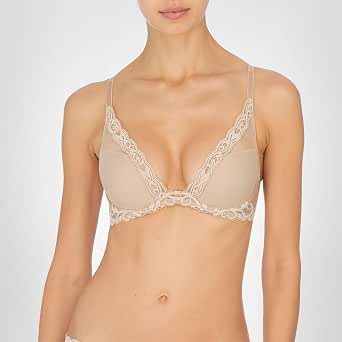
Natori Feathers Underwire Contour Plunge Bra
The flexible feather-lace upper cup adapts to reduced or redistributed post-weight-loss fullness — solving upper-cup gaping without requiring a cup-size change.
Check Price on Amazon →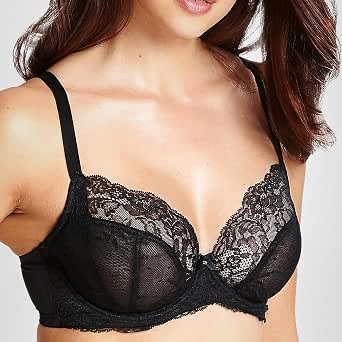
Panache Andorra Underwire Full Cup Bra
3-part seamed construction handles increasing volume from weight gain better than molded shells — maintains shape under load and lifts from the outer cup base for natural forward projection.
Check Price on Amazon →
Elomi Cate Underwire Full Cup Banded Bra
For larger cup sizes (E–N) experiencing weight-gain volume increase — the banded full cup frame with side support handles the additional lateral tissue that accompanies significant cup growth.
Check Price on Amazon →
Elomi Matilda Underwire Side Support Bra
Extended side wings and deeper band construction for postpartum and weight-change stages where the band keeps riding up — the extra wing height adds meaningful stability through fluctuation periods.
Check Price on Amazon →
Freya Deco Underwire Molded Balcony Bra
The low-centre balcony cut with J-hook option works well for hormonal / menopause soft tissue changes where you need forward projection without push-up padding and want a smooth daily silhouette.
Check Price on Amazon →
Amoena Valletta Underwire Bra
For post-surgical breast changes — mastectomy, lumpectomy, or reconstruction — the Amoena Valletta provides bilateral pockets and full coverage underwire support. Always follow your surgeon’s guidelines on bra type and timing post-surgery.
Check Price on Amazon →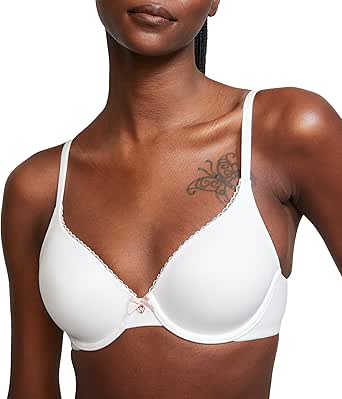
Victoria’s Secret Bombshell Push-Up Bra
For mild early weight-gain stages or hormonal fullness where you want a rounded, projected silhouette with light graduated padding rather than structural support architecture.
Check Price on Amazon →Product availability, size ranges, colours, and prices change frequently. Always check your specific size is in stock before purchasing. If a product shows as unavailable, search the exact product name on Amazon with the same construction specifications.
Breast Size Change Estimator: Expert Answers
How much can breast size change during pregnancy?
Breast size changes vary considerably between individuals. Many people need a new cup size, a larger band, or both as pregnancy progresses — particularly when the ribcage expands in the second and third trimesters. Cup volume often increases first, followed by band expansion. Using this estimator as a planning range and remeasuring every 4–6 weeks gives you the most practical approach to maternity bra shopping. See also: Nursing Bra Size Calculator.
Can weight gain change your bra cup size?
Yes. Breast tissue contains a significant proportion of fat, so weight gain can increase bust measurement and cup volume even when the underbust measurement changes less. As a general guideline: if only the bust measurement increases, the cup changes while the band may stay similar. If both underbust and bust increase, both band and cup may need adjustment. This estimator separates these two directions — which is why it asks about underbust and cup fullness independently.
Can weight loss make your bra cups gap?
Yes, and this is one of the most common post-weight-loss bra fit complaints. Weight loss can reduce cup volume or redistribute tissue from upper to lower cup, causing the upper portion of a rigid molded bra to gap even when the overall cup measurement looks correct on paper. The fix is usually cup shape — specifically a stretch or lace upper panel that flexes to meet reduced fullness — rather than simply sizing down. See the Cup Gaping Fix Guide for full detail.
When is this estimator most useful after breastfeeding?
This estimator is most useful during active breastfeeding as a shopping-range guide, and again after weaning once volume has begun to stabilise. During peak breastfeeding, cup size can fluctuate by 1–2 sizes between feeds, so any single “exact” size is inaccurate. After weaning, wait until your breasts have felt consistent for at least 4–6 weeks before using the result as your long-term bra size. The postpartum/after-weaning setting in the estimator accounts for the tissue softening and volume reduction that commonly follows.
Does menopause change your bra size?
It can, though the change is often qualitative rather than purely quantitative. Some people gain cup volume during perimenopause. Many more notice that their existing size starts fitting differently — with more upper-cup gaping, softer tissue creating a bottom-heavy distribution, or underwire becoming suddenly uncomfortable at a width that previously worked. Even when the tape-measure number stays similar, the bra construction that fits comfortably often needs to change. See the guide to best bras for sagging breasts over 50 and the Senior Bra Size Calculator.
Is this an implant cc to bra size calculator?
No. This estimator can provide a rough bra-wardrobe planning range for augmentation preparation — giving you a sense of which size range to explore post-surgery — but it is not an implant sizing tool. Implant volume selection depends on chest wall width, available tissue coverage, implant profile choice, surgical technique, and healing outcomes. All of these require consultation with your surgeon. Use this estimator only for the bra-shopping planning that happens after your surgical decisions are made with your clinical team.
What is the difference between band size and cup size change during pregnancy?
Band size and cup size change in response to different body measurements during pregnancy. Band size follows the underbust circumference — specifically the ribcage that expands as organs shift and the baby grows. This typically increases most noticeably in the second and third trimesters. Cup size follows the difference between bust and underbust measurements. Cup volume often increases earlier — in the first trimester — as breast tissue begins preparing for lactation. The two changes are independent, which is why both band and cup may need separate adjustment at different stages of pregnancy.
When should I see a doctor about breast size changes?
Seek medical advice promptly for: a new lump or thickening in the breast or underarm; sudden one-sided size or shape change; nipple discharge other than breast milk, especially if blood-stained; skin dimpling, puckering, or orange-peel texture; nipple newly pulling inward; redness, swelling, or warmth that doesn’t resolve; or persistent unexplained pain localised to one area. All breast size changes tracked by this estimator should be gradual, bilateral, and explainable by the reason you selected (pregnancy, weight change, hormonal cycle). One-sided changes or those without a clear cause warrant clinical evaluation.
When to Seek Medical Advice — Red Flag Symptoms
This estimator is for bra comfort and fit planning only. Do not use it to assess or dismiss breast symptoms.
Contact a qualified healthcare provider promptly for: a new lump or thickening in the breast or underarm; irritation, dimpling, or puckering of breast skin; redness or flaky skin around the nipple or on the breast; nipple pulling inward that is new; nipple discharge other than breast milk, particularly if blood-stained or from one nipple only; any sudden one-sided size or shape change; or pain in one localised area that does not resolve within a few days.
For breast cancer symptom reference, see the CDC: Breast Cancer Symptoms page.
Related Bra-Calculator.com Tools & Guides
Use this estimator as your first step, then follow the tools and guides below to confirm your exact measurements, address specific fit symptoms, and find bras built for your current stage.
📐 Core sizing tools
Bra Size Calculator Sister Size Bra Calculator Global Bra Size Converter Plus-Size Bra Calculator Breast Size Comparison GuideSources & Editorial Basis
This page combines Bra-Calculator.com bra-fit logic with public health references on normal breast changes during pregnancy, weight fluctuation, menopause, and the symptoms that require medical evaluation.
- MyHealth Alberta: Breast Changes During Pregnancy — pregnancy breast growth, support needs, tenderness, and trimester changes.
- HealthyWomen: Healthy Breasts Guide — weight changes and cup size, fat tissue composition, and hormonal influences.
- CDC: Breast Cancer Symptoms — red-flag symptoms and when to seek medical evaluation.
Author: Amelia B., Bra Fit Specialist — Bra-Calculator.com Editorial Team · Purpose: Educational bra-fit guidance only · Not medical advice
Confirm Your New Size With Fresh Measurements
Your estimate gives the smartest try-on range. Now pair it with fresh underbust and bust measurements so you don’t buy the wrong band or cup while your body is still changing — one wrong purchase during a fast-change stage is an expensive mistake.
Bra-Calculator.com · Educational bra-fit guidance only · Not a medical, pregnancy-care, or surgical tool · © 2026