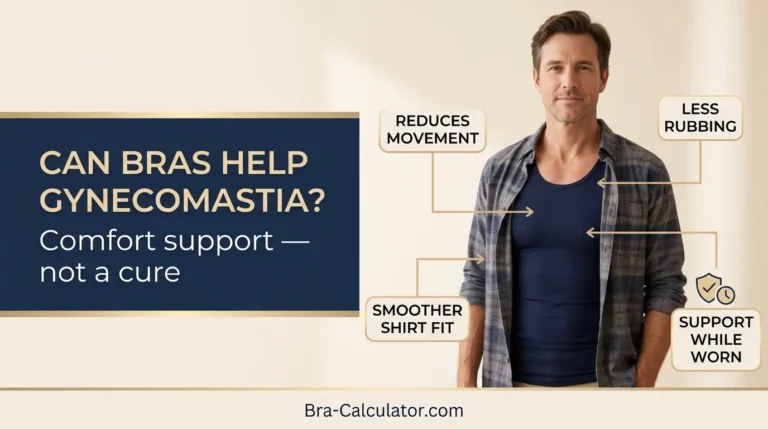
Gynecomastia stage affects how much support you may need, but it does not change the medical truth: support garments help comfort and appearance while worn, not the underlying tissue. Stage 1 often needs light or moderate compression. Stage 2 usually needs moderate compression with better coverage. Stage 3 may need firmer support, wide panels or a low-profile vest. Stage 4 usually needs medical evaluation plus comfort support, because compression alone cannot solve significant tissue volume or skin excess.
Medical disclaimer: This page is an educational support guide, not a diagnosis tool. Gynecomastia grading should be assessed by a clinician. A bra, compression shirt or vest can help movement, tenderness and clothing appearance while worn, but it cannot diagnose, treat or reverse gynecomastia.
Gynecomastia Stages Chart for Support Needs
| Stage / Severity | Support Direction |
|---|---|
| Stage 1 / mild | Light to moderate support, seamless undershirt, soft support top, low visibility. |
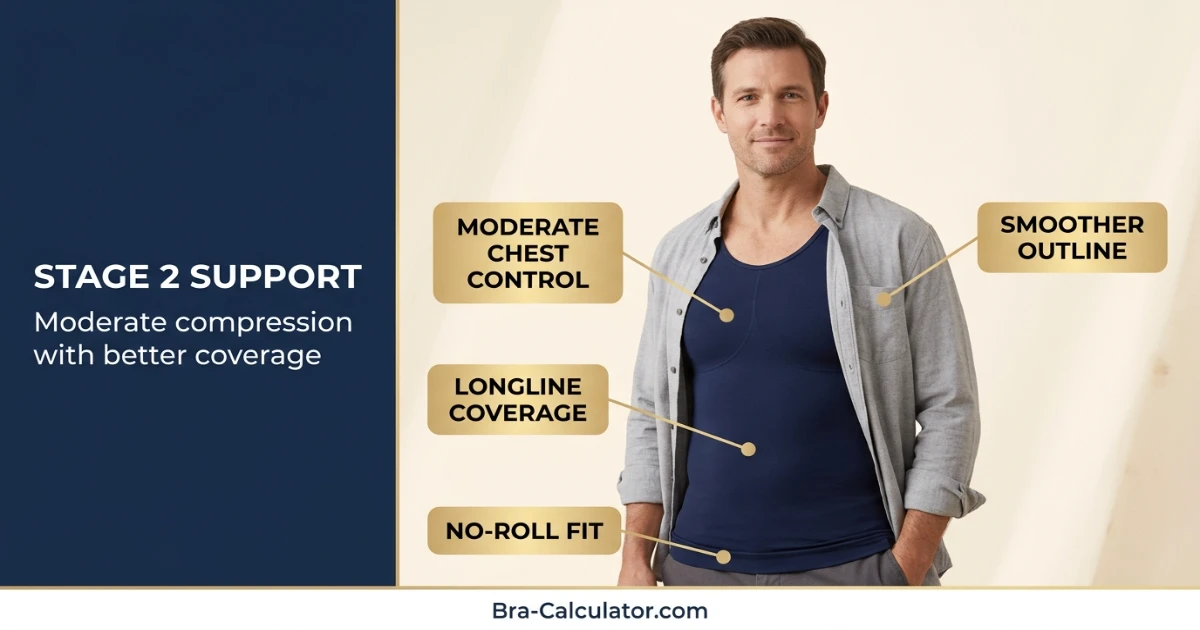
| Stage 2 / moderate | Moderate compression, better chest coverage, longline shirt if rolling happens. |
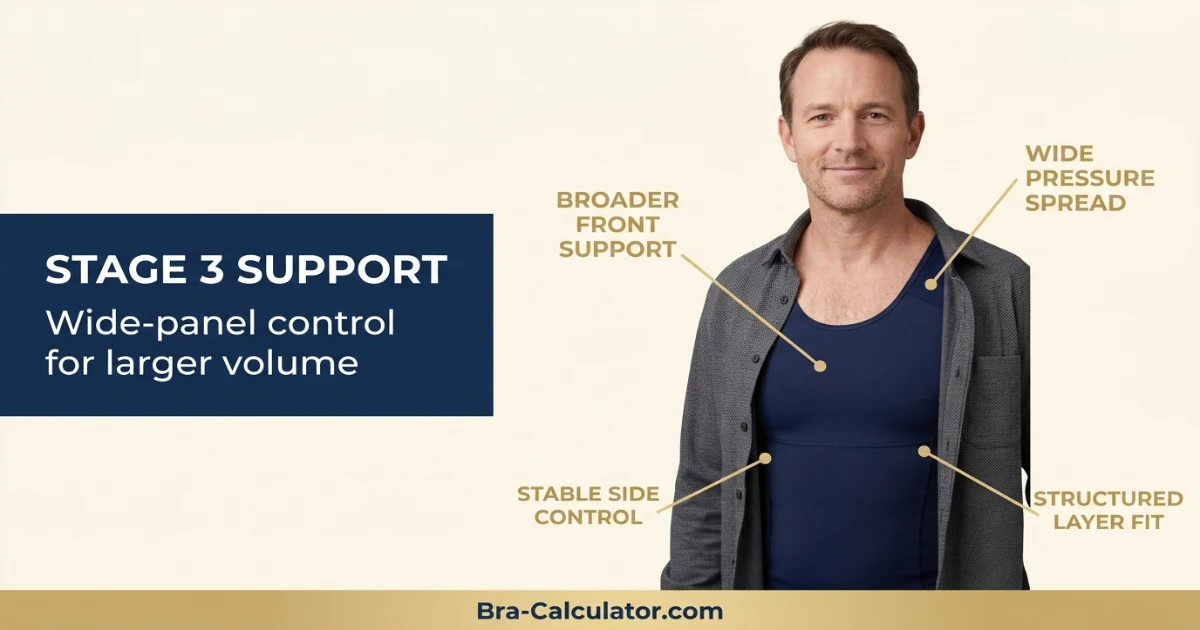
| Stage 3 / larger | Moderate-to-firm support, wider panels, low-profile vest or structured compression top. |
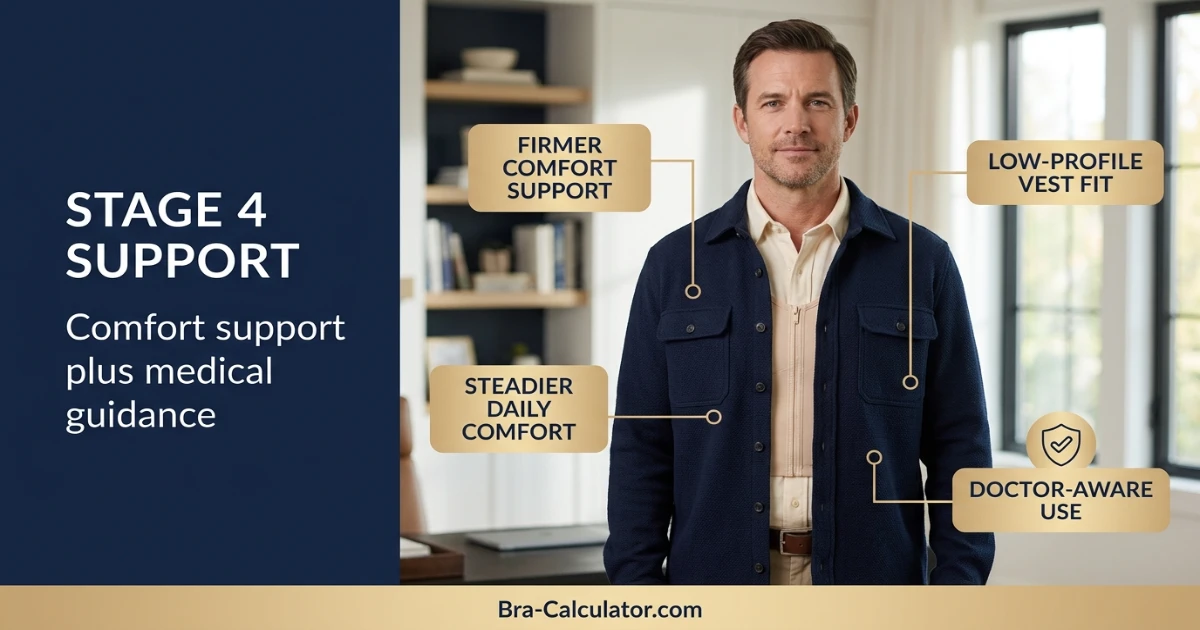
| Stage 4 / severe | Medical evaluation plus comfort-first support; compression alone is not a treatment plan. |
| Post-surgery stage | Surgeon-approved compression only. Do not self-select pressure or garment type. |
| Main rule | Match support to comfort + severity not shame, panic or maximum tightness. |
What Do Gynecomastia Stages Actually Mean?
Gynecomastia “stages” or “grades” are usually clinical ways to describe severity. A clinician may consider how much breast tissue is present, whether the chest has a small mound or larger enlargement, whether excess skin is present, and whether one or both sides are affected.
For a support guide, it is helpful to think in four practical levels: mild, moderate, larger and severe. This is not a diagnosis. It is a way to match support intensity to daily problems such as movement, tenderness, shirt outline, skin rubbing, strap pressure or compression rolling.
True gynecomastia involves glandular tissue, while pseudogynecomastia is fat-related fullness. A support garment can help the chest feel steadier and look smoother under clothes, but it cannot tell you whether the fullness is glandular tissue, fat, skin excess or another medical issue.
Important: You can use this guide to choose support, but you should not use it to self-diagnose your stage or decide whether you need medical treatment.
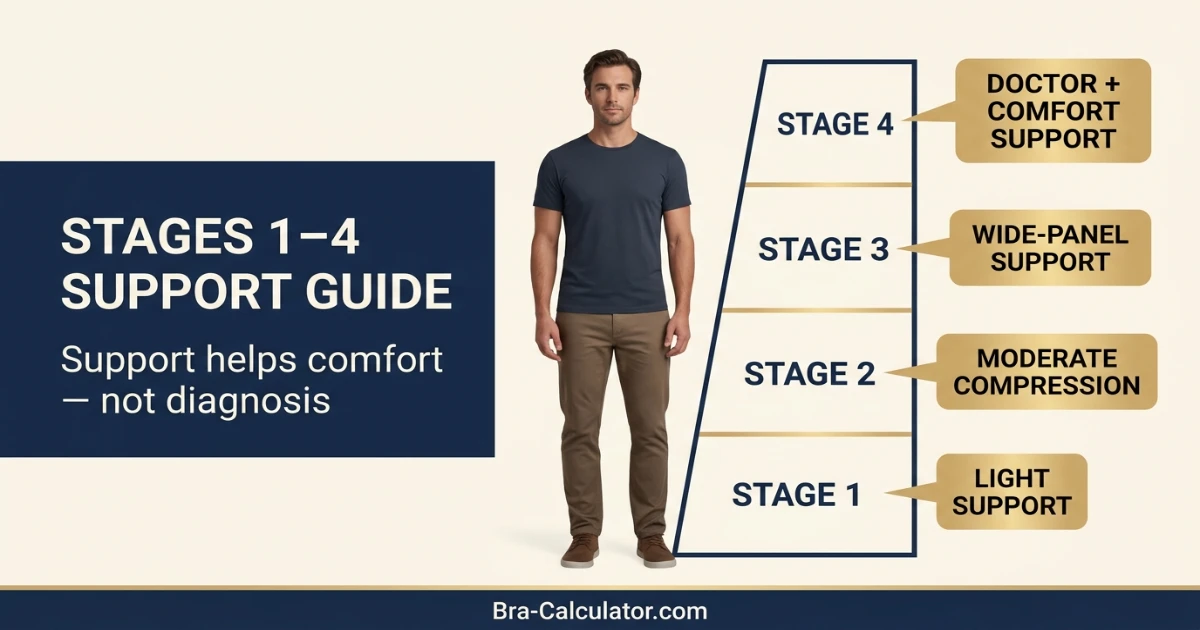
Gynecomastia Stages 1–4 Support Ladder
Mild Fullness
Small chest fullness, minor shirt outline concerns or light tenderness.
Light / moderateModerate Fullness
More noticeable shape, movement, rubbing or need for better coverage.
Larger Volume
More movement, stronger outline, possible need for structured support.
Moderate / firmSevere / Skin Excess
Significant size or skin changes where support helps comfort but medical advice matters.
Doctor + supportBra by Gynecomastia Severity: What to Try First
| Stage | Common Daily Problem | Best First Support | When to Upgrade |
|---|---|---|---|
| Stage 1 | Minor outline, mild tenderness, nipple rubbing. | Light support top or seamless compression undershirt. | If movement remains noticeable. |
| Stage 2 | Visible shirt shape, more movement, moderate rubbing. | Moderate compression shirt or longline tank. | If rolling or poor coverage happens. |
| Stage 3 | More chest movement, stronger outline, support failure. | Wide-panel compression top or low-profile vest. | If comfort, skin or fit issues persist. |
| Stage 4 | Significant enlargement, possible skin excess, daily discomfort. | Comfort-first supportive vest plus medical evaluation. | If symptoms change or support is not enough. |
| Post-surgery | Recovery swelling and medical compression needs. | Surgeon-approved compression vest only. | Only under surgeon guidance. |
| Best general start | Unsure stage or first purchase. | Measured size + moderate support | Adjust after fit tests. |
How to Choose Support by Gynecomastia Stage
Use this page for support planning only. A clinician should assess true grade, tissue type, skin excess and any concerning symptoms.
Choose based on movement, tenderness, shirt outline, rubbing, rolling, skin comfort or workout needs.
Mild cases may not need firm compression. More pressure can cause rolling, rib pressure or overheating.
Use under-chest and fullest chest measurements instead of guessing by T-shirt size.
If support fails, try better coverage, longline length, wide panels or a vest before choosing a painfully small size.
Stage 1 Gynecomastia: Mild Support Needs
Stage 1 or mild gynecomastia usually means chest fullness is present but not strongly projected. The main issues may be nipple rubbing, mild tenderness, a slight outline under thin shirts or feeling self-conscious in fitted clothing.
For mild cases, the best support is often discreet and simple. A seamless compression undershirt, light compression tank or soft support top can reduce movement and shirt friction without making the garment feel like medical shapewear.
Moderate undershirt support often gives enough smoothing without feeling obvious.
Light support can reduce rubbing while avoiding harsh pressure.
Firm compression may be unnecessary and can create more discomfort than benefit.
Stage 2 Gynecomastia: Moderate Support Needs
Stage 2 or moderate gynecomastia usually creates a more noticeable chest outline and may involve more movement during walking, stairs or exercise. A loose shirt alone may not feel comfortable or private enough.
Moderate compression is usually the best first support level here. Look for a smooth chest panel, enough coverage, matte fabric, stable hem and a length that does not roll at the stomach.
Balanced smoothing without jumping straight to firm compression.
Longer length helps when shirts ride up or bunch at the waist.
Matte seamless undershirts usually hide better under men’s clothes.
Stage 3 Gynecomastia: Larger Support Needs
Stage 3 or larger gynecomastia may involve stronger projection, more movement and more difficulty finding a garment that feels both supportive and discreet. This is where simple undershirts may start to feel too weak.
Instead of sizing down aggressively, look for better construction: wide shoulder panels, firmer chest support, stable side panels, full coverage, a longline body or a low-profile vest. Support should feel steady, but it should still allow normal breathing and movement.
Better pressure distribution and stronger chest coverage than thin compression shirts.
A structured vest can help when shirt-style support is not enough.
Strong support should not mean numbness, rib pressure or restricted breathing.
Stage 4 Gynecomastia: Severe Support Needs + Medical Evaluation
Stage 4 or severe gynecomastia is usually where support becomes more about comfort management than simple smoothing. There may be significant tissue volume, skin changes, rubbing, clothing difficulty or emotional distress.
Support can still help. A comfort-first vest, wide-panel compression top or soft supportive layer may reduce movement and friction. But compression should not be framed as a treatment. If you have significant enlargement, skin changes, pain, discharge, a lump or sudden one-sided change, medical evaluation matters.
Doctor-first reminder: Stage 4 support should be paired with medical guidance when symptoms are significant, changing or distressing. A garment may help comfort, but it cannot determine whether tissue is glandular, fat-related, skin-related or caused by another condition.
Best Support Options by Gynecomastia Stage
These are product categories, not medical treatments. Replace placeholder images and generic Amazon searches with selected products when ready.
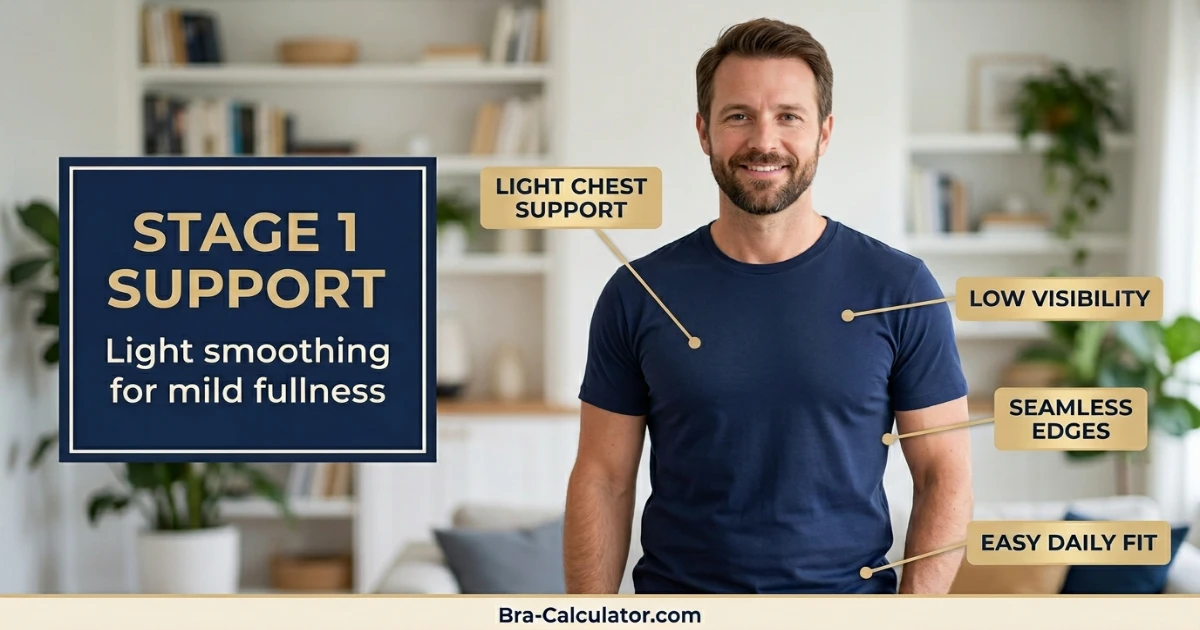
Seamless Compression Undershirt
Best for mild fullness, shirt outline concerns and first-time buyers who want a normal undershirt-style option.
- Discreet first option
- Easy under clothing
- Good for mild support
- May roll if too short
- Not for severe movement
- Size still matters
Longline Moderate Compression Tank
Best when moderate fullness needs more coverage and regular compression shirts ride up or bunch.
- Better torso coverage
- Good daily support
- Less sleeve bulk
- Neckline can show
- Too-small tanks still roll
- Armholes need checking
Wide-Panel Compression Top
Best when standard shirts are too weak and you need broader support across chest, shoulders and sides.
- Better pressure spread
- More stable coverage
- Useful for larger volume
- Can feel warmer
- May show under thin shirts
- Should not restrict breathing
Low-Profile Support Vest
Best when comfort, movement control and clothing support are daily concerns. Pair with medical advice if symptoms are significant or changing.
- More structure
- Better stability
- Useful under thicker shirts
- Not a treatment
- Can feel warm
- Medical advice may be needed
What Support Should You Try by Severity?
- Mild outline
- Nipple rubbing
- Light tenderness
- Light support top
- Seamless undershirt
- Moderate compression only if needed
- More visible shape
- Chest movement
- Shirt cling
- Moderate compression
- Longline tank
- Matte seamless fabric
- Larger chest movement
- Standard shirts too weak
- Need stronger coverage
- Wide-panel top
- Low-profile vest
- Moderate-to-firm support
- Significant size
- Skin or rubbing issues
- Daily discomfort
- Medical evaluation
- Comfort-first support vest
- No painful compression
Mistakes to Avoid When Choosing Support by Gynecomastia Stage
Use this page for support choices, not medical grading. A clinician should assess actual severity.
Higher stages do not mean painfully tight garments. Comfort and breathing still matter.
Skin changes, discharge, lumps or sudden one-sided changes need medical advice.
Accurate under-chest and fullest chest measurements reduce wrong-size support problems.
If support fails, choose better design before choosing a smaller painful size.
Severity can guide support intensity, but your daily symptoms guide the final choice.
What Usually Improves When Support Matches Severity
These are practical comfort outcomes, not medical promises.
“I stopped over-compressing mild fullness.”
Stage 1 support often works better when it stays light, discreet and comfortable.
“Moderate support was enough once it fit correctly.”
Stage 2 support often improves after better length, coverage and fabric — not more tightness.
“A vest felt steadier than undershirts.”
Stage 3 support may need more structure when standard compression shirts feel weak.
“I realized support and medical advice can both matter.”
Stage 4 comfort support can help daily life, but it should not replace professional evaluation.
Medical References and Disclaimer
This guide is for comfort, clothing and support education. It is not medical advice and does not diagnose or treat gynecomastia. Clinical staging, treatment decisions and evaluation of lumps or changing symptoms should be handled by a qualified healthcare professional.
Seek medical advice for sudden swelling, a hard lump, ongoing breast or nipple pain, nipple discharge, bleeding, skin changes, fast one-sided enlargement, or any symptom that feels unusual for you.
Frequently Asked Questions
What are the stages of gynecomastia?
Gynecomastia staging or grading is usually used by clinicians to describe severity, chest enlargement and skin excess. A simple support guide often groups it as mild, moderate, larger and severe, but only a clinician can diagnose the actual grade.
What support do I need for stage 1 gynecomastia?
Stage 1 or mild gynecomastia often needs light to moderate support such as a seamless compression undershirt or soft support top, especially if movement, tenderness or shirt outline is the main issue.
What support works for stage 2 gynecomastia?
Stage 2 or moderate gynecomastia usually benefits from moderate compression, a longline compression shirt, or a soft support top with better coverage depending on tenderness and clothing goals.
What support works for stage 3 gynecomastia?
Stage 3 or larger gynecomastia may need firmer support, wider panels, a low-profile vest, or a structured compression top. Comfort, breathing and skin safety should still come first.
What support works for stage 4 gynecomastia?
Stage 4 or severe gynecomastia often requires medical evaluation in addition to support. A garment may improve comfort and clothing appearance while worn, but it cannot treat excess tissue or skin.
Can a bra or compression garment treat gynecomastia stages?
No. Bras and compression garments can help comfort, movement control and clothing appearance while worn, but they cannot diagnose, treat or reverse gynecomastia.
How do I know what stage my gynecomastia is?
You cannot accurately grade gynecomastia from a website alone. A clinician can examine whether the enlargement is glandular tissue, fat-related fullness, skin excess or another condition.
When should I see a doctor for gynecomastia?
Seek medical advice for sudden swelling, a hard lump, ongoing pain, nipple discharge, bleeding, skin changes, fast one-sided enlargement, or symptoms that feel unusual.
Match the Support to Your Comfort Problem, Not Just the Stage
Use your measurements and daily symptoms to choose the right support: light, moderate, firm, longline, vest-style or doctor-guided recovery support.
More gynecomastia support guides
- Gynecomastia bra guide
- Gynecomastia bra size chart
- Pseudogynecomastia vs Gynecomastia: Key Differences & Support Options
- Gynecomastia Bra Results: What Changes After Wearing a Gynecomastia Bra?
- Compression Bra vs Shirt for Gynecomastia: Which Is Better?
- Best Bras for Gynecomastia: Men’s Chest Support Picks