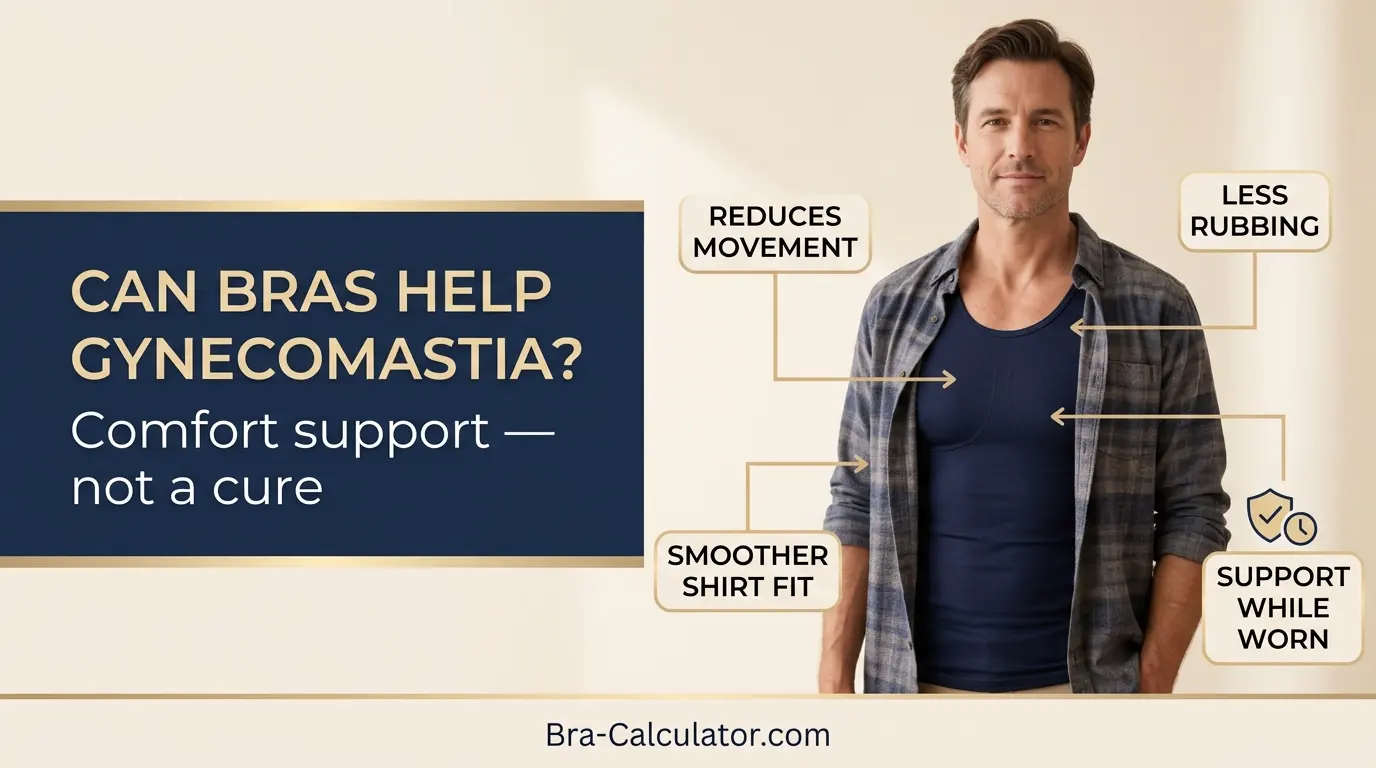
Bras can help gynecomastia comfort while worn, but they cannot reduce or treat gynecomastia. A properly fitted bra, compression shirt or support vest may reduce movement, rubbing, nipple irritation, tenderness from fabric friction, and clothing-outline discomfort. The evidence supports gynecomastia as a tissue condition that may cause swelling or soreness; support garments are not a medical cure, but they can be useful mechanical support for daily comfort.
Medical disclaimer: This page is educational and support-focused. It does not diagnose or treat gynecomastia. Seek medical advice for sudden swelling, a hard lump, ongoing breast or nipple pain, nipple discharge, bleeding, skin changes, fast one-sided enlargement, or symptoms that feel unusual.
Can Bras Help Gynecomastia? Evidence-Based Summary
| Question | Evidence-Based Answer |
|---|---|
| Can bras reduce gynecomastia? | No. Bras cannot shrink glandular tissue or reverse gynecomastia. |
| Can bras help discomfort? | They may help mechanical discomfort by reducing movement, rubbing and fabric friction while worn. |
| Can bras help pain? | They may help rubbing-related or movement-related discomfort, but ongoing pain needs medical advice. |
| Can bras improve clothing confidence? | Yes, a support layer may create a smoother outline and reduce visible movement under clothes. |
| Can bras diagnose the condition? | No. Support cannot tell you if the fullness is glandular, fat-related, skin-related or another issue. |
| Main verdict | Helpful for comfort, not treatment |
What the Evidence Says About Gynecomastia and Support
Medical sources describe gynecomastia as an increase in male breast gland tissue. Mayo Clinic also separates pseudogynecomastia, where the chest enlargement is fat-related rather than glandular. Cleveland Clinic gives the same practical distinction: gynecomastia involves increased glandular tissue, while excess adipose tissue can create a similar-looking enlarged chest.
That distinction matters because a bra cannot change tissue type. If the fullness is glandular, a support garment will not remove gland tissue. If the fullness is fat-related, a support garment will not remove fat. What support can do is mechanical: hold tissue steadier, reduce skin and fabric movement, and make clothing feel smoother while the garment is worn.
NHS guidance notes that gynaecomastia may involve swelling or soreness and recommends speaking with a GP for specific symptoms or concerns. That means support can be part of daily comfort, but it should not replace medical evaluation when symptoms are changing, painful, one-sided or unusual.
Evidence reality: There is a difference between “helps comfort” and “treats gynecomastia.” Bras may help the first. They do not do the second.
What a Bra or Support Garment Can Realistically Help
Support can reduce bouncing, shifting and pulling sensations while walking, using stairs or exercising.
A smooth layer may reduce shirt friction, nipple irritation and fabric movement across sensitive areas.
Gentle support may feel better than loose fabric when the chest or nipples feel sore.
Compression or soft support may create a smoother outline under shirts while worn.
Less movement and less shirt-checking can reduce how often the chest distracts you during the day.
Comfort and clothing stability can make normal activities feel easier and less self-conscious.
What a Bra Cannot Do for Gynecomastia
A bra cannot shrink glandular breast tissue or remove fat-related chest fullness.
Support cannot tell you whether fullness is gynecomastia, pseudogynecomastia or another condition.
New lumps, discharge, bleeding, skin changes or sudden one-sided swelling need clinical evaluation.
Support garments do not change estrogen, testosterone, medication effects or underlying health causes.
Any smoother outline only exists while the support garment is on.
Not being a cure does not make support useless. Comfort improvements can still matter daily.
Can a Bra Help Gynecomastia Pain or Discomfort?
A bra or support top may help discomfort when the discomfort is mechanical — for example, movement during walking, shirt friction, nipple rubbing, or a sensation of the chest pulling against clothing. Soft support can reduce the amount of fabric movement across the chest.
However, ongoing pain is different from simple rubbing or movement discomfort. If your breast or nipple pain is persistent, worsening, one-sided, associated with a lump, or linked to discharge or skin changes, support should not be your only response. That is a medical evaluation situation.
The best support for discomfort is usually not the firmest support. Tenderness often responds better to smooth fabric, gentle pressure, soft edges and moderate support. Over-tight compression can create new problems such as rib pressure, rolling, numbness or skin irritation.
Important: If support makes pain worse, remove it. A helpful support garment should reduce distraction, not create new symptoms.
Which Support Type Has the Best Evidence-Based Logic?
| Support Type | Best For | Why It May Help | Evidence Limit |
|---|---|---|---|
| Seamless compression undershirt | Daily clothing confidence | Reduces visible movement and smooths shirt outline. | Does not reduce tissue. |
| Soft support top | Tenderness, rubbing, sensitivity | Reduces friction without harsh compression. | Not a pain diagnosis. |
| Longline compression tank | Torso smoothing and less rolling | Distributes pressure across chest and upper torso. | Wrong size can still roll. |
| Low-profile support vest | More movement control | Provides more structure than soft undershirts. | Can be too firm if misused. |
| Sports compression shirt | Exercise or fast walking | Limits motion with better stretch recovery. | Not always discreet for daily wear. |
| Best first option | Unsure buyer | Moderate seamless support | Measure first. |
How to Try a Gynecomastia Bra Safely and Realistically
Use support for comfort, clothing and movement control — not as a cure or tissue-reduction method.
Measure under-chest, fullest chest, waist and torso length. Guessing by T-shirt size often creates poor results.
Start with light or moderate support unless you truly need firm movement control.
Sit, walk, raise your arms, breathe fully and check for rolling, rib pressure, numbness or skin irritation.
Support is not enough if symptoms are new, painful, one-sided, changing or linked to nipple/skin changes.
Comfort Support Options for Gynecomastia
These are product categories, not medical treatments. Replace placeholder images and generic Amazon searches with selected products when ready.
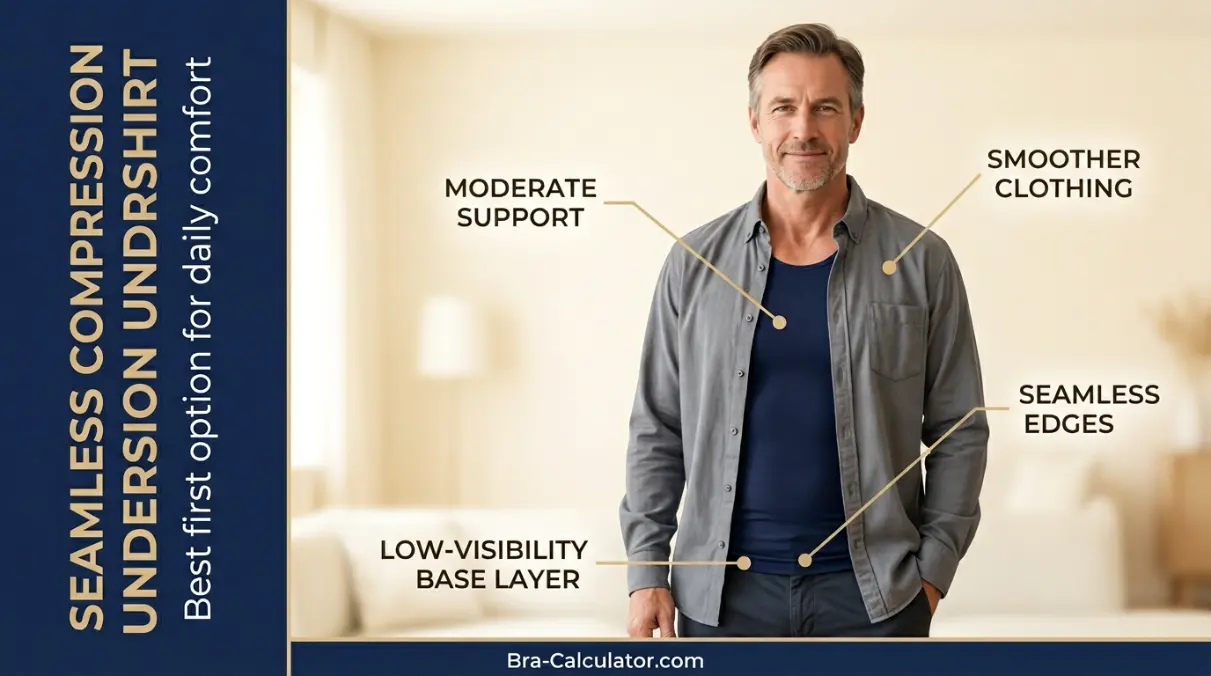
Seamless Compression Undershirt
Best for men who want the most discreet first option for less movement and smoother clothing under normal shirts.
- Looks like a base layer
- Good daily starting point
- May reduce visible movement
- Can roll if too short
- May feel warm
- Not medical treatment
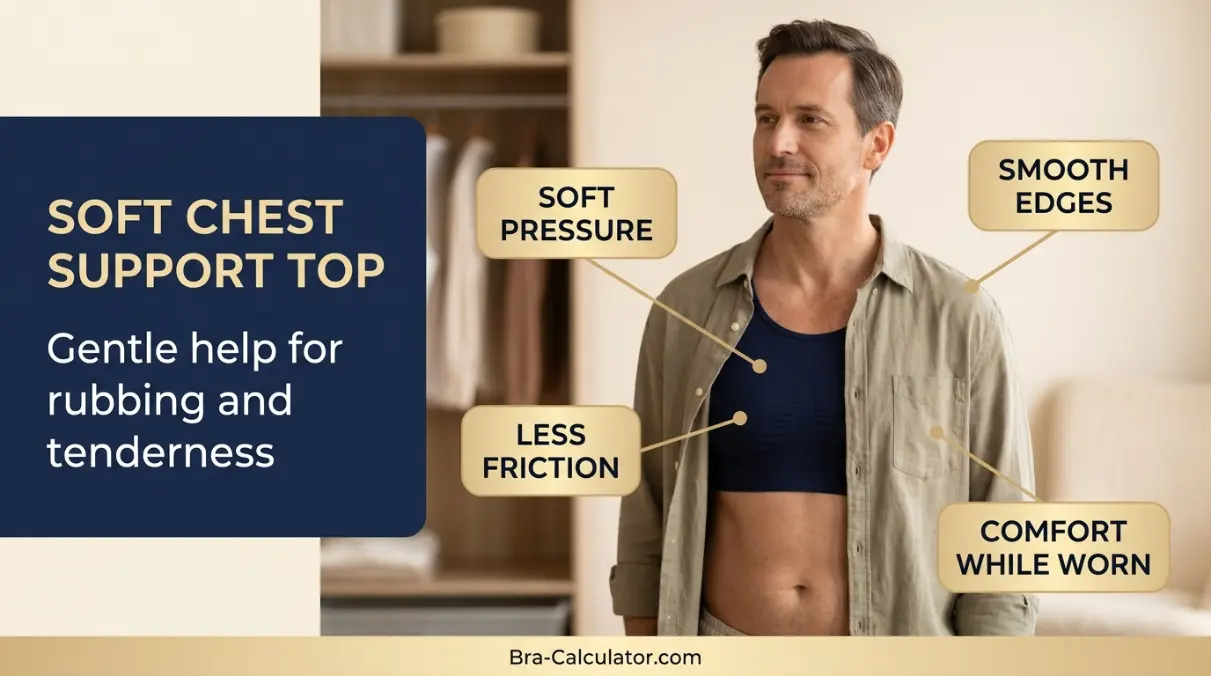
Soft Chest Support Top
Best when discomfort comes from rubbing, sensitivity or loose fabric moving across the chest.
- Gentler than firm compression
- May reduce friction
- Good sensitive-day option
- Less flattening
- May be more visible
- Pain still needs medical review if persistent
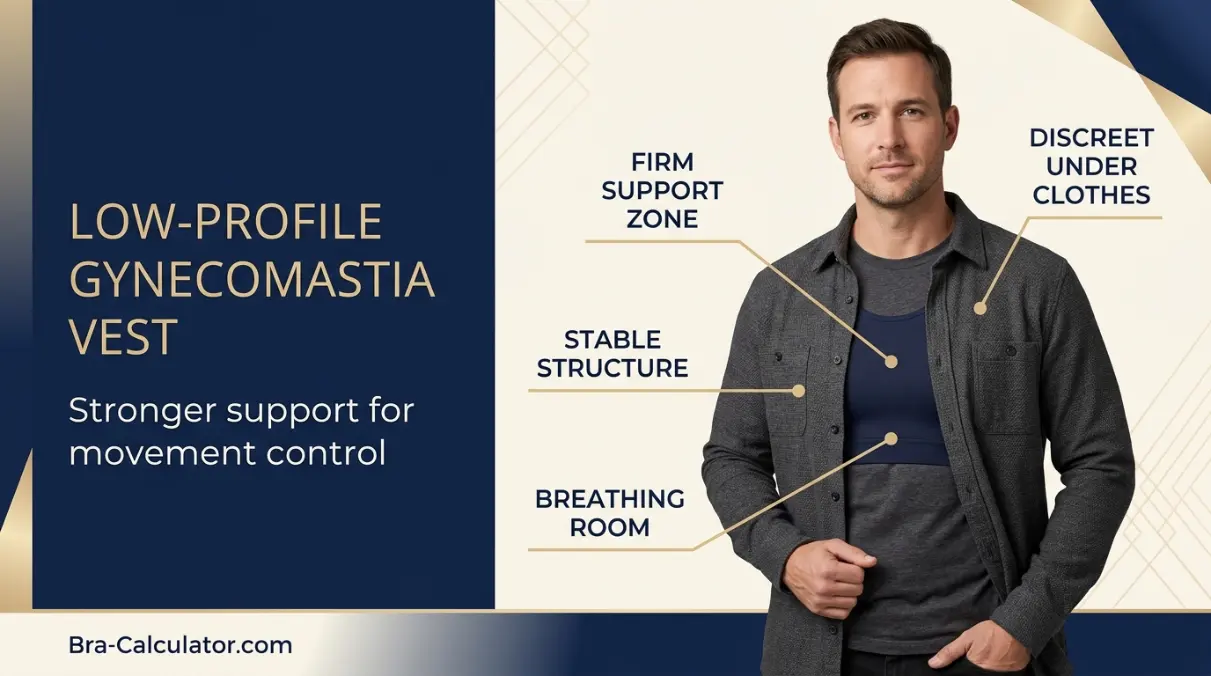
Low-Profile Gynecomastia Vest
Best when basic undershirts do not reduce movement enough and you need support from the garment body.
- More stable support
- Useful for larger movement
- Can work under thicker shirts
- Can be warm
- May show under thin clothes
- Should not restrict breathing
Who Is Most Likely to Feel a Comfort Benefit?
Fastest Benefit
If bounce or shifting is the issue, support may feel helpful immediately.
MovementSoft Support
Gentle fabric control may reduce rubbing on sensitive days.
ComfortDiscreet Layer
Seamless compression can reduce cling and visible chest movement.
DiscreetStructure
A vest or wide-panel top may feel steadier than light support.
FirmLower Pressure
Light or moderate support may be more wearable than firm garments.
BreathableAdult Guidance
Teenagers should involve a parent or clinician if pain or distress is present.
CareDoctor Rules
Recovery compression should follow surgeon instructions only.
MedicalDoctor First
New lumps, discharge or skin changes need medical advice, not shopping first.
SafetyShould You Try a Bra, Compression Shirt or Vest?
- You want smoother shirts
- You want low visibility
- You need normal daily support
- Seamless compression undershirt
- Moderate support
- Matte fabric
- Chest is sensitive
- Loose shirts rub
- Firm compression hurts
- Soft support top
- Light compression
- Smooth seams
- Walking causes bounce
- Workout movement bothers you
- Undershirts feel weak
- Sports compression
- Low-profile vest
- Wide-panel support
- Hard lump
- Discharge or bleeding
- Sudden one-sided change
- See a clinician
- Do not rely on support
- Use garment only for comfort if safe
Myths About Bras and Gynecomastia Evidence
Support can change comfort and outline while worn, not tissue size.
Over-compression can create pain, rolling, numbness and breathing restriction.
Red-flag symptoms need medical evaluation, not only a garment change.
Even without treatment effect, daily comfort improvements can matter.
Tenderness often needs gentler support, not maximum compression.
The wrong size can make support feel worse instead of better.
What Men Commonly Notice When Support Actually Helps
These are practical comfort outcomes, not medical promises.
“It did not reduce the tissue, but it reduced the distraction.”
This is the most evidence-safe way to describe good support: it helps the day feel easier while worn.
“My shirt stopped rubbing as much.”
Soft support can reduce fabric movement across sensitive areas.
“Walking felt more comfortable.”
Less movement is often the first benefit men notice from a well-fitted garment.
“I learned that comfort support and treatment are different.”
Support can be useful even when it is not a medical solution.
Medical References and Disclaimer
This guide is for comfort, clothing and support education. It is not medical advice and does not diagnose or treat gynecomastia. A support garment can help with mechanical comfort while worn, but it cannot identify the cause of chest fullness or remove glandular tissue.
Seek medical advice for sudden swelling, a hard lump, ongoing breast or nipple pain, nipple discharge, bleeding, skin changes, fast one-sided enlargement, or any symptom that feels unusual for you.
Frequently Asked Questions
Do bras help gynecomastia?
Bras and chest support garments may help gynecomastia comfort while worn by reducing movement, rubbing, tenderness and clothing outline concerns. They do not treat or remove gynecomastia tissue.
Can bras reduce gynecomastia?
No. Bras cannot reduce glandular breast tissue or reverse gynecomastia. They can only change comfort and appearance while worn.
Can a bra help gynecomastia pain?
A soft support top or properly fitted compression garment may reduce rubbing and movement-related discomfort, but ongoing breast or nipple pain should be discussed with a clinician.
What evidence supports wearing support for gynecomastia?
Medical sources describe gynecomastia as glandular tissue enlargement and note symptoms such as swelling or soreness. Support garments are not a medical treatment, but they can logically help mechanical comfort by limiting movement and friction while worn.
Is compression better than a bra for gynecomastia?
Compression undershirts are often more discreet, while soft support tops can be better for tenderness. Vests may work better when stronger movement control is needed.
Can wearing a bra make gynecomastia worse?
A properly fitted support garment should not worsen gynecomastia, but too-tight compression can cause discomfort, skin irritation, rib pressure, rolling, numbness or breathing restriction.
Should teenage boys with gynecomastia wear bras?
Teenagers should involve a parent or clinician if gynecomastia is painful, distressing or changing. Soft, discreet support may help comfort, but medical guidance is important for young people.
When should I see a doctor instead of using support?
Seek medical advice for sudden swelling, a hard lump, ongoing pain, nipple discharge, bleeding, skin changes, fast one-sided enlargement, or symptoms that feel unusual.
Use Bras for Comfort — Not as a Cure
Measure first, choose the least aggressive support that reduces your real discomfort, and use medical advice for pain, lumps, discharge, skin changes or sudden one-sided changes.
More gynecomastia support guides
- Gynecomastia bra guide
- Gynecomastia bra size chart
- Best Gynecomastia Support for the Gym: Workout Guide
- Gynecomastia Support for Work: Discreet All-Day Comfort Guide
- Wearing a Bra to Sleep with Gynecomastia: Is It Safe?
- Gynecomastia Support for Swimming: Waterproof Options Guide
- Gynecomastia Support for Running: Bounce-Control Guide