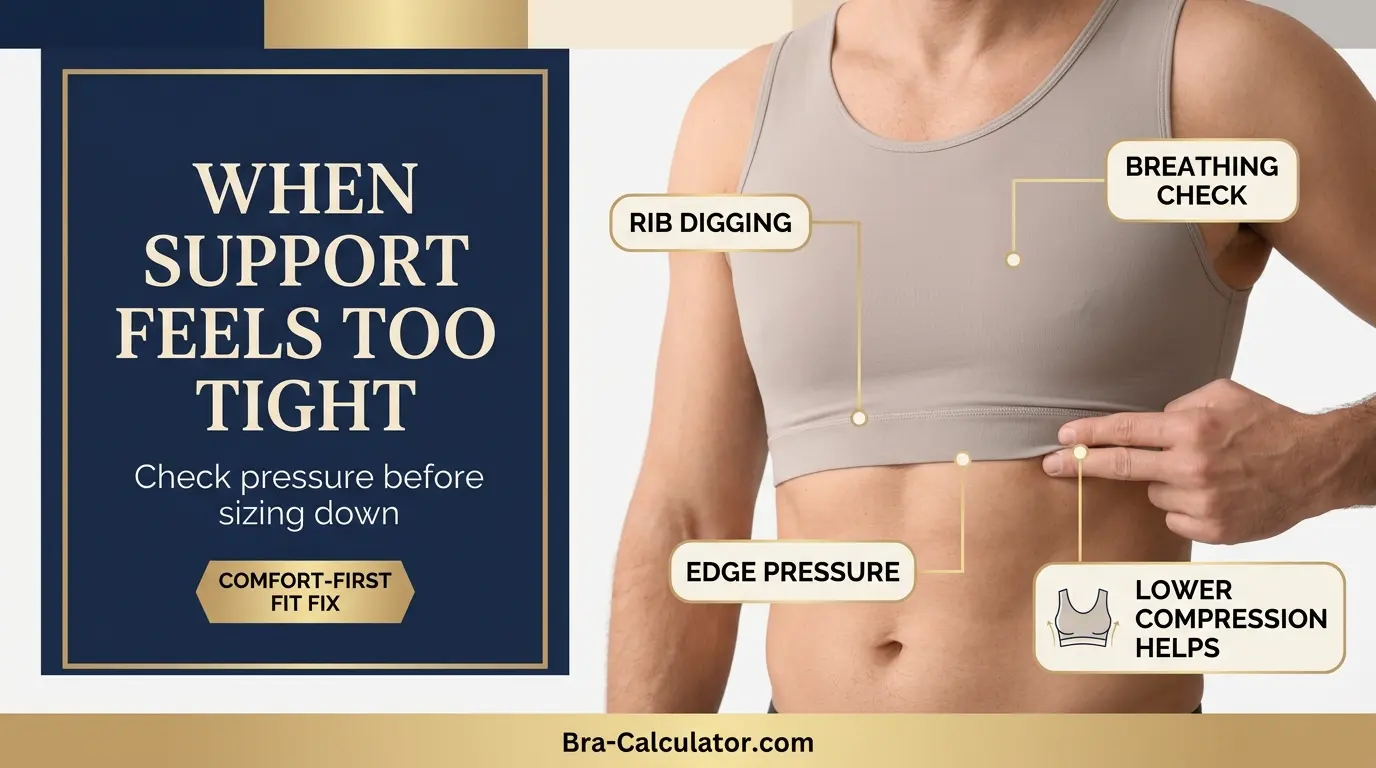
Gynecomastia support is too tight if it restricts breathing, causes numbness, digs into ribs, leaves painful marks, rolls from tension, worsens tenderness or feels unbearable after normal movement. The fix is usually not “push through it.” Remeasure, stop sizing down, choose moderate support, use a longline cut if rolling happens, or switch to a soft support top if tenderness is the main issue. Post-surgery compression should only be changed with surgeon guidance.
Safety first: Remove the garment and seek medical advice if tight compression causes breathing trouble, chest pain, numbness, skin color changes, severe swelling, unusual wound symptoms, or symptoms that feel alarming. This guide is for comfort and fit education, not medical treatment.
Signs Your Gynecomastia Compression Is Too Tight
| What You Feel or See | What It Usually Means |
|---|---|
| Breathing feels restricted | Too tight or wrong compression level. Remove and reassess. |
| Numbness or tingling | Pressure is too high. Do not ignore it. |
| Rib digging or sharp edge pressure | Band/hem/vest edge is too firm, too small or badly placed. |
| Compression rolls up | Often too tight, too short or wrong for waist/torso shape. |
| Chest tenderness feels worse | Support may be too firm for sensitivity. Try softer support. |
| Main rule | Snug, not painful — support should feel steady, breathable and wearable. |
Why Gynecomastia Compression Gets Too Tight
Compression support gets too tight when the garment is asked to do more than your body, fabric and fit can comfortably handle. Many men size down because they want a flatter look, but a smaller size often creates new problems: rolling, rib pressure, shoulder digging, heat, visible ridges and breathing restriction.
Gynecomastia support should steady and smooth the chest, not punish it. Firm support can be useful for movement control, but it is not automatically better for daily wear. If you have tenderness, sensitivity or long wear hours, moderate compression or soft support may work better.
The right question is not “how tight can I tolerate?” The right question is “what is the lowest support level that solves my real problem while still letting me breathe, sit, move and wear normal clothes?”
Fit truth: If you are counting the minutes until you can take it off, it is not a good everyday support fit.
How to Fix Gynecomastia Support That Is Too Tight
Take it off if you have breathing trouble, numbness, severe pain, skin color changes, intense pressure or any post-surgery warning signs.
Check whether pressure is at the chest, ribs, shoulders, armholes, stomach, neckline, zipper, hooks or bottom hem.
Measure under-chest, fullest chest, waist and torso length. T-shirt size alone is not enough for compression fit.
If firm support hurts, try moderate support. If full-torso compression worsens tenderness, try a soft wireless support top.
Sit, walk, breathe deeply and raise your arms. A good fit should remain supportive without rolling, digging or restricting movement.
Where Is It Too Tight? Find the Real Fix
| Tightness Area | Likely Cause | Best Fix |
|---|---|---|
| Ribs / under-chest | Band or hem too small, too firm or sitting too high. | Remeasure under-chest; try larger size or softer band. |
| Full chest | Compression level too aggressive for volume or tenderness. | Try moderate compression or soft support. |
| Shoulders | Straps or shoulder panels too narrow. | Use wider shoulder design or shirt-style support. |
| Armholes | Cut is too high or too narrow. | Try different cut or larger size with better chest support. |
| Stomach / hem | Garment too short, too tight or wrong for waist shape. | Try longline compression or waist-friendly fit. |
| Zipper / hooks | Closure pressure or raised hardware digging in. | Use smoother closure, padded vest or different support type. |
| Most common pattern | Sizing down for flattening creates pressure and rolling. | Measured size + moderate support |
How Tight Should a Gynecomastia Bra Be?
| Fit Test | Good Compression | Too Tight |
|---|---|---|
| Breathing test | You can take a full normal breath. | Ribs feel squeezed or breathing feels shallow. |
| Two-finger edge test | Edges feel snug but not sharp. | You cannot ease pressure at the edge or it feels cutting. |
| Sitting test | Support stays wearable while seated. | Stomach, ribs or chest pressure spikes when sitting. |
| Movement test | You can raise arms without digging. | Shoulders, armholes or chest panels bite into skin. |
| Wear-time test | Still comfortable after normal movement. | Numbness, tingling, pain, overheating or irritation appears. |
Better Options When Compression Is Too Tight
Often solves daily support needs without the pain and rolling caused by firm compression.
Useful when chest sensitivity matters more than full-torso flattening.
Helps when short garments roll, bunch or squeeze at the stomach.
Wider shoulder construction can reduce narrow strap pressure and edge digging.
If every shirt hurts, a soft top, tank or properly fitted vest may work better.
Sizing down for flattening often makes tightness, rolling and pain worse.
Support Options to Try When Compression Feels Too Tight
These are product categories, not medical treatments. Replace placeholder images and generic Amazon searches with specific selected products when ready.
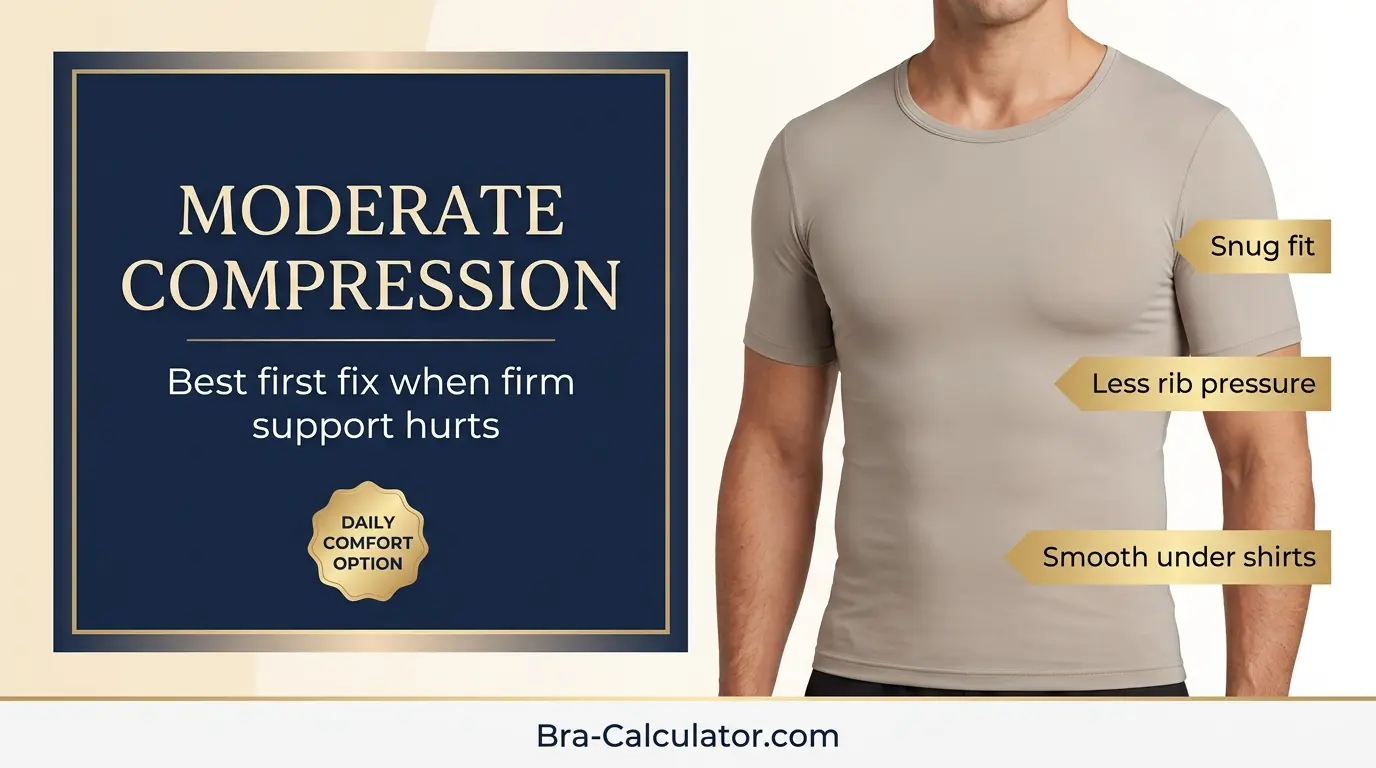
Moderate Compression Undershirt
Best if your current compression is painful but you still want a smooth base layer under normal clothes.
- More wearable than firm compression
- Good under everyday shirts
- Lower risk of harsh digging
- May not provide firm control
- Cheap fabric can stretch
- Short styles may still roll
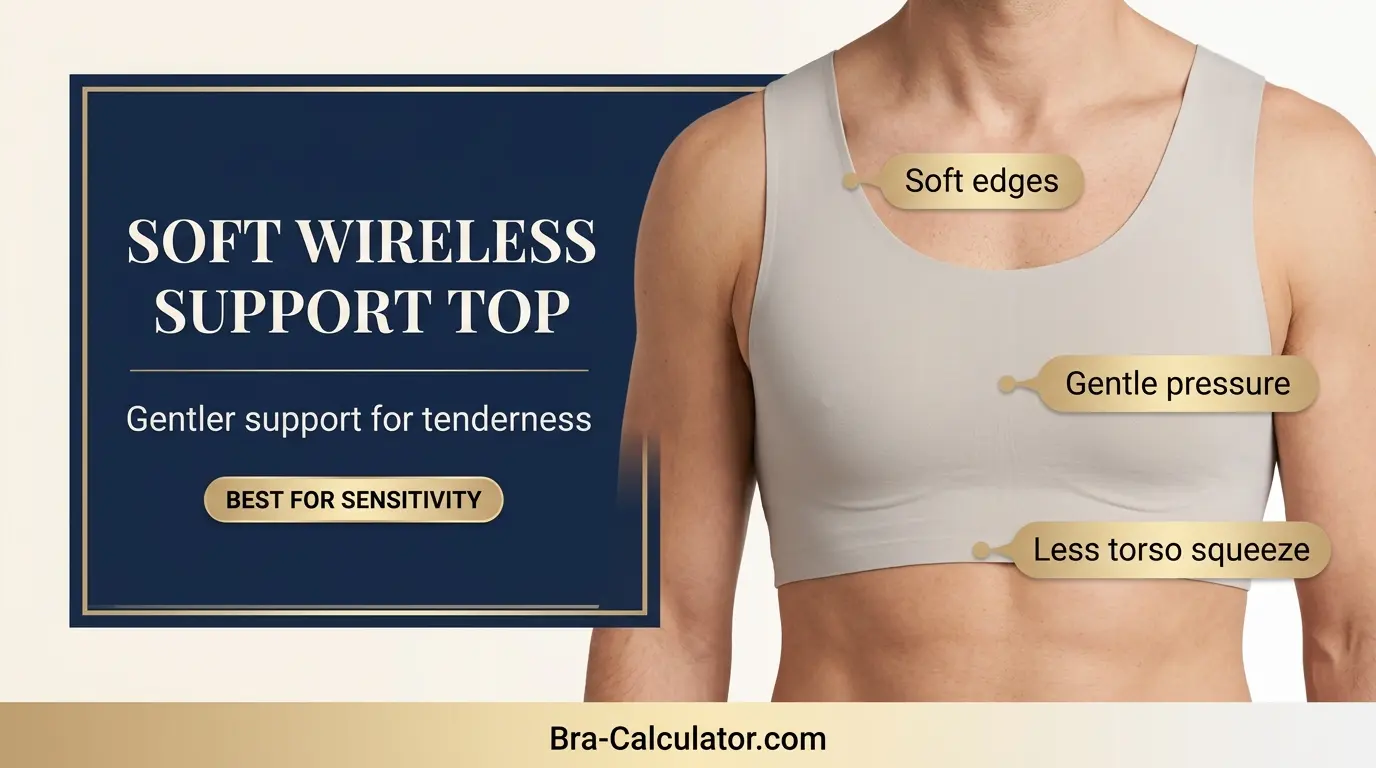
Soft Wireless Support Top
Best when full-torso compression makes tenderness worse or rib/stomach pressure is the main problem.
- Gentler than firm compression
- Less stomach pressure
- Comfort-focused support
- May be more visible
- Less flattening than a vest
- Needs neckline testing
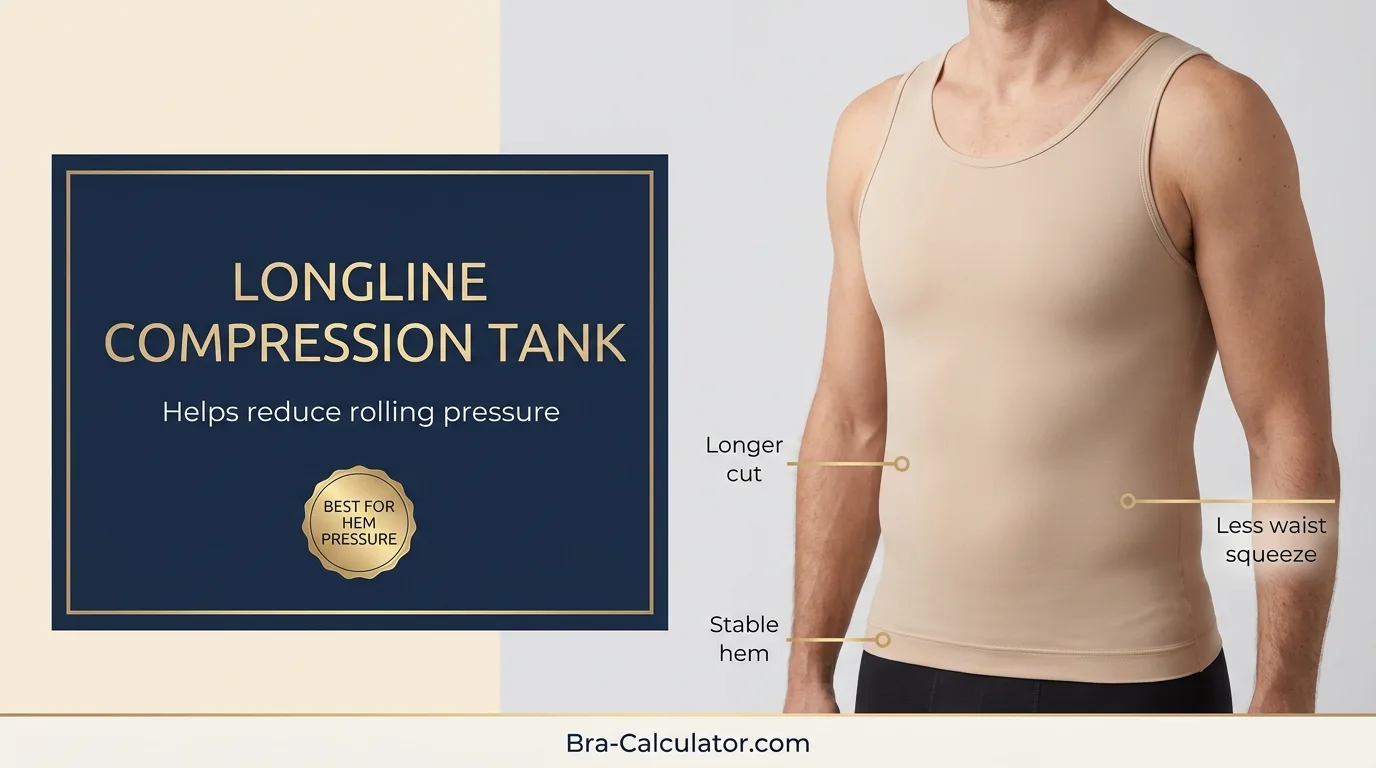
Longline Compression Tank
Best when tightness is mostly at the stomach or hem because a short shirt rolls and creates a painful ridge.
- Better for longer torsos
- Can reduce rolling
- Less sleeve bulk
- Neckline may show
- Too-small tanks still squeeze
- Armholes need testing
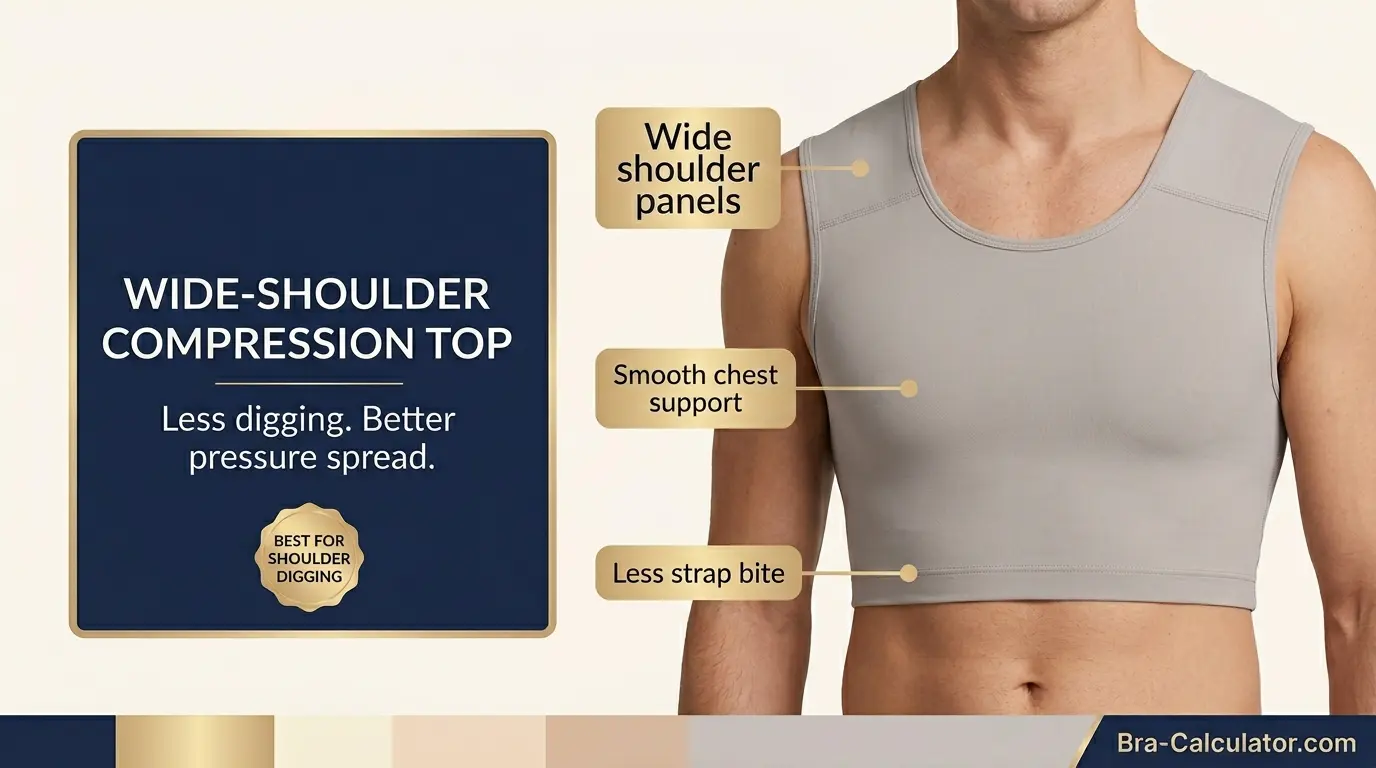
Wide-Shoulder Compression Top
Best if narrow straps, armholes or shoulder edges are digging while the chest support itself feels useful.
- Distributes shoulder pressure
- Can feel more stable
- Useful for broad chests
- May show under thin shirts
- Still needs correct chest size
- Not always best for heat
Why Compression Feels Too Tight on Different Body Shapes
Side Pressure
Need wider panels so pressure does not concentrate at ribs or shoulders.
Wide panelsHem Pressure
Short garments may roll into a tight ridge at the stomach.
LonglineRiding Up
Standard shirts can pull upward and squeeze the ribs.
Long fitToo Firm
Firm compression may worsen sensitivity.
Soft supportEdge Digging
Bulky vests may create pressure points on a smaller frame.
Low profileMotion Pressure
Wrong fabric can bind during movement.
Sports cutOverheating
Firm compression may feel tighter as heat and sweat build.
BreathableAsk Surgeon
Do not loosen, replace or resize recovery compression without guidance.
Medical firstWhat Should You Fix First?
- Breathing feels shallow
- Ribs feel squeezed
- You want to remove it immediately
- Remove it if severe
- Remeasure size
- Use lower compression
- Shoulders or armholes bite
- Rib edge feels sharp
- Marks are painful
- Wider shoulders
- Softer edges
- Different cut
- Hem rolls into a ridge
- Sitting makes pressure worse
- Short shirt rides up
- Longline support
- Waist-friendly fit
- Stop sizing down
- Chest sensitivity worsens
- Firm panels feel harsh
- Full compression feels too much
- Soft wireless support
- Light compression
- Shorter wear testing
Mistakes That Make Gynecomastia Compression Too Tight
1. Sizing Down for Flattening
Smaller size often creates rolling, rib pressure and pain instead of better support.
2. Choosing Firm Support for Daily Wear
Firm compression can be too much for long hours.
3. Ignoring Torso Length
Short compression can climb upward and squeeze.
4. Ignoring Tenderness
Chest sensitivity needs gentler support, not more pressure.
5. Forcing Post-Surgery Fit Changes
Recovery compression must follow surgeon guidance.
6. Keeping a Garment That Hurts
Support that causes numbness or breathing restriction is not a “break-in” issue.
What Usually Improves When Compression Fits Better
These are practical comfort outcomes, not medical promises.
“I could breathe normally again.”
Lowering compression or correcting size often makes support feel wearable instead of restrictive.
“The support stopped digging into my ribs.”
A better band, hem or garment cut can reduce sharp edge pressure.
“I realized tighter was not better.”
Many men get better daily results from moderate support than painful firm compression.
“I stopped adjusting it all day.”
When support is the right size and length, it usually rolls less and feels less distracting.
Medical References and Disclaimer
This guide is for comfort, fit and shopping education. It is not medical advice and does not diagnose or treat gynecomastia. Support garments can help with comfort and clothing appearance while worn, but they cannot identify the cause of chest fullness or remove glandular tissue.
Seek medical advice for sudden swelling, a hard lump, ongoing pain, nipple discharge, bleeding, skin changes, fast one-sided enlargement, or tight-compression symptoms such as numbness, severe pain, breathing trouble or skin color changes.
Frequently Asked Questions
How tight should a gynecomastia bra be?
A gynecomastia bra or support garment should feel snug and steady, not painful. You should be able to breathe normally, sit comfortably and move your arms without numbness, rib pressure, severe digging or skin color changes.
How do I know if my compression shirt is too tight?
It is too tight if it restricts breathing, causes numbness or tingling, digs into ribs, leaves painful marks, rolls from excess tension, worsens tenderness or feels unbearable after normal movement.
Should I size down for better gynecomastia compression?
Usually no. Sizing down often causes rolling, rib pressure, overheating and pain. Choose the lowest effective compression level that supports without restricting your body.
Can tight compression make gynecomastia worse?
Tight compression does not remove gynecomastia tissue and should not be used as treatment. It can make comfort worse if it causes pain, skin irritation, numbness or breathing restriction.
What should I do if chest support is digging in?
Check whether the garment is too small, too firm, too short, too narrow at the shoulders or poorly shaped for your torso. Try a measured size, softer support, wider straps, longline construction or a different garment type.
Is firm compression better for gynecomastia?
Firm compression is not automatically better. It may help with movement control, but moderate or soft support is often better for daily wear, tenderness and long-term comfort.
Can I loosen a post-surgery compression vest?
Do not change post-surgery compression without asking your surgeon. Contact your surgical team if the vest causes severe pain, numbness, breathing trouble, skin color changes, unusual swelling or wound concerns.
When should I seek medical advice?
Seek medical advice for sudden swelling, a hard lump, ongoing pain, nipple discharge, bleeding, skin changes, fast one-sided enlargement, or alarming symptoms from tight compression such as numbness or breathing restriction.
Do Not Buy Another Tight Support Garment by Guesswork
Remeasure your under-chest and fullest chest, then choose the right support goal: daily discretion, soft comfort, no-roll length, firm control or workout support.
More gynecomastia support guides
- Gynecomastia bra guide
- Gynecomastia bra size chart
- Choosing the Right Compression Level for Gynecomastia Support
- Men’s Bra Sister Sizes Explained: How to Find Your Perfect Fit (2026)
- How to Measure Male Chest for a Support Garment
- What Size Bra Should a Man With Gynecomastia Wear? Size Guide 2026
- The Most Advanced Gynecomastia / Men’s Bra Size Calculator (2026 Complete Guide)