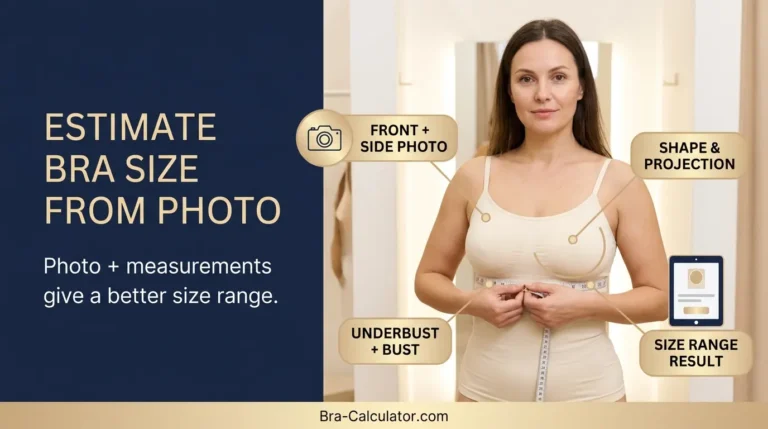
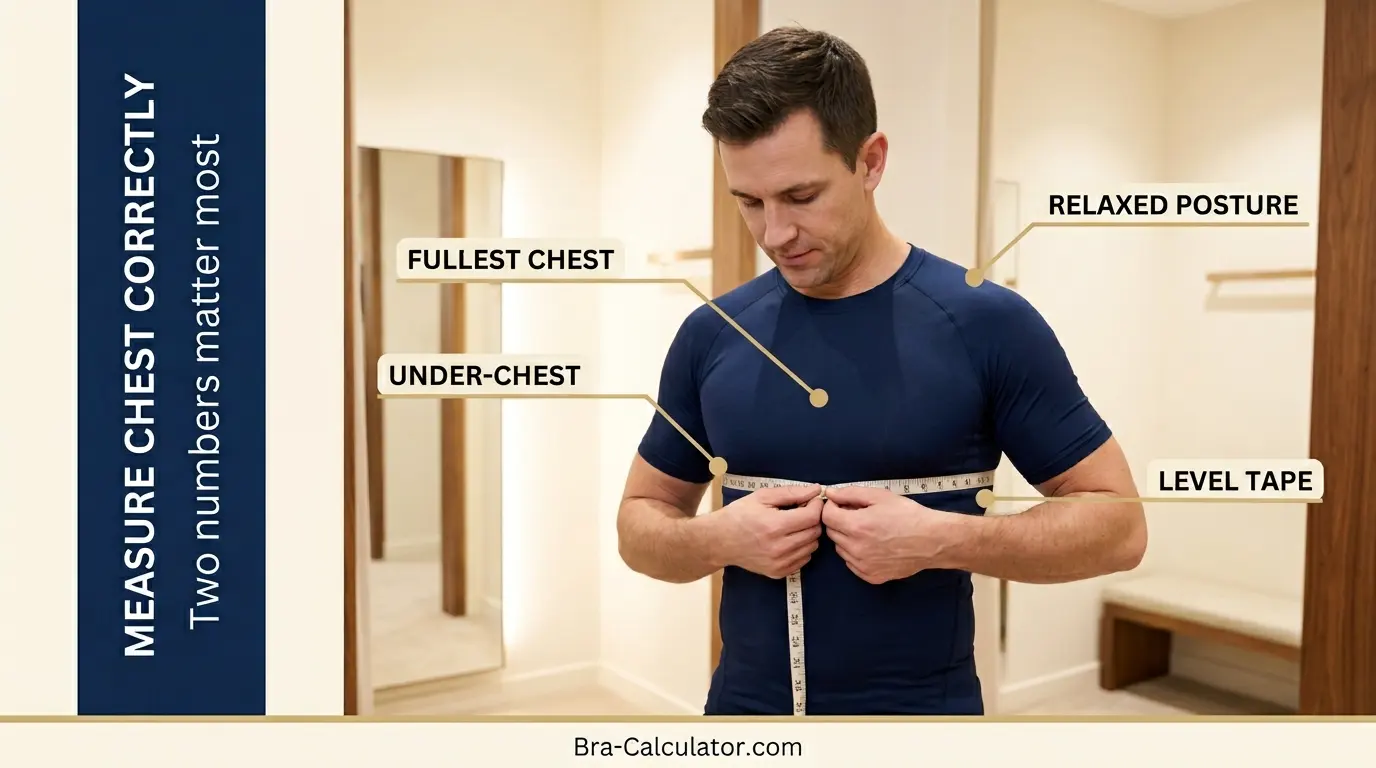
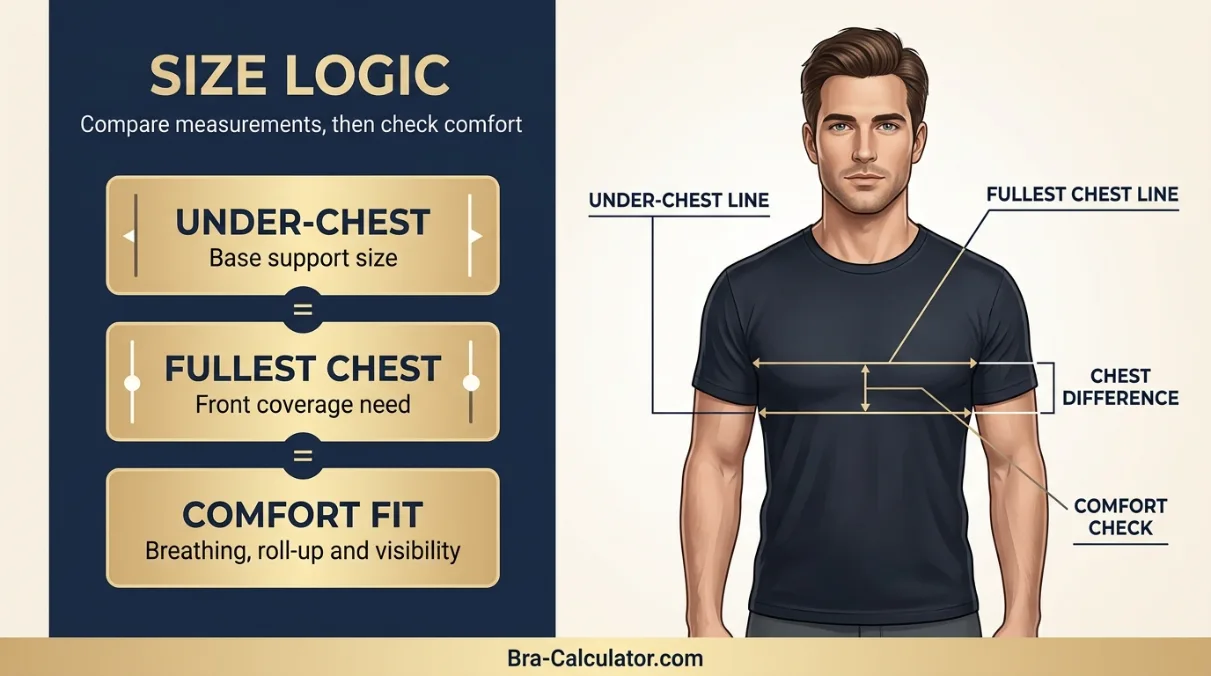
To measure chest for a gynecomastia bra, take two main measurements: under-chest and fullest chest. Measure snugly around the ribcage directly under the chest tissue, then measure around the fullest part of the chest, usually across the nipple line. Keep the tape level, relaxed and flat. For compression shirts or vests, also check natural waist and torso length so the garment does not roll up, dig in or restrict breathing.
Gynecomastia Chest Measurement at a Glance
| Measurement | Why It Matters |
|---|---|
| Under-chest / ribcage | Helps estimate band size or the base size of a compression garment. |
| Fullest chest | Shows how much front coverage, cup depth or compression panel capacity you may need. |
| Chest difference | The difference between fullest chest and under-chest helps decide whether light compression, shaped support or a firmer vest may work better. |
| Natural waist | Important for compression shirts because waist pressure can cause rolling or stomach discomfort. |
| Torso length | Helps prevent short garments from riding up during sitting, bending or walking. |
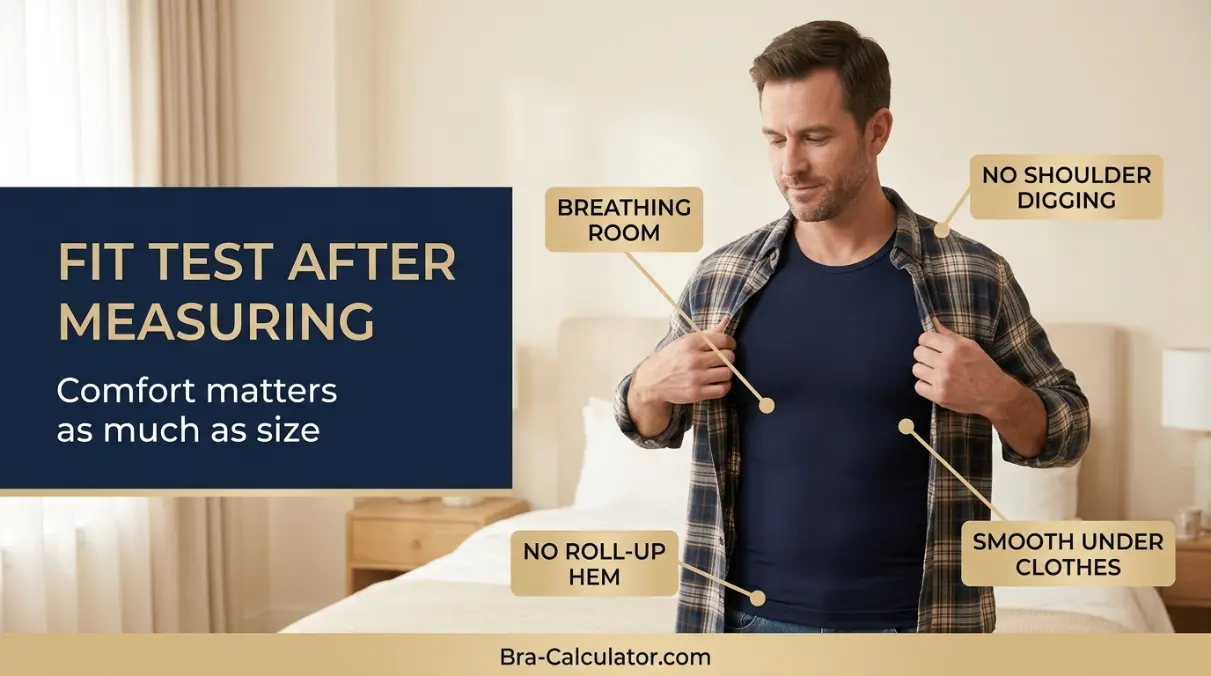
| Comfort check | After measuring, always test breathing, shoulder pressure, hem roll and visibility under normal shirts. |
What Measurements Do You Need for a Gynecomastia Bra?
For gynecomastia support, the two most important numbers are your under-chest measurement and your fullest chest measurement. The under-chest measurement is taken around the ribcage directly below the chest tissue. The fullest chest measurement is taken around the fullest part of the chest, usually across the nipple line. Together, these two numbers help estimate how much support, coverage and front-panel space a garment needs.
This is slightly different from buying a regular T-shirt. A T-shirt size mainly follows shoulder width, body width and brand fit. A gynecomastia compression shirt, support bra or vest has to manage chest volume, movement, fabric tension, under-shirt visibility and breathing comfort. That is why two men who both wear a large T-shirt may need different support sizes.
Measurement is not about forcing your chest smaller. Pulling the tape too tight gives a number that may look better on paper but leads to a garment that feels painful, rolls up or restricts breathing. Measure the body you actually have, then choose the lowest effective compression that solves your real clothing or movement problem.
Fit truth: Accurate measurement is not the tightest measurement. The tape should be level and snug, but your breathing and posture should stay natural.
How to Measure Chest for Gynecomastia Bra Step by Step
Use a soft measuring tape and stand in front of a mirror if possible. Measuring over a thin fitted shirt is acceptable if you prefer modesty, but avoid thick hoodies, loose shirts or layered clothing because they add extra bulk.
Stand upright with shoulders relaxed, arms down and feet flat. Do not puff out your chest, hunch forward or hold your breath. Your normal posture gives the most useful support measurement.
Wrap the tape around your ribcage directly under the chest tissue. Keep it parallel to the floor and snug enough to stay in place. This is your under-chest or band size measurement for men.
Wrap the tape around the fullest part of the chest, usually across the nipple line. Keep the tape flat across the back and front. This is sometimes called the fullest chest, over-chest or bust measurement for men.
If you are buying a compression undershirt or tank, measure around your natural waist or the widest stomach area. This helps avoid garments that support the chest but roll up at the stomach.
Measure from the top of your shoulder down to where you want the garment hem to sit. Longline compression shirts are often better for people with long torsos, larger stomachs or frequent rolling problems.
Use your under-chest and fullest chest measurements in the men’s bra size calculator. Treat the result as a starting point, then adjust based on garment type and comfort checks.
Five Fit Tests After You Try a Gynecomastia Support Garment
Measurements get you close, but the final answer comes from how the garment behaves on your body. Test the support garment under real movement before deciding it fits.
| Fit Test | Good Sign | Problem Sign |
|---|---|---|
| Breathing | You can take a full breath while standing and sitting. | The garment feels restrictive, tight around ribs or uncomfortable after a few minutes. |
| Chest movement | Movement is reduced without painful flattening. | Chest still bounces noticeably or compression pushes tissue upward. |
| Shoulders | Shoulder area feels stable, broad and non-digging. | Thin straps, neck tension or shoulder grooves appear. |
| Hem roll | The bottom stays flat while sitting, walking and bending. | The shirt rolls up at the stomach or bunches under the chest. |
| Visibility | The garment stays smooth under your normal shirts. | Seams, neckline, straps or panel edges show clearly. |
Common Mistakes When Measuring for a Gynecomastia Bra
1. Pulling the Tape Too Tight
A too-tight tape gives a smaller number, but it leads to over-compression, rib pressure and discomfort.
2. Measuring Over Loose Clothing
Loose shirts, hoodies and layered clothing add bulk and distort the chest measurement.
3. Letting the Tape Dip at the Back
If the tape is higher in front and lower at the back, the measurement can be inaccurate.
4. Ignoring Waist and Torso Length
A chest measurement may be correct, but the garment can still roll up if the waist or torso length is wrong.
5. Buying Only by T-Shirt Size
T-shirt size does not tell you how much front compression or chest support you need.
6. Measuring Once After Exercise
Posture, sweat, swelling, heat and temporary body changes can affect how measurements feel.
Which Measurements Matter for Each Gynecomastia Support Type?
Different garments use different fit logic. A soft support top may behave more like a bra, while a compression shirt depends heavily on torso and waist fit.
| Support Type | Most Important Measurements | Why It Matters |
|---|---|---|
| Compression undershirt | Fullest chest, waist, torso length | Needs chest smoothing without rolling up at the stomach. |
| Compression tank | Fullest chest, shoulder width, torso length | Needs shoulder comfort and hidden neckline under shirts. |
| Gynecomastia vest | Under-chest, fullest chest, waist | Needs stronger front control without rib restriction. |
| Soft support bra/top | Under-chest and fullest chest | Needs band stability and gentle front coverage. |
| Sports compression shirt | Fullest chest, shoulder width, torso length | Needs movement support, sweat control and range of motion. |
| Post-surgery vest | Clinician or brand-specific measurements | Recovery compression should follow surgeon or garment instructions. |
Measuring Tips for Different Body Shapes
Check Shoulder Fit
Measure chest normally, but also watch shoulder width. Narrow tanks may dig or sit too close to the neck.
Shoulder width mattersMeasure Waist Too
A chest-size garment can still fail if it compresses the stomach too aggressively and rolls up.
Add waist measurementMeasure Length
Measure shoulder-to-hem length if shirts usually ride up. Longline support often works better.
Check torso lengthAvoid Compression Error
Measure normally, but choose softer compression if firm garments irritate sensitive areas.
Prioritize comfortAvoid Bulky Support
Firm vests can show under thin shirts. Measure accurately and consider seamless lighter support first.
Try seamless fitMeasure Fullest Point
Measure around the fullest overall chest point. New or fast one-sided changes should be checked medically.
Use flexible supportMovement Changes Fit
Measure normally, then test arm movement and deep breathing because gym compression must move with you.
Test motionFollow Instructions
Use your clinician’s measurement method and garment instructions, not a generic everyday size chart.
Clinical sizing firstHow to Interpret Your Gynecomastia Measurements
After you measure, compare the under-chest and fullest chest numbers. The larger the difference, the more front coverage or structured support you may need. But the numbers are only a starting point; your final decision should also consider breathing, rolling, visibility and comfort.
| Measurement Pattern | Likely Support Direction | First Style to Try |
|---|---|---|
| Small chest-to-under-chest difference | Light to moderate smoothing may be enough | Seamless compression undershirt or tank. |
| Moderate difference with movement | Needs better chest control | Sports compression shirt or firmer compression top. |
| Larger difference or heavier chest feel | Needs structured front support | Gynecomastia compression vest or support top. |
| Chest measurement fits but waist rolls | Torso/waist mismatch | Longline compression shirt or vest with stable hem. |
| Tenderness is the main issue | Gentle support over flattening | Soft wireless support top or lighter compression. |
What Should You Fix First After Measuring?
- You usually buy by T-shirt size only
- Compression varies wildly between brands
- Support looks fine standing but fails when moving
- Measure under-chest and fullest chest
- Use calculator before buying
- Then compare with brand chart
- Chest still moves after compression
- Front panel feels weak
- Fullest chest is much larger than under-chest
- Choose stronger chest panel
- Try support vest or firm compression
- Do not simply size down painfully
- Compression rolls up at stomach
- Chest fit feels fine at first
- Hem shifts when sitting or bending
- Measure waist and torso length
- Try longline construction
- Avoid overly tight waist compression
- Breathing feels restricted
- Chest is tender
- Shoulder or rib pressure appears
- Use lighter compression
- Try softer support top
- Size up if numbness or pain appears
What Better Measuring Usually Improves First
These are practical fit outcomes, not medical promises. Accurate measurements usually improve the buying process because you stop guessing from T-shirt size alone.
“I finally understood why shirts rolled up.”
Many people measure only the chest and ignore waist or torso length. Once those are checked, it becomes easier to choose longline compression that stays flatter when sitting.
“The calculator gave me a better starting point.”
Using under-chest and fullest chest measurements gives a more useful starting point than buying only by small, medium or large — especially when chest volume and ribcage size do not match standard T-shirt sizing.
Important: Measurements are a starting point, not a guarantee. The final fit should pass breathing, movement, shoulder, rolling and visibility checks.
Problems Often Caused by Measuring Wrong
Usually caused by pulling the tape too tight, sizing down for more flattening or ignoring breathing comfort.
Often caused by measuring chest only and ignoring waist or torso length.
Can happen when the size is close but neckline, seam placement or fabric color does not match your clothing.
May happen when a regular athletic compression shirt is chosen instead of a chest-support-focused garment.
References and Medical Disclaimer
This guide is for comfort, clothing support and sizing education. It is not medical advice and does not diagnose or treat gynecomastia. Support garments can improve how the chest feels and how clothing sits, but they do not remove glandular tissue or replace professional evaluation.
Seek medical advice if you notice a new hard lump, sudden swelling, one-sided rapid change, nipple discharge, skin dimpling, redness, fever, severe pain or any symptom that feels unusual for you.
Frequently Asked Questions
How do you measure chest for a gynecomastia bra?
Measure snugly around the ribcage directly under the chest tissue, then measure around the fullest part of the chest, usually across the nipple line. Keep the tape level, relaxed and flat. These two numbers help estimate a starting size for a gynecomastia bra, compression shirt or support vest.
Where do men measure band size for gynecomastia support?
Men should measure band size around the ribcage directly under the chest tissue. The tape should be level and snug but not painfully tight. This under-chest measurement helps determine the base size of the support garment.
Where do men measure bust size for gynecomastia?
Measure around the fullest part of the chest, usually across the nipple line. This measurement is sometimes called the fullest chest, over-chest or bust measurement for men in support garment sizing.
Should the tape be tight when measuring gynecomastia chest size?
No. The tape should be snug enough to stay level but not so tight that it compresses the chest, changes your breathing or creates a smaller number than your natural body measurement.
What measurements do I need for a gynecomastia compression shirt?
The most important measurements are under-chest, fullest chest and sometimes natural waist or torso length. Under-chest and fullest chest estimate support size, while waist and torso length help prevent rolling.
Can I use a regular T-shirt size for gynecomastia support?
T-shirt size can be a rough starting point, but it is not enough for accurate support. Gynecomastia compression garments depend on chest volume, ribcage size, torso shape and how much compression you can comfortably tolerate.
When should I use the men’s bra size calculator?
Use the men’s bra size calculator after measuring your under-chest and fullest chest. The calculator gives a starting size and support direction, then you can adjust based on comfort, movement and garment type.
Do I need medical advice before measuring for support?
You do not need medical advice simply to measure for comfort support. However, seek professional care for sudden swelling, a hard lump, severe pain, nipple discharge, skin changes or fast one-sided enlargement.
Now Use Your Chest Measurements in the Calculator
Once you have your under-chest and fullest chest numbers, enter them into the men’s bra size calculator to get a realistic starting size before buying a gynecomastia bra, compression shirt or support vest.
More gynecomastia support guides
- Gynecomastia bra guide
- Gynecomastia bra size chart
- How to Hide Gynecomastia Under Clothes: Discreet Men’s Styling & Support Guide
- Best Post Surgery Compression Vest Gynecomastia
- Best Compression Tops for Gynecomastia 2026: Full Review
- Can Bras Help Gynecomastia Comfort? What the Evidence Says
- Best Gynecomastia Support for the Gym: Workout Guide