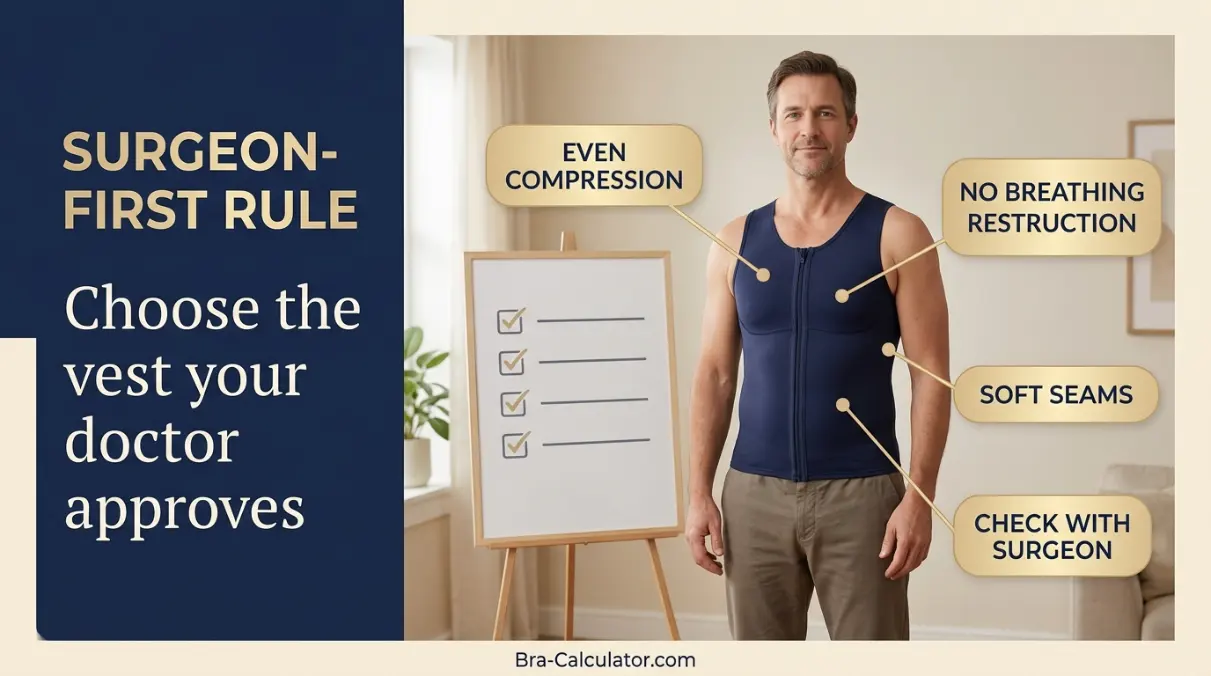
The best post-surgery gynecomastia compression vest is the one your surgeon approves for your exact procedure and recovery stage. In general, look for even chest pressure, adjustable closure, breathable fabric, smooth seams, stable coverage, easy on/off access and a fit that feels snug without restricting breathing. Do not replace your surgeon’s garment instructions with a regular compression shirt or a generic online size chart.
Medical disclaimer: This page is for education and shopping guidance only. Post-surgery compression is part of medical recovery. Always follow your surgeon’s instructions for garment type, size, pressure level, wear schedule, showering, washing, drains, wound care and when to stop or change compression.
Best Post-Surgery Compression Vests for Gynecomastia
| Vest Category | Best For |
|---|---|
| Surgeon-recommended Stage 1 vest | First recovery phase when your surgeon wants consistent medical compression. |
| Adjustable hook-and-eye vest | Swelling changes, careful fit adjustment and controlled pressure. |
| Front-zip recovery vest | Easier on/off access when lifting arms is uncomfortable. |
| Backup second vest | Washing, hygiene and uninterrupted surgeon-approved compression routine. |
| Light recovery compression top | Later-stage comfort only if your surgeon clears lighter support. |
| Most important rule | Surgeon approval first before buying or switching garments. |
Why Post-Surgery Compression Is Different from Daily Support
A post-surgery gynecomastia compression vest is not the same as a normal compression shirt worn to smooth the chest under clothing. After surgery, compression may be used to support the treated area, help manage swelling and keep pressure more even while tissues recover.
That means the “best” vest is not always the most comfortable-looking or most discreet product online. Your surgeon may want a certain garment style, pressure level, closure type or wear schedule based on your procedure, swelling pattern, drains, incision locations and follow-up exam.
If you are still before surgery, ask your surgeon whether they provide a vest, whether you need a backup garment, which closure type is acceptable and when you can switch to lighter compression. If you are already recovering, do not change garments without checking first.
Recovery truth: A post-op vest should support healing instructions, not fight them. Comfort matters, but surgeon-approved fit matters more than Amazon reviews.
Best Gynecomastia Surgery Compression Garment Categories
Use these as shopping categories to discuss with your surgeon. Replace placeholder images and generic search links with selected Amazon products only after checking sizing, reviews, return policy and medical suitability.
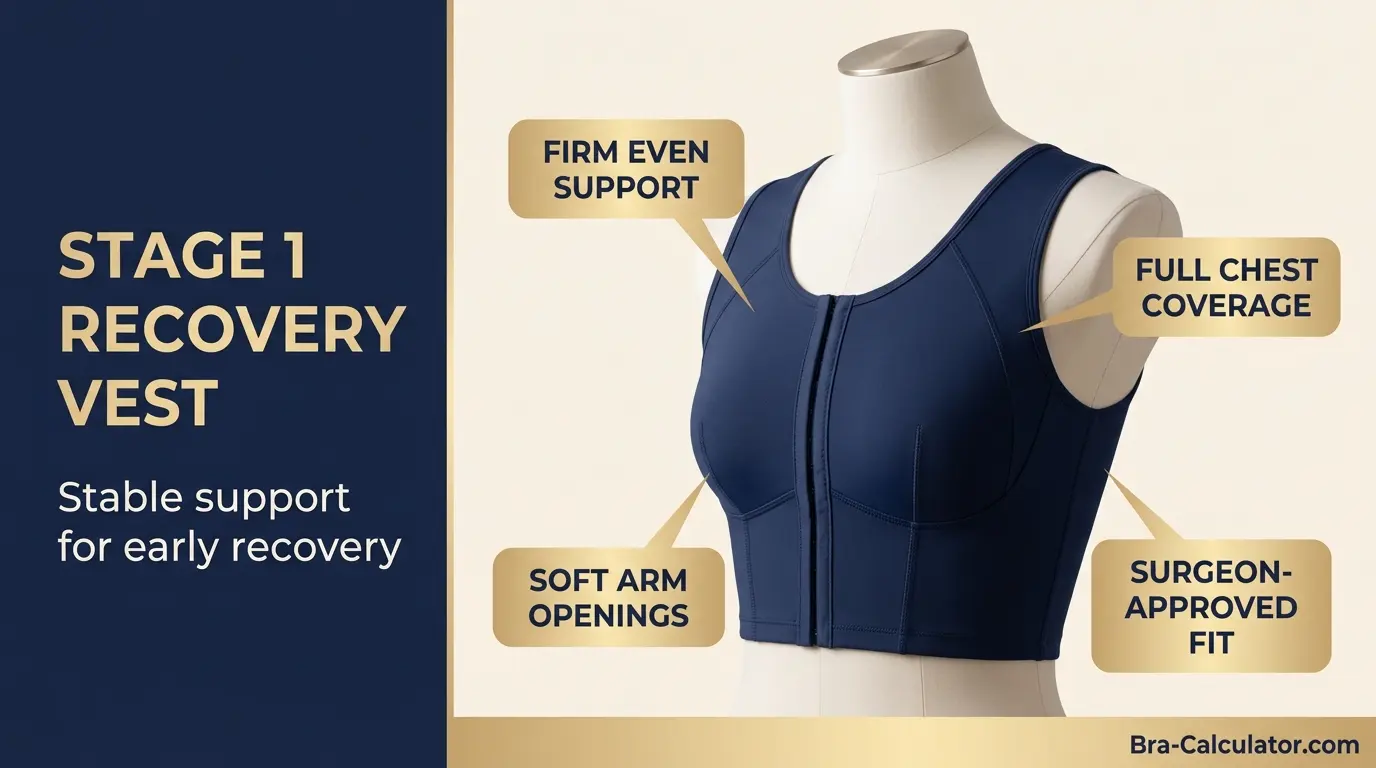
Surgeon-Recommended Stage 1 Compression Vest
This is the main post-op garment category for the early recovery phase. It should provide stable, even compression without harsh pressure points or breathing restriction.
- Designed for recovery support
- Usually more structured than daily compression
- Often recommended after surgery
- Must match surgeon instructions
- Wrong size can be unsafe
- Not chosen for style or invisibility
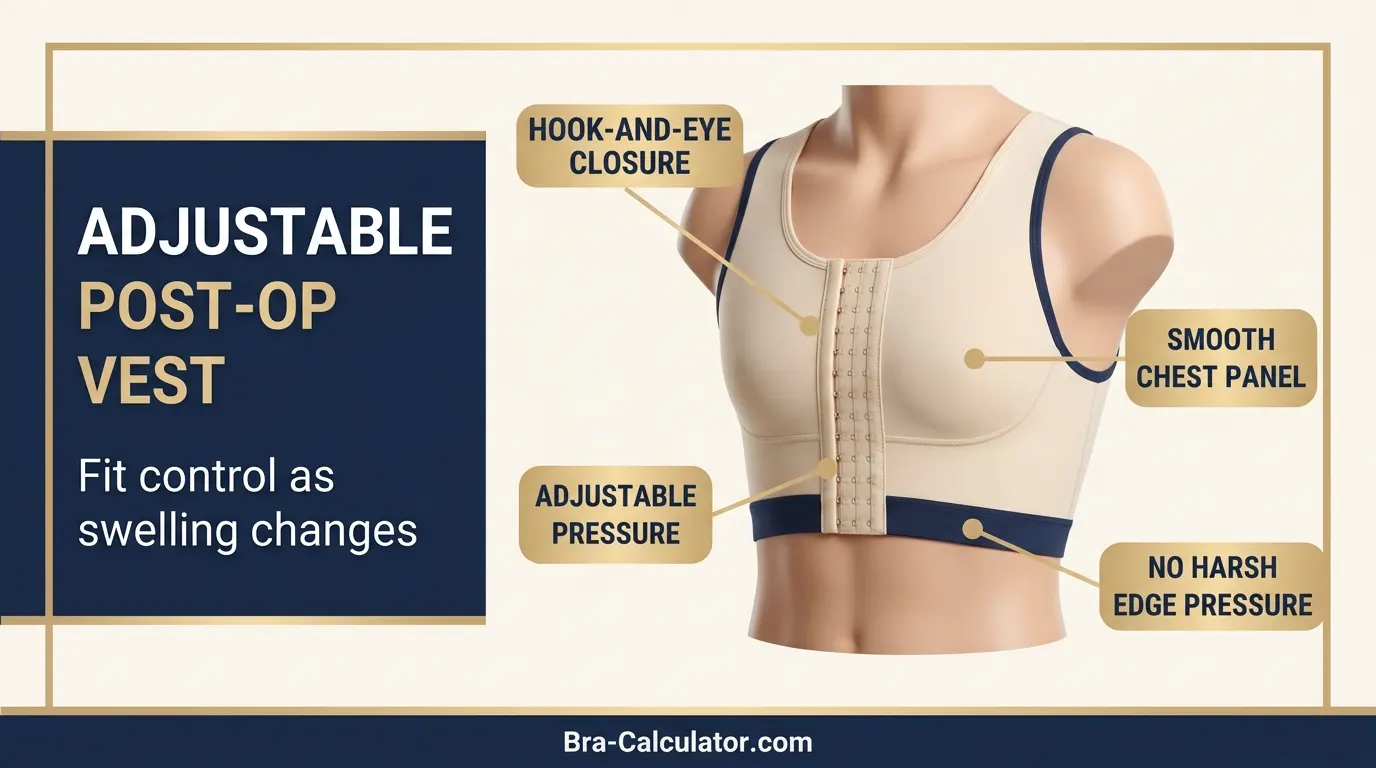
Adjustable Hook-and-Eye Post-Op Vest
An adjustable vest can be useful when swelling changes during recovery, but closure pressure and seam placement must not irritate incision areas.
- More fit control
- Useful when swelling changes
- Easier to adjust than pullover tops
- Hooks may create pressure lines
- Closures may show under clothing
- Not ideal if closure hits tender areas
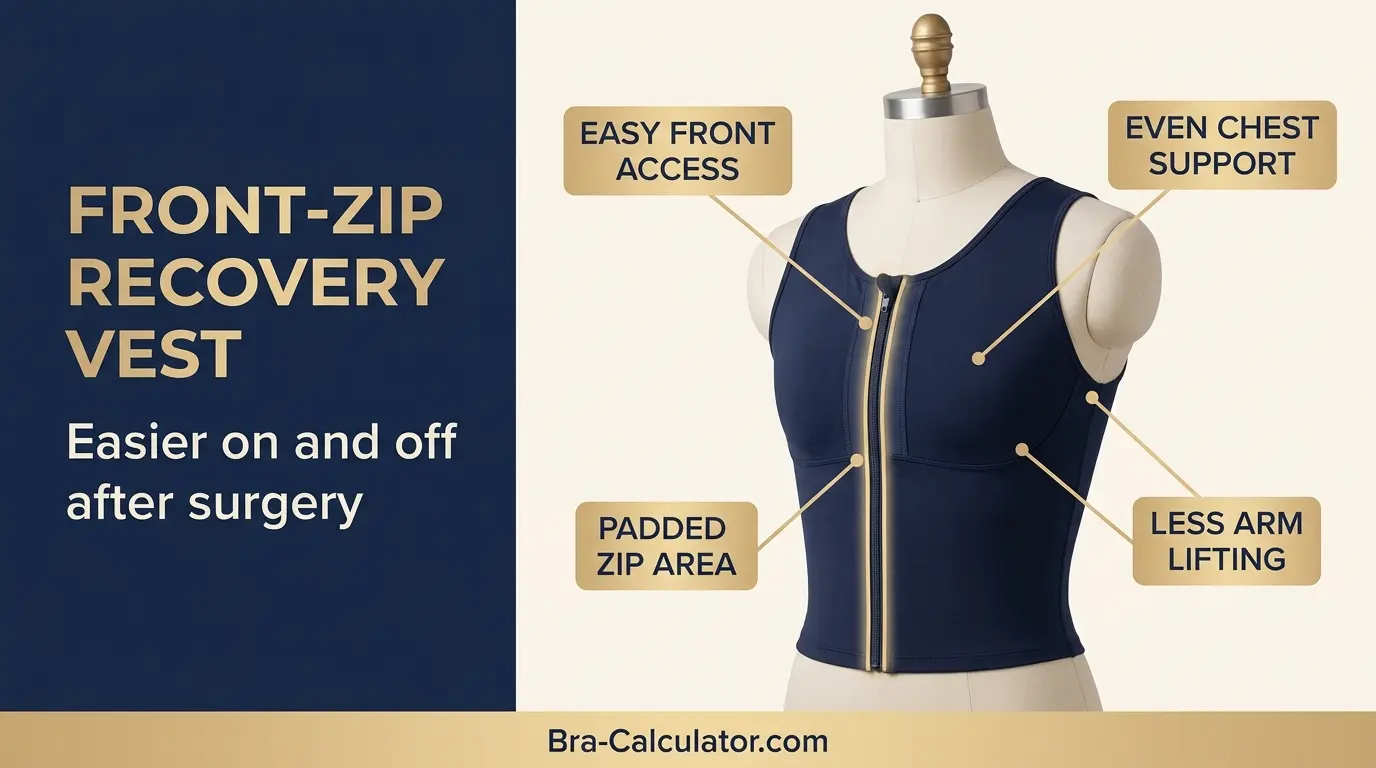
Front-Zip Gynecomastia Compression Vest
A front-zip vest can make dressing easier after surgery, especially if overhead movement is uncomfortable. The zipper must not create harsh pressure or rub healing skin.
- Easier to put on
- Less overhead stretching
- Useful for early recovery handling
- Zipper can create a ridge
- May irritate if poorly padded
- Surgeon must approve compression level
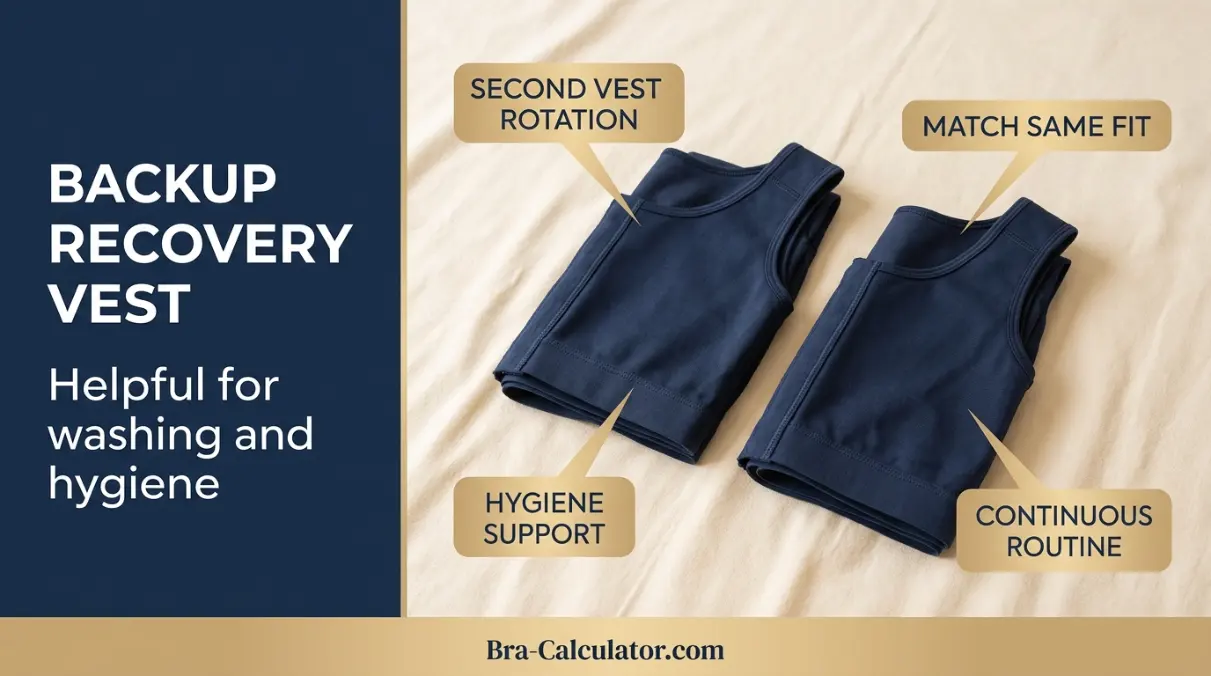
Second Backup Recovery Vest
A backup vest is often practical because post-op garments need washing. The backup should match the surgeon-approved style and size rather than being a random cheaper substitute.
- Helps hygiene
- Reduces downtime during washing
- Useful for longer wear schedules
- Must match approved garment
- Different fit can change pressure
- Do not downgrade without asking
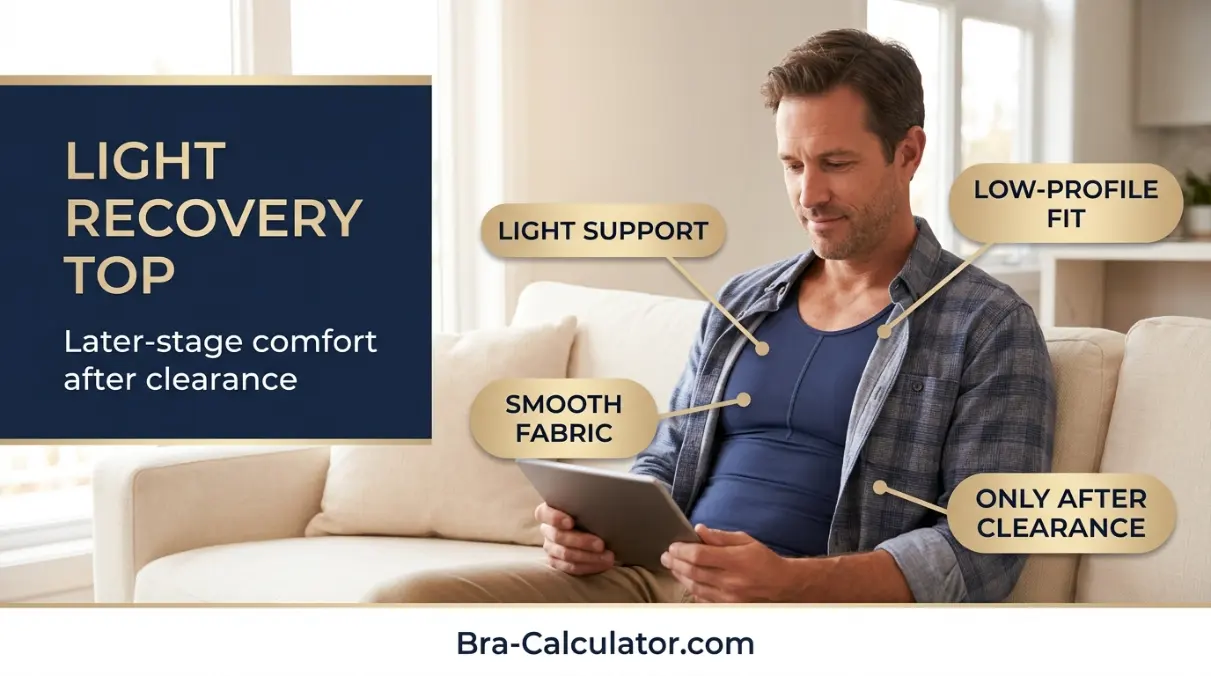
Seamless Light Recovery Compression Top
A lighter compression top may be useful only after your surgeon says you can reduce compression. It should not replace early recovery compression without approval.
- More comfortable later
- Can be easier under clothes
- Less bulky than firm vests
- Not for early recovery unless cleared
- May be too weak
- Not a medical substitute
Post-Surgery Gynecomastia Compression Vest Comparison
| Garment Type | Best Use | Key Safety Check | Visual Winner |
|---|---|---|---|
| Stage 1 recovery vest | Early recovery when surgeon wants firm consistent support. | Surgeon-approved pressure and size. | Primary recovery |
| Adjustable vest | Swelling changes and controlled pressure adjustment. | Closure does not irritate incision areas. | Adjustability |
| Front-zip vest | Easier on/off access after surgery. | Zipper is padded and does not dig. | Easy access |
| Backup vest | Washing rotation and hygiene. | Matches approved garment specs. | Convenience |
| Light recovery top | Later-stage comfort after clearance. | Not used too early. | Later comfort |
| Most important choice | Follow the garment your surgeon approves. | Do not self-switch compression. | Surgeon-first |
How to Choose a Post-Surgery Gynecomastia Vest Safely
Confirm the garment style, compression level, closure type, wear schedule and whether you need a second vest.
A vest can match your chest measurement but still be wrong if pressure, closure or coverage differs from your surgeon’s plan.
Avoid harsh pressure directly over tender areas, drains, incisions or sensitive healing skin unless your clinician says it is appropriate.
If your surgeon wants long wear time, ask whether a second identical or approved backup garment is useful.
Severe pain, numbness, breathing restriction, unusual swelling, bleeding, wound changes or skin color changes should be checked by your surgical team.
How a Gynecomastia Surgery Compression Garment Should Feel
| Check | Better Sign | Call Surgeon If |
|---|---|---|
| Breathing | Snug support without breathing restriction. | You feel short of breath, squeezed or panicked. |
| Pressure | Even pressure across the chest. | Sharp pressure, one-sided digging or intense pain. |
| Skin | No unusual color change or severe irritation. | Skin looks very pale, blue, blistered or increasingly red. |
| Incision area | No harsh rubbing over healing areas. | Bleeding, fluid leakage, odor, fever or wound concern appears. |
| Swelling | Swelling follows your expected recovery pattern. | Sudden, worsening or uneven swelling worries you. |
Features to Look for in a Gynecomastia Post-Op Vest
Compression should feel steady and balanced, not sharp, patchy or one-sided.
Useful when swelling changes, but closure placement must not irritate healing areas.
Front zip or hook access may reduce arm lifting during early recovery.
Soft edges reduce rubbing, especially near sensitive skin or dressing areas.
Helps with heat and long wear time, especially if surgeon recommends extended compression.
Regular shapewear or gym compression is not the same as post-surgical recovery compression.
Stage 1 vs Later-Stage Compression: What Changes?
Every surgeon uses slightly different recovery instructions, so treat this as a conversation guide, not a wear schedule. Your follow-up visits matter because swelling, healing and comfort can change.
| Recovery Stage | Common Garment Priority | What to Ask Your Surgeon |
|---|---|---|
| Early post-op | Stable surgeon-approved compression and easy access. | How many hours per day, shower rules, drain rules, and warning signs. |
| Swelling changes | Adjustability and even pressure without over-tightening. | Whether to adjust hooks/zip or change size. |
| Washing routine | Backup garment with matching approved specs. | Whether a second vest is recommended and how to wash safely. |
| Later recovery | Possibly lighter compression if cleared. | When lighter support is allowed and what activities are safe. |
When to Contact Your Surgeon About a Compression Vest
Call your surgical team promptly if the vest causes severe pain, numbness, breathing difficulty, skin color changes, increasing swelling, bleeding, unusual fluid leakage, wound concerns, fever, bad odor, or anything that feels wrong compared with your discharge instructions.
A compression vest should never feel like something you have to “push through” if symptoms feel alarming. Recovery discomfort can happen, but severe pressure, worsening symptoms or unusual wound changes need professional guidance.
Which Post-Surgery Vest Should You Ask About First?
- Your surgeon has not specified a brand
- You need early recovery support
- You need stable chest coverage
- Stage 1 vest style
- Compression level
- Wear schedule
- Swelling changes are expected
- You need fit adjustment
- Closure placement matters
- Hook-and-eye closure
- Front-zip design
- Pressure limits
- Your vest needs frequent washing
- You need continuous wear
- Hygiene is a concern
- Second identical vest
- Washing instructions
- Safe garment rotation
- You are past the early recovery phase
- Your surgeon mentions lighter support
- Daily comfort becomes the issue
- When to reduce compression
- Light support options
- Activity restrictions
Mistakes to Avoid With After Gynecomastia Surgery Bras and Vests
1. Replacing the Surgeon’s Vest Too Soon
A random online vest may not match the pressure or coverage your surgeon intended.
2. Buying for Discretion Instead of Recovery
Early recovery compression is about healing support, not just hiding under clothes.
3. Choosing Painfully Tight Compression
More pressure is not automatically better and may create unsafe symptoms.
4. Ignoring Washing Needs
One vest can become difficult if long wear time is required.
5. Overlooking Closure Pressure
Zippers, hooks and seams can irritate healing areas if badly placed.
6. Treating Online Advice as Medical Instructions
Recovery guidance must come from your surgical team.
What the Right Post-Op Vest Usually Improves First
These are practical recovery-support outcomes, not promises. Your individual results depend on your surgery, healing and surgeon’s guidance.
“The pressure felt more even.”
A better-matched recovery vest often feels supportive across the chest rather than sharp in one area.
“Changing clothes became easier.”
Front access or adjustable closure can make daily handling easier when arm movement is limited.
“Having a backup helped with washing.”
A second approved garment can make hygiene easier during longer wear schedules.
“I knew what to ask my surgeon.”
Clear questions about pressure, fit, closure and timing can make recovery instructions easier to follow.
Medical References and Disclaimer
This article is educational buyer guidance only. It does not provide surgical recovery instructions, diagnosis or treatment. Follow your surgeon’s instructions and contact your surgical team about any post-op concern.
Frequently Asked Questions
What is the best post-surgery compression vest for gynecomastia?
The best post-surgery compression vest for gynecomastia is the one your surgeon approves for your procedure, swelling level and recovery stage. In general, look for even chest pressure, adjustable closure, breathable fabric, smooth seams and a fit that does not restrict breathing.
How long should I wear a compression vest after gynecomastia surgery?
Follow your surgeon’s exact instructions. General online guidance cannot replace your surgeon’s wear schedule because compression timing depends on the procedure, healing, swelling, drains, skin condition and follow-up exam.
Should a gynecomastia surgery compression vest be tight?
It should feel snug and evenly supportive, not painfully tight. Contact your surgeon if you notice numbness, severe pain, breathing restriction, skin color changes, worsening swelling or unusual drainage.
Can I buy a post-op gynecomastia vest on Amazon?
You can compare post-op vests online, but your surgeon should approve the garment type, compression level and sizing before use after surgery.
Do I need a second compression vest after gynecomastia surgery?
Many patients find a backup vest useful for washing and hygiene, but the second garment should match your surgeon’s recommended compression style and size.
Can a regular compression shirt replace a post-surgery vest?
Usually not unless your surgeon approves it. Post-surgery vests are designed for recovery compression and support, while regular compression shirts are mainly for clothing appearance and daily comfort.
What features matter most in a gynecomastia post-op vest?
Important features include surgeon-approved pressure, adjustable closure, breathable fabric, smooth seams, stable chest coverage, easy on/off design and no harsh edge pressure near incision areas.
When should I call my surgeon about my compression vest?
Call your surgeon if the vest causes severe pain, numbness, breathing trouble, skin color changes, unusual swelling, bleeding, fluid leakage, fever, wound concerns or anything that feels wrong during recovery.
Use This Page as a Buying Checklist, Not a Recovery Plan
Post-surgery compression should follow your surgeon’s instructions. For non-surgical everyday support after recovery clearance, use the men’s bra size calculator and support guides.
More gynecomastia support guides
- Gynecomastia bra guide
- Gynecomastia bra size chart
- Best Compression Tops for Gynecomastia 2026: Full Review
- Can Bras Help Gynecomastia Comfort? What the Evidence Says
- Best Gynecomastia Support for the Gym: Workout Guide
- Gynecomastia Support for Work: Discreet All-Day Comfort Guide
- Wearing a Bra to Sleep with Gynecomastia: Is It Safe?