Best Wireless Bras for Large Busts: Supportive Wire-Free Picks for DD+
A large bust does not need an underwire to feel secure, but it does need real structure. This guide shows which wireless features matter, which styles suit everyday wear versus exercise, and how to avoid the soft-but-unsupportive bras that fail by lunchtime.


What is the best wireless bra for a large bust?
The strongest wireless bras for large busts use a firm, level band, deep full-coverage or shaped cups, side support and wide adjustable straps. For everyday wear, a structured wire-free bra with a back closure usually gives more control than a stretchy pull-on bralette. For running or HIIT, choose a dedicated high-impact wireless sports bra instead of an everyday style.
If your current wireless bra rolls at the band, lets tissue escape near the arm, or needs the straps tightened until they dig, the problem is not simply that your bust is “too large for wireless.” More often, the bra is too stretchy, too shallow, or not graded strongly enough for the cup volume you are wearing.
That distinction matters. The top-ranking guides in this category now compete on specific picks, comfort, size range and real fit criteria. This page takes the same commercial intent seriously, but starts with the fit: the best wireless bra is the one whose structure matches your band size, cup volume and breast shape.
Best Wireless Bras for Large Busts — Quick Comparison
| Pick | Best for | Support design | What to know |
|---|---|---|---|
| Evelyn & Bobbie Beyond Bra | Everyday wireless support | Shaped wireless core, back closure, adjustable straps, center cradle | Brand chart maps a broad range of fuller cup volumes; check its current style-specific chart before ordering. |
| Glamorise MagicLift Moisture Control #1064 | Structured full-figure comfort | Inner support band, wide padded straps, moisture-wicking fabric | Current official US listing focuses on 38–50 bands with extended cup options that vary by band. |
| SHEFIT Ultimate Sports Bra | Running, HIIT, high-impact movement | Wire-free seamed cups with highly adjustable band and straps | Performance-first feel; more locked-in than an everyday lounge bra. |
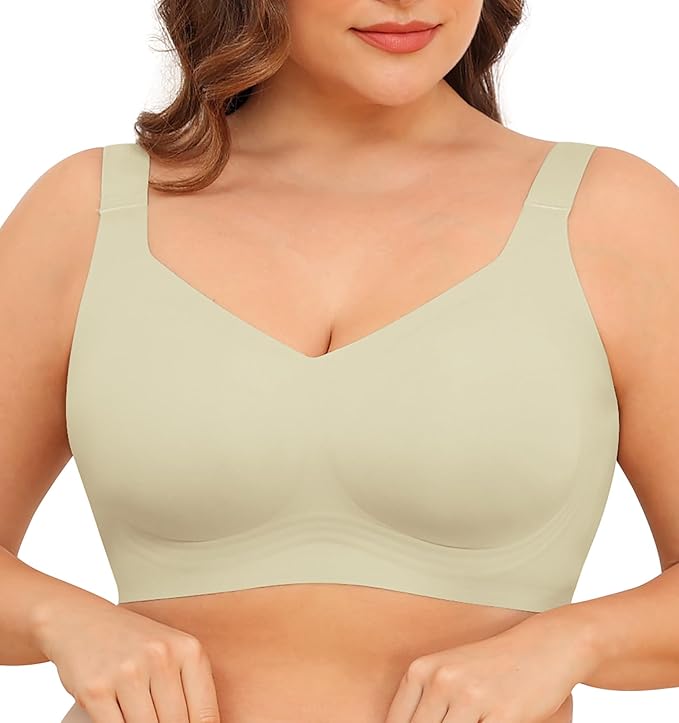
Evelyn & Bobbie Beyond Bra
A strong choice when you want a polished everyday shape without a wire. The current brand design uses adjustable straps, a hook-and-eye back and a center-front cradle to create more separation than a basic pull-on bralette.
- Best for: work, travel, long sitting days and wire fatigue.
- Why it suits fuller busts: the support is distributed through the knit structure and band rather than relying on thin straps.
- Check first: use the Beyond-specific size chart; its sizing is not standard band/cup labeling.
Affiliate link · Price and availability can change.

SHEFIT Ultimate Sports Bra
This is the specialist pick for movement, not the bra to choose just because you want a soft wireless day. It uses wire-free seamed cups plus extensive strap and rib-band adjustment to control motion during higher-impact activity.
- Best for: running, jumping, CrossFit-style training and high-motion workouts.
- Why it suits fuller busts: you can tune band tension and lift separately.
- Trade-off: the locked-in feel is intentionally firmer than an everyday wireless bra.
Affiliate link · Price and availability can change.
Affiliate disclosure: Bra-Calculator.com may earn a commission from qualifying purchases at no extra cost to you. Recommendations are selected for fit relevance; an affiliate relationship does not change the fit criteria used in this guide.
What Makes a Wireless Bra Supportive for Large Breasts?
A wire is only one way to create a stable frame. In a good wire-free bra, the same job is spread across several softer components. That is why two bras that both say “wireless” can feel completely different on a DD, G or J cup.
The band should stay level while you lift your arms. If it climbs up the back, the bra loses its anchor and the straps start carrying too much load.
Fuller busts need room forward as well as across. A cup can technically cover the breast and still be too shallow, causing spill or a flattened shape.
Side panels, firmer wings or an inner sling help guide tissue forward instead of letting it migrate toward the armpit.
A firm band matters more than extra-tight straps
When support feels weak, the instinct is often to shorten the shoulder straps. That can lift the cups temporarily, but it also concentrates pressure at the shoulders. Start with the band: it should feel secure on the loosest hook when new, stay roughly horizontal, and resist riding upward during normal movement.
Deep cups beat “more coverage” when projection is the issue
A tall cup is not automatically a deep cup. If your breast tissue is projected, a shallow full-coverage bra may push the tissue sideways or create pressure at the center. Look for cup construction that gives space at the apex and lower cup, especially if you commonly get side spill despite wearing the correct cup letter.
Seams, slings and bonded zones can replace some wire function
Three-part cups, internal slings, laminated lower cups and high-density knit zones all create directional support. They do not behave exactly like underwire, but they can lift and shape far better than a single sheet of soft stretch fabric.
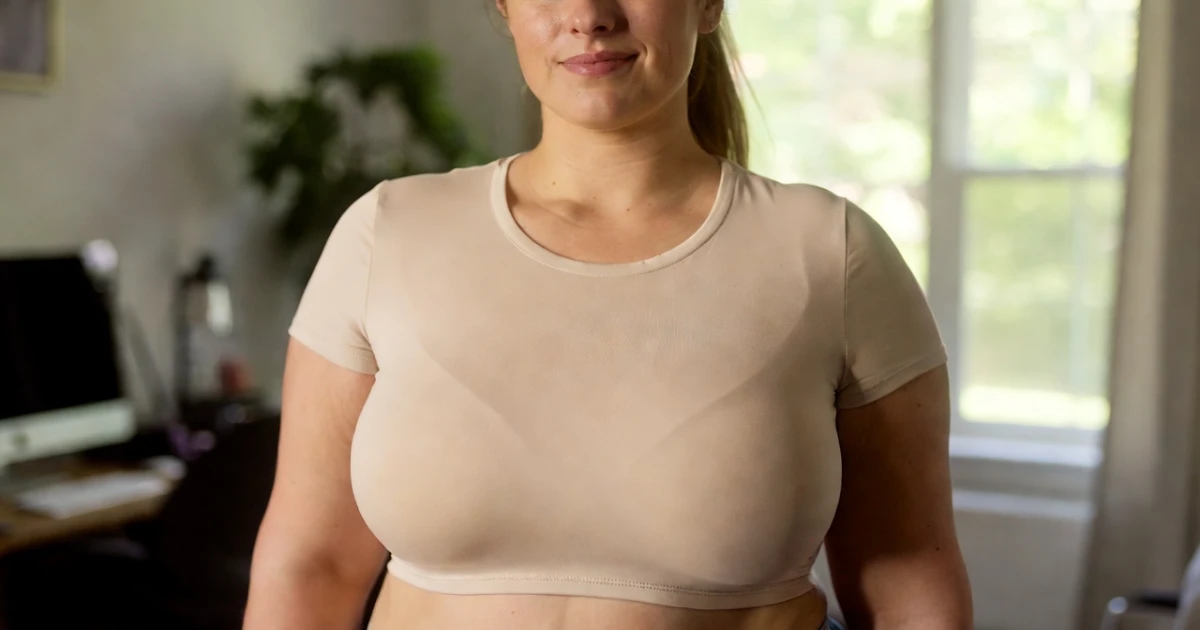
Wireless Bras for Large Busts With Pictures: What Good Support Looks Like
Your site’s visual sizing content performs well because fit is easier to understand when readers can see the construction. On a wireless bra, these are the visual clues worth checking before you buy.
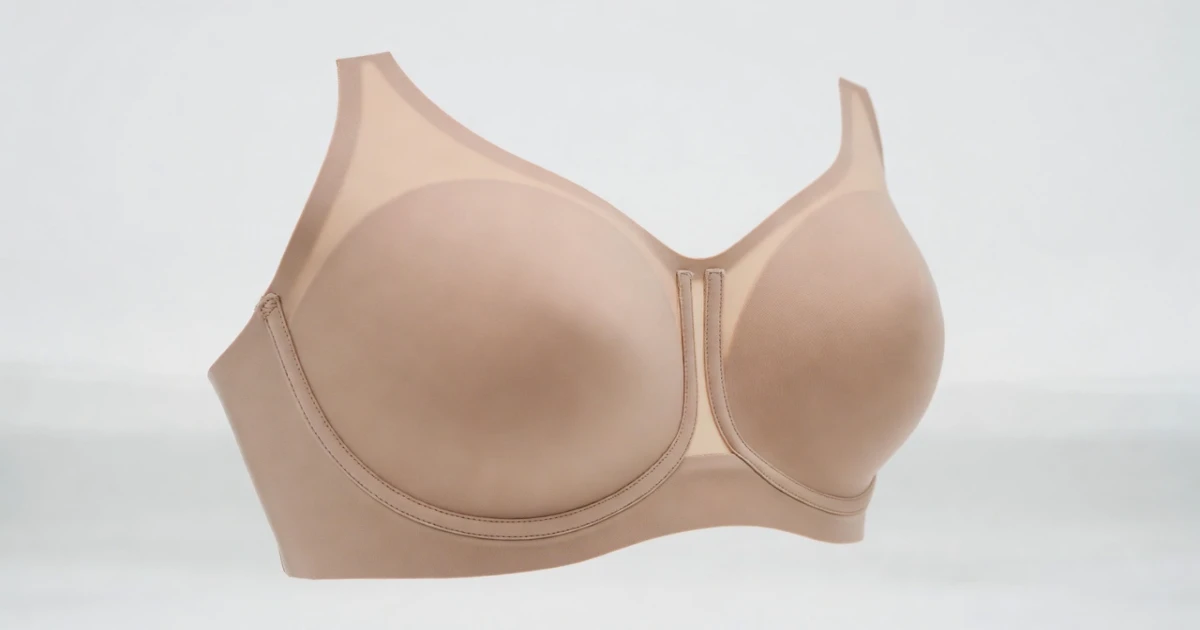

How Should a Wireless Bra Fit on a Large Bust?
Start with your current measurements rather than the size printed on your oldest comfortable bra. If you have not measured recently, use the Bra Size Calculator to get a practical starting size, then confirm it in the actual bra.
Find Your Best Bra Match
Answer a few fit questions to get bra styles matched to your support needs, breast shape and everyday preferences.
Question 1 of 5
Why it matches
What to look for
What may not work
Private fit matching: your answers are used only to build the recommendation on this page. No measurements or fit selections are submitted to Bra-Calculator.com.
This tool suggests a starting bra style, not a medical or diagnostic recommendation. Individual brands and bra models can fit differently.
Use the upside-down band test if you are unsure
Put the bra on backward and upside down so the cups hang away from the body. This isolates the band. If it suddenly feels much looser than it did with the cups on, the cup volume or cup depth may be forcing the bra away from your ribcage. If the band itself is loose even in this test, try a firmer band and adjust the cup with a sister size if needed.
Do not judge a wireless bra before scooping and settling
Lean slightly forward, guide tissue from the side and underneath into the cup, then stand naturally. This is especially important in full-bust sizes because tissue left outside the cup can make a correct cup look too large and can make the band feel tighter than it really is.
Best Wireless Bra Type by Need
| Your priority | Start with | Why | Avoid |
|---|---|---|---|
| All-day office wear | Back-close full-coverage wireless | More precise band adjustment and better cup stability | Very thin pull-on bralettes if you need lift |
| Smooth under T-shirts | Molded or spacer wireless cup | Gives a cleaner surface under knits | Heavy seams if they show through your clothing |
| Hot weather | Spacer knit, mesh or moisture-wicking panels | Reduces heavy padding and improves airflow | Dense foam if you overheat easily |
| Wide-set tissue | Side-support or center-cradle wireless style | Helps direct tissue forward | Very wide, shapeless center panels |
| Running / HIIT | High-impact wireless sports bra | Designed to control movement, not just provide everyday lift | Everyday bralettes, even if they feel snug |
| Sleep / lounge | Soft flexible wireless bra | Comfort and low-pressure containment | Overly firm performance bras for overnight wear |
Match the Wireless Bra to Your Breast Shape
Two people can wear the same 36G and need completely different wireless bras. Cup volume tells you how much space you need; breast shape tells you where that space needs to be.
Projected or full-on-bottom breasts
Prioritize lower-cup depth and a defined base. Seamed cups or supportive lower panels are often more forgiving than very shallow molded foam. If a bra gives you a flat front with tissue pushing toward the sides, you may need more projection rather than a larger band.
Wide-set breasts
Look for a side-support panel, firmer wing or center cradle that encourages a more forward shape. Wireless bras will not always create the same sternum contact as a wired bra, so judge the result by stability, containment and how the shape sits under clothing.
Soft tissue or lower-set breasts
Choose a bra with stronger lower-cup structure and a band that stays anchored. Very stretchy cups may feel comfortable at first but can let softer tissue settle lower during the day. A firmer cup edge and internal sling can make a noticeable difference.
Asymmetry
A cup with some stretch at the neckline is easier to fit when one breast is slightly larger. Fit the larger side first, then use strap adjustment or a removable insert on the smaller side if you want a more balanced appearance.
Not sure which shape description matches you? Use the Breast Shape Identifier before choosing between molded, seamed, plunge, full-coverage or side-support designs.
Wireless vs. Underwire for a Large Bust
Neither category is automatically better. A well-fitted underwire bra can provide very precise lift and separation. A well-built wireless bra can give excellent everyday support with fewer hard pressure points. The better option depends on what you want the bra to do.
| Feature | Wireless | Underwire |
|---|---|---|
| Comfort for long sitting days | Often excellent when the band is correct | Excellent if wire width and shape match your root |
| Maximum separation | Varies; depends on center construction and cup shaping | Usually easier to achieve |
| Flexible sizing days | Often more forgiving | Less forgiving when the cup/root fit changes |
| High-impact exercise | Excellent in purpose-built sports styles | Also available, but not required for bounce control |
| Very projected H+ cup fit | Possible, but style selection matters more | Often offers more precise structural options |
5 Mistakes That Make Wireless Bras Feel Unsupportive
- Buying a bigger band for comfort. A looser band often feels easier for five minutes, then rides up and reduces lift. If the cups are the problem, fix the cups instead of escaping into a larger band.
- Choosing S/M/L bralettes without checking the bust-to-band ratio. Fuller busts often need more cup room without a dramatically larger ribcage. A generic size may fit one dimension and miss the other.
- Assuming full coverage means full support. A tall cup made from weak stretch fabric can cover a lot and support very little.
- Using an everyday wireless bra for high impact. Running creates a different support problem. Use a sports bra designed for the activity.
- Ignoring shape mismatch. A bra can be the right labeled size and still be wrong for your root width, projection or tissue distribution.
How to Make a Supportive Wireless Bra Last Longer
Wireless bras depend heavily on elastic recovery and fabric tension, so heat and repeated wear without rest can reduce support. You do not need an elaborate lingerie ritual; you need to protect the parts that provide structure.
- Fasten hooks before washing and use a mesh bag if machine washing is allowed by the care label.
- Use cool or moderate water and skip high dryer heat unless the manufacturer specifically permits it.
- Reshape molded cups while damp and let them dry without crushing one cup into the other.
- Rotate between bras instead of wearing the same band every day.
- Replace a bra when the band stays loose on the tightest hook, the cups no longer recover their shape, or you keep tightening the straps to compensate.
Frequently Asked Questions
Can wireless bras really support large breasts?
Yes. A supportive wireless bra can work well for large breasts when it has a stable band, enough cup depth, side containment and adjustable straps. A thin stretchy bralette and a structured wireless bra are not the same product category, even though both lack underwire.
What is the most supportive wireless bra style for DD+ cups?
For everyday wear, start with a back-close full-coverage or seamed wireless bra with a firm underband and side support. For high-impact exercise, use a dedicated wireless sports bra with adjustable band tension and motion-control construction.
Are wireless bras better for a large bust than underwire bras?
Not automatically. Wireless styles can be more forgiving and may feel more comfortable for long wear, while underwire often gives more precise separation. Fit and construction matter more than the presence or absence of a wire.
Why does my wireless bra roll up under my breasts?
The band may be too loose, too narrow, too stretchy, or unable to stay anchored against your body shape. A deeper longline is not always the fix; first check whether the band size and cup volume are correct.
Why do wireless bras give me a uniboob shape?
Many soft bras use one continuous stretch panel, which compresses both breasts toward the center. Look for shaped individual cups, a defined center cradle, inner slings or side-support construction if you want more separation.
Should I size up in a wireless bra?
Do not size up automatically. Start with your measured size and the brand’s current chart. If the cup volume is correct but the band is too firm, a sister size can adjust band tension while keeping a similar cup volume.
Can I wear a wireless bra for running if I have a large bust?
Yes, but it should be a high-impact sports bra designed to control movement. An everyday wireless bra may feel snug without providing enough motion control for running, jumping or HIIT.
What should I do if straps dig into my shoulders?
Check the band and cup fit before simply loosening or padding the straps. Digging can happen when the band is too loose, the cups are too small or shallow, or the bra relies too heavily on shoulder tension for lift.
Reviewed by Amelia
Founder & Bra Fit Specialist, Bra-Calculator.com
Amelia reviews the site’s fit guides with a practical focus on band stability, cup containment, sister sizing and the real-world symptoms that tell you whether a bra is working for your body.
Read Amelia’s bio and editorial approach →