Bra Fitting During Chemotherapy: Comfort, Ports and Changing Sizes
For bra fitting during chemotherapy, choose soft, wire-free bras with a gentle, adjustable band, wide padded straps and smooth, breathable fabric such as cotton or modal. Size can change during treatment because of weight change, fluid retention or steroids, so re-measure every few weeks and favour stretch cups and extra hook columns. If you have an implanted port, position or pad the strap so it does not rub or press on the port site. Always follow your oncology team’s advice, especially after surgery or during radiotherapy.
Jump to a Section
Bras During Chemotherapy at a Glance
| Attribute | Detail |
|---|---|
| Best general choice | Soft wire-free bra with a gentle band, wide straps and smooth fabric |
| Why size changes | Weight change, fluid retention, steroids and changes in appetite during treatment |
| Re-measure | Every few weeks, or whenever a bra starts to feel different |
| Ports | Keep straps and edges off the port; adjust, pad or choose a different strap position |
| Sensitive skin | Cotton, modal or soft microfibre; tagless; flat seams; wash before wearing |
| During radiotherapy | Follow your team: usually soft, wire-free, no pressure or seams on the treated area |
| After surgery | Use what your surgical team advises; front-fastening post-surgery bras are common |
Why Bras Can Feel Different During Treatment
Chemotherapy affects the whole body, and several of its common side effects change how a bra fits and feels. The NHS and Cancer Research UK list effects including tiredness, changes in appetite and weight, and skin that becomes dry or more sensitive. Some treatment plans include steroids, which can cause fluid retention and weight gain. Others reduce appetite and lead to weight loss. Either way, the band and cups that fitted last month may not fit now.
Fatigue matters too. When you are exhausted, a bra that needs adjusting, digs in or is hard to fasten becomes a daily irritation you do not need. Comfort, ease and softness move to the top of the list, and shaping and style can wait. Choosing bras you can put on in seconds, without reaching or fiddling with small hooks, saves energy on difficult days.
There is no “correct” bra for everyone in treatment. Some people wear their usual bras throughout. Others find they want soft bras only, or nothing at all at home. Any of these is fine. The aim of this guide is to make whatever you choose more comfortable.
A practical approach many people find helpful is to keep a small set of two or three soft, adjustable bras for treatment weeks, rather than buying a whole new wardrobe. Size may keep changing for a while after treatment ends, so it is usually worth waiting until things settle before investing in more structured or special-occasion bras.
Health note: this guide covers comfort and fit only. It is not medical advice. Your oncology team, breast care nurse or chemotherapy nurse knows your treatment, any surgery, your port or line, and your skin. Ask them before changing what you wear near a port, a wound or an area being treated with radiotherapy, and tell them about any redness, swelling, pain or discharge around a port or line straight away.
Bra Features That Help During Treatment
Removes pressure points under the breast and along the ribs while still offering some support.
Spreads pressure and copes with changing size; extra hook columns give room either way.
Spread weight on the shoulders and are less likely to rub a port site.
Easier to put on when your energy, arm movement or reach is limited.
Cotton, modal or soft microfibre; tagless labels; flat or bonded seams.
Adapt to small changes in volume over the weeks of treatment.
Add pressure and friction where skin may already be sensitive.
Bras and chemotherapy ports
Bras and Implanted Ports
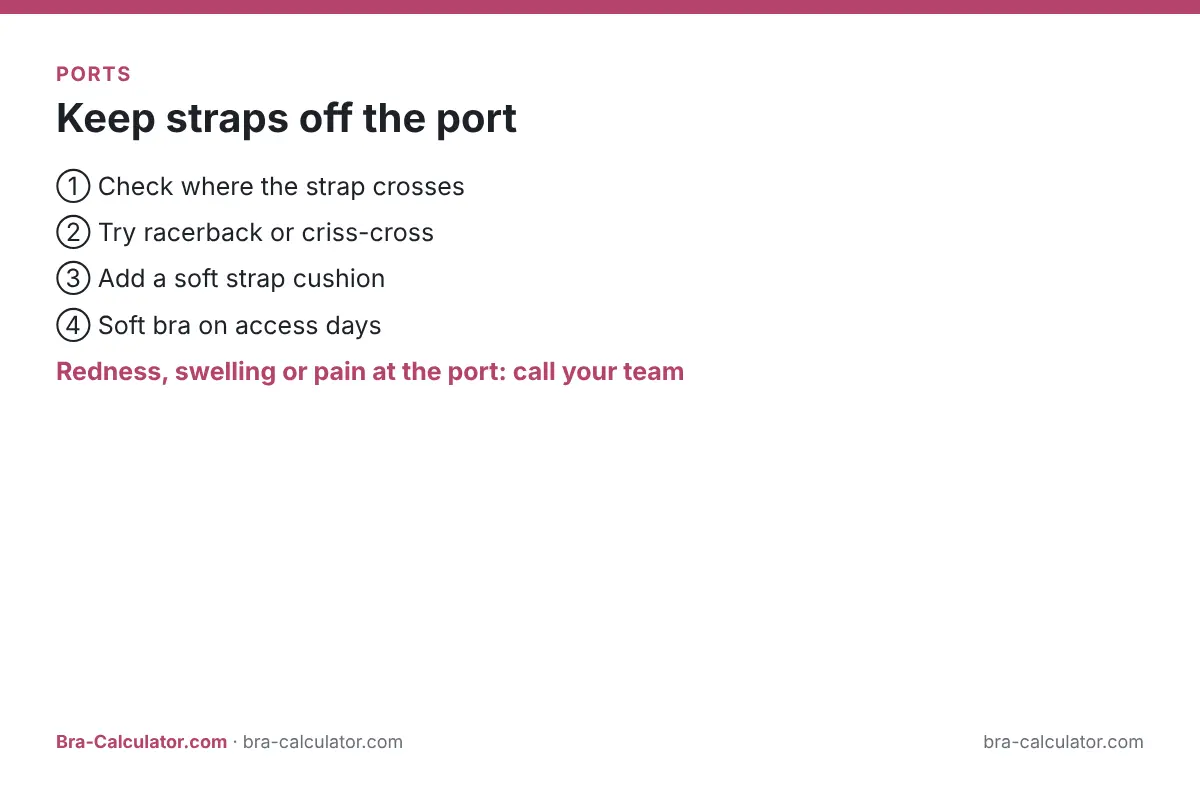
Many people have chemotherapy through an implanted port, a small device placed under the skin, usually on the upper chest below the collarbone, or through another central line. Bra straps cross exactly that area, so a strap that sits on or rubs over the port can become sore, especially in the first weeks after it is placed.
Put on the bra and look in a mirror. Note whether the strap crosses the port site.
Converting to a racerback or criss-cross setting, or choosing a bra with straps set further in or out, often moves the strap away from the port.
A soft strap cushion or a fold of soft fabric under the strap can reduce rubbing. Ask your nurse what they recommend.
On days the port is accessed, a soft bra or a front-opening top makes access easier for the nurse and more comfortable for you.
Redness, warmth, swelling, pain or discharge at the port site needs prompt advice from your treatment team, not a bra change.
Re-Measuring When Your Size Changes
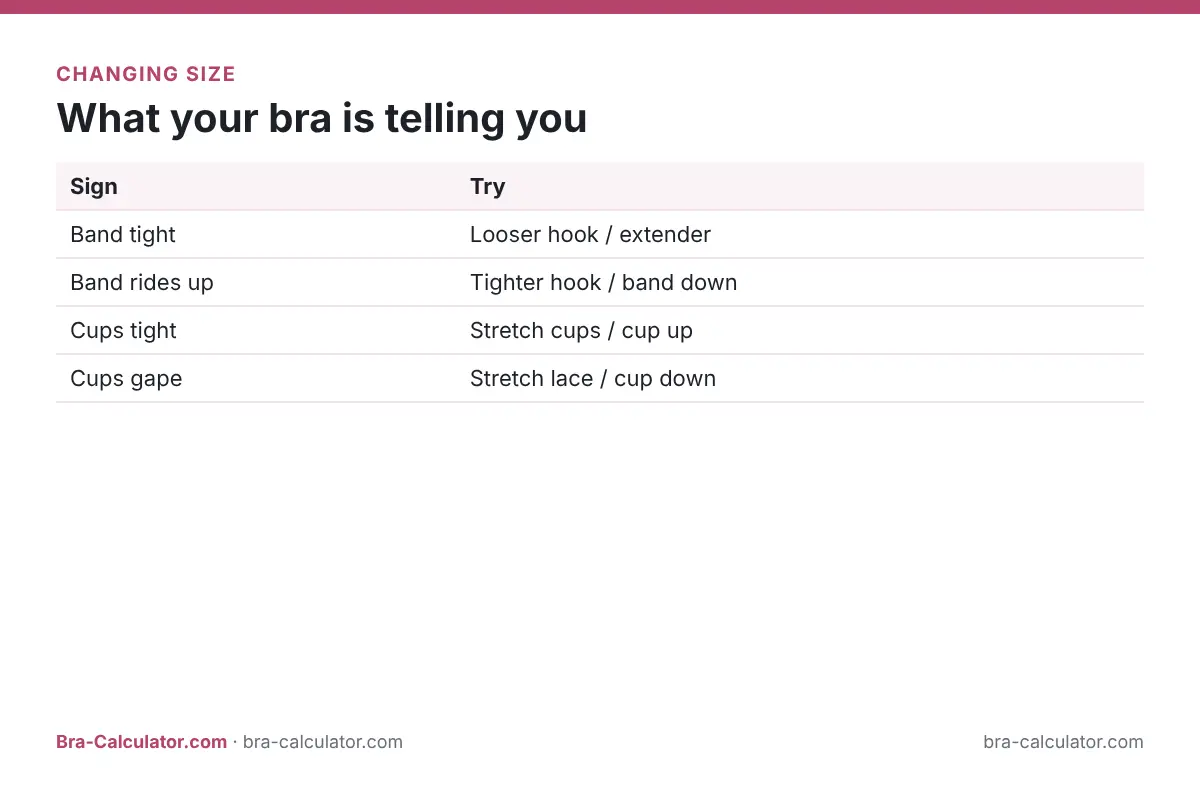
Weight changes during treatment are common and can go in either direction. Because the band is where most support and most pressure come from, it is the first thing to feel wrong. A simple routine helps:
| What you notice | Likely change | What to try |
|---|---|---|
| Band feels tight, leaves deep marks | Weight gain or fluid retention | Looser hook, a hook extender short-term, or one band up |
| Band rides up, straps dig in | Weight loss | Tighter hook, or one band down |
| Cups feel tight or cut in | Breast volume increased | Stretch cups or one cup up |
| Cups gape | Breast volume decreased | Stretch-lace cups or one cup down |
Measure gently with a soft tape, and only when you feel up to it. Our bra size calculator takes about two minutes. If the band and cup change in opposite directions, the sister size calculator shows equivalent sizes. A short-term extender can bridge a few weeks of swelling without buying new bras.
Changing size during treatment
Sensitive Skin During Chemotherapy
Skin can become dry, itchy or more sensitive during chemotherapy. Some treatments also make skin more sensitive to sun. Friction from a bra band or seam that you never noticed before can suddenly become uncomfortable. Practical steps:
Cotton, modal or soft microfibre, with tagless labels and flat seams.
Removes finishing residues that can irritate skin.
Small dose, rinse well, no fabric softener.
A loose band rubs; a tight one presses. The middle ground is gentlest.
Tell your team about any new rash, as some treatments cause skin reactions that need specific care.
Bras During and After Radiotherapy
If radiotherapy to the breast or chest is part of your treatment, the treated skin can become red, dry, sore or itchy over the course of treatment and for a while afterwards. The NHS lists skin changes in the treated area among the common side effects. Radiotherapy teams usually give specific advice on clothing, and it is important to follow it, because practices vary.
Commonly given advice includes wearing a soft, wire-free bra in a natural fabric such as cotton, avoiding seams, lace or edges that press on or rub the treated area, and choosing a size that does not feel tight. Some people prefer a soft crop top, a camisole or no bra at all at home. The underwire typically sits in the breast fold, a common area for skin reactions, which is one reason many teams suggest wire-free during treatment. Ask your team when it is safe to return to underwire bras.
Bras After Breast Surgery
If you have had or will have breast surgery, your surgical team will usually advise on what to wear in the first weeks. This is often a soft, front-fastening post-surgery bra that gives gentle support without pressure on scars or drains. Afterwards, needs differ widely. After a lumpectomy, many people return to a soft wire-free bra. After a mastectomy, pocketed bras that hold a breast form are common. Our mastectomy bra guide and post-mastectomy bra calculator explain the options once you have been cleared.
If lymph nodes were removed, you may have been told about the risk of lymphoedema (swelling in the arm or chest). Tight bands or straps that dig in are worth avoiding. Ask your team or a lymphoedema specialist about suitable bras, and report any new swelling.
Comfortable Options at Every Size
| Bust size | Gentlest supportive option | Notes | More help |
|---|---|---|---|
| AA–B | Soft bralette or a lightly lined wire-free bra | Little weight to support; prioritise softness | small-bust bras |
| C–DD | Wire-free with a firm, soft band and moulded or seamed soft cups | Support reduces movement and rubbing | most comfortable bras |
| DDD/E+ | Supportive wire-free with side slings and wide straps | Fuller busts need the band to carry the weight | wireless bras for large busts |
| After surgery or with a form | Pocketed soft bra as advised | Fit both sides evenly | mastectomy bras |
If you have always worn underwire and find wire-free unsupportive, look for structured soft cups and a firmer band rather than a soft stretchy bralette. Our underwire vs wireless guide and non-wired bras for large busts explain how wire-free bras can still give real support.
Comfort at Home and at Night
On treatment days and the days after, many people want as little as possible against their skin. A soft sleep bra, a camisole with a built-in shelf or nothing at all are all reasonable choices at home. If your breasts feel heavy or sore when you lie down, a soft, wire-free sleep bra can make it easier to rest; choose one that is gently supportive, never compressive.
Temperature changes, such as hot flushes from treatment or medication, can make synthetic bras feel uncomfortable. Breathable cotton or modal and a slightly looser fit help. If straps dig in or the band feels tight while you are resting, that is a sign to loosen or change the bra rather than put up with it. See straps digging in and band too tight for quick fixes.
Soft, Supportive Options
All picks are in stock on Amazon with at least a 4.0-star average and hundreds of verified ratings. They are general comfort bras, not medical products. Check with your care team before wearing anything near a port, a wound or a treated area. Ratings were checked in November 2026.
A very soft, lightly lined wire-free bra with a smooth band. A gentle everyday option. Check sizes on Amazon
A wide, soft band designed not to dig in, useful when your size is changing. Check sizes on Amazon
A front-closure racerback that is easier to put on when tired. Check that the racerback strap position suits your port. Check sizes on Amazon
A short-term fix that adds room to the band during weeks of fluid retention. Check on Amazon
Affiliate disclosure: we earn a commission on qualifying Amazon purchases at no extra cost to you. Picks are chosen for comfort, never for commission.
Questions to Ask Your Care Team
- Is there anything I should avoid wearing near my port or line?
- Should I wear a bra during radiotherapy, and what kind?
- When can I go back to underwire bras?
- Am I at risk of lymphoedema, and does that affect what I wear?
- Is there a bra fitting or prosthesis service I can use through the hospital?
Many hospitals and charities offer fitting services or can point you to fitters experienced with treatment, surgery and prostheses. Macmillan has wider information and support about chemotherapy.
Common Problems and Gentle Fixes
The strap crosses the port site.
Fluid retention, often with steroids.
Weight loss during treatment.
Friction on more sensitive skin.
Fatigue or limited reach.
Sources and Further Reading
- NHS: Chemotherapy side effects
- Cancer Research UK: Chemotherapy side effects
- NHS: Radiotherapy side effects
- NHS: Lymphoedema
- Macmillan: Chemotherapy
Sizing guidance follows our published methodology.
Related guides
Frequently Asked Questions
A soft, wire-free bra with a gentle adjustable band, wide padded straps and smooth breathable fabric, as long as your care team has no specific advice otherwise.
It can. Weight changes, fluid retention and steroids are common during treatment, so re-measure every few weeks.
Usually yes, but make sure the strap does not rub or press on the port. Adjust the strap position or add soft padding, and check with your nurse.
Many people prefer wire-free for comfort. During radiotherapy to the breast, teams commonly advise wire-free. Ask your team when you can return to underwire.
Follow your radiotherapy team. A soft, wire-free cotton bra with no seams or pressure on the treated area is commonly suggested.
Yes. Wear whatever is most comfortable for you unless your care team advises otherwise.
Soft cotton, modal or smooth microfibre with tagless labels and flat seams. Wash new bras before wearing.
For redness, swelling, warmth, pain or discharge around a port or line, a new rash, or new swelling in the arm or chest.
Re-measure gently when you are ready
Size often changes during treatment. A two-minute measurement helps you find a comfortable fit.