The best teen gynecomastia support is usually a soft, breathable compression undershirt or seamless base layer — not a tight medical-style vest. For school, choose something discreet under uniforms, polos or PE shirts. For sports, choose breathable support that reduces movement without restricting breathing. Teens should involve a parent, guardian or clinician if there is pain, worry, a lump, nipple discharge, skin changes or fast one-sided swelling.
Important teen safety note: This page is educational and not medical advice. Gynecomastia can happen during puberty, but a teen should not feel forced to handle it alone. Talk with a parent, guardian, school nurse or doctor if symptoms are painful, changing, one-sided, distressing or confusing.
Teen Gynecomastia Support at a Glance
| Teen Situation | Best Support Direction |
|---|---|
| School uniform | Soft seamless base layer or matte compression undershirt under the uniform shirt. |
| PE class | Breathable sports compression shirt that reduces movement but allows full breathing. |
| Tender chest or nipple rubbing | Soft support fabric with smooth seams; avoid harsh compression. |
| Visible outline under shirt | Medium-weight outer shirt, darker approved color, hoodie or overshirt where allowed. |
| High worry or embarrassment | Talk with a trusted adult or clinician; support can help comfort but emotional support matters too. |
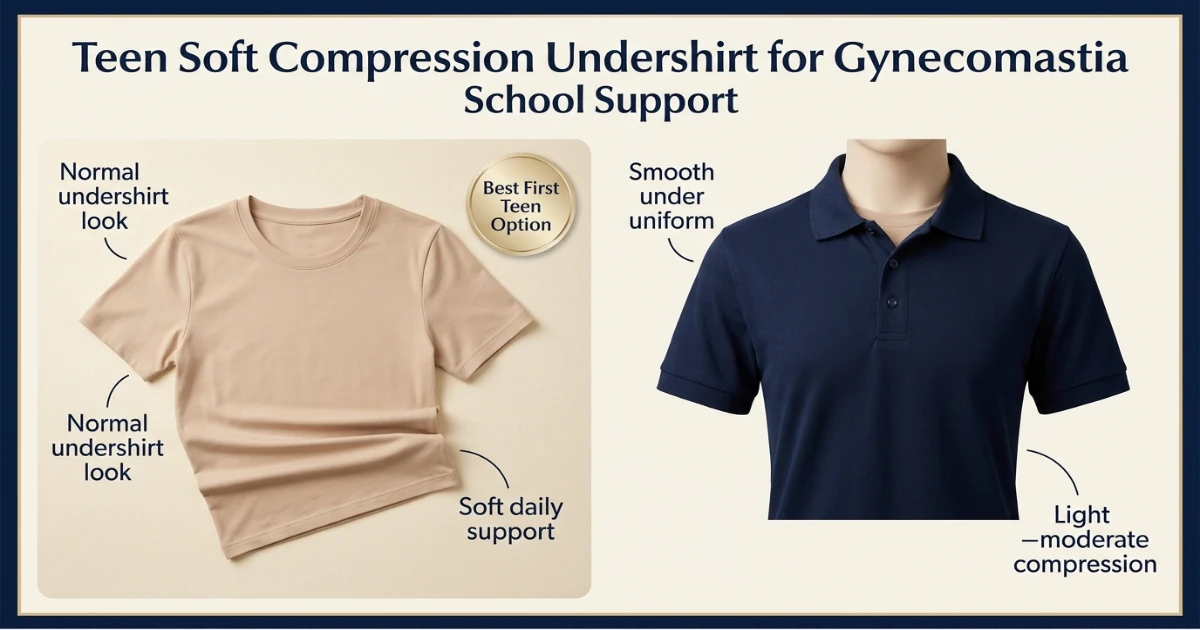
| Best first choice | Soft compression undershirt because it feels like normal clothing and stays discreet. |
Why Teen Gynecomastia Support Is Different
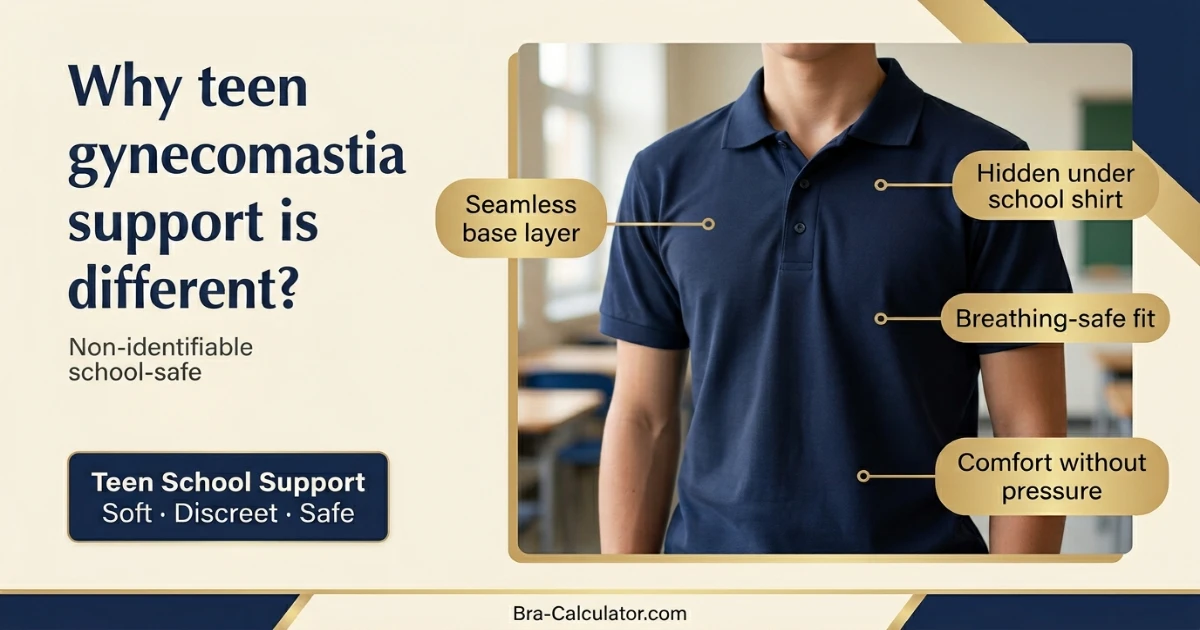
Teen gynecomastia support is not the same as adult compression shopping. A teen may be dealing with puberty changes, school uniforms, PE class, locker-room anxiety, body teasing, sensitive nipples, and uncertainty about what is normal. The support goal should be comfort, privacy and confidence — not punishment, shame or extreme flattening.
For many teens, a support garment should look and feel like ordinary clothing. A soft compression undershirt or seamless base layer is often easier to accept than something that feels like a “bra.” The language matters too. Calling it a base layer, support shirt or compression undershirt can feel more comfortable for teens who are already self-conscious.
Support does not treat gynecomastia or make puberty changes disappear. It can, however, reduce movement, rubbing, shirt cling and daily distraction while the teen and family decide whether medical advice is needed.
Teen comfort rule: The right support should make school, sports or daily life feel easier — never painful, humiliating or forced.
For Parents: How to Help Without Making It Worse
If a teen brings up chest changes, treat the conversation gently. Avoid teasing, shocked reactions, or quick comments like “just lose weight” or “it is nothing.” Even when gynecomastia is medically common, it can feel very personal and embarrassing to a teenager.
The most helpful approach is practical and calm: ask whether there is pain, rubbing, sports discomfort, school uniform stress, or worry about appearance. Then decide together whether a soft support layer, clothing adjustment or doctor visit would help.
A clinician can help distinguish puberty-related gynecomastia, pseudogynecomastia, medication-related changes or symptoms that need evaluation. Support garments are for comfort and confidence; they are not a substitute for medical advice when symptoms are concerning.
Best parent script: “You are not in trouble and you are not weird. We can look at comfortable options together, and if anything hurts or worries you, we can talk to a doctor.”
How to Wear Gynecomastia Support Under School Uniforms
| School Clothing | Best Support Layer | Why It Works | Watch Out For |
|---|---|---|---|
| White uniform shirt | Skin-tone, gray or approved undershirt color. | Less show-through than bright white compression. | Thin fabric can reveal seams. |
| Polo shirt | Matte seamless compression undershirt. | Polo texture hides better than thin T-shirt fabric. | Neckline showing at collar. |
| PE shirt | Breathable sports compression base layer. | Reduces movement during running and jumping. | Overheating or tight armholes. |
| Hoodie allowed | Soft support + hoodie or overshirt. | Adds privacy without aggressive compression. | Hot weather discomfort. |
| Formal blazer | Soft compression undershirt. | Blazer structure hides outline naturally. | Support should not bunch under shirt. |
| Most discreet school formula | Soft seamless base layer + medium-weight uniform shirt + calm fit check in natural light. | ||
Teen Gynecomastia Support for PE Class and Sports
PE class can make gynecomastia feel more noticeable because running, jumping and changing clothes increase movement and anxiety. A soft daily undershirt may be enough for normal school, but PE may need a breathable sports compression layer with better stretch recovery.
The support should reduce bounce and rubbing without restricting breathing. Teens should be able to run, stretch, lift arms, and breathe deeply. If the support makes PE harder, causes dizziness, digs into the ribs or creates numbness, it is too tight or the wrong design.
Use breathable compression that controls movement during repeated steps.
Choose support that stays hidden and does not shift under the jersey.
A normal-looking compression shirt may feel less stressful than bra-style support.
Soft, flat seams and moisture-wicking fabric help reduce friction.
Light sports fabric is better than thick shapewear during activity.
High compression should not be worn all school day if it restricts breathing or feels painful.
Best Support Types for Teen Gynecomastia
Feels like normal clothing and usually hides well under school shirts.
Smooth edges reduce show-through under polos and uniform shirts.
Useful for running, jumping and sports if it stays breathable and safe.
Gentler support can help if rubbing or nipple sensitivity is the main issue.
Hoodies, overshirts or structured polos can help without aggressive compression.
Teens should avoid painful pressure, rib restriction or all-day over-compression.
How to Choose Teen Gynecomastia Support Safely
A teen should not feel alone. Talk with a parent, guardian, school nurse or doctor if there is pain, worry or embarrassment.
Begin with a soft compression undershirt or seamless base layer before trying firmer support.
Check the support under uniforms, polos, PE shirts and hoodies in natural light.
The teen should be able to breathe deeply, raise arms, sit, walk and run without pain or tightness.
See a doctor for ongoing pain, lumps, discharge, skin changes, bleeding, fast one-sided change or major distress.
Teen Support Fit Tests Before Wearing It to School
| Fit Test | Good Sign | Problem Sign |
|---|---|---|
| Breathing test | Teen can breathe fully and speak normally. | Ribs or chest feel squeezed. |
| School shirt test | Support stays hidden under uniform or polo. | Neckline, seams or color show through. |
| Arm raise test | Garment stays in place when arms lift. | Support rides up or pulls underarms. |
| Sitting test | No rib pressure while sitting at a desk. | Band digs, rolls or creates discomfort. |
| PE movement test | Movement is reduced without pain. | Bounce remains or support feels restrictive. |
| End-of-day test | No deep marks, irritation, numbness or urgent need to remove it. | Skin marks, tingling, pain or overheating. |
Best Teen Support Type by Main School Problem
| Main Problem | Best Support Type | Why It Works | What to Avoid |
|---|---|---|---|
| Visible chest under uniform | Seamless base layer | Smooths without obvious seams. | Shiny fabric or high neckline. |
| Movement during PE | Sports compression shirt | Controls movement better than daily support. | Restrictive compression. |
| Nipple rubbing | Soft support undershirt | Reduces fabric friction. | Rough seams or scratchy tags. |
| Locker-room stress | Normal-looking compression shirt | Looks more like athletic clothing. | Bulky support that draws attention. |
| Tenderness | Light soft support | Gentle pressure can feel steadier. | Firm compression or tight bands. |
| Best first teen buy | Soft compression undershirt | Most discreet and teen-friendly | Do not over-tighten. |
Best Teen Gynecomastia Support Options
These are support categories, not medical treatments. For teens, involve a parent/guardian for buying decisions and choose comfort-first support rather than aggressive compression.
Soft Compression Undershirt
Best for most teens because it feels like ordinary clothing and can reduce shirt cling, movement and rubbing without looking like a traditional bra.
- Uniform shirts show chest outline
- Teen wants discreet support
- All-day comfort matters
- It restricts breathing
- It leaves deep marks
- It feels emotionally uncomfortable
Teen buying tip: Choose a color that hides under the school shirt, and test the neckline with the actual uniform.
View Options on Amazon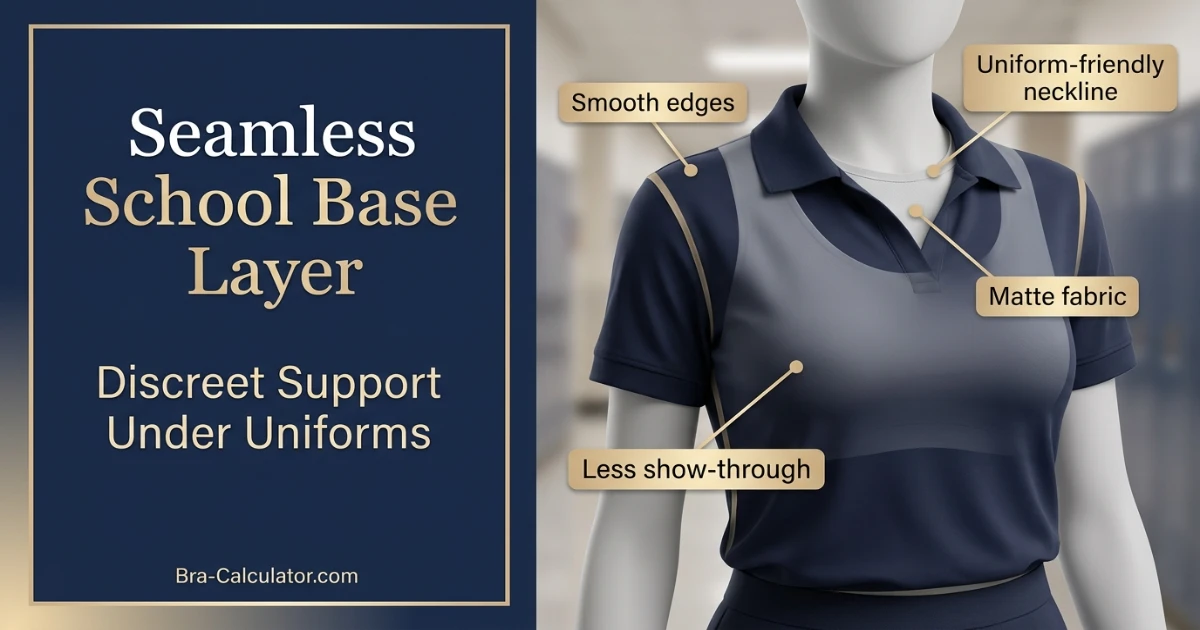
Seamless School Base Layer
Best when thin uniform shirts reveal seams or shirt cling. A seamless base layer can reduce outline without feeling like strong compression.
- Uniform fabric is thin
- Seams show easily
- Teen wants subtle coverage
- PE movement needs stronger control
- Fabric is too warm
- Neckline shows
Teen buying tip: Matte fabric usually hides better than shiny athletic compression under school clothing.
View Options on Amazon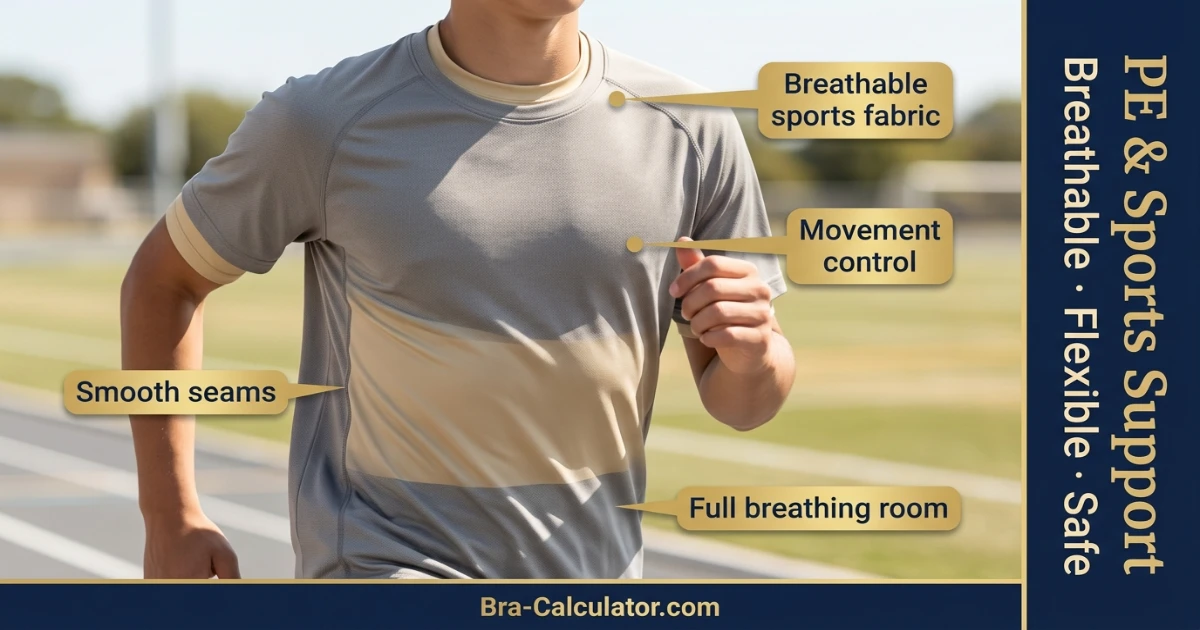
Breathable PE Compression Shirt
Best for running, jumping or sports when a soft daily undershirt does not reduce movement enough.
- PE causes bounce or rubbing
- Sports shirt is loose
- Sweat control matters
- It feels too tight for all-day wear
- It cuts into underarms
- It makes breathing harder
Teen buying tip: A PE support shirt can be used only for activity instead of being worn all school day.
View Options on AmazonTeen Body and School-Situation Notes
Keep It Gentle
Soft support is safer than firm pressure when the chest is tender.
GentleLow Profile
Choose support that stays hidden under the actual uniform shirt.
DiscreetBreathable
Sports support should reduce movement but allow full breathing.
PENormal-Looking
A compression shirt may feel less stressful than bra-style support.
PrivacySoft Seams
Smooth, tag-free fabric helps reduce rubbing.
SoftLight Fabric
Avoid thick layers that make school days uncomfortable.
CoolAdult Support
A trusted adult can help with school clothing and emotional stress.
SupportDoctor First
Symptoms that hurt, change or worry you deserve medical advice.
SafetyHow Teens Can Ask for Help Without Feeling Embarrassed
It can feel awkward to ask for support clothing, but the conversation does not need to be dramatic. A teen can start with comfort rather than appearance: “My chest feels uncomfortable in PE,” “my shirt rubs,” “I feel self-conscious at school,” or “I want to try a compression undershirt.”
Parents can make the conversation easier by using practical language: base layer, support shirt, compression undershirt, PE shirt or comfort layer. The goal is to solve the day-to-day problem without turning it into a shameful topic.
| Teen Can Say | Adult Can Respond |
|---|---|
| “My chest feels uncomfortable during PE.” | “Let’s find something soft and breathable, and we can ask a doctor if it hurts.” |
| “My uniform makes it obvious.” | “We can test a base layer under your actual shirt and keep it discreet.” |
| “I don’t want a bra.” | “That’s okay. We can look at normal compression undershirts first.” |
| “I’m worried something is wrong.” | “We can book a doctor visit so you don’t have to guess.” |
Choose Teen Support by Main Problem
- Uniform shirt clings
- Chest outline shows
- Teen wants discreet support
- Soft compression undershirt
- Seamless base layer
- Medium-weight outer shirt
- Running causes movement
- PE shirt rubs
- Sports feel embarrassing
- Breathable sports compression
- Smooth seams
- Activity-only use if needed
- Chest or nipples feel sore
- Fabric rubbing hurts
- Firm pressure feels bad
- Soft support layer
- Tag-free fabric
- Light support only
- Hard lump
- Discharge or bleeding
- Fast one-sided change
- Talk with parent/guardian
- Book GP/doctor visit
- Use support only for comfort
Teen Gynecomastia Support Mistakes to Avoid
Teens should not wear painful support that restricts breathing or leaves deep marks.
School anxiety, teasing and body worry deserve support, not dismissal.
Support must be checked under the actual uniform or PE shirt.
“Support shirt” or “base layer” may feel more comfortable than “bra.”
Soft compression is usually a better first step than a firm vest.
A teen should not have to manage pain, symptoms or distress alone.
What Teens Often Notice with Better Support
These are practical comfort outcomes, not medical promises.
“A compression undershirt felt less awkward than I expected.”
Normal-looking base layers can make support feel more private and school-friendly.
“PE felt less distracting.”
Breathable support can reduce movement and rubbing during running or sports.
“Testing it under my uniform helped.”
Real shirt testing catches neckline, color and seam issues before school.
“Talking to an adult made it easier.”
A calm parent or clinician can turn a stressful topic into a practical plan.
Medical References and Disclaimer
This guide is for teen comfort, clothing and support education. It is not medical advice and does not diagnose or treat gynecomastia. Support can reduce movement, rubbing and shirt discomfort while worn, but it cannot remove glandular tissue or replace medical evaluation.
Seek medical advice if a teen has sudden swelling, a hard lump, ongoing breast or nipple pain, nipple discharge, bleeding, skin changes, fast one-sided enlargement, severe pressure pain, numbness, or significant worry or distress.
Frequently Asked Questions
Can a teenager wear a bra for gynecomastia?
A teenager may wear soft, discreet chest support if it helps comfort, rubbing or clothing confidence, but a parent, guardian or clinician should be involved if there is pain, worry, distress or changing symptoms.
What is the best support for teen gynecomastia at school?
The best school option is usually a soft compression undershirt or seamless base layer that stays hidden under uniforms or polos without restricting breathing.
Can teen gynecomastia go away on its own?
Puberty-related gynecomastia can improve over time for many teens, but ongoing pain, lumps, discharge, skin changes or major worry should be discussed with a doctor.
Should teens use firm compression for gynecomastia?
Firm compression is usually not the best first choice for teens. Start with soft, breathable support and avoid anything painful, restrictive or worn too long.
What should a teen wear for PE class with gynecomastia?
For PE, a breathable sports compression shirt or supportive base layer under the PE shirt can reduce movement and rubbing while allowing breathing and shoulder movement.
How can a teen hide gynecomastia under a school uniform?
Use a matte seamless base layer, medium-weight shirt, darker colors if allowed, structured polo fabric, and avoid thin clingy shirts that reveal seams or chest outline.
Can support reduce teen gynecomastia?
No. Support can help comfort and appearance while worn, but it cannot reduce glandular tissue or treat gynecomastia.
When should a teen see a doctor for gynecomastia?
A teen should see a doctor for ongoing pain, a hard lump, nipple discharge or bleeding, skin changes, fast one-sided enlargement, or if the condition causes significant worry or distress.
Teen Support Should Feel Safe, Soft and Discreet
Start with gentle support, test it under real school clothes, involve a trusted adult, and get medical advice for pain, lumps, discharge, skin changes or major worry.
More gynecomastia support guides
- Gynecomastia bra guide
- Gynecomastia bra size chart
- Plus Size Gynecomastia Bra Guide: Best Support for Larger Men
- Gynecomastia Grade 2 Bra Guide: Best Support for Moderate Chest Fullness
- Gynecomastia Grade 3 Compression Guide: Stronger Support Without Over-Tightening
- Gynecomastia Bra Buying Guide: How to Choose the Right Support
- Compression Too Tight: How to Fix Gynecomastia Support Fit