Breast Health and Bra Fit: Myths vs Facts — What Science Actually Says (2026)
Most popular beliefs about bras and breast health — that underwires cause cancer, that going braless prevents sagging, that sleeping in a bra helps — are not supported by scientific evidence. What the research does show is that a consistently poorly fitting bra can contribute to real physical symptoms including back pain, shoulder strain, and posture problems. This guide separates 14 persistent myths from what the science actually says, so you can make informed decisions rather than ones based on misinformation.
Ask a room full of people what they know about bras and breast health and you’ll hear the same claims repeated with complete confidence: underwire bras cause cancer. Sleeping in a bra prevents sagging. Going braless makes your breasts sag faster. Most of these claims have circulated for decades — some originated from books, some from social media, some from well-meaning relatives passing along received wisdom. Almost none of them are supported by clinical evidence. But some things that sound like myths — like the connection between bra fit and back pain — are genuinely real. This guide goes through each claim individually and tells you exactly what the evidence actually shows.
⚡ Key Takeaways
- Bras do not cause breast cancer — multiple large-scale studies have found no association. This is one of the most thoroughly debunked myths in breast health.
- Breast sagging is caused by genetics, age, gravity, and lifestyle factors — not bra wearing or not wearing habits.
- A poorly fitting bra can cause genuine physical symptoms — particularly back, neck, and shoulder pain in women with larger cup sizes. This is well-supported by research.
- Underwires are not inherently dangerous — a correctly fitted underwire that sits on the ribcage poses no documented health risk.
- There is no single “correct” amount of time to wear a bra — decisions about daily wear, exercise, and sleep are personal and not medically mandated.
- Bra size accuracy matters more than bra style — the evidence consistently shows that fit problems (particularly band size errors) drive most bra-related physical symptoms.
- Most women are wearing the wrong bra size — studies consistently suggest that 70–85% of women are in an incorrectly fitting bra, most commonly with a band too large and a cup too small.
- Regular breast self-examination is important — while bra fit doesn’t affect cancer risk, knowing your own breast tissue helps you detect changes worth discussing with a healthcare provider.
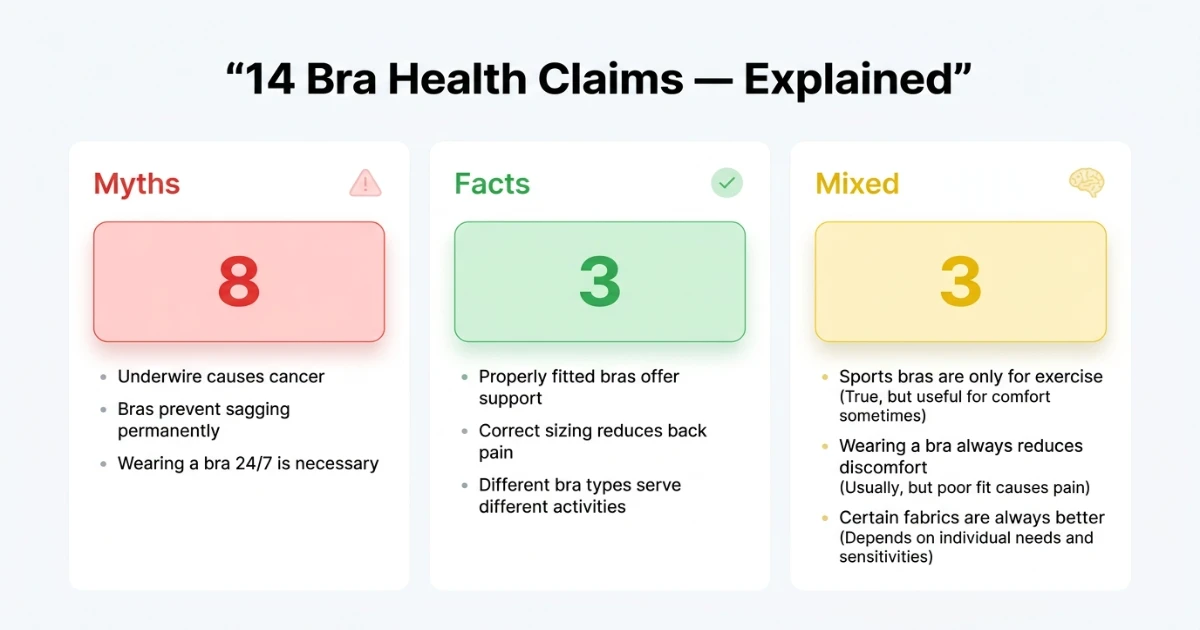
The Verdict at a Glance: 14 Claims Assessed
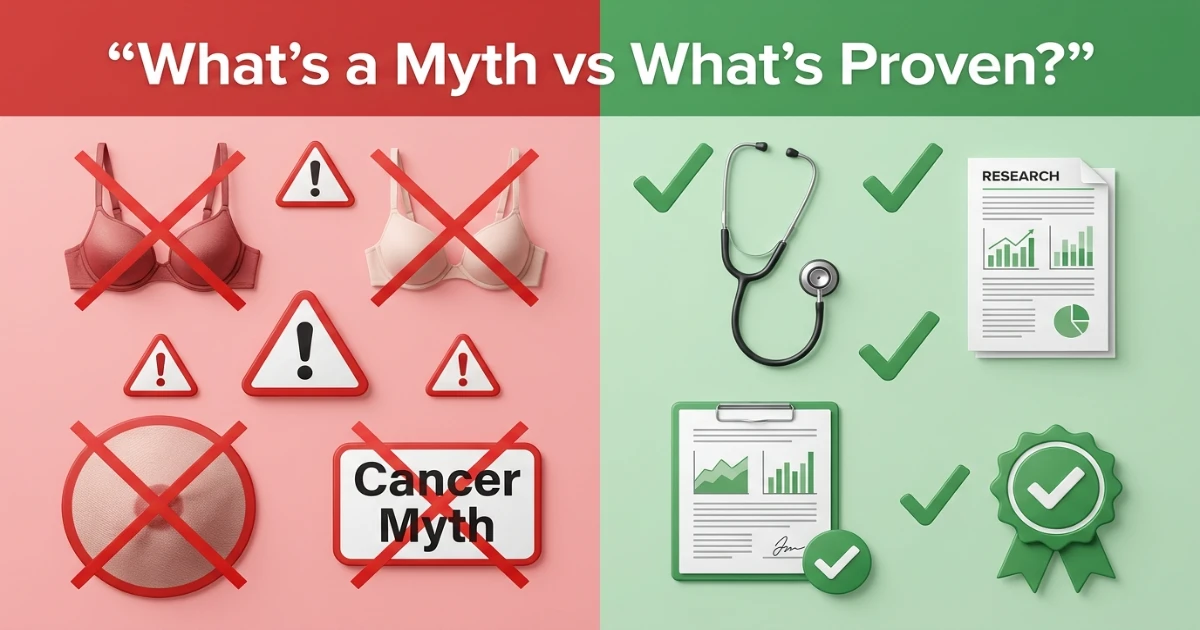
Before diving into the detail, here’s the summary of how the 14 most common breast health and bra fit claims hold up against the scientific evidence:
Not supported by evidence
Partly true, nuanced, or inconclusive
Supported by research evidence
The 14 Claims — Examined One by One
This is perhaps the most persistent and damaging breast health myth in circulation. It originated primarily from a 1995 book called Dressed to Kill, which proposed that bras restrict lymphatic flow and cause toxins to accumulate in breast tissue, leading to cancer. The claim was not based on clinical research — it was a hypothesis built on anecdotal observations.
Multiple large-scale epidemiological studies have since examined this claim directly and found no association between bra wearing and breast cancer risk. A 2014 study published in Cancer Epidemiology, Biomarkers & Prevention by researchers at the Fred Hutchinson Cancer Research Center examined over 1,500 women and found no link between bra wearing habits (including cup size, bra type, hours worn per day, and whether underwire was used) and breast cancer incidence. The American Cancer Society and major cancer research institutions worldwide explicitly state there is no credible evidence that bras cause breast cancer.
The lymphatic system does run through breast tissue and the surrounding areas, but the lymph nodes in the armpit are not significantly compressed by a well-fitting bra. Even a poorly fitting bra that creates discomfort does not compress lymph nodes to a degree that would affect their function in the way the myth describes.
This claim is widespread and sounds intuitive — if support prevents sagging during the day, more support should help more, right? The reality is that breast ptosis (the clinical term for sagging) is determined by the structural integrity of the Cooper’s ligaments and the skin envelope, and sleeping position has no documented effect on either.
When you sleep, gravity’s effect on breast tissue changes based on your position — on your back, the tissue falls backward; on your side, it falls laterally. A bra does not prevent this redistribution during sleep and there is no clinical evidence that it affects the long-term integrity of the Cooper’s ligaments. Whether sleeping in a bra is comfortable is entirely a personal preference question — for people with larger cup sizes, some find a soft wireless bra more comfortable overnight; others find any bra uncomfortable during sleep. Neither choice has documented health consequences in either direction.
The primary causes of breast ptosis are genetics, age, skin elasticity, gravity over time, pregnancy and breastfeeding, significant weight fluctuation, and smoking — all of which affect the Cooper’s ligaments and skin envelope in ways that bra wearing habits do not meaningfully reverse or accelerate.
A widely cited 15-year French study led by professor Jean-Denis Rouillon suggested that women who did not wear bras had slightly firmer breasts and more developed natural support musculature — implying that bras may actually weaken the Cooper’s ligaments by removing the stimulus for the natural support system to maintain itself. However, Rouillon himself cautioned strongly against drawing broad conclusions from the data, noting that the study was limited in scope, did not account for confounding factors adequately, and should not be used to recommend that women stop wearing bras. The study has not been replicated to a standard that would allow firm conclusions.
What is well-established: for larger cup sizes, wearing a well-fitted supportive bra during high-impact exercise reduces the amount of breast tissue movement, which does reduce strain on the Cooper’s ligaments over time. This is a genuine benefit of wearing the right bra during physical activity — not evidence that braless daily life causes sagging.
This is one of the few well-supported connections between bra fit and physical health. The evidence is most robust for women with larger cup sizes — multiple clinical studies have found that poorly fitted bras correlate with musculoskeletal symptoms including chronic back, neck, and shoulder pain, headaches, and postural changes.
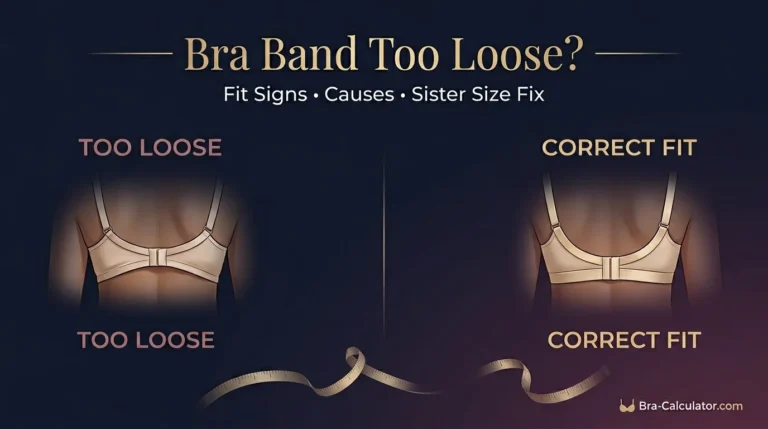
The mechanism is straightforward: a band that is too large forces the shoulder straps to carry the full weight of breast tissue, because a loose band cannot provide the lateral support it’s designed to deliver. Over hours of daily wear, cumulative strap pressure on the trapezius muscle and surrounding structures in the shoulder and neck creates tension that becomes chronic. A study published in Chiropractic & Manual Therapies found significant reductions in reported pain symptoms following correct bra fitting in a group of women with large cup sizes. Breast reduction surgery studies consistently cite relief from these symptoms as one of the primary functional benefits — confirming that the weight of breast tissue is a real physical force that fit either manages or fails to manage.
The band carries approximately 80% of the breast support in a well-fitted bra. A band that is too loose transfers that load to the straps — and over a full day of wear, that transfer becomes shoulder and neck strain.
The research consistently suggests the opposite. Multiple studies across different countries and populations have found that the majority of women are wearing incorrectly sized bras — with estimates ranging from 70% to 85% in ill-fitting bras. The most common pattern is a band that is too large and a cup that is too small: a combination that results in poor support, cup overflow, a rising band, and the strap-weight-transfer problems described above.
The reasons for this are partly structural: the traditional “add 4 inches to the underbust” method of measuring band size, which was developed to account for bra fabric inelasticity that no longer exists in modern bras, systematically produces bands that are too large. Women measured using the outdated method may have been wearing a 36 band for years when their actual underbust measurement is closer to 32 or 34 inches — with the corresponding cup letter being larger than they realise. A woman told she’s a 36C by the old method is often a 34DD or 32E by modern measurement.
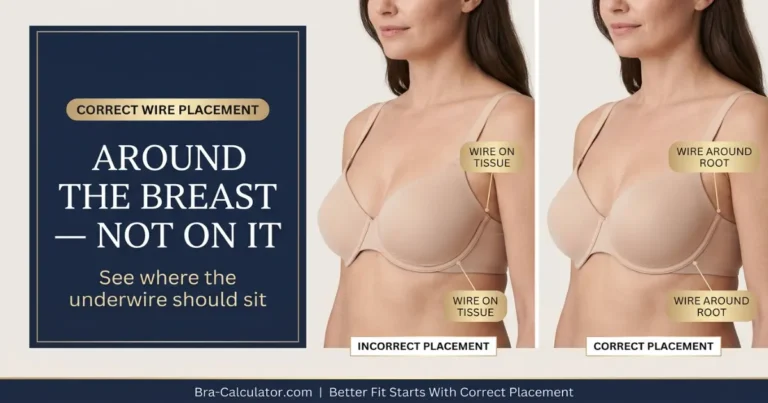
In a correctly fitting bra, the underwire sits on the ribcage and follows the base of the breast tissue — it does not compress the breast itself, the lymph nodes under the arm, or the lymphatic vessels running through breast tissue. There is no scientific evidence that a properly fitted underwire bra poses any health risk to breast tissue or lymphatic function.
The distinction between a fitting problem and an inherent underwire problem is important. An underwire that digs into the armpit, sits on breast tissue rather than ribcage, or constantly pokes through the fabric is a fit problem — the underwire is the wrong size or shape for that body, or the bra has worn out. These fit problems can cause skin irritation, bruising, and discomfort. But the solution is a better-fitting bra, not abandoning underwires entirely. Women who experience consistent underwire discomfort despite trying multiple styles in their correct size may have breast shapes or chest wall widths that underwire styles don’t suit — in which case wire-free options are a completely valid choice, not a medical necessity.
A correctly fitting bra band feels snug — it should allow two fingers underneath with mild resistance, sit level all the way around, and stay in place during normal movement. This is not “tight” in any medically concerning sense and does not impair circulation. The ribcage is a rigid structure; unlike a cuff around the wrist or arm, a bra band around the ribcage cannot reduce blood flow to a limb or organ.
A genuinely painful band — one that leaves deep marks, restricts breathing, or causes numbness — is too small for the wearer’s underbust measurement. This is a sizing problem, not an indictment of the concept of a snug band. The solution is to measure correctly and find the right size, not to exclusively wear loose bands that fail to provide support. See our bra fit problems guide if your band is consistently leaving marks or causing discomfort.
The well-supported part of this claim: research from the University of Portsmouth’s Research Group in Breast Health has consistently shown that breast tissue moves significantly during exercise — up to 15 cm of displacement in larger cup sizes during running — and that a correctly fitted sports bra reduces this movement by approximately 50–78%. Reduced breast tissue movement during exercise reduces strain on the Cooper’s ligaments and the skin envelope in the short term.
The less certain part: whether this translates into meaningfully less long-term ptosis is not established by long-term clinical evidence. The Cooper’s ligaments are not elastic structures that fully recover from repeated stretching — they can stretch and thin permanently, and reducing the rate of that process through exercise support is plausible but not clinically proven to produce visible long-term differences. What is established: wearing a well-fitted sports bra during high-impact exercise significantly reduces immediate discomfort, tissue strain, and the risk of exercise-related breast pain.
This is well-supported and practically important. Bra size is not a fixed characteristic — it changes in response to weight fluctuation, hormonal changes (including pregnancy, breastfeeding, menopause, and hormonal contraception), age-related changes in tissue density and elasticity, and muscle mass changes. Studies have found that women’s bra size can change multiple times over their adult lives, and that relying on a size measured years earlier leads to consistently suboptimal fit.
The most accurate time to measure is in the first week of the menstrual cycle — when premenstrual breast swelling has fully resolved and breast tissue is at its baseline volume. Using this measurement as the primary size and sister sizing for the premenstrual phase is the most practical approach for people whose breasts change significantly across their cycle. A fresh measurement is recommended: after any weight change of 10+ pounds, after completing breastfeeding, at the start of or after stopping hormonal contraceptives, and in perimenopause and menopause.
A well-fitted bra lifts and shapes breast tissue while it’s being worn — that effect is real and immediate. But it does not permanently alter the position or projection of breast tissue once the bra is removed. Breast shape and position are determined by the Cooper’s ligaments, the skin envelope, and the distribution of glandular and fatty tissue — structural characteristics that a bra supports but does not change.
This myth often travels alongside its inverse (that going braless causes sagging), and both are based on the same misunderstanding of breast anatomy. External support changes how breast tissue looks and is distributed while the support is present. It does not modify the underlying structures that determine breast shape when the support is removed. The French study referenced earlier even suggested the reverse relationship might be possible — that habitual bra wearing could reduce the stimulus for the body’s own support structures to maintain their integrity.
Bra sizing is not standardised across brands, manufacturers, or countries. A 34C from one brand may fit very differently from a 34C from another — due to differences in cup geometry, underwire width, band elasticity, fabric composition, and production standards. This is not a fitting error by the wearer; it’s an industry reality that is well-documented by both consumer research and fitting professionals.
The practical implication: finding your correct measurements is the starting point, not the end point. You may be a 34C in one brand’s T-shirt bra but need a 34D in the same brand’s balconette style, or a 34C in Brand A and a 36B (your sister size) in Brand B. This is why sister sizing matters — it gives you a range of equivalent options to try rather than one number to search across all brands.
While the evidence on structured breast self-examination (BSE) as a formal clinical protocol is mixed — large trials found it did not reduce breast cancer mortality rates — the underlying principle of breast awareness is genuinely endorsed by healthcare organisations. Knowing what is normal for your own breast tissue (typical texture, lumps, asymmetry, and cyclic changes) means you are more likely to notice when something has changed and seek medical evaluation promptly.
This is distinct from the methodological question of whether formal monthly BSE as taught in the 1980s reduces mortality. The current evidence-based recommendation is breast awareness — understanding your own normal — rather than a strict examination protocol. Changes worth discussing with a healthcare provider include: new lumps or thickening, changes in breast size or shape outside your normal cycle, skin changes (dimpling, puckering, redness), nipple changes (inversion, discharge, rash), or persistent pain not associated with your menstrual cycle.
The best time to assess your breast tissue is in the first week of your cycle when premenstrual swelling has fully resolved — the same window that produces the most accurate bra fitting measurements.
No external garment alters the actual volume of breast tissue through regular wear. Padded and push-up bras create visual changes — redistributing, compressing, or augmenting the apparent shape — but remove the bra and the underlying tissue is identical to what it was before. Breast tissue volume is determined by glandular tissue, fatty tissue, and hormonal state — none of which are affected by the external garment worn over them.
Sustained hormonal changes (pregnancy, breastfeeding, hormonal contraception, significant weight gain) can produce lasting changes in breast tissue volume. A padded bra cannot. This myth likely persists because the visual effect of a good padded bra is genuinely convincing — and repeated visual experience of a particular shape can feel like it becomes normal. But the bra is not producing a physiological change in the underlying tissue.
Premenstrual breast pain (cyclical mastalgia) is caused by hormonal changes — primarily the progesterone and estrogen surge during the luteal phase — and is not directly caused or cured by bra fit. In that sense, bra fit is not the root cause of premenstrual breast pain.
However, a poorly fitting bra can meaningfully worsen the experience of premenstrual breast pain. An underwire that sits on swollen breast tissue, a band that is too tight during the fluid retention phase, or cups too small for temporarily enlarged breast tissue all add mechanical compression to already-tender tissue — amplifying discomfort significantly. Switching to a wire-free bra or using the sister size during peak premenstrual swelling (one cup larger on the same band, or one band wider with the same cup volume) is a practical intervention that many people find genuinely reduces day-to-day premenstrual discomfort. See our complete guide on breasts getting bigger before your period for the full explanation.
What Actually Does Matter for Breast Health and Bra Fit
Now that the myths are cleared away, here is what the scientific evidence consistently shows actually matters — the practical checklist for breast health and bra fit based on real research rather than received wisdom.
The most impactful thing you can do for bra comfort and health is wear the correct size. Studies show 70–85% of women are in the wrong size. Use our how to measure guide and take fresh measurements after significant weight change, pregnancy, breastfeeding, or hormonal changes.
The band carries ~80% of breast support. A too-loose band transfers that load to the straps and creates neck, shoulder, and back strain. Two fingers should slide under the back band with mild resistance on the loosest hook. If they don’t, the band is too tight. If they slide through with no resistance, it’s too loose.
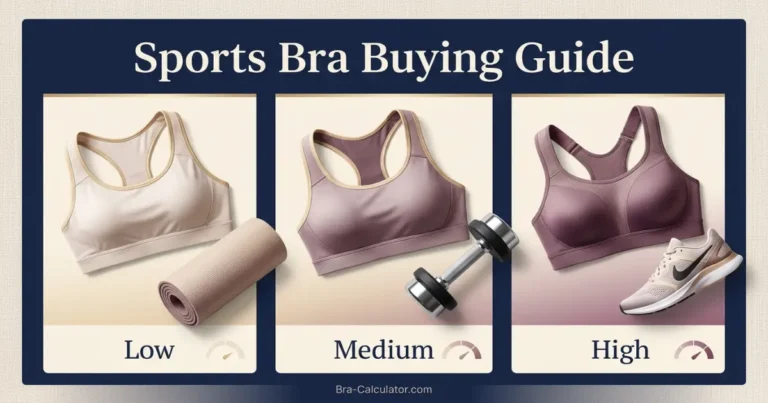
Breast tissue moves significantly during running and high-impact activities. A well-fitted sports bra reduces that movement by 50–78%, reducing immediate discomfort and strain on the Cooper’s ligaments and skin envelope. A general-purpose bra — even a good-fitting one — is not engineered for high-impact exercise support.
Breast volume can increase up to 25% in the 1–2 weeks before a period. Going up one cup letter on the same band (34B → 34C) or using a wireless style during peak swelling days reduces mechanical compression on swollen, tender glandular tissue. This is practical management, not a permanent size change.
Knowing your own breast tissue — what texture, asymmetry, and cyclic changes are normal for you — means you’ll notice when something changes. New lumps, skin changes, nipple changes, or pain outside your normal cycle pattern are worth discussing with a healthcare provider promptly. The best time to check is in the first week of your cycle when premenstrual swelling has resolved.
The factors that genuinely affect breast cancer risk include age, genetics, family history, hormone exposure history, alcohol consumption, and body weight — not bra wearing habits. Following recommended mammography screening schedules (typically beginning at 40 or 50 depending on guidelines and individual risk) is the evidence-based approach to breast cancer detection.
Quick Reference: All 14 Claims at a Glance
| Claim | Verdict | Evidence Strength |
|---|---|---|
| Bras cause breast cancer | ❌ Myth | Thoroughly debunked by multiple large-scale studies |
| Sleeping in a bra prevents sagging | ❌ Myth | No clinical evidence; personal preference only |
| Going braless causes sagging | ⚠️ Mixed | Sagging has many causes; bra habits are not primary |
| Poor bra fit causes back/shoulder/neck pain | ✅ Fact | Well-supported by clinical research |
| Most women wear the correct size | ❌ Myth | 70–85% are in wrong size per research |
| Underwires are inherently dangerous | ❌ Myth | No evidence; correctly fitted wires pose no risk |
| A snug band cuts off circulation | ❌ Myth | Ribcage cannot be compressed the same way as a limb |
| Sports bras prevent permanent sagging | ⚠️ Mixed | Reduces movement during exercise; long-term effect unclear |
| Bra size should be remeasured regularly | ✅ Fact | Well-documented that size changes with hormones, weight, age |
| Bras make breasts permanently perkier | ❌ Myth | No physiological mechanism; visual only |
| Same size fits same across all brands | ❌ Myth | Industry-wide sizing inconsistency is well-documented |
| Breast awareness aids early detection | ✅ Fact | Breast awareness endorsed; formal monthly BSE has mixed evidence |
| Padded bras permanently increase size | ❌ Myth | No physiological mechanism for tissue volume change |
| Bra fit doesn’t affect period breast pain | ⚠️ Mixed | Root cause is hormonal; poor fit worsens the experience |
🛍️ Well-Fitted Bras That Support Real Breast Health
The evidence is clear that fit matters more than style for breast health. These four options represent the best-in-class across the key fit factors — correct band anchoring, appropriate cup containment, and comfortable all-day wear — that translate directly into the musculoskeletal health benefits the research identifies.

Glamorise Women’s MagicLift Active Support Wirefree Bra #1005
At 6,800+ reviews, the consistency of feedback praising reduced shoulder and back discomfort compared to previous bras is notable — and directly reflects the mechanism the research identifies. Cushioned non-slip straps carry guidance rather than load, and the extended size run through 46H covers the cup sizes where the health-fit relationship is most clinically significant. Available in sister size range: if your calculated size is unavailable, sister sizing up or down by one band and cup letter preserves the cup volume and support structure.
Available in: 36C–46H — extended band and cup range
View on Amazon →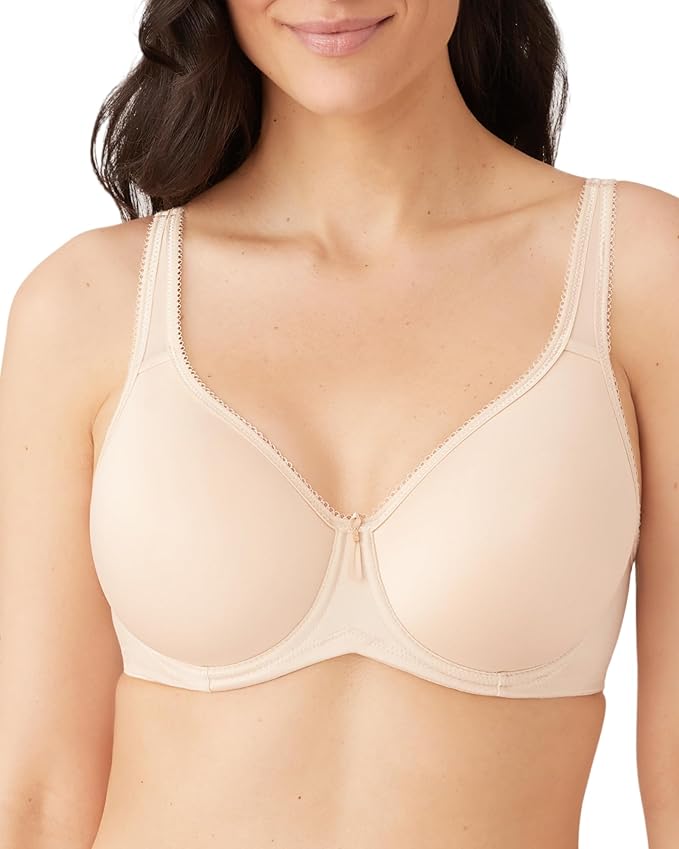
Warner’s Women’s Elements of Bliss Wire-Free Contour Bra #1269
Over 14,000 Amazon reviews with consistent feedback on all-day comfort across a full range of activities confirms the structural integrity that health-related bra fit research identifies as the key variable. The structured back band is the feature that most directly translates to reduced strap dependence — and therefore reduced shoulder and neck strain across long wear days. Available in sister size range for full flexibility if your specific calculated size is temporarily unavailable in this style.
Available in: 32A–40DD — covers A through DD cup in 32–40 band
View on Amazon →
Glamorise Women’s WonderWire Front-Close Underwire Bra #1245
Wide side panels contain lateral tissue and prevent the side-spillage that can make wearers feel their cup is too small when the actual problem is cup shape. The front-close design removes the difficulty of reaching around to fasten a back hook — which matters because a bra that’s awkward to put on correctly tends to be worn incorrectly. Available in an extended size run through 48H with cup depth properly graded throughout — meaning the health benefit of a correctly placed wire applies consistently across all sizes in the range.
Available in: 34D–48H — extended range for larger cups and bands
View on Amazon →
Maidenform Women’s Comfort Devotion Extra Coverage Wire-Free Bra #09404
The extra-coverage cup height is also relevant to the health-fit relationship: cups that contain the full breast tissue footprint prevent the top-of-cup spillage that, over long wear days, translates to strap-compensating posture changes and the cumulative shoulder strain the research identifies. Smoothing side panels contain lateral tissue migration, and the multi-hook back maintains adjustability as band fit requirements change with weight and hormonal fluctuations across the year.
Available in: 32B–42DDD — covers B through DDD cup in 32–42 band
View on Amazon →ℹ️ As an Amazon Associate, Bra Calculator earns from qualifying purchases. All picks are independently selected based on fit quality, construction, and relevance to the health-fit relationship discussed in this article. Prices and availability subject to change.
The single most evidence-backed thing you can do for breast health and bra comfort is wear the correct size. Most people aren’t — and the musculoskeletal consequences are real. Our AI calculator gives you your correct band, cup, and complete sister size family in under 2 minutes.
Find My Correct Bra Size →Frequently Asked Questions: Breast Health and Bra Fit
Does wearing a bra cause breast cancer?
No. Multiple large-scale epidemiological studies have found no association between bra wearing habits and breast cancer risk. This myth originated from a 1995 book proposing that underwires restrict lymphatic flow — a claim that has been examined and consistently not supported by clinical evidence. The American Cancer Society and major cancer research bodies worldwide explicitly state there is no credible evidence linking bra wearing to breast cancer.
Does going braless cause breasts to sag?
No — breast ptosis is primarily caused by genetics, age, gravity, pregnancy, breastfeeding, significant weight changes, and smoking. A 15-year French study suggested bra wearing might actually weaken natural support structures over time, but the researcher cautioned strongly against drawing firm conclusions from the data. What is established: wearing a well-fitted sports bra during high-impact exercise reduces short-term strain on the Cooper’s ligaments. But daily braless living does not cause accelerated sagging on its own.
Can a poorly fitting bra cause health problems?
Yes — this is one of the few genuinely well-supported connections in bra health research. A too-loose band forces shoulder straps to carry breast tissue weight, creating cumulative strain in the neck, shoulders, and upper back. Studies have found significant reductions in reported musculoskeletal pain symptoms following correct bra fitting interventions in women with larger cup sizes. Poor fit also causes skin irritation, strap dig-in, headaches from neck muscle tension, and postural compensation patterns.
Are underwire bras bad for you?
No — there is no scientific evidence that a correctly fitted underwire bra poses health risks. In a properly fitting bra, the underwire sits on the ribcage and follows the base of the breast tissue without compressing it or the surrounding lymph nodes. Persistent underwire discomfort is a fit problem (wrong size, wrong style, or wrong cup shape for the wearer’s breast root width) — not evidence of an inherent health risk from underwires.
How often should I get fitted for a new bra?
Take fresh measurements whenever your body changes significantly — after any weight change of 10+ pounds, after pregnancy and breastfeeding, when starting or stopping hormonal contraception, and during perimenopause and menopause. As a general practice, remeasuring once a year is a reasonable baseline even without major changes, since bra band sizing conventions and individual measurement precision both benefit from periodic rechecking. Use our how to measure guide for step-by-step instructions.
Should I wear a bra to bed?
There is no medical evidence that sleeping in a bra causes harm or provides health benefits. It is entirely a personal preference decision. Some people with larger cup sizes find a soft, wireless bra more comfortable for sleeping; others find any bra uncomfortable. Neither choice has documented health consequences in either direction — the decision is yours to make based on what is most comfortable for you.
Does bra size affect breast cancer risk?
No — bra size itself is not associated with breast cancer risk. Larger cup sizes are associated with higher breast tissue density in some contexts, and breast density is a risk factor for breast cancer because dense tissue can obscure findings on mammograms. But this is a relationship between tissue composition and imaging visibility — not between bra size or wearing habits and cancer risk. Factors that do affect breast cancer risk include age, genetics and family history, hormone exposure history, alcohol consumption, and body weight.
What changes in my breasts should I discuss with a doctor?
Changes worth prompt medical discussion include: a new lump or thickening that feels different from the surrounding tissue; changes in breast size or shape outside your normal menstrual cycle pattern; skin changes including dimpling, puckering, redness, or orange-peel texture; nipple changes including new inversion, discharge (especially bloody), or rash; and persistent pain that doesn’t follow your normal cyclic pattern. Knowing what is normal for your own breast tissue — breast awareness — makes it significantly easier to notice when something has changed.
Does a sports bra prevent sagging during exercise?
Wearing a well-fitted sports bra during high-impact exercise significantly reduces breast tissue movement — by approximately 50–78% compared to exercising without a bra, according to research from the University of Portsmouth. This reduces the immediate strain on the Cooper’s ligaments and skin envelope during exercise. Whether this translates into meaningfully less long-term sagging is plausible but not confirmed by long-term clinical trials. The discomfort-reduction and short-term ligament-strain-reduction benefits are real and sufficient reason to wear one.
Why does my bra size vary between brands?
Bra sizing is not standardised across the industry. Different brands use different cup geometries, underwire widths, band elasticities, and fabric constructions — meaning a 34C in one brand may fit very differently from a 34C in another. This is an industry reality, not a measuring error. The practical solution is to use your measurements as a starting range, understand your sister sizes (which give you equivalent volumes across a band range), and expect to try adjacent sizes when moving between brands or styles.
Affiliate Disclosure: This article contains affiliate links to Amazon. If you purchase through these links, Bra Calculator may earn a small commission at no additional cost to you. All product recommendations are independently selected based on fit quality, construction, and relevance to the evidence discussed. Prices and availability are subject to change.