Whether you need a compression vest for gynecomastia, a post-surgery support garment, or a chest-flattening undershirt, getting an accurate chest measurement is the most important step. An incorrect size means poor compression, discomfort, or garments that roll, gap, or restrict breathing.
This guide explains exactly how to measure male chest for support garment sizing with chest — covering chest circumference, underbust (band equivalent), and how to interpret your measurements against manufacturer size charts.

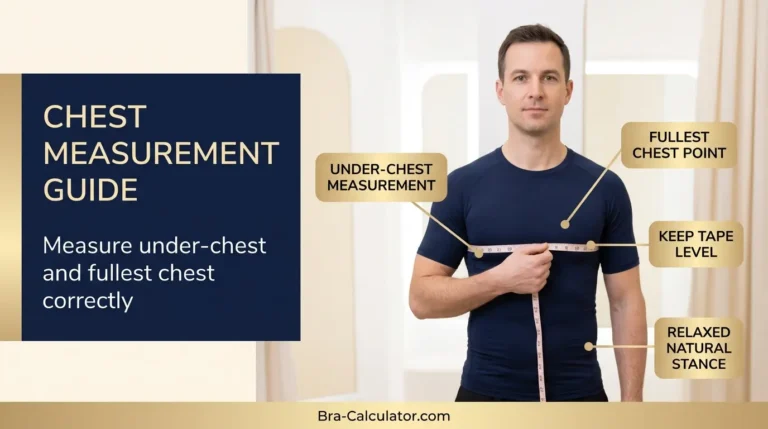
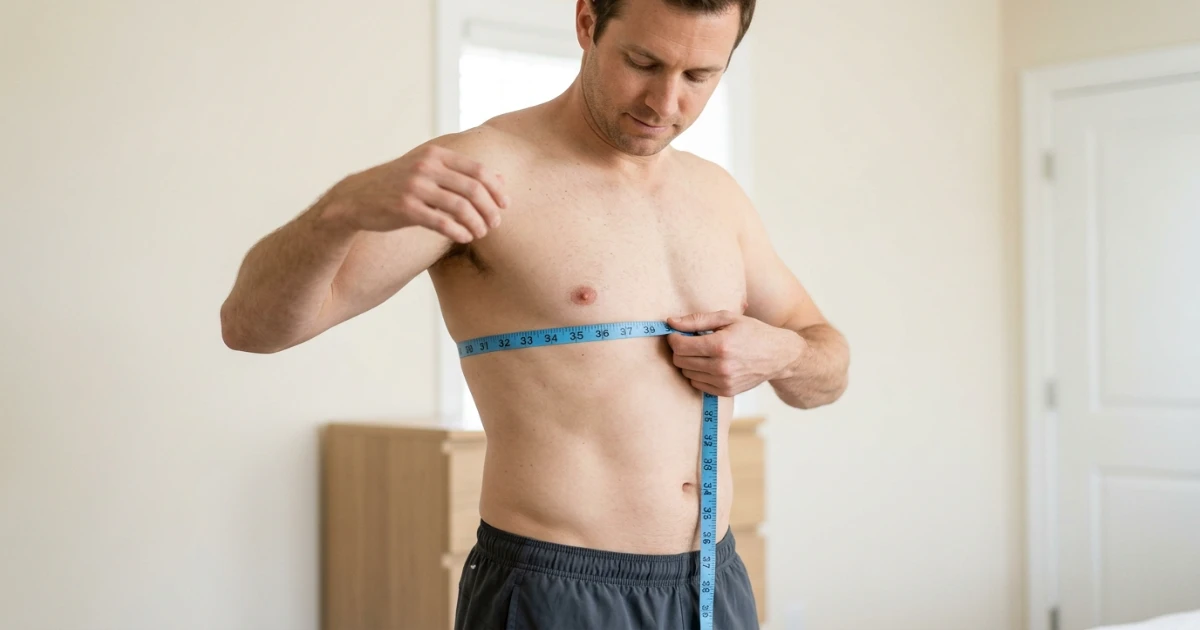
To measure the male chest for a support garment, take two measurements: (1) wrap a flexible tape around the fullest part of the chest, across the nipple line, for your chest size; and (2) wrap the tape directly under the pectoral muscles around the ribcage for your underbust (band equivalent). Use both numbers together to match the garment’s size chart. A chest-to-underbust difference of 2–4 inches typically indicates a standard compression vest.
🔑 Key Takeaways
- Two measurements are required: full chest circumference and underbust (ribcage) circumference
- The underbust measurement functions like a bra band size — it determines the garment’s structural fit
- The chest-to-underbust differential indicates how much compression coverage is needed
- Always measure in a relaxed, upright position with a flexible, non-elastic tape
- When between sizes, size down for firmer compression and size up for everyday all-day wear
- Gynecomastia shirts, compression vests, and chest binders all use the same two-measurement system
What You Need Before Measuring
You only need three things to measure your chest accurately:
- Flexible measuring tape — a soft dressmaking tape, not a rigid metal tape measure
- A mirror or a second person — to check the tape is level at the back
- Thin clothing or bare skin — avoid measuring over thick jumpers or shirts

How to Measure Male Chest for Support Garment: Step-by-Step
Stand Upright in a Relaxed Position
Stand with your feet shoulder-width apart and your arms relaxed at your sides — slightly away from your body so the tape can pass underneath. Do not stand at attention or puff out your chest. Do not inhale deeply and hold your breath. A relaxed, natural stance gives the most accurate functional measurement for how the garment will actually fit when worn throughout the day.
Measure Your Full Chest Circumference
Bring the measuring tape around your torso at the fullest point of your chest — this is typically across the nipple line for most men. Keep the tape horizontal (parallel to the floor) all the way around, including at your back. The tape should be snug against your chest but not compressing the tissue. Note the measurement in both inches and centimetres if possible.
Measure Your Underbust (Band Equivalent)
Move the tape directly below your pectoral muscles — around the circumference of your ribcage. This is the anatomical equivalent of the underbust measurement used in female bra sizing and directly corresponds to the “band” sizing on most male compression vests. Keep the tape level. It should be snug but allow normal breathing — you should be able to take a calm, full breath without the tape restricting you.
Calculate the Chest Differential
Subtract your underbust measurement from your full chest measurement. This differential tells you how much chest projection or tissue volume you have, which determines the compression level and garment style most appropriate for your body. A 2-inch difference is minimal; a 5+ inch difference indicates significant chest volume that will likely require a structured gynecomastia-specific garment rather than a basic compression undershirt.
Match to the Manufacturer Size Chart
Cross-reference both measurements against the garment brand’s size chart. Most brands publish a table showing which underbust range and chest range map to each size (S / M / L / XL / 2XL etc.). When your measurements fall on a size boundary, use the intended use case to decide: size down for firmer daily compression, size up for post-surgical comfort or extended wear. Always check the return policy before committing.
Understanding Your Two Key Measurements
The two measurements work together to size your support garment correctly:
Male Chest Measurement Size Chart for Support Garments
The table below provides a general reference. Always consult the specific brand’s chart as sizing can vary by up to one full size between manufacturers.
| Garment Size | Chest Circumference (inches) | Underbust / Ribcage (inches) | Chest Differential | Best For |
|---|---|---|---|---|
| Small (S) | 34–36″ | 30–32″ | 2–4″ | Light chest tissue, post-op light support |
| Medium (M) | 37–39″ | 33–35″ | 2–4″ | Moderate gynecomastia, everyday compression |
| Large (L) | 40–42″ | 36–38″ | 3–5″ | Firm compression, athletic build |
| X-Large (XL) | 43–45″ | 39–41″ | 3–5″ | Larger frame, higher volume chest tissue |
| 2X-Large (2XL) | 46–48″ | 42–44″ | 3–6″ | Plus size / extended compression range |
| 3X-Large (3XL) | 49–52″ | 45–47″ | 4–6″ | Bariatric / high-coverage garments |

Choosing the Right Compression Level
Not all support garments offer the same level of compression. Your chest differential and intended use case should guide this decision:
| Chest Differential | Compression Level | Garment Type | Use Case |
|---|---|---|---|
| 0–2 inches | Light (8–15 mmHg) | Smoothing undershirt | Minimal tissue, everyday wear |
| 2–4 inches | Medium (15–20 mmHg) | Compression vest / gynecomastia shirt | Moderate gynecomastia, gym / office |
| 4–6 inches | Firm (20–30 mmHg) | Structured compression vest | Significant tissue, high visibility occasions |
| 6+ inches | Medical-grade (30+ mmHg) | Post-surgical binder / medical garment | Post-gynecomastia surgery recovery |
Recommended Support Garments for Men
Based on measurement accuracy and compression quality, these are two top-rated options available on Amazon:

Esteem Apparel Gynecomastia Compression Shirt
- Targeted chest-panel compression design
- Seamless underbust band for accurate fit
- Available in S–3XL (measure underbust + chest)
- Breathable, odour-resistant fabric blend
- Invisible under dress shirts and t-shirts
- Suitable for daily wear and moderate gynecomastia
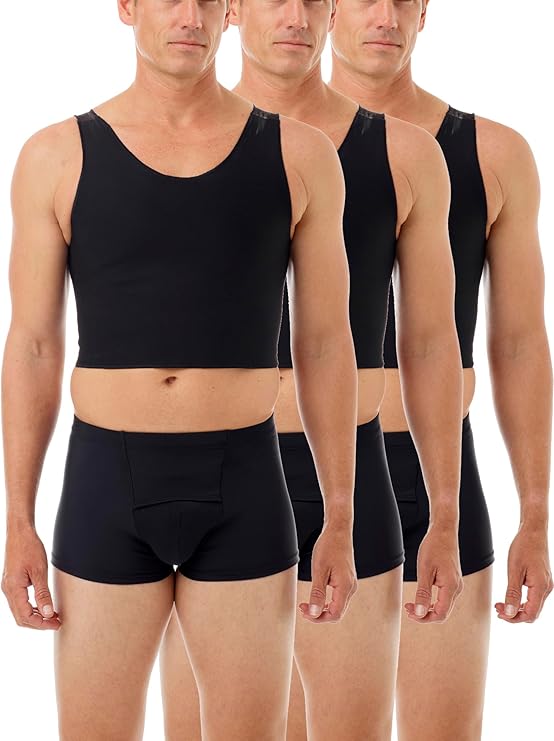
Underworks Men’s Chest Compression Vest
- Firm-grade compression (20–25 mmHg range)
- Dual-layer front panel for maximum flattening
- Full torso coverage — anchors at waist
- Sized by chest + underbust (chart included)
- Medical-quality construction — post-op ready
- Suitable for significant gynecomastia or surgery recovery
Male Chest Measurement vs. Female Bra Measurement: Key Differences
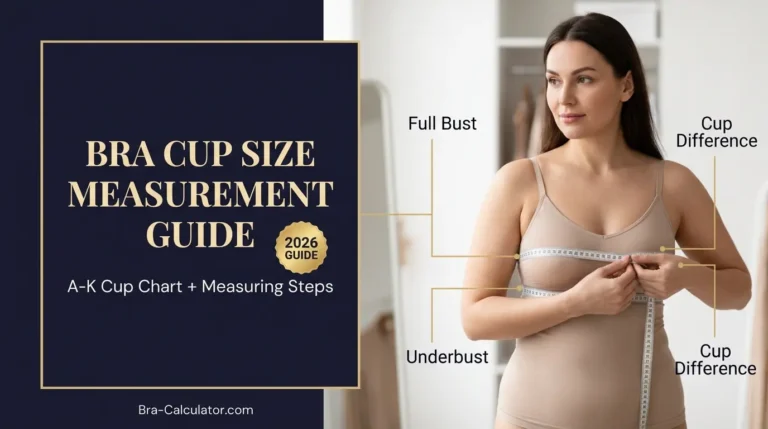
The measurement principles are nearly identical — both systems use underbust and full chest circumference. The key differences lie in terminology and application:
| Measurement Point | Female Bra Sizing | Male Support Garment Sizing |
|---|---|---|
| Under the chest | Band size (e.g., 34, 36, 38) | Underbust / ribcage measurement |
| Fullest chest point | Bust measurement (determines cup) | Full chest circumference |
| Differential | Cup size (A, B, C, D, DD…) | Compression level / garment type |
| Sizing system | Band + Cup (e.g., 34C) | S/M/L/XL or chest range (e.g., 38–40″) |
| Primary fit goal | Support and shape | Compression and flattening |
Common Mistakes to Avoid When Measuring
- Measuring over thick clothing: This adds 1–3 cm and can push you into the wrong size bracket. Always measure over a thin vest or bare skin.
- Holding breath while measuring: Chest circumference increases by 2–4 cm when lungs are fully expanded. Stay relaxed and breathe normally.
- Allowing the tape to slope at the back: If the tape droops at your back, your chest measurement will read smaller than reality. Use a mirror or ask someone to check.
- Ignoring the underbust measurement: Many men only measure their chest and skip the underbust. For compression garments, the underbust determines the band fit — without it, you risk a garment that rides up or sits uncomfortably.
- Assuming standard shirt size translates to vest size: Shirt sizes (S/M/L) are cut for movement and comfort. Compression garments use exact circumference ranges that often differ from your shirt size by one full size.
Frequently Asked Questions
More gynecomastia support guides
- Gynecomastia bra guide
- Gynecomastia bra size chart
- What Size Bra Should a Man With Gynecomastia Wear? Size Guide 2026
- The Most Advanced Gynecomastia / Men’s Bra Size Calculator (2026 Complete Guide)
- Gynecomastia Workout Compression: 7 Best Gym Support Tips
- Gynecomastia Support for Travel: 7 Smart Comfort Tips
- Best Discreet Bras for Men with Gynecomastia (Under Clothes)