Bra Wardrobe
Builder
A science-backed rotation planner tailored to your shape, lifestyle & climate. Get your perfect number in under 2 minutes.
Not sure of your size? Try the AI Smart Fit Calculator ↗ first.
Rotation Science
Rest time reduces early stretch and "support fatigue" — giving elastic fibres time to recover their shape.
Elastic needs 24–48h to recover. Without rotation, bands stretch out 30–50% faster.
More bras in rotation = stress spread across more garments = longer lifespan each.
A 6-bra rotation can last 2× longer than wearing 2–3 on constant repeat.
Washing Frequency
Hot climates and higher sweat increase washing pressure — which increases how many clean bras you need in reserve.
Humidity shifts ideal washing frequency closer to every 1–2 wears.
Mesh bag + gentle cycle or hand-wash protects elastic from heat degradation.
Air-dry time (12–24h) increases "clean inventory" needs — plan for it.
Shape + Tissue Logic
Projection, fullness, root width, spacing, asymmetry and tissue firmness all interact to change which bra constructions feel stable and supportive each day.
Frequently Asked Questions
How Many Bras Should You Own? The Complete, Science-Backed Answer
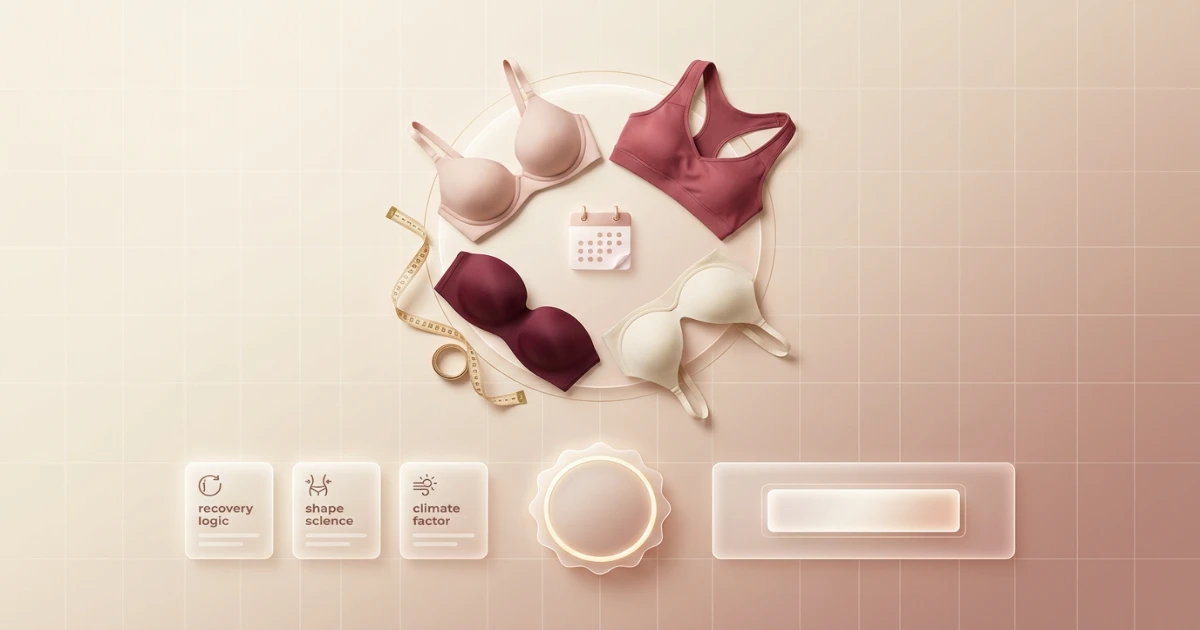
Most people need 5 to 12 bras in active rotation, split across everyday, structured-support, sports, breathable, wireless-lounge and occasion categories. The exact number depends on four variables: how many days a week you wear a bra, your climate and sweat level, your activity level, and your tissue and shape profile. Under 5 bras accelerates elastic fatigue through overwork; over 12 usually means unworn inventory and wasted spend. Use the calculator above to get your personal number, then use this guide to understand — and act on — the reasoning behind it.
Most people own too few bras — or the wrong ones. The number you actually need isn’t a single magic figure: it’s a formula shaped by wash frequency, climate, activity level, and the specific structure your shape demands. This guide breaks down that formula in full, category by category, so you can build a bra wardrobe that actually holds up.
What Is a Bra Wardrobe Rotation?
A bra wardrobe rotation is the set of bras a person wears on a repeating cycle so that no single bra is worn on consecutive days. The rotation exists for one reason: elastane and lycra fibers need rest time to recover their shape after being stretched under tension all day. A rotation is not the same thing as a bra collection — a collection can sit in a drawer unused, while a rotation is the smaller, functional subset that actually gets worn, washed, and re-worn on a schedule.
Fit specialists distinguish a rotation from a wardrobe because the two answer different questions. A wardrobe answers “what do I own for every occasion?” A rotation answers “what do I need in clean, wearable condition at any given moment?” The Wardrobe Builder tool above calculates both: your minimum functional rotation size and your complete category-by-category wardrobe.
The “5 to 12” Rule — And Why It’s a Range, Not a Number
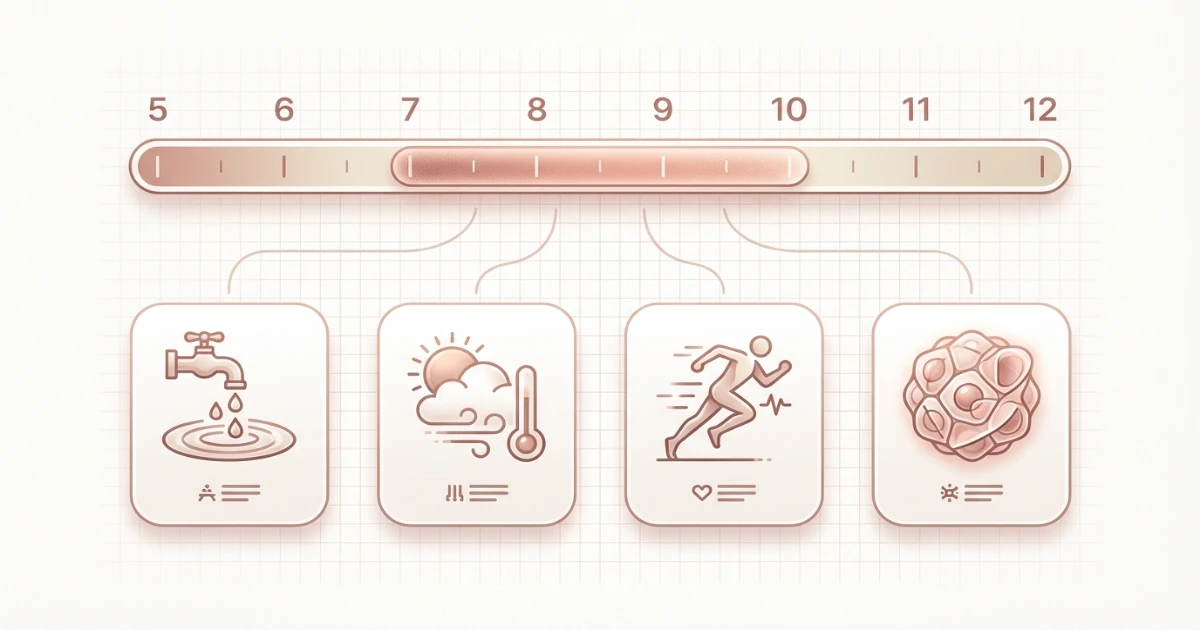
Most people who wear bras regularly need between 5 and 12 in active rotation. Fewer than 5 means constant washing that stresses elastic and shortens lifespan; more than 12 usually means bras that never get worn, which wastes both money and drawer space.
Where you land in that range depends on four variables: wash frequency, climate, activity level, and tissue and shape needs. Because these four variables interact — a hot climate with high activity compounds faster than either factor alone — a single flat number can’t serve everyone accurately. Our Wardrobe Builder tool above calculates your exact figure using all four together.
Why Rotation Is the Most Underrated Factor
Bra elastic doesn’t just wear out from washing — it wears out from not resting. Lycra and elastane fibers need roughly 24 to 48 hours to recover most of their tension after a day of wear, because the fibers are viscoelastic: they deform under sustained load and only partially spring back if given time. Wear the same bra two days running and that recovery window disappears, which is why bras worn daily without rotation tend to lose shape noticeably faster than bras given a rest day between wears.
This is exactly why the Wardrobe Builder asks how many days per week you wear a bra before anything else — it’s the single biggest variable in your base rotation number, because it determines how many recovery cycles each bra needs to survive per week.
Climate & Sweat: The Hidden Multiplier
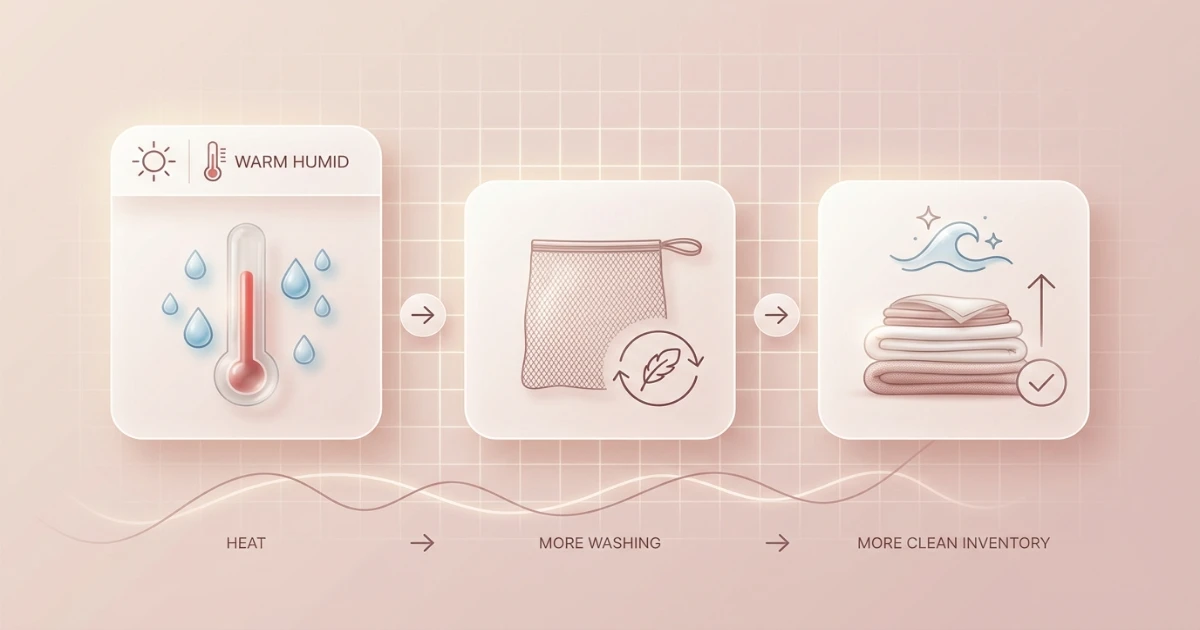
In cool, dry climates with low sweat exposure, washing every 3–4 wears is reasonable, because sweat and skin oils accumulate slowly. In hot or humid climates, that shifts to every 1–2 wears, because moisture breaks down elastic and encourages bacterial growth much faster. This one variable alone can double the number of clean bras you need on hand at any given moment.
Air-drying takes 12 to 24 hours on its own. If you wash daily and air-dry — which is the correct method, since heat from dryers is the single fastest way to destroy elastane — you need a minimum of 2 bras just to cover that drying window, before any rotation buffer is added. Add a full rotation window on top and hot-climate wearers typically land at 7 to 9 bras minimum, versus 5 to 6 for cool-climate wearers with the same wear frequency.
Our tool adjusts your total automatically when you select Hot/Humid climate combined with Medium or High sweat.
The 6 Categories Every Wardrobe Needs (And How Many of Each)
A complete wardrobe isn’t just “more bras” — it’s the right types covering different outfit and activity needs. Here’s the breakdown our tool uses, and roughly how many of each a typical rotation should include:
The core of your rotation. Smooth, seamless, invisible under fitted tops. This is the category that should scale most directly with how many days per week you wear a bra.
Full-coverage or underwired options with stable wings. Critical for soft tissue, wide roots, larger cup sizes, or physically active jobs that demand more containment.
Needed only if you work out weekly. These wear faster than any other category because sweat and frequent washing degrade elastic quickly — plan quantity around training frequency.
Mesh panels and moisture-wicking fabrics. Essential in hot climates, optional elsewhere — treat this as a climate-driven category, not a universal one.
Your rest-day essential. No underwire, soft fabric, lets tissue and elastic recover. Every wardrobe needs at least one, regardless of lifestyle.
Only needed if you wear off-shoulder or formal necklines. If you reach for strapless styles often, owning 2 prevents a last-minute fit failure before an event.
How Many Bras You Need, By Lifestyle
The 5-to-12 range compresses into a much narrower, more useful number once you factor in how someone actually lives day to day. Below are five common lifestyle profiles and where each typically lands.
Lower wear frequency and low sweat exposure mean fewer everyday bras are needed, but at least one wireless lounge option is essential since comfort during long desk hours matters more than structure.
Daily wear plus a mix of fitted and tailored clothing pushes this group toward more everyday and structured-support bras, with at least one strapless or occasion bra for events.
Sports bras degrade fastest of any category due to sweat and wash frequency, so this group needs 2–3 dedicated high-impact bras on top of a standard everyday rotation.
Rapid, ongoing size changes and more frequent washing (due to leaks) mean prioritizing soft, flexible, wireless-friendly construction over quantity in any single style.
Limited access to laundry favors versatile, quick-drying, multi-purpose bras that can transition between an everyday and breathable role rather than a large, single-purpose collection.
Shape & Tissue: Why Your Body Changes Your Number
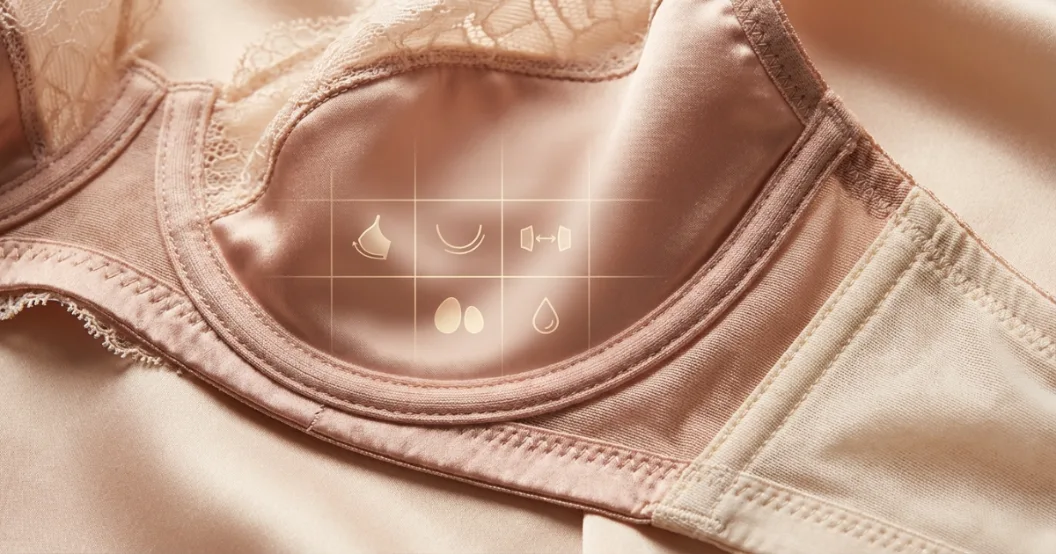
Two people wearing the identical band and cup size can have completely different shape profiles. Projection, fullness distribution between the upper and lower pole, root width, breast spacing, and tissue firmness all determine which bra constructions actually fit and support correctly — which is why “size” alone never fully predicts what someone needs to own.
Soft tissue migrates more under motion and benefits from more structured options, which means a rotation should lean toward more support bras and fewer ultra-smooth T-shirt styles. Noticeable asymmetry, where one side is meaningfully larger than the other, increases what fit specialists call “fit redundancy” — owning extra bras across different constructions so you have options that work well for both sides rather than compromising on either.
Use our AI Smart Fit Calculator to get your precise size and shape profile first, then run the Wardrobe Builder with that data for the most accurate results.
Where to Start: 4 T-Shirt Bras Worth Building Your Rotation Around
If you’re filling gaps in your rotation rather than starting from zero, these four cover the shape and size ranges discussed above — from an all-purpose everyday pick to specialist options for fuller and plus-size busts. Full breakdown and two more picks in our complete best T-shirt bras guide.

The default pick for your core everyday category — spacer-knit foam holds its dome shape under fitted tops without underwire.
View on Amazon ↗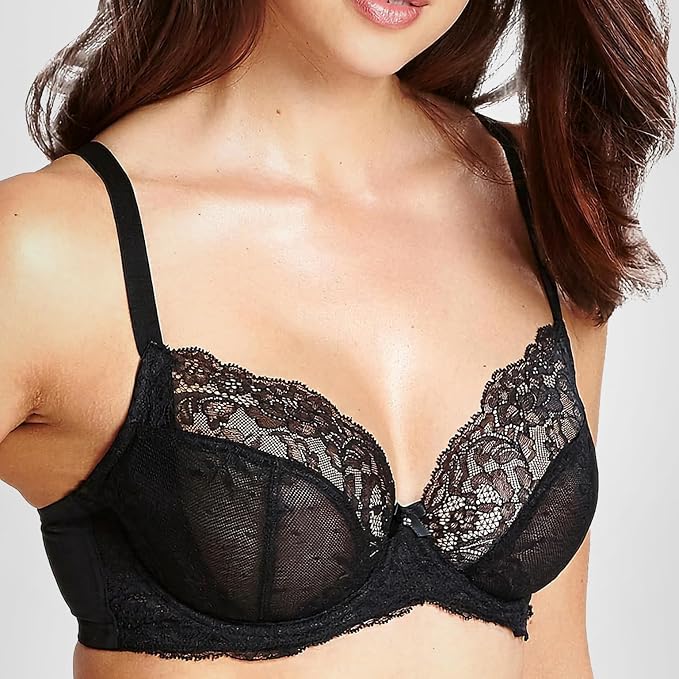
A structured-support anchor for soft or full-on-bottom tissue — the inner sling does the lifting single-piece foam can’t.
View on Amazon ↗
The rest-day and low-impact pick — zero underwire, so it doubles as your wireless lounge category on off days.
View on Amazon ↗Built for round, full-on-bottom, and projected shapes — the side support panel keeps tissue forward under fitted clothing.
View on Amazon ↗Average Bra Lifespan and Cost-Per-Wear by Category
Knowing how long each category lasts helps you budget your wardrobe instead of replacing everything at once. As a general guide:
| Category | Typical lifespan | Main wear-out cause | Replace when… |
|---|---|---|---|
| Everyday T-shirt bra | 6–12 months | Daily elastic fatigue | Band rides up or feels loose on the tightest hook |
| Structured support bra | 9–14 months | Underwire and wing stress | Wires poke, cups gape, or wings dig in |
| Sports bra (high-impact) | 4–8 months | Sweat + frequent washing | Reduced bounce control during activity |
| Breathable / mesh bra | 6–10 months | Fabric pilling and stretch | Mesh loses recoil or fabric thins visibly |
| Wireless lounge bra | 8–12 months | Fabric stretch, low structural stress | Fabric feels permanently stretched, not just soft |
| Strapless / occasion bra | 1–3 years | Infrequent use, low cumulative stress | Silicone grip degrades or band loosens |
Sports bras and everyday bras cycle out fastest because they see the highest combination of physical stress and wash frequency — which is also why they should make up most of any replacement budget, not the occasion or lounge categories.
How to Make Your Bras Last Longer
Even the most optimized wardrobe plan won’t help if you’re burning through bras in three months. These are the care habits that actually extend lifespan:
It protects hooks, underwires, and elastic from snagging on other garments in the machine.
Heat breaks down elastane fibers faster than almost anything else. Even “warm” is too hot for regular bra washing.
Tumble dryers are the number one cause of premature elastic failure. One dryer cycle can do the damage of ten hand washes.
Folding one cup inside the other cracks the foam and destroys the shape permanently within weeks.
Open hooks catch on everything — fabric, mesh, other bras — and cause snags and pulls that ruin cups fast.
Common Mistakes When Building a Bra Wardrobe
Most wardrobe problems trace back to one of five avoidable mistakes rather than a lack of bras overall:
- Buying only one category. A drawer full of T-shirt bras with no structured-support or sports option leaves gaps for activity and outfit needs that no amount of everyday bras can fill.
- Skipping the rest-day bra. Wearing structured or underwired bras every single day, with no wireless option, denies tissue and elastic the recovery window they need.
- Ignoring climate. A wardrobe built for a cool climate and transplanted into a hot, humid one wears out roughly twice as fast because wash frequency has to increase to match sweat exposure.
- Buying based on band size alone. Skipping shape and tissue firmness when selecting construction leads to bras that technically fit the size chart but don’t actually support correctly.
- Machine-washing on a warm or hot cycle. This single habit alone shortens the lifespan of every category in this guide, often cutting expected life in half.
Frequently Asked Questions
How many bras should the average woman own?
Most people who wear a bra regularly need 5 to 12 bras in active rotation, with the exact number set by wash frequency, climate, activity level, and shape. A common practical target is 6 to 8 bras covering everyday, structured-support, sports, and rest-day categories.
Is it bad to wear the same bra two days in a row?
Yes, doing this regularly accelerates wear. Elastane fibers need roughly 24 to 48 hours to recover their tension after a day of wear, so wearing the same bra back-to-back denies the elastic a chance to reset, which speeds up permanent stretch-out.
How often should you replace your bras?
Most bras last 6 to 12 months with proper rotation and gentle care, though sports bras typically wear out faster (4 to 8 months) and strapless or occasion bras can last 1 to 3 years due to infrequent use. Replace a bra once the band loosens on its tightest hook or the underwire pokes through.
How many sports bras do I need if I work out regularly?
If you exercise three or more times a week, plan for 2 to 3 dedicated high-impact sports bras. Sports bras wear out faster than any other category because sweat and frequent washing degrade elastic quickly, so relying on just one leaves no recovery window between workouts.
Do I need more bras in a hot climate?
Yes. Hot or humid climates typically require washing every 1 to 2 wears instead of every 3 to 4, which roughly doubles how many clean bras you need on hand. Hot-climate wearers usually need 7 to 9 bras minimum, compared with 5 to 6 for cool-climate wearers with the same wear frequency.
What’s the difference between a bra wardrobe and a bra rotation?
A bra wardrobe is everything you own across all categories, including occasion pieces worn rarely. A bra rotation is the smaller, functional subset you actually wear and wash on a repeating schedule — typically 5 to 12 bras drawn from that larger wardrobe.
Related Calculators & Tools
Your wardrobe plan is only as accurate as your size. Use these free tools to make sure everything is right before you shop:
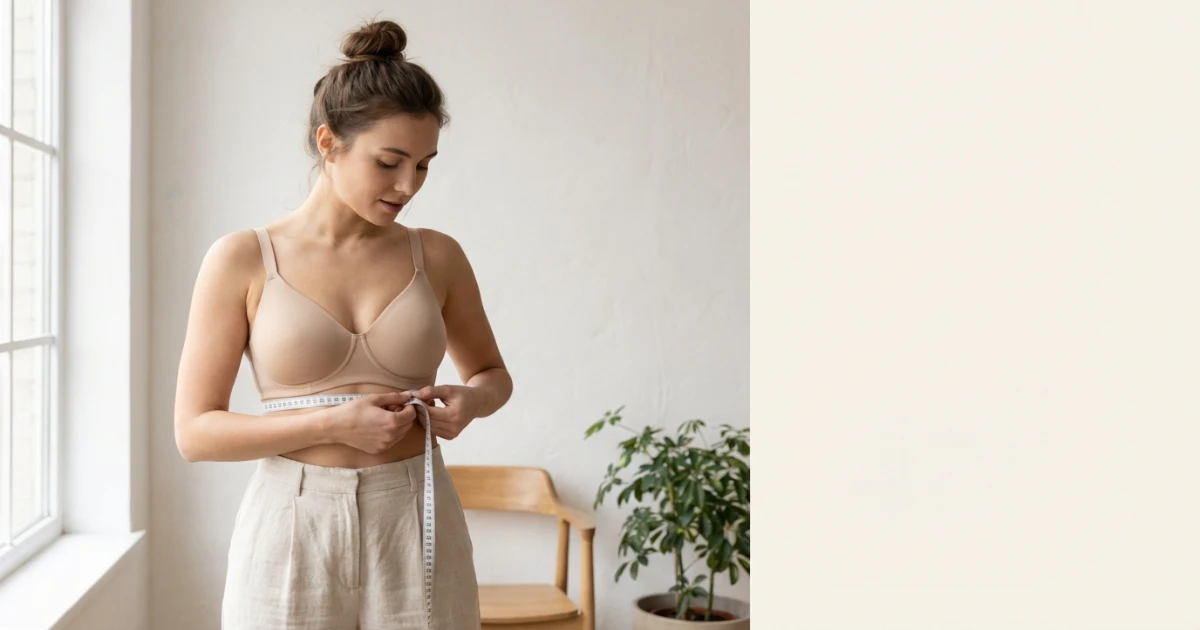
The most accurate bra size calculator available. Uses 6 measurements + shape data to give you your perfect fit.
Try it free ↗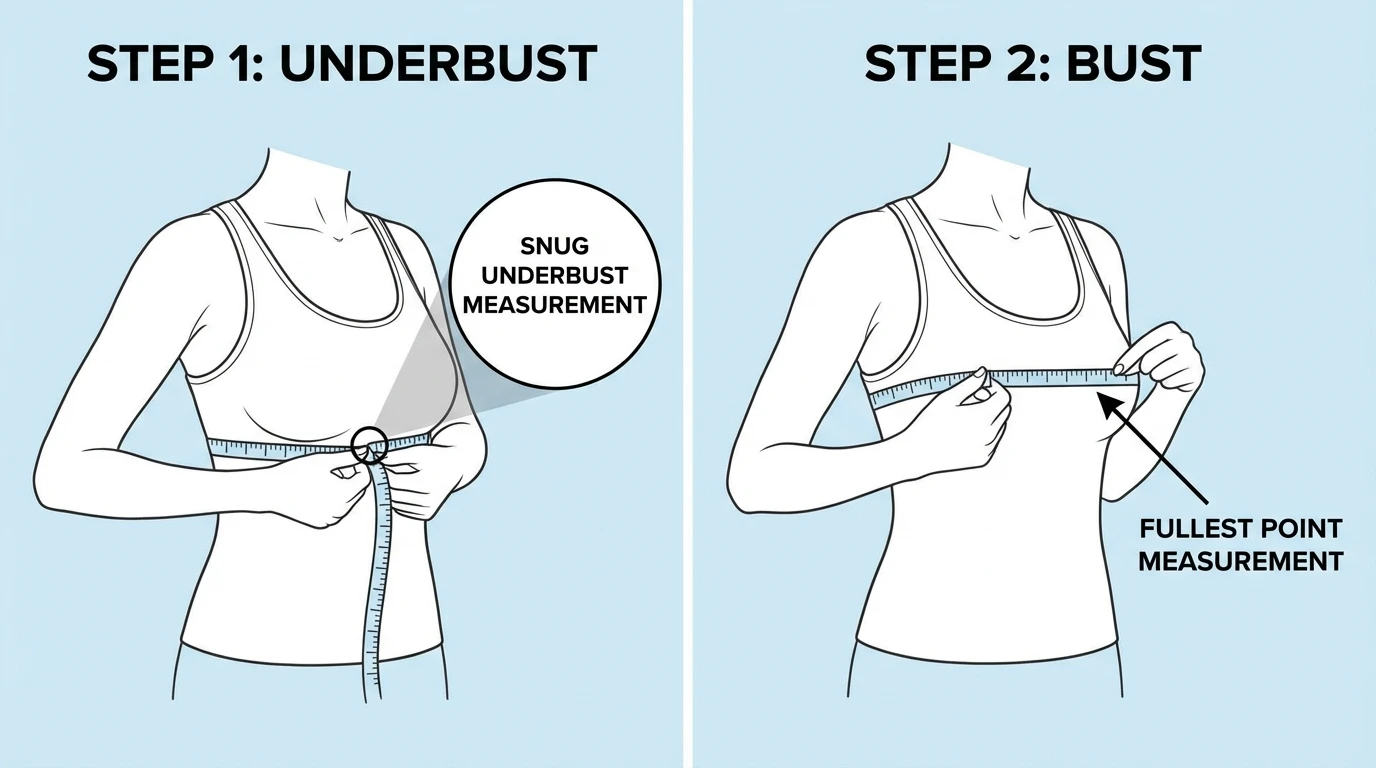
Can’t find your exact size in stock? Find the perfect sister size alternative that fits just as well.
Find sisters ↗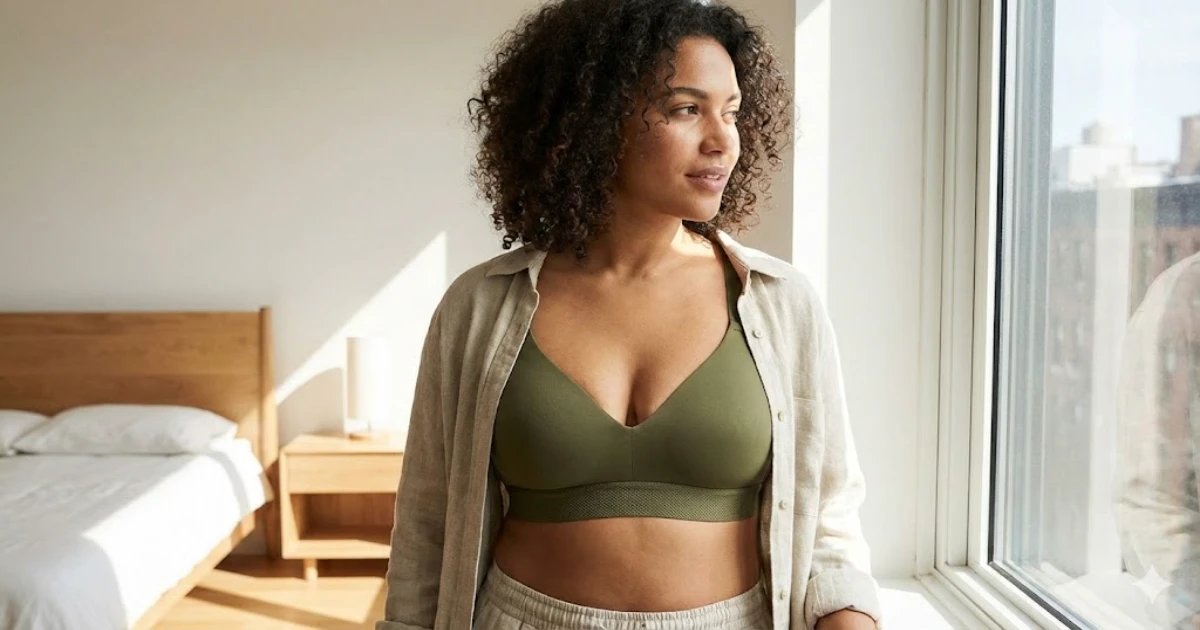
For D+ cups wanting less projection under fitted clothes. Find the right minimizer size for your measurements.
Calculate ↗Ready to Build Your Perfect Rotation?
Use the free tool above to get your personalized bra wardrobe number — broken down by category, tailored to your shape, lifestyle and climate.
↑ Back to the Builder