Racerback Bra Size & Fit Guide: How It Should Fit, Who It Suits & When to Choose One
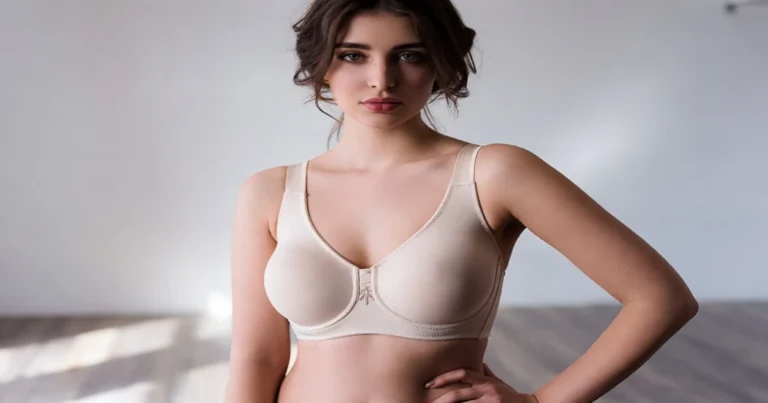
A racerback bra brings the shoulder straps toward the center of the back, which can reduce strap slipping and keep straps hidden under racerback tops. Your size still comes from the band and cups—the racerback shape changes strap placement, not the bra-size system.
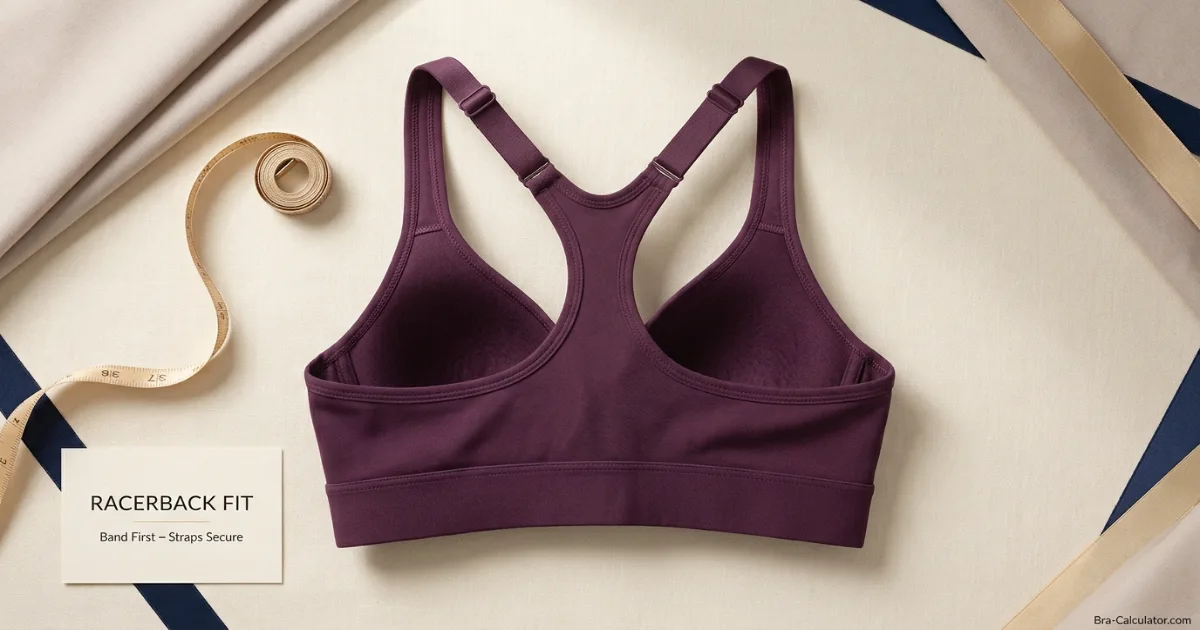
Start with the same bra size you wear in a well-fitting regular bra. Do not automatically size up or down just because a bra is racerback. The band should stay level and comfortably firm, the cups should contain the breast tissue without gaping or spillage, and the racerback straps should sit securely without pulling hard into the neck. If the band and cups fit but straight straps often slide off your shoulders, a racerback, cross-back or J-hook design can be a smart style change.
What Is a Racerback Bra?
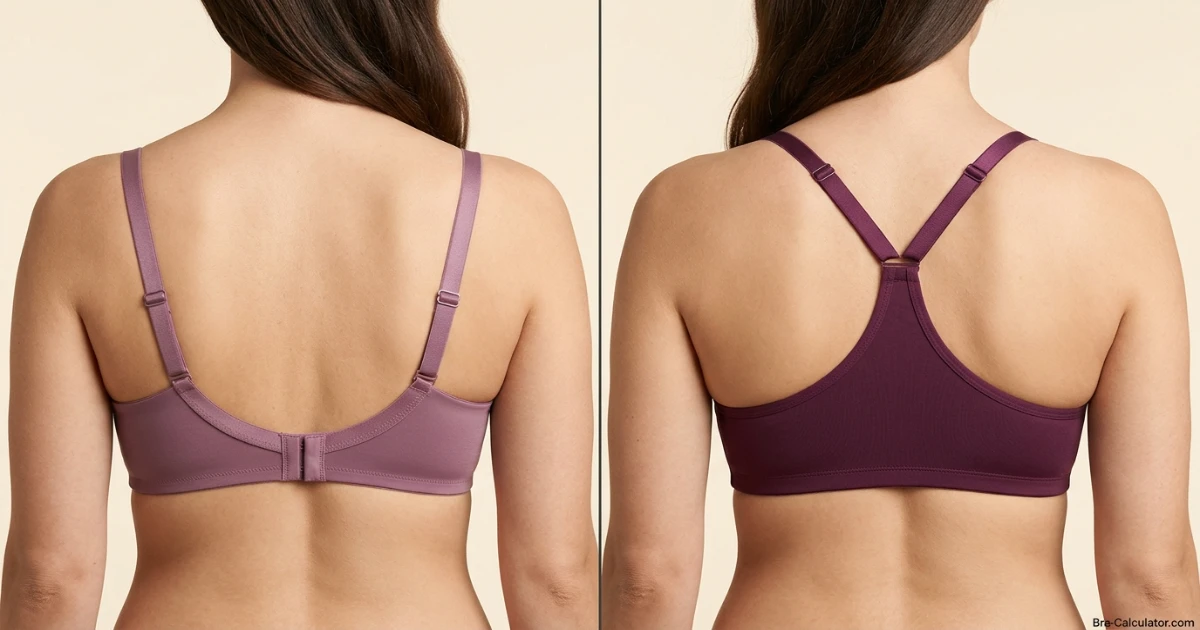
A racerback bra is a bra whose shoulder straps angle inward and meet, cross or connect toward the center of the back. From behind, the strap layout may resemble a Y, V, T or X depending on the design. Some bras are permanently built this way; others convert from straight straps using a J-hook, clip or repositionable straps.
The shape is useful for two separate reasons. First, it keeps bra straps away from the outer shoulder area, which can help under racerback tanks and sleeveless tops. Second, inward strap placement can reduce the tendency of straps to slide off narrow or sloping shoulders when the bra size itself is otherwise correct.
Visual Racerback Fit Guide
Racerback bras can look similar on a product page while feeling very different on the body. These diagrams show the four fit ideas that matter most: where the straps travel, how the common back layouts differ, where support should come from, and why a very narrow or high connection can create neck pressure.
Find Your Best Bra Match
Answer a few fit questions to get bra styles matched to your support needs, breast shape and everyday preferences.
Question 1 of 5
Why it matches
What to look for
What may not work
Private fit matching: your answers are used only to build the recommendation on this page. No measurements or fit selections are submitted to Bra-Calculator.com.
This tool suggests a starting bra style, not a medical or diagnostic recommendation. Individual brands and bra models can fit differently.
Regular straps vs. racerback
The main change is strap path—not a new bra-size system.
Fixed, X-back and J-hook
They all move straps inward, but the geometry and adjustability are different.
Where support should come from
A stable band and well-fitted cups do the heavy work; straps fine-tune position.
Comfortable angle vs. neck pressure
More inward is not always better. A very high, narrow connection can feel concentrated near the neck.
“Racerback” describes the back and strap arrangement. It does not create a separate band-and-cup size conversion. Start with the size that already fits you well, then let the actual band, cups, wires and strap tension decide whether that specific racerback runs firm, shallow, compressive or true to your usual fit.
Racerback Bra Size Guide: What Size Should You Buy?
Your normal well-fitting bra size is the best starting point. A 34D does not automatically become 36C, 34DD or 32DD merely because the bra is racerback. However, construction can change how a size feels. A front-closure racerback may have fewer band-adjustment positions. A sports racerback may use firmer fabric or compression. A wireless racerback may have a wider underband and flexible cup sizing.
That is why size labels should be treated as a starting point and the try-on test should decide the final fit.
| Fit area | Correct racerback fit | Warning sign |
|---|---|---|
| Band | Level, secure, does not ride up | Climbs toward shoulder blades or shifts with arm movement |
| Cups | Tissue contained without major gaps or overflow | Spillage, wrinkling, empty space or wires on tissue |
| Center front | Sits as designed for that bra style | Clearly pushed away by insufficient cup room in a wired bra |
| Racerback straps | Secure, no repeated slipping, no painful neck pull | Digging at neck base or carrying most of the bust weight |
| Movement | Band and cups remain stable when arms lift | Whole bra shifts upward or cups move out of place |
Racerback Bra Size Guide: 5-Step Fit Test
Who Can Benefit From a Racerback Bra?
Straps slide off
Inward-set straps can help when regular straps sit too close to the shoulder edge even after correct adjustment.
Racerback clothing
The strap path stays more discreet under racerback tanks, athletic tops and certain sleeveless dresses.
Active movement
Many sports bras use racerback or cross-back layouts to keep straps stable during repeated arm movement.
People with narrow or sloping shoulders often notice the most obvious strap-position benefit, but shoulder shape is only one part of the fit. Someone with broad or square shoulders may prefer straight straps because a very narrow racerback connection can feel concentrated toward the neck.
Types of Racerback Bras
The straps are permanently joined or cut in a Y/T shape. Simple and stable, but usually less adjustable for different necklines.
Regular straps can clip together at the back. Useful when you want both straight and racerback options from one bra.
Straps cross each other rather than meeting at one central point. This can spread tension differently from a narrow Y-back.
Often used because a fixed racerback can make a traditional back clasp awkward to reach. Check band adjustability carefully.
Built for movement, sometimes with compression, encapsulation or hybrid support. Choose by impact level as well as size.
Uses underband, fabric structure and cup shape instead of wires. Support varies widely by construction.
Are Racerback Bras More Supportive?
Sometimes—but “racerback” describes strap orientation, not a guaranteed support level. A well-designed racerback can feel more stable because the straps are less likely to slip outward. That can be particularly useful in sports bras or for people whose straight straps repeatedly fall.
However, the support system still depends heavily on the band and the way the cups control breast tissue. If your shoulders are carrying most of the load, shortening the racerback straps harder is usually the wrong fix. A flimsy low-support racerback will not necessarily outperform a well-fitted full-coverage bra with straight straps. For larger busts, look beyond the back shape and evaluate band firmness, cup depth, side support, strap width and whether the style is designed for the activity you have in mind.
Racerback Bras for Large Breasts: What Matters Most
A racerback can work very well for fuller busts, especially when straps tend to slide, but it needs enough structure. Wider underbands, cups sized by band-and-cup rather than broad S/M/L ranges, stable side wings and straps that distribute pressure can matter more than the racerback label itself.
Pay particular attention to neck pressure. If the straps converge very sharply and are overtightened, the load can feel concentrated near the neck. A wider cross-back, adjustable J-hook position or a style with broader strap placement may feel better than a narrow fixed T-back.
| Fuller-bust priority | Why it matters |
|---|---|
| Firm, level band | Reduces reliance on shoulder straps for lift |
| Enough cup depth | Prevents tissue from forcing the bra downward or outward |
| Comfortable strap angle | Avoids excessive inward pull at the neck |
| Appropriate support level | Everyday walking and high-impact exercise need different construction |
| Adjustability | Helps fine-tune strap position and tension |
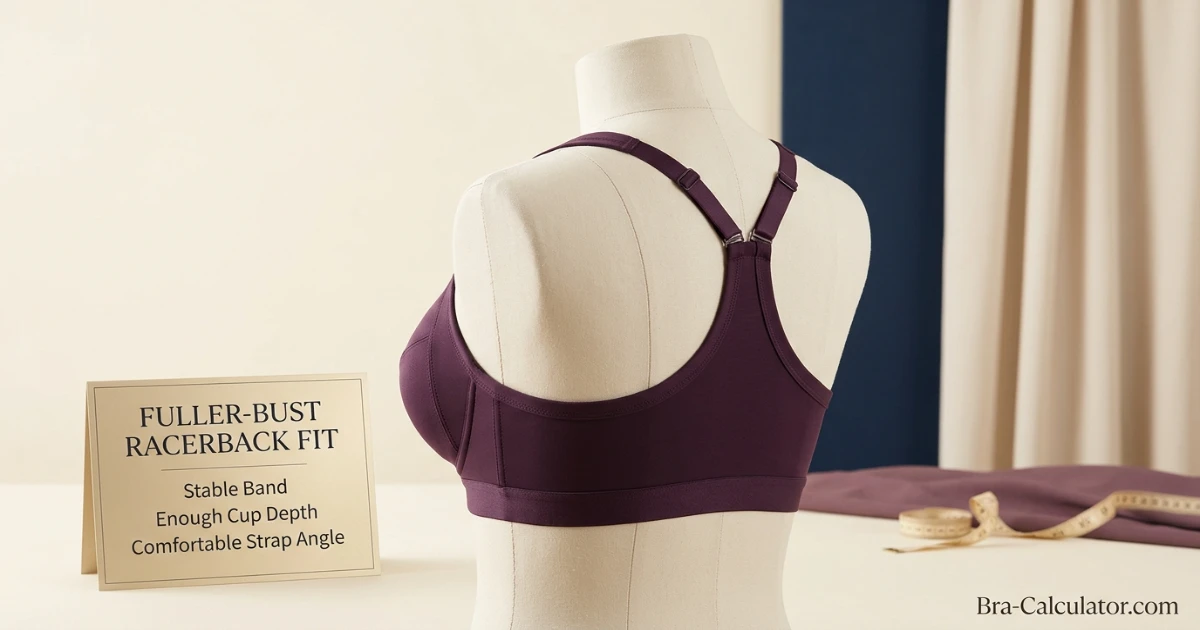
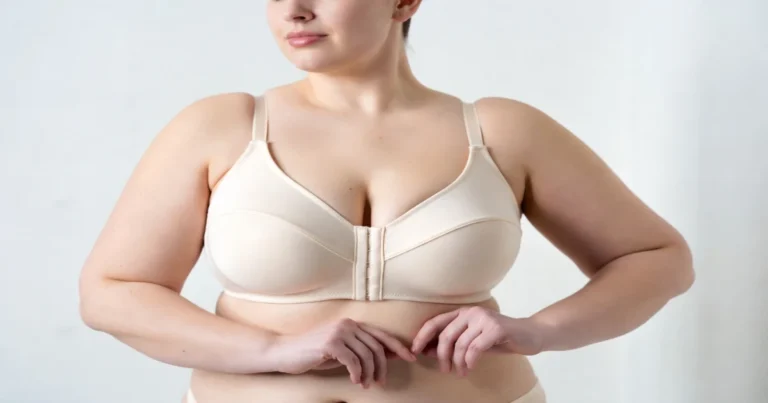
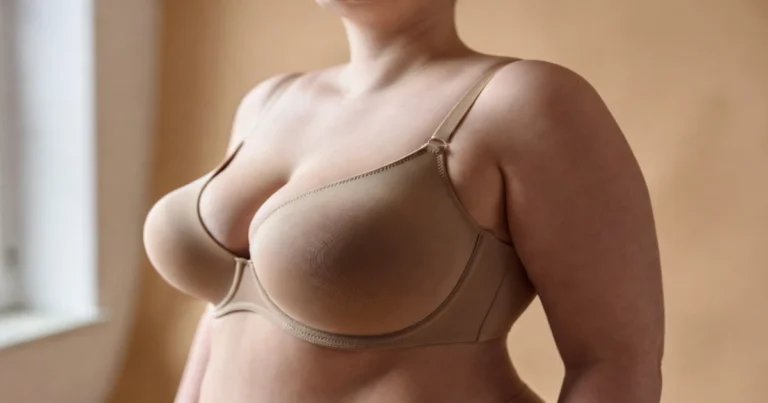
For a fuller bust, look beyond the back shape
A centered racerback can help straps stay put, but a fuller bust still needs enough cup depth, a stable underband and a strap angle that does not concentrate pressure near the neck.
Good fit signs: level underband, cups contain tissue fully, and the straps stay secure without digging.
Racerback Sports Bra vs. Everyday Racerback Bra
An everyday racerback bra is mainly designed for daily support, smoothness and clothing compatibility. A sports racerback must also control breast movement during exercise. The fact that both share a center-back strap shape does not make them interchangeable.
For yoga, walking or strength training, a lower-impact racerback may feel adequate. Running, jumping, court sports and HIIT usually demand stronger movement control. Look for a band that remains stable during a jump test, cups or panels that control bounce, and straps that stay secure without digging.
Straps only fall during workouts?
That can be a movement-specific fit problem rather than an everyday sizing problem.
Fix Workout Strap SlippingCheck Your Starting SizeRacerback Bra vs. Regular Bra
| Feature | Racerback bra | Regular straight-strap bra |
|---|---|---|
| Strap position | Angles inward toward center back | Runs more vertically over shoulders |
| Strap-slip resistance | Often better for narrow/sloping shoulders | Depends heavily on strap placement and shoulder shape |
| Clothing | Works well under racerback and cut-in tops | Best under standard shoulder coverage |
| Neck pressure risk | Can feel concentrated if straps pull too far inward | Usually distributes straps farther apart |
| Size rule | Start with normal bra size | Start with normal bra size |
| Support | Varies by construction | Varies by construction |
Racerback vs. Cross-Back vs. J-Hook
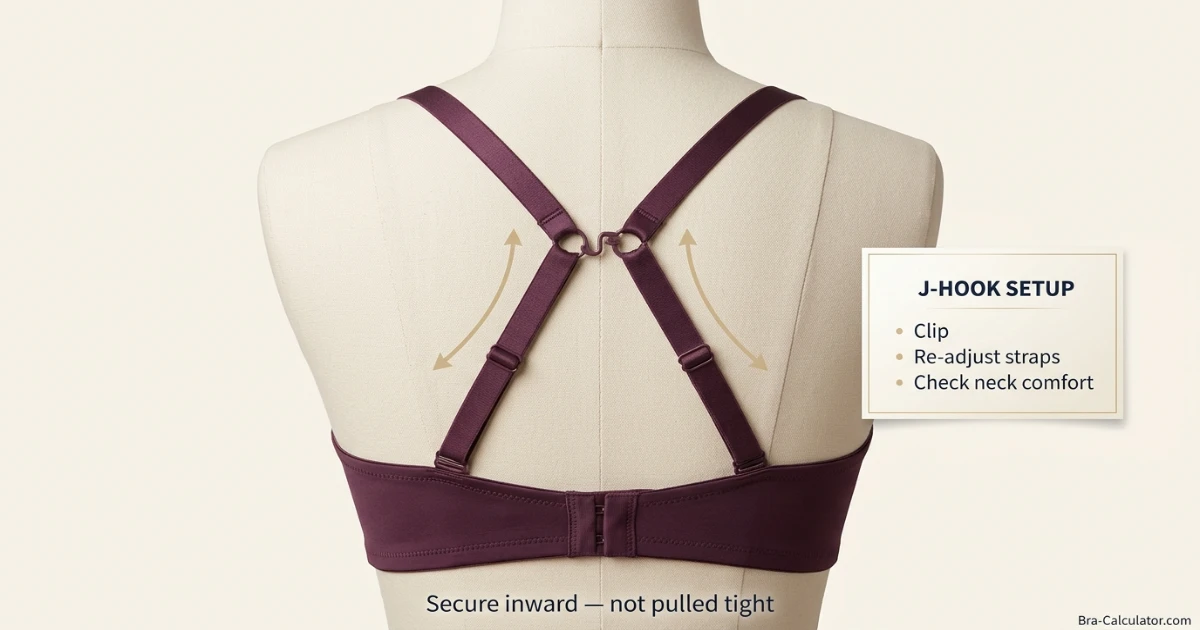
These terms overlap, but they are not identical. A fixed racerback has a permanent center-back shape. A cross-back has two straps that cross in an X. A J-hook bra starts as two regular straps and clips them together, creating a temporary racerback-like position.
If you are trying to stop strap slipping, a J-hook is a useful way to test whether moving straps inward helps before committing to a fixed racerback wardrobe. If the J-hook instantly creates neck pain, the strap connection may be too high or too narrow for you.
How to Use a J-Hook Without Creating Neck or Shoulder Pressure
A J-hook can be one of the easiest ways to test whether inward strap placement solves slipping, but clipping the straps together changes their path and can make them feel shorter. Treat the conversion as a fresh strap adjustment rather than simply connecting the hook and walking away.
Common Racerback Bra Fit Problems and Fixes
| Problem | Likely reason | Try this first |
|---|---|---|
| Racerback digs into neck | Straps too tight or connection too narrow/high | Lengthen straps; try wider X-back or lower J-hook position |
| Band rides up | Band too loose or stretched | Remeasure; test firmer band/sister size |
| Cups gape near top | Shape mismatch, cup too large or strap tension distorting cup | Reduce strap tension and reassess cup shape |
| Breast spills at top or side | Insufficient cup volume or wrong shape | Try more cup room before tightening straps |
| Front closure feels tight but cups look small | Cups may be forcing band tension | Test larger cup volume rather than only larger band |
| Straps still slip in convertible mode | J-hook position or strap length not secure | Re-adjust both straps evenly and check hardware |
| Shoulders ache after a few hours | Straps carrying too much load | Improve band/cup support and reduce strap tension |
Should You Size Up or Down in a Racerback Bra?
Not automatically. If your current measured size fits well in a regular bra, try that size first. Only change after reading the actual symptoms.
If the racerback band feels too tight
Check the cups before sizing the band up. Too-small cups can make a band feel tighter. If the cups truly fit and only the band is too firm, compare the larger-band sister size—for example, 34D to 36C—or a different style with more band adjustability.
If the band rides up
Do not loosen it further. A smaller-band sister size may be more appropriate if cup capacity is correct.
If the cups spill
Increase cup capacity or change cup shape. The racerback strap position is not a substitute for enough cup volume.
If straps dig near your neck
First lengthen the straps. If the bra then loses stability, the design may simply be too center-pulled for your frame.
What to Look for When Buying a Racerback Bra
Especially useful for fuller busts or anyone who needs precise cup volume rather than broad alpha sizing.
More control over tension and the inward pull toward the neck.
Lets one bra switch between regular and racerback clothing.
If the bra closes in front, check how much band adjustment is available elsewhere.
Helps anchor support so the straps are not doing all the work.
For sports use, buy for impact level—not merely for the racerback appearance.
3 Racerback Bras Worth Comparing
These three picks cover different use cases: everyday wear, fuller-bust wireless support and low-impact movement. Always check the current size chart before ordering.
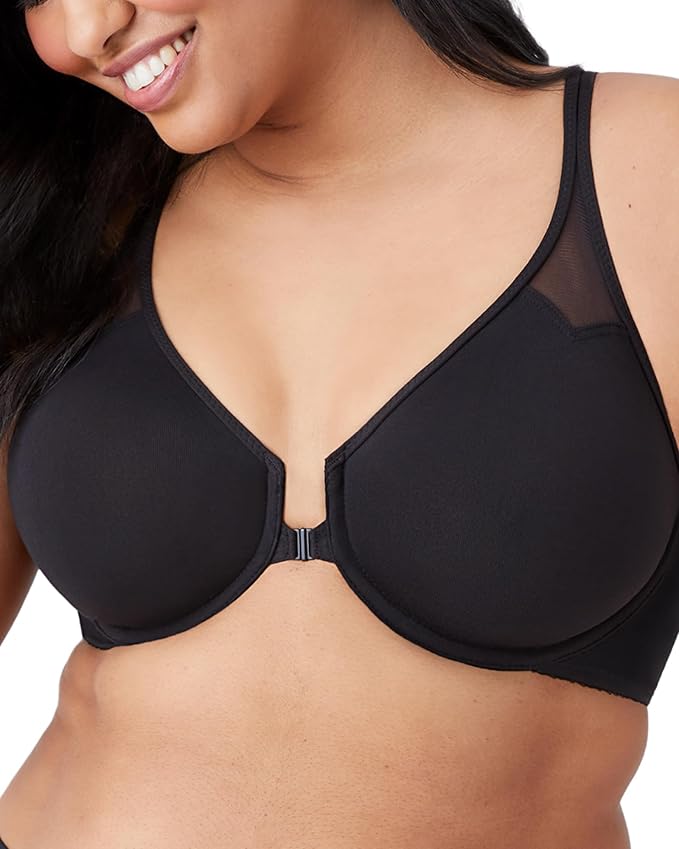
Future Foundation Front Close Racerback Bra
A practical everyday option with a front closure, soft stretch-foam cups, a T-back and adjustable straps.
Check Price on Amazon →Best when you want a true everyday racerback rather than a sports-bra feel.

MagicLift Front-Closure Racerback Bra
A wireless, front-close racerback designed for extended band and cup ranges, with a centered back to help reduce strap slipping.
Check Price on Amazon →A stronger candidate when your priority is fuller-bust coverage and no-slip strap placement.

Butterluxe Y Back Sports Bra
A soft Y-back option for yoga, stretching and other low-impact use. It is a good example of why racerback shape alone should not be treated as high-impact support.
Check Price on Amazon →Choose this type for comfort and light movement—not running or other high-impact exercise.
Affiliate disclosure: As an Amazon Associate, Bra Calculator earns from qualifying purchases at no extra cost to you. Product prices, colors and size availability can change; verify the current listing and brand size chart before buying.
What Clothes Work Best With a Racerback Bra?
Racerback bras are especially useful under tops where the shoulder fabric cuts inward toward the neck. Racerback tanks, athletic tops, sleeveless tees and some halter-adjacent designs can expose straight bra straps while covering a center-back racerback.
They are less ideal when a garment has a very open back, because the center strap junction can remain visible. For low-back, backless or unusual necklines, a convertible, low-back or strapless solution may be more appropriate.
How to Care for a Racerback Bra
Fasten hooks and close any J-hook before washing so hardware does not catch other garments. Hand washing is the gentlest method; if you machine wash, use cold or cool water, a lingerie bag and a gentle cycle. Air dry rather than using high dryer heat, which can shorten the life of elastic.
Store molded cups without folding one cup inside the other. For convertible racerbacks, return the straps to a relaxed position rather than storing them under strong tension.
Frequently Asked Questions About Racerback Bras
What is the point of a racerback bra?
It moves the straps toward the center of the back so they can stay more secure on the shoulders and remain hidden under racerback-style tops. The design is common in both everyday and sports bras.
Should I buy the same size in a racerback bra?
Yes, your normal well-fitting bra size is the best starting point. Change size only if the band, cups or wires show real fit problems in that specific bra.
Are racerback bras good for large breasts?
They can be. For fuller busts, prioritize a stable band, adequate cup depth, comfortable strap angle and construction designed for the level of support you need.
Do racerback bras stop straps falling off?
They often help when the cause is outward strap placement on narrow or sloping shoulders. They will not fix slipping caused by a loose band, worn elastic or an overall incorrect size.
Can a racerback bra cause neck pain?
It can feel uncomfortable if the straps are overtightened or converge too sharply toward the neck. Lengthen the straps and consider a wider cross-back or different strap geometry if pressure remains.
Is a racerback bra the same as a sports bra?
No. Racerback describes the strap/back layout. Many sports bras are racerback, but everyday racerback bras are not automatically designed for running or other high-impact activity.
What is a J-hook bra?
A J-hook is a small connector that lets two regular shoulder straps clip together behind the back, creating a racerback-like position when needed.
Why does my racerback bra feel tighter than my normal bra?
Firmer fabric, a front closure with less adjustment, different cup depth or more center-pulled straps can change the feel. Check whether the cups are actually large enough before assuming you need a larger band.
Should I loosen the straps when using a J-hook?
Often, yes. Connecting regular straps inward can increase their effective tension. Re-adjust after clipping so the straps stay secure without pulling into the neck or shoulders.
Does a racerback bra give more support than a regular bra?
Not automatically. The inward strap layout may feel more stable and can reduce strap slipping, but overall support still depends on the band, cup construction, materials and—when exercising—the bra’s actual impact-control design.

Amelia reviews Bra-Calculator.com fit guides with one consistent rule: style features can improve comfort and strap placement, but they should never be used to hide a band or cup problem. Start with size, then choose the racerback construction that fits your shoulders, clothing and activity.
Editorial note: Racerback is a strap/back construction, not a separate sizing standard. Current fitting guidance consistently treats strap stability as only one part of fit: the band, cups and wires still need to work correctly, and sports support depends on the bra’s actual movement-control construction rather than the racerback shape alone. Use your normal well-fitting size as the starting point, then confirm the fit in the specific bra.