Full Coverage Bras for DD: Fit, Support & Style Guide
Full coverage can solve top spill, side escape and constant readjusting in DD cups—but only when the band, cup depth and breast shape match. This guide explains what “full coverage” actually means, how a DD full-cup bra should fit, and which construction works best for everyday wear, smoothing, minimising and movement.
What should a full coverage bra do for a DD cup?
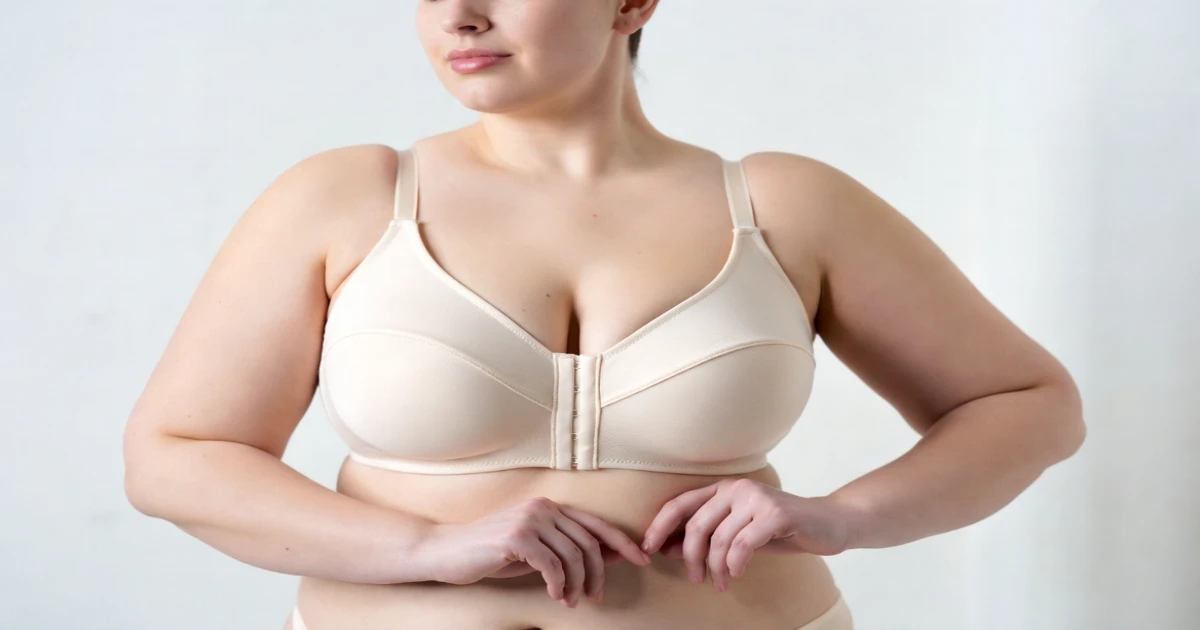
A good full coverage bra for DD cups should contain the full breast footprint, keep the band level and stable, give enough cup depth for your projection, and prevent top or side spill without compressing breast tissue. Full coverage describes the cup height—not the support level—so a tall cup still needs strong band recovery, correct wire or cradle placement and a shape that matches your body.
Shopping for ranked product picks?
This page is the fit-and-style guide. We keep the commercial “best products” roundup separate so the two pages serve different search intent.
The older version of this guide blurred five different jobs—everyday full cup, wireless comfort, minimising, seamless T-shirt wear and sports support—into one “best bra” list. That is why the new version starts with fit mechanics. Once you know why a DD bra spills, gaps, digs or rides up, choosing the right full-coverage style becomes much easier.
What “Full Coverage” Means at DD Cup and Above
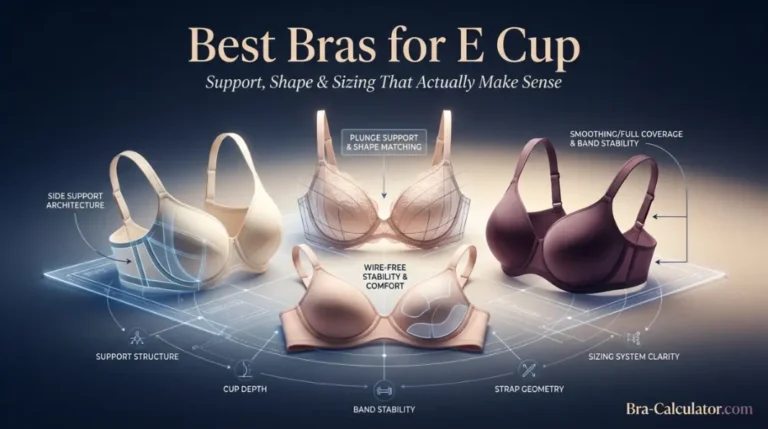
Full coverage, also called full cup in many UK brands, describes a cup that covers more of the breast than a demi, balconette or plunge. On a DD bust, that extra height can help contain upper and outer tissue—but height alone does not create support. The bra still has to anchor at the ribcage and provide enough room through the deepest part of the cup.
DD is not one fixed breast size
A cup letter is relative to its band. A 32DD and a 40DD do not hold the same breast volume. As the band increases, the volume represented by the same cup letter increases too. That is why “best bra for DD” advice becomes misleading when it ignores band size.
Full coverage is not the same as a minimizer
A full-coverage bra contains more tissue. A minimizer is designed to redistribute projection across a broader area so certain clothes fit differently. Some minimizers are full coverage, but most full-coverage bras are not minimizers. If your only problem is side spill or cup overflow, a deeper full cup may be a better first move than a minimizer.
Which Full Coverage Bra Style Should You Choose?
| Style | Best for | Strength at DD+ | Watch for |
|---|---|---|---|
| Seamed full-cup underwire | Lift + projection | Multi-part cups can shape and support deeper busts more precisely. | Wire width must match your breast root. |
| Smooth full-coverage T-shirt | Fitted knits | Clean surface under thin clothing; spacer foam can reduce bulk. | Very shallow molded cups may gap or push tissue sideways. |
| Structured wireless full cup | Long comfortable days | Good when a firm band, side panels and shaped cups replace the wire. | Thin S/M/L bralettes may not suit a large bust-to-band ratio. |
| Full-coverage minimizer | Button-front shirts | Can reduce forward projection visually under structured clothing. | Compression is not a fix for an incorrect cup size. |
| Full-coverage sports bra | Running / training | Encapsulation plus a stable band controls movement better than an everyday bra. | Choose by impact level, not just cup coverage. |
How Should a Full Coverage Bra Fit a DD Bust?
Measure first, then judge the bra on your body. Start with the Bra Size Calculator if your current size is old, uncomfortable or inconsistent across brands. After that, use this fit check in the exact style you plan to keep.
Find Your Best Bra Match
Answer a few fit questions to get bra styles matched to your support needs, breast shape and everyday preferences.
Question 1 of 5
Why it matches
What to look for
What may not work
Private fit matching: your answers are used only to build the recommendation on this page. No measurements or fit selections are submitted to Bra-Calculator.com.
This tool suggests a starting bra style, not a medical or diagnostic recommendation. Individual brands and bra models can fit differently.
If the top edge cuts in
First check cup volume. If the cup is clearly overflowing at the top or side, go up in cup volume. If the cup otherwise fits but only the upper edge cuts in, the problem may be cup shape—especially with full-on-top or soft tissue. A stretch-lace upper panel can be more forgiving.
If a full-coverage cup gaps at the top
Do not automatically size down. A tall cup can gap because it is too high for your breast shape, because your tissue is fuller at the bottom, or because the cup is too shallow at the base and gets pushed away from the body. Try a shorter full cup, stretch upper cup or more projected seamed style before changing two sizes at once.
If the band feels tight but the cups spill
A too-small or too-shallow cup can make the whole bra feel tighter. Test the band backward and upside down so the cups are out of the equation. If the band feels reasonable in that position, fix the cup before increasing the band.
Full Coverage Bras for DD — Fit Guide With Pictures
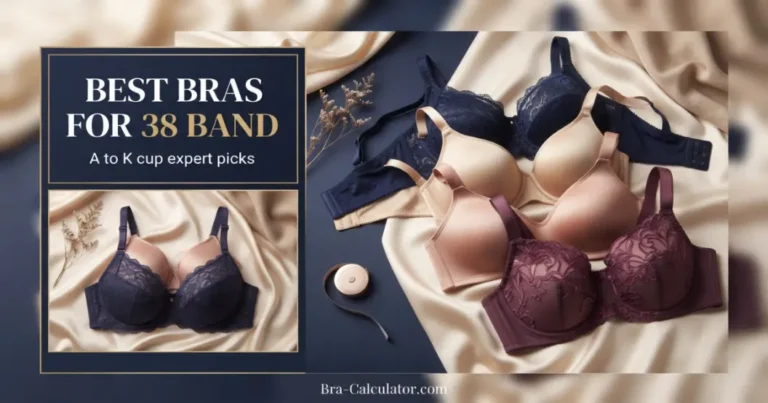
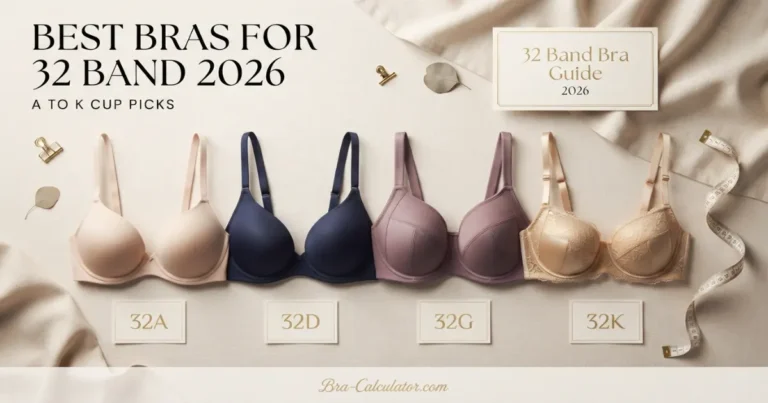
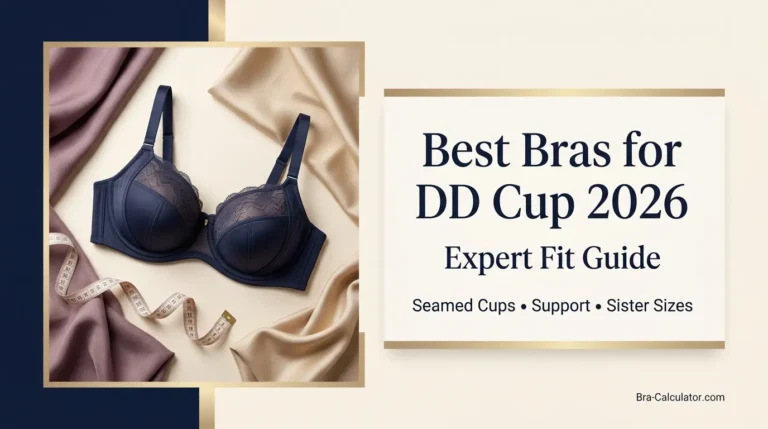
Visual comparisons matter because two bras can share the same size label but distribute coverage very differently. These existing Bra-Calculator.com visuals are now given specific, descriptive alt text instead of repeating the same generic phrase on every image.
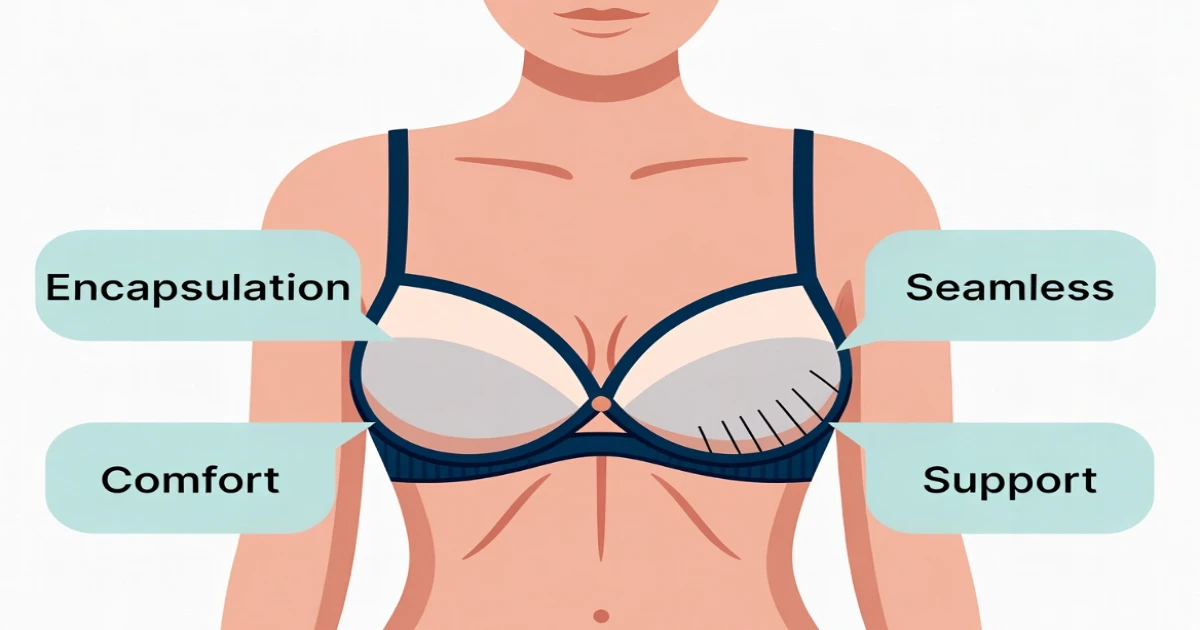
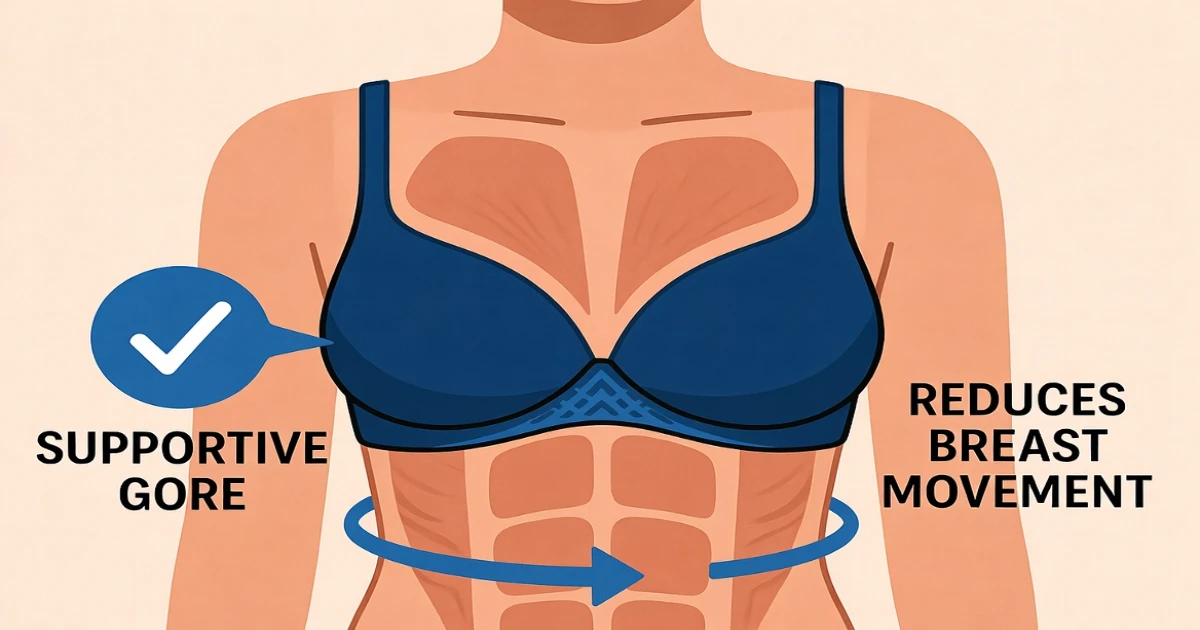
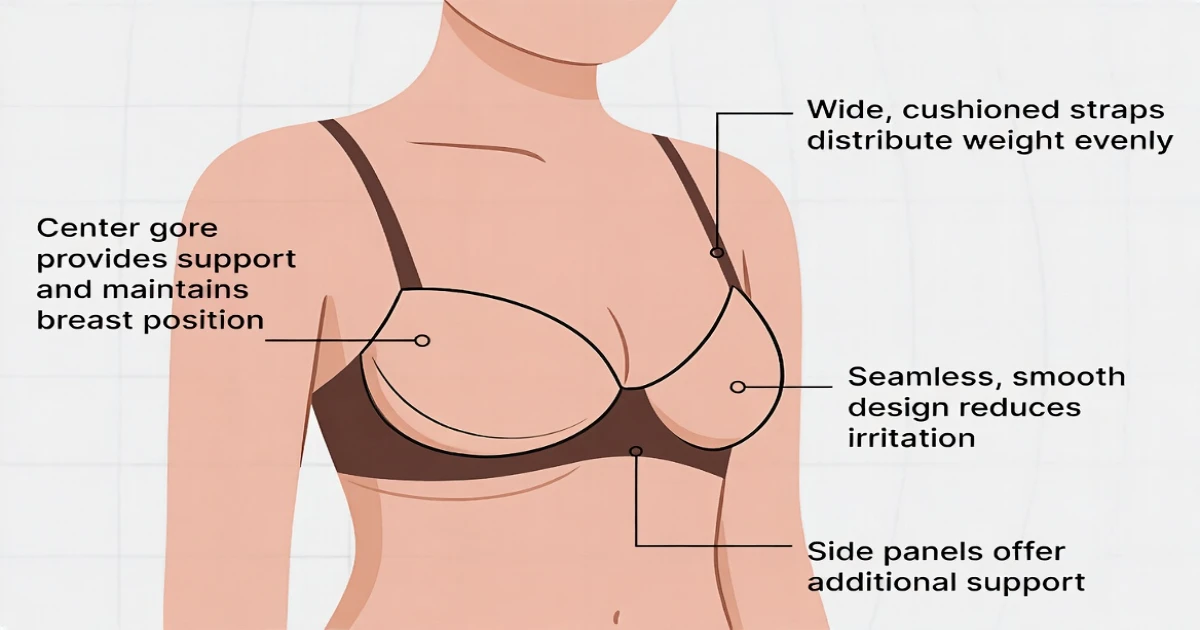
The Four Support Features That Matter Most
Elastic should return after stretch. A band that feels soft in the hand but rides up quickly will reduce lift.
DD+ tissue needs forward room. Shallow cups often create side spread, center overflow or a floating gore.
Power bars, inner slings or firmer outer panels can guide breast tissue forward for a more centered shape.
1. Band support
The band is the foundation. Width can improve comfort, but width alone is not enough—the elastic must be firm enough for your torso and the bra must be sized correctly. A new bra should generally start on the loosest hook so you can move inward as the elastic relaxes with wear.
2. Strap design
Wider or softly padded straps can distribute shoulder pressure, especially in fuller cups. Fully adjustable straps are useful if you have a short torso or sloped shoulders. But if the band is loose, wider straps only hide the real problem for a while.
3. Cup construction
For projected DD+ shapes, a multi-part seamed cup often gives more depth and directional lift than a single molded piece. Smooth molded or spacer cups are still excellent under T-shirts when their depth matches your shape. The right choice is about shape and outfit—not a rule that one construction is universally superior.
4. Side wings and center stability
Taller wings can contain outer breast tissue and reduce escape near the underarm. A stable center section helps the cups work independently instead of collapsing toward the middle. On a wired bra, the center gore is also a useful fit signal; on a wireless bra, judge stability and separation rather than expecting the same hard tack.
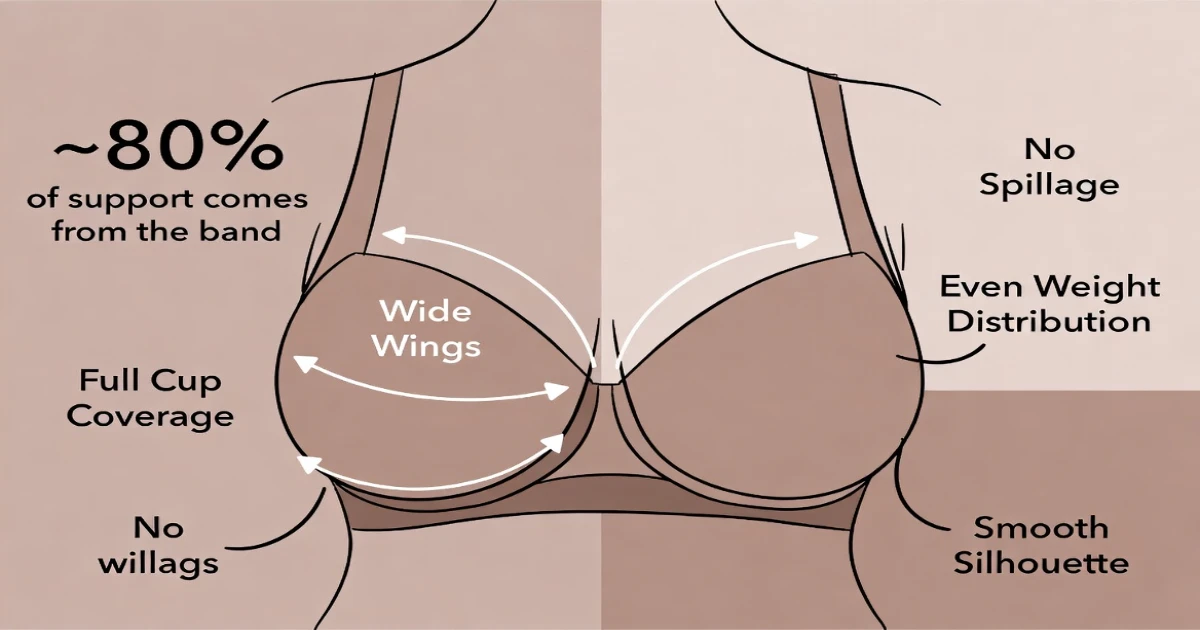
DD Cup Sizing: US vs UK Labels
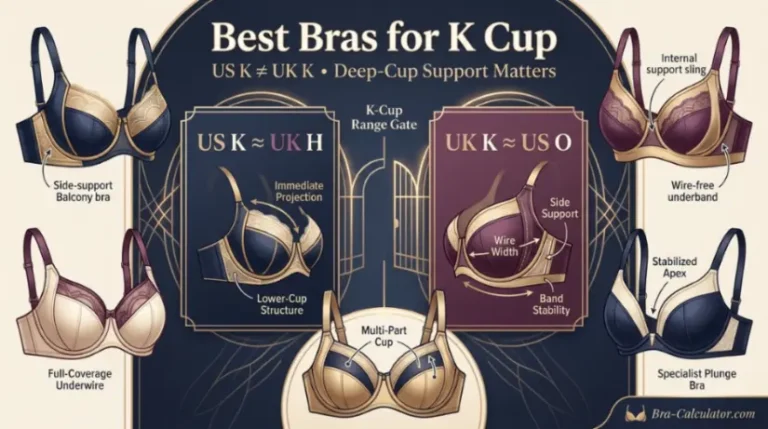
One of the easiest ways to order the wrong full-coverage bra is to assume every DD+ brand uses the same cup sequence. Many US and UK brands use different lettering above DD, so check the brand’s sizing system before you order.
| Stage | Typical UK sequence | Typical US sequence | Why it matters |
|---|---|---|---|
| Up to DD | D → DD | D → DD | Labels are often similar here, but brand grading can still differ. |
| After DD | E → F → FF → G… | DDD/F → G → H… | A UK E is not the same label as a US E in every brand. |
| Buying online | Check “UK sizing” note | Check “US sizing” note | Use the product’s own chart rather than converting from memory. |
Elomi, for example, uses UK cup lettering on many markets and its published international guide extends from D through KK in UK sizing across its wider range. Wacoal’s current Basic Beauty Full Figure Seamless Underwire listing uses US-style bands 32–44 and cups C–H. Always confirm the exact product and market page because size availability can vary by style and color.
Two Full-Coverage DD Examples to Understand the Difference
These are examples, not a replacement for the dedicated buying roundup. They show two common full-coverage directions: a smooth everyday US-style bra and an extended UK full-cup option.
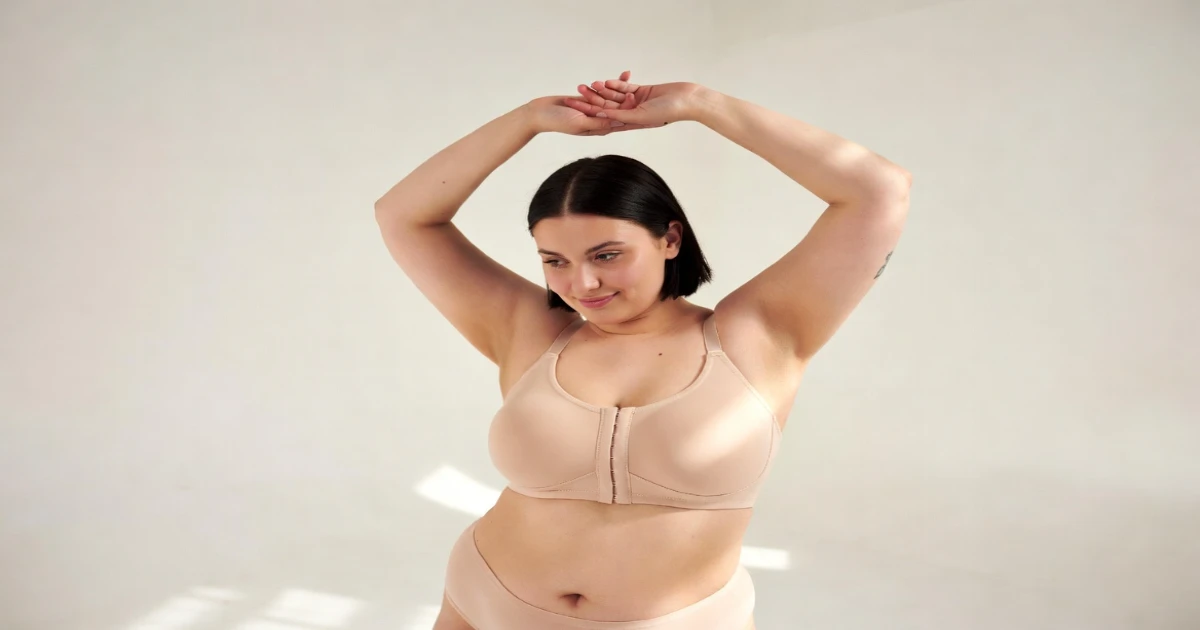
Wacoal Basic Beauty Full Figure Seamless Underwire
A useful reference for shoppers who want a smooth everyday cup rather than obvious seam lines. The current Wacoal US listing identifies it as full coverage and offers DD among its cup options. Check your exact size availability before buying.
Check Wacoal on Amazon →Affiliate search link · Editorial image above is a Bra-Calculator.com fit visual, not an Amazon product photo.
Elomi Cate Full Cup Banded Bra
Elomi is a useful example when you need a deeper cup or extended band/cup combinations beyond many mainstream US ranges. Its international size guide uses UK cup letters through KK and bands through 48 across the brand range, so verify the exact Cate listing and conversion before ordering.
Check Elomi Cate on Amazon →Affiliate search link · Editorial image above is a Bra-Calculator.com fit visual, not an Amazon product photo.
Affiliate disclosure: Bra-Calculator.com may earn a commission from qualifying purchases at no extra cost to you. Product availability, price and size ranges can change.
Match Full Coverage to Your Breast Shape
Full on top
Look for a stretch upper cup or open-enough neckline that can contain upper fullness without cutting in. A rigid tall edge can create “quad-boob” even when the lower cup depth is correct.
Full on bottom or softer tissue
A supportive lower cup with either stretch lace or a slightly shorter upper cup can reduce gaping. If the bra looks empty at the top but feels tight near the wire, do not immediately size down—the cup may be too shallow at the base.
Wide roots or outer fullness
Choose wider wires or a wireless side-support panel that contains tissue near the underarm. If the wire sits on breast tissue at the side, the cup is either too small or too narrow in shape.
Projected breasts
Prioritize depth at the wire and a cup that allows forward room. Seamed cups are often easier to engineer with projection than one-piece molded cups, although well-designed spacer styles can still work.
If you are not sure where your fullness sits, use the Breast Shape Identifier before deciding between a T-shirt, seamed, plunge, full-cup or side-support design.
Best Full-Coverage Direction by Outfit
| Outfit / day | Start with | Why |
|---|---|---|
| Thin T-shirt | Smooth molded or spacer full coverage | Reduces visible cup seams and top-edge show-through. |
| Button-down shirt | Seamed full cup or minimizer | Choose based on whether your main need is lift or reduced projection. |
| Long workday | Stable band + wide straps | Prioritize sustained comfort and a cup that stays in place while sitting. |
| Warm climate | Unlined seamed cup or spacer knit | Less dense padding and better airflow. |
| Running / HIIT | High-impact sports bra | Everyday full coverage is not the same as motion control. |
Common DD Full-Coverage Buying Mistakes
- Choosing only by cup letter. A 34DD and 42DD are not the same cup volume.
- Assuming taller cups are automatically more supportive. Coverage without band stability or cup depth can still feel weak.
- Going up in band to fix a small cup. This often creates ride-up while leaving the cup problem unresolved.
- Ignoring UK vs US lettering. DD may look familiar, but the sequence changes above it in many brands.
- Buying a minimizer when you actually need side support. Solve the fit symptom first, then choose the style effect.
- Over-tightening straps. Straps fine-tune placement; they should not replace a stable band.
How to Keep a Full-Coverage Bra Supportive
DD+ bras place repeated stress on bands, cup seams and strap attachment points. Care matters because once the elastic no longer recovers, the bra may still look fine while its support noticeably drops.
- Fasten hooks and use a lingerie bag if the care label allows machine washing.
- Skip high dryer heat unless the manufacturer specifically permits it.
- Reshape molded cups while damp and store them without crushing one cup into the other.
- Rotate your most-used bras so one band is not stretched every day.
- Replace the bra when the band rides up on the tightest hook or the cups no longer recover their shape.
Frequently Asked Questions
Is DD considered a large bra size?
DD is a fuller cup letter, but it is not one fixed breast size. Cup volume scales with the band, so 32DD has less cup volume than 40DD. Use both the band and cup when comparing sizes.
What is the best type of full coverage bra for DD cups?
For everyday lift, many DD wearers do well in a seamed full-cup underwire or a properly projected smooth full-coverage bra. For wire-free comfort, choose a structured wireless style with a stable band and side support. The right choice depends on breast shape and outfit.
Why does my DD full-coverage bra still spill at the top?
The cup may be too small, too shallow, or too closed at the neckline for your breast shape. Check for side spill and wire placement too; if several fit symptoms appear together, reassess cup volume and shape.
Why does a full-coverage bra gap near the top?
Top gaping can come from a cup that is too large, but it can also come from a cup that is too tall or too shallow for your shape. Try a shorter full cup, stretch upper cup or more projected construction before assuming you need a smaller size.
Are full coverage and full cup the same thing?
They are often used similarly. “Full cup” is especially common in UK lingerie terminology, while “full coverage” is common in US retail. Individual brands can use the labels differently, so judge the actual cup height and construction.
Do full coverage bras make breasts look smaller?
Not necessarily. Full coverage mainly contains tissue. A minimizer is specifically designed to redistribute projection. A well-fitted full cup can look smoother under clothing without making the bust materially smaller.
Should a DD cup use underwire or wireless?
Either can work. Underwire can offer precise lift and separation when the wire shape fits your breast root. Wireless can provide excellent comfort when the band and cup structure are strong enough. Choose based on fit, activity and comfort rather than cup letter alone.
How often should I remeasure my bra size?
Remeasure when your bras develop new fit symptoms or after meaningful body changes such as weight change, pregnancy, postpartum changes or hormonal shifts. You do not need to wait for a fixed annual date if the fit has already changed.
Final Fit Checklist for Full Coverage Bras for DD
Full coverage is most useful when it solves a real fit problem: overflow, side escape, unstable cups or visible edges under clothing. If the cup is simply taller but the band rides up, the wire sits on tissue or the cup collapses, you have more coverage—not better support.
Measure first with the Bra Size Calculator, use the Sister Size Calculator when the band needs to change, and move to the DD+ full-coverage buying roundup when you are ready to compare products.