An underwire pokes out when the fabric casing at the end of the wire channel wears through from friction and repeated washing — but if it keeps happening in the same spot, the bra is likely the wrong size. Stop wearing the bra immediately to avoid skin injury. Push the wire back in, seal the breach with a patch or hand stitching, and then decide: if the bra is relatively new with isolated damage, repair it. If the casing is frayed in multiple places, the wire has bent, or the bra never fit correctly, replace it. Going forward, wash bras in a mesh bag, air dry and rotate between at least three bras to slow casing wear.
Underwire Poking Out at a Glance
| Situation | What It Means |
|---|---|
| Wire pokes out at one end of the channel | Fabric casing has worn through at its thinnest or most stressed point — the most common location is the centre front near the gore. |
| Wire breaks through repeatedly at the same spot | A stress point caused by the underwire not lying flat — likely a sizing or fit issue rather than pure wear. |
| Wire pokes out on a relatively new bra | Bra may have been washed incorrectly (no mesh bag, tumble dried), or the underwire was the wrong size and sat under stress. |
| Wire has bent or deformed as well as poking out | The wire has been exposed to excessive heat or mechanical stress — repair is unlikely to hold; replacement is the better choice. |
| Casing is frayed or worn in multiple places | The bra has reached end of life — even if the current breach is repaired, another will appear soon. |
| Skin irritation or scratching from the wire | Stop wearing immediately. Even temporary skin breaks can become infected if wear continues. |
Why Does the Underwire Come Out of a Bra?
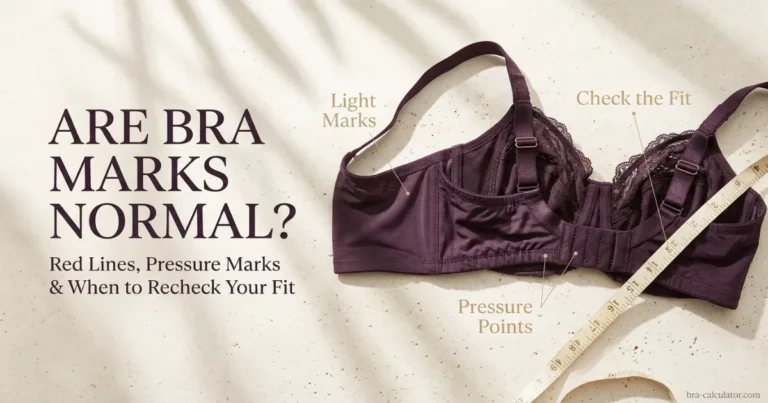
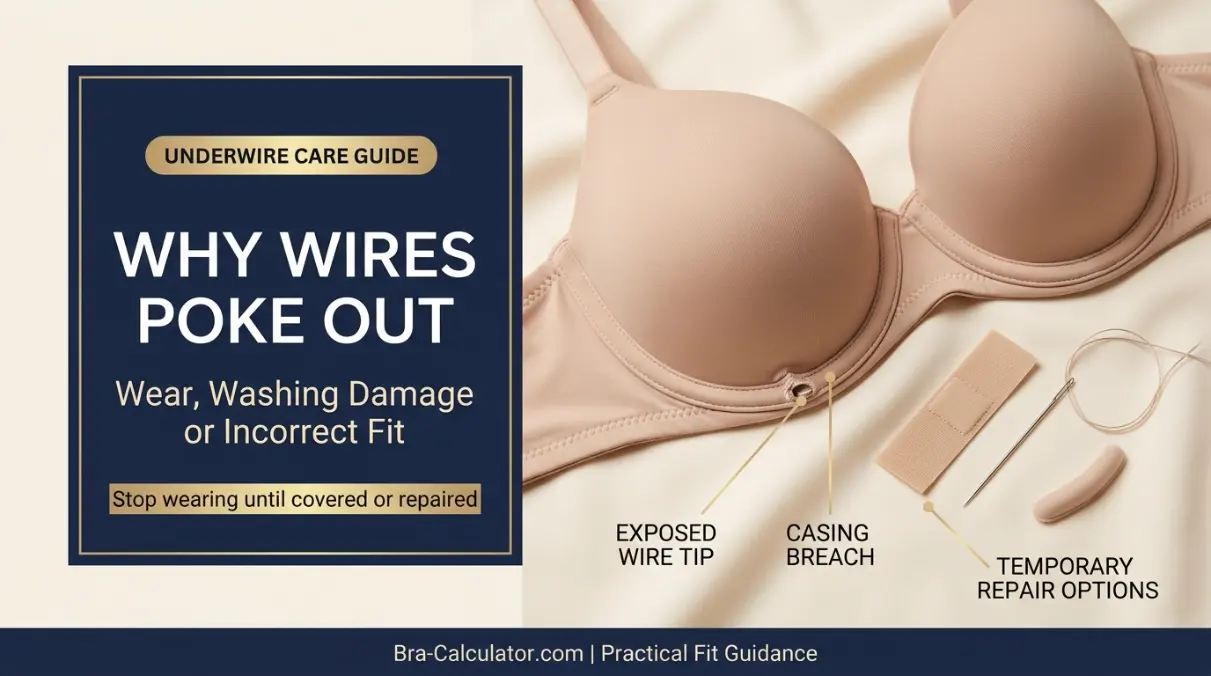
The underwire in a bra sits inside a fabric channel called the casing — a tube of fabric stitched to the inside of the bra cup, usually made from the same material as the bra’s lining. The ends of this channel are the most vulnerable points: they bear the most flex stress during wear, experience the most friction during washing, and are the thinnest part of the structure because stitching converges there.
Over time, the casing fabric weakens at these stress points. Eventually it develops a small hole — and once the hole is large enough, the rounded end of the underwire finds the opening and pushes through. This is the classic underwire poking out of bra experience. It almost always starts with a barely noticeable scratch before the wire fully emerges.
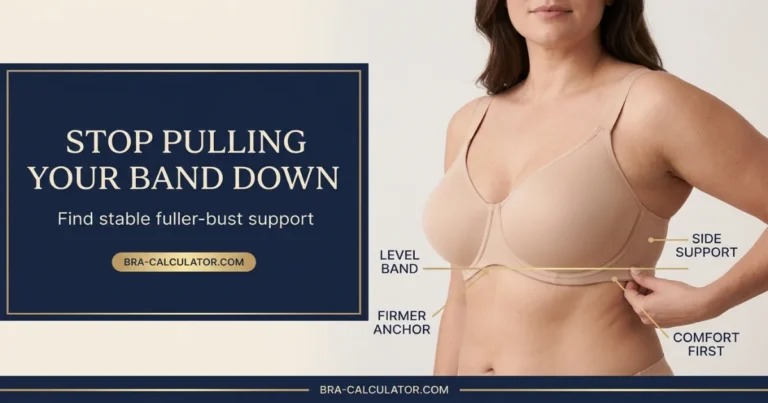
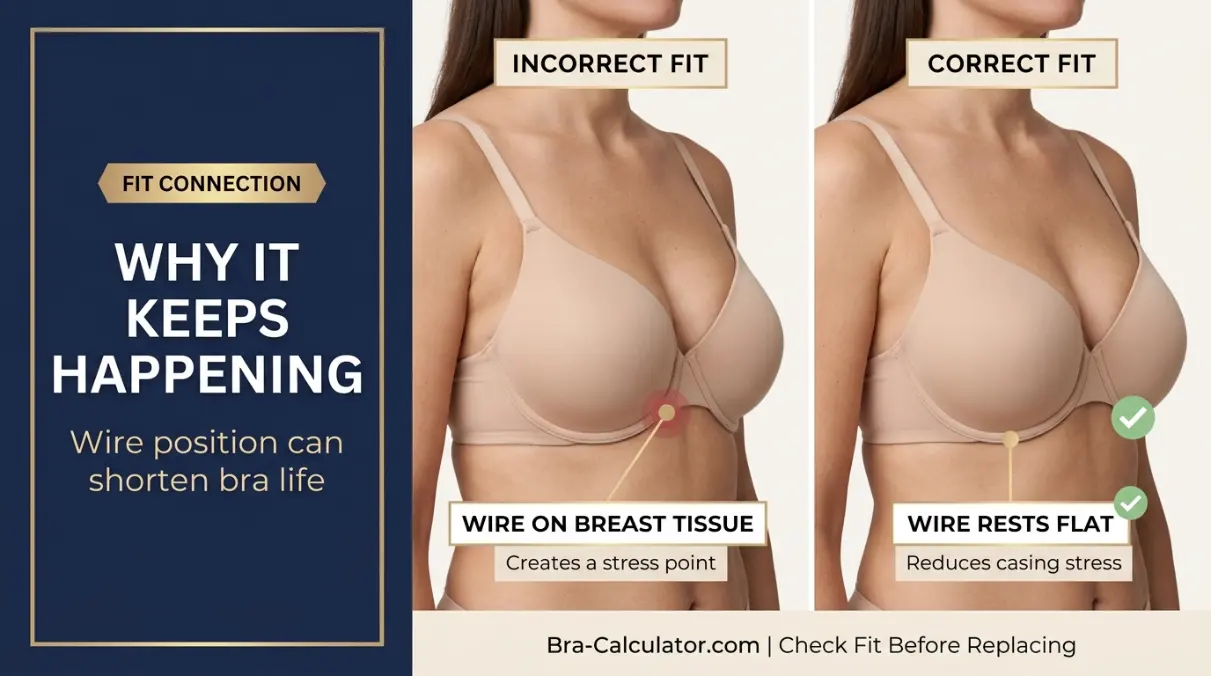
What makes this more than just a wear problem is the fit connection. A bra whose underwire sits in the correct position — flat against the chest wall at the natural breast root, not on breast tissue — distributes flex stress evenly along the entire wire. When the wire is too small or too narrow, it sits on breast tissue and flexes at a concentrated point with every movement and breath. This concentrated stress dramatically accelerates casing failure at that exact spot, which is why some bras poke out after just weeks while others last years.
Safety first: Do not continue wearing a bra with an exposed underwire tip. Even a small exposed metal or plastic tip can scratch skin, break the surface and create an entry point for infection. Apply an emergency fix or set the bra aside until properly repaired.
Same-Day Solutions When Your Bra Underwire Is Coming Out
These fixes are for immediate relief only — they get you through the day without injury and buy time to decide on a proper repair or replacement. None of them substitute for correctly repairing or replacing the bra.
Moleskin or Fabric Plaster
Cut a small piece of moleskin, adhesive fabric tape or even a fabric plaster and stick it firmly over the breach point on the inside of the cup. This covers the wire tip and prevents it re-emerging through the same hole during the rest of the day.
Underwire Tip Guard
Purpose-made soft plastic or rubber tip guards slide over the wire end to cushion and cover it. Keep a few in your bag — they are specifically designed for this situation and hold reliably until you can make a proper repair.
Hand Stitch the Opening
Push the wire back inside, then stitch the casing opening closed with strong thread — button thread or upholstery thread works best. Make several passes in different directions across the opening. This holds through several more wears when done firmly.
Iron-On Fabric Tape Inside
Iron-on hemming tape cut into a small patch and pressed firmly to the inside of the casing opening seals the breach without sewing. This is more durable than a plaster but requires an iron and a few minutes of heat bonding to set properly.
Important: All emergency fixes are temporary. A repaired bra should not be machine washed on a hot cycle or tumble dried — this will undo any temporary fix almost immediately. Hand wash gently or use a mesh laundry bag on a cool, delicate cycle after any repair.
Should You Repair or Replace Your Bra?
Not every poking underwire means the bra is finished. Equally, not every repair is worth making. Use this checklist to decide quickly — and honestly — which direction is right for your specific situation.
- The bra is less than six months old and has had limited wears
- Only one small breach has appeared in the casing
- The rest of the fabric, elastic and band are in good condition
- The bra fits correctly — the wire sits flat on the chest wall at the breast root
- The underwire itself is straight and undamaged
- The bra is high-quality, expensive or difficult to replace
- You are willing to hand wash and air dry after repair
- The casing is frayed, thin or showing wear in more than one place
- The underwire has bent, kinked or deformed
- The bra is more than 12 months old with frequent washing
- The same spot has been repaired before and failed again
- The bra was the wrong size — the wire was never sitting correctly
- The band has stretched out and the overall support is gone
- The wire broke through after being tumble dried or washed hot repeatedly
Why Your Bra Underwire Keeps Poking Out
1. Casing Wear from Normal Use
Every underwire casing experiences friction and flex stress with every movement and every wash. Over time — typically 6–12 months of frequent wear — the casing at the wire ends thins and eventually fails. This is normal product lifespan, not a defect.
2. Tumble Drying
Heat from a tumble dryer degrades elastic and weakens fabric over time, making casing material significantly more brittle than it would be with air drying. Many bra casings fail years earlier than they should because of regular tumble drying.
3. Machine Washing Without a Mesh Bag
In a washing machine drum without protection, bras twist, hooks catch on other fabric and wires flex against the drum walls with significant mechanical force. A single unsupported wash cycle creates more stress on the casing than many handwash cycles.
4. Wrong Bra Size — Wire Sitting on Breast Tissue
When the cup is too small or the underwire frame too narrow, the wire does not sit in its correct anatomical position against the chest wall. Instead it presses against and flexes against breast tissue at a concentrated stress point with every breath and movement, accelerating casing failure at exactly that location.
5. Gore Not Lying Flat
When the centre front gore floats away from the sternum, both underwires are under lateral stress — each wire is being pulled outward rather than lying in its designed flat position. This creates end stress at the gore end of each casing, causing that specific point to fail faster.
6. Low-Quality or Thin Casing Material
Not all bras are made to the same standard. Budget bras often use thinner casing fabric that fails far sooner than the underwire itself would suggest. The wire is often fine; it is the casing that was the weak link from the beginning.
7. Washing Too Frequently or Too Hot
Washing a bra after every single wear, using warm or hot water, or using harsh detergent accelerates breakdown of casing fabric and elastic. Bras do not need to be washed as frequently as other garments — over-washing is one of the most common preventable causes of early casing failure.
Step-by-Step: How to Fix an Underwire Broke Through Fabric
This is the full repair process — from immediate safety through to a durable fix that will hold through multiple more wears and washes when done correctly.
Even a small wire tip exposure will scratch skin and enlarge the casing hole with every movement. Set the bra aside completely rather than wearing it for “just one more day.”
Turn the bra inside out and run your fingers along the underwire channel. Locate the hole in the casing precisely — it is usually at the centre front end or the side seam end of the wire channel, rarely in the middle.
Ease the wire end gently back through the hole. If the wire has bent near the tip, straighten it carefully before reinserting — a kinked wire creates ongoing stress at that exact point and will simply break through again more quickly.
For a sewing repair: use strong thread (button thread or similar) and stitch across the hole in multiple directions, creating a cross-hatch of stitches that the wire tip cannot push through. For a no-sew repair: use iron-on interfacing or hemming tape cut to cover the breach area by at least 1 cm on each side. Press firmly with an iron for 20–30 seconds.
Even after a good repair, sliding a soft rubber or plastic tip guard over the wire end before returning it to the channel adds a second layer of protection. The tip guard cushions the wire end and prevents it from creating a new stress point at the repaired area.
Wear the bra for a few minutes and confirm nothing pokes. After a repair, hand wash only in cool water and lay flat to dry. Machine washing — even in a mesh bag — puts mechanical stress on the repaired area and can undo the fix within one or two cycles.
How the Wrong Bra Size Makes Underwires Poke Out Faster
This is the part most repair guides omit entirely. If your underwires consistently poke out — particularly at the same location — the bra’s fit is almost certainly contributing. Understanding why prevents you from repairing and replacing the same problem repeatedly without ever solving it.
| Fit Problem | How It Stresses the Casing | Fix |
|---|---|---|
| Cup too small — wire sits on breast tissue | Wire flexes against tissue with every breath and movement, concentrating stress at one casing point | Size up in the cup; confirm wire sits on chest wall, not breast tissue. |
| Underwire frame too narrow — wire sits on outer breast tissue | Side of wire presses outward; end of wire digs into centre front creating a focal stress point | Try a wider underwire frame or a brand with fuller-cup wires. |
| Gore not lying flat — wires pulled laterally | Both wires are under lateral tension instead of resting flat, stretching casing from the inside at the gore end | Address the cup or band fit causing the floating gore. |
| Band too loose — bra shifts during wear | Wire moves with band rather than staying still; friction against casing increases with every shift | Check band fit and consider sister sizing for a more stable anchor. |
| Correct size and fit | Wire lies flat and still; casing stress is evenly distributed and minimal per wear | Focus on washing care to maximise casing lifespan. |
How to Stop Underwires Poking Out in the Future
Underwire casing failure is partially inevitable over time — but most people accelerate it dramatically through avoidable care and fit mistakes. These six steps, applied consistently, can double or triple the functional lifespan of a bra’s underwire casing.
Always Use a Mesh Laundry Bag
Fasten the bra hooks before washing, place inside a dedicated lingerie mesh bag and use a cool delicate cycle. The mesh bag prevents the bra from being thrown against drum walls and other clothes — the primary source of mechanical casing stress in machine washing.
Never Tumble Dry
Heat is the single most destructive force for bra elastic and casing fabric. Even a “low heat” tumble cycle degrades the casing material significantly. Lay bras flat or hang from the centre gore, in the shade if possible to prevent UV degradation of elastics.
Rotate Between at Least Three Bras
Elastic and casing fabric need 24–48 hours to recover and return to their original shape after wearing. Rotating between three or more bras means each individual bra is worn and washed approximately three times less often — dramatically extending casing life.
Wear the Correct Size
The most overlooked prevention step. A wire that sits correctly on the chest wall at the breast root generates minimal localised casing stress. A wire that sits on breast tissue creates a constant stress point that will fail the casing at that exact location, often within months.
Wash After Every 2–3 Wears, Not Every Wear
Bras do not need washing after every single use unless you have been sweating heavily. Excessive washing is one of the most common accelerators of casing breakdown. Spot clean if needed and reserve full washes for genuine soiling.
Use Delicate Detergent in Cool Water
Biological detergents and hot water both attack fabric fibres. Use a dedicated lingerie wash or gentle liquid detergent in cool water (30°C maximum). Never soak bras for extended periods — prolonged water exposure weakens elastic significantly.
What Should You Do First?
- Wire is already poking out right now
- You need to wear the bra today
- No sewing kit immediately available
- Buying time before a proper fix
- Moleskin or fabric plaster over the breach
- Underwire tip guard slid over the wire end
- Medical tape pressed firmly inside the cup
- Do not wear without covering the wire tip
- Bra is less than 6 months old
- Only one small breach in the casing
- Fabric and elastic are otherwise intact
- Bra fits correctly — wire sits on chest wall
- Stitch casing closed with strong button thread
- Add iron-on interfacing over the repaired area
- Slide tip guard over wire end as backup
- Hand wash only after repair — no machine wash
- Casing frayed or damaged in multiple places
- Wire is bent or deformed
- Bra is over 12 months old with frequent use
- Bra was the wrong size from the start
- Remeasure — size can change without noticing
- Check wire width matches your breast root
- Confirm the cup is not too small
- Use the free Bra Calculator to verify your size
- Mesh bag every machine wash, cool cycle
- Air dry — never tumble dry
- Rotate 3+ bras to reduce wear per bra
- Wear the correct size — wire must lie flat
- Wash every 2–3 wears, not every wear
- Cool water, delicate liquid detergent
- Fasten hooks before washing to prevent snagging
- Never soak bras for extended periods
Products That Help With Underwire Repair and Prevention
Whether you are repairing a current bra or looking to replace it with something built to last longer, these product categories address the most common causes of underwire breakthrough. Confirm your size before purchasing any new bra.

Full-Coverage Bras With Reinforced Underwire Casing
- Look for bras with a separate reinforced channel at the underwire ends — these are the most vulnerable points and better construction here extends life significantly.
- Confirm the underwire sits completely against the chest wall when worn; a wire that fits correctly creates far less casing stress per wear.
- Remeasure before buying a replacement — wearing the wrong size is the most common reason the previous bra’s wire broke through prematurely.

Mesh Lingerie Laundry Bags
- A dedicated mesh bag is the single most effective change you can make to extend underwire casing life — it eliminates the mechanical drum stress of unprotected machine washing.
- Use one bag per bra rather than combining multiple bras in one bag, which allows hooks to catch on adjacent fabric.
- Fasten bra hooks before placing in the bag to prevent the hooks from snagging on the mesh itself.

Wireless Soft-Cup Bras
- If underwire breakthrough is a recurring problem despite correct sizing and careful washing, a well-fitted wireless bra eliminates the issue entirely — no casing means no casing failure.
- Modern wireless bras in the correct size provide adequate support for many body types; the support comes from band strength and cup structure rather than a wire.
- Ensure the cup still contains breast tissue smoothly — a wireless bra in the wrong size creates its own fit problems even without the casing concern.
Problems That Often Appear Alongside a Poking Underwire
An underwire that digs into the breast or the side of the ribcage is sitting on soft tissue rather than the chest wall — the same root cause that accelerates casing failure through that precise stress point.
When the centre front gore floats away from the sternum, both underwires are under lateral tension and the casing at the gore end of each wire takes concentrated stress — the exact location where breakthrough is most common.
A loose band that rides up during wear causes the entire bra frame — including the underwires — to shift constantly. This dynamic shifting means the wire ends are repeatedly pressing against the casing from new angles rather than resting still.
Breast tissue overflowing the cup means the cup is too small and the underwire is definitely sitting on breast tissue rather than the chest wall. The same sizing correction that stops double bust also moves the wire off the stress point that is breaking through the casing.
Frequently Asked Questions
Why is the underwire poking out of my bra?
The fabric casing at the end of the underwire channel has worn through from friction, flex stress and washing. It can happen to any bra over time, but occurs faster when the bra is tumble dried, machine washed without a mesh bag, or worn in the wrong size — because a misfit wire sits on breast tissue and creates concentrated stress at its anchor point in the casing.
Is it safe to wear a bra with a poking underwire?
No. Even a small exposed wire tip can scratch and break skin with repeated movement, cause bruising and create an entry point for infection. It will also enlarge the casing hole quickly, making repair harder. Stop wearing the bra immediately and apply an emergency fix — even a fabric plaster — before using it again.
Can I repair a poking underwire myself?
Yes, for temporary and medium-term repairs. Push the wire back inside the channel and seal the opening with hand stitching using strong thread, iron-on hemming tape, or both. Slide an underwire tip guard over the wire end as backup. This holds through multiple wears if done firmly and if the bra is subsequently hand washed only.
When should I replace instead of repair?
Replace when: the casing is worn or frayed in more than one place, the wire has bent or kinked, the bra is over 12 months old with frequent washing, the same repair point has failed before, or the bra was never the correct size and the wire was sitting on breast tissue rather than the chest wall.
Can the wrong bra size cause the underwire to poke out?
Yes — and this is the most overlooked cause of recurring wire breakthrough. A cup that is too small or a wire frame that is too narrow forces the underwire to sit on breast tissue rather than resting flat on the chest wall. This creates a constant concentrated flex stress at the wire’s anchor point in the casing, breaking through the fabric far faster than normal wear would.
Why does my underwire always poke out at the same spot?
Repeated breakthrough at the same location is a strong sign of a localised stress point rather than general wear. The most common cause is the underwire not lying flat — typically because the cup is too small or too narrow, causing the wire to press outward or upward at a fixed point with every breath and movement.
How do I stop the underwire poking out again after repairing it?
After repair, hand wash only in cool water, air dry flat, and check whether the bra fits correctly — wire must lie completely against the chest wall with no pressure on breast tissue. If the wire was sitting incorrectly before, repairing the casing without correcting the size will result in breakthrough at the same point within weeks.
What is the best long-term prevention for underwire poking out?
Use a mesh laundry bag for every machine wash on a cool delicate cycle, never tumble dry, rotate between at least three bras to reduce wash frequency per bra, and wear the correct size so the wire lies flat without stress. These four steps together can extend underwire casing life from months to years.
Fix the Poking Wire — Then Fix What Caused It
An emergency patch buys time. A proper repair can extend a good bra’s life. But if the wire keeps breaking through at the same spot, the real fix is making sure it sits in the right place on your body — which starts with knowing your correct size.