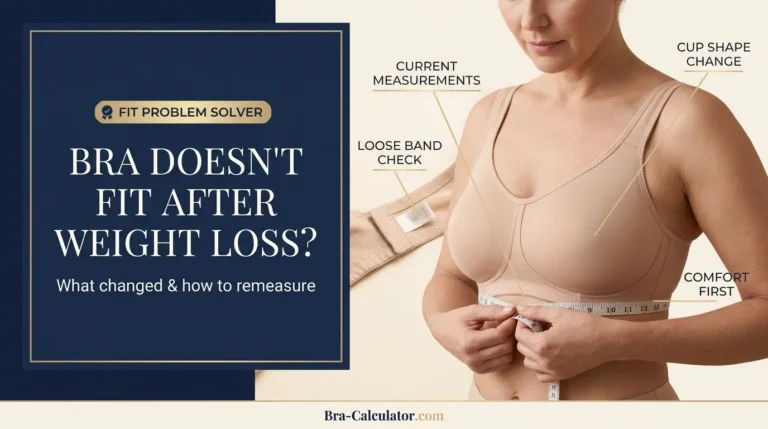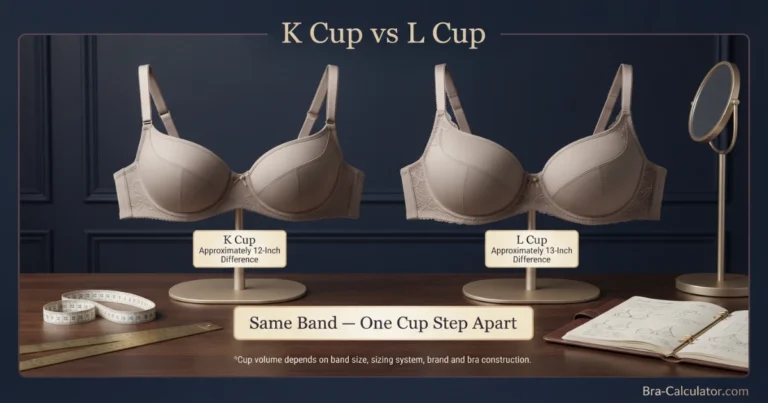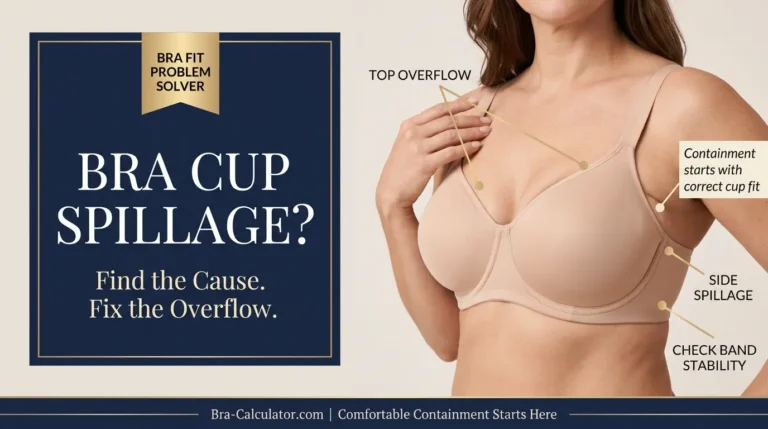
Side boob in a bra is not automatically a fit failure. Natural softness at the side of the chest or underarm is normal. But if breast tissue escapes outside the cup, the wire rests on tissue, the side edge cuts in, or you repeatedly push tissue back into the cup, your bra may need better side containment. Common solutions include checking cup size, choosing a wider or better-shaped wire, trying a true side support bra, and selecting full-coverage styles with comfortable side wings.
Side Boob Bra Fit at a Glance
| What You Notice | Comfort-First Interpretation |
|---|---|
| Softness outside the bra side without pain or wire pressure | May be normal side-torso or underarm softness rather than a bra problem. |
| Breast tissue remains outside the wire after scoop-and-swoop | The cup or wire may be too small, too narrow or poorly shaped for your breast root. |
| Side bulge plus top cup overflow | There may be insufficient cup capacity overall; review the broader bra cup spillage guide. |
| Side edge digs into underarm tissue | The side wing may be too high or stiff, or cup and wire placement may be wrong. |
| Side tissue shifts forward in a supportive bra | Side-support panels may improve shaping and containment without flattening your body. |
| Sudden or painful one-sided change | This should not be assumed to be only fit-related; seek medical advice when appropriate. |
What Does Side Boob in a Bra Really Mean?
The phrase “side boob” is often used for fullness that appears beside a bra cup or near the underarm. In fitting terms, two very different things can be happening. You may be seeing natural softness that sits beyond the edge of a bra. A bra is not meant to erase every fold or make the torso perfectly flat. Or breast tissue may be escaping because the bra is not surrounding or supporting it correctly.
True side spillage in a bra commonly appears when breast tissue lies outside the side wire, bulges over the cup near the underarm, or feels pinched by the cup edge. It may become more visible after a proper scoop-and-swoop because tissue that was sitting toward the side is brought forward into the cup. If the cup looks too crowded after this fitting step, the bra may have been compressing breast tissue rather than containing it.
This page focuses specifically on side containment: wire width, cup depth, side wings and side-support construction. For overflow across the neckline or several cup edges, the broader guide to bra cup spillage and overflow covers the complete overflow diagnosis. Side boob needs a focused guide because a high-coverage bra alone is not always the answer. A bra can cover more skin yet still fit poorly if the wire cuts into tissue or the side wing digs under the arm.
Body-positive fit rule: The goal is comfortable containment of breast tissue, not eliminating all natural side fullness. A good bra should feel supportive and smooth without pinching, pressing or forcing your body into an unrealistic silhouette.
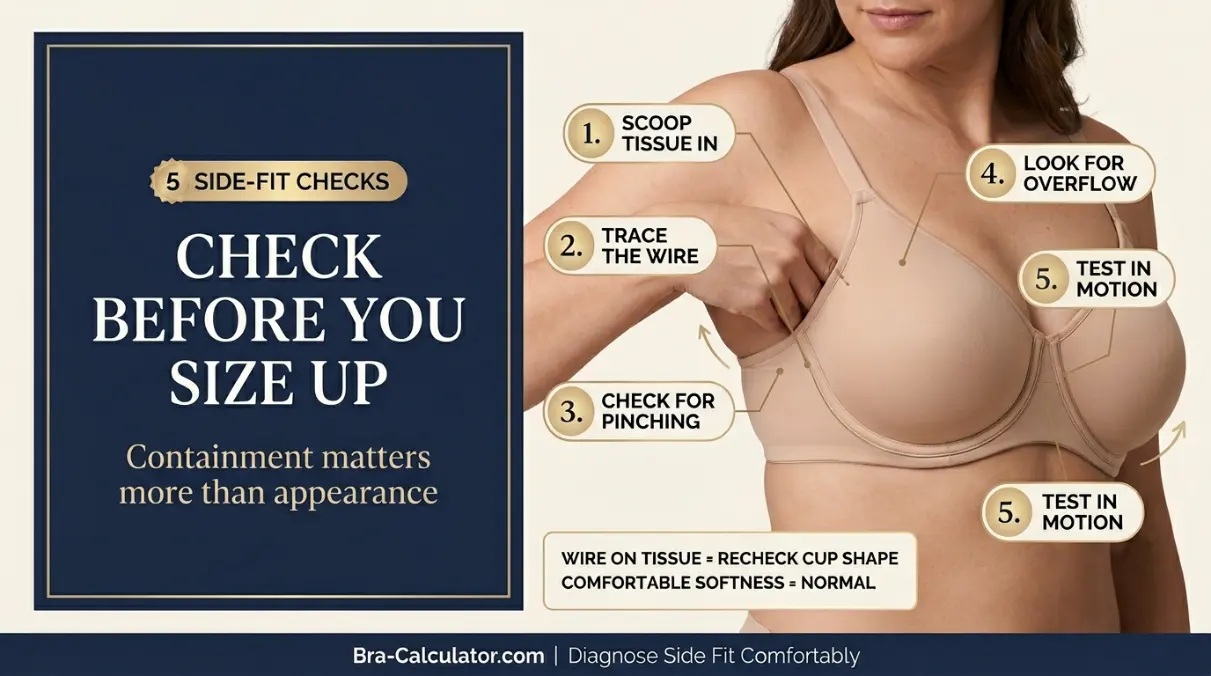
Five Checks for Breast Tissue at the Side of Your Bra
Before buying a higher-side bra or choosing a larger cup, use these checks to determine whether you are seeing natural softness, displaced breast tissue or a real containment issue.
Lean slightly forward, reach into the bra near the underarm and gently sweep breast tissue forward into the cup. Settle the wire around the breast root. If tissue still escapes beyond the side edge, containment needs review.
Follow the outer end of the underwire with your fingers. It should surround breast tissue rather than rest on it. A wire pressing on tissue can create discomfort, side bulging and an unhelpful “smoothing” line.
A taller side panel can improve containment, but it should not rub in the armpit or cut when you move your arms. Height without correct placement is not a comfort solution.
Check whether there is also top spillage, a floating center gore, bottom escape or cup gaping. Multiple signs mean the bra may need cup-volume or shape correction, not just a side panel.
Reach forward, lift your arms and sit. A bra for side boob should keep breast tissue contained without rubbing, wire migration or repeated adjusting.
| Test Result | Likely Meaning | Best First Direction |
|---|---|---|
| Soft side fullness remains, but cup and wire feel comfortable | Natural body softness | Choose smoothing only for preference, not because anything is wrong. |
| Breast tissue remains outside the side wire | Wire or cup may be too narrow/small | Try better cup capacity or a wider-root side-support style. |
| Side spillage plus top overflow | Cup may lack usable room | Review cup volume and shape; do not rely on smoothing alone. |
| High side wing rubs or digs under the arm | Side height or placement is unsuitable | Try softer or lower comfort-focused wing placement. |
| One side is much fuller or newly changed | Asymmetry may be normal, unless sudden | Fit the fuller side; seek advice for concerning changes. |
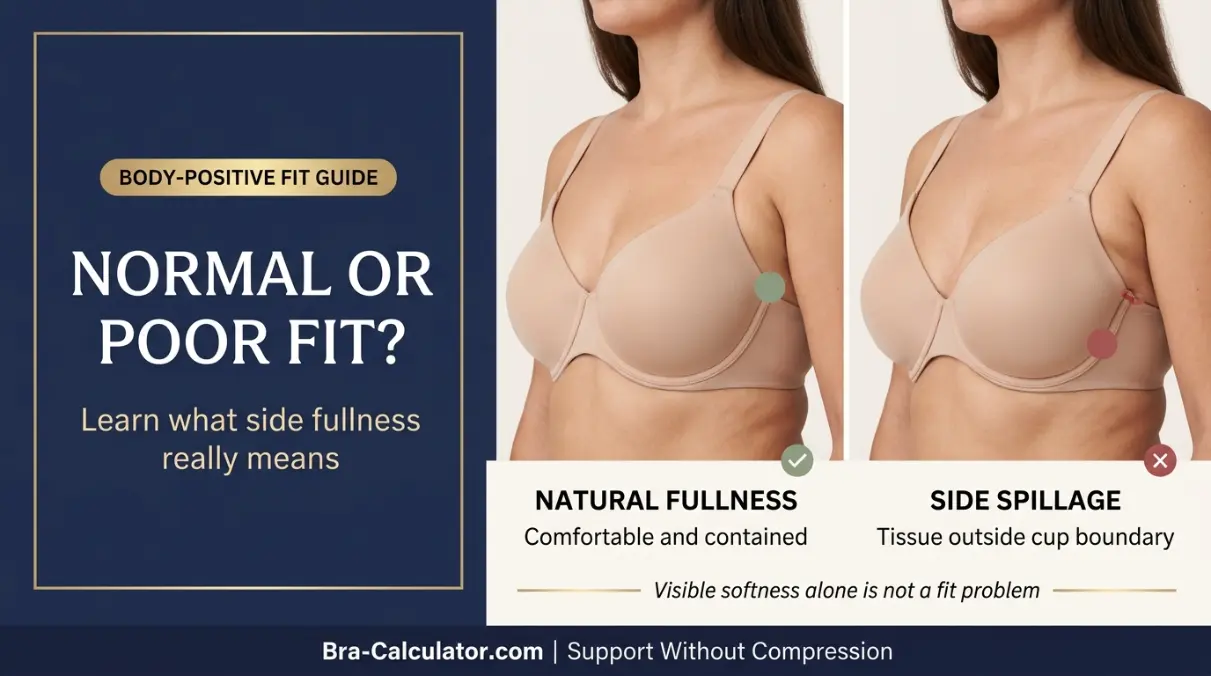
Natural Side Fullness vs Side Spillage Bra Symptoms
The language around side boob can make people feel they need to correct a natural part of their body. Good fitting advice separates appearance preference from support problems. Some visible side softness can be present in a perfectly wearable bra. The issue is not visibility alone; it is whether breast tissue is being pushed, cut, rubbed or unsupported.
| Sign | More Likely Normal Fullness | More Likely Fit Issue |
|---|---|---|
| Comfort | No pinching, pain or repeated adjustment | Wire, seam or elastic cuts into tissue or rubs painfully |
| Wire position | Wire surrounds breast root comfortably | Wire lands on breast tissue or tissue bulges beyond it |
| After scoop-and-swoop | Cups remain smooth and secure | Cups suddenly overflow at side or top |
| Movement | Bra feels stable when arms move | Tissue slips outward or needs retucking |
| Solution need | Optional smoothing style for clothing preference | Size, shape or support correction for comfort |
Never chase painful smoothing. A very tight band, overly high side wing or stiff underwire may reduce visible softness while creating a worse fit. Comfort and proper breast containment come first.
The Side-Boob Test Most Guides Miss: Wire Width & Breast Root
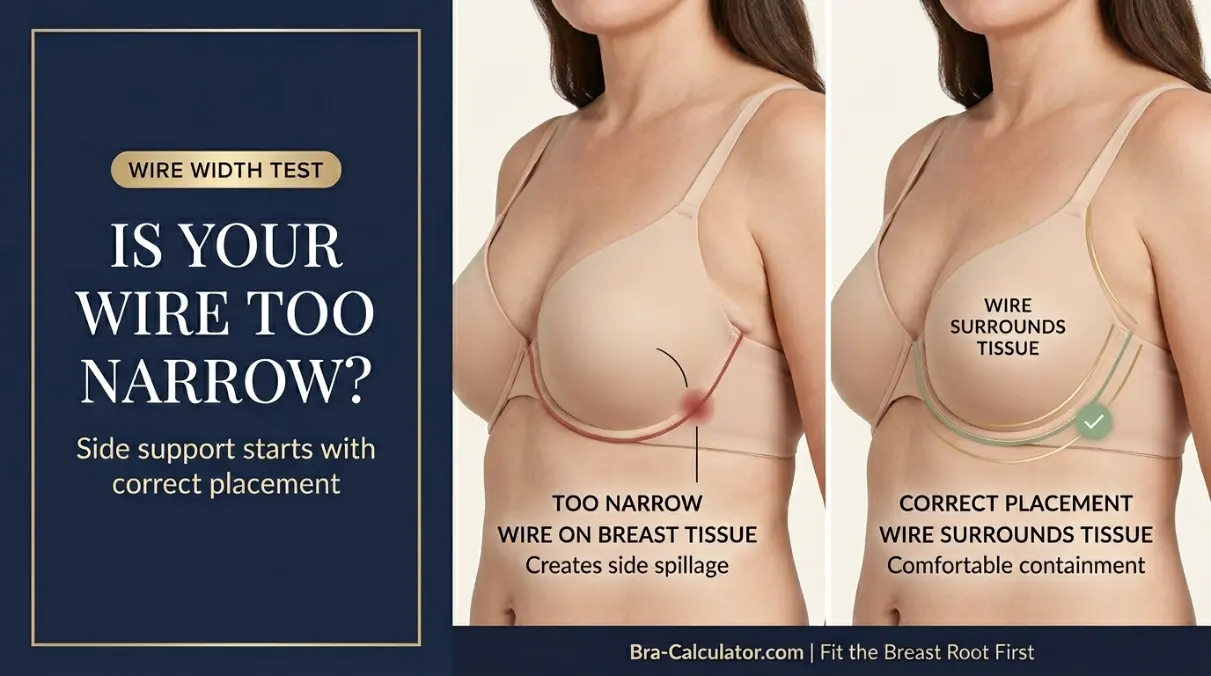
A side-support bra cannot solve side spillage if the underwire is landing on breast tissue. The breast root is the area where breast tissue meets the chest wall. For some wearers it is narrower and more centered; for others it extends naturally toward the underarm. If your bra uses a wire that is narrower than your root, it may divide tissue at the side, create a bulge and make you think you need “smoothing” when you actually need correct containment.
Perform this check after wearing the bra for a few minutes. Gently feel along the outside edge of the underwire beneath the arm. A correctly placed wire should sit just beyond breast tissue, following the natural outer crease without pinching. A narrow wire sits on soft breast tissue or leaves breast tissue outside the cup. A wire that is too wide may extend far beyond the tissue, feel unstable or reduce comfortable lift even though it is not cutting in.
| Wire Position at the Side | What You May Feel or See | Correct Direction |
|---|---|---|
| Wire sits on breast tissue | Pinching, tissue bulging outside the cup, red pressure line across soft side tissue | Try a wider-wire or larger/deeper cup; avoid compressive smoothing as the only solution. |
| Wire ends just beyond tissue | Breast tissue feels enclosed, side edge stays comfortable, cup feels stable in motion | This is the target fit; add side-support construction only if you want more forward shaping. |
| Wire extends much farther back than tissue | Empty space near the side cup, bra feels overly broad, support may feel less centered | Try a more suitable cup/root shape rather than increasing side width further. |
| Wire fits standing but digs when arms move | Underarm irritation or rubbing at the outer wire/wing junction | Look for softer finishing, lower wing height or a better torso-length match. |
Why this matters: A “side smoothing” bra that presses tissue flat while the wire still sits on breast tissue may look neater briefly, but it has not corrected the fit problem. The first goal is a cup boundary that safely surrounds the breast root.
Why Side Boob Happens in a Bra
1. The Cup Does Not Have Enough Capacity
When breast tissue needs more room, it may push over whichever edge offers least resistance, including the underarm side. If top overflow or a floating gore appears too, overall cup containment may be inadequate.
2. The Outer Wire Is Too Narrow
Two bras with similar stated volume can have very different wire widths. A narrow wire may pinch tissue extending farther toward the underarm, leaving side spillage even when the cup front seems filled.
3. A Shallow Cup Pushes Tissue Outward
When the cup lacks forward depth, the breast may be pushed sideways. This can look like a side-boob problem even though the true mismatch is insufficient cup projection.
4. The Bra Has No Side-Support Structure
Some cup designs allow tissue to sit outward. A true side-support sling or panel guides tissue forward while keeping the fit stable and comfortable.
5. The Band Is Loose or Shifting
If the band rides up or rotates, cups and wires cannot remain aligned with the breast root. Tissue may shift outward even if the cups looked close when first put on.
6. The Side Wing Is Wrong for Your Torso
A higher side wing can provide coverage, but if it reaches too far into the underarm or uses firm elastic, it may cut into skin and create irritation. More fabric is not always a better fit.
How to Choose a Better Bra for Side Boob
The correct fix depends on whether you need real breast containment or simply prefer smoother lines beneath clothing. Begin with fit, then use styling features that improve comfort rather than forcing tissue into a smaller space.
Scoop and swoop gently from the side, then position the wire around the breast root. A bra cannot be assessed accurately while breast tissue remains outside the cup boundary.
The outer wire should extend far enough to contain breast tissue comfortably. If it sits on tissue, try a different cup shape, more cup capacity or a wider wire.
A side-support panel is more useful than a generic smoothing promise when tissue naturally sits outward. It should redirect breast tissue gently forward without underarm pressure.
Higher wings may reduce escape and create smoother lines, particularly in full-coverage designs. Avoid any wing that rubs the underarm crease or restricts movement.
If side tissue is paired with neckline bulging, quad-boob or bottom escape, use the cup spillage and overflow guide and check whether cup capacity needs to increase.
Why Side Support Fits Differently on Different Bodies
A bra that contains side tissue well for one wearer may feel narrow, high or restrictive for another. Breast root width, projection, torso height and tissue softness all change how side-support features perform.
Wire Width Matters
Breast tissue may naturally extend toward the underarm and require a wider enclosing wire.
Try wider wireSide Sling Can Help
Side-support panels can guide tissue forward while improving the supported shape.
Try side supportHigh Wings May Rub
A tall side wing can reach into the underarm crease and feel irritating.
Check wing heightGentle Edges Matter
Stretch fabrics and smooth finishing can contain comfortably without a sharp cut-in line.
Choose soft panelsFour Common Side-Fit Scenarios
| Your Side-Fit Pattern | What Often Works Better | What to Be Careful With |
|---|---|---|
| Wide breast root with tissue naturally extending toward the underarm | Wider wires, supportive side panels and full cups that enclose the outer root | Narrow plunge or push-up cups that sit on tissue |
| Projected breast tissue being pushed outward by shallow cups | Seamed cups with forward depth and supportive side slings | Very shallow molded cups marketed only as smoothing bras |
| Soft tissue that settles toward the side during wear | Stretch-lace containment, secure band and comfortable side support | Hard elastic edges that create new cut-in lines |
| Short torso or high underarm sensitivity | Moderate-height wings with soft finishing and correct wires | Extra-high side panels that rub when arms move |
Health note: Normal side fullness is common. A new underarm lump, sudden one-sided change, persistent pain, redness or skin changes should be discussed with a healthcare professional rather than assumed to be caused by a bra.
When Side Spillage Means You Need a Size Change
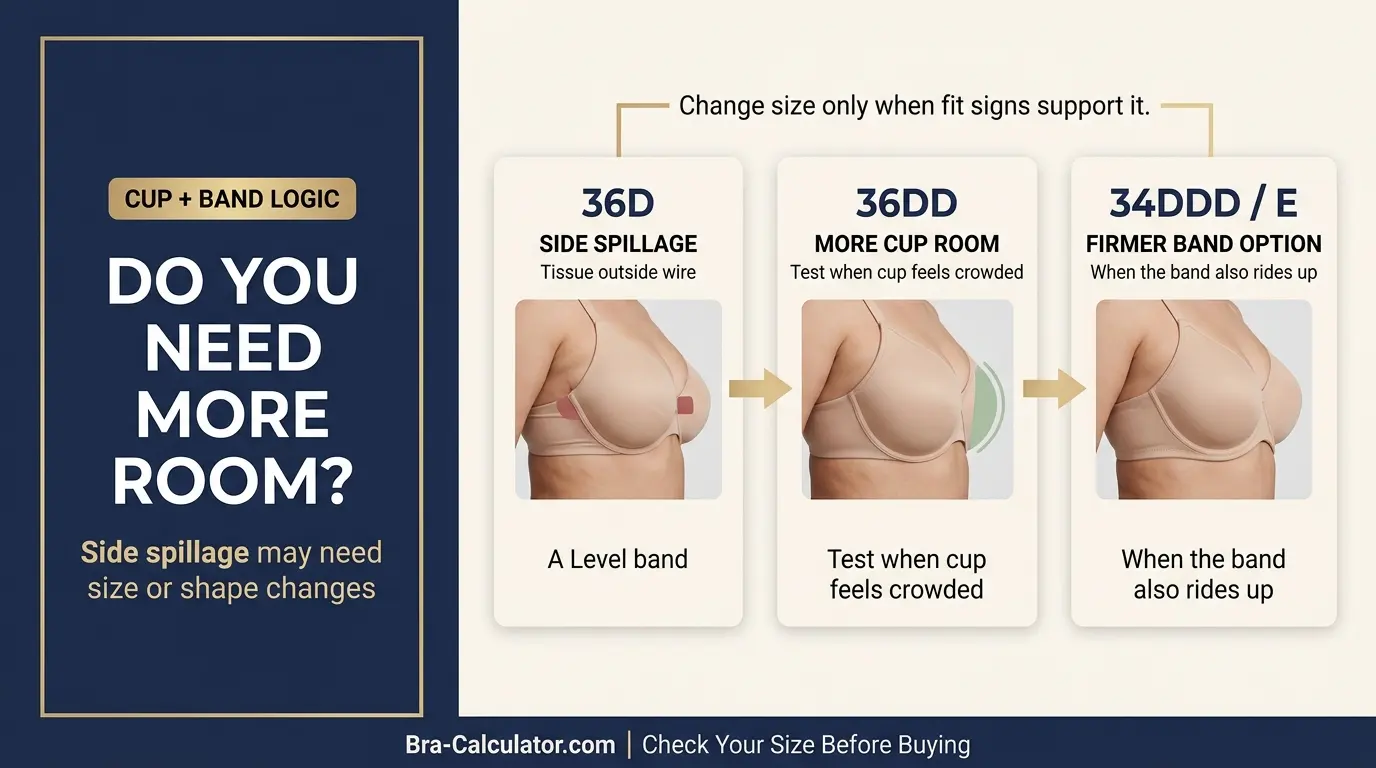
A side-support style can guide tissue, but it cannot make an undersized cup fit. Use size changes when tissue clearly exceeds the cup boundary; use shape changes when the cup has empty space yet the outer wire cuts into breast tissue.
| Your Signs | Try | Why |
|---|---|---|
| Side spillage and cup feels crowded; band stable | Increase cup volume on same band | The bra may need more usable cup capacity. |
| Side tissue outside wire, but cup gaps at top | Different wire/cup shape before sizing down | A narrow or shallow cup can spill at the side while appearing loose elsewhere. |
| Side spillage and band rides up | Firmer band with enough cup room | The cup needs a stable anchor without compressing tissue. |
| Comfortable fit with visible side softness only | No required size change | Appearance alone is not proof of poor fit. |
What Should You Fix First?
- No wire pressure or pain
- Cup contains breast tissue smoothly
- Only soft side contour remains
- No fit correction is required
- Choose smoothing only if preferred
- Avoid painful compression
- Wire sits on side breast tissue
- Tissue escapes after scoop-and-swoop
- Other cup overflow may appear
- Check larger or wider cup options
- Look for adequate projection
- Confirm wire encloses the root
- Size feels close, but tissue sits outward
- No major neckline overflow
- You want forward shaping
- Try a side-support panel
- Choose full coverage with comfortable wings
- Avoid underarm rubbing
- Band rides up or rotates
- Cup shifts during movement
- Side tissue escapes later in wear
- Review band stability
- Use sister sizing carefully
- Keep enough cup capacity
Bra Styles That Help With Side Containment
A side sling or panel can guide outer breast tissue forward when size and wire width are suitable.
Useful when you need secure side and upper containment without a low-cut edge releasing tissue.
Can suit wider breast roots better than narrow molded cups that sit on side tissue.
Offers a softer visual line when fit is comfortable; it should never dig or restrict movement.
Flexible fabric may adapt gently to soft tissue and reduce sharp side edges.
Can push tissue upward and outward when you already experience side overflow.
What to Look for in a Side Support Bra
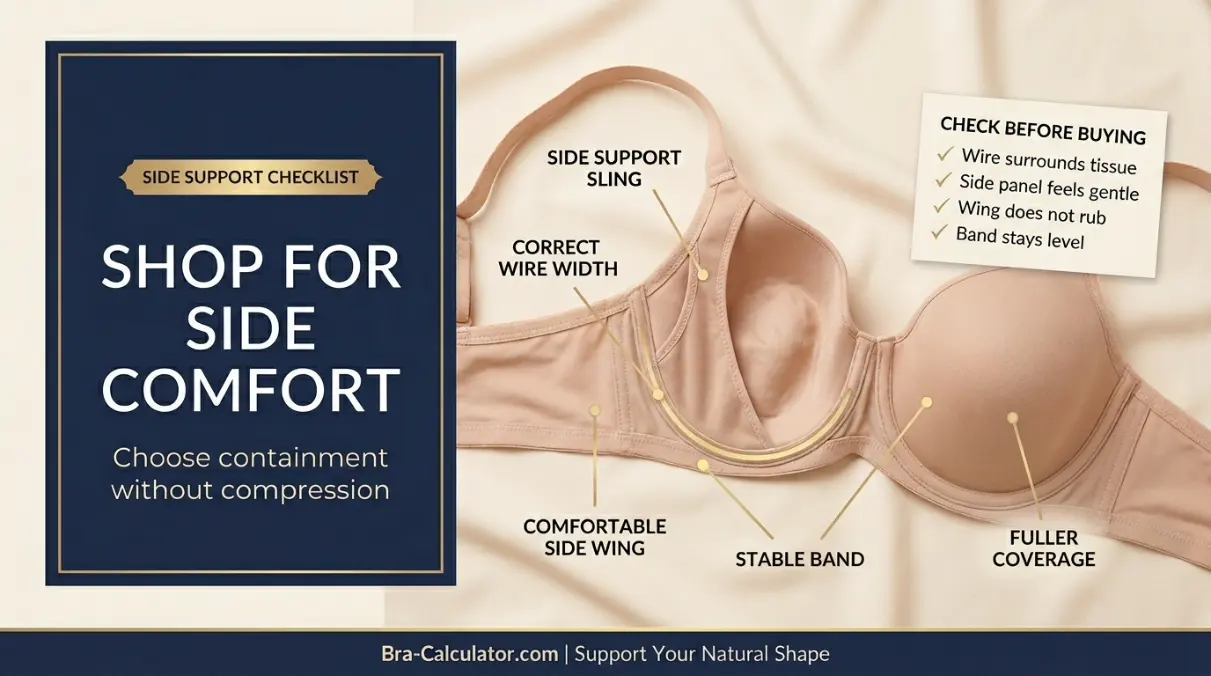
The words “side smoothing” and “full coverage” are not enough on their own. A bra for side boob should first enclose breast tissue correctly, then use construction details that gently move support forward or create a smoother line. Use this checklist before selecting a product.
| Feature to Check | Why It Helps With Side Boob | Fit Warning |
|---|---|---|
| Internal side sling or support panel | Guides outward breast tissue toward the front of the cup for a more centered supported shape. | A panel cannot correct a cup that is already too small. |
| Wire width that matches your root | Prevents the cup boundary from cutting across breast tissue at the underarm side. | Wider is not automatically better; excessive width can feel unstable. |
| Fuller cup coverage | Helpful when side spillage appears together with upper or center overflow. | Very tall cups may gape if your upper fullness is limited. |
| Comfortable side-wing height | Can reduce outward escape and smooth beneath tops. | High wings may rub on short torsos or sensitive underarms. |
| Firm but wearable band | Holds the cup and side panel in the correct position during movement. | Do not choose painfully tight bands merely to compress side softness. |
| Stretch or soft edge finishing | Adapts to softer tissue with less risk of cutting in. | Too much stretch without support can allow tissue to migrate again. |
Shop Styles for Comfortable Side Support
After completing the wire-width and cup-containment checks above, these supportive categories can be used as starting points for comparison. Because side boob is especially dependent on wire position and side-panel construction, do not buy by appearance alone: open each option and confirm the exact cup style, wire coverage, side wing height, available sizes and return options before purchasing.

Wide Padded-Strap Full-Coverage Bras
- Fuller cup coverage can help contain tissue once size and wire placement are correct.
- Useful when side overflow also appears with upper-cup fullness.
- Check that side wings feel smooth rather than high and restrictive.

U-Back Support Bras With Wide Straps
- A stable back design may reduce cup shifting that lets side tissue escape during movement.
- Wide adjustable straps support comfort without excessive tension.
- Choose a cup width and side construction that encloses your tissue.

Wireless Comfort Bras With Cushioned Straps
- A softer option when rigid side edges feel uncomfortable for relaxed wear.
- Look for structured side coverage instead of a very stretchy design that lets tissue migrate.
- Comfort styles still need correct band and cup capacity.
Fit Problems That Can Appear With Side Boob
When tissue escapes at the side and neckline, the cup may need more usable room rather than side coverage alone.
A bra can gape at the top while side tissue escapes if the cup is narrow, shallow or wrong for your fullness pattern.
A loose band can shift the bra and make side containment unreliable through the day.
Pulling cups upward with tighter straps adds discomfort without correcting side-wire fit.
Side Boob Advice That Can Make Fit Worse
| Myth | Better Fit Guidance |
|---|---|
| “Any visible side softness means your bra is wrong.” | Natural softness is normal. Correct only breast-tissue escape, pain, wire pressure or poor support. |
| “A tighter band will hide side boob.” | A supportive band should anchor the cup, not painfully squeeze the torso or create new bulges. |
| “The tallest side wing is always best.” | Side wings must suit torso height and underarm comfort; too high can rub and restrict movement. |
| “Just size up in every case.” | A larger cup helps when the cup is crowded; a different wire width or deeper shape may be better when the cup gaps elsewhere. |
Frequently Asked Questions
Why do I have side boob in my bra?
Some visible side softness is natural. If breast tissue pushes outside the cup or wire, however, your cup may be too small, too narrow or lacking enough side support. Scoop tissue into the cup first, then assess whether the wire encloses it comfortably.
Is side boob always a fit problem?
No. A bra does not need to flatten every part of your side torso. It is more likely a fit issue when breast tissue is pinched, sits outside the wire, repeatedly slips out or causes discomfort.
What is side spillage in a bra?
Side spillage occurs when breast tissue escapes beyond the cup or side wire rather than being comfortably surrounded and supported. It may relate to cup size, wire width, cup depth or band stability.
Can a cup that is too small cause side boob?
Yes. A crowded cup can force breast tissue toward the side as well as over the neckline. If you see side overflow with top bulging or a floating gore, test more cup space and a supportive shape.
What type of bra is best for side boob?
A properly sized side-support bra or full-coverage side-support style is often helpful. Look for supportive panels that guide tissue forward, cups and wires that enclose breast tissue, and side wings that do not rub.
Will a full coverage side support bra hide all side fullness?
It can improve containment and create a smoother line, but natural body softness may still be visible. A good bra should improve comfort and support, not painfully compress your body for a perfectly flat look.
Should I size up for breast tissue at the side of my bra?
Size up in the cup when tissue remains outside a stable cup after scoop-and-swoop and the cup feels crowded. If the cup is loose elsewhere, consider a different wire width or cup shape instead.
When should side or underarm fullness be checked by a doctor?
Seek medical guidance for a new lump, sudden one-sided swelling, persistent pain, redness, skin changes or any concern not clearly explained by a bra fit issue.
Find Comfortable Coverage Without Compression
Better side support begins with a cup that surrounds your breast tissue and a band that stays secure. Check your size first, then choose a supportive style designed for comfort and natural shape.