Not an exaggeration. A documented consequence of a measurement system that was never designed for the full range of real body shapes — and fitting advice that stops too soon.
Why Most Bra Fit Problems Are Never Actually Solved
Most bra fit problems persist because the sizing system is non-standardized across brands, cup letters represent relative — not fixed — volume, and most fit guides only teach measurement without explaining the mechanics behind each symptom. Understanding why a problem occurs makes the fix obvious.
Bra sizing is not intuitive. A 34B at one mainstream retailer fits completely differently from a 34B at a specialist brand. Cup letters don’t represent fixed volumes — a D cup on a 30 band holds significantly less breast tissue than a D cup on a 38 band. The entire system was built around average body shapes from decades ago, and it hasn’t kept pace with the actual range of bodies wearing it.
What happens as a result: most people find a size that’s “close enough” and wear it until something starts to bother them. A strap that won’t stay up. A wire that starts jabbing by 2pm. A band riding up by lunch. They assume that’s just how bras feel. It isn’t.
A correctly fitting bra is something you stop noticing within five minutes of putting it on. If you’re still thinking about your bra at noon, something is wrong — and the fix is usually more straightforward than expected.
Three things keep fit problems unresolved: measuring incorrectly from the start, not accounting for body changes over time, and not understanding what each symptom is actually signaling. Most fit guides stop at “here’s your measurement.” This guide goes further — explaining the mechanics behind every symptom, so you understand not just what to change, but why it works.
The One Rule That Solves Most Bra Fit Problems Before You Touch Anything Else
The band does 80–90% of a bra’s structural work. Not the straps. Not the cups. The band. When the band is correctly fitted, most strap and cup problems either disappear or become simple to fix. Starting with the band is non-negotiable.
When a woman tightens her straps because she needs more lift, she’s treating a symptom while ignoring the cause. Lift comes from the band — a level, snug band provides the anchor from which the straps keep cups correctly positioned. If the band rides up, sits too loose, or tilts forward, no amount of strap adjustment creates a stable fit.
Think about the geometry. A bra has one continuous band wrapping the entire torso. When that band sits correctly, it distributes breast weight evenly across the ribcage and creates a stable platform. When it’s too large, the back rises, the front tilts down, the straps angle forward instead of straight up, and the cups can’t contain breast tissue. Every downstream symptom — digging straps, gaping cups, underwire pain — traces back to that one structural failure.
The band should sit level all the way around — parallel to the floor — with exactly two fingers fitting underneath at the back. If it rides up when you lift your arms, the band is too large. If it leaves a visible mark after four hours, it may be too small. Check this before diagnosing anything else.
This is also why sister sizing works as a fine-tuning tool — it adjusts band tension while preserving cup volume, which is the most common adjustment needed. But sister sizing only works when the original size is approximately right. If you’re significantly off on both measurements, start with a fresh measurement at the Bra Size Calculator.
Why Does My Bra Band Ride Up in the Back?
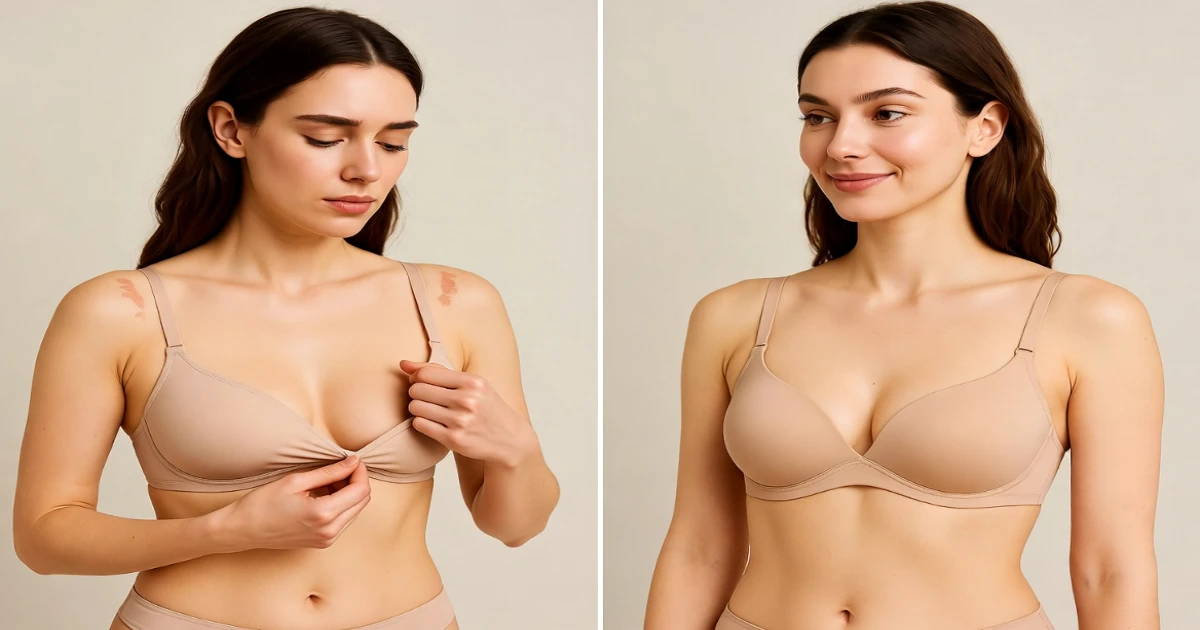
A bra band riding up the back almost always means the band is too large. Breast weight pulls the front down, the back rises to compensate, and the band ends up sitting near the shoulder blades — at which point it provides virtually no support. The fix is a smaller band size, typically paired with a larger cup to preserve volume.
Band riding up is the single most common bra fit complaint, and it almost always means the same thing: the band is too large for your ribcage to anchor it.
Here’s the mechanical reason. Breast tissue has weight. When a band is too large to provide horizontal resistance at the back, the weight of the breasts pulls the front of the bra downward and the back upward — following the path of least resistance. By the time the band has ridden up near the shoulder blades, it’s providing almost no meaningful support. The straps then get tightened to compensate, loading the shoulders with weight they were never designed to carry.
A bra that fit correctly six months ago can ride up now because elastic degrades over time. Most bra elastic has a functional lifespan of 6–12 months of regular wear. If your bra is older than a year and suddenly riding up, the bra may simply be done — not the wrong size.
The fix depends on where you are in the size range. If cups fit correctly and only the band is loose, a sister size with a smaller band — and corresponding larger cup to preserve volume — often solves it cleanly. If both are off, a full remeasure is the right starting point.
A correctly fitted new bra should fasten on the loosest hook. That’s confirmation the band size is right from day one, with the tighter hooks held in reserve as the elastic softens over months of wear.
Bra Band Feels Too Tight: When the Problem Isn’t What You Think
A tight-feeling band is frequently misdiagnosed as the wrong size. People who’ve worn a too-large band for years often experience a correct-fitting band as “too tight” because their reference point is miscalibrated. Give a properly fitted bra 48 hours before concluding it’s the wrong size. True tightness involves restricted breathing or skin folding completely around the band.
A band that feels tight gets misdiagnosed constantly. Most people assume it means the band size is too small — and sizing up without understanding the real cause creates new problems rather than solutions.
A band that feels snug but sits level, doesn’t compress breathing, and leaves no more than a light contact mark after a full day is often doing its job correctly. Bra bands are supposed to feel secure. That’s the point of them. After years in a too-large band, a correctly-fitting one can register as “too tight” simply because the reference point is wrong. Wear a new bra for two full days before making a judgment.
True band tightness — where the band is genuinely undersized — shows up as: restricted breathing, skin folding over both edges of the band all the way around (not just at the clasp), or difficulty physically getting the band onto your body. That’s categorically different from a band that feels unfamiliar.
Structured strapless bras and lined bras use rigid-fabric bands that feel firm for the first several wears. This is a material property, not a sizing issue. The band rarely softens dramatically — if it’s still uncomfortable after a week, check the fit rather than waiting.
When the band genuinely is too small, sister sizing — moving up one band size while dropping one cup letter — is the cleanest adjustment when cups already fit well. A 34D that’s too tight becomes a 36C: identical cup volume, looser band. The Sister Size Calculator maps equivalences for any starting size.
Why Are My Bra Cups Gaping or Wrinkling?
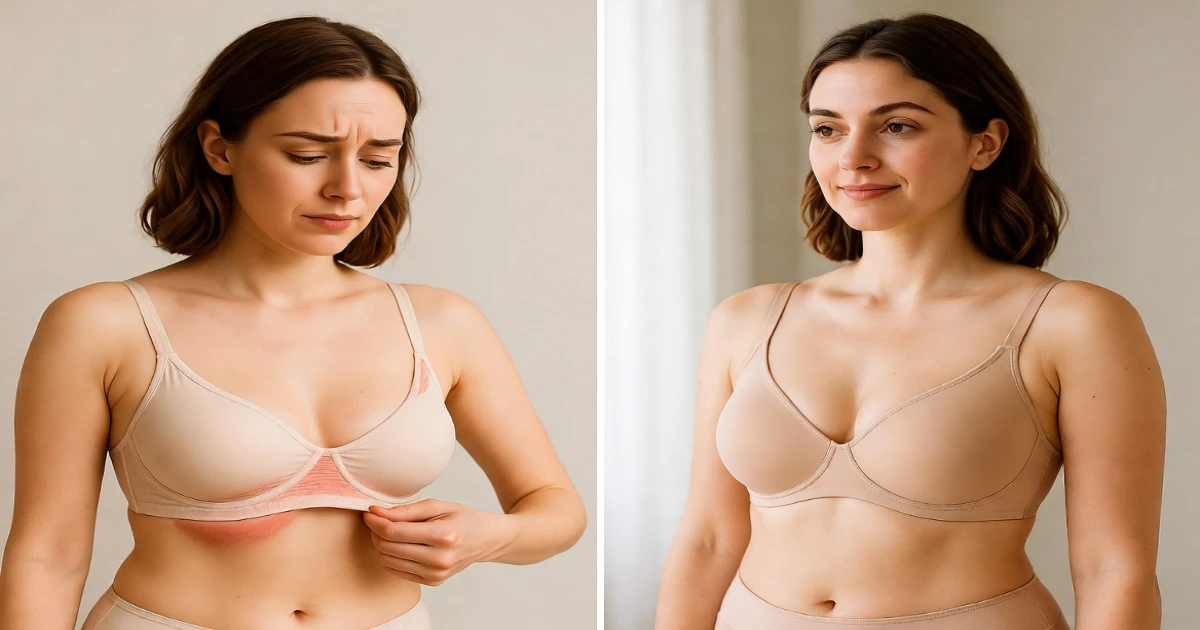
Gaping cups are often caused by a loose band, not an oversized cup. A band that’s too large tilts the entire bra structure forward, pulling the cup top away from the chest. Fix the band first — if gaping persists, then assess cup size or shape mismatch. Getting this wrong leads to undersized cups that overflow once the band is corrected.
Gaping cups look like a cup-size problem. They’re often a band problem in disguise — and misdiagnosing this is one of the most costly fitting errors a person can make.
When a bra band is too large, the entire structure shifts. The band rises at the back, which tilts the front of the bra downward and forward. That tilt pulls the top of the cups away from the chest, creating a gap at the upper cup that looks identical to an oversized cup — but is actually caused by a band that isn’t anchoring the cup in place. The fix in this case is a smaller band, not a smaller cup. Size down the cup in response to band-caused gaping and you’ll deal with overflow once the band is finally corrected.
Genuine cup gaping — where the band is correct but the cups are too large — looks different. The cup wrinkles evenly from the bottom, not just at the neckline. There’s excess fabric volume throughout the cup, not just a gap at the top. In this case, downsizing the cup is correct.
When your size is approximately right but the cup still gaps, the cause is often shape — not size. A full-coverage molded cup gaps at the top on lower-fullness breasts. A balconette gaps at the sides for close-set breast roots. The fix is trying a different cup construction at the same size, not changing the numbers.
Quick diagnostic: if gaping gets worse when you lift your arms, it’s almost always a band issue. If gaping is consistent at rest throughout the day, check whether it’s size or shape mismatch.
Bra Cup Overflow and Spillage: The One Symptom That Cascades Into Everything Else
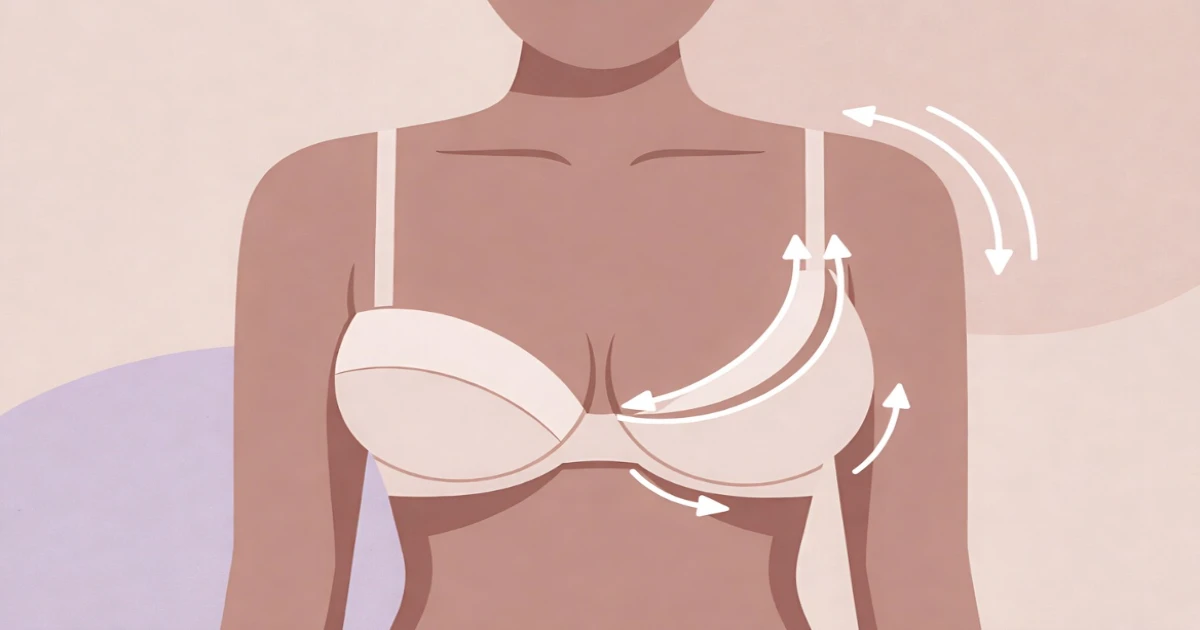
Cup overflow is not cosmetic — it’s a structural failure that causes underwire pain, strap digging, and poor lift simultaneously. When cups are too small, breast tissue displaces the underwire onto soft tissue, pulls straps forward and inward, and produces the “double-bust” effect. The fix is increasing cup size, not adjusting straps or tightening wires.
Cup overflow gets dismissed as a cosmetic inconvenience. It isn’t. It’s a structural failure that causes a cascade of other problems that people rarely connect back to their original source.
When cups are too small, breast tissue doesn’t stay within the cup’s fabric boundary. It pushes upward, to the sides, or over the top depending on breast shape and projection. The underwire — which should sit in the crease beneath the breast — ends up sitting on breast tissue instead. This is why cup overflow and underwire pain so frequently occur together. The wire isn’t the problem. The cup size is.
Overflow also causes a specific strap problem: tissue pushing forward out of the cup pulls straps forward and inward, away from their optimal shoulder position. People tighten the straps to compensate, which increases shoulder pressure and creates the digging sensation they then blame on “bras” — while doing nothing to address the cup volume problem causing it.
The double-bust effect — where the cup rim creates a secondary line across the breast — is so normalized that many people mistake it for a body shape issue. It isn’t. It means the cup volume is insufficient for the breast it’s supposed to contain.
| Overflow Symptom | What’s Causing It | Correct Fix |
|---|---|---|
| Tissue escaping over the top of the cup | Cup too shallow for breast projection | Increase cup depth — try a deeper-projection style |
| Double-bust / quad boob effect | Cup rim pressing into breast tissue — cup too small | Go up one full cup size |
| Tissue escaping to the sides | Cup too narrow for breast root width | Try fuller-cup or side-support style at same size |
| Underwire sitting on breast tissue | Cup too small — wire displaced from crease | Increase cup size so wire returns to natural crease |
Breast volume isn’t static. Hormonal shifts, weight changes of 5–10 lbs, pregnancy, breastfeeding, and monthly cycle fluctuations all affect cup volume requirements. A bra that fit correctly two years ago may now be too small with no obvious external change. Remeasuring every 12–18 months — or after any significant body change — is practical maintenance, not perfectionism.
Bra Straps Digging In or Falling Off: Two Symptoms, One Root Cause
Straps that dig in and straps that slip off both typically trace back to the same problem: a band that isn’t doing its job. Straps are designed to carry 10–20% of support load. When the band fails, straps get overtightened or mispositioned. Fix the band first — most strap problems resolve without any strap adjustment at all.
Straps that dig into the shoulders and straps that slip off the shoulders look like opposite problems. They’re usually the same problem from different angles.
Straps are designed to provide roughly 10–20% of a bra’s support — enough to keep cups in position, not enough to carry breast weight. When a band fails to do its structural job, straps get recruited to fill the gap. The band doesn’t lift from below, so straps get tightened to lift from above. This places load on the shoulders that straps were never designed to handle — producing the shoulder pain and groove formation that people attribute to bras in general, when the actual cause is a band that isn’t working.
The same loose-band dynamic causes strap slipping. When the band rides up, it shortens the distance from the back closure to the shoulder, pulling straps toward the outer edge where they have less grip. Fix the band — strap slipping often resolves without touching the adjusters at all.
If strap problems persist after the band is correctly sized, the issue shifts to shoulder geometry. Narrow or sloped shoulders cause wide-set straps to migrate outward regardless of size. A racerback converter, U-back style, or closer-set straps keeps them centered. This is a style decision — not a size change.
One specific edge case: straps that dig specifically at the front top of the shoulder — rather than across the full strap length — often indicate the cup is too small. Tissue pushing forward out of an undersized cup creates a leverage point where the strap angle becomes acute. The fix here is increasing cup size, not adding strap cushions or widening the strap.
Underwire Pain: Why the Wire Is Almost Never the Actual Problem
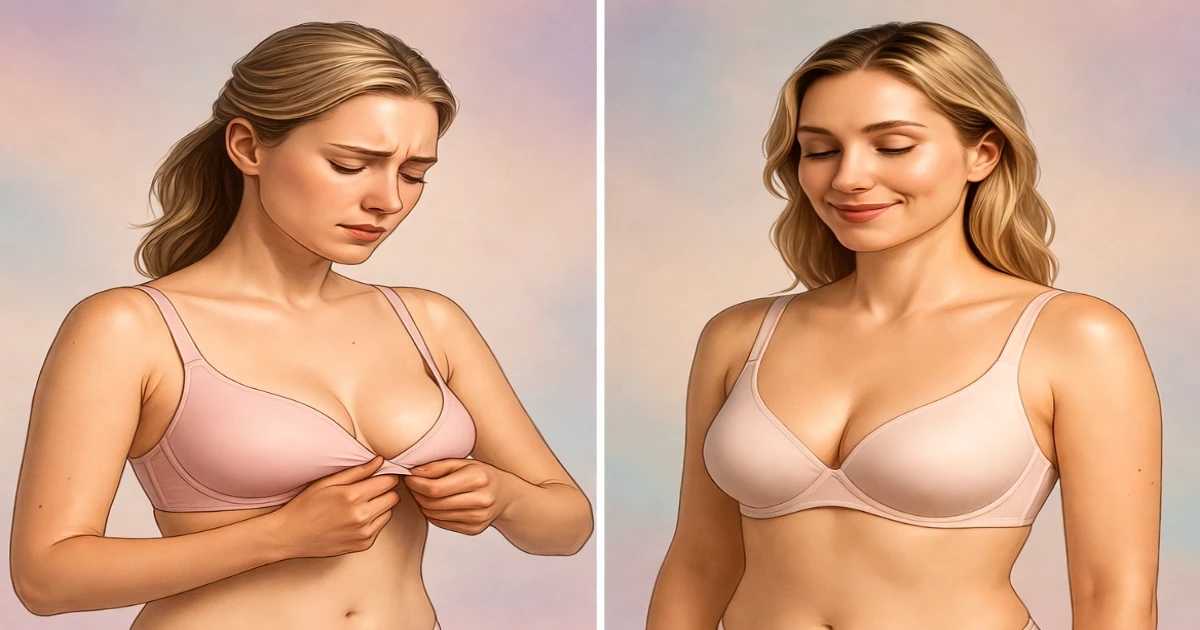
Underwire bras have a reputation for discomfort that’s almost entirely caused by wearing them in the wrong size. A correctly positioned underwire sits in the inframammary fold — the natural crease beneath the breast — resting against ribcage, not soft tissue. In the right size, you stop noticing it within minutes. Underwire pain almost always means the cup is too small or the wire is too narrow for your breast root width.
Underwire bras have a reputation for being uncomfortable. That reputation is almost entirely an artifact of how often they’re worn in the wrong size — not an inherent quality of the underwire itself.
A correctly sized underwire sits in the inframammary fold — the natural crease beneath the breast — and follows the breast root around to the sides, encircling all breast tissue. In this position, the wire rests against ribcage and cartilage, not against soft tissue. There’s no sensation from a correctly positioned underwire, which is exactly why people who’ve always worn correctly fitted underwire bras don’t understand what anyone is complaining about.
Underwire pain happens when this positioning fails. The three most common failure modes:
- Cups too small: Insufficient cup volume pushes breast tissue below and around the wire rather than inside the cup. The wire ends up sitting on soft tissue instead of beneath it. Increasing cup size moves the wire back into the fold where it belongs.
- Wire too narrow for your breast root: Breast roots vary significantly in width. A wire that’s narrower than your breast root sits on breast tissue at the sides regardless of cup size. This requires switching to a style with a wider wire — not changing the numbers.
- Gore not laying flat at the center: A center gore that doesn’t sit against the sternum usually means cups are too small and pushing the entire bra structure outward. The wire digs at center front because the cup volume can’t contain the tissue.
- Wire fatigue — where a wire has been bent repeatedly and lost its shape — is solved by replacing the bra, not changing the size. Visibly misshapen or channel-migrating wires have reached end of life.
- People who’ve abandoned underwires entirely due to pain are often wearing the wrong cup size. A properly fitted underwire bra provides genuinely superior support architecture for most breast sizes above a C cup — and it’s worth one properly fitted test before giving up on the construction entirely.
Sister Sizing: The Most Useful Bra Fitting Tool — Used Correctly
Sister sizing means when you change band size by one increment (e.g., 34→36), you change cup size one step in the opposite direction (D→C), and the physical cup volume stays identical. A 34D and 36C hold exactly the same amount of breast tissue. It’s a precision band-tension adjustment — not a substitute for correct sizing when both band and cup are significantly off.
Sister sizing is one of the most genuinely useful concepts in bra fitting, and also one of the most misapplied. Understanding exactly what it does — and what it can’t do — is the difference between precision adjustment and compounding existing problems.
When you change band size by one increment, you change cup size in the opposite direction, and the physical cup volume stays identical. A 34D and a 36C hold exactly the same amount of breast tissue. The 36 band is longer and provides less horizontal tension than the 34. This makes sister sizing effective in two specific situations: when band tension is slightly off but cup volume is correct, and when a specific bra isn’t available in your exact size but is available in a sister size.
| Your Size | Sister Size Up ↑ (looser band) | Sister Size Down ↓ (tighter band) | When to Use It |
|---|---|---|---|
| 32C | 34B | 30D | Band too tight → 34B · Band too loose → 30D |
| 34D | 36C | 32E | Band too tight → 36C · Band too loose → 32E |
| 36DD | 38D | 34F | Band too tight → 38D · Band too loose → 34F |
| 38C | 40B | 36D | Band too tight → 40B · Band riding up → 36D |
| 32DDD/F | 34DD/E | 30G | Band tight → 34DD · Band loose → 30G |
- Cup overflow — if cups are too small, a sister size with an even smaller cup letter makes overflow worse, not better.
- Shape mismatch — sister sizing changes volume, not cup geometry. A shape problem requires a different style at the same size.
- Strap digging caused by a loose band — going up in band to relieve tightness makes a loose band even looser.
- Being significantly off on both measurements — sister sizing is a fine-tuning tool, not a correction for a miscalibrated starting point.
Used correctly, sister sizing is a legitimate alternative when your exact size isn’t stocked — which happens constantly at mainstream retailers with limited band ranges. Used incorrectly, it becomes a way of staying comfortable in the wrong bra while the actual problem goes unaddressed. The Sister Size Calculator shows the full map of equivalences from any starting size.
When Fit Problems Appear Out of Nowhere: Why Bra Size Changes
A bra that fit correctly for two years can develop problems due to elastic degradation, body changes, or both. Most bra elastic has a functional lifespan of 6–12 months of regular wear. Body changes of 5–10 lbs, hormonal shifts, and postpartum recovery all affect bra sizing. If problems appear suddenly, check whether the bra has aged out before assuming you need a different size.
One of the more disorienting bra fit experiences is when a bra that worked perfectly for two years suddenly starts creating problems without any obvious body change. There’s almost always an explanation.
Elastic degradation is the most common. Most bra elastic has a functional lifespan of 6–12 months of regular wear. After that, tension decreases, the band effectively lengthens, and symptoms of a too-loose band appear — riding up, straps doing too much work, cups losing position. A bra developing these symptoms after a year of regular use isn’t defective. It’s finished. Replacing bras regularly is maintenance, not extravagance.
Body changes that affect fit happen more gradually. Weight fluctuations of 5–10 lbs can shift both ribcage circumference (band) and breast volume (cup). Hormonal changes — including monthly cycles, hormonal contraception changes, and perimenopause — alter breast density and volume. Pregnancy and postpartum changes are more dramatic: ribcage expansion and breast volume changes mean the pre-pregnancy bra rarely fits correctly six months after delivery.
Machine washing on high heat, tumble drying, or washing with hooks unfastened (which causes hooks to catch and distort fabric) all accelerate elastic degradation. Bras that are hand-washed and air-dried consistently outlast machine-washed ones by several months of functional life.
The practical rule: if fit problems appear suddenly without an obvious cause, test a new bra in the same size before concluding you need a different one. If more than 18 months have passed since your last measurement, remeasure first.
How to Diagnose Any Bra Fit Problem in 3 Steps
Every bra fit problem can be diagnosed with the same 3-step sequence: assess the band first, cups second, straps last. Working through this order eliminates the most common diagnostic error — treating strap and cup symptoms while leaving an incorrectly sized band in place. Straps and cups cannot compensate for a bad band.
Every bra fit problem responds to the same diagnostic sequence. Work through these steps in order and you’ll identify the real cause rather than treating downstream symptoms.
Assess the Band First
Put on your bra and stand with your arms at your sides. In a mirror, or with someone checking from behind: is the band sitting level — parallel to the floor — or angled upward at the back? Can you fit two fingers underneath the back band? When you lift both arms, does the band stay in place or rise significantly? If the band is riding up, too loose, or not sitting flat, that’s the cause of your fit problem — regardless of what other symptoms you’re experiencing. Don’t proceed to cup assessment until the band passes this test.
Assess the Cups Second
Only move to cup assessment once you’re confident the band is correctly sized and positioned. With the band sitting correctly, do the cups contain all breast tissue without any spillage at the top, sides, or underneath? Is the underwire sitting in the natural crease beneath the breast — or digging into tissue? Is there empty space or wrinkling in the cups, or does fabric sit smoothly against breast tissue throughout? If the band is correct and cups show spillage or overflow, the cup size needs to go up. If cups show gaping or wrinkling with a correct band, cup size may need to decrease — or the style needs to change.
Assess the Straps Last
After band and cups are correct, straps usually need minimal adjustment. They should lie flat on the shoulder without creating a groove after several hours of wear, and shouldn’t slip during normal movement. If straps are still problematic after band and cup are correct, the issue is almost always style — strap placement, strap width, or back construction — rather than size. A racerback converter or closer-set strap style resolves most remaining strap problems without any size change.
- Always start with the band — it’s the structural foundation of everything else.
- Never size down cups in response to gaping without first verifying the band is correct.
- Never tighten straps to solve a lift problem — that’s a band job.
- If two symptoms appear simultaneously, the band is almost always involved in both.
- A correct fit means you stop noticing the bra within 5 minutes. That’s the standard.
Amazon Bra Fit Helpers Mentioned in This Guide
These are practical shopping shortcuts for the fit problems explained above. Check the current size range, return policy, material, hook count, and reviews before buying because Amazon listings can change quickly.