Normal Breast Size for a 50 Year Old
Amelia B. · Bra Fit Specialist · Updated 2026 · Average sizes, menopause effects, and expert fit advice for women in their 50s.

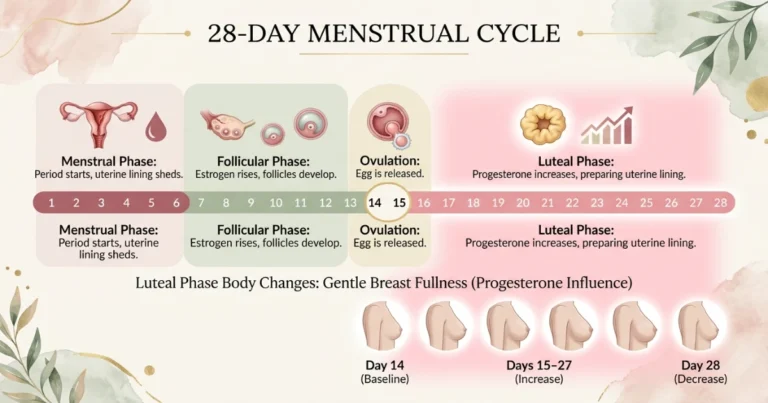
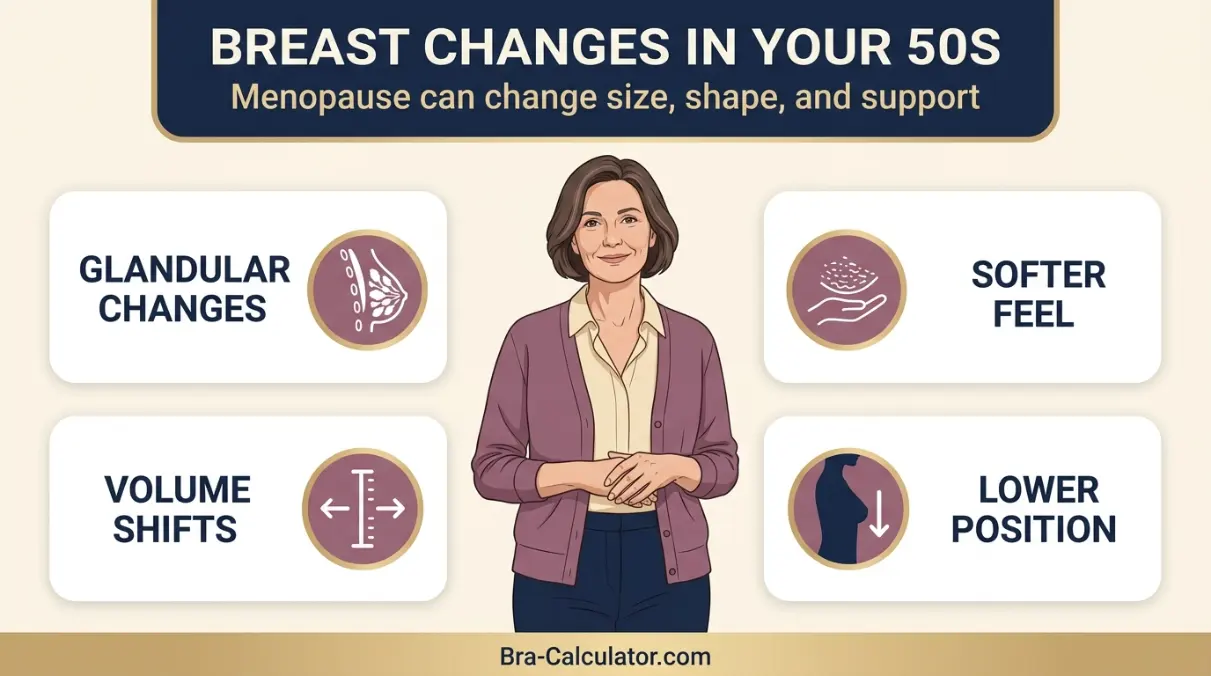
A normal breast size for a 50 year old spans a wide range — the average in the US is around 36D, but this varies considerably by body weight, menopausal status, and whether hormone replacement therapy is used. In your 50s, menopause causes estrogen to decline, leading to reduced glandular tissue (and increased fatty tissue) in the breast. Many women find their breasts become softer and may increase in overall volume even as glandular density decreases. The bra size you wore at 40 may no longer fit correctly.
In This Guide
What Is a Normal Breast Size at 50?
The 50s are the decade when most women complete the menopausal transition. The average age of menopause in the US and UK is 51–52, meaning most women in their 50s are either in late perimenopause or post-menopause. This hormonal transition has significant effects on breast tissue composition, size, and shape.
Use this page as a fit guide, not a comparison chart. At 50, breast size can be influenced by menopause, lower estrogen, softer fatty tissue, band-size changes, and post-menopausal support needs; the most accurate answer is the size that fits your current body comfortably.
Post-menopause, the decline in estrogen causes glandular breast tissue to atrophy gradually and be replaced by fatty tissue. This means breasts often become softer and may feel larger even if the total volume is similar — fatty tissue is less dense than glandular tissue. For women on HRT (hormone replacement therapy), these changes may be slowed or reversed.
The most important thing to understand: breast size is not a health indicator. There is no size that is medically “normal” or “correct” for your age. The range of typical sizes is wide, and where you fall within it is determined by genetics, hormones, body composition, and life history — not health or fitness.
The averages on this page are drawn from population studies and fitting data. They describe what is common, not what is required.
Average Bra Size for Women in Their 50s
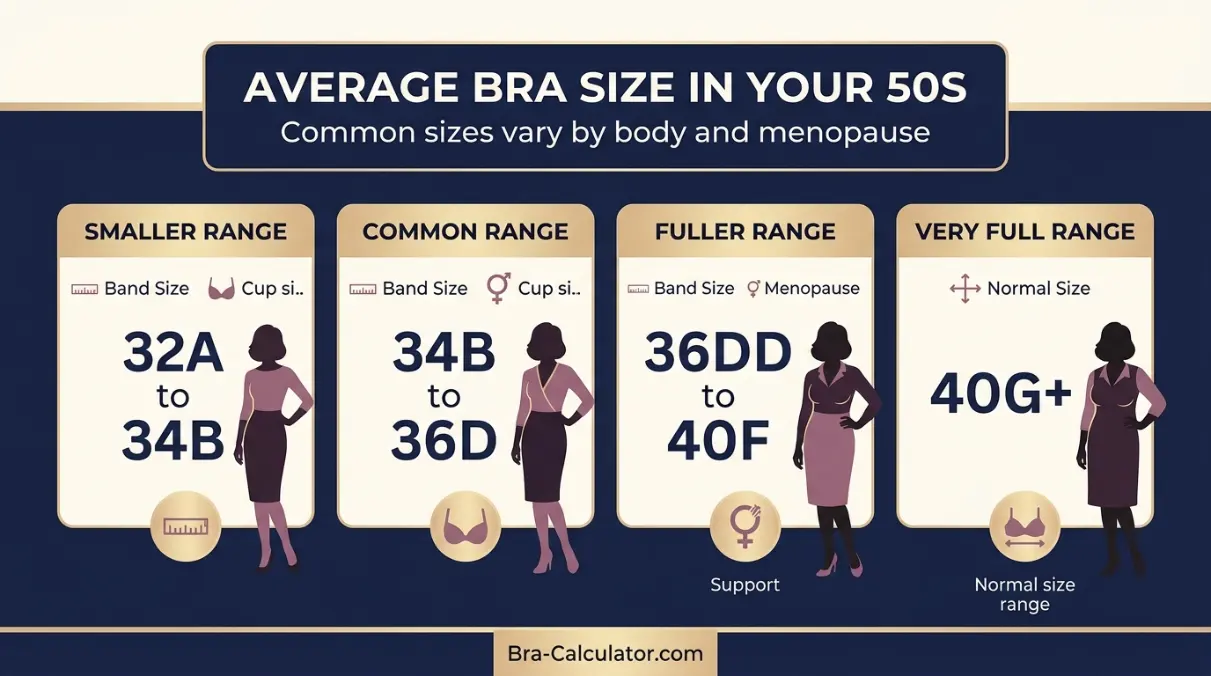
Average bra size in the 50s reflects the combined effects of post-menopausal tissue changes and gradual torso widening with age. Band size often increases by 2–4 sizes compared to the 20s. Cup volume can increase (from fatty tissue replacing denser glandular tissue) or remain similar — the shape change is typically more notable than the size change.
| Percentile | Typical Bra Size | What It Means |
|---|---|---|
| Smaller range | 32A – 34B | Completely normal — smaller breast volume relative to frame |
| Common range | 34B – 36D | Most frequently measured in population studies |
| Fuller range | 36DD – 40F | Larger volume — equally normal, different support needs |
| Very full range | 40G+ | Specialist sizing needed — not uncommon, not abnormal |
What Determines Breast Size at 50?
Breast size at any age is determined by a combination of factors, most of which are outside your control. Understanding what drives size helps explain why it varies so much between women of the same age.
Primary Driver
The estrogen decline of menopause reduces glandular tissue and increases fatty tissue in the breast. Net volume effect varies by individual — some women increase, some decrease, some remain similar.
Significant Modifier
HRT slows or partially reverses menopausal breast changes. Women on HRT may retain more glandular tissue and experience less of the softening and shape change typical of menopause.
Amplified Effect
At 50+, body weight has an even stronger relationship to breast size because fatty tissue proportion in the breast is higher. Weight gain directly adds cup volume; weight loss reduces it.
Baseline Predictor
Genetic predisposition continues to predict the baseline pattern of change. Women whose mothers experienced significant post-menopausal size changes often follow similar patterns.
Diagnostic Implication
The reduction in breast density after menopause actually makes mammogram screening more effective (denser tissue is harder to read). Lower density is not a health concern.
Band Size Impact
Torso circumference tends to increase gradually with age due to both fat redistribution and subtle skeletal changes. Band size increasing by 2–4 sizes between the 20s and 50s is very common.
Breast Changes That Are Normal in Your 50s
Tissue Becomes Fatty
Post-menopausal estrogen decline causes glandular breast tissue to be gradually replaced by fatty tissue. This makes breasts softer, often less firm, and changes how they sit on the chest wall.
Position Changes
Cooper’s ligament laxity continues. Many women in their 50s notice more pronounced ptosis than in their 40s. The nipple position moves lower relative to the breast crease.
Often Increase
Despite glandular tissue loss, many post-menopausal women report increased bra size — driven by fatty tissue gain and/or weight changes. An increase of 1–2 cup sizes between the 40s and 50s is common.
Less Tenderness
Post-menopause, cyclical breast tenderness typically stops entirely. This is usually a welcome change. Persistent or new breast pain after menopause should always be evaluated.
How Breast Size Changes Through Life
Breast size is not fixed — it changes across decades in response to hormones, pregnancy, menopause, weight, and ageing. This timeline shows what is typical at each life stage.
Development & Stabilisation
Breast tissue reaches full development by the early 20s. Size may still fluctuate with weight and hormonal cycles. Most women are wearing the wrong bra size at this stage.
Stability with Hormonal Influence
Relatively stable decade for most women unless pregnancy occurs. Pregnancy and nursing can increase size by 1–4 cup sizes temporarily or permanently.
Perimenopausal Changes Begin
Perimenopause typically starts in the mid-40s, causing hormonal fluctuations that affect breast density and size. Weight changes are common and affect cup volume.
Menopause & Tissue Changes
Menopause causes estrogen decline, leading to reduced glandular tissue and increased fatty tissue. Breasts often become softer, may increase slightly in size, and change in position.
Post-Menopausal Settling
Breast tissue continues to soften and reposition. Most women experience increased ptosis (droop) and a shift in where volume sits. Support becomes more critical.
Bra Fit Priorities for Women in Their 50s
Whatever your size, the right bra fit makes a significant difference to comfort, posture, and how clothing sits. These are the most important fit considerations for women at this life stage.
Post-Menopausal Size Differs
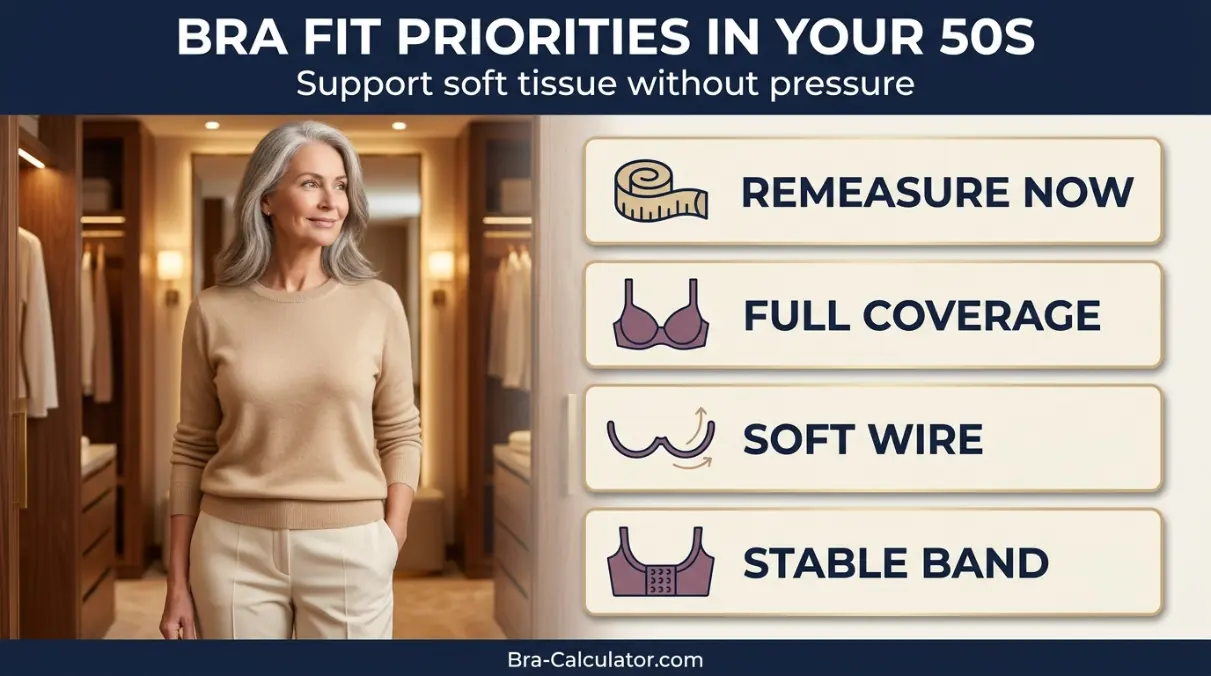
Many women in their 50s are still wearing a bra from their 40s or earlier. Post-menopausal size is often larger in band and different in cup shape. Remeasure with snug underbust and natural full bust.
Best for Softer Tissue
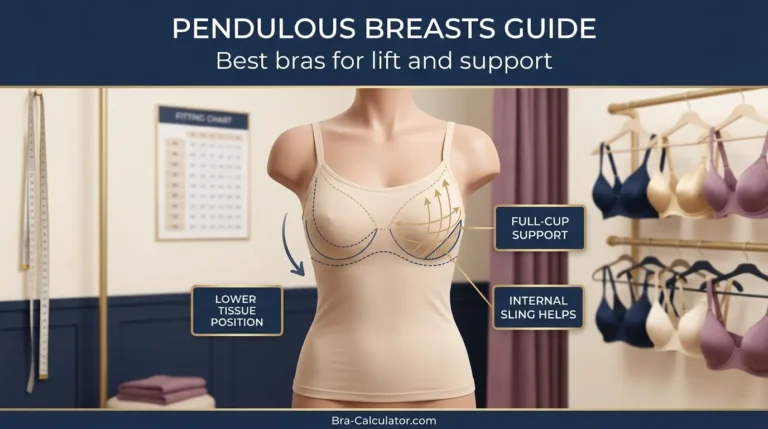
As tissue softens and repositions, full-cup styles (Wacoal, Elomi, Panache Andorra) provide better containment than demi or balconette cuts. The cup needs to surround a wider area of repositioned tissue.
Comfort First
Post-menopausal skin is often more sensitive. Wire-free bras with structured cups (Glamorise, Wacoal Softcup) provide all-day comfort without pressure points. If underwire, use flexible wires rather than rigid.
If Volume Has Increased
If cup size has increased post-menopause and you feel top-heavy, a minimiser bra (Panache Andorra, Wacoal Minimizer) redistributes projection rather than compressing — providing a smoother silhouette without discomfort.
How to Check Your Bra Size at 50
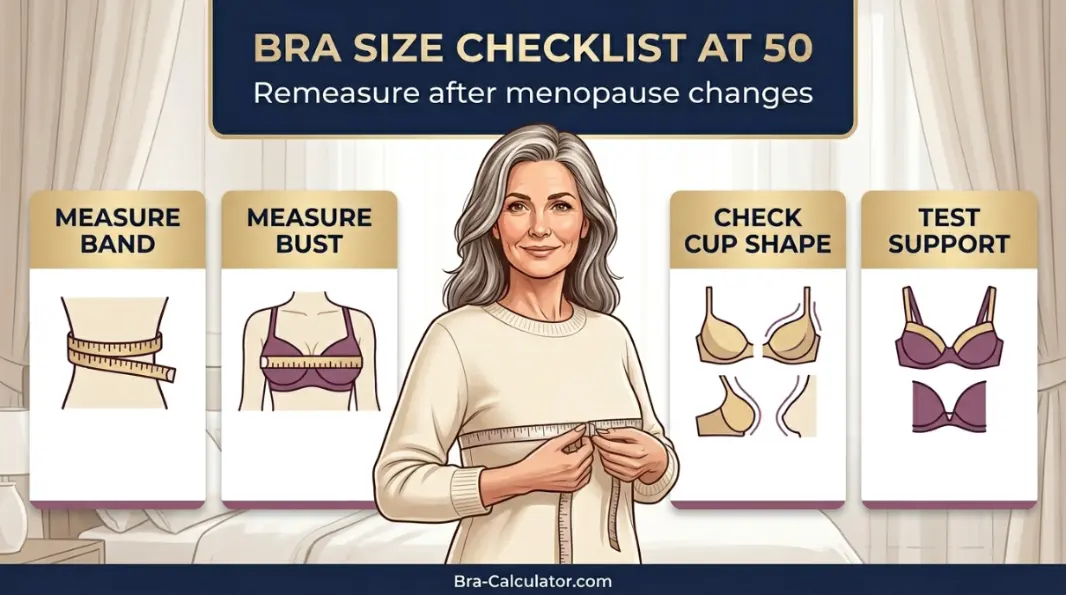
At 50, it is very common for the size on the label to change even if your body feels familiar. Menopause can reduce glandular density and increase fatty tissue, while weight distribution can alter the band and cup relationship. A supportive fit should lift gently, hold tissue forward, and avoid pressure on tender areas or underarm tissue.
Remeasure the band carefully
A small band change can alter every cup size. Measure snugly and check that the back band stays level all day.
Choose cups for soft tissue
Soft tissue often fits better in full-cup, balcony, or seamed styles than shallow molded cups.
Prioritize comfort hardware
Wider straps, padded hooks, and smooth underwire channels can reduce pressure without sacrificing lift.
Do not ignore new symptoms
Fit discomfort is common, but new one-sided changes, lumps, or skin changes should be medically checked.
| When to Remeasure | Why It Matters |
|---|---|
| Every 6–12 months | Menopause and post-menopause can change tissue softness, band size, and cup fit. |
| When support feels lower | If straps are doing all the work, the band or cup structure may no longer match your body. |
| After 10–15 lb weight change | Band size and cup volume can shift together, so recalculate rather than guessing. |
When a Size Change Needs Extra Attention
In your 50s, menopause-related changes are common, but new or unusual symptoms should never be dismissed as “just age.” Speak with a healthcare professional about a new lump, sudden one-sided swelling, nipple changes, skin dimpling, unusual discharge, or persistent localized pain. Use this guide for fit context, not diagnosis.
Fit guide rule: a bra calculator can help you find a better band and cup size, but it cannot evaluate symptoms, lumps, skin changes, or pain. If something feels new, one-sided, persistent, or unusual for your body, treat it as a health question first and a bra-fit question second.
For a 50-year-old reader, the page should be comfort-led, medically careful, and specific about menopause, tissue softness, and support structure.
Frequently Asked Questions
Know Your Size at Every Stage
Average sizes are interesting — but your accurate personal size is what matters. Use the free Bra Size Calculator to find your exact band and cup measurement today.