Normal Breast Size by Age
The complete guide to breast development, average bra-size ranges, body changes and comfort-first bra fit from puberty through post-menopause.

There is no single normal breast size by age. Breast size can vary widely at every life stage because genetics, frame size, body weight, hormones, pregnancy, nursing and menopause all affect breast tissue. Age is useful for understanding likely changes, but your correct bra size comes from your current underbust and bust measurements plus how the bra actually feels on your body.
- Age does not assign a cup size; it only gives context for likely hormonal and tissue changes.
- Teen development can begin early or late and still be normal, so comfort matters more than comparison.
- The 20s are often more stable, but cycle changes, contraception, weight and pregnancy can still affect fit.
- The 30s are a high-change decade for many women because of pregnancy, nursing and post-nursing shape changes.
- The 40s often bring perimenopause-related tenderness, density changes and a stronger need for side support.
- The 50s and 60s often involve softer tissue, wider tissue spread and a higher need for full-cup or comfort-led support.
| Life Stage | Age Range | Commonly Seen Sizes | What Usually Changes | Best Fit Priority |
|---|---|---|---|---|
| Teen years | Puberty to 19 | Training bra to 34B+, very wide range | Development speed, breast buds, asymmetry, tenderness, growth spurts | Soft support, comfort, easy movement, remeasuring often |
| 20s | 20–29 | Often 34B–34C, but 32A–38DD+ can be normal | Final settling, cycle swelling, contraception, weight and activity changes | Correct band, cup containment, sports support, fit habits |
| 30s | 30–39 | Often 34C–36C/D, wide normal range | Pregnancy, nursing, post-nursing shape, weight and hormonal changes | Fresh measurements after life changes, band recovery, cup shape match |
| 40s | 40–49 | Often 36C–36D, but many ranges remain normal | Perimenopause, tenderness, tissue softness, lower position, weight shifts | Side support, full coverage, stretch lace or wire-free options |
| 50s | 50–59 | Often around 36D, with broad variation | Menopause, reduced glandular density, softer tissue, band changes | Full-cup support, comfort hardware, flexible or wire-free construction |
| 60s+ | 60 and beyond | Often 36D–38D, but 34B–42DD+ can be normal | Post-menopausal settling, tissue softness, side spread, posture and comfort needs | Stable band, wider straps, side support, soft fabric, easy daily wear |
These are broad fit-reference ranges, not medical standards. Retail averages can understate true cup size because many people wear bands too large and cups too small.
What “Normal Breast Size” Actually Means
The question “what is a normal breast size for my age?” is common because people want reassurance, context and a practical answer. The honest answer is that age alone cannot define normal. A normal breast size is a healthy size for that person’s body, frame, genetics, hormones and life stage. Two people of the same age can differ by several cup volumes and both be completely normal.
Age does matter, but not in the way many charts suggest. Age tells you which life-stage forces may be acting on breast tissue. Puberty brings development. The 20s bring settling and monthly cycle changes. The 30s may bring pregnancy or nursing. The 40s may bring perimenopause. The 50s and 60s often bring menopause-related tissue softness and support needs. These changes affect how bras fit even when the label appears similar.
The safest and most useful way to talk about breast size by age is to separate size context from fit diagnosis. A life-stage guide can explain why your bras may feel different, when to remeasure and which style features may help. Only current measurements can estimate the actual band and cup size.
Breast Size by Age: Detailed Life-Stage Guide
Use these sections as a practical hub. Each stage explains what usually changes, what range is commonly seen, how often to remeasure and what bra features tend to work best. The full page link appears only inside the matching stage section where it belongs.
Normal Breast Size During the Teen Years
Development stage, growth rate, asymmetry, first bras and comfort-first support.
There is no single normal teen breast size because puberty happens at different speeds. Some teens still prefer soft bras or training bras, while older teens may wear 32A, 32B, 34B or a much wider range. Growth, tenderness and asymmetry can all be normal during this stage.
Teen breast development usually begins with breast buds, then moves through gradual changes in shape, volume and nipple or areola appearance. One side may develop earlier or faster than the other. That can feel worrying, but mild asymmetry is extremely common during puberty and may settle over time. The most important goal is not to match a friend or social media image; it is to choose gentle support that feels comfortable on a growing body.
Because growth can happen in spurts, teen bra size can change quickly. Cups may gape one month and feel small a few months later. A band that felt fine may begin riding up after a growth spurt. Teens involved in PE, dance, running or sports often benefit from a real sports bra because movement discomfort usually appears before everyday discomfort.
Breast Size in Your 20s
Final development, cycle changes, contraception, sports support and fit habits.
In the 20s, breast development is usually complete or nearly complete. Commonly worn sizes often cluster around 34B or 34C, but a genuine normal range is much wider. Monthly cycle swelling, hormonal contraception, weight change and pregnancy can all shift fit.
The 20s are often the decade when a person begins building a real adult bra wardrobe. That does not mean bras must be complicated or expensive, but it does mean guessing by small/medium/large labels often becomes less accurate. If you are around your mid-20s, this guide to normal breast size for a 25-year-old can also help you understand typical changes and sizing expectations. A correct band should feel stable without digging, and cups should contain tissue without flattening, spilling or gaping.
Monthly hormone changes matter a lot in this decade. Many women notice fullness or tenderness before a period. That is not always a true size change; it may be temporary swelling. Stretch-lace cup edges, flexible everyday bras and a correctly sized sports bra can make a major difference. For active lifestyles, the sports bra should be treated as essential support, not an optional extra.
Breast Size in Your 30s
Pregnancy, nursing, post-nursing shape, weight shifts and current-size fitting.
The 30s are often a stable decade unless pregnancy, nursing or major weight change occurs. Commonly worn sizes often sit around 34C to 36C, but pregnancy and nursing can increase size by 1–4 cup sizes, and post-nursing shape may differ from the pre-pregnancy baseline.
The biggest mistake in the 30s is assuming an old size is still current. A pre-pregnancy bra may not fit after nursing, and a nursing-size bra may not fit after weaning. Even if the cup letter looks similar, tissue may sit differently in the cup. Some women retain fuller volume after pregnancy; others return to a previous size; others notice reduced upper fullness and a different cup shape.
Body composition changes also matter. Weight gain or loss affects both band and cup volume, but many people only change the cup and forget the band. The band is the foundation of support. If it rides up, straps start carrying too much weight and the cups can appear wrong even when the cup volume is close.
Breast Size in Your 40s
Perimenopause, tenderness, tissue softness, side support and changing shape.
In the 40s, commonly worn sizes often move toward 36C to 36D, but the bigger story is shape and sensitivity. Perimenopause can cause unpredictable fullness, tenderness and tissue changes, so bras that worked in the 30s may stop feeling supportive.
The 40s are a transition decade. Some women are still cycling regularly, while others enter perimenopause earlier. Hormone levels can fluctuate rather than change smoothly, which is why breast fullness may feel unpredictable. A bra can feel fine for two weeks, then tight or irritating during a tender phase. This does not automatically mean something is wrong, but it does mean adaptable fit matters.
Style becomes more important than the number on the label. Softer or lower-positioned tissue may not work well in shallow molded cups. A seamed cup, side-support panel or stretch-lace upper cup can solve problems that a simple cup-size change cannot. If a molded cup gapes at the top but feels full at the bottom, the issue is often cup shape, not “too big.”

Breast Size in Your 50s
Menopause, softer tissue, band changes, comfort hardware and full-cup support.
In the 50s, breast size is strongly influenced by menopause and post-menopausal tissue changes. The commonly worn average is often around 36D, but the true normal range is broad. Shape, softness and support structure usually matter more than the average label.
As estrogen declines, glandular tissue often becomes softer and fattier. This can change how the breast sits in the cup. Some women notice more fullness because of weight redistribution; others notice less firmness without much volume change. Old bras may start feeling unsupportive because they were designed for a firmer or higher tissue position.
Comfort hardware matters more in this decade. Wider straps, smoother closures, soft underwire channels and gentle cup edges can make a major difference. Full-cup and side-support styles often contain softer tissue better than demi cups or shallow molded cups. Wire-free can be a strong choice when it has real construction, not just a loose bralette shape.
Breast Size in Your 60s and Beyond
Post-menopausal settling, tissue spread, side support, wider straps and all-day comfort.
In the 60s, normal breast size still spans a wide range. Commonly worn sizes are often around 36D to 38D, but the most important changes are usually tissue softness, lower position, side spread and support needs rather than one “correct” cup size.
Post-menopausal breasts often feel softer and may sit lower or wider on the chest. This can make a bra feel less supportive even when the old label looks close. The solution is often not just a new size but a different construction: fuller cups, side panels, wider straps, softer fabrics and a band that stays level without pressing painfully.
Ease of wear also becomes part of fit. Some women prefer front-close bras, wire-free support or softer hook-and-eye closures. Others still prefer underwire, but need a wider or more flexible wire. The best bra in this decade supports without pinching, guides tissue forward without squeezing and stays comfortable during a full day.
What Actually Changes Breast Size at Any Age
Age is a shortcut for the hormonal and physical changes happening in the body, but it is not the direct cause of size. The same age can produce very different outcomes depending on body composition, genetics and life history. These are the main factors that change breast size or bra fit across the lifespan.
Genetics
Genetics influence baseline breast volume, body frame, tissue distribution, projection, spacing and how strongly tissue responds to hormones. Family patterns are often more useful than age averages.
Body Weight
Breasts contain fatty tissue, so weight gain or loss can change cup volume. A 10–15 lb change can be enough to alter both band and cup fit.
Monthly Cycle
Hormonal swelling before a period can make cups feel tighter for a few days. This is common and may not require a permanent size change.
Contraception or HRT
Hormonal medication can change fullness, tenderness or fluid retention. If bras feel different after starting or stopping, remeasure instead of guessing.
Pregnancy and Nursing
Pregnancy and breastfeeding can change volume, shape, firmness and nipple position. Post-nursing size should be measured after the body settles.
Perimenopause
Hormone fluctuation in the 40s and 50s can create irregular tenderness, size shifts and shape changes before menopause is complete.
Menopause
After menopause, glandular tissue often becomes softer and fattier. Size may increase, decrease or stay similar, but support needs often change.
Exercise and Chest Shape
Exercise does not build breast tissue, but pectoral muscle, posture and body-fat changes can alter how bras sit and how tissue projects.
Bra Construction
Sometimes the body has not changed much — the bra style is wrong. Molded cups, seamed cups, side support and wire width can all fit differently.
How to Measure Your Bra Size at Any Age
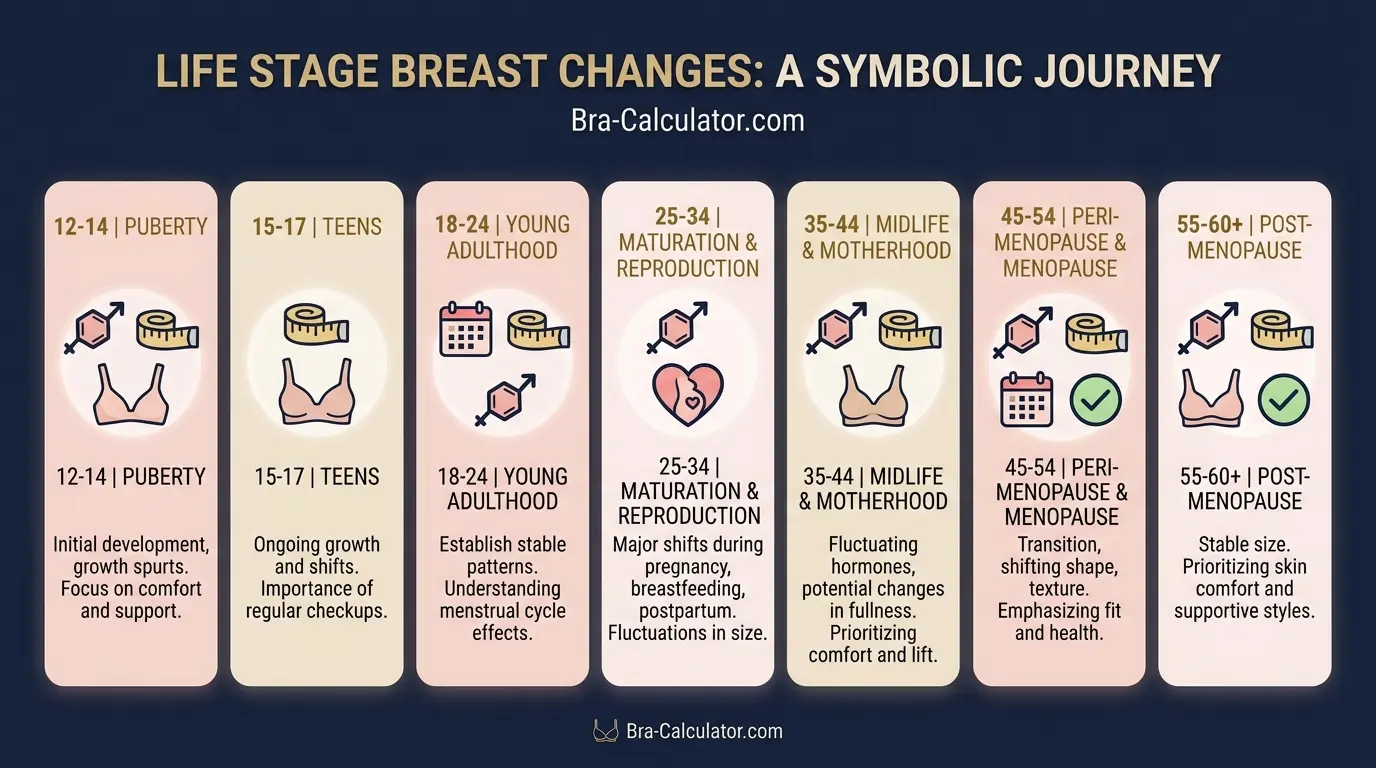
The same measurement method works from the teen years through the 60s. What changes is how often you should remeasure and what style you choose afterward. Measure on a calm day when possible, use a soft tape measure and avoid pulling the tape so tight that it compresses tissue.
- Measure your underbust
Wrap the tape around your ribcage directly under the bust. Keep it level and snug. This number helps determine the band size, which should provide most of the support.
- Measure your full bust
Measure around the fullest part of the bust without flattening tissue. If tissue is soft or full, take the measurement gently and keep the tape parallel to the floor.
- Calculate the cup difference
Subtract the band measurement from the bust measurement. The difference gives a starting cup letter, but cup shape and brand sizing still matter.
- Try the size and check comfort
A correct bra should sit level, contain tissue, avoid painful marks and feel supportive when you move. Use sister sizes if the band or cup is close but not perfect.
Which Bra Styles Usually Work Best by Age?
Style guidance should never replace measurement, but it helps when the number is technically correct and the bra still feels wrong. A person in their 20s may need movement support, while someone in their 50s may need side containment and softer hardware. Start with size, then refine by style.
Soft bras, wire-free training bras, crop bras and light sports bras. Comfort and non-restrictive support matter most while the body is still changing.
T-shirt bras, stretch-lace cups, sports bras and a few outfit-specific styles. The goal is learning correct band and cup fit early.
Supportive everyday bras, nursing bras when needed, seamed cups and post-pregnancy refit options. Do not rely on old sizes after pregnancy or weight change.
Side-support bras, full-coverage cups, soft wire, stretch lace and structured wire-free options for tender or fluctuating days.
Full-cup bras, minimizers, wider straps, comfort closures and wire-free bras with real support. Softer tissue often needs more containment.
Front-close options, side-support full cups, soft fabrics, wider bands and gentle lift. Comfort and ease of use are part of good fit.
When Your Bra Size Should Be Checked Again
A bra size is not a permanent identity. It is a current fit result. Remeasuring is especially important when body changes are gradual, because old bras can become uncomfortable slowly enough that the problem feels normal.
- Every 6–12 months as a normal fit check.
- Every 3–6 months during active teen development or rapid growth.
- After starting, changing or stopping hormonal contraception.
- After pregnancy and again 6–8 weeks after nursing ends.
- After a 10–15 lb body-weight change.
- During perimenopause if tenderness or fullness becomes unpredictable.
- After starting or changing hormone replacement therapy.
- When bras ride up, straps dig, cups gape, cups overflow or tissue slips sideways.
- When switching brands, because sizing and cup shape vary across manufacturers.
Find Your Current Bra Size in 2 Minutes
Average age ranges are helpful for context, but your exact size comes from your current measurements. Use the free calculator to check band, cup and sister size options before buying another bra.
Open the Bra Size Calculator