D Cup vs DD Cup: What’s the Real Difference? (2026 Fit Guide)
Key Takeaways
- DD is one cup step above D — roughly one inch more difference between underbust and bust measurements
- Cup letters aren’t absolute sizes — a 32D has way less volume than a 38D, even though both are “D cups”
- Fit signs matter more than letters — spillage, gore floating, and wire placement tell you which size fits
- DD doesn’t mean huge breasts — it’s a relationship between band and bust, not a fixed volume
- Sister sizing helps bridge the gap — if one size spills and the next gaps, try adjusting both cup and band
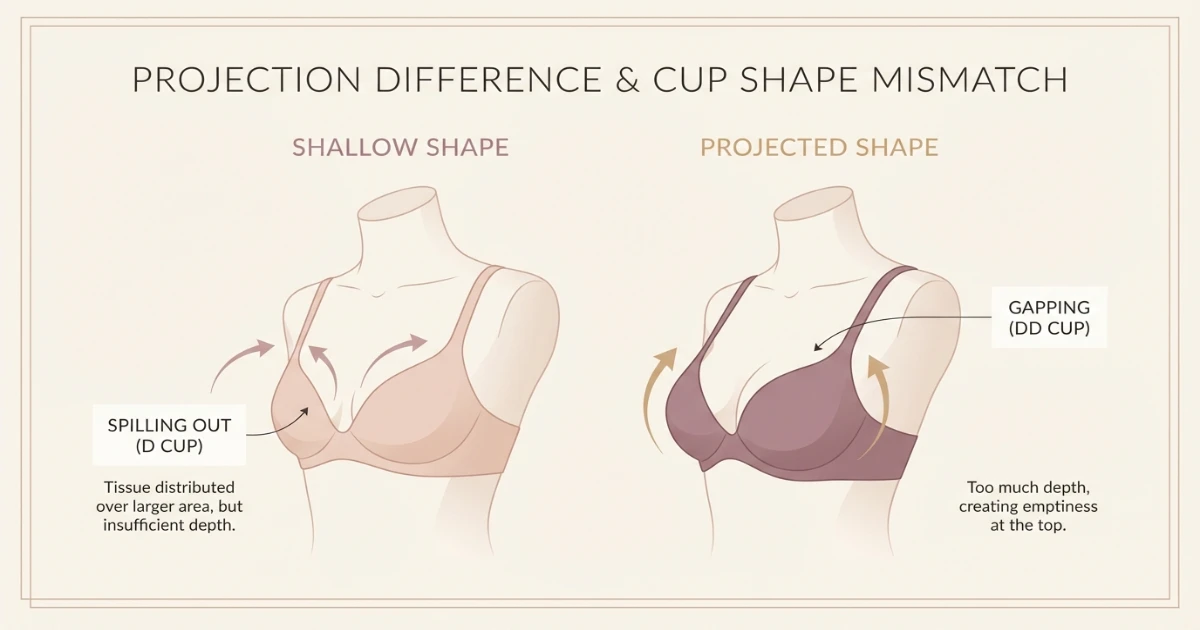
- Projection changes everything — shallow breasts may gap in DD even when D spills at the top
- Both sizes can work on the same person — depending on brand, style, and where you are in your cycle
If you’ve ever stood in a fitting room holding a D cup in one hand and a DD in the other, wondering why one gives you quad-boob and the other wrinkles like a sad deflated balloon, you’re not alone. The jump from D to DD feels like stepping into mystery territory, mostly because we’ve been taught that cup letters work like shirt sizes. They don’t.
Let’s fix that right now. Check out our full breast size comparison hub for visual guides, or keep reading to understand exactly what’s happening between D and DD — and how to choose the right one for your actual body.
The #1 Thing People Get Wrong About Cup Letters
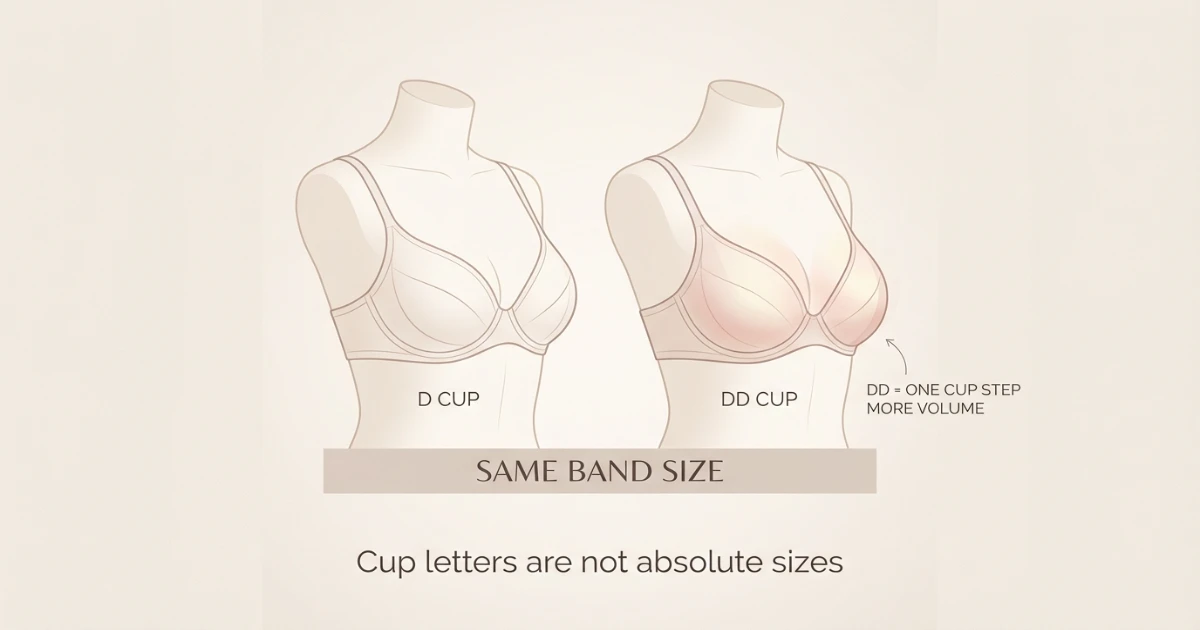
Here’s the truth bomb: D is not a size. DD is not a size. They’re part of a two-number system where the band size matters just as much as the letter.
A 32D and a 38D are completely different volumes. The 32D holds significantly less breast tissue because it’s designed for someone with a smaller ribcage. Think of it like pants — a size 4 and a size 12 both come in “regular length,” but they’re not the same volume of fabric.
When you see “D cup,” your brain probably pictures a specific breast size. But that mental image is wrong. What you’re actually picturing is probably a 34D or 36D on someone of average build, and you’re unconsciously filling in the rest of the body proportions.
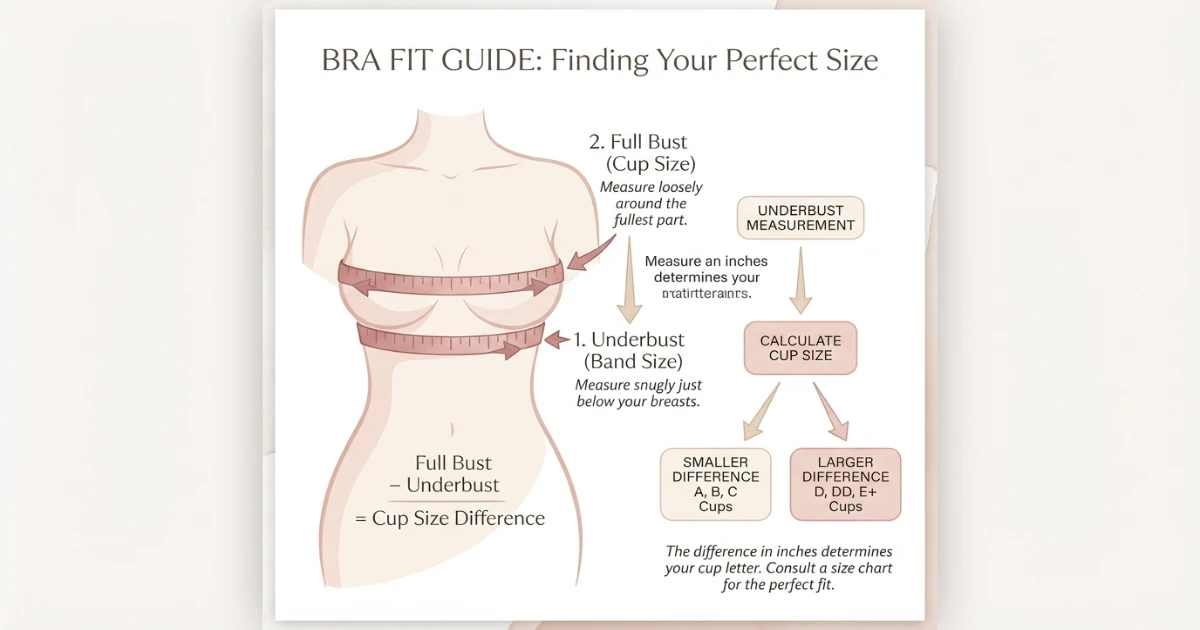
The same goes for DD. It doesn’t mean “massive.” It means the difference between your underbust measurement and your bust measurement is about 5 inches. On a petite frame with a 28-inch ribcage, that’s a 28DD — which looks nothing like a 40DD on someone with a larger torso.
This is why using our bra size calculator matters. You need both measurements — not just a letter guess.
D vs DD: How Much Bigger Is DD?
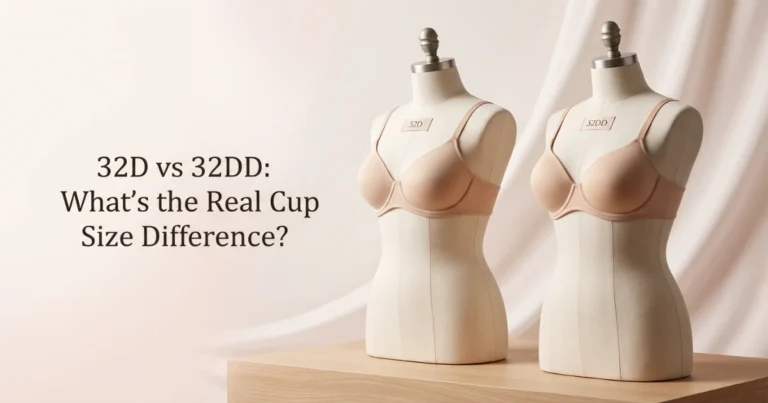
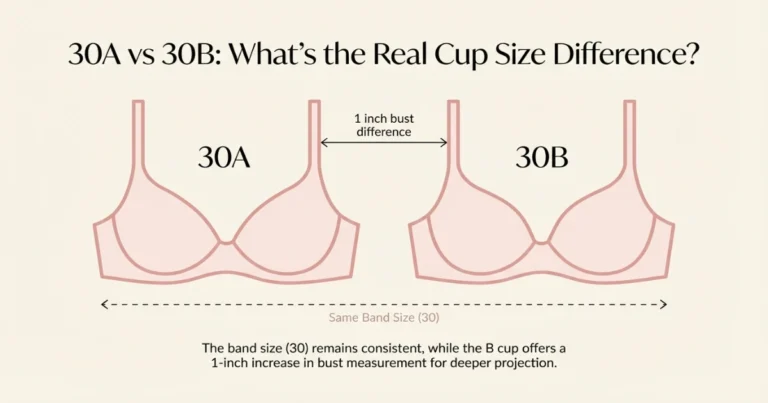
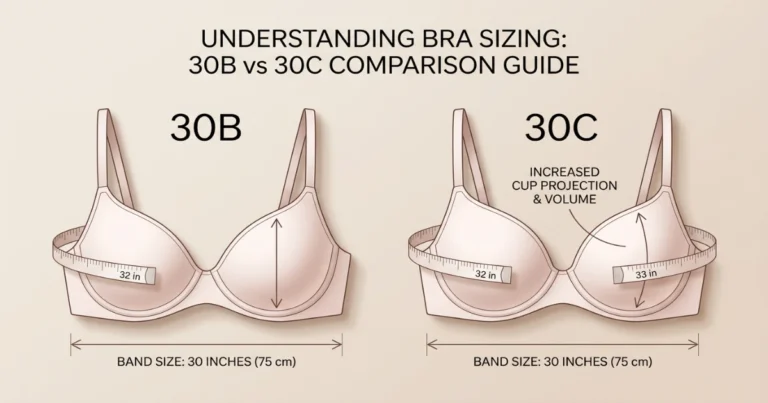
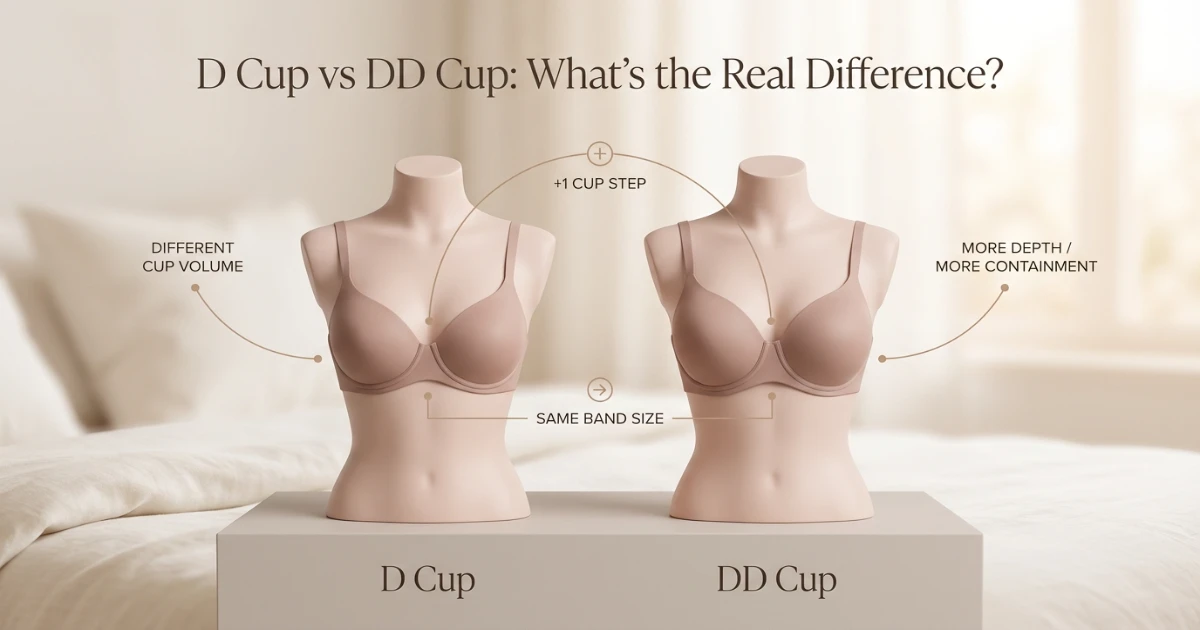
In the simplest terms: DD is one cup volume step above D. In the US and UK sizing systems, each cup letter represents roughly one inch of difference between your underbust and bust measurements.
So if D cup = 4 inches of difference, DD cup = 5 inches of difference.
But — and this is important — that “one inch” is distributed around your entire bust circumference. It’s not one inch of projection forward or one inch taller. It’s volume spread across the whole cup. That’s why the difference can feel subtle when you try on bras, even though mathematically it’s a full cup size.
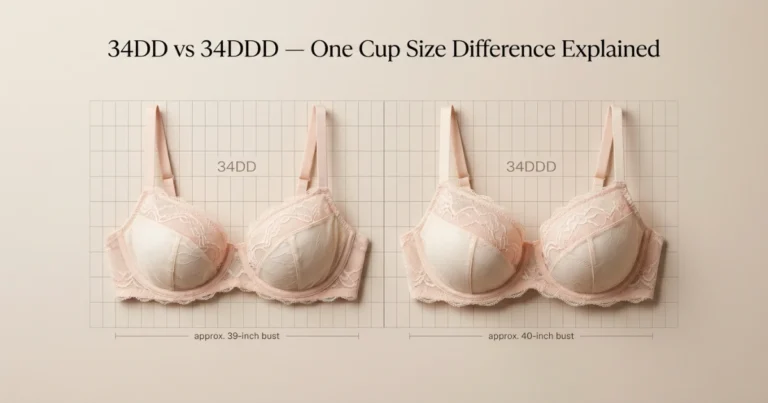
Some brands use different naming conventions. You might see “E” instead of “DD” in UK brands. In the US, most brands go: D → DD → DDD (or E). They’re the same thing, just different letters.
Regional Variations
US sizing: A, B, C, D, DD (or E), DDD (or F), G, H…
UK sizing: A, B, C, D, DD, E, F, FF, G, GG…
If you’re ordering from a UK brand and you usually wear a US DD, you’re looking for UK DD. If you usually wear US DDD/F, you’re looking for UK E. It gets messy, which is why trying on bras and checking fit signs matters more than chasing letters.
D vs DD Measurement Examples (Inches + CM)
Let’s make this concrete with real numbers. Here’s what D and DD look like across different band sizes:
Band 30:
30D = 30″ underbust + 34″ bust (4″ difference / 10 cm)
30DD = 30″ underbust + 35″ bust (5″ difference / 13 cm)
Band 34:
34D = 34″ underbust + 38″ bust (4″ difference / 10 cm)
34DD = 34″ underbust + 39″ bust (5″ difference / 13 cm)
Band 38:
38D = 38″ underbust + 42″ bust (4″ difference / 10 cm)
38DD = 38″ underbust + 43″ bust (5″ difference / 13 cm)
Notice how the difference stays the same (4″ vs 5″), but the total volumes are wildly different. A 38D has more total breast volume than a 30DD, even though D is “smaller” than DD on paper.
This is why you can’t compare cup letters across different band sizes. You have to look at the whole size as a unit. Need help visualizing this? Our cup volume comparison tool shows exactly how volumes scale.
What You’ll Feel: Real Fit Differences
Forget the measuring tape for a second. Here’s what the difference between D and DD actually feels like when you’re wearing the bra:
If D is too small (you need DD):
- Spillage at the top — breast tissue overflows the cup edge, creating a “quad-boob” effect
- Underwire sits on breast tissue — the wire digs in because it can’t get under your breasts properly
- Center gore doesn’t tack — the piece between the cups floats away from your sternum
- Cups feel compressed — your breasts push forward, making the bra feel tight even if the band is fine
- Straps dig in — because they’re doing the work the cups should do
- Neckline cuts in — especially in balconette or demi styles
If DD is too big (you need D):
- Gaping at the top — empty space at the neckline, especially when you lean forward
- Cups wrinkle — fabric folds or puckers because there’s not enough volume to fill them
- Bra shifts when you move — cups slide around because they’re not anchored by breast tissue
- Wire sits too wide — extends past your breast tissue into your armpit area
- Loss of shape — your breasts sit at the bottom of the cup with empty space above
The tricky part? Some people experience both issues — D spills at the top, but DD gaps when standing. This usually means you need to look at projection and depth, not just cup volume. Check our projection and depth analyzer for help diagnosing this.
Who Should Choose D Cup
You’re probably a D cup if:
- DD cups have visible gaping at the neckline when you stand normally
- The underwire on DD extends past your breast tissue into your armpit
- DD cups wrinkle or fold, especially at the top or sides
- Your breasts sit at the bottom of DD cups with empty space above
- You have shallower breast tissue that doesn’t need as much forward projection
- D cups feel snug but the gore tacks and underwire sits correctly
- After scooping and swooping in a D cup, everything stays in place without spillage
Fit check: In a well-fitting D cup, you should be able to move, bend, and raise your arms without spillage or shifting. The underwire should trace your breast root (where breast tissue meets your ribcage), and the center gore should sit flat against your sternum.
Who Should Choose DD Cup
You’re probably a DD cup if:
- D cups give you quad-boob, especially when you scoop and swoop
- The underwire in D cups sits on breast tissue instead of underneath it
- The center gore in D cups floats away from your chest
- D cups feel tight or compressed, even when the band fits correctly
- Your breasts spill out the top, sides, or center when you bend forward in D cups
- You have more projected breast tissue that needs depth, not just width
- Straps dig into your shoulders because they’re compensating for too-small cups
Fit check: In a well-fitting DD cup, the gore should tack, the underwire should encircle your entire breast without sitting on tissue, and you should have no spillage or empty space. The cups should feel supportive without feeling compressed.
How to Choose D vs DD in 3 Minutes
Put on the bra (start with your best guess) and follow these steps:
- Scoop and swoop — Lean forward, reach into each cup, and pull all breast tissue from your sides and underarms into the cups. This is how the bra should fit during normal wear.
- Check the gore — The center piece between the cups should sit flat against your sternum. If it floats, your cups are too small. Try DD.
- Look at the underwire — It should sit in your inframammary fold (the crease under your breasts), not on breast tissue. Wire sitting on tissue = cups too small.
- Check for spillage — Look in the mirror. Any breast tissue overflowing at the top, sides, or center? Too small. If the D spills, try DD.
- Check for gaping — Is there empty space at the top of the cups when you stand normally? If DD gaps but D spills, you might need a different style or more projection, not just a different letter.
- Test the band — Can you fit two fingers under the band comfortably? The band should be snug but not painful. If it rides up in back, it’s too loose. Read more in our : band rides up troubleshooting guide.
- Move around — Raise your arms, bend forward, twist side to side. The cups should stay in place. If they shift or gap with movement but look fine standing still, try a more projected cup shape.
D vs DD Comparison Table
| Factor | D Cup | DD Cup |
|---|---|---|
| Cup depth/coverage | 4″ difference between underbust and bust; moderate volume | 5″ difference between underbust and bust; one step more volume |
| Spillage risk | Lower if you have shallower breast tissue; higher if you’re between sizes | Lower for fuller or more projected breasts; none if sized correctly |
| Gaping risk | Low for moderate fullness; moderate if you have less tissue | Higher if you have shallow breasts or less upper fullness |
| Wire width feel | Narrower, may not encircle all tissue if you need DD | Slightly wider to accommodate more volume; shouldn’t extend into armpit |
| Support and lift | Good support if sized correctly; less effective if you actually need DD | Better support for fuller breasts; distributes weight properly |
| Best for breast shape | Shallow breasts, less projection, moderate upper fullness | Projected breasts, fuller on top or bottom, center fullness |
| Most common fit signs | Gore tacks, no spillage, slight gaping possible if too big | Gore tacks, underwire under tissue, no quad-boob after scoop and swoop |
Common Fit Mistakes (And How to Fix Them)
Even when you’ve narrowed it down to D vs DD, these mistakes can throw off your fit:
1. Tightening straps to compensate for cups that are too small
The problem: If your D cup spills, you might crank the straps tighter to hold everything in. This creates painful grooves in your shoulders and doesn’t actually fix the cup issue.
The fix: Go up to DD. Your straps should provide minimal lift — most support comes from the band and cups. If you’re constantly tightening straps, your cups are too small or your band is too loose.
2. Wearing a band that’s too loose to “make room” for cups
The problem: If DD feels tight, you might try 36DD instead of 34DD, thinking you need a “bigger bra.” But a loose band rides up your back and stops providing support.
The fix: The band should be snug on the loosest hooks. If 34DD feels tight across the cups but the band is fine, you need 34DD (or 34E) in a different style with more projection. If the band itself is tight, then yes, try 36D — this is called sister sizing. Learn more at our : sister size chart.
3. Not accounting for projection vs. shallow shape
The problem: You try D and it spills at the top. You try DD and it gaps when you stand. This isn’t a volume issue — it’s a projection mismatch.
The fix: Look for bras with seamed cups (like unlined balconettes) instead of molded foam cups. Seamed cups adapt to projected breast tissue better. If you have shallow breasts, molded cups might work better in D. For a deep dive, check our : fit check guide.
4. Mixing up molded cups vs. seamed cups
The problem: A molded t-shirt bra in DD might gap, but a seamed balconette in DD fits perfectly. Or vice versa.
The fix: Molded cups hold one shape. If your breasts don’t match that exact shape, you’ll get gaping or spillage. Seamed cups are flexible. Try the same size across different styles — DD in one brand’s t-shirt bra is not the same as DD in their lace demi cup.
5. Forgetting that breast size fluctuates
The problem: Your D cup fits great most of the month, then suddenly you’re spilling out.
The fix: Hormones, weight changes, and menstrual cycles affect breast volume. Some people keep both D and DD bras and rotate based on how they feel. This is totally normal.
Sister Sizes to Try Next
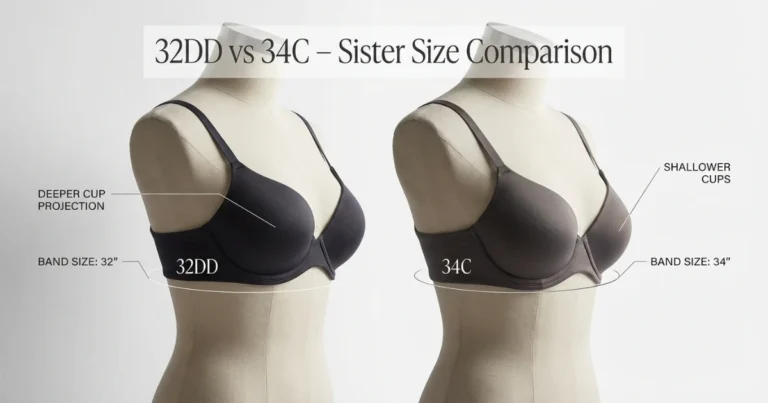
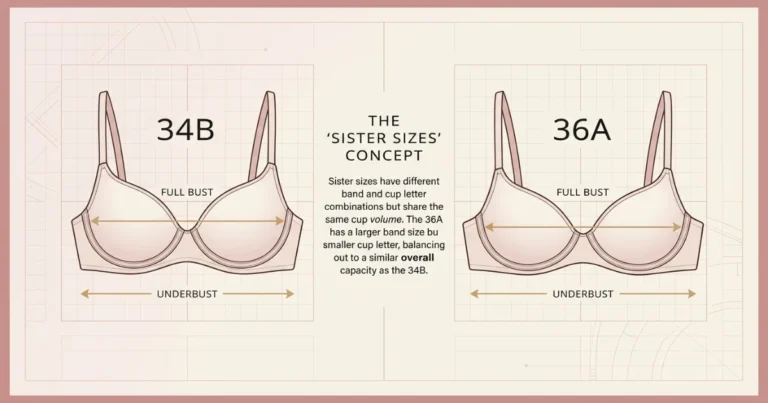
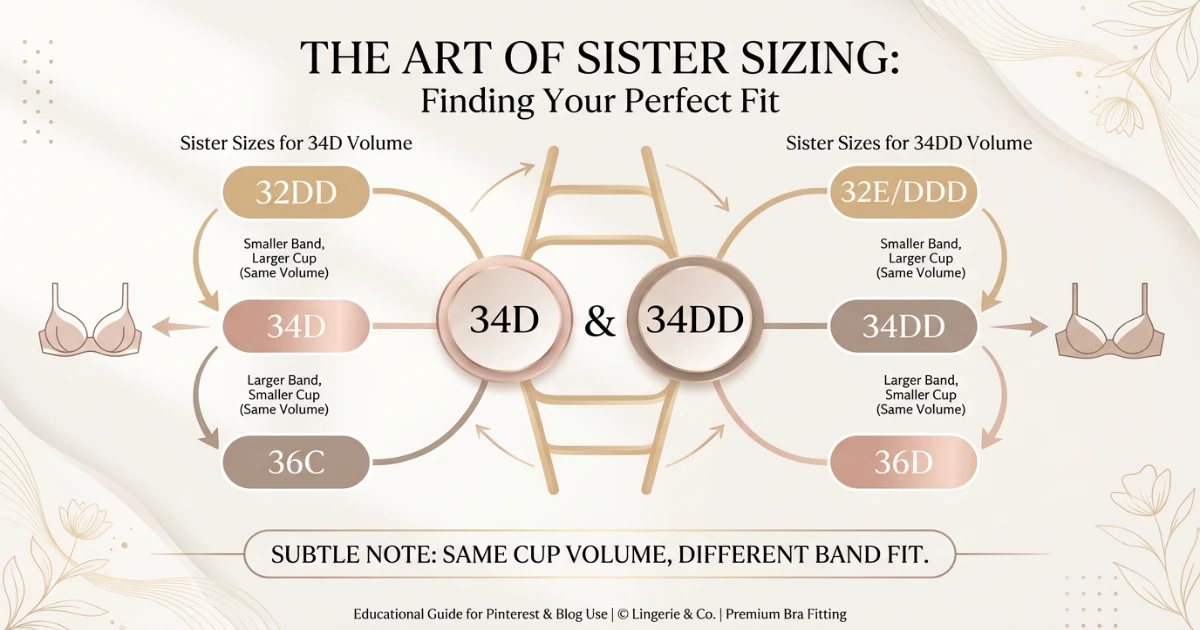
If D spills but DD gaps, or if the band feels wrong in both, you need sister sizing. Sister sizes keep the same cup volume but swap the band size.
Here’s how it works: going up one band size and down one cup letter keeps the same volume. Going down one band and up one cup also keeps the same volume.
Example sister size ladder (starting from 34D):
- 32DD ← tighter band, same cup volume as 34D
- 34D ← your starting point
- 36C ← looser band, same cup volume as 34D
Another ladder (starting from 34DD):
- 32E/DDD ← tighter band, same cup volume as 34DD
- 34DD ← your starting point
- 36D ← looser band, same cup volume as 34DD
So if 34D spills but you think the band is too tight, try 36C (sister size with looser band). If 34DD gaps but the band rides up, try 32E/DDD (sister size with tighter band).
This is why measuring matters. You might discover you’re actually a 32DD when you thought you were a 34D. Same cup volume, different band. Use our how to measure bra size guide to get accurate numbers.
People Also Ask
The Bottom Line on D Cup vs DD Cup: Trust Fit Signs, Not Letters
Here’s what you need to remember: D and DD are not fixed sizes. They’re ratios. A 32DD can have less volume than a 36D. What matters is how the bra actually fits on your body.
If you’re stuck between D and DD, stop staring at the label and start checking the fit signs. Does the gore tack? Does the underwire sit in your inframammary fold? Can you scoop and swoop without spillage? Do the cups wrinkle or gap?
These questions tell you more than any measuring tape.
And if D spills in one style but fits in another, that’s normal. Cup sizing varies by brand, by bra type, and by how much projection the cup offers. This is why trying on multiple styles in both D and DD is the only way to know for sure.
You might end up with some bras in D and some in DD. That’s not a failure — that’s understanding how bras actually work.
Ready to Find Your Perfect Fit?
Stop guessing and start comparing. Use our visual guides to see exactly how D and DD differ across band sizes, explore sister sizing options, and discover which bra styles work best for your shape.
Compare D, DD, and More Sizes Now