40 Bra Size Guide: Every 40 Band Size from 40AA to 40K
Compare cup differences, approximate bust measurements, sister sizes, fit clues, bra styles and international equivalents for the full 40-band family—without opening a dozen nearly identical pages.
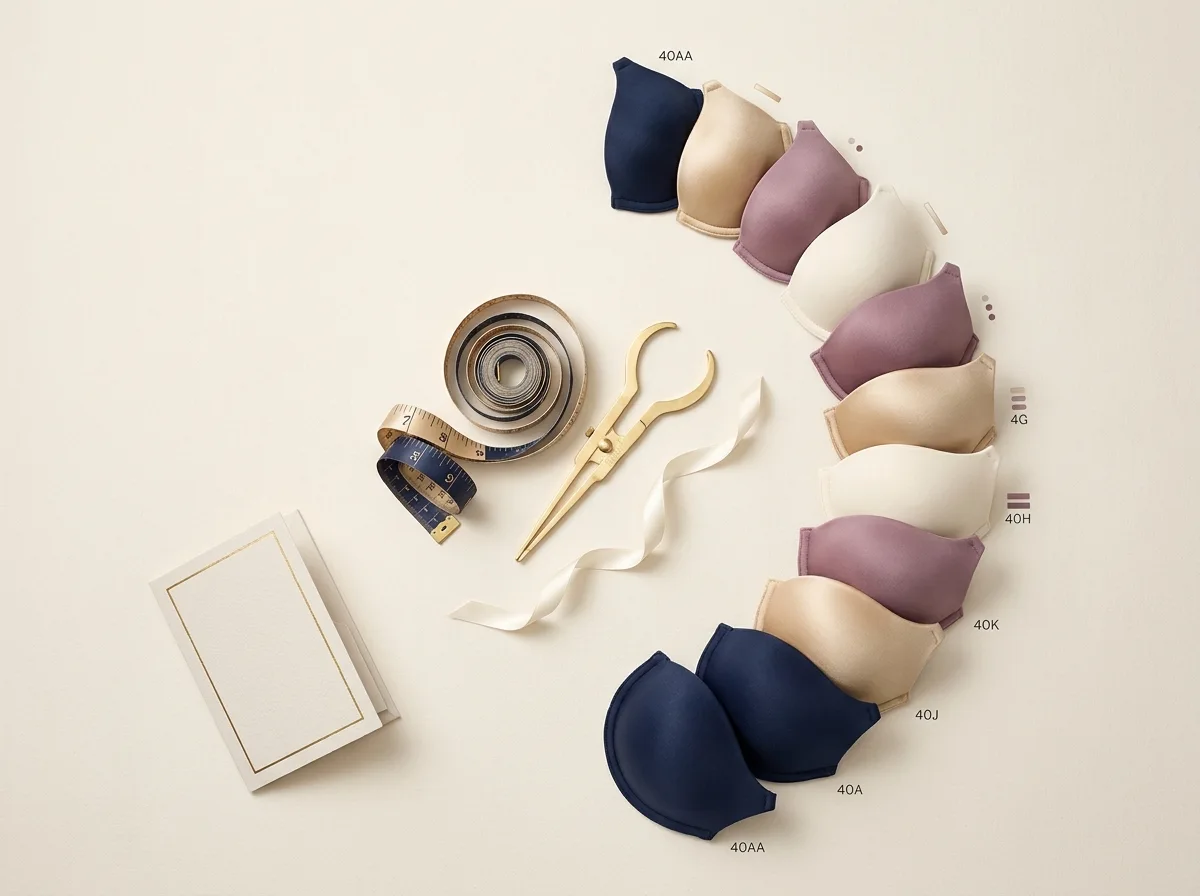

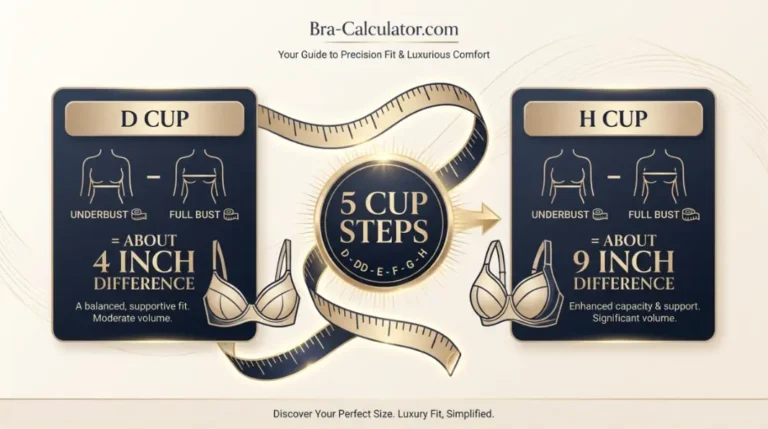
A 40 bra size is a band family, not one breast size. The band stays around the same 40-inch starting point while the cup changes with the difference between the full bust and the band. In the common US sequence, 40A is about a 1-inch difference, 40B about 2 inches, 40C about 3 inches, 40J about 10 inches and 40K about 11 inches. AA sits below the A-cup step. After D, brands and regions use different cup letters, so this hub shows aliases such as 40DD/40E and 40DDD/40F instead of pretending they are separate volume steps.
40 Bra Size Chart: 40AA Through 40K
This chart keeps the band baseline fixed and shows what changes as cup depth rises. The approximate bust column assumes a 40-inch baseline; it is a fit starting point rather than a literal promise that every person or brand will match exactly.
| Size | Cup difference | Approx. full bust* | Tighter sister | Looser sister | UK · EU · AU/NZ |
|---|---|---|---|---|---|
| 40AA | Less than 1 in | ~40–41 in | 38A | No common larger sister | 40AA · 90AA · 18AA |
| 40A | 1 in | ~41 in | 38B | 42AA | 40A · 90A · 18A |
| 40B | 2 in | ~42 in | 38C | 42A | 40B · 90B · 18B |
| 40C | 3 in | ~43 in | 38D | 42B | 40C · 90C · 18C |
| 40D | 4 in | ~44 in | 38DD | 42C | 40D · 90D · 18D |
| 40DD / 40E | 5 in | ~45 in | 38DDD / 38F | 42D | 40DD · 90E · 18DD |
| 40DDD / 40F | 6 in | ~46 in | 38G | 42DD / 42E | 40E · 90F · 18E |
| 40G | 7 in | ~47 in | 38H | 42DDD / 42F | 40F · 90G · 18F |
| 40H | 8 in | ~48 in | 38I | 42G | 40FF · 90H · 18FF |
| 40I | 9 in | ~49 in | 38J | 42H | 40G · 90I · 18G |
| 40J | 10 in | ~50 in | 38K | 42I | 40GG · 90J · 18GG |
| 40K | 11 in | ~51 in | 38L | 42J | 40H · 90K · 18H |
Is a 40 Band Actually Right for You?
A 40 band should be chosen from the ribcage measurement and how the band behaves on the body—not from an old label. A snug underbust around the high 30s to low 40s can place you near this band family, with the final choice affected by stretch, body softness, comfort preference and the brand.
Stays level, feels secure on the loosest hook when new and does not ride upward when you raise your arms.
If the cups are close to correct but the band rides up, test a 38 sister size with the cup moved up one step.
First check the cups. Too-small or too-shallow cups can make an otherwise suitable band feel much tighter.
Use the Bra Size Calculator for a current starting size, or read the Bra Band Size Guide for band-specific fit logic.
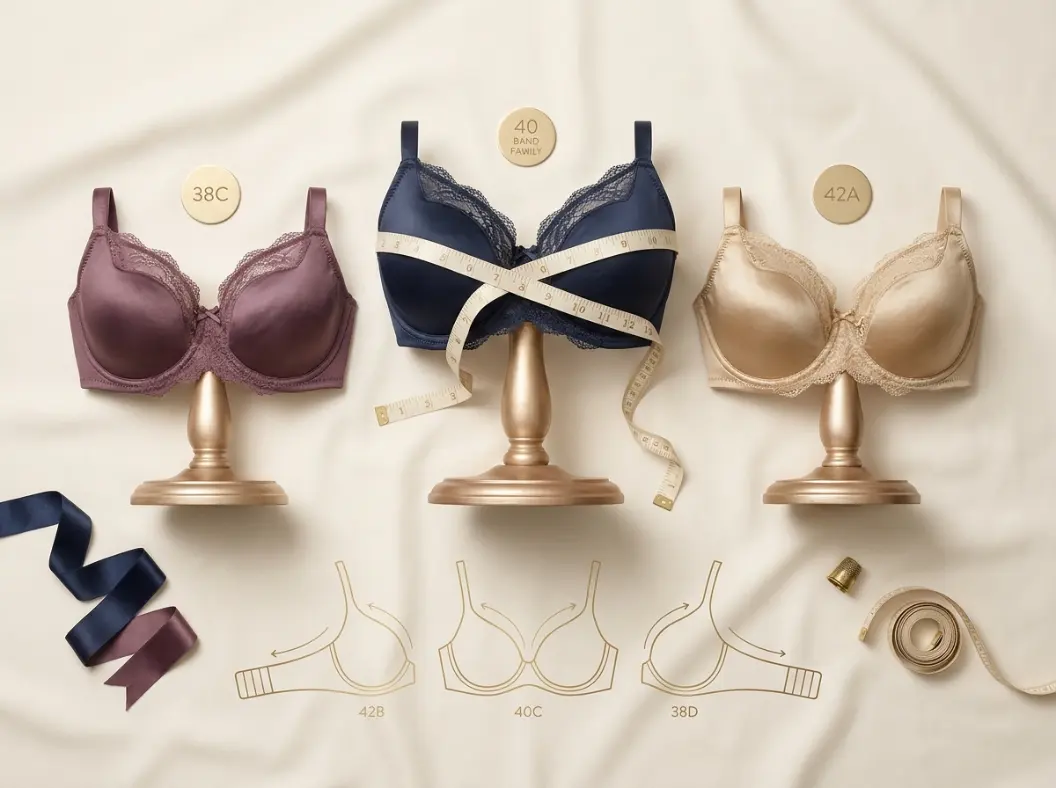
40AA to 40K: Individual Size Profiles
Each profile answers the specific size query while the shared 40-band logic stays centralized. This creates deeper topical coverage without repeating the same article twelve times.
40AA Bra Size: Measurements, Fit & Sister Sizes
40AA is a lightest cup depth. On a 40-band baseline, it represents roughly a Less than 1-inches bust-to-band difference, with an approximate full-bust reference around 40–41 inches. Treat that as a starting point, not a guarantee: breast shape, band stretch and brand construction can change the final fit.
How 40AA should fit
The 40 band should stay level around the torso and feel secure on the loosest hook when new. After scooping tissue into the cups, the edges should lie smoothly, wires should sit outside breast tissue, and straps should stabilize rather than carry the entire load.
Top gaping often comes from cup height or shape; side tissue can still mean the cup or wire is too narrow.
Best bra styles to try
Good starting constructions include shallow-friendly T-shirt bras, stretch-edge cups, wireless bras and low balconettes. The cut still has to match root width, projection, upper fullness and tissue softness.
If the band is right but the cups overflow, compare 40A. If there is genuine excess cup space after a proper scoop-and-settle, compare — or try a different cup shape before changing the band.
40A Bra Size: Measurements, Fit & Sister Sizes
40A is a shallow-to-light cup depth. On a 40-band baseline, it represents roughly a 1-inch bust-to-band difference, with an approximate full-bust reference around 41 inches. Treat that as a starting point, not a guarantee: breast shape, band stretch and brand construction can change the final fit.
How 40A should fit
The 40 band should stay level around the torso and feel secure on the loosest hook when new. After scooping tissue into the cups, the edges should lie smoothly, wires should sit outside breast tissue, and straps should stabilize rather than carry the entire load.
If 40A gaps, check cup height and shape before sizing down. If tissue spills, move to 40B on the same band.
Best bra styles to try
Good starting constructions include lightly lined bras, demi cups, stretch lace and low balconettes. The cut still has to match root width, projection, upper fullness and tissue softness.
If the band is right but the cups overflow, compare 40B. If there is genuine excess cup space after a proper scoop-and-settle, compare 40AA or try a different cup shape before changing the band.
40B Bra Size: Measurements, Fit & Sister Sizes
40B is a light-to-moderate cup depth. On a 40-band baseline, it represents roughly a 2-inches bust-to-band difference, with an approximate full-bust reference around 42 inches. Treat that as a starting point, not a guarantee: breast shape, band stretch and brand construction can change the final fit.
How 40B should fit
The 40 band should stay level around the torso and feel secure on the loosest hook when new. After scooping tissue into the cups, the edges should lie smoothly, wires should sit outside breast tissue, and straps should stabilize rather than carry the entire load.
A level band with smooth cup edges is the target. Overflow suggests 40C; persistent empty space may point to 40A or a shallower cut.
Best bra styles to try
Good starting constructions include T-shirt bras, demi cups, wireless support bras and soft balconettes. The cut still has to match root width, projection, upper fullness and tissue softness.
If the band is right but the cups overflow, compare 40C. If there is genuine excess cup space after a proper scoop-and-settle, compare 40A or try a different cup shape before changing the band.
40C Bra Size: Measurements, Fit & Sister Sizes
40C is a moderate cup depth. On a 40-band baseline, it represents roughly a 3-inches bust-to-band difference, with an approximate full-bust reference around 43 inches. Treat that as a starting point, not a guarantee: breast shape, band stretch and brand construction can change the final fit.
How 40C should fit
The 40 band should stay level around the torso and feel secure on the loosest hook when new. After scooping tissue into the cups, the edges should lie smoothly, wires should sit outside breast tissue, and straps should stabilize rather than carry the entire load.
Look for complete side containment and a stable center. If the cup cuts in or the gore floats, test 40D.
Best bra styles to try
Good starting constructions include T-shirt bras, side-support bras, balconettes and stretch-lace cups. The cut still has to match root width, projection, upper fullness and tissue softness.
If the band is right but the cups overflow, compare 40D. If there is genuine excess cup space after a proper scoop-and-settle, compare 40B or try a different cup shape before changing the band.
40D Bra Size: Measurements, Fit & Sister Sizes
40D is a moderate-to-full cup depth. On a 40-band baseline, it represents roughly a 4-inches bust-to-band difference, with an approximate full-bust reference around 44 inches. Treat that as a starting point, not a guarantee: breast shape, band stretch and brand construction can change the final fit.
How 40D should fit
The 40 band should stay level around the torso and feel secure on the loosest hook when new. After scooping tissue into the cups, the edges should lie smoothly, wires should sit outside breast tissue, and straps should stabilize rather than carry the entire load.
Cup projection matters more here. A molded cup can gap at the top while still being too shallow at the base.
Best bra styles to try
Good starting constructions include seamed balconettes, side-support bras, supportive T-shirt bras and full-cup styles. The cut still has to match root width, projection, upper fullness and tissue softness.
If the band is right but the cups overflow, compare 40DD / 40E. If there is genuine excess cup space after a proper scoop-and-settle, compare 40C or try a different cup shape before changing the band.
40DD / 40E Bra Size: Measurements, Fit & Sister Sizes
40DD / 40E is a full-bust cup depth. On a 40-band baseline, it represents roughly a 5-inches bust-to-band difference, with an approximate full-bust reference around 45 inches. Treat that as a starting point, not a guarantee: breast shape, band stretch and brand construction can change the final fit.
How 40DD / 40E should fit
The 40 band should stay level around the torso and feel secure on the loosest hook when new. After scooping tissue into the cups, the edges should lie smoothly, wires should sit outside breast tissue, and straps should stabilize rather than carry the entire load.
Choose enough center depth and wing stability. Floating gore or side spillage usually points to more cup space or a better shape match.
Best bra styles to try
Good starting constructions include 3-part cups, side-support bras, full cups and supportive plunges. The cut still has to match root width, projection, upper fullness and tissue softness.
If the band is right but the cups overflow, compare 40DDD / 40F. If there is genuine excess cup space after a proper scoop-and-settle, compare 40D or try a different cup shape before changing the band.
40DDD / 40F Bra Size: Measurements, Fit & Sister Sizes
40DDD / 40F is a full-bust cup depth. On a 40-band baseline, it represents roughly a 6-inches bust-to-band difference, with an approximate full-bust reference around 46 inches. Treat that as a starting point, not a guarantee: breast shape, band stretch and brand construction can change the final fit.
How 40DDD / 40F should fit
The 40 band should stay level around the torso and feel secure on the loosest hook when new. After scooping tissue into the cups, the edges should lie smoothly, wires should sit outside breast tissue, and straps should stabilize rather than carry the entire load.
Support should come from a firm level band plus cup structure, not over-tightened straps. Test deeper cups if the wire slides down.
Best bra styles to try
Good starting constructions include seamed 3-part cups, side-support bras, full cups and reinforced plunges. The cut still has to match root width, projection, upper fullness and tissue softness.
If the band is right but the cups overflow, compare 40G. If there is genuine excess cup space after a proper scoop-and-settle, compare 40DD / 40E or try a different cup shape before changing the band.
40G Bra Size: Measurements, Fit & Sister Sizes
40G is a fuller cup depth. On a 40-band baseline, it represents roughly a 7-inches bust-to-band difference, with an approximate full-bust reference around 47 inches. Treat that as a starting point, not a guarantee: breast shape, band stretch and brand construction can change the final fit.
How 40G should fit
The 40 band should stay level around the torso and feel secure on the loosest hook when new. After scooping tissue into the cups, the edges should lie smoothly, wires should sit outside breast tissue, and straps should stabilize rather than carry the entire load.
Prioritize projection, a secure wing and wires that surround the root. Shallow molded cups often create compression or a floating gore.
Best bra styles to try
Good starting constructions include side-support bras, seamed balconettes, full cups and structured plunges. The cut still has to match root width, projection, upper fullness and tissue softness.
If the band is right but the cups overflow, compare 40H. If there is genuine excess cup space after a proper scoop-and-settle, compare 40DDD / 40F or try a different cup shape before changing the band.
40H Bra Size: Measurements, Fit & Sister Sizes
40H is a deep fuller-bust cup depth. On a 40-band baseline, it represents roughly a 8-inches bust-to-band difference, with an approximate full-bust reference around 48 inches. Treat that as a starting point, not a guarantee: breast shape, band stretch and brand construction can change the final fit.
How 40H should fit
The 40 band should stay level around the torso and feel secure on the loosest hook when new. After scooping tissue into the cups, the edges should lie smoothly, wires should sit outside breast tissue, and straps should stabilize rather than carry the entire load.
A stable lower cup and enough immediate projection help prevent the bra from sliding down. Wider straps improve comfort but do not replace band support.
Best bra styles to try
Good starting constructions include 4-part cups, side-support bras, deep plunges and firm full cups. The cut still has to match root width, projection, upper fullness and tissue softness.
If the band is right but the cups overflow, compare 40I. If there is genuine excess cup space after a proper scoop-and-settle, compare 40G or try a different cup shape before changing the band.
40I Bra Size: Measurements, Fit & Sister Sizes
40I is a deep cup volume. On a 40-band baseline, it represents roughly a 9-inches bust-to-band difference, with an approximate full-bust reference around 49 inches. Treat that as a starting point, not a guarantee: breast shape, band stretch and brand construction can change the final fit.
How 40I should fit
The 40 band should stay level around the torso and feel secure on the loosest hook when new. After scooping tissue into the cups, the edges should lie smoothly, wires should sit outside breast tissue, and straps should stabilize rather than carry the entire load.
Check wire width and center depth together. If tissue is compressed and the center floats, the cup may be too shallow or small.
Best bra styles to try
Good starting constructions include multi-part cups, reinforced side support, deep plunges and full-cup bras. The cut still has to match root width, projection, upper fullness and tissue softness.
If the band is right but the cups overflow, compare 40J. If there is genuine excess cup space after a proper scoop-and-settle, compare 40H or try a different cup shape before changing the band.
40J Bra Size: Measurements, Fit & Sister Sizes
40J is a very deep cup volume. On a 40-band baseline, it represents roughly a 10-inches bust-to-band difference, with an approximate full-bust reference around 50 inches. Treat that as a starting point, not a guarantee: breast shape, band stretch and brand construction can change the final fit.
How 40J should fit
The 40 band should stay level around the torso and feel secure on the loosest hook when new. After scooping tissue into the cups, the edges should lie smoothly, wires should sit outside breast tissue, and straps should stabilize rather than carry the entire load.
The band must stay level during movement while the lower cup supports projection. Cup collapse, wire drop or center overflow are strong fit clues.
Best bra styles to try
Good starting constructions include reinforced seamed cups, firm side-support bras, deep full cups and specialist plunges. The cut still has to match root width, projection, upper fullness and tissue softness.
If the band is right but the cups overflow, compare 40K. If there is genuine excess cup space after a proper scoop-and-settle, compare 40I or try a different cup shape before changing the band.
40K Bra Size: Measurements, Fit & Sister Sizes
40K is a very deep specialist cup volume. On a 40-band baseline, it represents roughly a 11-inches bust-to-band difference, with an approximate full-bust reference around 51 inches. Treat that as a starting point, not a guarantee: breast shape, band stretch and brand construction can change the final fit.
How 40K should fit
The 40 band should stay level around the torso and feel secure on the loosest hook when new. After scooping tissue into the cups, the edges should lie smoothly, wires should sit outside breast tissue, and straps should stabilize rather than carry the entire load.
At 40K, cup depth and wire geometry matter as much as the printed label. Judge support by band stability, containment and comfort.
Best bra styles to try
Good starting constructions include specialist 4-part cups, reinforced side support, deep full cups and high-support plunges. The cut still has to match root width, projection, upper fullness and tissue softness.
If the band is right but the cups overflow, compare —. If there is genuine excess cup space after a proper scoop-and-settle, compare 40J or try a different cup shape before changing the band.
5-Point Fit Check for Any 40 Band Size
Your measurements give the starting label. The bra itself has to prove the fit.
Band
Level, secure and stable when your arms move.
Cups
No cutting, overflow, empty space or folding after scooping.
Wires
Surround breast tissue and rest on the ribcage.
Center
In wired bras, sits as close to the sternum as anatomy and style allow.
Movement
Walk, sit, bend and raise your arms without the bra shifting.
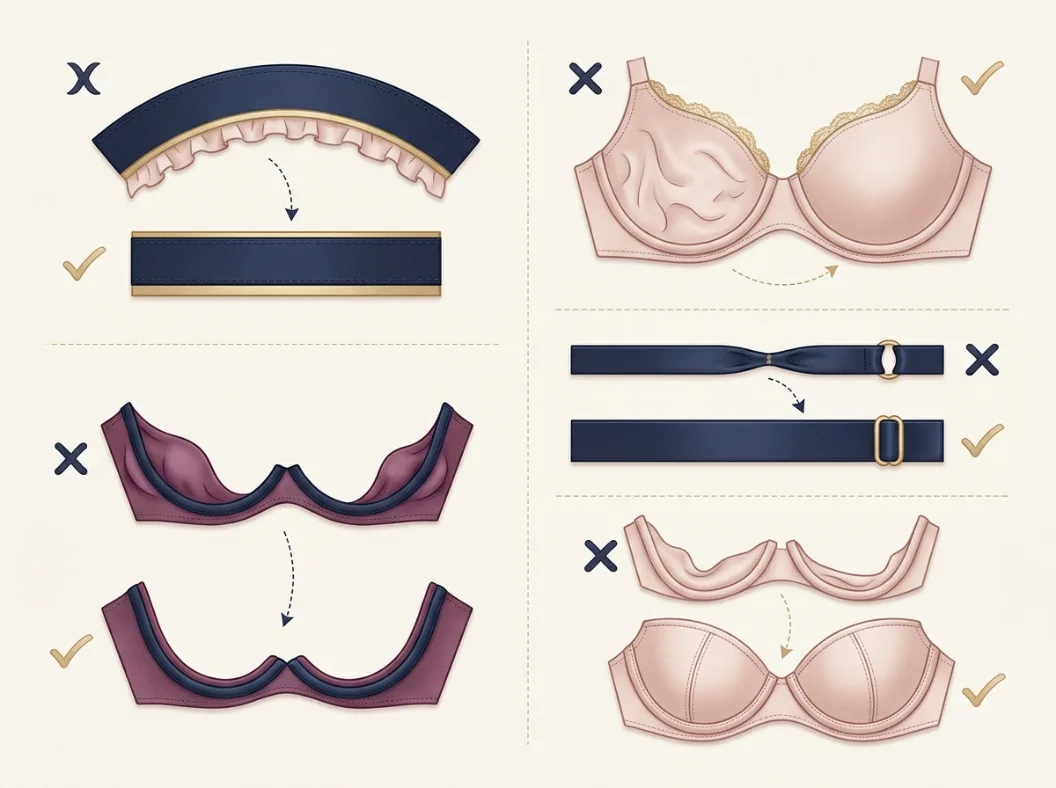
Common 40 Band Fit Problems
The band is probably too loose or the straps are compensating.
Try a 38 sister size with one cup step up.Too-small cups can create false band tightness.
Test the band independently before jumping to 42.Could be excess volume, but also a cup that is too tall, rigid or projected.
Try a lower or stretch-edge shape first.The cup may be too small, shallow or narrow.
Try one cup up on the same 40 band or a deeper cut.Often a sign of insufficient immediate projection or cup depth.
Try seamed cups with more depth near the wire.The band and cups may not be carrying enough support.
Fix band/cup fit before relying on the straps.For symptom-by-symptom guidance, open Bra Fit Problems.
40 Band International Conversion Notes
The 40 band commonly maps to EU 90 and AU/NZ 18. Cup names, however, diverge after D. A US 40H is not automatically a UK 40H. That is why every size profile above shows the regional equivalent separately.
What to Look for When Shopping the 40 Band
Construction becomes increasingly important as cup depth rises, but shape matters at every size. Do not buy a bra only because its title contains your size. Check cup shape, wire width, band stretch and return policy.
 Everyday Pick
Lightly Lined Everyday Bra
A useful first test for smooth shaping and for separating cup-volume problems from upper-cup shape mismatch.
- Best starting point for lighter cup depths.
- Compare nearby cup sizes in the same bra model.
- Confirm the exact 40-band size is stocked before ordering.
 Comfort Pick
Wireless Support Bra
A softer option when rigid wires feel uncomfortable, while still keeping the underband responsible for the main anchor.
- Useful for everyday comfort and sensitive ribs.
- Choose enough cup coverage to avoid spill or roll-up.
- Check the brand chart because stretch can change band feel.
 Fit-Test Pick
Balconette / Seamed Bra
Especially useful from D upward when you need to judge projection, wire width, cup edge and center depth more precisely.
- Seams can provide more targeted depth than molded foam.
- Useful for side-support and fuller-bust fit checks.
- Match the brand’s US/UK cup sequence before checkout.
40 Bra Size Guide FAQs
What does a 40 bra size mean?
It means the bra uses a 40-band starting size. The cup letter then describes the bust-to-band difference. A 40B, 40D and 40H share the same band family but not the same cup volume.
What bust measurement is a 40C?
Using a 40-inch band baseline and a 3-inch C-cup difference, the simple starting reference is about a 43-inch full bust. Real fit can shift with brand construction and body shape.
Is 40DDD the same as 40F?
Many US brands use DDD and F for the same sixth cup step, while other brands use a different alphabet. Treat this as a labeling issue and verify the brand chart.
Is 40DD the same as 40E?
US 40DD commonly aligns with EU 90E, and some US brands use E as an alternate label. The printed letter depends on the brand’s cup sequence.
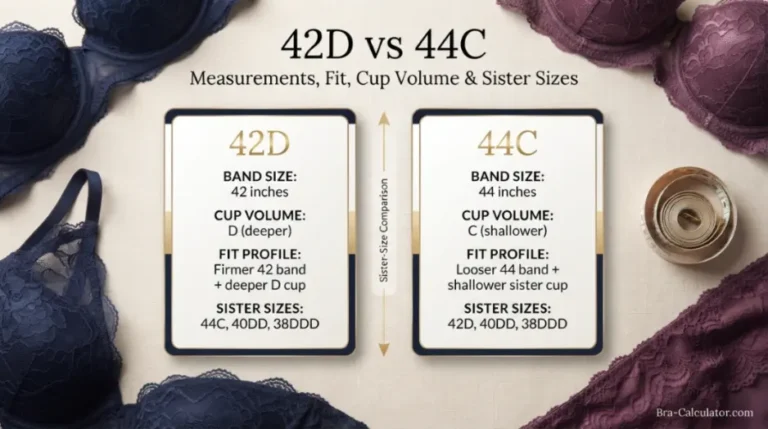
What is the sister size of 40D?
38DD is the common tighter sister size and 42C the common looser sister size.
What is the sister size of 40K?
In a common US progression, 38L is the tighter sister and 42J the looser sister. Extended cup letters vary by brand, so verify its alphabet.
Should I wear the same 40-band size in every brand?
No. Band stretch, wire width, cup height, projection and cup-letter sequences vary. Start from measurements and let the actual bra fit decide.
How do I know whether to change the band or cup?
If the band is stable but cups spill or gap, change cup size or cup shape first. If the cups fit but the band rides up or painfully digs, use a sister-size move.
Not Sure Which 40 Band Size Is Yours?
Use current measurements to get a starting size, then confirm it with the band, cup, wire, center and movement checks. The printed label is useful only when the bra actually fits.