Sleep Nursing Bras for Night Feeds: What Actually Matters Overnight

In This Guide
- Do you need a sleep nursing bra?
- How overnight fit differs from daytime
- 60-second sleep-bra fit check
- Features that matter most at night
- Leaks and nursing pads
- Fullness, engorgement and pressure
- Wireless vs underwire for sleep
- Fabric, seams and night sweats
- Sleep position and comfort
- Night-feed access
- Should you size up?
- Product examples
- FAQs
Do You Need a Sleep Nursing Bra at All?
No. A bra is not a requirement for sleeping while breastfeeding. Some people prefer one because it keeps reusable or disposable nursing pads in place, reduces the feeling of breast movement, or simply feels more comfortable when the breasts are fuller. Others sleep better without any bra at all.
That is an important distinction because the original version of this topic can easily make a special “overnight nursing bra” sound medically necessary. It is not. Think of it as a practical clothing option: useful when it makes nights easier, unnecessary when it does not.
How Overnight Fit Differs From Daytime
A daytime nursing bra has to stay stable while you stand, walk, bend, carry a baby and move through normal tasks. At night, movement is lower but contact time is much longer. A small pressure point that feels harmless for ten minutes can become irritating after several hours in the same position.
Lying down also changes where breast tissue settles. Side sleeping can move tissue laterally, back sleeping can make a firm center or cup edge more noticeable, and a band that feels fine upright may feel tighter when your ribcage and soft tissue compress against the mattress.
For that reason, overnight fit is less about maximizing lift and more about avoiding concentrated pressure while still giving enough containment for your comfort and nursing pads.
The 60-Second Sleep Nursing Bra Fit Check
Find Your Best Bra Match
Answer a few fit questions to get bra styles matched to your support needs, breast shape and everyday preferences.
Question 1 of 5
Why it matches
What to look for
What may not work
Private fit matching: your answers are used only to build the recommendation on this page. No measurements or fit selections are submitted to Bra-Calculator.com.
This tool suggests a starting bra style, not a medical or diagnostic recommendation. Individual brands and bra models can fit differently.
1. Lie down, not just stand in front of a mirror
Check the bra on your back and on the side you usually sleep on. If a band, seam, clasp or cup edge suddenly becomes obvious, that matters more than how it feels standing.
2. Slide two fingers under the band
You should feel contact and stability, not a sharp squeeze. “Loose enough to sleep” does not mean the band should float around your torso.
3. Check the fullest breast
If one side is fuller—common between feeds—fit the bra to that side. Cup edges should not cut into tissue or force fullness toward the center or underarm.
4. Add the nursing pads you actually use
Pads add thickness. A bra that fits beautifully without them may become cramped once an absorbent pad is inside the cup.
5. Open it with one sleepy hand
A perfect technical fit is not much help if a clip is fiddly at 3 a.m. Test the access mechanism before deciding it is a good night-feed bra.
6. Look at your skin in the morning
Light temporary elastic impressions can happen with clothing. Painful, deep or very localized marks deserve a fit recheck.
What Features Matter Most in a Sleep Nursing Bra?
| Feature | Why it helps at night | What to watch for |
|---|---|---|
| Soft, flexible band | Provides light containment without relying on rigid structure. | A band that rolls, pinches or shifts can be as annoying as one that is too tight. |
| Wireless or low-rigidity construction | Usually adapts more easily to lying positions and fullness changes. | “Wireless” alone does not guarantee comfort; elastic and seams can still press. |
| Crossover or clip-down access | Makes night feeding possible without removing the bra. | Check that the cup returns to position without twisting after a feed. |
| Enough cup depth | Accommodates the fuller side and nursing pads without cutting in. | Stretch should not be used to disguise a cup that is clearly too small. |
| Breathable-feeling fabric | Can feel more comfortable during postpartum sweating or when pads become damp. | Fiber name alone does not predict comfort; knit, thickness and moisture retention matter too. |
| Minimal bulky hardware | Reduces hard spots against the mattress. | Back hooks can be fine if they remain flat and unnoticed in your sleep position. |
Seamless is convenient, not compulsory. A well-placed flat seam can be perfectly comfortable. Likewise, a hook-and-eye closure is not automatically a problem just because a pull-on bra looks more “sleep friendly.” Your body position is the final test.
Overnight Leaks: Let the Pad Handle the Milk, Not the Band
One of the easiest mistakes is tightening the bra because the nursing pad keeps moving. That often makes the bra less comfortable without fixing the actual reason the pad is shifting.
Instead, look for enough cup coverage to keep the pad flat, a fabric surface that gives the pad some grip, and a band stable enough that the whole bra does not migrate while you turn in bed. Reusable pads are usually thicker than disposable ones, so check fit with the exact type you plan to wear overnight.
Fullness, Engorgement and Pressure: Keep the Advice Simple
Breast fullness can change substantially across a night, especially earlier in lactation, after an unexpectedly long sleep, or when a usual feed is missed. A sleep bra therefore needs some adaptability, but that does not mean buying a deliberately baggy bra.
The fit goal is comfortable support without restrictive pressure. Current NHS breastfeeding guidance advises avoiding tight or restrictive bras and clothing when mastitis or blocked-duct symptoms are present. If you develop a painful hot area, a persistent hard or tender area, fever, chills or worsening redness, treat that as a health issue rather than a bra-fitting problem.
Wireless vs Underwire for Sleeping While Breastfeeding
For most people, a wireless nursing bra is the easiest starting point for sleep because there is less rigid structure to become uncomfortable when the body changes position. That is a comfort recommendation, not a universal medical ban on underwire.
If you already own a correctly fitted underwire nursing bra and can lie in your normal sleep positions without the wire pressing into breast tissue, the category label alone does not make it unsafe. The practical problem is that changing fullness can make a wire that fitted at 8 p.m. feel quite different at 3 a.m.
For that reason, many people reserve structured bras for daytime and use a more forgiving wireless option overnight.
Fabric, Seams and Postpartum Night Sweats
Breathability claims are easy to oversimplify. Cotton, modal, bamboo-derived viscose, nylon and elastane can all feel comfortable depending on how the fabric is knitted, how thick it is and how quickly it dries. A thin synthetic performance knit may feel cooler than a heavy cotton rib; a soft modal blend may feel better against sensitive skin than either.
What matters in practice is whether the bra feels clammy after a feed or leak, whether seams rub when damp, and whether the fabric recovers after washing. If night sweats are a problem, keeping a dry backup bra and spare pads nearby can be more useful than chasing a single “best” fiber.
Does Sleep Position Change the Best Bra Choice?
It can change what feels comfortable, but there is no evidence-based rule saying side sleepers must wear a bra or that a bra necessarily distributes pressure better than sleeping bra-free. Some side sleepers like light containment because the breast feels more stable; others find any elastic around the ribcage irritating.
Use your normal sleeping position as a fit test rather than as a reason to buy a particular style. If you spend most of the night on your side, pay extra attention to side seams, the underarm edge and whether the lower cup bunches under the breast.
Night-Feed Access: Crossover vs Clip-Down
Crossover / pull-aside
Very simple in the dark, minimal hardware and often comfortable for sleep. It can be less containing for heavier busts or for thick nursing pads.
Clip-down cup
Usually keeps the non-feeding side more stable and can offer more cup shaping. Make sure the clip is easy to operate one-handed.
Pull-on seamless
Comfortable when you dislike back hardware, but sizing needs enough stretch to pull on without overstretching the garment.
Front closure
Can work well for some users, but check that the closure does not become a pressure point when lying on your stomach or partly rolled forward.
Should a Sleep Nursing Bra Be One Size Bigger?
No universal “size up one” rule is reliable because brands use very different alpha-size ranges and stretch levels. One brand’s medium may already be designed to span several cup volumes, while another medium may fit much closer to the body.
Start with the brand’s current size chart and your current measurements. Then judge the bra in your sleep position with pads inside. Size up only when the normal size creates pressure, cutting-in or insufficient room for your typical fullness—not simply because the bra will be worn at night.
The reverse matters too: if sizing up makes the band ride, the cups shift around the pads or the bra twists every time you turn, the larger size is not automatically the safer or more comfortable choice.
Need a fresh starting size?
Use the Bra Size Calculator before comparing sleep-bra size charts →
Three Sleep-Friendly Nursing Bra Examples to Compare
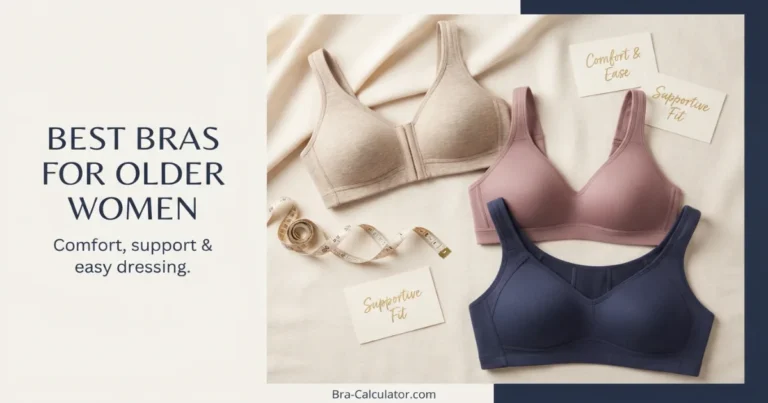
These are examples of soft nursing styles that make sense to compare for overnight or lounge use. They are not lab-tested rankings, and “best” depends on your band, cup volume, sleep position and preferred access style. Check the current brand chart and live listing before buying.

Cake Maternity Cotton Candy Seamless Nursing Bra
Cake currently describes Cotton Candy as wire-free, seamless and designed with easy-feed drop-down cups, knitted contour support and flexible stretch. The brand lists it for B–G cups and includes sleep among its common use cases.
Check before buying: its S–XL style sizing covers multiple bra sizes, so use Cake’s current chart rather than guessing from your usual T-shirt size.
View Options on AmazonAffiliate link · Price and availability can change
Bodily The Everything Bra
Bodily positions The Everything Bra as a soft clip-down maternity-to-postpartum bra designed for pregnancy, breastfeeding and continued wear after nursing. Its low-structure feel can appeal to sleepers who dislike a conventional bra sensation.
Check before buying: this is comfort-led rather than a highly projected or maximum-lift style, so fuller busts may prefer more structure during the day.
View Options on AmazonAffiliate link · Price and availability can change
Bravado Designs Body Silk Seamless Nursing Bra
Bravado’s current Body Silk range is a seamless nursing bra with standard and fuller-cup sizing, and the brand states the refreshed range now fits up to a K cup. That makes it worth comparing when generic S–XL sleep bras run out of cup room.
Check before buying: the current size system includes multiple fuller-cup variants, so choose from the newest chart rather than an older retailer chart.
View Options on AmazonAffiliate link · Price and availability can changeHow Many Sleep Nursing Bras Do You Actually Need?
For many households, two is a sensible starting rotation: one to wear and one to wash or dry. If leaking is heavy enough that bras are frequently soaked, a third may reduce laundry pressure. If you sleep bra-free most nights, you may only need one soft nursing bra for fuller or leakier nights.
Avoid building a large overnight-specific wardrobe early. Breast size, leaking and feeding frequency can change quickly, and the bra you love in the first month may feel unnecessarily loose or low-support later.
When Your Night Bra Needs to Change
- The band or cup edge has started leaving painful or unusually deep marks.
- You wake up pulling the bra away from one area of the breast.
- Nursing pads no longer stay flat because the cup is too small or too loose.
- The band has stretched enough that the bra twists around your torso.
- Your breast fullness is now much more stable and you no longer need as much stretch.
- You no longer need overnight access and would rather sleep in a regular soft bra—or no bra.
Frequently Asked Questions
- Do I need to wear a nursing bra to sleep while breastfeeding?
- No. It is a comfort and leak-management choice. A soft sleep nursing bra can hold pads or provide light support, but sleeping bra-free is also fine if that is more comfortable.
- Should overnight nursing bras be looser than daytime bras?
- They should not feel restrictive, but “one size looser” is not a universal rule. Use the brand chart, then check the fit while lying down and with your usual nursing pads inside.
- Can I sleep in my daytime nursing bra?
- Yes, provided it remains comfortable when you lie down and does not create localized pressure. You do not need a separate product just because it is marketed as a sleep bra.
- Can I sleep in a sports bra while breastfeeding?
- A very soft, non-compressive lounge sports bra may feel fine, but a high-compression sports bra is usually a poor sleep choice because it is designed to restrict movement. If it feels tight or presses into breast tissue, choose something softer.
- Can I sleep in an underwire nursing bra?
- There is no blanket rule that all underwire is forbidden. For sleep, however, wireless designs are often easier to tolerate as breast fullness and sleeping position change. Any wire that presses into tissue is a fit problem.
- Do nursing pads change sleep-bra sizing?
- They can. Reusable pads especially add noticeable thickness. Test the bra with the exact pads you plan to use rather than fitting it empty.
- What should I do if I wake with a painful hard area or fever?
- Do not treat that as a simple bra-sizing issue. Recheck whether clothing is restrictive, but seek appropriate medical or lactation guidance for persistent pain, a hot or red area, fever, chills or worsening symptoms.
- Is seamless always best for sleeping?
- No. Seamless construction is convenient, but a well-designed flat seam can be comfortable. The important point is whether anything rubs or digs in your normal sleep position.
- How do I know a sleep nursing bra is too loose?
- If the band rotates, pads move around, the cup shifts away from the breast, or you repeatedly have to reposition the garment, you may need a smaller band or a different shape.
- When can I stop using sleep nursing bras?
- Whenever you no longer find them useful. As overnight feeds and leaking reduce, many people move to a regular soft bra or sleep bra-free without needing a formal transition point.
Editorial Sources & Product Checks
- NHS — Mastitis: comfortable supportive bras and avoiding tight-fitting bras when symptomatic
- NHS — Breast pain and breastfeeding
- Academy of Breastfeeding Medicine — Clinical Protocol #36: The Mastitis Spectrum
- Cake Maternity — Cotton Candy Seamless Nursing Bra
- Bodily — The Everything Bra
- Bravado Designs — Body Silk Seamless Nursing Bra
Amelia
Founder of Bra-Calculator.com, former lingerie buyer and bra-fit specialist. Amelia reviews sizing and fit guidance with a practical, measurement-first approach and separates garment-fit advice from medical care.
Read Amelia’s bio & editorial methodology →This page provides general garment-fit and shopping information, not medical diagnosis or individualized lactation care. Seek qualified clinical or lactation support for persistent breast pain, fever, worsening redness, a painful or hot area, wound concerns, or feeding/pumping problems. As an Amazon Associate, Bra-Calculator.com earns from qualifying purchases.