Panty Size by Hip Measurement
Amelia B. · Bra Fit Specialist · Use the fullest hip as the main starting point for everyday underwear, then check the waist, rise and stretch before ordering.
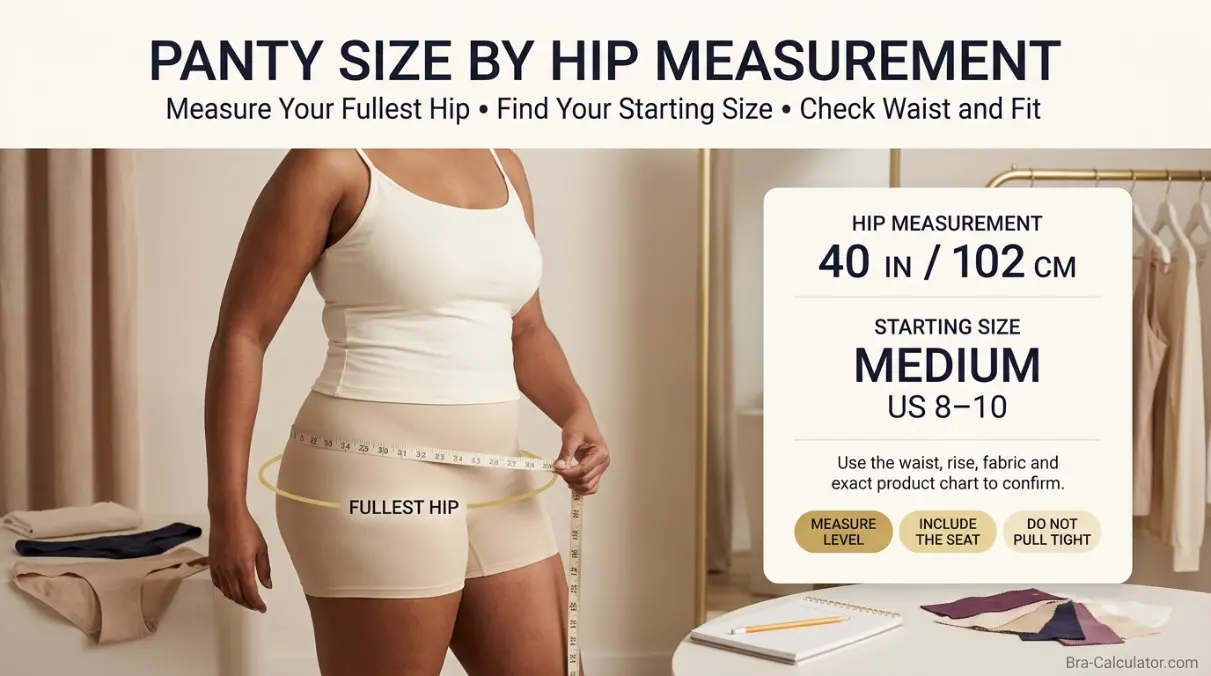
For most everyday underwear, the fullest hip is the most useful first measurement because the garment must pass over and fit around the widest area. A 39–41 inch hip is broadly Medium in this framework; use the waist and product chart to confirm.
In This Guide
- Use the interactive tool
- Hip measurement lookup table
- Why the hip leads most everyday panty sizing
- What to do when the waist is smaller
- What to do when the waist is larger
- Boundary examples
- How style changes the result
- The limits of a single measurement
- Product verification
- When the hip measurement leads—and when it is not enough
- At-home fit test
- Common mistakes
- Product-page checklist
- Amazon product comparisons
- Frequently asked questions
Choose the fit signs you notice in the band, cups, center and straps. We’ll use them to suggest the most useful next step.
Private fit check — your answers stay in your browser and are used only for this on-page guidance. Nothing is stored or submitted.
Quick hip-measurement lookup
Enter the fullest hip in inches or centimetres for a starting size.
Hip measurement lookup table
| Full hip | Starting alpha size | US numeric | Check next |
|---|---|---|---|
| 32–34.5 in / 81–88 cm | XXS | 00–0 | Compare waist range 22–24.5 in / 56–62 cm |
| 34.5–36.5 in / 88–93 cm | XS | 0–2 | Compare waist range 24.5–26.5 in / 62–67 cm |
| 36.5–38.5 in / 93–98 cm | S | 4–6 | Compare waist range 26.5–28.5 in / 67–72 cm |
| 38.5–41 in / 98–104 cm | M | 8–10 | Compare waist range 28.5–31 in / 72–79 cm |
| 41–44 in / 104–112 cm | L | 12–14 | Compare waist range 31–34 in / 79–86 cm |
| 44–47.5 in / 112–121 cm | XL | 16–18 | Compare waist range 34–37.5 in / 86–95 cm |
| 47.5–51.5 in / 121–131 cm | 2XL | 20–22 | Compare waist range 37.5–41.5 in / 95–105 cm |
| 51.5–55.5 in / 131–141 cm | 3XL | 24–26 | Compare waist range 41.5–45.5 in / 105–116 cm |
| 55.5–59.5 in / 141–151 cm | 4XL | 28–30 | Compare waist range 45.5–49.5 in / 116–126 cm |
| 59.5–63.5 in / 151–161 cm | 5XL | 32–34 | Compare waist range 49.5–53.5 in / 126–136 cm |
| 63.5–67.5 in / 161–171 cm | 6XL | 36–38 | Compare waist range 53.5–57.5 in / 136–146 cm |
panty-size-by-hip-measurement-hero.webp to replace this fallback.Why the hip leads most everyday panty sizing
Here’s the logic in plain terms: the fullest hip is the checkpoint the garment has to clear. It controls whether the fabric can travel over the widest part of your body and whether the seat and gusset stay put once you sit down. Size from the waist alone and fuller-hipped bodies tend to hit the same three problems — tight leg openings, thin back coverage, or a waistband that keeps sliding down.
That said, hip-first isn’t waist-never. The waist is still your early-warning sign for gaping, digging or rolling, especially once it lands a full row or more away from your hip size on the chart.
What to do when the waist is smaller
Start with enough hip room, then look for a contoured waistband, strong elastic recovery or a cut designed with more difference between waist and hip. Sizing down to close a waist gap often transfers pressure to the leg openings and seat.
High-cut legs, briefs with shaped back panels and proportion-specific designs may work better than a straight tube-like cut. The goal is not to make the body match the garment; it is to choose a garment pattern that matches the measurements.
What to do when the waist is larger
High-rise products need the waist-led measurement to avoid concentrated pressure. A straight or fuller-waist cut may sit more comfortably than a strongly contoured waistband. For low-rise styles, compare the actual waistband position because the natural waist may sit above the garment.
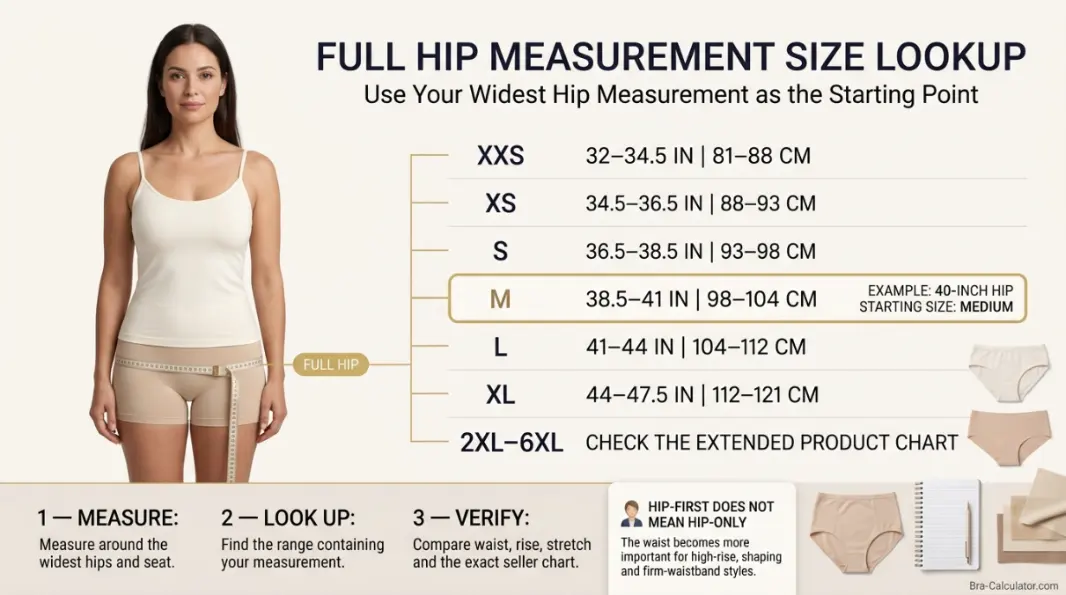
full-hip-measurement-size-lookup.webp to replace this fallback.Boundary examples
38.5-inch hip
This sits at the boundary between Small and Medium. Compare the waist, stretch and desired fit.
44-inch hip
This is the upper edge of Large. Firm cotton, period underwear or relaxed preference may make XL worth comparing.
51.5-inch hip
This boundary sits between 2XL and 3XL. Use the exact extended chart and do not rely on the same brand’s straight-size naming.
How style changes the result
Bikinis, hipsters and low-rise thongs tend to follow the hip more closely because their waistbands sit below the natural waist. High-rise briefs, shaping underwear and some period styles bring the waist back into the calculation. Boyshorts also depend on the upper-thigh opening and inseam shape.
The limits of a single measurement
Underwear labels are not standardized across the industry. A letter such as Medium can represent a different waist and hip range from one brand to another, and two products carrying the same label may still fit differently because the rise, gusset width, leg opening, fabric recovery and waistband construction are not identical. For that reason, this guide treats a size as a starting point, not a permanent body label.
Our measurement-first method gives the fullest hip the strongest influence for most everyday panties because that measurement determines whether the garment can pass over and sit comfortably around the widest area. The natural waist is then used as a fit check. High-rise briefs, shaping styles and some period underwear need more attention at the waist, while low-rise bikinis and hipsters depend more heavily on the full-hip range.
Always compare your current measurements with the chart attached to the exact product you are considering. Product lines can be updated, fabrics can change, and a brand may use a separate chart for shapewear, period underwear or plus sizing. A careful chart check is more reliable than ordering from an old pair, a jeans label or a conversion found on a marketplace listing.
Product verification
Check the exact product chart
Do not assume every collection from the same company uses one chart. Confirm whether the product is everyday underwear, period underwear, shapewear or a special proportion cut.
Read the fabric description
High-stretch seamless fabric behaves differently from firm cotton, lace with narrow elastic, or an absorbent panel. Stretch percentage and recovery can change the best choice at a boundary.
Use the return policy
When two sizes are plausible, compare both if the retailer permits hygienic returns. Try them over clean close-fitting underwear and follow the seller’s return conditions.
When the hip measurement leads—and when it is not enough
The fullest hip is usually the most useful first measurement because the garment must travel over and sit around the widest part of the lower body. It is not the only measurement that matters. A high-rise waistband can still gap on a defined waist, while a lower rise may feel tight at the high hip even when the natural waist is comfortably inside the chart.
Protect hip room
Start from the hip-led size and search for a contoured waistband, curved back seam or strong elastic recovery. Sizing down often replaces a small waist gap with leg pressure or riding up.
Protect waistband comfort
Use the waist-led comparison for high-rise or firm styles. A flexible leg opening and moderate back coverage can prevent looseness through the seat.
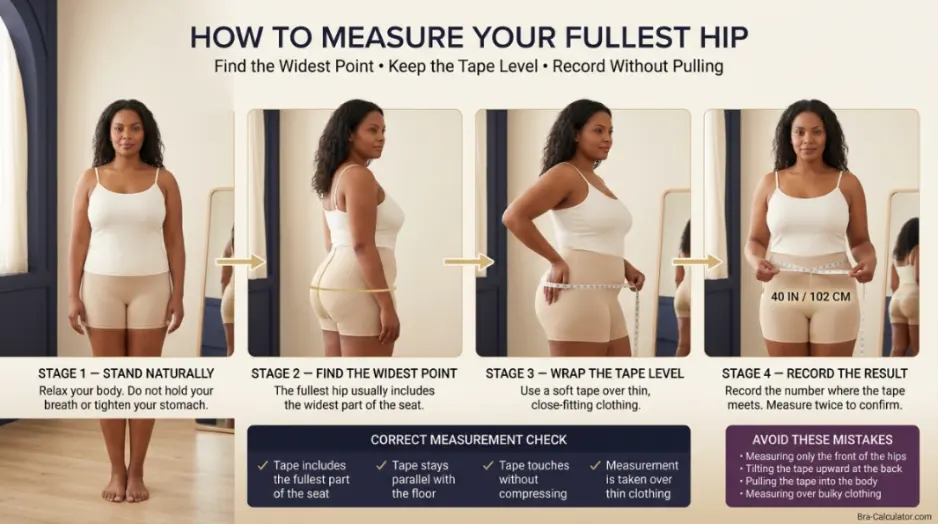
hip-led-vs-waist-led-sizing-diagram.webp to replace this fallback.How to confirm the result after delivery
Use the recommended size as a starting hypothesis, not a done deal — let movement, pressure and garment stability do the confirming. In my experience, this five-minute check catches far more sizing mistakes than staring in a mirror ever does.
Check pressure and stability
The waistband should stay where the style is designed to sit. It should not create sharp pressure, fold repeatedly, slide downward or require constant pulling. A light temporary impression can occur with close-fitting elastic, but pain, numbness or deep persistent marks are not a successful fit.
Walk, sit and lift one knee
Leg edges should follow the body without cutting into the hip crease or floating away. If they dig while the waist feels loose, the problem is probably the opening shape or insufficient hip room rather than an all-over smaller waist size.
Look for calm fabric
The back should remain in place during several minutes of normal movement. Repeated wedging, crawling or excess fabric indicates a coverage, gusset or seat-shape mismatch. Sizing up can help when the fabric is stretched; it can worsen the problem when the cut is already too loose.
Confirm placement, not just width
The gusset should sit where intended without being pulled too far forward or backward. Poor placement can result from the wrong rise, a short body length, tight hips or a cut that does not suit the wearer’s proportions.
For ordinary underwear, a short indoor movement test usually reveals more than a still mirror check. Keep tags attached until the fit is settled.
- Test for at least five minutes indoors. Stand, sit, bend, walk and use stairs if available.
- Compare one variable at a time. When trying two sizes, keep the brand, style and fabric identical.
- Notice adjustment frequency. The better fit is usually the option you stop thinking about.
- Recheck the seller return conditions. Underwear policies vary, so use an allowed try-on method and keep hygiene liners and packaging intact.
Common mistakes with panty size by hip measurement
Using an old measurement
Body measurements can change while the familiar clothing label stays the same. Use a current waist and full-hip reading whenever the last result feels less reliable or you are buying a less forgiving construction.
Mixing measurement points
The natural waist, high hip and fullest hip are different circumferences. Measure the point requested by the product chart rather than placing the tape where the waistband of a favourite garment happens to sit.
Assuming more stretch always means size down
Stretch describes how far fabric can move; recovery describes whether it returns and remains stable. A highly stretchy garment with weak recovery can slide or distort, while firm recovery can feel smaller than expected.
Comparing unrelated products
A change from a cotton brief to seamless microfiber changes fabric, seams, rise and coverage at the same time. To isolate size, compare adjacent labels in one identical product.
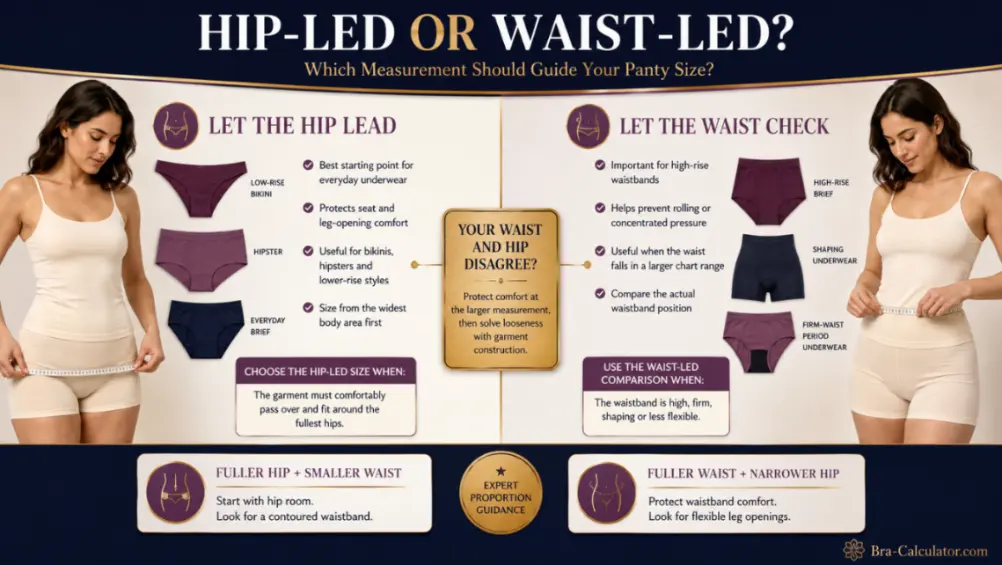
how-to-measure-fullest-hip-point.webp to replace this fallback.What to check on the product page
Before using panty size by hip measurement guidance to place an order, read the product page as a fit document rather than a marketing page. The most useful details are often below the headline: the body-measurement chart, rise description, fabric composition, model measurements, coverage photographs and return conditions.
Confirm which measurements the chart uses
Some charts list natural waist and fullest hip; others list only a clothing size or a garment measurement. Do not treat these as interchangeable. A garment measurement includes design ease and stretch, while a body chart describes the intended wearer range.
Locate the actual waistband
Words such as low, mid and high rise are relative. Use side photographs, side-seam height and any “sits at” description to estimate where the waistband will cross your body. That point determines whether the natural waist or high hip is the better comfort check.
Separate stretch from recovery
Elastane content can suggest stretch, but knit density and elastic construction affect recovery. Reviews that mention sliding, bagging, rolling or unusually firm elastic can be more useful than a simple statement that the fabric is stretchy.
Study front, side and back views
Coverage names are inconsistent. Look at the width across the seat, the leg-opening angle, gusset length and whether the style narrows sharply at the back. These details help predict riding, wedging and visible lines.
For recommended categories such as contoured-waist briefs, stretch hipster underwear, full-coverage briefs, compare recent fit comments from shoppers with similar waist-to-hip proportions rather than relying only on height or weight. Finally, check whether underwear returns are accepted, whether the hygiene liner must remain attached and whether multipacks can be partially returned. A careful product-page audit reduces the need to guess and protects the usefulness of the calculator result.
How this guide handles uncertainty
Bra-Calculator.com separates measurement, label conversion and construction because they answer different questions. The measurement suggests a body range; the regional label helps you navigate a retailer; the garment construction determines how that label behaves in real movement.
Official brand guidance was rechecked on 2026-07-25 as part of a scheduled content review, and the visual references and fullest-hip measurement diagram on this page were expanded during the same pass. We do not claim that one universal chart overrides a seller’s current product chart, and we do not use price, star-rating or inventory claims that can become stale. Where waist and hip data disagree, the guide explains the trade-off instead of presenting false precision — that’s a judgment call, not an algorithm, and we’d rather tell you where the uncertainty actually sits.
Primary editorial references
- Jockey Size Charts — Natural-waist and fullest-hip measurement instructions.
- Wacoal Size Charts — Published panty waist and hip ranges showing why brand charts matter.
Relevant products to compare
These recommendations are selected by construction and fit purpose. They open current Amazon search results rather than making fixed price, stock or rating claims.
Affiliate disclosure: As an Amazon Associate, Bra-Calculator.com earns from qualifying purchases at no extra cost to you. Recommendations are based on fit criteria, not commission rates.
Contoured-waist briefs
A shaped waistband can reduce gaping without reducing hip room.
- Compare the exact seller size chart.
- Check rise, fabric and coverage before ordering.
- Prices and availability can change.
Stretch hipster underwear
Flexible side seams and back coverage can reduce riding up.
- Compare the exact seller size chart.
- Check rise, fabric and coverage before ordering.
- Prices and availability can change.
Full-coverage briefs
More back coverage helps keep the garment anchored during movement.
- Compare the exact seller size chart.
- Check rise, fabric and coverage before ordering.
- Prices and availability can change.
Frequently asked questions
A 38-inch hip falls in Small in this framework, close to the upper boundary. Compare Medium if the fabric is firm or the waist is larger.
A 40-inch hip broadly falls in Medium.
A 42-inch hip broadly falls in Large.
A 46-inch hip broadly falls in XL.
It gives a useful starting point, but the waist, rise, fabric and exact product chart should confirm the choice.
Your waist may fall in a smaller range. Try a contoured waistband or proportion-specific cut rather than reducing hip room.
The opening shape, elastic and cut may be unsuitable. A higher-cut leg or softer edge can help.
Yes. Measure around the widest part of the hips and seat.
Continue through the sizing system
Measure First. Then Choose the Construction.
Use the Panty Size Calculator for a private starting size, regional equivalents, fit-conflict explanation and product suggestions matched to your rise and comfort preferences.